
There is a particular kind of disappointment that every photographer knows. You see something that makes you stop, lift the camera quickly and make a frame, but when you look at the photograph later, the reason you stopped is barely there. The subject is present, the exposure is correct and nothing is obviously wrong, yet the photograph feels like a record of having noticed something rather than the result of having understood it.
The usual reaction is to assume that the scene was not quite good enough. We continue walking in search of a stronger subject, better light, a more expressive person or a cleaner background. Sometimes that is the correct decision, because not everything we notice will become a worthwhile photograph. Very often, however, the scene has not failed us. We have simply left before the photograph was ready.
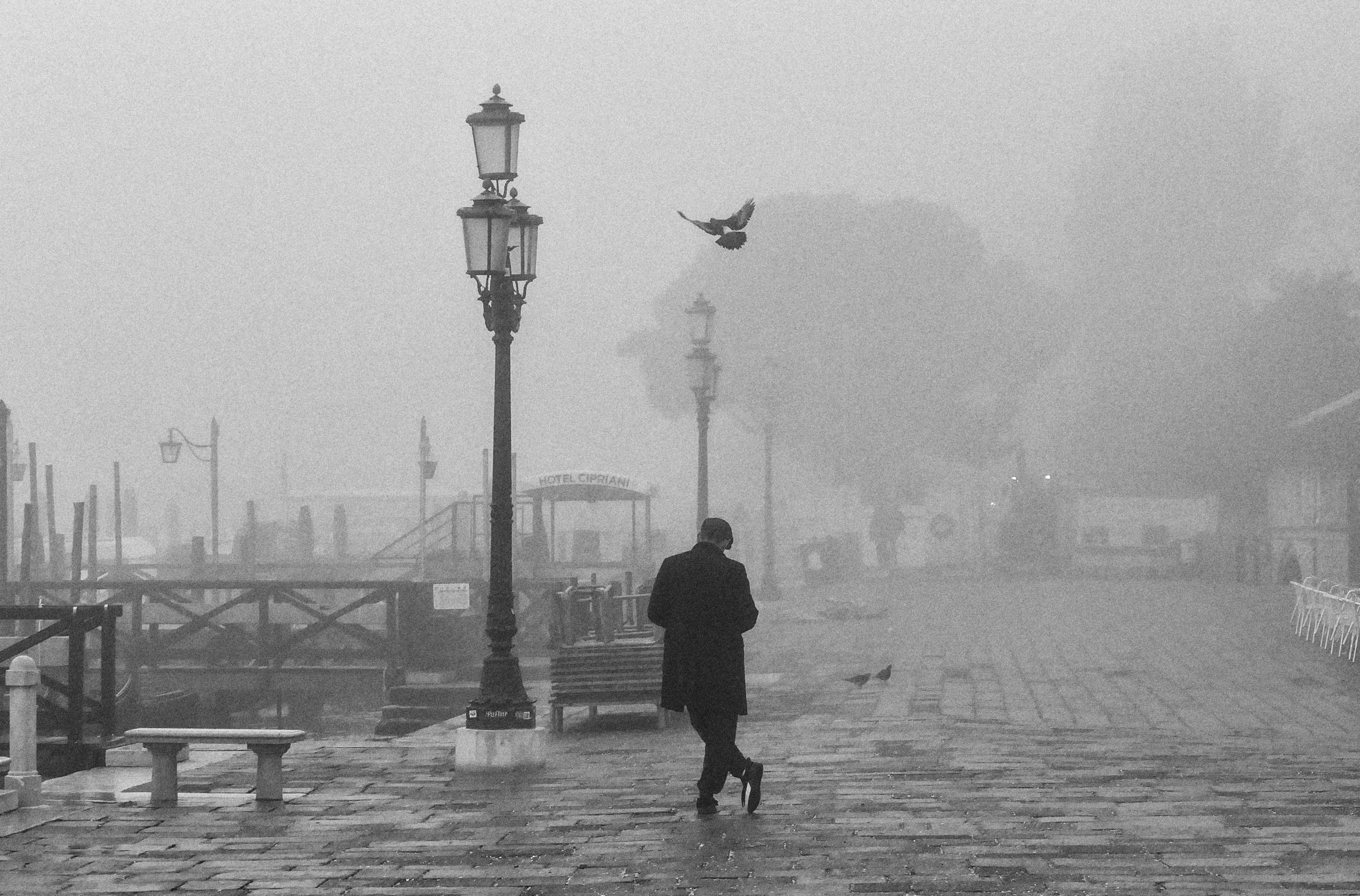
The first frame is useful because it records the initial attraction. Perhaps it was a patch of light on a wall, the distance between two people, a bright coat against a dark doorway or the strange order of objects in a shop window. That first response matters, but it is only the beginning of the work. It tells us where our attention went; it does not yet tell us what to do with it.
This is the point where many photographs stop developing, because we make two or three nearly identical frames, perhaps adjust the exposure, then move on. The camera has confirmed that we were there, but we have not made a serious decision about hierarchy, position, timing or the edges of the frame. We found the subject, but we did not build the photograph around it.
Photography encourages movement. A street changes every few seconds, travel presents us with an endless supply of new subjects, and digital cameras allow us to collect each one at almost no immediate cost. The temptation is to cover ground rather than explore what is already in front of us. We return with hundreds of frames, but many are simply first impressions separated by a few streets.
This does not apply only to street photography. A landscape photographer may arrive, put the tripod in the most obvious position and begin shooting before looking at the relationship between the foreground and horizon. A portrait photographer may accept the first comfortable distance instead of noticing what the background is doing around the sitter. An architectural photographer may concentrate on the building while ignoring the light, reflections and human scale that could give it character.
In each case, the problem is not a lack of technique. It is the failure to remain with the scene long enough to identify what the photograph needs. A better lens will not solve that, and neither will another ten frames made from precisely the same place. The important change usually happens before the shutter is pressed again: one step to the side, a lower viewpoint, a quieter edge, a decision to exclude something, or the patience to wait for one element to enter the right relationship with another.
When I ask photographers to stay with a scene, I am not suggesting that patience is automatically virtuous or that every ordinary corner contains a masterpiece. Waiting without observing is merely standing around with a camera, so the purpose is to use time to diagnose the frame. Ask what attracted you, what competes with it and what is still missing, then decide whether the photograph would become clearer if you moved, simplified, waited, or accepted that the first frame was already the best one.
Those questions turn photographing from collecting into editing. More importantly, they move the act of selection into the street, the landscape or the room where the picture is being made, rather than postponing every decision until Lightroom.
Your first photograph should not be treated as a mistake, because it is evidence of what first caught your attention. Look at it for a moment and ask whether the original attraction is visually dominant or merely present. If the answer is merely present, identify what is weakening it before making another frame.
Perhaps the brightest area is in the wrong part of the picture, pulling the eye away from the subject. Perhaps a person merges with a doorway, two important shapes touch awkwardly, or the foreground occupies a great deal of space without contributing anything. Perhaps everything is arranged correctly, but the photograph lacks the gesture or change in light that would give the composition a reason to exist.
Once the problem has a name, the next frame has a purpose, and you are no longer hoping that repetition will somehow produce a better photograph. Instead, you are testing a specific decision whose result can teach you something. The result may still fail, but an intelligent failure teaches you more than twenty variations made without knowing what you were trying to change.
This week’s Masterclass is built around that process. The exercise below asks you to remain in one ordinary place for thirty minutes and develop a photograph through five distinct decisions. Paid subscribers will also find the editing test for comparing the first and final frames, guidance on when waiting becomes pointless, and an opportunity to submit both photographs for a future Red Pen critique.
Paid membership also gives you access to the complete archive of practical lessons, field assignments and subscriber discussions. If these Masterclasses help you photograph with more clarity and less dependence on equipment or fashionable formulas, you can continue with the full exercise below.
TWO Service Messages
My Venice workshops for autumn 2026 are now almost fully booked, although I still have limited availability during the following periods:
11 to 19 October, excluding 15 October
15 to 18 November
24 December 2026 to 3 January 2027
I also have one available period for a private photography workshop in Istria, from 25 September to 2 October. If you have been considering joining me in either Venice or Istria, please contact me before making travel arrangements so that I can confirm the precise dates. Check my workshop website
Submissions for the August Red Pen are now closed, and I have started working through the photographs. Thank you to everyone who sent one. I expect the complete article to be ready towards the end of next week, allowing me enough time to give each image the careful consideration it deserves. Check the July Editon
Comments
Nothing yet. Say the first thing.
Sign in to join the conversation.