
We are told that, the coming decades are likely to witness an unprecedented convergence of biotechnology, artificial intelligence, and nanotechnology. AI systems will assist physicians in analyzing vast amounts of medical data, identifying subtle patterns that may escape human observation, and recommending highly personalized treatment plans. Advances in genomics and gene-editing technologies such as CRISPR will make it possible to correct certain genetic disorders at their source, while laboratory-grown tissues and organs may help address the chronic shortage of transplant donors.
Another promising frontier lies in regenerative medicine and nanoscale interventions. Scientists are developing stem-cell-based therapies capable of repairing damaged tissues, restoring lost function, and potentially slowing some aspects of aging. Nanomedicine may enable microscopic devices or targeted drug-delivery systems to travel through the body, releasing therapeutic agents precisely where they are needed while minimizing side effects. Combined with advances in robotics, virtual reality, and brain-computer interfaces, these technologies could dramatically improve the treatment of neurological disorders, physical disabilities, and chronic diseases. While many challenges remain, the technologies now emerging in research laboratories suggest that medicine in the twenty-first century will become increasingly precise, personalized, and preventive.
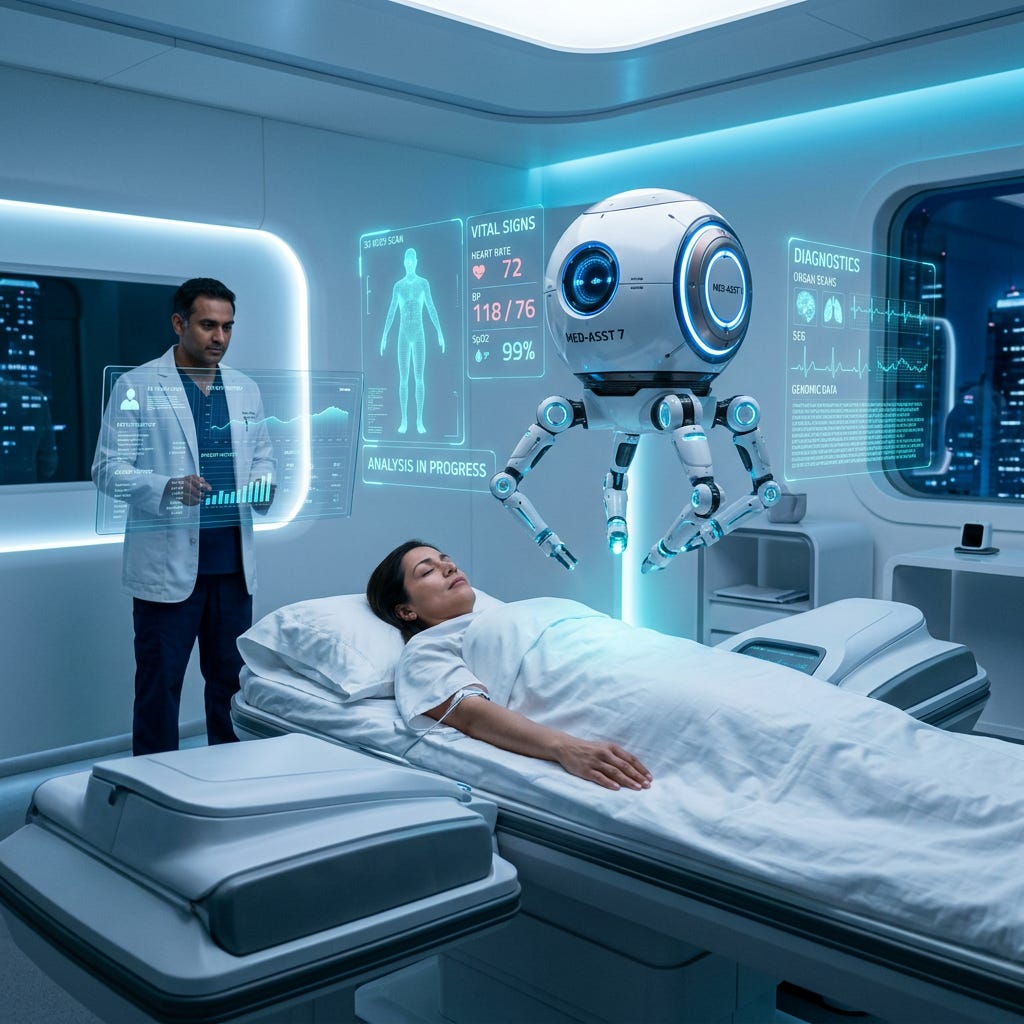
So, the prevailing narrative is that we should expect a bright future, with medicine approaching a profound transformation.
However, a healthcare system rooted exclusively in a materialistic and mechanistic view of health and the human body—one that prioritizes technology, efficiency, and data analysis while neglecting the subjective dimensions of healing, including the patient’s lived experience, emotional well-being, and search for meaning—may ultimately find that its promises remain only partially fulfilled. We are then confronted, as usual, with the realization that things turned out to be far more complex than the original narrative suggested. And why is life complicated?
We have seen this pattern repeatedly in the past, and there is no reason to doubt that we will continue to witness progress that is widely celebrated, yet coupled with a second, deeper feeling that it is not the whole story—that something essential is still missing.
The medicine of the future will experience a true paradigm shift only when it combines scientific sophistication with a deeper understanding of the human person, recognizing that healing involves not only the body but also the mind and the wider context of a meaningful life. This transformation will require acknowledging that there are “soul factors” influencing our physical reality. This would mean moving beyond a purely mechanistic view of life and reopening, in a scientifically informed way, questions traditionally associated with concepts such as vitalism and spirituality—terms that may themselves require reinterpretation in light of future discoveries.
I assume that most people would agree with this standpoint. The physicians I know generally acknowledge that health has a mental and emotional dimension, and they emphasize that this aspect should not be ignored. Modern medicine recognizes the so-called “placebo effect” and acknowledges that a patient’s beliefs, expectations, and emotional state can influence physiological processes and treatment outcomes. Although traditionally regarded as a psychological phenomenon, the placebo effect challenges a strictly mechanistic view of the body by revealing the complex interplay between mind, brain, and physiology. It suggests that healing cannot always be understood solely in terms of biochemical interventions, but must also take into account the patient’s subjective experience, meaning, and relationship with the therapeutic process.
This recognition is not new. For decades, it has been acknowledged that there are mental, emotional, and spiritual dimensions to health. Nonetheless, there is still scarce attention, and even less research funding, devoted to forms of medical practice that go beyond the mechanistic aspects of health and illness. This acknowledgment has not led to a significant change in medical practice and, more importantly, has not resulted in a fundamental shift in mindset or in the underlying way we think about health and disease. Medicine, at least in its dominant scientific and institutional form, remains more mechanistic, reductionist, chemical, molecular, and genetic than ever. There is little evidence of a genuine shift in perspective, beyond a cautious acknowledgment that some phenomena once dismissed as charlatanism can no longer be ignored and are now being gradually incorporated into a narrower scientific framework. However, this recognition has not yet translated into substantial changes in medical practice or in the prevailing conceptual framework.
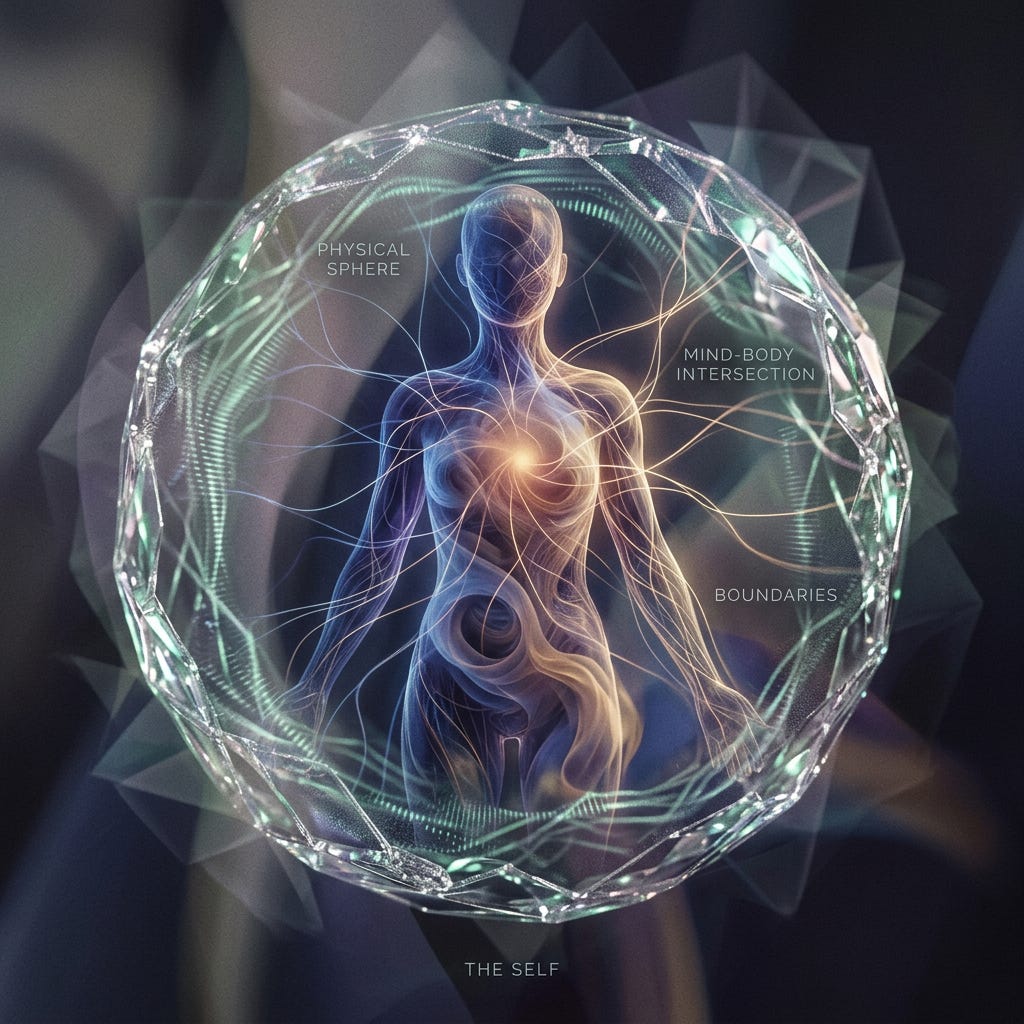
For example, the idea that a physician may contribute more to healing through a compassionate and caring attitude than through a purely pharmaceutical intervention is rarely a topic of serious discussion beyond personal conversations. Likewise, the influence of fear, anxiety, and emotional states on medical outcomes remains insufficiently integrated into mainstream medical debate. Not to mention the idea that the body possesses its own consciousness, that is, forms of intrinsic intelligence or self-regulation that can influence the course of healing, recovery, or decline.
But to get there, it will not be enough merely to recognize these additional layers of reality beyond the physical. Even if we intellectually accept that bodily functions transcend purely physical and mechanistic processes, this recognition alone will not fundamentally transform medical practice. We will have to “de-program” the mechanistic mindset of a “physical mind”—the habitual way of understanding reality that perceives only its material aspects—and learn to see and experience life differently.
This way of seeing and experiencing is not only rarely cultivated in academic institutions; it is often implicitly discouraged or marginalized. We, including physicians, are subtly and unconsciously shaped from childhood by mental patterns, assumptions, conditionings, fears, and doubts that are not ours. The medical student, the professor, or the surgeon bring into the lecture hall or the operating room not only their technical knowledge, but also their worldview, the suggestions, the social conditionings, and their sense of themselves, projecting it onto their patients. They act accordingly. If this deeper transformation does not occur, no amount of additional data, even from fields such as psi research, will fundamentally change medical attitudes and practice.
It is this mechanical view of life which is holding back progress. The future of medicine will not be determined solely by more powerful technologies, larger datasets, or deeper biological knowledge, but by our capacity to transform the very way we understand and feel life, health, and the human being. Only by integrating scientific progress with a deeper awareness of the psychological, emotional, and spiritual-soul dimensions of existence can medicine fulfill its promise of becoming a truly transformative art of healing.
So far, there is little indication that this transformation is going to happen anytime soon. But history has shown that genuine paradigm shifts often emerge suddenly not from gradual adjustments within an existing paradigm, but from moments when new ways of thinking challenge deeply rooted assumptions. The future of medicine may therefore depend not so much on what new technologies we develop, but on whether we are willing to question the conceptual boundaries that define our understanding of life and healing.
Alternatively, you can support my work by buying me one or more coffees.
Comments
Nothing yet. Say the first thing.
Sign in to join the conversation.