
As I grow older, I find myself increasingly tired of commenting on these kinds of speculations (which is also the reason my Substack posting has become less frequent). Yet I continue to follow them, in the hope that, at some point, they might finally lift their gaze toward a broader intellectual horizon.
Bernardo Kastrup asks the right questions and is entirely right to expose the limitations of contemporary neuroscience. But I am also convinced that the persistent refusal—not only among neuroscientists, but equally among almost all philosophers of mind—to engage seriously with what mystical traditions have long had to say on the matter represents a self-imposed intellectual straitjacket that ensures not progress, but stagnation resulting in the endless proliferation of yet another theory of consciousness added to an already bloated inventory of 325 existing ones. It’s like those who debate whether the moon is made of quintessential ether, chalk, or cheese, but are unwilling to look up and even consider that looking through a telescope might furnish some meaningful insight.
Anyway, enough complaining about others’ academic attitudes. I do not claim to possess any final answer, nor do I ask anyone to simply believe what mystics report. That would be just another dogma added to the pile.
What I do insist on, however, is something far more basic and, oddly, far more neglected in contemporary discourse: that these accounts should at least be read, studied, and taken seriously enough to ask whether they might contain genuine heuristic value for the advancement of knowledge and science itself. The reflex dismissal of them, without even minimal engagement, is not rigor but intellectual laziness dressed up as rigor.
A starting point could be the following extract from my book “Spirit Calls Nature” (with minor modifications made to keep the description accessible).
While for the ordinary human consciousness in the waking state, the outer being is all that we believe to be and is indicated as ‘me’ and ‘I’, during the sleeping state, we retire from the outer into the inner or inmost being or into the subconscious or supraconscious planes.
As it appears in the writings of many mystics, especially those of the Eastern traditions, though comparable descriptions can be found throughout the world's spiritual literature, dreams are (in most cases) a distorted symbolic transcription of the experiences of our consciousness moving throughout the different planes of being. While the number of possible states of consciousness is virtually infinite, each of these states can be related to four main categories.
1) The common waking state (‘jagrat’) where the sense-mind and our physical mentality are most active and almost completely identified with our bodily existence.
2) The dream state (‘svapna’) where the soul enters into a series of “life-planes” and “mind-planes,” detaching from its corporal identification that was predominant during the waking state, but still with a physical mind active and which translates all the experiences on these planes in the form of an incoherent jumble, wandering phantasies, disordered associations from brain memories, etc. We most easily recall these experiences on vital-life and mental planes as vague reflections in the form of confused dreams because they are filtered by the same physical mind through which we interpret the physical plane.
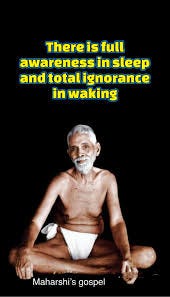
3) The (deep and dreamless) sleep-state (‘susupti’) where the soul is liberated from the outward-going senses and enters the supramental plane, also more commonly called the ‘causal body’. Here the self reaches the highest state of consciousness and purest form of intuitive wisdom (‘Prajna’).
4) Finally, the supreme or absolute self of being, the ‘fourth’ state of consciousness (‘turiya’). It is a state of pure and absolute self-existence where the soul rests only for a relatively short period of (earthly) time before climbing back from this divine state to the ordinary waking state.
The gulf between our waking state and these other progressively deeper states of consciousness arises due to an untrained soul that experiences this state of ‘trance’ as a blank to the waking mind. The aim of classical Indian yoga is precisely to bring these deeper dimensions to the surface and even rest in the fourth state during the waking state.

Thus, dreams are experiences on the inner planes filtered through our mind. If the consciousness dwells in the inner being or higher planes, the mind translates it into vivid and refreshing symbolic dreams, while an experience on the subconscious plane, is reported as a series of incoherent and heavy dreams and eventually nightmares. The short time interval during which we really find ourselves in a state of sleep without dreams is that of ‘psychic rest’—that is, when the soul retires into itself and momentarily detaches from all the outer and inner parts of our being and is the most refreshing part of sleep.
Therefore, generally, dreams are the mind’s interpretation of experiences on the subconscious, vital , mental, soul, or higher spiritual planes. If we find our waking-state daily experiences reflected in a dream, it means that they have been registered in the subconscious or as brain memories, which tosses them up once again when the waking mind is quiescent and does not filter them out.
In this view, spiritually speaking, sleep is a necessary retreat of the soul from the burden of the material plane. Not only is it a physiological necessity, but it also has a psychological function ensuring that the soul finds back to itself from time to time. Sleep prevents our inmost essence from losing contact with its source and with other subtle non-physical realms. In fact, as is well known, sleep deprivation leads to severe psycho-physiological disorders and, in the extreme case, to physical death.
Another spiritual function of sleep is that of ‘recharging’ the life-sheat, or ‘vital body’ with its vital energy. When we don’t sleep enough, we increasingly feel a sense of lack of vitality, energy deprivation, and inertia that no substance, food, or physical means alone can regenerate other than the sleep cycles, which restore a balance in the vital sheat with a vital force. This is, obviously, something modern science resolutely rejects. Vitalism is anathema. Nonetheless, intuitively we feel and know this from our daily waking-sleep experience but misinterpret that feeling and sense of weakness as purely physical because that’s what we are told to believe.
Modern science is, in some sense, right in describing dreams as having the functional role of processing our emotional waking-life experiences to avoid an informational and experiential overload that we could otherwise barely handle. While scientists agree that sleep has the purpose of repairing and reorganizing neural pathways, consolidating memories acquired during the waking state, filtering out redundant information, restoring the body and mind, and serving other physiological and psychological functions, there is nevertheless a shared consensus that this can’t be the whole story and that the real function and purpose of sleep remains elusive.
In fact, we don’t know why all the organic functions of sleep mentioned above couldn’t be performed in a waking state as well. But most puzzling is its evolutionary function. From a naturalistic evolutionary perspective, sleep looks like a bit of an outsider. According to Neo-Darwinism, everything—including sleep—must have evolved out of natural selection and random mutations to allow for the best survival and reproduction chances. But sleep is a risky habit in a prey-predator environment, especially if you are at the bottom of the food chain. Yet, there is no living organism, from cyanobacteria, all the way to humans, that isn’t subjected to a circadian clock that, in brains, expresses itself as what we call ‘sleep’. There is no evidence to suggest that natural selection favored those able to stay awake longer. But there is evidence that even jumping spiders display REM-Like sleep behavior, suggesting spiders dream.
Furthermore, if sleep is a physiological necessity of the brain only, having the function of reorganizing and repairing neural networks, one would expect to observe some direct correlation between brain size and sleep duration. Humans need approximately seven-eight hours of sleep a night, but an elephant or a sperm whale that, as we have seen, has a three-to-six-times-larger brain, gets away with only three to four hours of sleep. And mammals such as mice and shrews, whose brains are much smaller than the human brain, sleep much longer than the length of the night. This is yet another fact that does not fit into a mind-brain identity theory. The naturalistic theory that identifies sleep as a brain cycle and a cerebral necessity is as questionable as the physicalists’ mind-brain identification itself.
In fact, waking-sleep activity is not limited to organisms with a brain; those without a brain also show waking-sleep cycles. A sleep-like state has been observed in the cnidarian Hydra vulgaris, a small freshwater polyp with only a primitive nervous organization. It is now known that sleep is also present in animals, such as the jellyfish Cassiopea, that possess neurons organized into a non-centralized nerve system but that have no brain. Their pulsing behavior, alternated by periods of quiescence at night, is consistent with waking-sleep cycles. When deprived of these quiescence periods, their activity and responsiveness decrease, indicative of a sleep-like state and supporting the hypothesis that sleep arose prior to the emergence of a centralized nervous system.
Of course, by speculating about any sort of evolutionary advantage and adaptive benefit, one can always imagine something that could explain away sleep’s function in the orthodox evolutionary Darwinian paradigm. For example, we might think of sleep as something that keeps us fit by ‘charging our physiological batteries’ so that we can escape the predator during the day or avoid dangers that hide in the darkness. But what is it that ‘recharges’ during sleep? Why can’t we recharge in a waking state? And the day/light cycles alone can’t be the only reason for the wake/sleep cycles. There are also nocturnal animals. Then there are animals living on the poles, in the deep sea, in caves, or under the earth, where no such cycling exists and all, without exceptions, are nevertheless subjected to some circadian cycle. Fill this in with dozens of other hypotheses and conjectures. Imagining so-called ‘adaptive advantages’ is easy and is like finding the culprit to blame for everything. You will always find something to cling to, but proving it to be the real cause is another matter.
The fact is that the evolutionary function of sleep remains unclear to science. When confronted with the hard fact that non-neuronal forms of life also sleep, at the time of this writing, some opined that the most plausible hypothesis is that sleep serves metabolic functions. That might well be the case, but I predict that there will always remain an explanatory gap, a deep mystery that refuses to disappear. The true nature of the sleeping consciousness and its dreamlike character will be precluded forever to science if it doesn’t accept and open itself to a first-person inquiry and research into other planes of being.
Perhaps, the first step in this direction could be that of thinking the other way around: Sleep isn’t an adaptation; rather, it is evolution that adapted to sleep because it is a non-physical necessity of the inner being to temporarily disengage from the outer gross plane and reconnect with subtle domains.
But, I believe, as long as science continues to ban the soul and vital forces as anathema, positing it a priori as nonexistent, not because of a scientific rationale but because of an axiomatic and almost unquestioned assumption, it will hardly be able to go beyond a superficial understanding of the function of sleep and will continue to circle a mystery it can’t make much sense of.
[End of Extract]
Oh… wait! I hear you asking the question: "Whatever the truth, how could we test this theory? How could an empirical science like neuroscience experimentally verify or falsify these claims?"
That’s right. These kinds of spiritual inner truths cannot be “proven” through external experiments; they must be experienced and “proven” to oneself through direct first-person experience. I cannot prove to you that I am conscious, but I know that I am conscious through introspection. Yet this should not become an excuse to deny and ignore introspective accounts. From a scientific perspective, nothing conclusively proves that we are conscious, and yet here we are discussing so-called “consciousness studies.” The fact that something cannot be directly verified from the outside does not mean that it is unreal or unworthy of investigation.
But even from an empirical standpoint I say that you will never be able to conduct any experiment to begin with if you don't first allow yourself to adopt some conjecture and give certain assumptions a chance at verifiability. No matter what Newton told us, the history of science shows that progress always begins with the framing of hypotheses and conjectures before asking if and how there is a way to test them. Your experiments reflect your belief system and your more or less unaware assumptions and premises. If you look only for something that confirms your physicalist bias you will always see and discover only physical things. Let the doors to the mystic claims open, and then let us see where it leads us. Only then may we realize that science and spirituality are simply two perspectives on a deeper reality, and that both point toward a third position yet to be articulated: a future form of post-material knowledge that transcends their self-imposed limitations.
The subscription to “Letters for a post-material future” is free. However, if you find value in my posts and would like to support my work, you can make a small financial contribution by buying me one or more coffees.
Comments
Nothing yet. Say the first thing.
Sign in to join the conversation.