
An aggressive viral infection kept me at home, sleeping a lot and, yes, reading a lot for most of July. Here are short takes on five novels and three nonfiction books that held my interest from page one to the end. Plus, an Easter egg.
FICTION
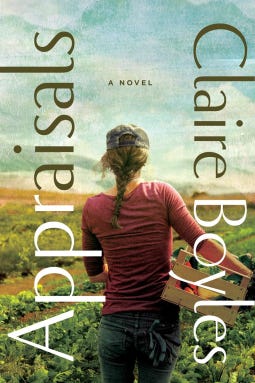
Appraisals by Claire Boyles
Literary Fiction. | W.W. Norton & Co. | Aug. 4, 2026 | 304 pages
“Maggie had both hands in the ditch now, gently resisting the flow [of water]. Gus ran a surplus when he flooded his fields, and the measuring systems had plenty of give. Nobody would notice if she skimmed a little off the top. And if they did, she could explain it away with the efficiencies of her drip system, one aspect of farming her old-school neighbors knew next to nothing about.”
Once happily married, Maggie and Fish are now mired in financial woes. He’s unemployed. Her small-scale farm is a money pit. His solution--a high-paying job convincing local farmers to allow fracking on their land--violates everything she believed they both valued. Her solution--illegally diverting wastewater from a neighboring farm to her own crops--is equally problematic. The result: a marital crisis. This heartfelt novel, set in Colorado during the Great Recession, gets off to a slow start, but the tension eventually builds nicely. Other strengths include vivid descriptions of farm fields and crops and an authentic portrayal of the hardships and ethical dilemmas of farm life. A conspiracy between Maggie’s grandmother, Fiona, and Maggie and Fish’s daughter, Ozzie, to protest Fish’s employer adds multigenerational interest to this sympathetic literary novel.
Transcription by Ben Lerner
Literary Fiction. | Farrar, Straus and Giroux | April 2026 | 144 pages
In Ben Lerner’s fascinating new novella, Transcription, a writer pretends to interview his elderly mentor for a magazine article. When the writer later discloses to friends that he “reconstructed” parts of the article, he’s shocked at their accusations of misconduct. The mentor’s son tells the writer a long rambling story about his daughter’s eating disorder and an anguished videocall he had with his father while he was hospitalized with Covid. What ties these might’ve-been-short-stories together is a recurring question: without recordings or transcriptions, can the writer be certain of anything he believes he heard in any of these conversations? The chasms between literal truth and memory may be massive.
“Mostly Books” is a reader-supported publication. Please consider a free or paid subscription. Your support is appreciated!
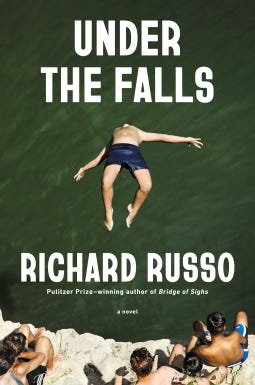
Under the Falls by Richard Russo
Literary Fiction. | Knopf. | Aug. 11, 2026 | 256 pages
A child’s doubtful parentage isn’t a new idea for a novel. Nor is a bent cop covering up a crime. In Under the Falls, Russo combines the two and adds a complicated friendship between a rural Adirondacks’ town’s police chief and a famous Nashville singer who reluctantly returns to the town to perform a benefit concert. Later that night, two people die; two others are seriously injured. The novel’s villains lack emotional depth, and a plot twist in the second half defies logic. Still, the story remains engaging as the boyhood friends struggle to understand themselves, their history, and their obligations to each other.
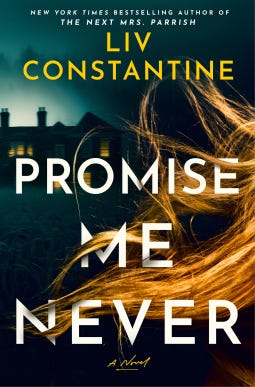
Promise Me Never by Liv Constantine
Thriller. Mystery. | Ballentine | August 18, 2026 | 288 pages
An aspiring writer falls in love with a bestselling author. After they marry, she discovers he’s a controlling, gaslighting, patronizing jerk and his first wife and several other women who dated him disappeared or died in mysterious circumstances. Did he or someone close to him murder them? Surprises, twists, clues, psychological manipulations, secrets, and suspects pile up at a relentless and alarming pace. The murderer’s identity is easy guess and some of the final reveals prove cheesy or sentimental, but these flaws don’t detract much from the fun ride or overall satisfaction of Liv Constantine’s latest thriller, Promise Me Never.
East of Eden by John Steinbeck
Fiction. | Viking. | 1952 | 601 pages
More than seventy years after it was first published, John Steinbeck’s powerful family saga about fathers and sons, good versus evil, and the nature of free will remains an essential classic of California literature. Though elements of the novel are now dated, cringy, or glaringly offensive, the powerful narrative voice demands to be heard, the Salinas Valley’s dry landscape crackles with life, and the drama proves unforgettable. A plan to transport lettuce across the U.S. by rail and a car salesman’s demonstration of how to start a Model T add memorable color.
EASTER EGG
The Lion, the Witch, and the Wardrobe by C.S. Lewis, read by Michael York
Children’s Fiction. Audiobook. | HarperCollins | May 10, 2005 | 4 hrs., 21 mins.
Four siblings evacuated to an English country manor during World War II step into a forgotten wardrobe in a spare bedroom and discover the magical realm of Narnia in this charming children’s story infused with Christian imagery. The posh phrases—”By, Jove!”—and plummy accents sound a bit affected 76 years after the book was first published, but the story still holds plenty of (Turkish) delights. The other audiobooks in this The Chronicles of Narnia series are read by Kenneth Branagh, Alex Jennings, Lynn Redgrave, Derek Jacobi, Jeremy Northam, and Patrick Stewart. Wow.
NONFICTION
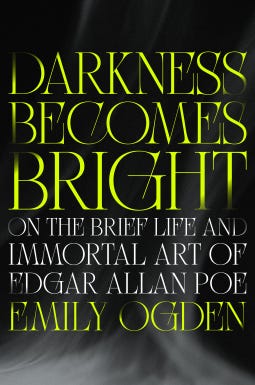
Darkness Becomes Bright: On the Brief Life and Immortal Art of Edgar Allan Poe by Emily Ogden
Biography. Memoir. | Viking | Sept. 29, 2026 | 240 pages
Orphaned at a young age, Edgar Allan Poe (1809-1849) endured poverty, alcoholism, paranoid and suicidal thoughts, and the tragic death of his young wife and cousin, Virginia, from tuberculosis. Rather than pen a traditional biography of the author of “The Raven” and other fantastical tales of horror, Emily Ogden offers a thoughtful, creative, and intriguing investigation of Poe’s influence on his readers, including two of his European translators and herself. Through Poe’s poems and short stories, she argues, readers can encounter and engage with scary ideas about death and their own darknesses.
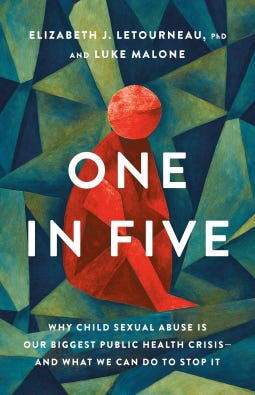
One In Five: Why Child Sexual Abuse is Our Biggest Public Health Crisis--and What We Can Do To Stop It by Elizabeth J. Letourneau and Luke Malone
Public Policy. | Basic Books | Aug. 18, 2026 | 336 pages
In this new nonfiction book, Professor Elizabeth J. Letourneau, director of the Moore Center for the Prevention of Child Sexual Abuse at Johns Hopkins Bloomberg School of Public Health, and journalist Luke Malone show that existing laws don’t protect all children from sexual abuse, suggest that education and intervention could be more effective, and describe hundreds of social programs and interventions they believe show promise to protect more children. Descriptions of real-life cases are detailed, though not sensationalized. The book should inspire readers to learn more about this complex problem.
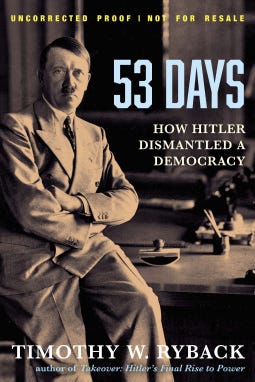
53 Days: How Hitler Dismantled a Democracy by Timothy W. Ryback
History. | Grove Atlantic | Sept. 1, 2026 | 288 pages
“The guardrails of the Weimar Constitution had been designed to protect the republic against external threats, from [communists] on the left and aspiring dictators on the right, on the assumption that the ‘people’—demos—and their ‘power’—krátos—were fundamentally democratic, and that their elected leaders, both for the [national] presidency as well as the [legislature], would necessarily reflect this presumed commitment to democratic values, that good faith actors would respect their sworn oath to uphold the constitutional order. The extraordinary powers embedded in Article 48 to suspend civil liberties and due process were intended as a safeguard for the protection of the republic, not as an authoritarian tool for its destruction.”
This new nonfiction book provides a detailed look at a crucial 53-day period in 1933 during which Adolf Hitler used legal means to destroy Germany’s democracy and become a dictator. Ten chapters explain how Hitler’s national socialist “Nazi” administration dismantled the civil service, banned critical news outlets, co-opted business owners, politicized the military, suspended civil liberties, manipulated voting, and pivoted from the rule of law to overzealous policing and street violence. Of special interest are insights into how Hitler politicized the Reichstag fire and why Paul von Hindenburg reversed his opposition to Hitler. Readers new to this subject will appreciate the helpful glossary of people, political parties, paramilitaries, and newspapers of the time.#
Marcie Geffner is a journalist, writer, and book critic in Ventura, California.
If you enjoyed this roundup of new and notable books, please comment, like, share, and restack. Your support is appreciated!
Comments
Nothing yet. Say the first thing.
Sign in to join the conversation.