
There is a very real association between autism spectrum disorder (ASD) and gender dysphoria (GD), with multiple published studies finding increased rates of GD among individuals diagnosed with ASD when compared to the rates in the general population. There is a high degree of variability, with some sources reporting 4-7% and others reporting up to 20% increased gender dysphoria in children and teens diagnosed with autism, compared to peers without ASD.
A recent systematic review examined the connection between autism spectrum disorder (ASD) and gender dysphoria or gender incongruence (GD/GI). Across 25 studies, approximately 11% of people with GD/GI had an ASD diagnosis. Researchers also found that participants with GD/GI reported more autistic traits than comparison groups. Estimates varied widely because studies used different definitions, screening tools and populations. Most research examined autism among gender-diverse people rather than gender dysphoria among autistic children. The findings support an association between ASD and GD/GI, but they do not show that either condition causes the other.
There are many questions about this association that remain unanswered. One of those questions that has plagued me for a long time is whether or not the use of aborted fetal tissue in vaccines given to infants and children may be a contributing factor to both ASD and Gender Dysphoria. Research from SoundChoice Pharmaceuticals implicates the use of aborted fetal tissue and DNA fragments in the increased incidence of autism through a process called insertional mutagenesis. The research also suggests that injecting the DNA fragments of other human beings in early life may be related to increased risk of childhood cancers, especially lymphoma, leukemia, and brain cancers. It has been known and acknowledged by the FDA for more than 50 years that DNA from aborted fetal tissue is oncogenic (causes cancer), and the amount of fetal DNA allowed in vaccines is supposed to be limited for this reason. Independent analysis has found that the amount of DNA in vaccines given to our children greatly exceeds the mandated limits, yet there has been no move to address this issue. Likewise, there has been zero research looking into the consequences of injecting fetal DNA fragments from both sexes (male and female) into infants and children and how this practice may (or may not) contribute to the rise in gender dysphoria. Research that addresses these very important questions is long overdue.
With the increased overlap of ASD and GD, parents of children and teens diagnosed on the autism spectrum need to have a strong understanding of this issue so they can protect their vulnerable children from becoming victims of a medical system that pushes “gender-affirming care” for children, teens, and young adults.
According to KFF.org (Formerly known as the Kaiser Family Foundation):
Gender-affirming care is a model of care which includes a spectrum of “medical, surgical, mental health, and non-medical services for transgender and nonbinary people” aimed at affirming and supporting an individual’s gender identity. Gender affirmation is highly individualized. Not all trans people seek the same types of gender affirming care or services and some people choose not to use medical services as a part of their transition.
You may have heard about laws passed since 2021, limiting access to gender-affirming care to minors. The following is from KFF.org:
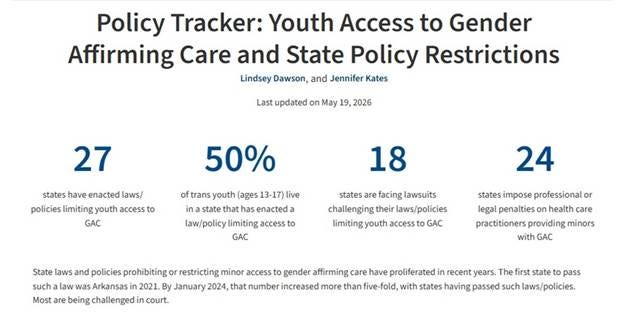
Regardless of one’s stance on gender identity, when it comes to children and adolescents diagnosed with autism and other neurodevelopmental disabilities, an increased level of caution needs to be exercised. Our children are more vulnerable to pressure and influence. They need us to be as informed as possible about this issue, so we can best support them and protect them from exploitation.
I recently asked my Facebook Friends to tell me their stories.
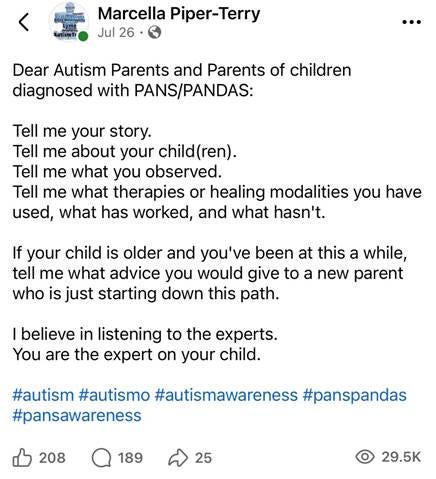
I received a lot of responses from parents telling me the stories of their children’s regression after vaccines. The stories are heart-wrenching, but this one really stood out:
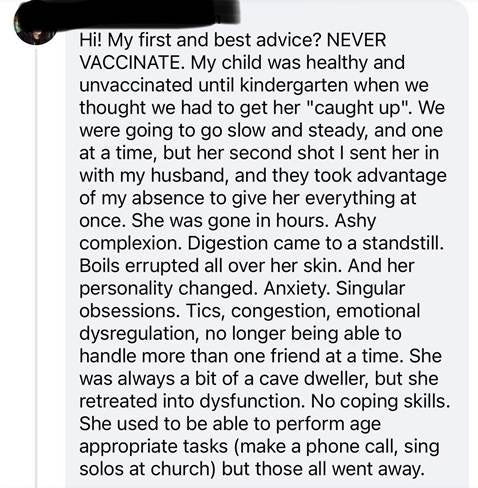
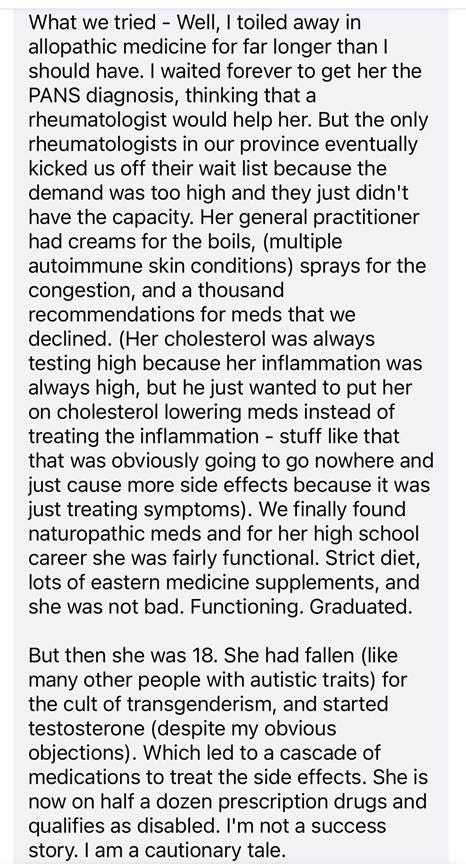
Over the years, I have worked with multiple teens and young adults on the autism spectrum who also exhibited significant signs of gender dysphoria and a few who have received “gender affirming care” from medical doctors. Although my personal experience with this is limited, I have witnessed enough to know that it can be difficult to parse out the depression, anxiety, and overall discomfort that frequently exists among individuals diagnosed with autism with the depression, anxiety, and overall discomfort associated with the drugs used to accomplish “gender affirming care.”
I feel the need to include a disclaimer here. I was raised by one of the most accepting and loving women ever to have walked this earth. My mother was brilliant and incredibly talented. She was a teacher and a musician. We shared a love of performing and were both involved with community theater when I was a teenager. I have had many friends throughout my life who were gay, lesbian, bisexual, or who fell somewhere other than “straight” on the continuum of gender identity. I know very well that there has always been a continuum. I also know (as someone currently in my 7th decade on this planet) that the percentage of the human population that currently identifies as non-binary has increased greatly in the last few decades. And like “autism,” I absolutely do not believe it’s because of “better diagnosis” or people being more comfortable expressing who they are. I also have to say that having been close with many people who were genuinely struggling with gender dysphoria and who previously had to hide in order to protect themselves from violence, I am glad to know that in general, the world is now safer and more accepting and people can feel freer to be who they are and love who they love.
Where I struggle is with the promotion of “gender affirming care” for children as young as three, as is the case at the UCSF Child and Adolescent Gender Center. How can a three-year-old child possibly be reliably judged to be “confused” or “distressed” about his or her gender, to the point of being “accepted as a patient” for “gender affirming care?” And how can anyone look at this situation and see it as anything other than exploitation?
One of the most important safeguards and requirements for any medical procedure or process is informed consent of the patient. Obviously, young children and adolescents are not capable of giving true informed consent. Add in the medical complexities, neurological differences, and communication deficits for children and adolescents on the autism spectrum, and it is beyond me how anyone with any amount of ethics could ever believe this process has the child’s best interest as the primary consideration.
This article shares the story of Fox Varian, who was awarded $2 million in a malpractice case against the psychologist and surgeon involved in a double mastectomy she underwent at age 16. Varian later detransitioned and alleged negligence, inadequate informed consent, and insufficient evaluation of her gender dysphoria and co-occurring conditions, including autism, anorexia and body dysmorphia.
The jury in Fox Varian’s case concluded that the clinicians departed from the accepted standard of care by omitting important assessment steps and failing to communicate adequately. The jury awarded $1.6 million for pain and suffering and $400,000 for future medical expenses.
Concerns raised in the article include:
Parents may be pressured by doctors and “mental health professionals” who tell them if they don’t consent, their children are likely to die by suicide.
Treatment risks may not be adequately communicated.
Professional guidelines from the AAP and WPATH are insufficiently evidence-based.
Autism and other mental-health conditions require more extensive assessment before irreversible treatment.
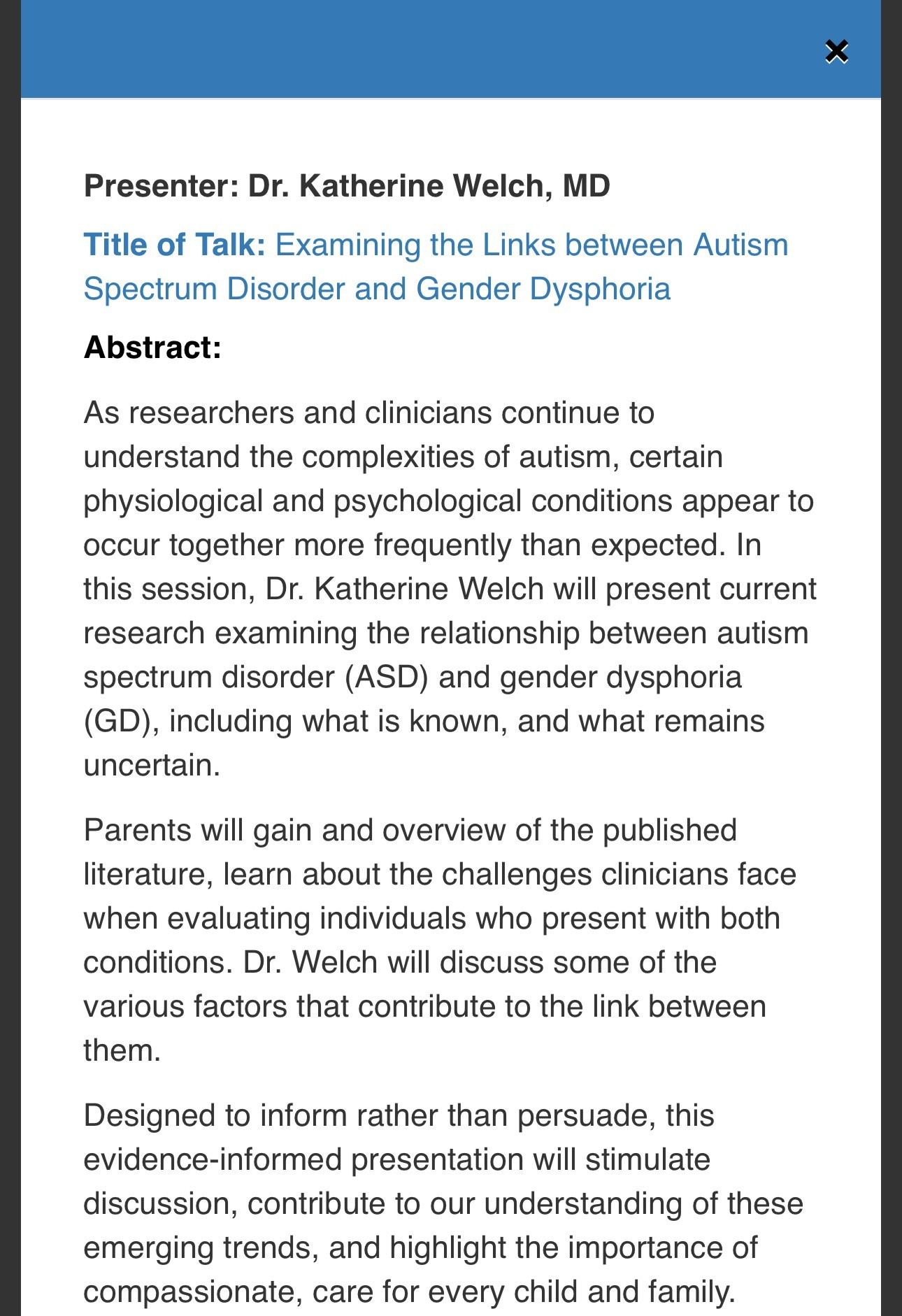
This is obviously a highly emotionally charged topic. It is also a topic that parents of children, teens, and young adults on the autism spectrum MUST become educated about. This is just one topic that we are talking about at the upcoming MAPS Parent Conference on September 13th. Dr. Katherine Welch (MD) will be presenting her research and participating in the Q&A session on Sunday evening. Here is the abstract from Dr. Welch’s presentation:
The conference is available for in-person or virtual attendance. Go here to learn more and register. Use the code MARCELLA20 for $20 off registration.
To learn more about aborted fetal tissues and DNA fragments in vaccines, check out this article:
Thanks for reading Marcella’s Substack! This post is public so feel free to share it.
No posts
Comments
Nothing yet. Say the first thing.
Sign in to join the conversation.