
“This is the year of UNIX,” confidently proclaimed a bespoke suited CEO standing in the bowels of a Mayfair hotel in London, in 1989. This was a press conference. A weird juxtaposition of suited, salesy corporate people and a rabble of mostly young, casually-dressed tech journalists.
When I got back to the office and said “hey, did you know this is the year of UNIX?” there were chortles from a couple of the editors who had clearly heard it all before. Still, I had to write an 800 word news analysis somehow mocking the proclamation and suggesting that the year of UNIX might in fact never arrive.
Today, Apple and Android phones, as well as AppleMacs, many modern servers and embedded systems (washing machines, TVs etc) are driven by operating systems derived from UNIX. But that’s not the point. The point is that some people will say anything to get the attention of an inexperienced ear and grab a headline.
“We could’ve put you up at the Europa,” joked one of the men from the local enterprise team. “You could’ve got the t-shirt then, saying you survived a night…”
As it turned out, 1989 was not the year of UNIX anyway but the experience didn’t help to dampen my imposter syndrome. Attending press conferences was always part of the job and often reinforced my tech ignorance. But even then I never understood why some journalists would continue to ask long and complicated questions. You could hear the groans in the room, as the usual suspects put their hands-up when asked if there are any final questions.
Most of us, at this point, had our eyes on the buffet being set-up in the other room. On our salaries, we had to take all the free food we could get.
One of my very first press conferences was a computer book launch at the old Wig and Pen Club on Fleet Street (built in 1625, it still has its original wooden staircase and claims to host the ghost of Oliver Cromwell. It’s now a Thai restaurant). Quite a tame introduction. It set the bar high on lunch quality and historical ambience but very low on challenging subject matter. It was a joke book. Didn’t get any of them but then I wasn’t the target market.
This was soon followed by a bizarre trip to Belfast in Northern Ireland, to write a story about how the council was funding local technology businesses as part of a regeneration plan. I got the feeling that not many tech journalists from London ever travelled to Belfast in the 80s.
We were greeted by the mayor at a reception in City Hall and a whole host of local dignitaries and representatives. I think there were about three tech journos, clearly hand-picked from their willingness to travel - I had no idea why I was invited. What on earth had I written at this point in time that had piqued their interest enough to warrant an invite? My insightful analysis comparing the whole Apple Mac versus IBM PC debate to sectarianism perhaps? (I didn’t do this. Honest).
“We could’ve put you up at the Europa,” joked one of the men from the local enterprise team. “You could’ve got the t-shirt then, saying you survived a night…if you survived a night.”
The Europa remains the most bombed hotel in the world. According to its website, it has been targetted 33 times between 1970 and 1994.
“Oh well, maybe this will have to do,” he said, handing over a bottle of Bushmills whiskey.
First ‘the year of UNIX’ free sandwiches, bombing jokes and now this? Tech journalism was increasingly full of surprises. An odd imbalance of power and money. On the one hand, you had people in suits and well-paid jobs, with large expense budgets. On the other, you had us - generally a strange mix of poorly-paid young people, whose only common denominator (apart from the ability to dress-down for any occasion) was that we worked in the tech media.
In this pre-internet age, these magazines had a lot of sway (except for Which PC of course - see RIP Which PC) so this came (and still does) with a certain amount of influence. Grabbing journalist attention has often meant using those expense budgets to buy a drink or two, a sandwich or even a trip to a conference, in Europe or the US.
These ‘carrots’ often come with expectations, which are not always met. PRs understandably have targets but if there’s no story, then there is no story.
Over the years, IT firms have rolled out countless celebrities for corporate launches and conference parties. Every journalist will have their own list but mine started with Jonathan Ross. He’d recreated his chat show format with a Microsoft exec sat in an armchair on a stage, somewhere in the West End of London. Billed as ‘Ross on Dos’ it was supposed to be a PR and marketing coup for Microsoft’s launch of its latest operating system. Despite being excrutiating to watch, it probably worked.
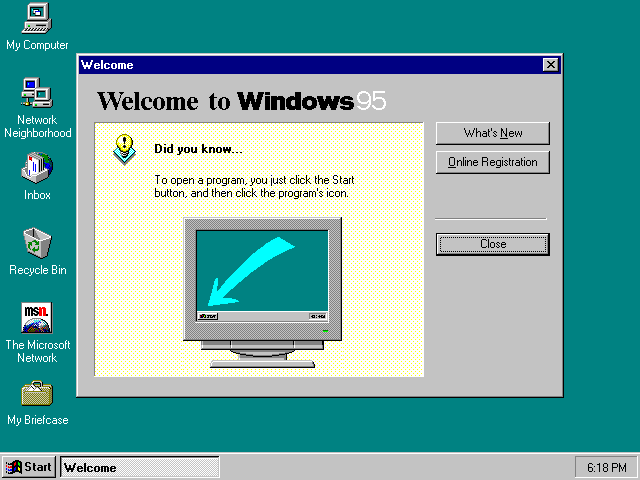
In fact, unsurprisingly, Microsoft went large on events in the 90s, especially with its new versions of Windows. Reportedly paying in the region of $10m for the right to use The Rolling Stones’ Start me up song, Microsoft had put a lot of focus on its new ‘Start’ button. The launch of Windows 95 was a simultanous global event.
In the US, Jay Leno was on stage with Bill Gates (the full US event is available online if you need an insomnia cure). In London, we had a group of lookilikies, such as Marilyn Monroe and Princess Diana mingling among the drinks and canapes (check out this old BBC archive footage of the London event). Microsoft even sponsored a 1.5 million print run of The Times newspaper on the day of the launch, enabling Murdoch’s News International to distribute it for free.
It all seemed excessive but when you look back and see footage of people (I say people, I mean men) queuing at midnight to buy the first copies of AN OPERATING SYSTEM, it beggars belief. This was, perhaps, a seminal moment, where a tech firm had entered the consciouness of the analogue world (to be fair, Apple had already done this to a certain extent but Microsoft had maxed it out). Computers, dad-dancing nerds and something called software, were now friends of rock stars and talk show hosts.
Celebrities have become a regular at events ever since. So, in no particular order, here is a list of celebs (at least the ones I can remember) that I have seen/met during my career to date…
Rik Mayall
Bjorn Again
Bob Monkhouse
Jonathon Ross
Spandau Ballet
Rick Astley
Belinda Carlisle
David Blaine
Graham Norton
Lewis Capaldi
Michael Portillo
Condoleezza Rice
Tony Hawk
Venus Williams
Malcolm Gladwell
Robert M Gates
Michael Ballack
Olaf Scholtz
Ian Wright
David ‘kid’ Jenson
Sir Geoff Hurst (nearly – just missed him)
While some of these people clearly added value to events - pure entertainment (Mayall, Astley, Blaine) or interesting insight (Rice, Gladwell) - others seemed a little lost or out of place. Occasionally, their experiences were squeezed into a theme but it didn’t always work. Still doesn’t.
“Any thoughts on the Windows launch? Can we do something, maybe 1000 words on its significance, in accelerating the consumer PC market? What do the dealers think? What does Apple think?”
“Sorry boss,” I said, yawning and slumping into a chair. “Too busy living the dream.”
No posts
Comments
Nothing yet. Say the first thing.
Sign in to join the conversation.