
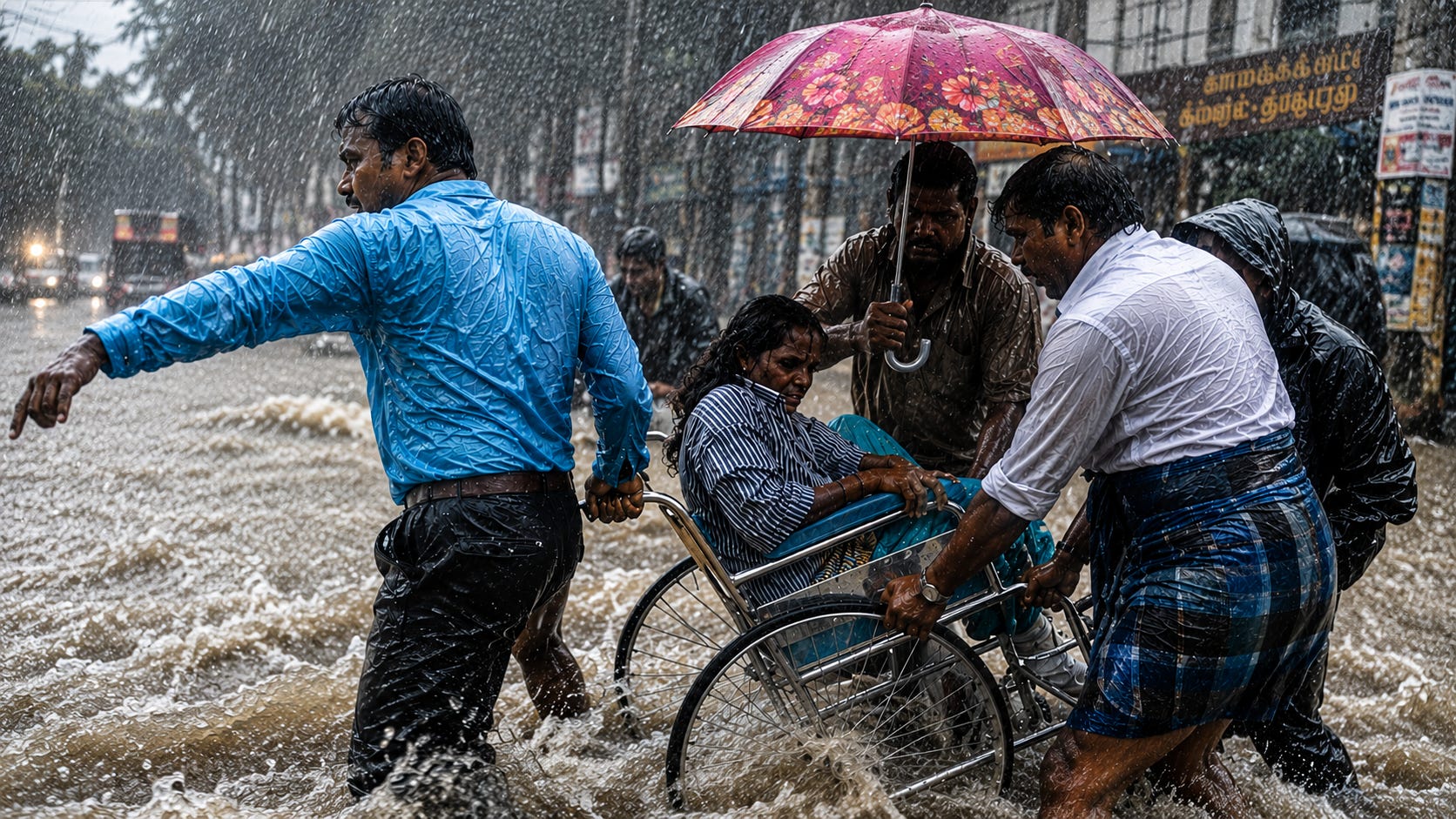
THOUSANDS of Indians who were safe in the pandemic because they were locked indoors have since perished because they stepped out. Or their homes caught fire, or collapsed in the rains. Across the country this monsoon, as in every monsoon, buildings are falling, people are dropping down into manholes in flooded streets (in one instance this happened when an official was making a show of inspecting roads for open manholes) or they are being electrocuted on the streets, roads are caving in and two-wheelers are cartwheeling after plunging into craters. When any of these happen, there is a street rescuer, or many but usually one alpha guy, his arms flailing, howling instructions to those who don’t have to listen to him. How does he know what to do? How many times has he rescued someone on the way to some place? Where was he going anyway, doesn’t he have to be there? As long as the rescue costs only time and effort and not money, there are many like him ready to help.
This may appear to be a glorious moment of human redemption, where an onlooker gets other onlookers to be of use to strangers in misery. But it actually reveals a daft nation that excels in the spectacle of street rescues that should not have been necessary in the first place. Consider the factors behind the tragedies. Fires in India are usually caused by rampant violation of layers of rules. Open manholes in regions where flooding is common should ideally elicit criminal prosecution of municipal workers, which is unlikely to happen here. Regular people are not innocent. Chawls in Mumbai that collapse have been falling bit-by-bit for years. There are thousands of condemned buildings in the city that should not be occupied, yet they are. Once, in Colaba, I saw a chawl where the wall on the second floor had collapsed. The family living there carried on as though only the paint had peeled off. I could stand on the road and see them, walk, cook, talk, in a house without a wall on one side. I have interviewed dozens of people in the BDD chawls of central Mumbai after one of them collapsed, killing people. Residents in the chawls that had survived were scared but didn’t move out because they were technically squatters, tenants who paid almost nothing, who were constantly in negotiations with builders who wished to buy them out and might even have even rejoiced when the chawls fell.
When I see debris, I don’t see the glory of onlooker rescuers. I see a collapse that was in the making for years, yet never influencing elections. Seen that way, the valiant rescuer himself might have contributed to the inevitable collapse. He is part of what led to the tragedies he saves people from. Like India itself, which lives in a manner that makes a tragedy an inevitability, yet performs a heroic rescue when the tragedy occurs.
Once I witnessed a rescue operation in Vienna. I had gone to a river to swim and found many police cars and ambulances. I saw a helicopter ambulance on the ready and several motorboats on the river. Someone had drowned and a rescue operation was underway. I saw a professional-looking diver emerge from the river with an underwater propulsion device. There must have been other divers still in the river looking for the boy. Vienna did everything it could to save him. It probably spent tens of thousands of euros on that search. The moment the divers would find the boy, boats were stationed at various points to take him to the helicopter ambulance. No onlooker was involved in the rescue.
This was a professional rescue operation in a city that also did everything to ensure people just didn’t die easily. And it is not a coincidence that there were not many heroic volunteers helping, because they were not necessary.
Also, there is an unpleasant matter. The poorer you are, the cheaper your time and effort. That explains not only the sheer number of heroic volunteers, but also the useless crowd that forms to watch. All this has the appearance of human concern but in reality reflects poor circumstances.
The street hero in India is greatly valued. For the same reason why, historically, family is venerated in countries where governments are inept. The street hero is vital when people don’t expect the government to show up or make a big difference even if it did.
In affluent countries, it is clear that professional rescuers consider the untrained heroic volunteer a nuisance. One American report said “spontaneous volunteers” who are “motivated by a sudden desire to help” can get in the way of active and professional rescuers. A few knowledgeable and trained rescuers perform better than a crowd of well-meaning people.
When I covered the Bhuj earthquake, an Israeli rescue team told me something similar. They were annoyed by onlooker-helpers. Some of them harmed the injured by carrying them in dangerous ways. Recently, in a fire in Lucknow, onlookers blocked the access roads for fire tenders. In a building collapse, soldiers use life detection equipment that sense vibration and heartbeat but their performance is hindered by the sheer number of people who come to gawk and can’t keep quiet. Since childhood, I have seen people run towards a tragedy, like a kite-string accident that slit the throats of passing scooterists. Oddly, they never demanded that the ‘manja’ thread, laced with powdered glass, be banned. In fact, many proudly made it at home. But when it slit a throat, they joined a crowd of concerned faces.
(Manu Joseph’s latest book is, ‘Why the Poor Don’t Kill Us’)
No posts
Comments
Nothing yet. Say the first thing.
Sign in to join the conversation.