
Every decade or so, young people in India discover that there is corruption, and they gather somewhere in Delhi to transform the nation. This happens under the influence of a charismatic common man in austere attire other than the political whites that Indians actually despise and associate with the lowest living things ever to walk the planet. The charismatic common man goes to war against the giant government; millions follow him and gather in festive congregations. Foreign correspondents and Indians trained to think like foreign correspondents call them Gen-some-late-alphabet, who will create some “spring.” In the end, the young become old.
The Cockroach Janata Party is the 2026 version of amateur political storms. Its founder, Abhijeet Dipke, is supremely articulate, instantly trustworthy and likeable in a way politicians in whites are not. He is also shrewd, which is critical in India. He knows that his demands, like the resignation of India’s education minister, or the removal of official post-retirement bribes for Supreme Court judges, cannot be met. So, he can keep his movement going. Even the way he laces his calls to protest with the word ‘peaceful’ reflects the wise caution of a man who knows that one wrong move in modern India could land him in prison for years, and that all these intellectuals who call themselves part of ‘civil society’ in their lifelong imitation of the genteel class of the West, would not have the game to get him out of jail.
But where is he headed? What exactly does he want?
So far, he has not been clear about wanting to contest elections. A real or proclaimed distaste for polls, and therefore power, is a familiar phase in a modern revolution where revolutionaries portray themselves as selfless people who are not interested in material things.
There is space for a mass movement in India that is purely reformist and does not require electoral validation. If magic, spirituality and diet can make people alter their behaviour, then a movement could train modern Indians to be smarter citizens. Such a force would not only demand a better life from the political class, but also demand that citizens behave like intelligent beings in public, follow the rules, keep the nation clean and stop bribing people for services. Such a revolution can even build a broad political consensus, as long as it does not threaten higher forms of corruption.
But the Cockroach Janata Party is not a social movement. It displays a clear loathing for the government. Such a movement has no choice but to be political, because a political movement needs to engage in politics. Their reluctance to accept this, and their inevitable plunge into politics were foretold by events just about 15 years ago.
Dipke’s party may be very popular but its fame is a fraction of the hysteria that Anna Hazare generated when he, after his letters to Sonia Gandhi went unanswered, came to Delhi, sat on a pavement near a public urinal and began a fast that he said he would end only when he died or the Congress-led government put in place his bizarre ideas to end political corruption (for instance, setting up an anti-corruption watchdog filled with Magsaysay Award winners.)
There were not many people on the first day, but the mainstream media framed it as though there were throngs. Eventually, the middle class began to see whatever they wished to see in Hazare’s protest, and an immense anti-politician movement began. He said that his movement would never enter politics because it is “filthy.” The absurdity of fighting politicians elected by the people while arguing that elections were too dirty was hard to sustain.
Idealists may be good at creating a spectacle, but once the main reason people gravitate towards them is over, so is the show. And so it happened with Hazare. People got bored of his fasts that he broke with Gandhian orange juice handed to him by a goody little girl. One of his deputies, Arvind Kejriwal, could see the doom, and decided that the movement would enter formal politics. There it succeeded and its success also transformed it into something resembling the very thing it claimed to fight.
The young will get bored of the Cockroach Party too and the only way the party can continue would be to contest elections. For this it will need money and that would bring in the pragmatists who have no ideology. Dipke will search for other Dipkes, idealists who are still practical enough to win elections, but not so great that they will outshine him. He will realize there are not many. Meanwhile, the entrenched political class too will not rest until the new threat is ended. After all, they have seen more revolutions than revolutionaries have.
So the Cockroaches are doomed if they don’t contest elections and doomed if they do. There is a way though that Dipke can be more than just a vigilante asking uncles to be nice, contest the ugly mess of elections from which idealists rarely survive intact, and yet triumph unlike anyone before him. He has to do that one thing no revolutionary has done. Listen to me, of course.
What would I do if I were Dipke? How do I sustain an idealistic and popular political movement? I’d convert it into the ‘10-Year Party.’ It will contest elections on the promise that if it takes over power, it would disband after 10 years. That way, I preserve my idealism, sustain my innocent amateurishness, proclaim selflessness and, more importantly, keep the filth out of this ephemeral party. Once the Centre is won, I will create state-level and local 10-Year Parties affiliated to the original 10-Year Party.
Voting is not always a moral act; people need the old political class for many ugly things. The world is what it is because people are what they are. But temporarily, they may want to vote for reform. All moral ideas have a consensus. That is one redeeming thing about humans. Nobody in India, whether they like cockroaches or not, doubts that India needs reform and that exam question papers should not leak. A 10-Year Party can attract voters from across the whole political spectrum, including Hindus whose primary job at the polls is to keep Muslims under control even if the roads are shit. They would consider the 10-Year Party transient, a formation that would reform the nation and go away, leaving the apparently necessary cultural evil intact.
Consider this. How did early Buddhism or Christianity survive in ancient India where Hinduism was the norm? How did start-up religions survive, thrive and in some cases replace ancient religions that were deeply rooted and severely punished any challenge to their codes? They looked like transient fads and not religions; they didn’t look like they were going to last for centuries. (Also, the first adopters were the elite, which is an important detail, who never thought they were renouncing their old faith that gave them all the advantages.)
The best way for a start-up to survive in Indian politics is to promise that it is temporary, even as an electoral force. You can achieve a lot in this world if you reassure people that you are not permanent. After that it really is not up to Dipke whether we will let him go.
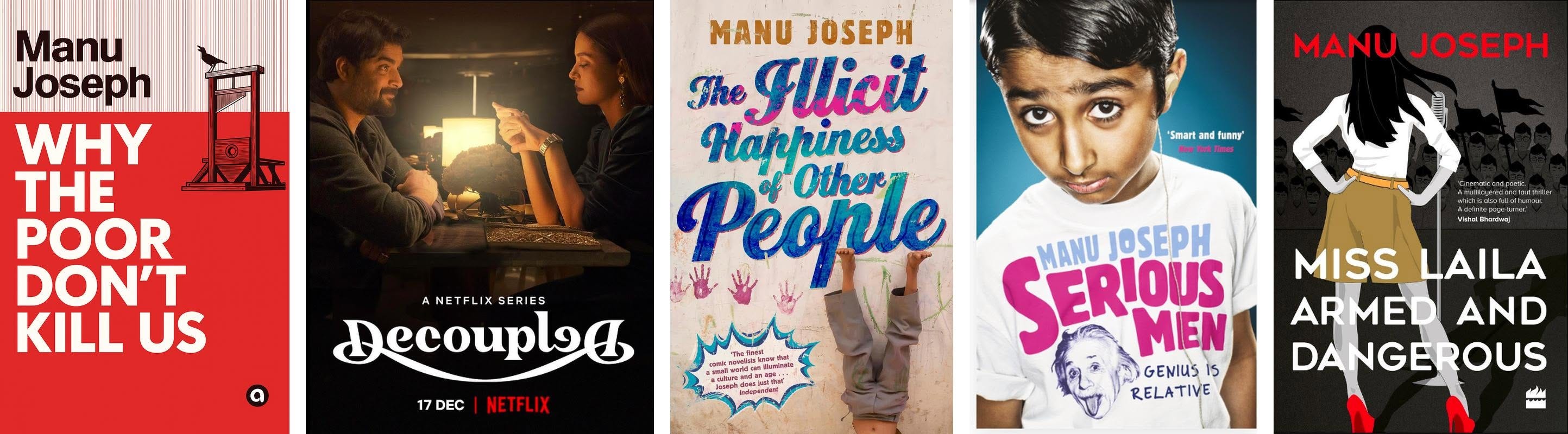
(Manu Joseph’s latest book is, ‘Why the Poor Don’t Kill Us’.)
No posts
Comments
Nothing yet. Say the first thing.
Sign in to join the conversation.