
Through my personal experiences and sharing deeper conversations with men over the past few years, I have noticed the unmet need to hear their thoughts and feelings. Part of you may pass judgment on the non-masculine tone of that message. I choose to reframe it as an awareness of the balance between masculine and feminine energies that we all possess that need expressing. Enjoy this post on what I refer to as ‘The Silent Crisis’.
Something goes unspoken in many men’s lives. Not because they don’t feel it, but because they were never given the language or the permission to say it out loud.
Two-thirds of young men report that nobody knows them well.[1] Male suicide rates have climbed 25% since 2001, with men dying by suicide at four times the rate of women.[2] In Canada, men account for 75–80% of all suicides.[3] The life expectancy gap between men and women sits at five years, and a significant part traces back to one pattern: men waiting until something becomes a crisis before they reach out for help.[4]
Yet the conversation around men’s mental health remains one of the most avoided topics. If you’re in midlife and you’re reading this, chances are you know exactly what I’m talking about, even if you’ve never said it out loud.

Before we had kids, I remember sharing a challenge I was having with my wife about having deeper relationships with my friends. It was the morning after I spent the night watching the Super Bowl at a friend’s house. Good group of guys. Successful, funny, the kind of people you’re genuinely glad to know. I remember telling her how I could call ten guys tomorrow to watch the game. But I don’t think I could call one of them to share any of my deeper-rooted insecurities that only another man could relate to…”
She didn’t say anything right away. She didn’t have to.
I had spent years, even decades, building a network. I had contacts. I had friends. I had surface-level acquaintances that nicely fit into a busy professional life. What I didn’t have was a group of guys I could call up and share how shitty a bad day was.
And the more honest I got with myself, the more I realized: I wasn’t unusual. I was completely normal. And that is the problem.
I was taught early, sometimes with words but more by watching, that showing emotion was something to manage, not express. I pushed it down. I let it all go when playing soccer. People would tell me I had a Jekyll and Hyde-like personality. I was one way with my day-to-day interactions, and a totally different person on the field. This was my outlet to release the energy and emotions I was conditioned to store inside. I showed the world the composed version.
Author Lewis Howes, in The Mask of Masculinity, makes a powerful argument: men wear emotional masks — the stoic, the provider, the one who has it together — not out of strength, but out of fear. Fear of being judged. Fear of being seen as less than. Fear that if people really knew what was going on inside, they’d lose the respect they’ve spent decades building.
This isn’t just a statistics problem. It’s a connection problem playing out quietly in the lives of men you know.
Think about the last time you got together with a group of friends. What did you talk about? The newest Netflix comedy special. Work complaints you purposely kept safely vague.
Did anyone say how they were actually doing? Did anyone admit they weren’t happy, or that they were struggling with something they needed help with?
If the answer is no, you’re not in bad company. You’re likely in the majority.
A few weeks ago, I met up with a friend I hadn’t seen in years. I was sharing how I recently joined a men’s group to provide safe spaces for us to have real conversations about our struggles and learnings in life. He shared how he took a management course on vulnerability that helped him be more honest about uncertainty, about difficulty, and how it improved his ability to lead his team. We laughed at the irony that these courses even existed. After taking the course, he realized his effectiveness didn’t decrease by dropping the mask. He became more of everything he was trying to be. Better leader. Better friend. Better father. The vulnerability he’d avoided his whole life turned out to be the thing that unlocked everything else.
Here’s the thing they don’t tell you: the vulnerability you’ve spent your whole life avoiding might be the very thing that unlocks everything else.
The self-improvement world is full of products and protocols promising to optimize your performance and well-being. And while some help, most end up being sophisticated ways to avoid the deeper work. You can be like Bryan Johnson and track every metric on your body from your heart age to the length of your nightly erections, but the research is consistent. It is the quality of your human connections, more than almost any other factor, that predicts your long-term mental health and quality of life[5]
The accolades you have worked hard to get have a way of making the surface stuff feel empty. The achievements that were supposed to feel like enough don’t. The friendships that were fine in your thirties start to feel thin. There’s a quiet voice that asks, is this it?
That voice isn’t a midlife crisis. It’s an invitation.
It’s asking you to focus less on performing and spend more time connecting. It’s inviting you to trade the stuffed Rolodex for a smaller, deeper circle. To be the kind of person that others feel safe being real around because you were real first.
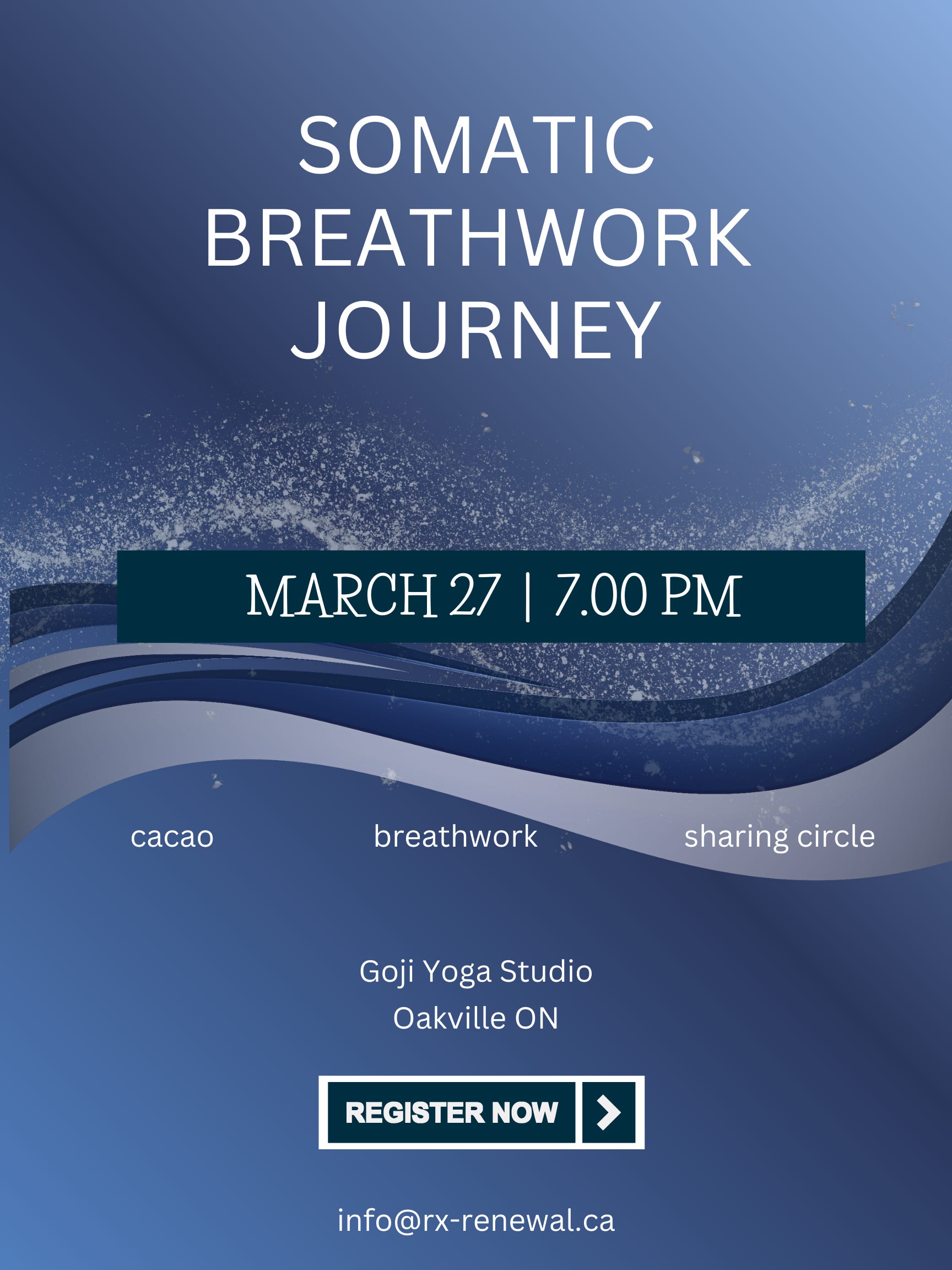
Join me for an opportunity to express what you have likely been holding onto for far too long. It’s a 2.5-hour breathwork journey, and I invite men and women to be curious and see what comes up. You can register HERE.
Manjit Hansra is the founder of Rx for Renewal. Through keynote speaking, 1:1 coaching, and curated retreats, I share evidence-based tools to help professionals prevent and manage burnout. Check my offerings HERE and book a complimentary call to improve your mental fitness HERE.
Thanks for reading Prescribing Awareness! This post is public so feel free to share it.
References
¹ Belonging Research, Survey Center on American Life, 2021 — two-thirds of young men report that no one knows them well.
² American Foundation for Suicide Prevention — male suicide rates have increased approximately 25% since 2001.
³ Statistics Canada / Centre for Suicide Prevention — men account for approximately 75–80% of suicide deaths in Canada.
⁴ Statistics Canada, Health Reports — the life expectancy gap between Canadian men and women is approximately five years.
⁵ Holt-Lunstad et al., PLOS Medicine, 2010 — social connection quality is one of the strongest predictors of longevity and mental health outcomes.
Comments
Nothing yet. Say the first thing.
Sign in to join the conversation.