
5 min read
Did you hear the one about two guys that flew 2500 miles for a high-society dinner, only to be served a bunch of Hemp? Well, that was me and my buddy John last fall when we flew from opposing coasts to meet at what ended up looking more like an airplane hangar than a restaurant. And no, although the venue was in Denver, what we consumed was not a big bowl of devil’s lettuce. It was, in fact, an 11-course meal masterfully prepared by Clayton White, a former sous chef from Napa Valley’s legendary French Laundry.Though our hosts brought in a string quartet to class up the joint, the ambiance was not as swanky as most Michelin 3-Stars — but the fare, I promise you, was beyond stellar. And that’s why we came — to meet the stars inventing the healthy and promising foods of the future.
Before I describe our magical evening I feel it’s important to reference the harmony humans have with this miraculous plant. As I prefaced in an earlier article, Hemping the Environment, human bodies (and many animals) are literally made to interact with Hemp, man’s oldest crop cultivated not for food. But that is quickly changing as our understanding of this miraculous plant deepens every day. So today, we’ll explore why people are eating Hemp…well, at least making delicious and nourishing dishes primarily with its seeds.
The Community Manifestao: on politics and economics is a reader-supported publication. To receive new posts and support my work, consider becoming a free or paid subscriber.
So, let’s start with the fact that Hemp seeds are a superfood, packed with protein and amino acids. These seeds are technically nuts that can be eaten raw or used to make products as simple as oil or protein powder, or as complex as the legendary meal below. In a world of growing dietary restrictions, Hemp-made foods can be vegan, gluten-free, allergen-free and non-gmo, as was every course on our evening’s menu. For the lactose intolerant, there are numerous milk and cheese alternatives finally making their way to grocery shelves — and yes, we finished with both ice cream and coffee, both made with Hemp. Hemp seeds are rich in essential fatty acids, including omega-3 and omega-6, which are important for maintaining heart health and supporting brain function. Hemp seeds are a complete source of protein, containing all nine essential amino acids that the body needs but cannot produce on its own, but with considerably less carbohydrates than other sources. I should mention that our host for the evening was Colorado’s Nepra Foods, and one of their first products to market is a line of ready-made meals for athletes, called ProPasta.
Though many in attendance that evening could easily be considered competitors to our hosts, such as Victory Hemp Foods CEO Chad Rosen, the only agenda I sensed was openness and gratefulness, perhaps more common in the Hemp trade than most, because we all know the impact this plant delivers physiologically, ecologically, economically, and to many, spiritually. The evening was as friendly as a reunion, celebratory, collegial and downright fun. Colorado’s Lt. Governor, Dianne Primavera joined us and for some reason seemed pleased that Tagliatelle and Lasagna were served;-) Nepra’s founders, David Wood and Chadwick White shared stories of their entrepreneurial journey, including the many challenges innovators often face making a new market. Both John and I felt truly fortunate to have been seated with Richard Rose, founder of the Hemp Food Association and a legend in the health foods industry — Rich has brought shelled Hemp hearts to North American salad bowls for the last 30 years.
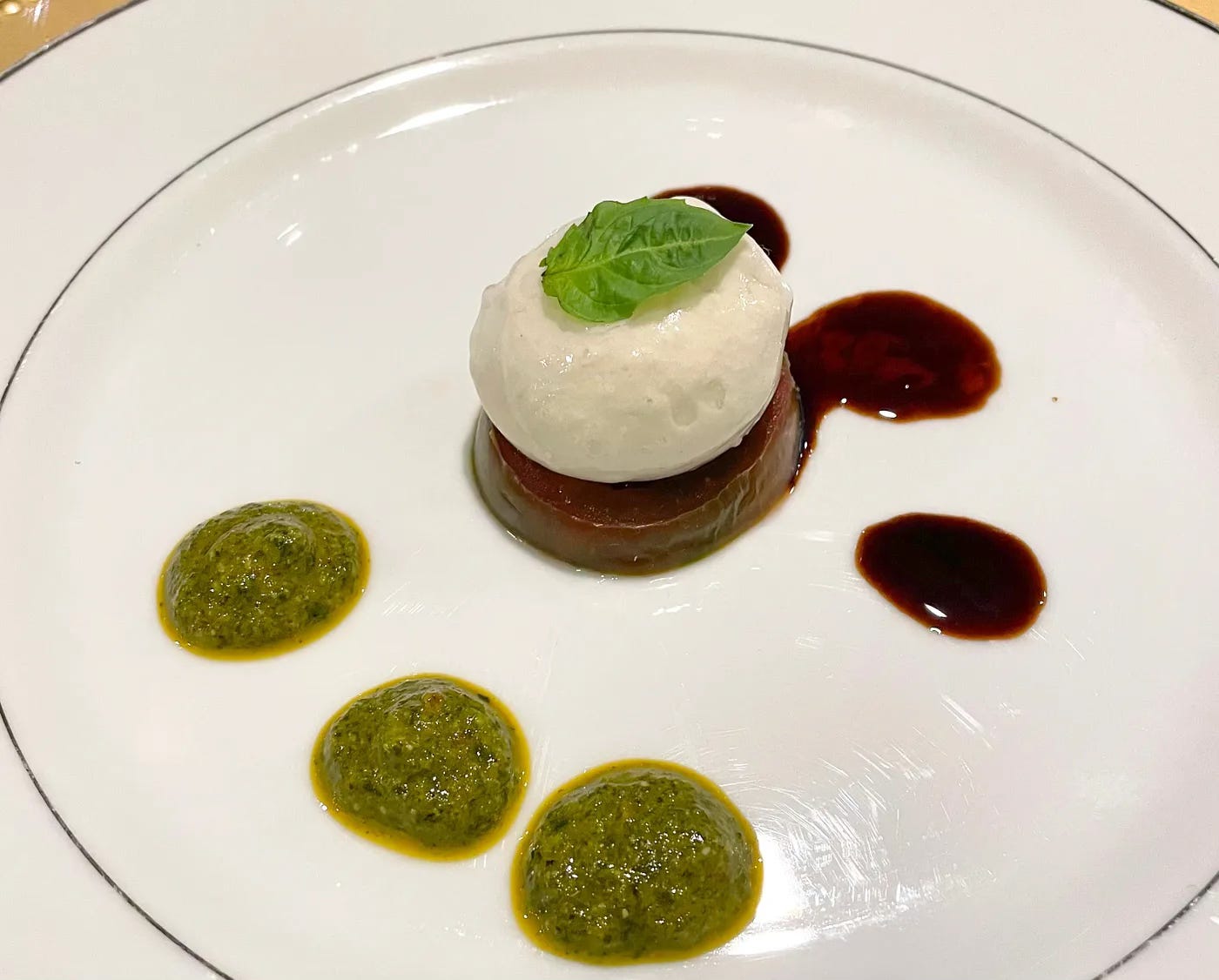
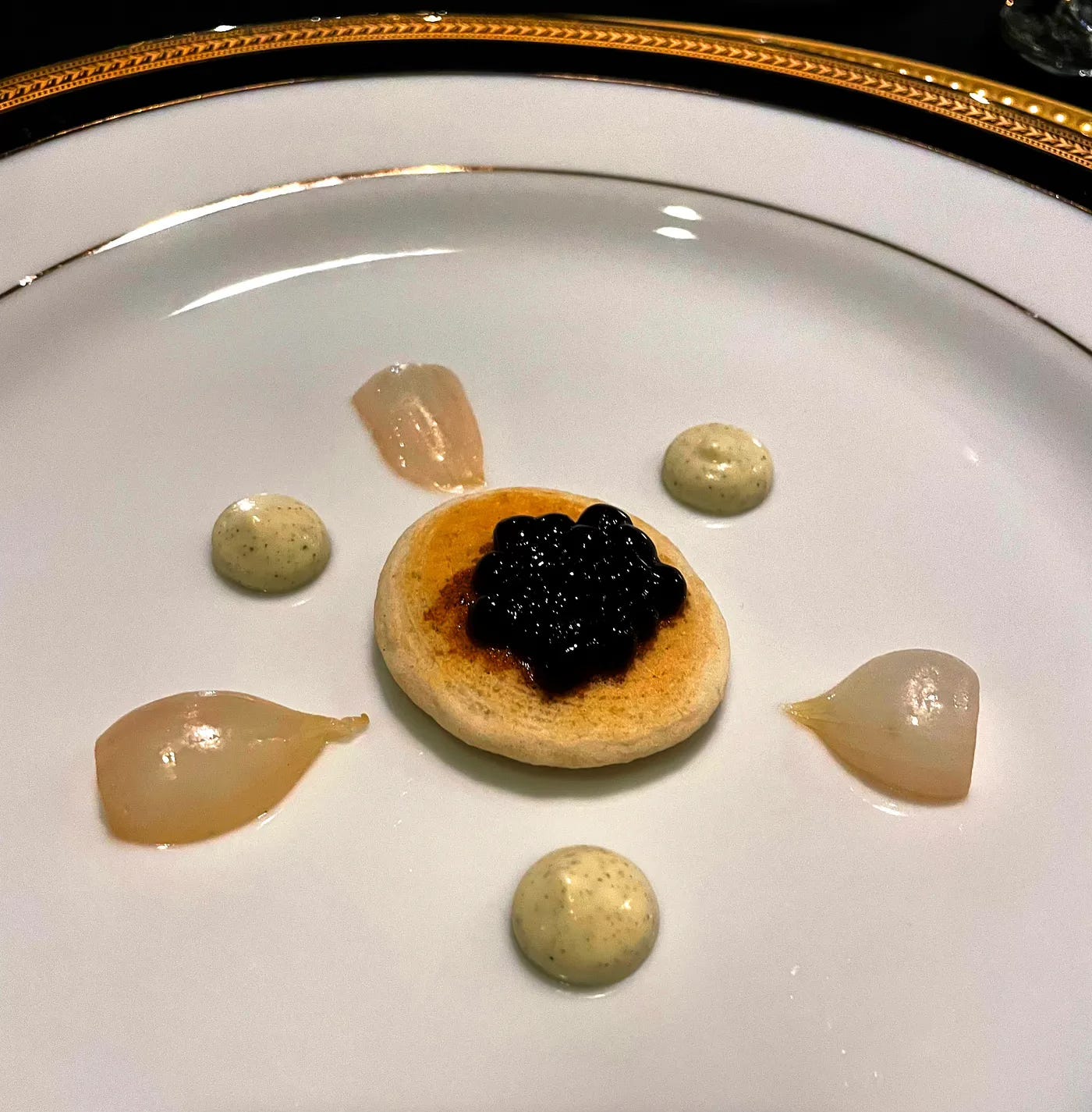
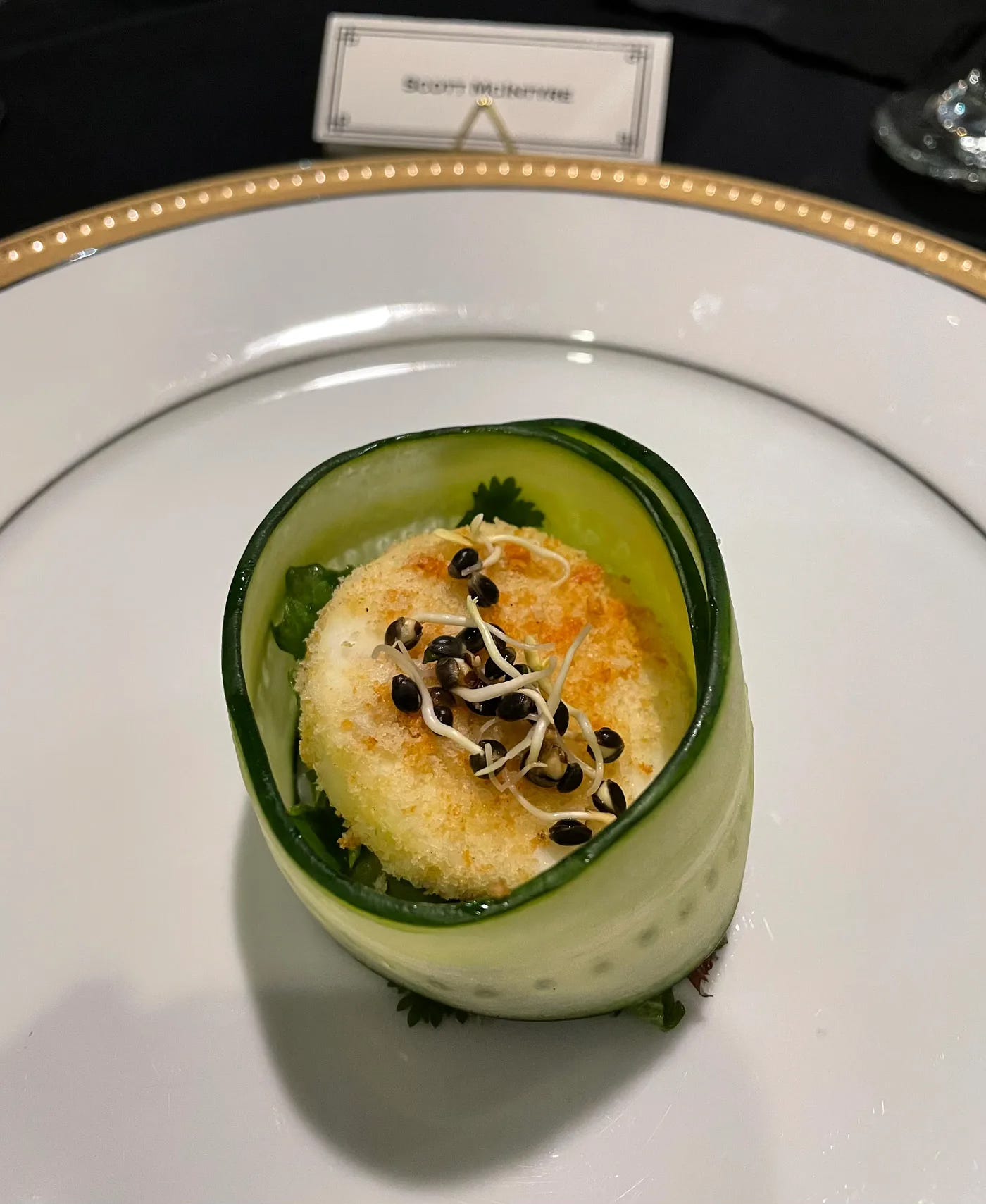
After being plied with some local libations, we sat down for our first course, a consommé with tofu and crisped meat all made from Hemp. A moment later we were indulged with “caviar” service featuring Hemp blini drizzled with Hemp crème fraîche. Next up was a Burrata nothing short of sublime — similar to Caprese salad, only with Hemp-based mozzarella and pesto, matched with a black truffle balsamic reduction. Constituting stable cheese from Hemp is a known challenge but Clayton produced a delicate, fresh and convincing imposter. Rounding out the first course was a cucumber salad adorned with breaded Hemp “goat” cheese, and Hemp oil Yuzu vinaigrette garnished with Hemp sprouts.
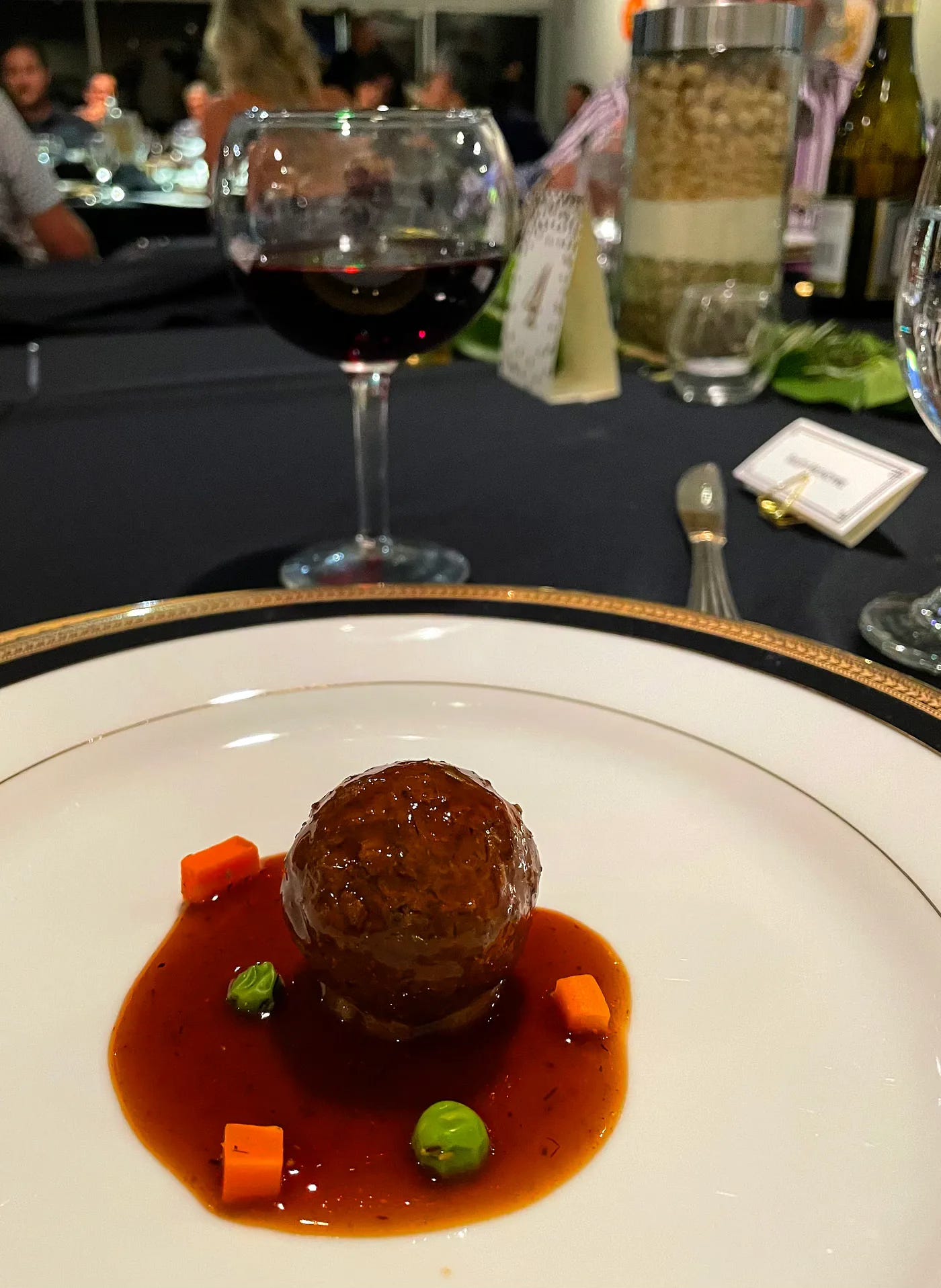
The second course offered some richer dishes, including the Italian plates mentioned earlier, featuring pasta, cream sauce, ricotta and bolognese, all Hemp-made. We then enjoyed a novel “inside out” Shepherd’s Pie made with Hemp meatball, and cleared our palates with a pink grapefruit intermezzo — granita with roasted Hemp oil shell.
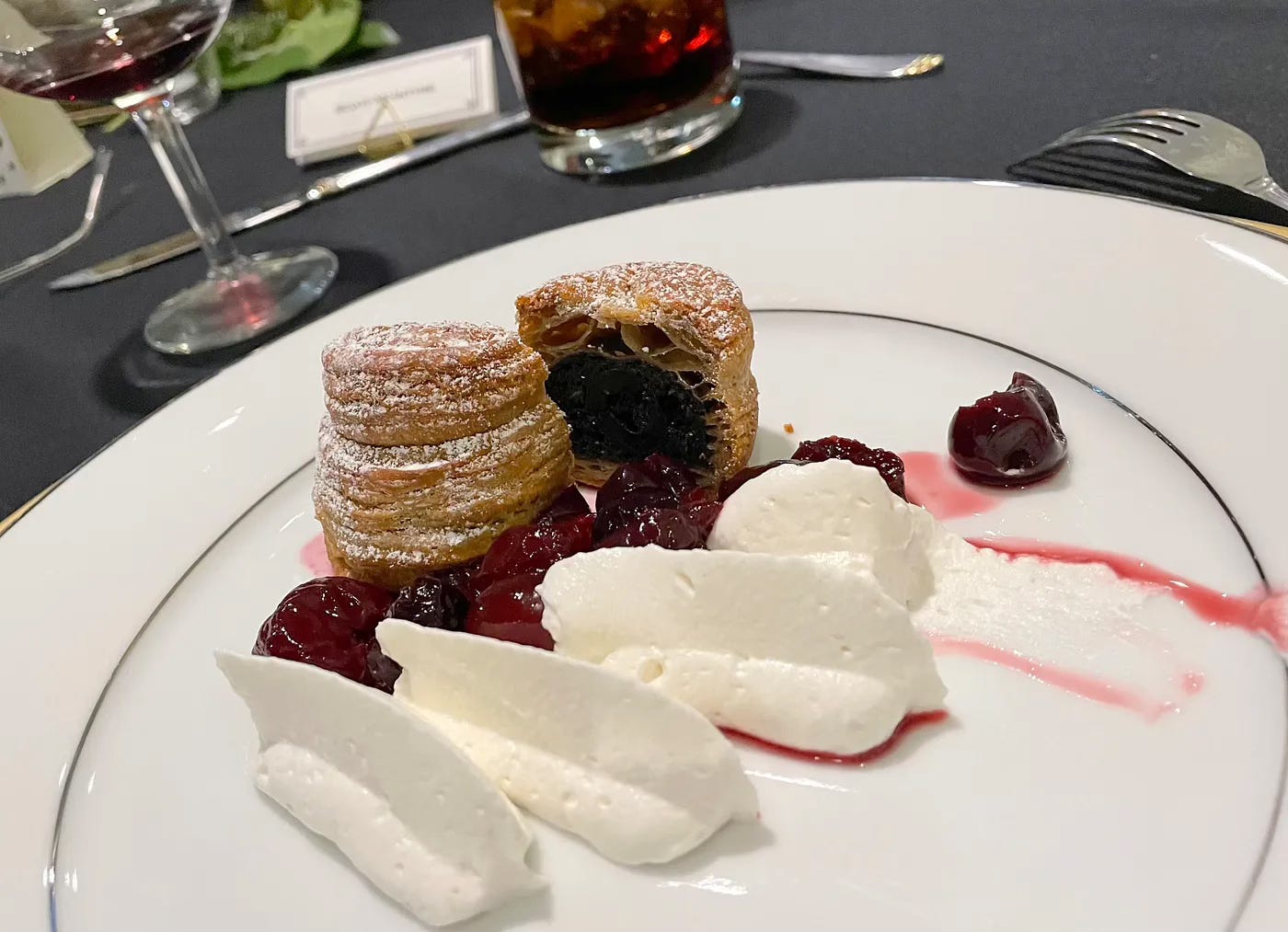
Pithivier was the dessert that closed out the evening. This masterpiece featured a cherry compote atop puff pastry and frangipane drenched in crème Chantilly all made from Hemp. I’m from Michigan so I know cherries. And this memorable sweet was a real treat.
For over 10,000 years we’ve cultivated Hemp. First, likely for fire to cook our food, but soon were making cloth, ropes and sails, the things that helped man evolve, explore and survive. And today, there are so many remarkable developments in labs and factories all over the world. But while all this innovation is impressive, many of our own cities are food deserts, our families poorly nourished and our soils poisoned and depleted. Hemp mitigates all these issues and much more.
So, please join us in this important movement. And eat some Hemp. Because yep, it’s good for that too
.
The Community Manifestao: on politics and economics is a reader-supported publication. To receive new posts and support my work, consider becoming a free or paid subscriber.
Comments
Nothing yet. Say the first thing.
Sign in to join the conversation.