
Happy publication day to the Polish translation of Mother Tongue Tied, translated by Joanna Stryjczyk. For my Polish-knowing friends here, you might notice the title is not translated word-for-word but instead, this edition is called, “Motherhood and Multilingualism: Being a Mother on the Border of Language & Culture”.
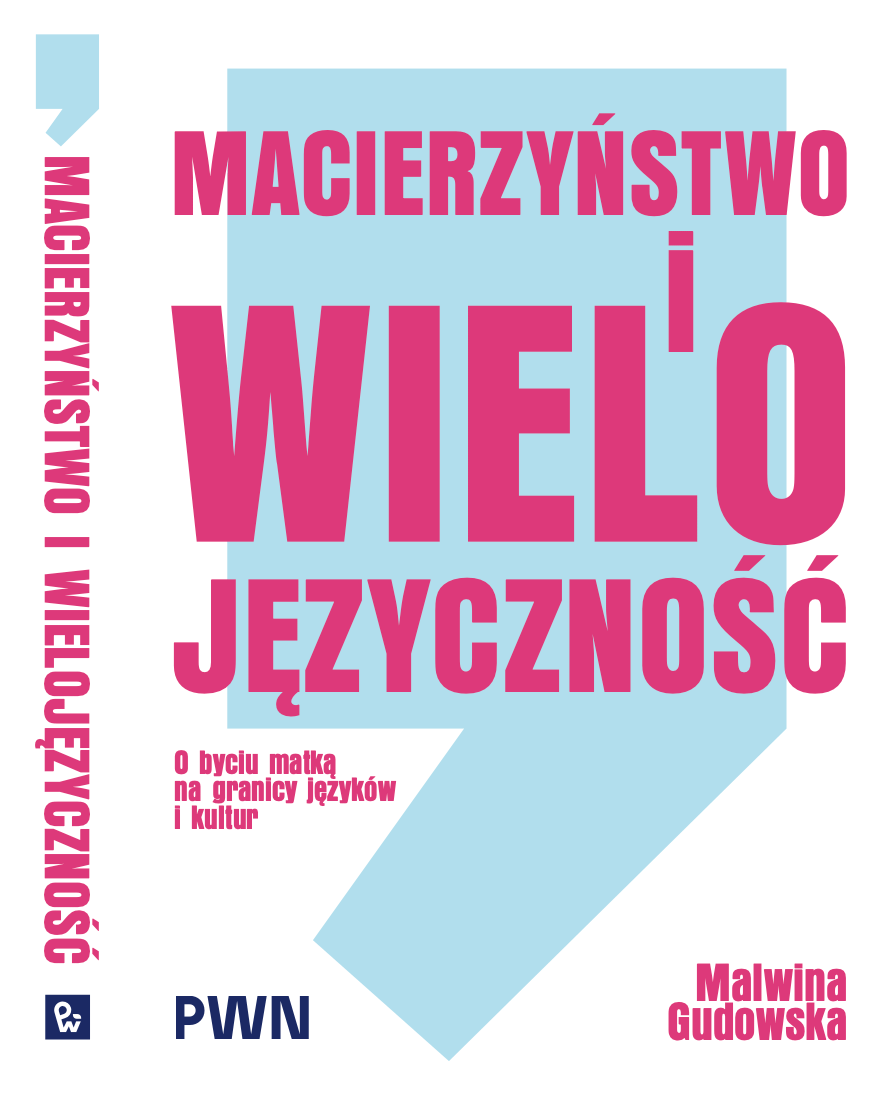
In Polish, "mother tongue" is "język ojczysty", or the language of the homeland ("ojciec" means father in Polish and there is an argument it is also closely linked to a "father tongue" as opposed to a "mother tongue" like in some other languages). Therefore, the title of the book had to be changed to reflect this, you could call, loss/shift-in-translation.
It has been a fascinating and humbling experience to have my book translated into my own “mother tongue”, a language that is no longer my dominant one but a language I am trying to pass on to my children. As I write something longer on this experience for another project, I have been thinking a lot about what it means to lose a heritage language, whether you ever used it, or not. And especially, the topic of who is at fault when a language is not passed on from one generation to the next.
During the proofing and finalising of the book translation, there was a lot to unpack for me. In the title change alone, I had to let go of the metaphorical (and in a way, literal) "mother" in heritage language ("mother tongue") maintenance — a challenging feat for someone whose research and work predominantly focuses on multilingual mothering. I am thinking of it as a poetic lesson in motherhood and multilingualism but also a lesson about what it means for a language to shift, evolve and feel like it is both at the very core of who you are and at the same, not belonging entirely to anyone at all.
At an event in London in June, I read from the translation for the first time. Although I practised several times ahead of the reading, I stumbled over some words and was incredibly nervous the entire time. Reading (speaking) in a non-dominant language, especially out loud in front of a crowd will do that to a person. Most of the time, I am confident in my first but non-dominant language but even so, there are times when I am overcome with a feeling that I have lost a piece of that identity through parts of a language never learnt. I wouldn’t be the same person, researcher, mother I am today if I had the ability to translate or write this book in Polish myself. And yet, reading my words translated into my first language, often words I am hearing for the very first time because they are not in my day-to-day vocabulary still shocks the system.
In addition to Polish, several other languages and cultures use terminology rooted in “father” (father tongue/fatherland) rather than “mother” (mother tongue). I did a quick search and came across the following (please correct me in the comments if I am wrong or if you have any others to add):
Balti (Pakistan/India): Ati skat which translates directly to “father-language”
Italian (contextual): lingua del padre or father tongue is used to describe a “standardized” language or a second language learned, distinct from a dialect or “mother tongue”
Sanskrit (Historical/Ritual): Some online sources note the use of “father tongue” was due to historical prohibitions on women chanting or speaking Sanskrit but others say it is more layered than this explanation
Countries Referring to a “Fatherland”:
Finland: isänmaa is “father’s land”
Germany: Vaterland (fatherland)
Estonia: Isamaa (fatherland)
Latvia: Tēvzeme (fatherland)
Lithuania: Tėvynė (derived from father)
Armenia: Hayrenik (land of the father)
If you are interested in the mother tongue and father tongue hypotheses from a more genetic perspective, you can start here. I also wrote about the “mother tongue” ties to the Catholic Church (“Mother Church” or Mother of God) in an early chapter of MTT and how the link with the maternal has changed over time and what it means for mothers raising children in a heritage language.
The use of “mother tongue” and/or “father tongue” reflects everything from historical metaphors to cultural institutions and caregiving roles. Both terms are rich with connotations, expectations, meanings and more, but as I have written before, “mother tongue” is a complicated term and often fails to include, for example, children without mothers or hearing mothers of Deaf children and Deaf mothers of hearing children. What does “mother tongue” mean to them?
I have also been thinking about being on the border of languages and cultures as the Polish translation’s subtitle proclaims. Is there an in-between space, a border, a boundary? Can you ever truly be between identities and languages? My immediate answer is no, not really. Or, is that space a blur of everything we are and all the languages we use making it redundant as an “in-between” or a border? Only while writing this newsletter did I make the connection of the Polish phrase I heard a lot as a child, “za granicą” (beyond/across the border) in the context of immigration. It was also often used when family and friends would go temporarily out of the country for work, a common occurrence. If you are an immigrant or child of immigrants, you probably know. In those contexts, there is a there and a here, but like languages, borders often shift, evolve, weaken, or sometimes, become too difficult to cross.
If you’d like to order the Polish edition, here is the link to my Polish publisher or, you can find it at most online shops that sell Polish books like here, here and here.
Thank you for reading.
No posts
Comments
Nothing yet. Say the first thing.
Sign in to join the conversation.