
I’ve spent two days in a field talking to farmers, producers and many friends in food who care deeply about how it’s produced. Groundswell, the regenerative agriculture festival, celebrated its 10th anniversary this year, having grown from a few hundred farmers to thousands of attendees spanning a wide cross-section of interests.
Needless to say, I’m exhausted. My muscles ache, despite two comfortable nights’ sleep and a hot tub at Jenny Jefferies Fullers Hill Cottages. But mostly, my brain feels like it might explode with everything I’ve learnt. So I thought I’d share the topline takeaways from the food love perspective.
If you were there, and have anything to add, please share away!
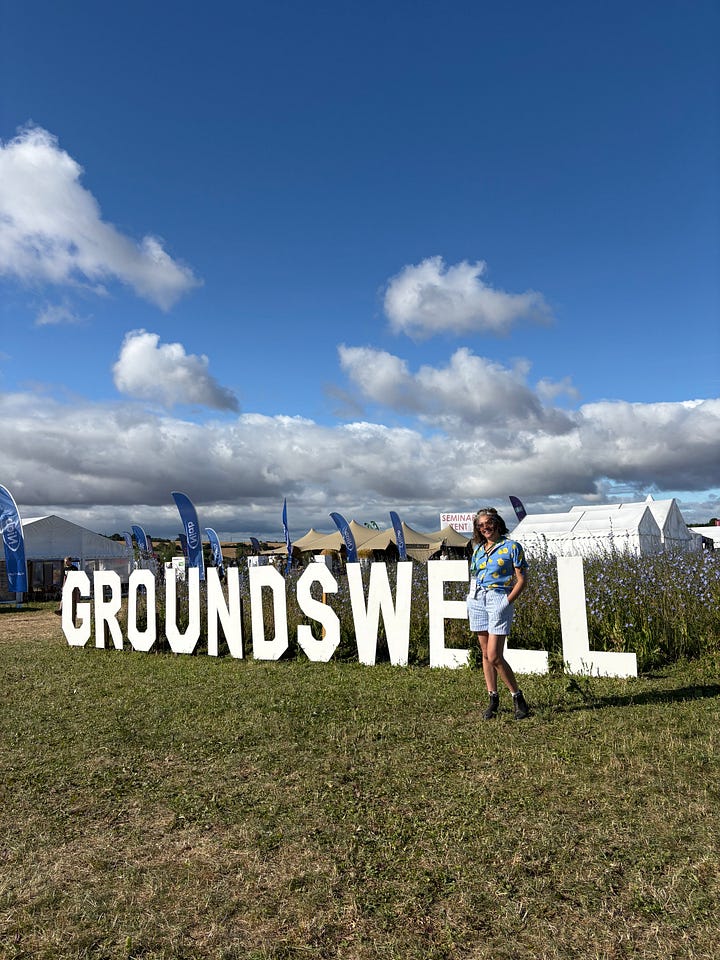
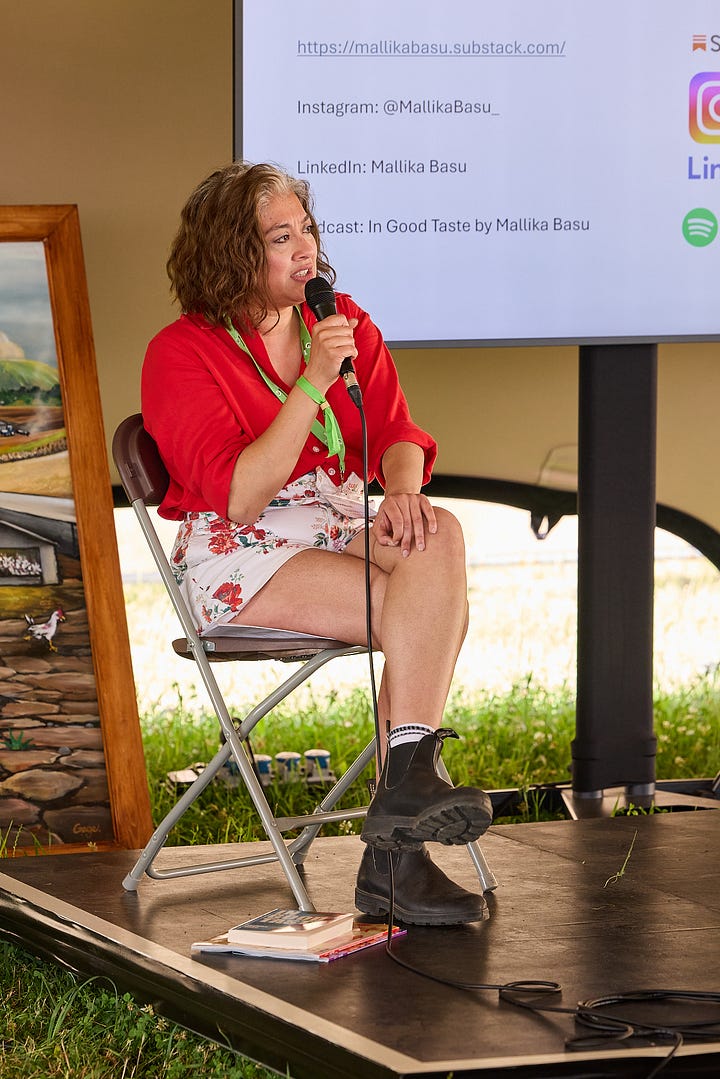
I spoke on an National Farmers’ Union (NFU) panel about the opportunity for British pulses through the lens of global cuisines and food culture. There are two challenges here: beans, peas and lentils have largely fallen off the plates and, if demand does grow, cheaper imports are likely to flood in, leaving British farmers no better off. The Bang in Some Beans campaign to address the former is gathering pace, with 41 businesses and Good Food magazine now signed up.
At my panel, and another I attended just beforehand with Josiah Meldrum, two farmers and Anna Taylor of Food Foundation, the conversation kept returning to the same two things: demand and profitability. Pulses are incredibly hard to grow, the infrastructure for processing and canning barely exists, and Government support remains limited.
One of the biggest opportunities, Josiah argued, is in expanding the range of peas we grow. Another is bean isolate, where the starch from beans is extracted and turned into a binding agent for Ultra Processed Food and other industrial products. It’s far more lucrative than selling the beans themselves: around £300 a tonne for beans compared with around £3,000 a tonne for bean isolate.
Finally, there was plenty of discussion about beans in animal feed. Rather than seeing food and feed as competing uses, both can coexist here. Replacing imported soya with British-grown pulses could reduce the environmental impacts associated with soya production. Beans contain around half the protein of soya, but there are nutritional ways to bridge that gap, including amino acid supplementation.
I’ve always struggled with the judgement and privilege that can creep into conversations about UPFs. Too often, the debate overlooks busy people, those who shoulder the bulk of domestic labour (read: women), and people on lower incomes. We should all be asking why it’s acceptable for disadvantaged groups to have poorer nutritional quality food, dressed up as choice.
So it was refreshing to hear Dr Chris van Tulleken tackle these questions head-on in his keynote.
The debate, he argued, is no longer just about food. It’s about fairness and injustice. Those with the least money often have the least power over the food available to them. He also drew a distinction between UPFs and unhealthy food, while pointing out that the overwhelming majority of UPFs are also high in fat, salt and sugar.
His argument went further still. UPFs, he said, are also bound up with some of the biggest environmental and social challenges we face, from plastic pollution and intensive livestock production to environmental degradation. A stark image of a Chinese high-rise pig farm drove the point home. I was also interested in his view that unhealthy food companies will become “stranded assets”, i.e. financially unattractive and no longer viable (similar to high-carbon energy assets).
He also warned against regenerative becoming a marketing label that distracts from poor practices elsewhere. No one likes to be hoodwinked, but in food, it’s surprisingly easy for us to be!
I loved hearing a series of eight-minute pitches showcasing potentially exciting developments in our food.
Take watercress. If you didn’t know, we’ve been growing it in Britain for around 140 years, now in low-pesticide hydroponic systems. The yellow middle, which isn’t the most attractive visually or texturally, is being explored as an ingredient for pesto rather than being discarded. (Pesto comes from the Italian verb pestare, meaning “to crush” or “to pound”. The classic basil version is Pesto alla Genovese.)
Then there were millets. One farmer had been growing them for bird feed until a visitor from India pointed out that they’re an important staple across many parts of the world. She’s now trialling them for human consumption here instead. One challenge is that glyphosate residue limits permitted for bird feed are higher than those allowed for food destined for people.
And finally, nuts. Hazelnuts are enjoying something of a revival in Britain. In fact, I’m off to watch the London premiere of a film all about it.
We know climate change is affecting our food. Extreme rainfall, drought and heatwaves are making it harder to grow ingredients. Yields are becoming less predictable and, in many cases, declining. I spent a long time talking to farmer John Jeffries, husband of food writer Jenny Jeffries, who took me out into his fields to show me the challenges ground up.
Ironically, climate change is forcing him to diversify away from some food crops towards crops that aren’t destined for our plates at all, but can be grown more reliably for anaerobic digesters.
And what do those digesters produce? Electricity. Including the electricity that powers the air conditioning many of us now rely on to get through increasingly frequent heatwaves: a perfect illustration of the vicious cycles we’re creating!
Meanwhile, one criticism levelled at hydroponic systems in a few tents and beyond, is that the produce doesn’t always taste as good. Not a lot of food love there.
Sue Pritchard of the Food Farming and Countryside Commission pulled off something of a coup by having Climate Minister Katie White on a panel she chaired. It was full of common sense. The discussion centred on how climate conversations have become increasingly politicised, why we need to meet people where they are, and how stories about people and nature resonate more than statistics.
My favourite line of the session was one I’ve used before: we get three chances every day to engage - breakfast, lunch and dinner.
And it cuts both ways.
In the four years I’ve been attending Groundswell, I’ve heard the same question come up time and again: How do we get more people to care about this stuff?
In one session on what cities can do to support farmers, people talked about cooking more and buying direct. Suffice to say, I was doing a lot of internal screaming about food environments, affordability, modern lifestyles and all the other barriers that shape the choices urban types are actually able to make.
Bridging that gap is a big part of the work I do through my writing, teaching or advising. My second session at Groundswell was a talk on communicating food as a force for good. The answer isn’t more facts or frustration. It’s making an emotional connection, speaking in a language people understand, aligning with their values and motivations, and never taking your own knowledge for granted.
Despite the England kick-off, I had a packed tent with much note and some brilliant questions afterwards. I did not mince my words, but tt clearly struck a chord. The book signing that followed took twice as long as scheduled because everyone wanted a chat as they bought a copy.
I picked up on something this year that I’ve noticed before: there isn’t a huge amount of love for urban vegans and vegetarians.
The argument, more often than not, is that animals are an essential part of regenerative farming systems and that plant-based alternatives are highly processed. There’s truth in both points, but there are also some holes in the argument.
For one, it assumes everyone is eating grass-fed, pasture-raised meat, when the reality is that most of the meat we consume comes from intensive farming systems and is heavily processed. As Dr Chris van Tulleken pointed out in his keynote, the less visible our meat products are, the less we tend to question their quality.
It also overlooks the fact that higher-welfare, more sustainable meat is often difficult to identify, inaccessible or unaffordable. And finally, not all plant-based alternatives are of poor nutritional quality. It’s a broad category.
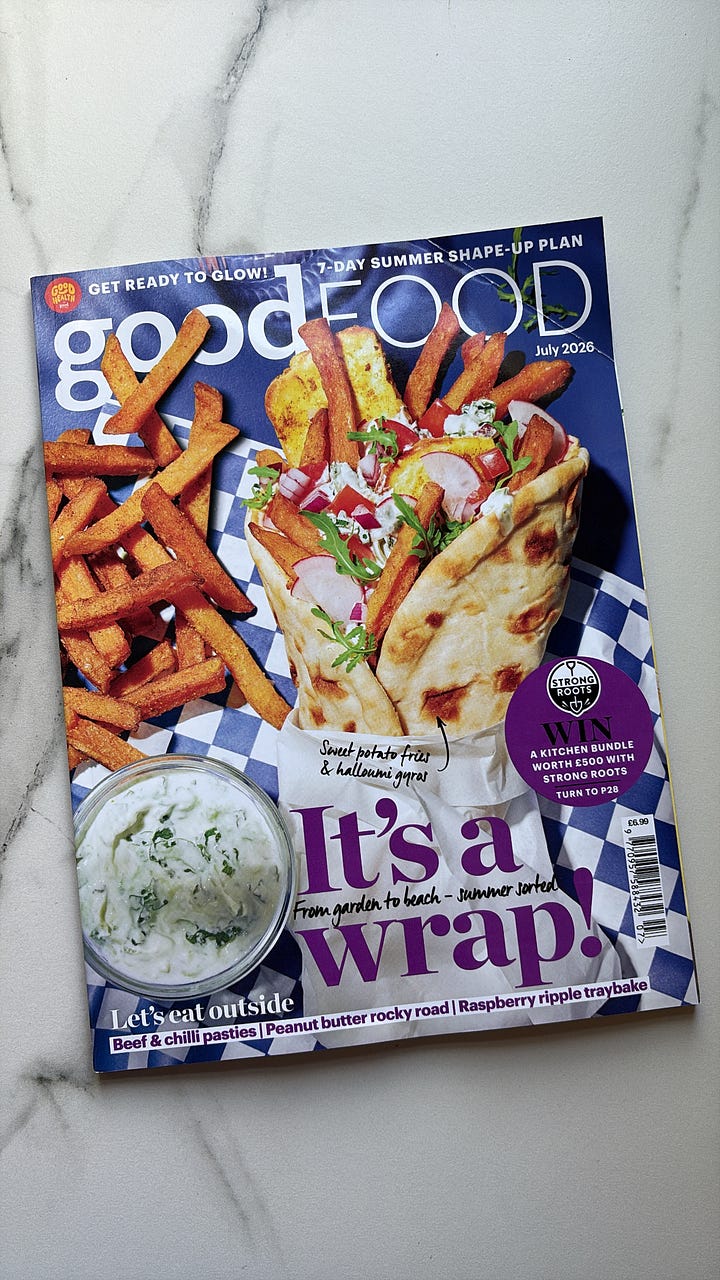
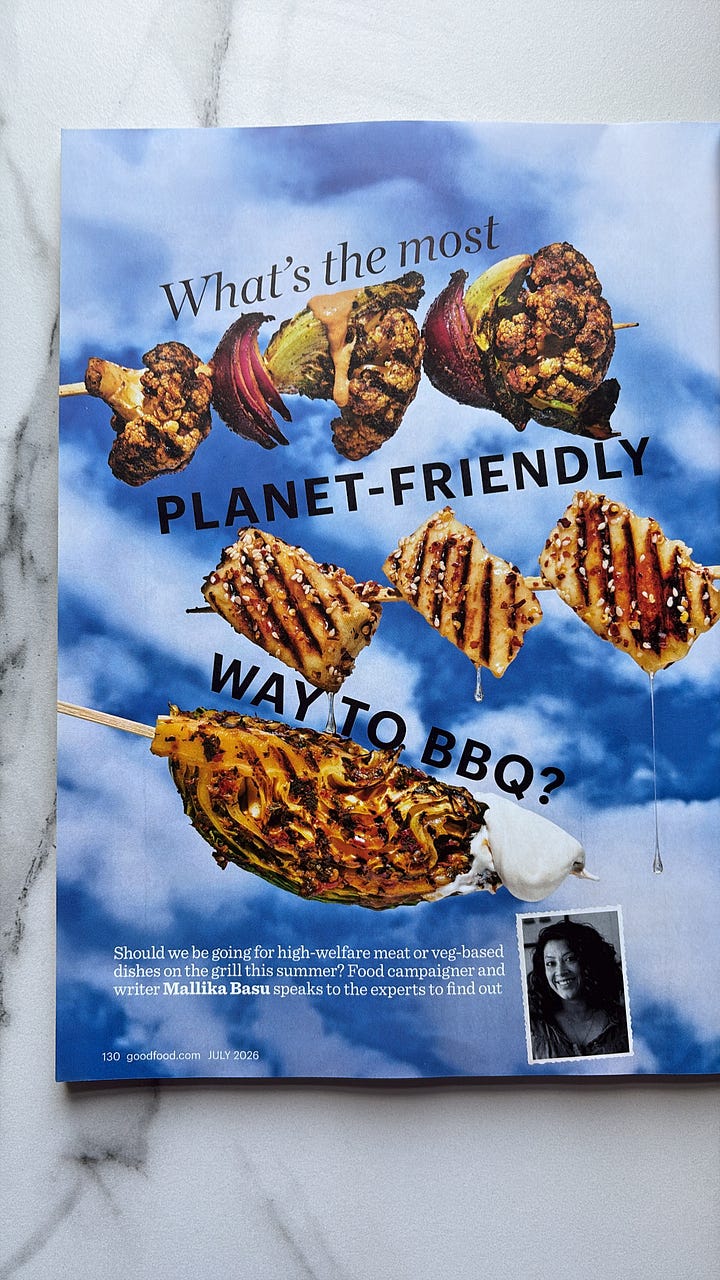
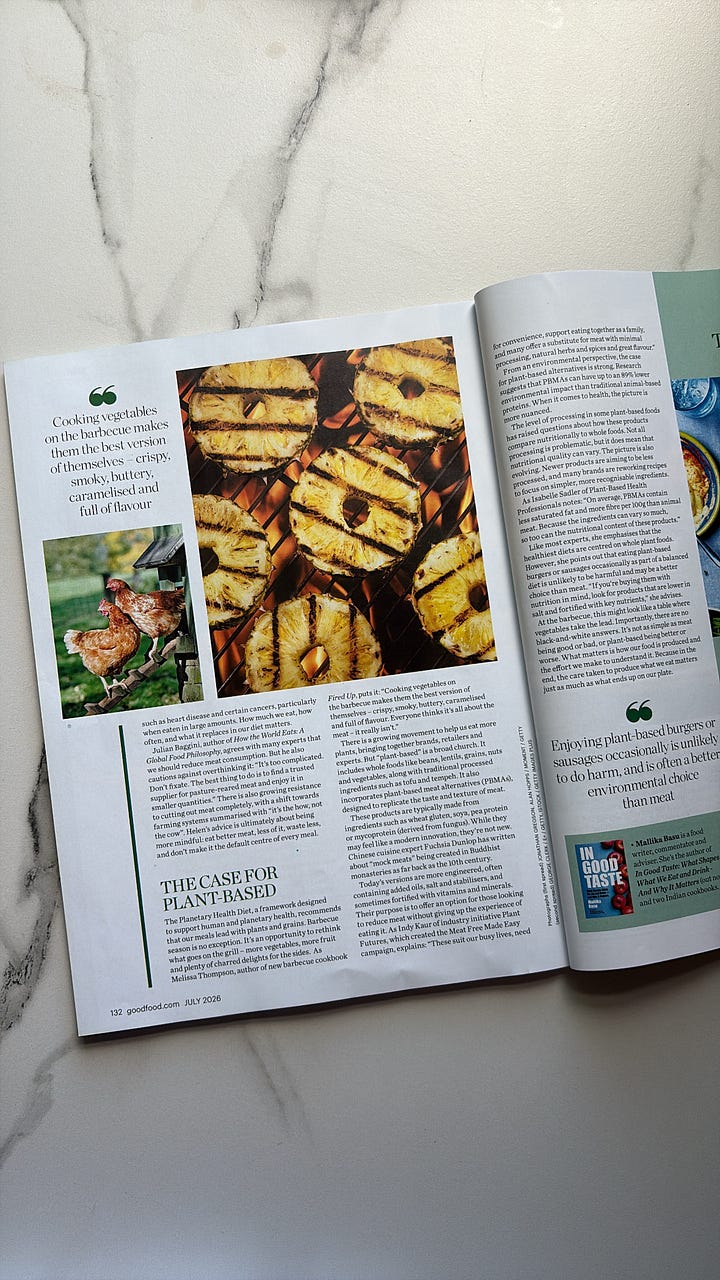
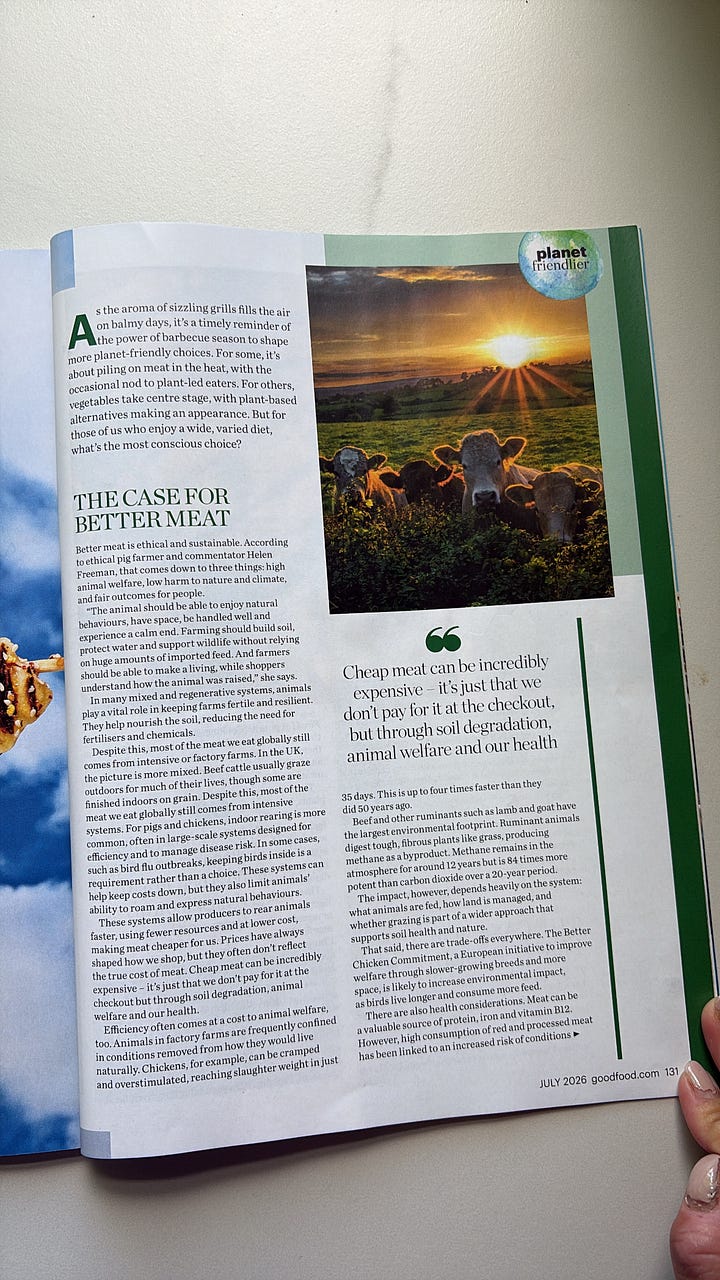
It felt rather timely that I’ve just published a piece in Good Food Magazine exploring exactly this: what ethical and sustainable meat really means, how to buy it if you choose to eat it, and the truth about vegan and vegetarian alternatives.
With huge thanks to Helen Freeman and my contributors for their inputs and review. The magazine is in the shops now and it will be online behind a paywall soon. I hope you’ll pick up a copy. Very grateful that Lulu, from Good Food and Keith Kendrick have given me a platform to share topics like this and in detail, and unexpectedly included my book cover in my bio.
I spent much time chatting to the members of the wonderful community that is Emergent Generation - a network of young farmers and farm workers - delivering a mentoring session for two of them. Please do look out for the Basic Income for Farmers campaign and Lucy, who goes by the moniker Farm Gay.
Despite my best efforts to be everywhere all of the time, and sacrificing the Groove Armada set in favour of preserving energy levels, there were sessions I wanted to attend but couldn’t.
Groundswell always films and puts these on YouTube. You may want to look out for the following:
Community Power from Farm to Fork: Advancing Food Justice & Equitable Food Access
Bread, Wine, and Olive Oil: Regenerative From Soil to Shelf
The Future We Chose: what happened when we put nature at the heart of food and farming
You might want to look out for Lucy Williamson’s book talk joining the dots between soil health and our gut and Stuart Gillespie on who holds power in our food. And mine, if you want to be ethical, sustainable and commercial. There is no impact without commerciality.
More pics and information on my sessions are on LinkedIn and Instagram. An appreciation post for Jenny, her cottage and the hot tub will follow.
I enjoyed ice cold English red wine from Sandridge Barton, a dal and momo box from Taste Tibet and roe venison on chips from Christy’s Kitchen at Groundswell. As paid meals at these things can quickly bore a hole in the pocket, the lovely light salads at the press tent also provided summery mealtime relief.
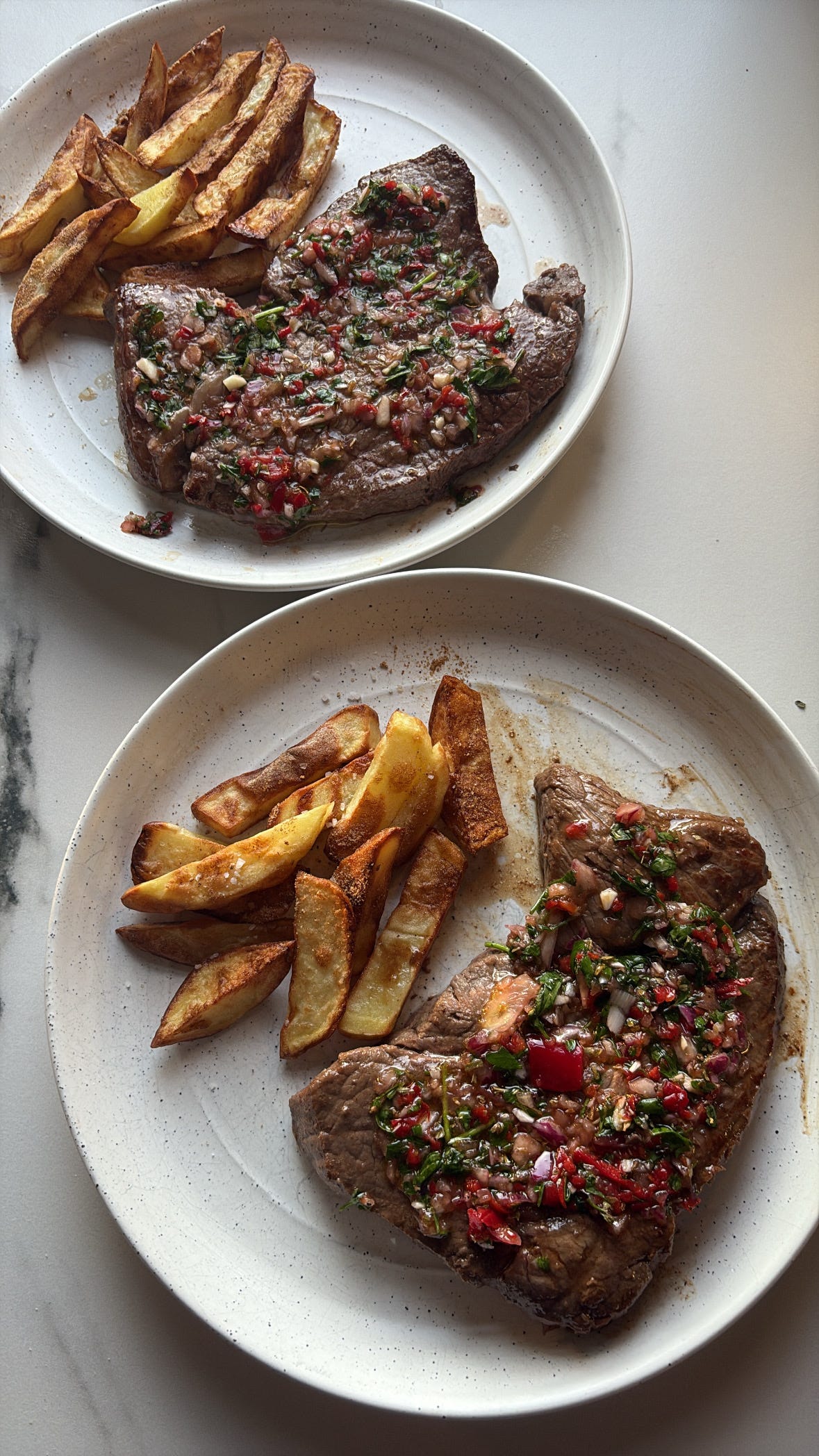
I was spoilt by a meal my 17-year-old cooked on my return: steak, homemade fries and chimichurri. It was a blessing that made the previous years of parenting pain fade. She also gave me a back massage, and it felt good to be looked after at home for a change.
I didn’t make much of the red wine vinegar she’d spilled into the crevices of the worktop that would outlive days of scrubbing. I also noted that the steak, which we normally eat mindfully and sparingly, was not of satisfactory standard but I chose to save the educational moment for another time in favour of preserving the peace!
I’m on BBC Radio 4 The Kitchen Cabinet talking pickling, potatoes and edible flowers (spoiler: they belong in a vase!). Did you know Spalding has a connection to Lithuanian food? Hope you’ll enjoy having a listen.
That’s all for me this week as I enjoy a much-needed rest. Look forward to your thoughts.

Comments
Nothing yet. Say the first thing.
Sign in to join the conversation.