
When I was working on my memoir SLIP, people used to ask me if I knew what my next book was going to be about.
“Not yet!” I’d say. “I’m still writing the first one.” I hadn’t ever made any mention of another book, but once you write one book, people often presume you’ll write another.
After my memoir was published and the initial fanfare had died down, I started to feel behind, as though I should have already been well on my way to book number two.
I watch in awe as other writer friends publish a novel every year and wonder how they do it. Multiple family members and friends have encouraged me to try writing my own novel, hoping I’ll consider lighter topics than the ones my memoir explores. Maybe someday. For now, my heart remains in nonfiction. And it’s still very much in memoir, though I need to live more life before I can write another one.
I’ve spent the past year thinking through other nonfiction possibilities, and I’ve landed on a book idea related to optimization culture and the ways in which it encourages people to see themselves as ongoing projects in constant need of improvement.
Without giving away too much of the idea at this early stage, I want to share the steps I’ve been taking to help shape it, with hopes that they can help you too. The steps that have worked for me may or may not work for you, but at the very least they can help you picture a pathway forward.
Here are 10 steps to consider taking when thinking through a nonfiction book idea:
Consider these questions:
Have I written any other stories that seemed unfinished and warranted more attention? At this year’s Power of Narrative conference, New Yorker staff writer Patrick Radden Keefe said: “The best is when you sort of write your 10,000 words and then you say, ‘That’s all I’m ever going to have to say on this subject ever again.’ There have been four times in 20 years where I’ve gotten to the end of a piece and thought, ‘I’m not ready to move on.’” In those cases, the stories led to books.
What topics or issues are keeping me up at night? The best nonfiction books begin with an unshakable quest to uncover or understand something.
Could I see myself spending years writing about this topic? If you’re going to write a book, you can’t get tired of the subject matter.
Am I thinking about a topic or an idea? It’s fine to start with a broad topic, but the finished product needs to stem from an original, focused idea that can be shaped by any number of things: lived experience, expertise, reporting and more.
What ideas will help me engage my existing audience and expand it? Too often, we wait until later in the process to think about audience. Instead, consider it from the very beginning to help shape your thinking around not just what the book would be about, but who it would be for.
Where would this book sit on shelves? It’s helpful to think about categorization early on too. Are you writing a work of narrative nonfiction? A pop culture book? A hybrid memoir? Clarifying the genre will help guide your thinking and will make it easier to talk about the book.
Does this idea have urgency? This is especially important if you’re seeking a commercial publisher. For better or worse, commercial publishers want nonfiction books that will speak to the current moment and resonate with readers in the here and now. Another way of thinking about this question is: Why you, why now?
Once I had fine-tuned my idea, I signed up for a month-to-month subscription to Publisher’s Marketplace. The site publishes daily book deal notices, making it a great place to see what books have already been published and which ones are forthcoming.
Reviewing the daily deals can give you a better sense of where your book fits among other titles, and it can challenge you to think about how yours would be different.
The more you read the deal announcements, the more you become accustomed to the language publishers use to describe books. This can prove helpful when crafting an elevator pitch for your idea, and when writing a proposal. Publisher’s Marketplace is pricey ($30/month). But if you can make it work financially, I think it’s worth it, even just for a few months.
Before sharing my idea with my agent, I spent weeks journaling about it and thinking through how I wanted to frame it. I also found it helpful to don my journalistic cap and consider: What’s my nut graph?
In journalism, the nut graph is a paragraph that describes a story in a nutshell. It appears in the actual story (usually within the first few paragraphs), and it lends the piece a sense of focus. It’s meant to answer a critical question: Why should readers care enough to keep reading?
Though nut graphs are journalistic speak, I think they can also be author speak. When working through a book idea, try to condense it into a paragraph with an eye toward focus and audience. (You can read more about these funny sounding graphs here.)
When exploring a book idea, read as much as you can about the subject matter. Consider media coverage from journalists working for mainstream news outlets as well as those writing independently on platforms like Substack. You can also set up Google Alerts to help you stay up to date on terms and themes that pertain to your idea. Reading stories and newsletter posts can introduce you to experts and researchers in the field, and the content can become valuable source material.
In addition to reading media coverage related to my idea, I’ve been reading peer-reviewed research to deepen my thinking. I have easy access to academic journals through my university’s library and realize I’m lucky in this regard. If you can’t access full studies, start by listing off the titles and researchers, and return to them later on in the writing process.
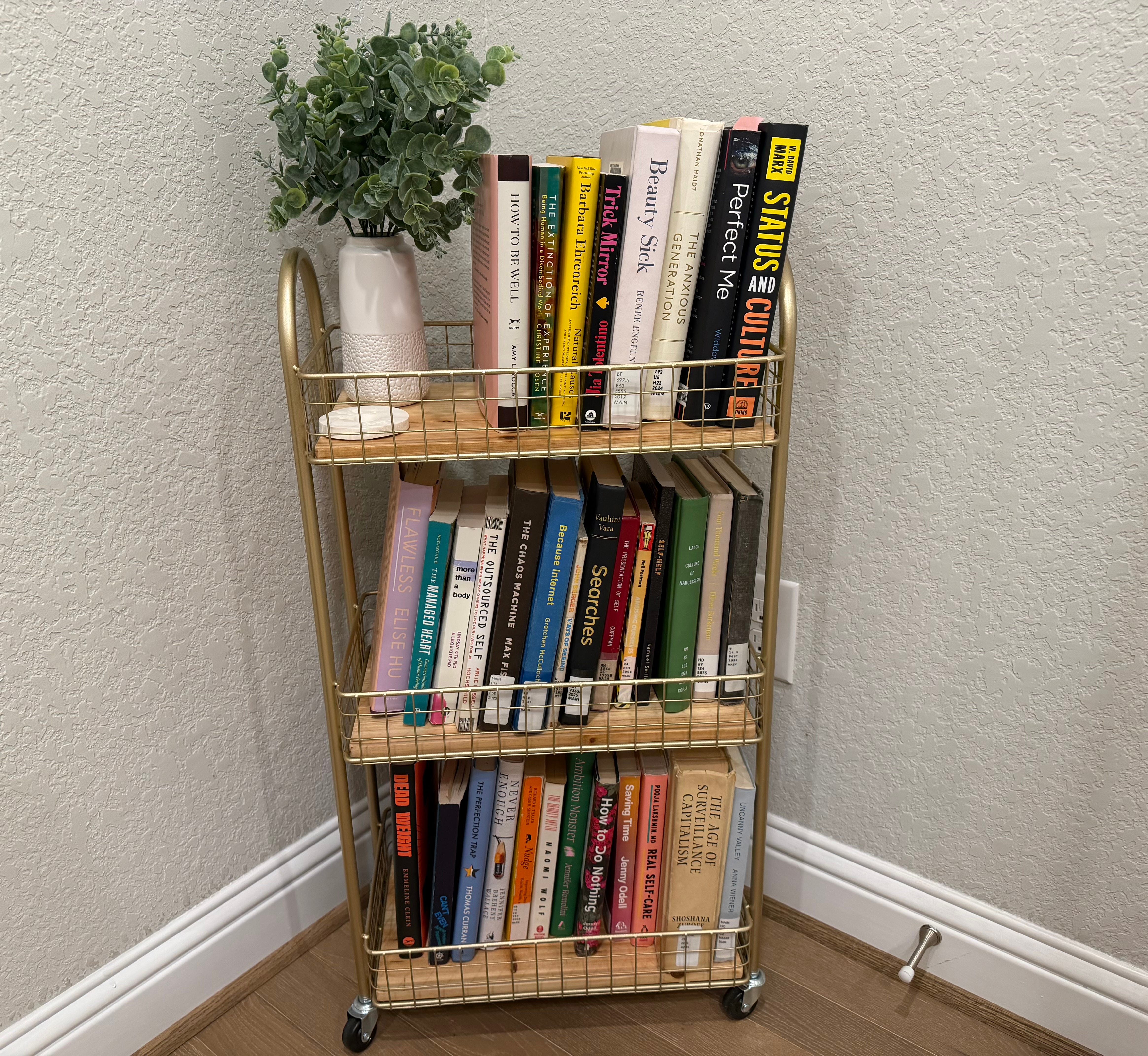
I’ve made several trips to the library over the past few months and have dedicated a special spot in my office for the books I want to read in the early stages of this next book project. (Creating literal space for your ideas — through pop-up bookcases in your workspace, file folders on your desk, etc. — is a great way to keep them top of mind.) I’m slowly making my way through the books pictured above to better understand the ideas I’m exploring, with a focus on historical context, cultural shifts, expert insights, and lived experience narratives.
Sometimes, the books I read have nothing to do with my specific idea, but they take a similar approach that I want to learn from. I’m always interested in how other writers blend multiple elements (personal narrative, research, cultural commentary, etc.), and I like seeking out related examples.
Reading a variety of books can be equal parts helpful and overwhelming. I try to set up guardrails, especially with regard to time and voice. I remind myself that although my preference is to read books cover to cover, there are some books that are better for browsing (especially if they contain just one chapter or section dedicated to the topic I’m interested in). I also try not to get hung up on other writers’ voices so as not to feel pressured to sound like anyone else. I know that once I begin writing more deeply, I’ll start to hear my own voice emerge from the page, and the content will begin to sound more familiar.
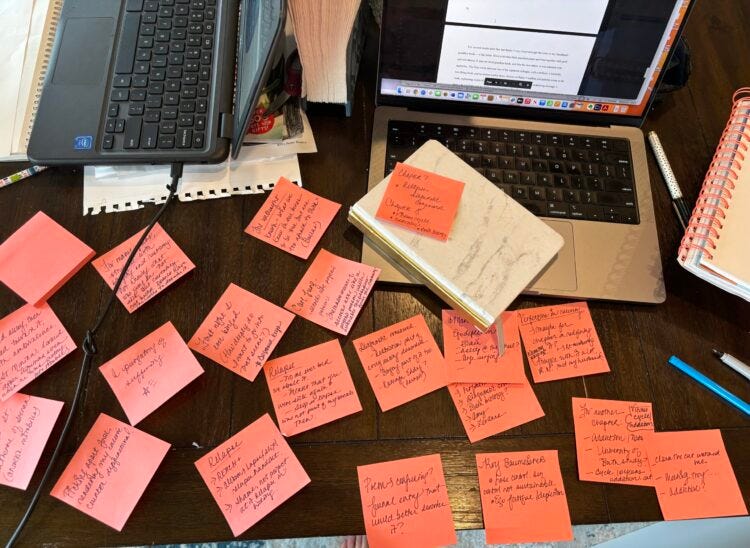
I was never a big outliner when I worked as a full-time journalist. But that changed when I wrote my memoir. I had so much material to work with that I had to start paying greater attention to outlines and structure. I devised a fun approach in which I used origami paper and Post-it notes to write out elements of each chapter and then moved them around like puzzle pieces until I found the right fit. (I wrote more about this approach here.)
When thinking about my next book idea, I felt overwhelmed by its magnitude. I needed to create a roadmap for myself, so I got out my Post-its and started piecing them together. I ended up with a rough chapter outline that I’m now using to guide my thinking around the book. This outline will continue to evolve, but it’s a helpful starting point.
Each chapter description includes a series of guiding questions that I plan to explore during the reporting process. These questions are helping me avoid the risk of drawing conclusions too early on. I want to approach this book the same way I would approach a journalistic story: with curiosity, a reflective acknowledgment of my biases, and an openness to different viewpoints that challenge my own.
Once I’ve done more reporting, I’ll begin turning those questions into arguments that I can include in my eventual book proposal. You don’t need to have every question answered in a proposal, but you need strong arguments that convey authority and expertise.
Once you’ve crafted your rough outline, you can create a reading list for each chapter. I’ve been doing this with the help of a graduate research assistant (GRA) who has compiled a reading list that includes media coverage, research, and books. This way, once I start working on each chapter, I’ll have a list of go-to resources.
The GRA and I are working off a shared Google spreadsheet so that we can see updates in real time. I’ve also started copying and pasting the reading materials into Scrivener, which is a great tool for organizing manuscripts. I didn’t use Scrivener when writing SLIP, partly because so many of my source materials were hard-copy medical records, journals, letters, etc. This new book idea involves far more digital materials, and Scrivener is proving to be a helpful repository.
Surveys take a considerable amount of time to create and publicize, but they can be tremendously helpful. I surveyed over 700 people from around the world when writing SLIP, and the survey became an invaluable tool for collecting data and finding people who were willing to be interviewed.
Earlier this week, I launched a journalistic survey for this book idea, with hopes that it will help me gather perspectives from everyday people navigating optimization pressures and opportunities. I shared the survey ahead of time with a few trusted friends and colleagues to get their feedback, and I tweaked some of the questions and formatting accordingly.
Story and book ideas really come to life for me once I start interviewing people about their lived experiences. That said, I’d be so grateful if you’d consider filling out the survey. It is a light lift (takes less than 10 minutes to complete) and it would mean a lot. If all 1,400 or so of you filled it out, I would have an incredible foundation for the reporting ahead!
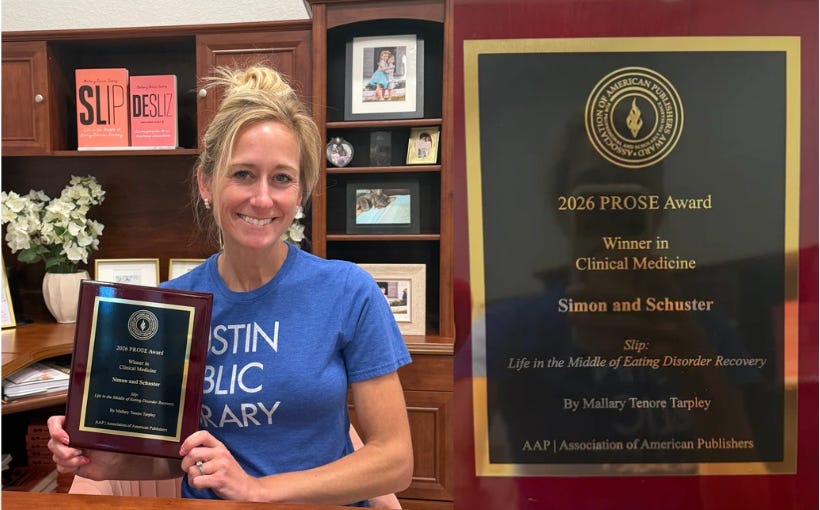
Reporting is a valuable tool for exploring an idea’s potential and broadening your scope of understanding.
Over the past month, I’ve started to interview experts and researchers who can deepen and challenge my own thinking. I will soon start interviewing some survey respondents too. This preliminary reporting will enable me to turn my questions into arguments and will help me write a book proposal that’s informed by my lived experience, my previous book, and my new reporting efforts.
Reporting is an important part of nonfiction books, and it can help you to get better at articulating your book’s nut graph and overall premise — something you’ll have to do when pitching your book to agents and publishers and when publicizing the finished product.
After I launched the survey earlier this week, I felt out of sorts. It was the first time I was sharing my idea publicly, and I worried about how people would respond. The doubts started pouring in. Is anyone even going to want to fill out this survey? Are people going to think this book idea is dense or dull? What if this idea doesn’t even become an actual book?
I grappled with similar questions when writing SLIP, but a little less so because I knew the subject matter so intimately. This new book idea will require a different kind of inquiry and a form of writing that stems less from my own lived experience and more from cultural commentary, original reporting, and the narratives of others. I’ll be the narrator and a character, but not the main character.
I’ve been thinking about all of this over the past few days, and I’ve been encouraged by the survey responses I’ve gotten so far. Once I began reading them, I felt re-energized by my idea’s potential.
Believing in a book’s potential can make all the difference. Developing a book idea takes time, emotional bandwidth, risk-taking, and vulnerability, with an understanding that some ideas will flop and others will flourish. The gap between those who have book ideas and those who actually pursue them is wide. To bridge the divide, you need to take steps that will help you make meaningful progress. What steps will you take?

I’d love to hear from you! What questions do you have about coming up with or pursuing book ideas? What steps are you taking, or what’s holding you back? Share your questions/thoughts in the comments.
Interested in writing a memoir, or already working on one and need more support? Join me for a five-week memoir-writing workshop through the Poynter Institute this Fall. You can find more details, and register, here.
No posts
Comments
Nothing yet. Say the first thing.
Sign in to join the conversation.