
In the year since my memoir SLIP was published, I’ve spent countless hours publicizing my book. Here’s a quick by-the-numbers look at my publicity efforts since last summer:
45 BOOK EVENTS
81 PODCAST INTERVIEWS
12 PUBLISHED ESSAYS & ARTICLES
37 MEDIA MENTIONS
ONE YEAR’S WORTH OF LESSONS
That last bullet point may be the one I’m proudest of. As I try to pique people’s interest in my work, I also try to embrace a spirit of generosity by helping other writers through the process. I’ve done a lot of that here in my newsletter and want to share a roundup of related posts as a one-stop publicity resource for authors.
Please feel free to share this resource with anyone who you think might find it helpful. And if this post resonates with you, I hope you’ll consider buying SLIP and/or becoming a paid subscriber. You’ll get access to all newsletter content, plus a free coaching call with me, access to a paid subscriber chat, and discounts on future trainings. Learn more here.
Here are 12 posts I’ve written to help you navigate book publicity …
Excerpt:
I mailed copies of SLIP to well-known authors and journalists whom I’ve come to know over the years. In one case, I reconnected with Katie Couric, whom I had interviewed for a story back in 2010. I mailed her a galley copy, not knowing if anything would come of it. She responded positively and invited me to write a piece for her website. She also has the galley on display in the set of her “Next Question” podcast. It appears in the background of videos she posts on social media, and acquaintances occasionally tell me they’ve spotted it. This was unexpected, free exposure. Has it sold copies? I don’t know. Does it make me smile every time I see it in the background? Yes.
Excerpt:
No one can fully prepare you for what publication day and the weeks that follow are like, and everyone’s experience is different. But I want to share some pointers that might be helpful if you’re working on a book or are about to publish one. They’re rooted in reactions that I didn’t anticipate as a first-time author and that, in some cases, caught me by surprise.
Excerpt:
If you’re considering going on tour, determine what you’d want to get out of it. Book tours don’t always generate a lot of sales, so if your main objective is to sell copies of your book, you may end up feeling let down. Consider the other factors that can make it worthwhile. In all candor, I will say that a book tour helps with optics. Announcing a tour creates more buzz around your book and can elevate its importance in some readers’ minds. This factored into my consideration, but my main reason for going on tour was to be in community and in conversation with readers.
Excerpt:
Memoirs, in many ways, are like mirrors. They hold a mirror up to the author’s life and invite readers to share in that reflection so they can more clearly see themselves and feel less alone. I’ve been reminded of this a lot while on my book tour, where many readers have told me some variation of, “I thought I was the only one.” After they heard me speak, or read my book, they realized that wasn’t the case.
Excerpt:
Tip #1: Picture audiences of all sizes. There’s no telling how many people will show up to your talk, so try not to get too hung up on the number of attendees. I find it helpful to envision small and large audiences. I sometimes picture myself standing in front of a room of five attendees and then a room of 500 attendees. This helps me mentally prepare for the possibility of a small or large crowd, or something in between.
Excerpt:
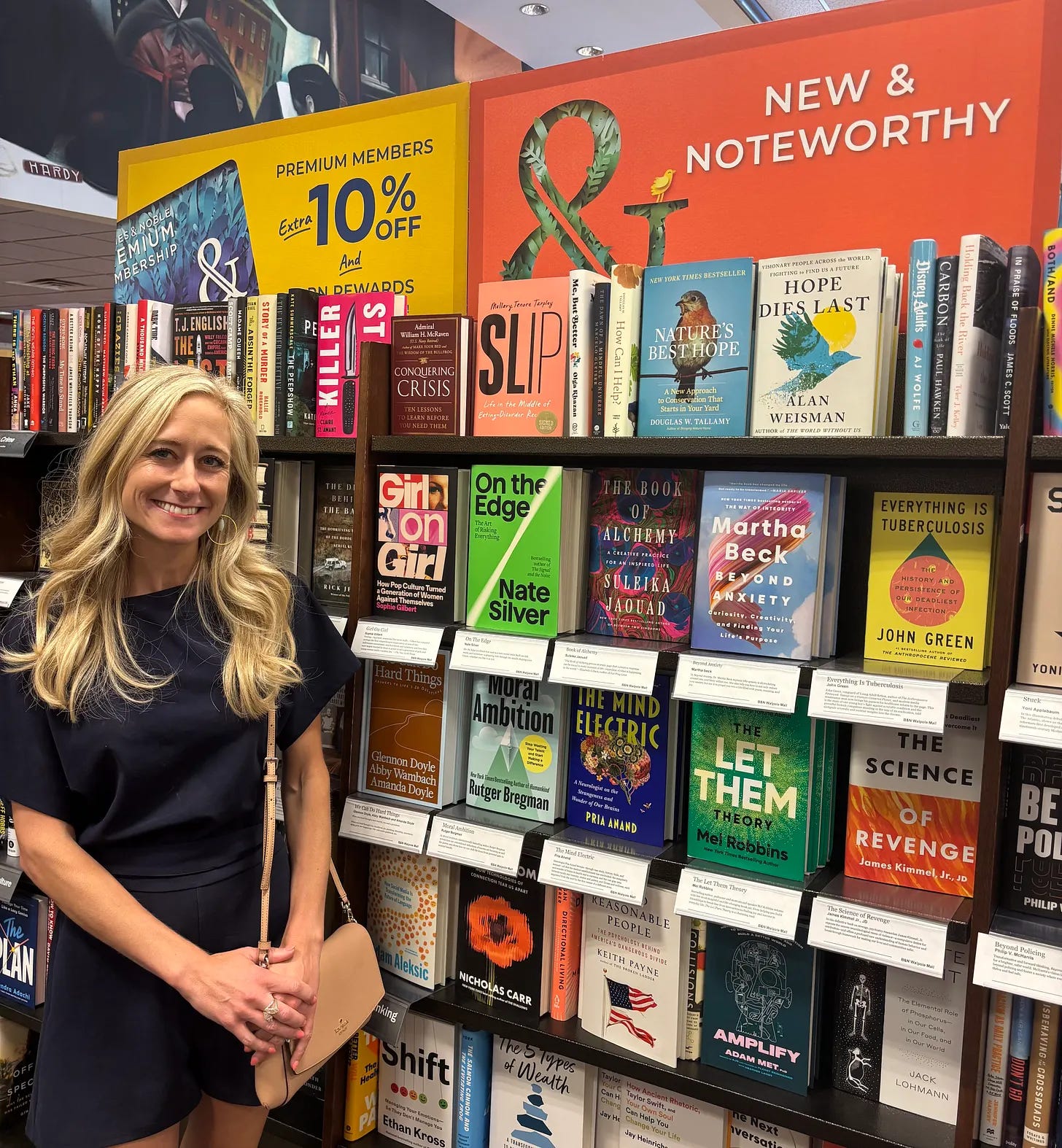
Over the past three months, I’ve been traveling the country to speak about and celebrate my new book SLIP. All of my two dozen or so book tour events have taken shape in similar fashion: as Q&As and/or talks followed by signings. The one exception was an event I did yesterday at the grand opening of a Barnes & Noble in Austin. Instead of giving a talk or being in conversation with a moderator, I sat and signed books for a two-hour stretch. Such signings are unpredictable; you never know how many (if any) people will stop by, let alone buy a copy. I now know that they’re also an exercise in character-building and in studying consumer behavior.
Excerpt:
Since my memoir SLIP was published last August, I’ve spoken at roughly 45 book-related events of my own and hope I’ve instilled a similar sense of possibility in attendees. My events have been a mix of webinars and in-person events at bookstores, universities, conferences, and book fairs. By all accounts, they’ve followed a pretty standard format: an interview or presentation, followed by an audience Q&A. This format has worked well, but after my thirtieth-some-odd event, I began to wonder: Is there something different I could be doing?
Excerpt:
The truth is, publicity can seem nebulous. With this in mind, I’ve found it helpful to develop clarifying messages about why I choose to spend so much time on publicity; this helps me stay intrinsically motivated even in moments when extrinsic factors feel discouraging. I try to remind myself that podcasts have staying power and can contribute to the long arc of a book’s lifespan. Publicity is the ultimate exercise in lengthening that arc over time — and reminding yourself why it matters.
Excerpt:
As I’ve followed Nanda Reddy’s success over this past year, I’ve been struck by how many book club events she has organized and attended. Even a year after her book’s publication, she continues to speak with book clubs around the country. It made me wonder: How is she doing it, and what has she learned along the way? I’ve wondered this partly for selfish reasons as an author who has wanted to reach more book clubs myself. (Anecdotally, I’ve found that book clubs tend to choose novels over memoirs, making it a little tougher for nonfiction writers.) Wanting to learn more from Reddy’s experience with book clubs, I reached out to inquire about her process, her tips, and more.
Excerpt:
Media outlets are pitched so frequently that they can’t possibly pursue every pitch (or read every one, for that matter). And many media outlets have done away with book coverage in recent years. But opportunities still exist, especially if you broaden your view of “the media” beyond traditional print publications. Here are 10 related tips, drawn from moments of growth and lessons learned while publicizing my book…
Excerpt:
I’ve written a lot of personal essays lately and have been thinking about the motivation behind them. Most of the essays stemmed from a desire to draw upon my lived experience to create awareness, dispel misconceptions, and/or validate others’ experiences. With that in mind, I’ve taken 10 of my personal essays and shared the driving questions behind them. My hope is that you can contemplate these questions and use them as inspiration for your own writing.
Excerpt:
As a journalism professor at the University of Texas at Austin, I make a concerted effort to teach my students the ins and outs of pitching — especially in my Longform Feature Writing class. I also like sharing pointers with professional writers, knowing that many people who pitch freelance stories to media outlets don’t have a journalism background. As a freelancer myself, I want to impart some lessons learned from recent essays I’ve pitched (and published) with hopes that you can practically apply them to your own work. Keep in mind that the difference between a “yes” and a “no” from an editor often comes down to the strength of your pitch — and your ability to clearly articulate a focused idea.
Excerpt:
To write a memoir is to shine a light on dark parts of your life that others may not know about. To publish a memoir is to be thrust into a different kind of spotlight — not just as a writer but as a therapist, a teacher, an ultimate advice-giver. To preserve a semblance of self-care, you have to determine how much of yourself you’re willing to give, and for how long. I’m still figuring out how to navigate this as a debut memoirist, but I want to share what I’ve learned so far. If you’ve written a memoir or want to do so one day, consider these seven tips for navigating requests for advice…
✦ ~~~~~~ ✦ ~~~~~~ ✦ ~~~~~~ ✦ ~~~~~~ ✦
I hope you found these ideas helpful! Please share your thoughts in the comments.
What’s coming next week: I'll take you behind the scenes of my latest Slate piece about content creators who say they're trying to develop cyclosporiasis to lose weight this summer. I'll share how I pitched, reported, and wrote the story.
No posts
Comments
Nothing yet. Say the first thing.
Sign in to join the conversation.