
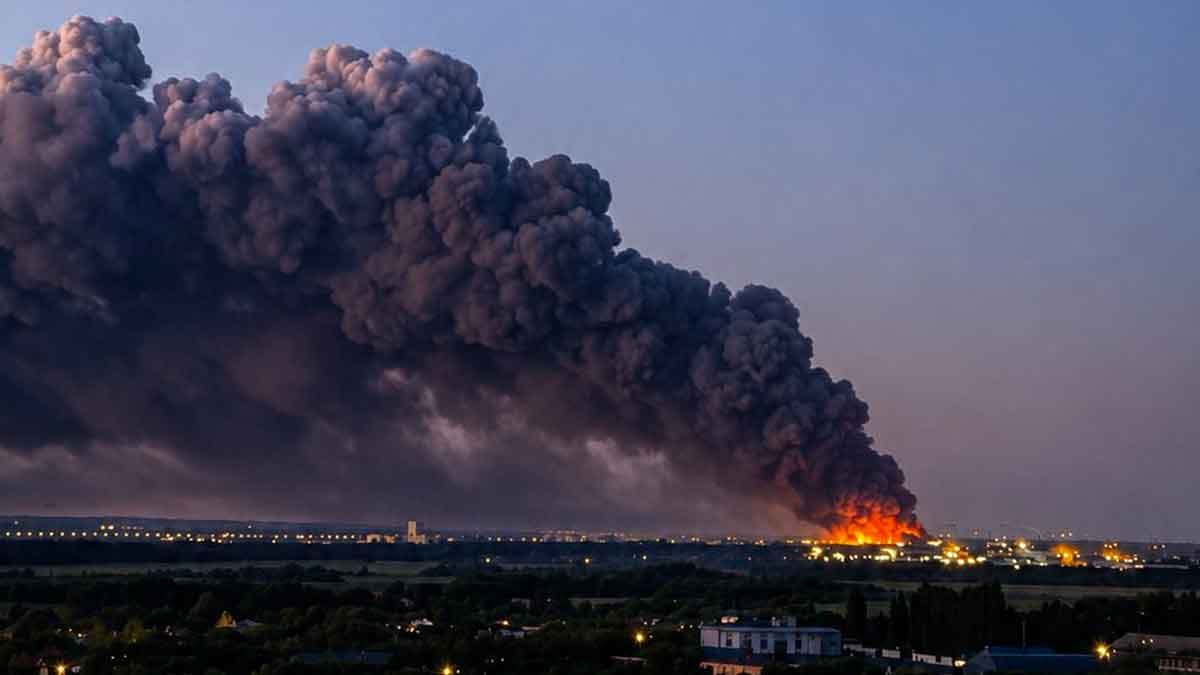
It has been 1,645 days since Russia expanded its war of aggression against Ukraine. It has been 4,570 days since the unprovoked and illegal invasion of Crimea and 533 days since Ukraine accepted a US-brokered unconditional ceasefire on March 11, 2025.
On August 25, the General Staff of the Armed Forces of Ukraine (GSAFU) reported that Russia carried out 203 attacks and another 189 assaults through 22:00 Hours Kyiv Time on Monday.
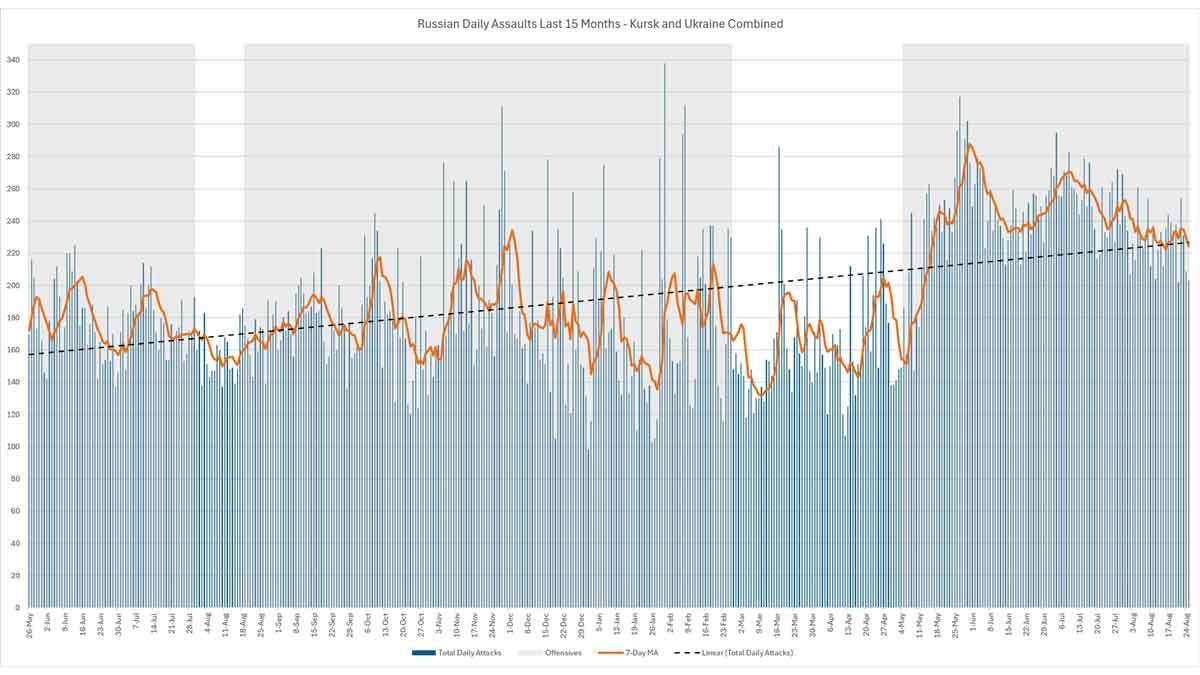
The 7-day moving average fell to 224. For the week ending August 24, Russia executed 1,607 discrete assaults, a one percent increase from the previous week.
On Tuesday, the VKS (Russian Aerospace Forces) and army aviation conducted 81 airstrikes using 270 precision-guided munitions. Russian ground forces executed approximately 3,100 fire missions and 10,500 strikes using wire-guided and first-person view (FPV) drones.
The heaviest fighting continues to be in the areas of Sloviansk, Kramatorsk, Kostiantynivka, and Dobropillya. On the frontlines, there were only small changes in territorial control.
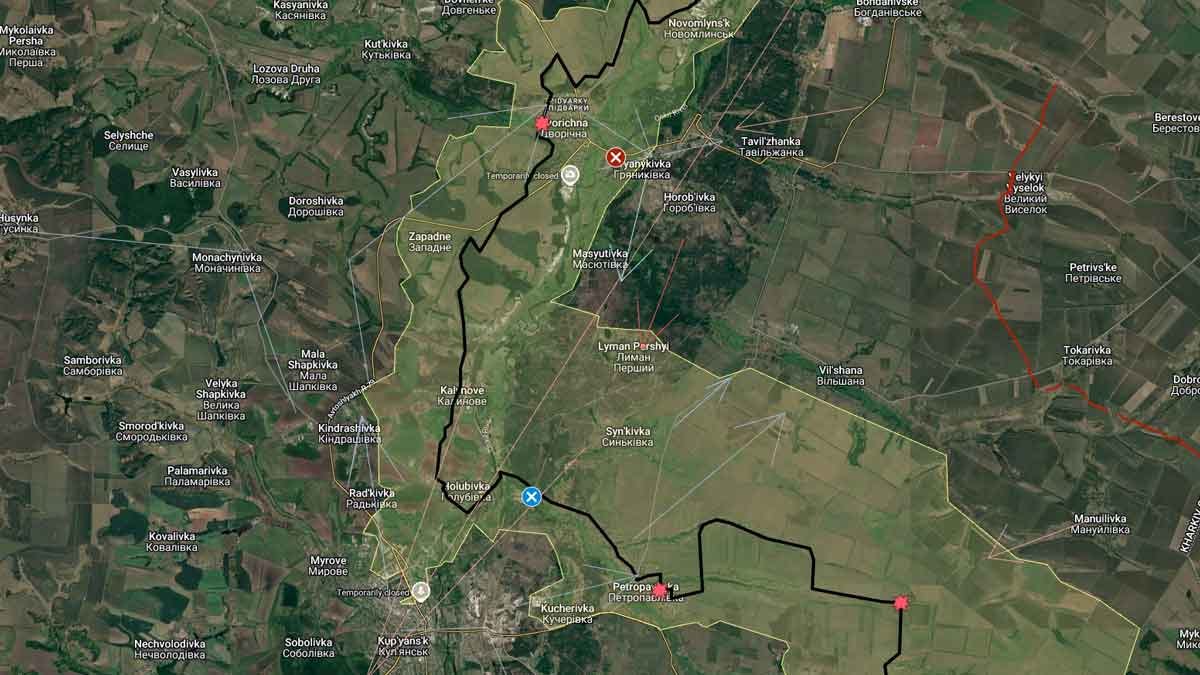
North of Kupiansk on the west bank of the Oskil River, Ukrainian forced completed clearing operations in Kutkivka and made marginal gains in the direction of Dvorichna. The gray area was reduced by 7.0 square kilometers, and the area of Russian control was reduced by 0.2 square kilometers. The localized offensive was carried out by volunteers from Colombia attached to Ukraine’s 23rd Assault Regiment.
Wait! While we have your attention, Malcontent News is an independent news agency established in 2016, and we cannot exist without your support. When you subscribe to our Substack or Patreon, you join a community of malcontents who believe that the truth still matters. We cannot continue to exist and fight in a post-truth world without support from readers, listeners, and viewers like you. Now, back to the story.
In the so-called Luhansk People’s Republic (LNR), there was a major explosion and fire in the city of Luhansk. Four hours later, local residents reported another large explosion that knocked out power in the city. In the evening, there was a third explosion, with a photo showing secondary detonations consistent with an air defense system or weapons cache cooking off. Occupation officials did not release a statement about any of the incidents, which is normal when military targets are hit.
The illegitimate governor of the LNR, Leonid Pasechnik, claimed the Lysychansk-Stakhanov marshrutka [a small bus that drives a regular intercity route) traveling between Zolote and Alchevsk was hit by a Ukrainian drone, killing nine and wounding five.
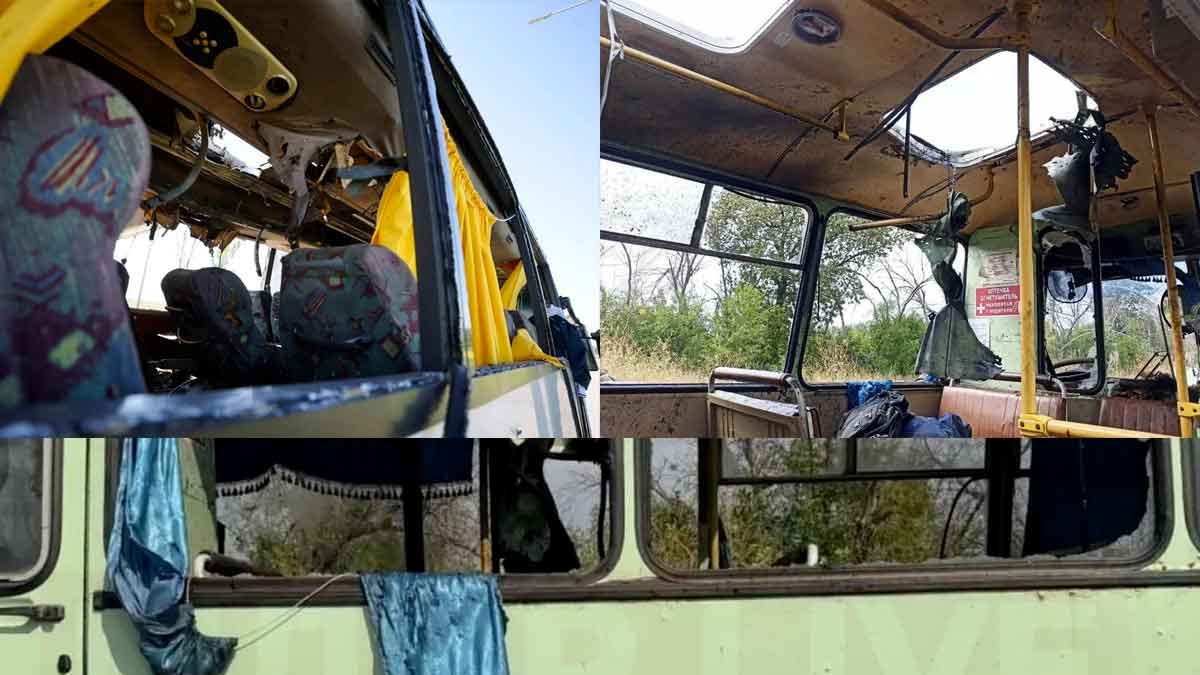
However, there’s a problem with the official photos. The interior photos shared by Governor Pasechnik clearly show two different buses. With one having a different exterior color, seats, ceiling controls, and curtains. While it is undeniable that a marshrutka was hit by a drone, there were no pictures of casualties and only areas of blood spatter in the legitimate interior picture. We cannot verify the casualty claim, nor can we verify the bus was being used by civilians on a route that is supposedly closed to civilian traffic.
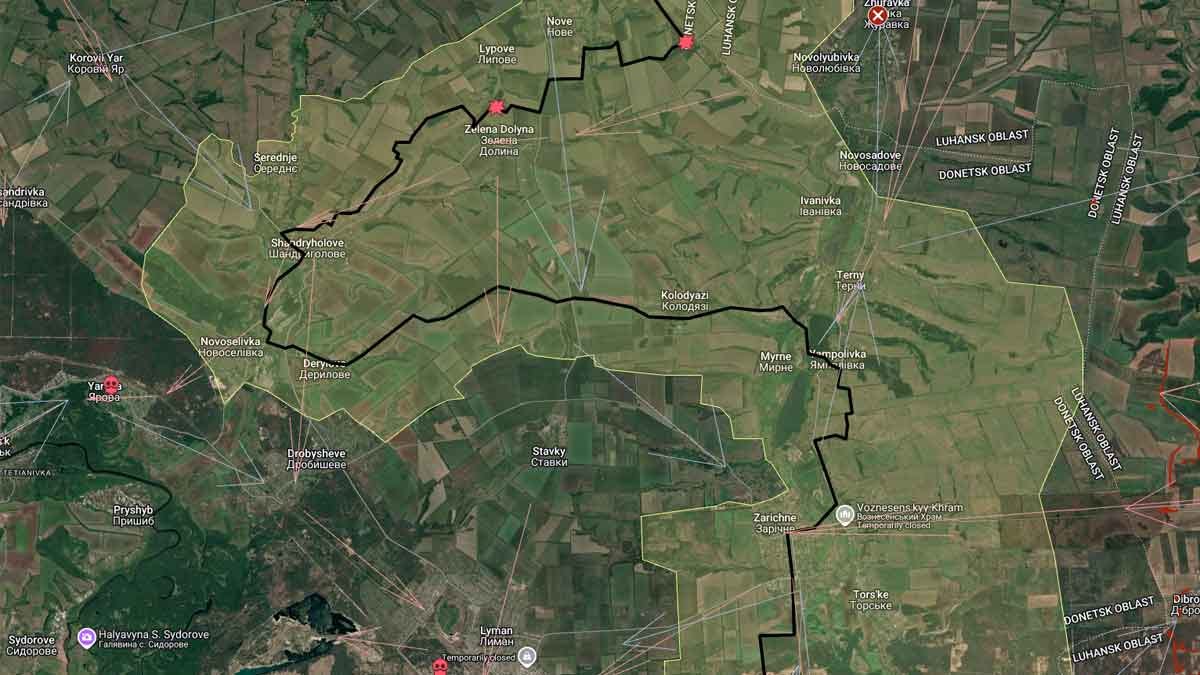
There are no changes to the tactical and operational situation in the Lyman area of operation that we can report. Claims made by Russian military bloggers of 4,000 to 10,000 surrounded Russian troops west of Shandryholove and Derylove are false. Russian map sources place the line of contact 11 to 15 kilometers further west than reality.
Ukraine is maintaining tight operational security (OPSEC), as it did in the Komar direction, to protect the ongoing localized offensive.
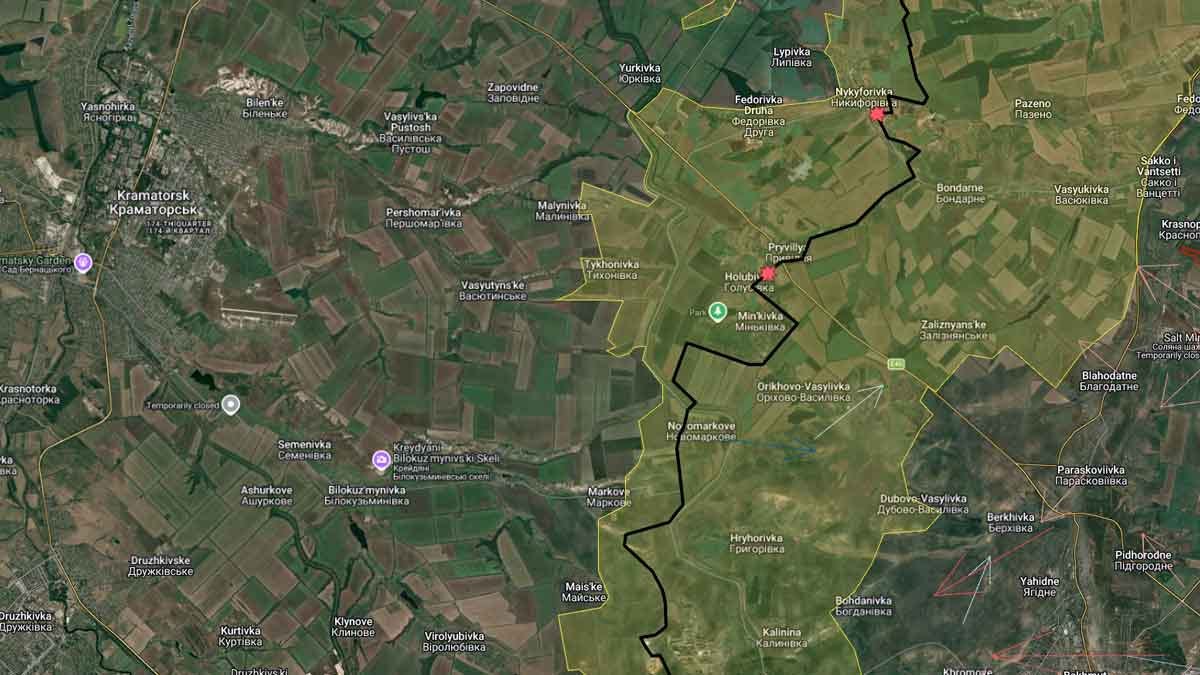
Southeast of Kramatorsk, in the area of the E-40 Highway and Siverskyi Donets- Donbas Canal, Ukrainian forces made marginal gains near Vasyutynske and south of Tykhonivka. The gray area was reduced by 5.7 square kilometers. Russian sources have significantly reduced the amount of information they are sharing and have republished numerous videos from the Siversk region, claiming to show advances past the canal.
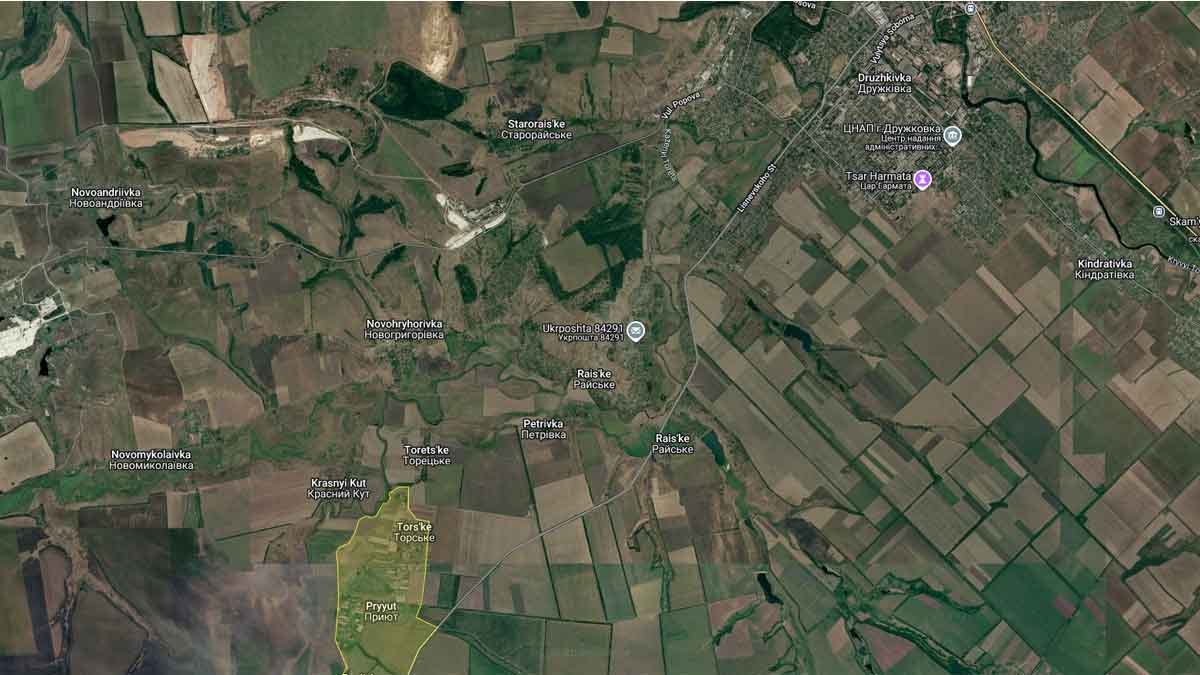
Our low confidence that Russian forces remained in Krasnyi Kut was well placed, with Ukrainian forces clearing the village earlier this week. The gray area was reduced by 1.0 square kilometers, north of the Kazenyi Torets River.
Claims by the Russian Ministry of Defense (RMOD) that Kucheriv Yar was captured are false. Russian sabotage and reconnaissance units periodically infiltrate Ukrainian defenses and enter the village, but have been unable to establish new defensive positions.
Russian military blogger Two Majors published a video claiming it was in the direction of Druzhkivka. The video was recorded in 2025, 26 kilometers south, in Tarasivka.
The RMOD announced the capture of Leontovichi (Soviet name: Pervoye Maya and alternatively Pervomaiskyi), southwest of Porvovsk. Russia has had full military control of the village for almost a year. Periodically, Moscow makes repeat capture claims of areas already under Russian control.
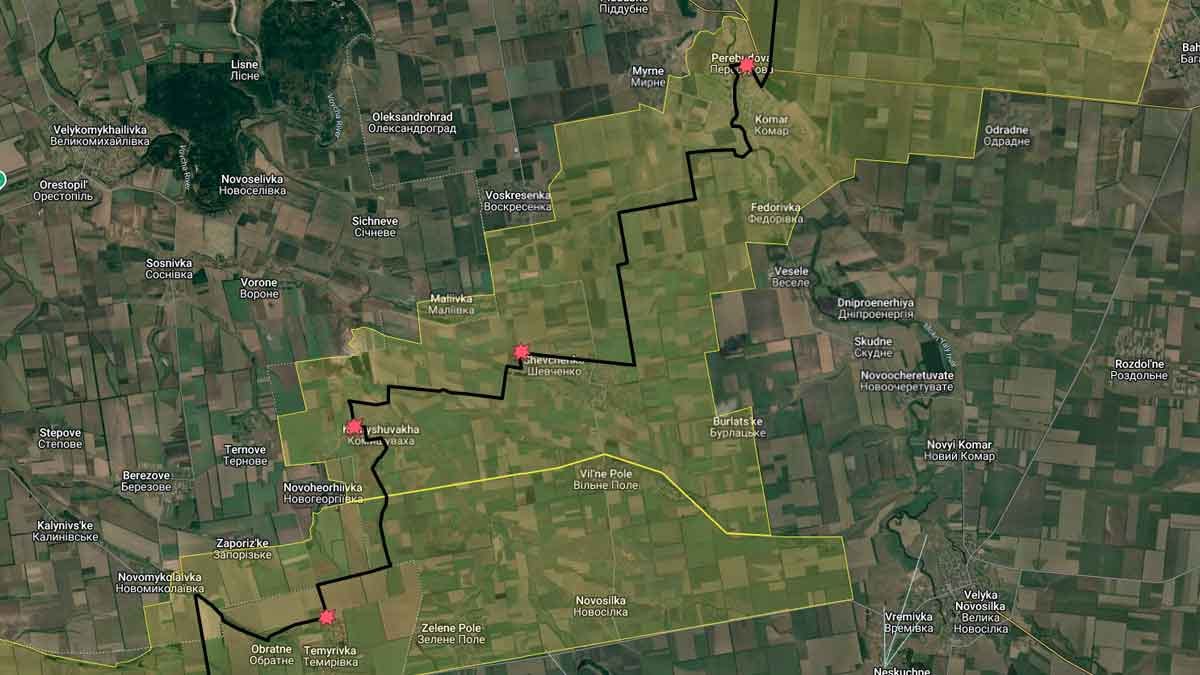
Southwest of occupied Komar, Ukrainian forces are further east than previously assessed. Russian video shows Ukrainian forces holding defensive positions north of Shevchenko. The area of Russian control was reduced by 7.0 square kilometers, and the gray area was unchanged.
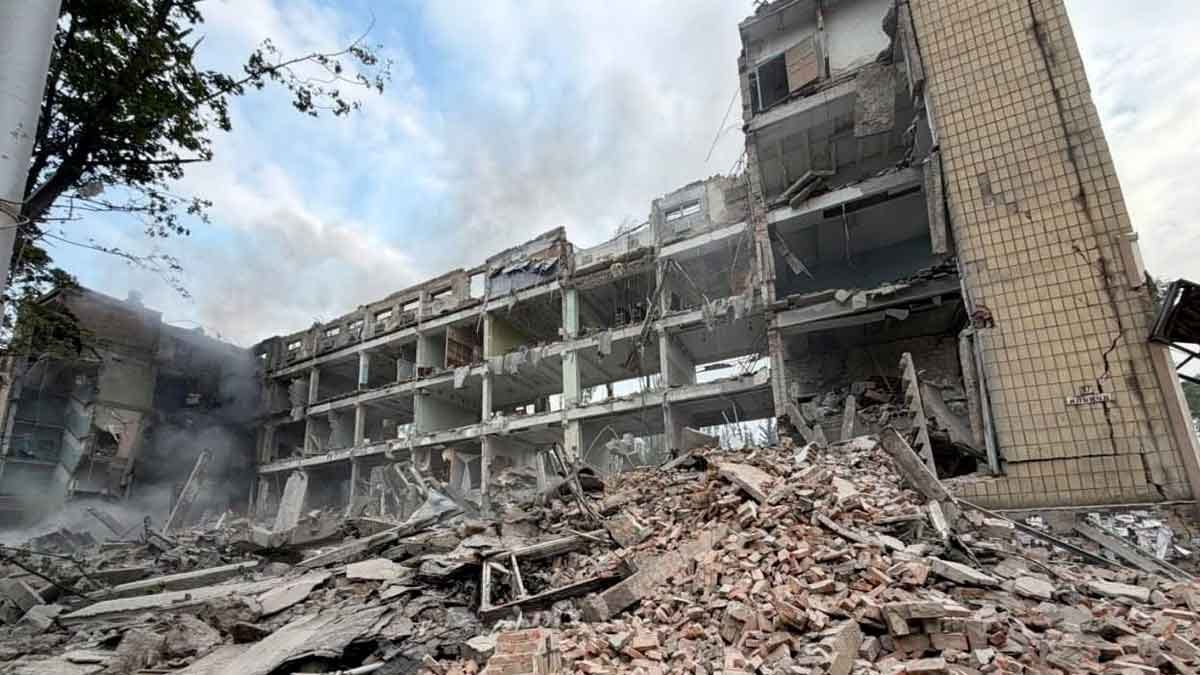
In the so-called Donetsk People’s Republic, 13 cruise missiles struck the former UkrNDIplastmas Research Institute Administrative and Laboratory Building No. 1 and an unfinished underground parking structure in the occupied city of Donetsk. The Research Institute was militarized by Russian occupiers in 2014 and was being used for command and control, logistics, and as a barracks for the 51st Guards Combined Arms Army. The building, which had a Cold War-era bomb shelter, was completely destroyed.
The underground parking structure is on Tamanskyi Avenue, less than 500 meters from the main entrance of the Donetsk City Mall. Ukraine claimed the garage, part of an unfinished apartment high-rise project, was being used as a shelter for missile transporter erector launchers (TELs) and armored vehicles.
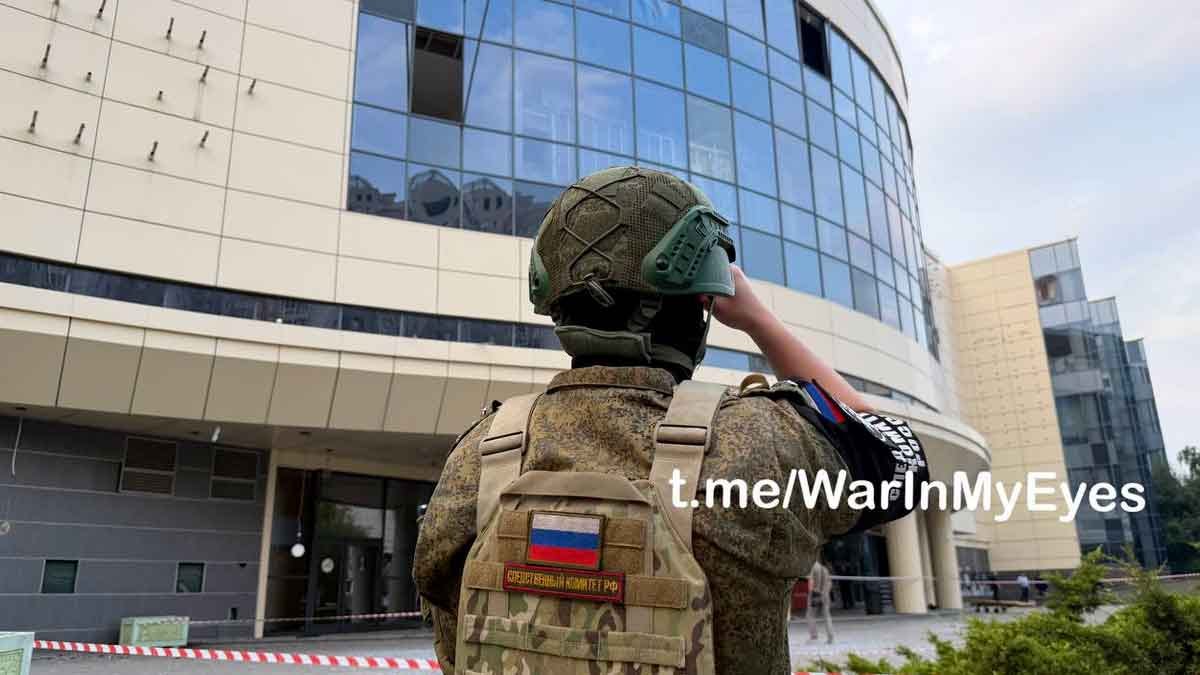
Local officials claimed the mall was the target, but pictures shared by Russian propagandists undermined the claim. Photos of the main entrance to the mall show that several windows were broken by the pressure wave or debris, with no signs of fire or structural damage.
A video recorded inside the mall captured the sound of nearby explosions, as panicked people ran for cover. The building didn’t lose power, and there were no indications of dust, smoke, or fire.
Officially, the occupation government claims 11 people were injured, and there were no fatalities. However, the Republican Blood Center in occupied Donetsk put out an urgent request for all blood types. Russian sources claim the Russian military suffered a mass casualty event at the Research Institute.
The off-site power outage at the Zaporizhzhia Nuclear Power Plant (ZNPP) has entered its sixth day. Neither the International Atomic Energy Agency, Ukraine’s Energoatom, nor Russia’s Rosatom has released a status update.
The last report from the IAEA was that seven of 20 emergency diesel generators were providing on-site power for coolant circulation and plant operations.
Ukrainian drones struck the chemical tanker NAZAN, the general cargo ship SVS JUSTICE, and the bulk carrier STAR II, near the Russian port of Novorossiysk. Near the Russian Black Sea port of Tuapse, the roll-on-roll-off ship LIDER BORDO MAVI was hit by three drones.
According to the head of Ukraine’s Unmanned Systems Forces, Robert “Magyar” Brovdi, Ukrainian drones have hit 36 Russian shadow fleet vessels in the Black Sea and the Sea of Azov.
The world’s largest seaborne shipping company, Mediterranean Shipping Co. (MSC), announced it would no longer accept orders for cargo shipments from Novorossiysk, due to a recent attack on the ULSAN III.
On August 25, Russia successfully attacked an ammunition depot in Pishchanka in the Dnipropetrovsk Oblast. The settlement was evacuated due to multiple secondary explosions. In nearby homes, windows were blown out, and doors were knocked out of their frames. Three houses were destroyed, and 15 were damaged. The explosions killed one and injured 15.
Officially, regional leaders did not explain the cause of the blast, only stating that “police investigative and operational teams, bomb disposal experts, and all relevant emergency services are working at the scene.”
Hours after Ukraine’s President Volodymyr Zelenskyy announced that the country had received a limited number of Patriot PAC-3 anti-ballistic missile interceptors, Russia launched a missile and drone attack on Kyiv. All seven North Korean Kn-23 and Russian Iskander-M short-range ballistic missiles were intercepted. On Thursday morning, Kyiv time, a large-scale air raid was ongoing.
On the morning of August 27, Kyiv Time, Russia attacked the Epicenter store in the Kyiv suburb of Boryspil, causing a large fire.
The Security Service of Ukraine (SBU) thwarted an assassination attempt in Kyiv backed by Russian intelligence. The Russian Federal Security Service (FSB) recruited a 63-year-old pensioner who had fled occupied Luhansk to plant one kilogram of plastic explosives on the car of a defense company executive. The plot was uncovered, and the bomb was defused. The unnamed man fled to Poland on August 20, hoping to reach Russia through Belarus, but was arrested by local police. He now faces extradition to Ukraine.
Ukrainian long-range drones and cruise missiles successfully attacked dual-use infrastructure and energy production facilities in Russia.
On Thursday morning Moscow Time, Ukrainian FP-1 long-range drones struck the Ozon distribution center (DC) in Blagoveshchensk, Republic of Bashkortostan. Ozon is an online e-commerce firm similar to Amazon and a direct competitor of Russian company Wildberries. The company’s stock (OZON) has dropped 23.85 percent in the last five days and is down 51.30 percent since the start of the year.
In the Tambov region, Ukrainian drones struck the Wildberries DC in Kostovsk, destroying the 108,000-square-meter complex.
In the Nizhny Novgorod Oblast, the Lukoil-Nizhegorodnefteorgsintez Refinery in Kstovo was knocked offline after the seventh Ukrainian drone attack since March 2024. Pre-2022, the facility could process 17 million tonnes of crude oil per year. The refinery was knocked offline on July 2 and had only returned to 75 percent output three weeks ago. This was the last operating refinery for Lukoil, Russia’s second-largest Russian oil and gas company.
On Tuesday, Russia’s largest chemical plant under construction, the $11 billion Amur Gas Chemical Complex, suffered a series of catastrophic explosions during operational testing. The plant was supposed to go online at the end of August, with autocrat Vladimir Putin attending the opening ceremony.
The death toll had climbed to seven with nine workers missing. One-hundred and fifty-two people were injured, with 36 hospitalized. Combat activity did not cause the explosion.
Russia’s second launch of Rassvet-3 Internet satellites has suffered significant technical issues, according to Anatoly Zak of RussianSpaceWeb.com. Two of the 16 satellites launched have decaying orbits, after failing to reach an altitude of 300 kilometers. A third satellite is also losing altitude. Data from the US Space Force shows the remaining 13 satellites have yet to reach their targeted orbits at 530 kilometers, and are stuck at approximately 350 kilometers.
Rassvet is Russia’s domestic version of Starlink, plans to have 250 satellites in orbit by 2027, and 900 by 2035. Currently, the constellation has 14 operational satellites, which provides two windows of Internet access in Ukraine for 60 to 90 minutes per day.
At the time of publication, Russian media reported a car bomb exploded in the Shushary District of St. Petersburg, killing a Lieutenant Colonel in the Armed Forces. No other information was available.
President Zelenskyy announced the expansion of the area of operation for the 1st Corps of the National Guard “Azov” and Ukraine’s 3rd Army Corps in the Donetsk Oblast.
Third Army Corps commander Brigadier General Andrii Biletskyi is now responsible for the defense of the Lyman, Siversk, Sloviansk, and eastern Kramatorsk regions. First Corps commander Brigadier General Denys Prokopenko is now responsible for the defense of the southern flank of Kramatorsk, Bakhmut, Kostiantynivka, Dobropillya, and Pokrovsk regions. Both commanders have performed well in their assigned areas. Units not attached to the 1st and 3rd Corps currently deployed in their respective areas of responsibility have been made subordinate to their command.
This is a positive development, especially east of Sloviansk, where the main Ukrainian units defending the area around Mykolaivka have been deployed without relief since 2022.
Italy is reportedly transferring four next-generation SAMP/T air defense batteries and Aster 30 interceptor missiles to Ukraine, which will be operational by the end of 2026. The military aid package has a value of $3.5 billion and is the 13th tranche from Italy. The batteries will have the upgraded SAMP/T NG radar, which provides better coverage. The Aster 30 missiles have also been upgraded and are capable of intercepting ballistic missiles. Ukraine was also granted a license from Italy and France to domestically produce Block 1 Aster 30 interceptors.
During his first visit to a foreign country, British Prime Minister Andy Burnham announced that Ukraine would be provided with the technical information for the SCALP-E and Storm Shadow cruise missiles, and the license for domestic production. As part of the technology sharing agreement, the UK became the first country to gain access to Ukraine’s drone warfare battlefield database, which can be used to train AI models.
President Zelenskyy issued the Ukrainian Order of Freedom to Elon Musk for his continued support with Starlink Internet services and blocking Russian access.
The commander of Ukraine’s Company Code 9.2, 475th Regiment, received the Gold Star of the Hero of Ukraine from Zelenskyy during Ukrainian Independence Day. The commander rescued two of his wounded soldiers after the uncrewed ground vehicle that was transporting them was disabled by a Russian drone strike.
At the time of publication, two F-18s with the Spanish Air Force had been scrambled from Romania’s Mihail Kogălniceanu Air Base 57 due to a Russian drone potentially violating the country’s airspace. It was the fourth time fighter planes were deployed in the last 24 hours. An air raid alert has been issued for parts of Tulcea County.
On Wednesday, Romanian radar tracked a Russian drone flying west, approximately 8 kilometers north of the Ukrainian border settlement of Vylkove. The National Military Command Center deployed an Air Force IAR-330 PUMA helicopter to monitor the situation and issued an air raid alert for parts of Tulcea County. No airspace violation was recorded.
An armed Russian drone washed ashore at the Romanian coastal resort town of Olimp. Explosive Ordnance Disposal (EOD) engineers destroyed the warhead in place. A second drone washed ashore in Constanta, next to the historic Constanta Casino. The UAV was unarmed.
On Thursday morning, Chisinau Time, five Russian drones violated Moldovan airspace, with two potentially crashing near Carahasani and Pervomaisc. Two more flew near the border village of Palanca, and the fifth flew over the Moldovan side of the Săiți-Lisne border crossing checkpoint. Debris from one of the drones has been located, but Moldovan officials did not provide a location.
A Russian Geran-2 drone briefly violated Moldovan airspace on Wednesday, crossing the Ukrainian border near Palanca and flying over Tudora before returning to Ukraine.
Comments
Nothing yet. Say the first thing.
Sign in to join the conversation.