

It has been four years and seven months since Russia expanded its war of aggression against Ukraine. It has been 4,568 days since the unprovoked and illegal invasion of Crimea and 531 days since Ukraine accepted a US-brokered unconditional ceasefire on March 11, 2025.
On August 23, the General Staff of the Armed Forces of Ukraine (GSAFU) reported that Russia carried out 231 attacks and another 181 assaults through 22:00 Hours Kyiv Time on Monday.

The 7-day moving average was 235. On Sunday, the VKS (Russian Aerospace Forces) and army aviation conducted 95 airstrikes using 329 precision-guided munitions. Russian ground forces executed approximately 3,300 fire missions and 11,850 strikes using wire-guided and first-person view (FPV) drones, a new single-day record.
The heaviest fighting continues to be in the areas of Sloviansk, Kramatorsk, Kostiantynivka, and Dobropillya. There is a lot of activity to report on.
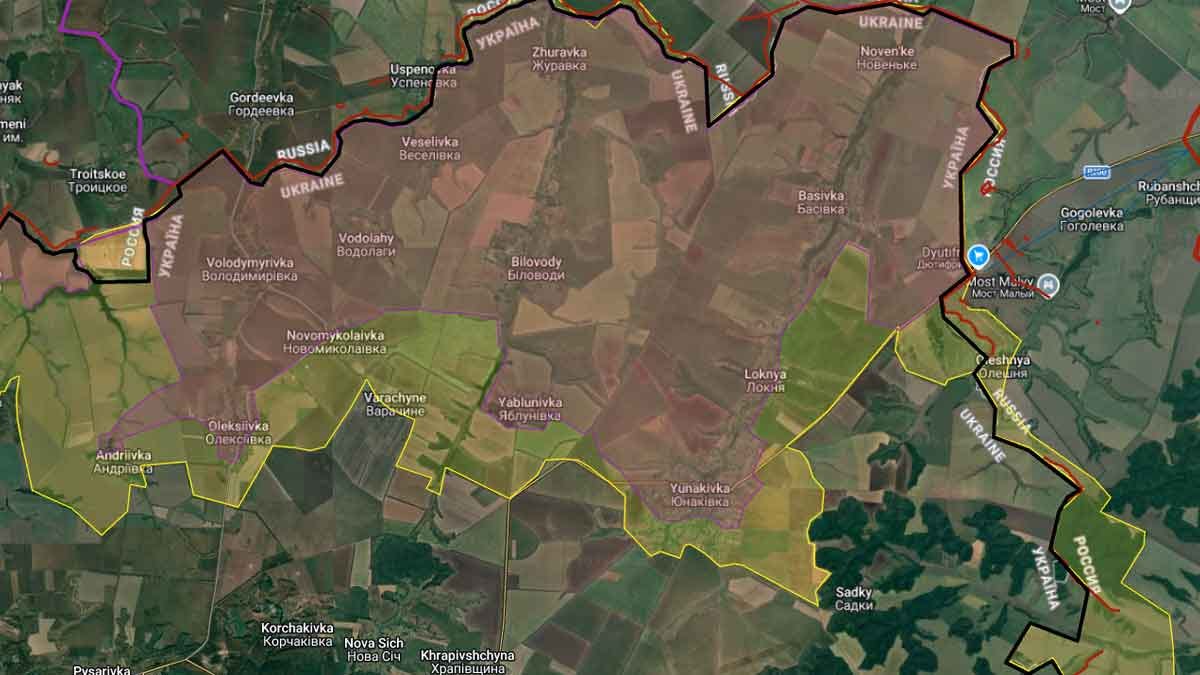
North of Sumy, a Ukrainian drone placed a flag on the ruins of the Ukrainian Orthodox Church of the Nativity of the Blessed Virgin Mary in occupied Yunakivka (pictured above). The flag planting was done on Ukrainian Independence Day and is not part of a Ukrainian offensive. Fighting has remained sporadic and positional in the North-Slobozhansky area.
Wait! While we have your attention, Malcontent News is an independent news agency established in 2016, and we cannot exist without your support. When you subscribe to our Substack or Patreon, you join a community of malcontents who believe that the truth still matters. We cannot continue to exist and fight in a post-truth world without support from readers, listeners, and viewers like you. Now, back to the story.
After an extended pause for operational security (OPSEC), Ukraine’s Unmanned Systems Forces (USF) restarted publishing compilation videos and detailed information on mid-range drone strikes in the occupied territories and Russia.
In occupied Dovzhansk, FP-2 mid-range strike drones successfully attacked a fuel and lubricants depot for the Russian 106th Separate Logistics Brigade, 41st Guards Combined Arms Army (CAA). Ukrainian drones have repeatedly targeted Russian military logistics, air defense, and railroad infrastructure in the city, located 13 kilometers from the Russian border.
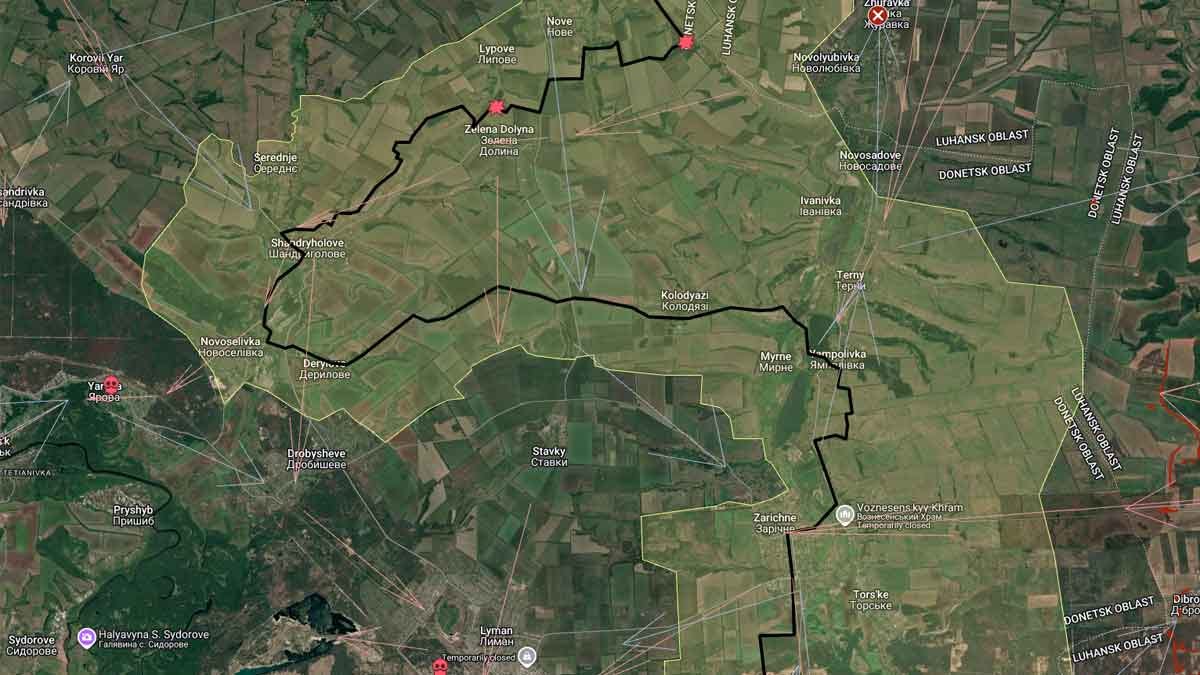
Russian sources released a video showing Ukrainian forces are further east of Nove and south of Katerynivka than what was publicly available. Russian military bloggers have been warning for months about a significant Ukrainian offensive operation in the Lyman area, and we can confirm those reports are somewhat accurate. However, the Russian maps showing advances as far west as Studenok at the Siverskyi Donets River are a fantasy.
Currently, the Russian blogger community is setting conditions to admit that none of the territory west of Novoselivka is under Russian control, using the favorite tool of the inaccurate mapper. “A big surprise, counteroffensive.” That isn’t the reality of the Ukrainian operation.
At this time, all we can confirm is that the area of Russian control was reduced by 4.9 square kilometers near Nove and Katerynivka, and there was additional successful Ukrainian activity in the same area. The actual situation for Russian forces is significantly more degraded than the map shows.
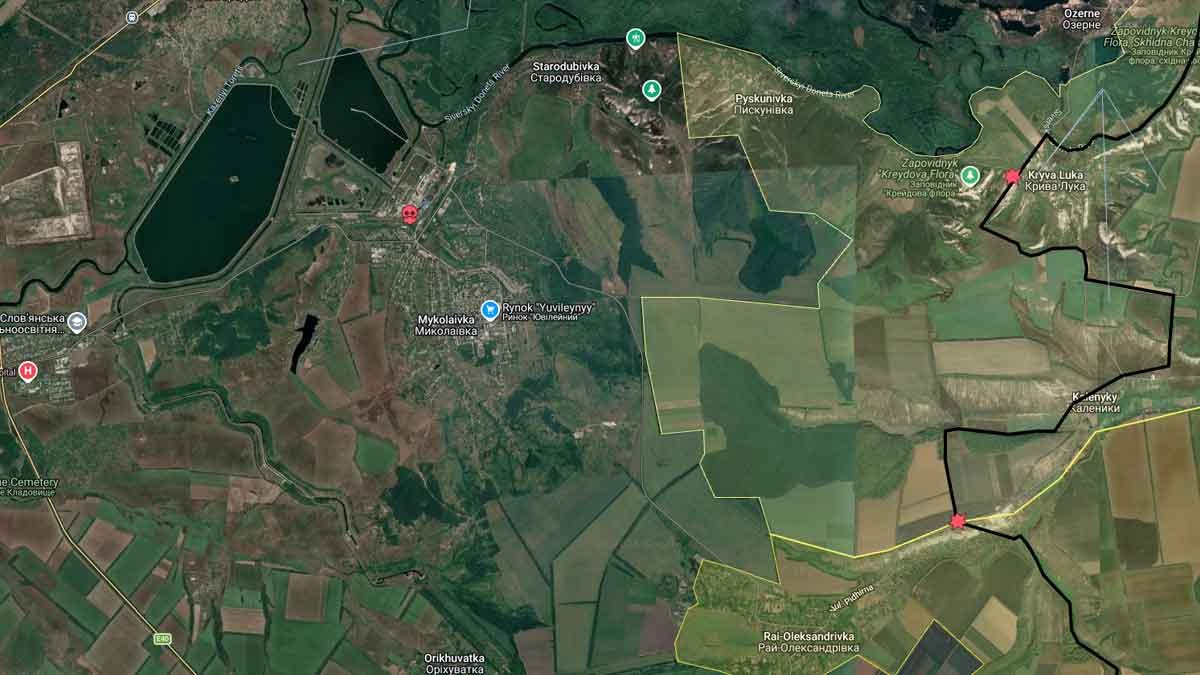
Ukrainian forces eliminated all three Russian squads that entered Mykolaivka. The heaviest fighting was in the area of School No. 3 on Myra Street, where Ukrainian forces suffered casualties during close combat. Mykolaivka is back under Ukrainian control, and the gray area was reduced by 4.7 square kilometers. Russian artillery and drones attacked Ukrainian positions southwest of the city, further confirming the assessed gray zone.
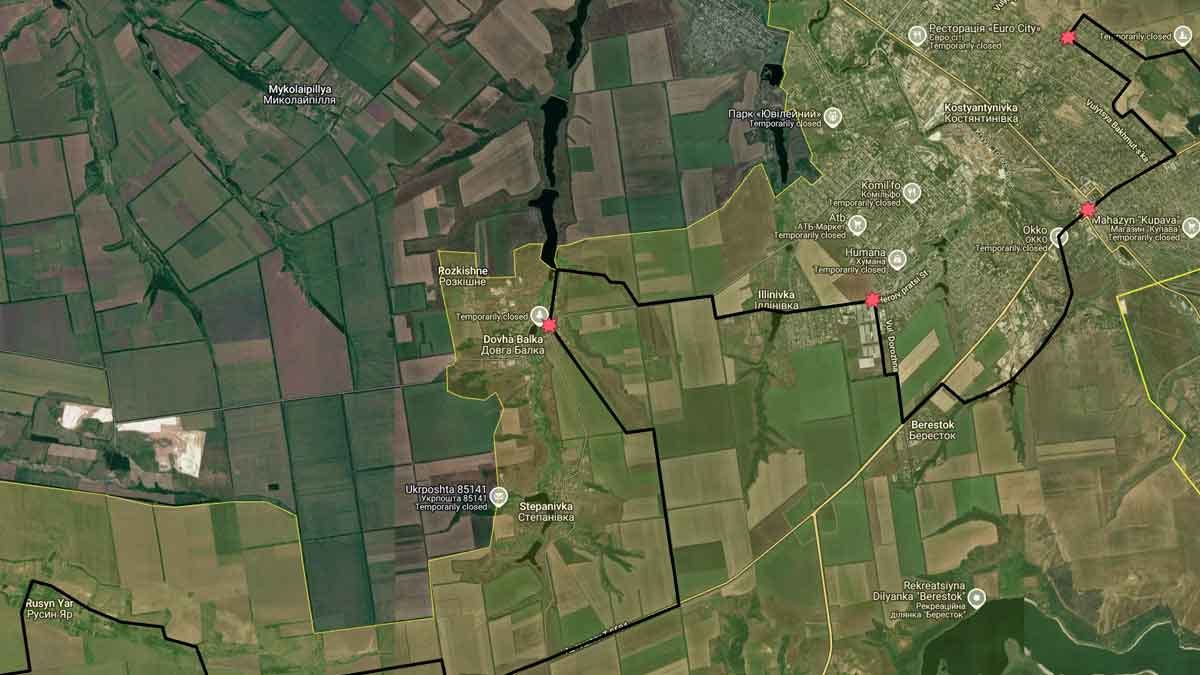
Russian forces were able to capture 10.6 square kilometers of territory west of Illinivka and secured new defensive positions in the eastern part of Dovha Balka. The gray area was expanded by 5.3 square kilometers and includes Rozkishne. A Russian squad carried out a dubious flag waving in Mykolaipillya, 6 kilometers from the known line of contact (LOC). Claims by the Russian Ministry of Defense (RMOD) that the village was captured are false.
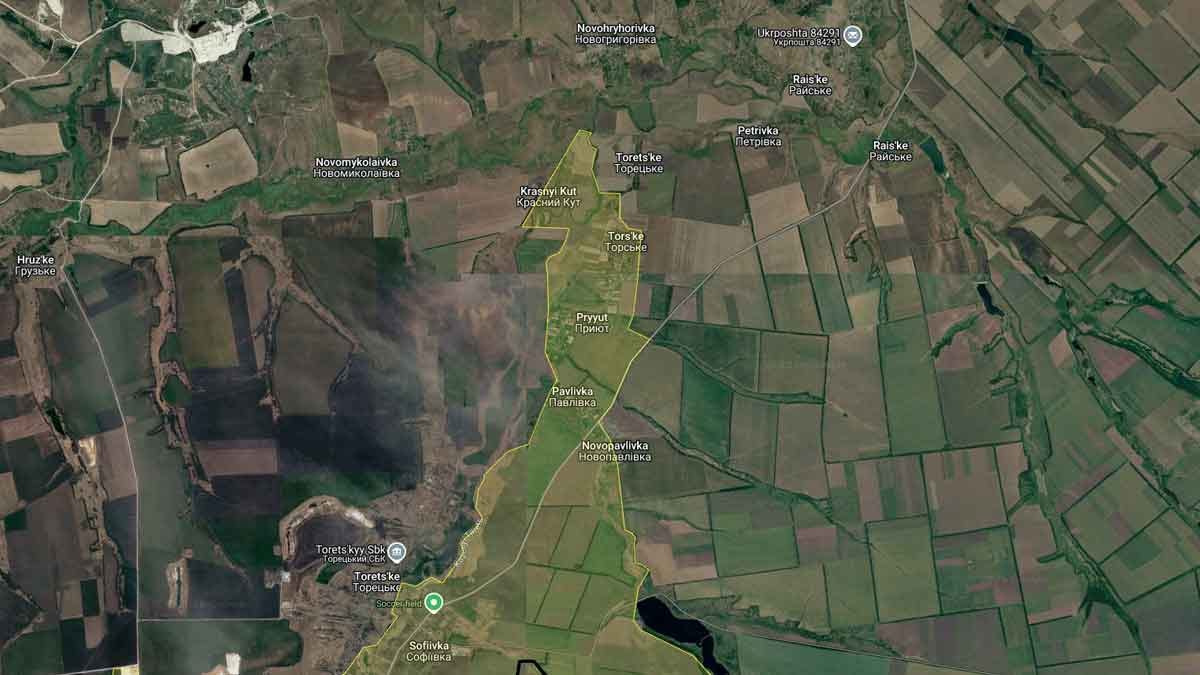
Russian sources released a “see how good we are at war” video that revealed the recent Russian advances southwest of Druzhkivka were a cognitive warfare operation. Russian artillery attacked Ukrainian positions in Novohryhorivka, Novomykolaivka, which Russia claimed to have captured on August 21, and Toretske, which Russian claimed to have captured on August 9. Due to the terrain, the Russian squad that waved flags in Petrivka on August 12 either left the village, was eliminated, or is currently encircled. We coded Novomykolaivka, Toretske, and Petrivka as under Ukrainian control, and reduced the gray area by 8.5 square kilometers.
We have low confidence that Russian forces remain in Krasnyi Kut due to the Kazenyi Torets River isolating the village.
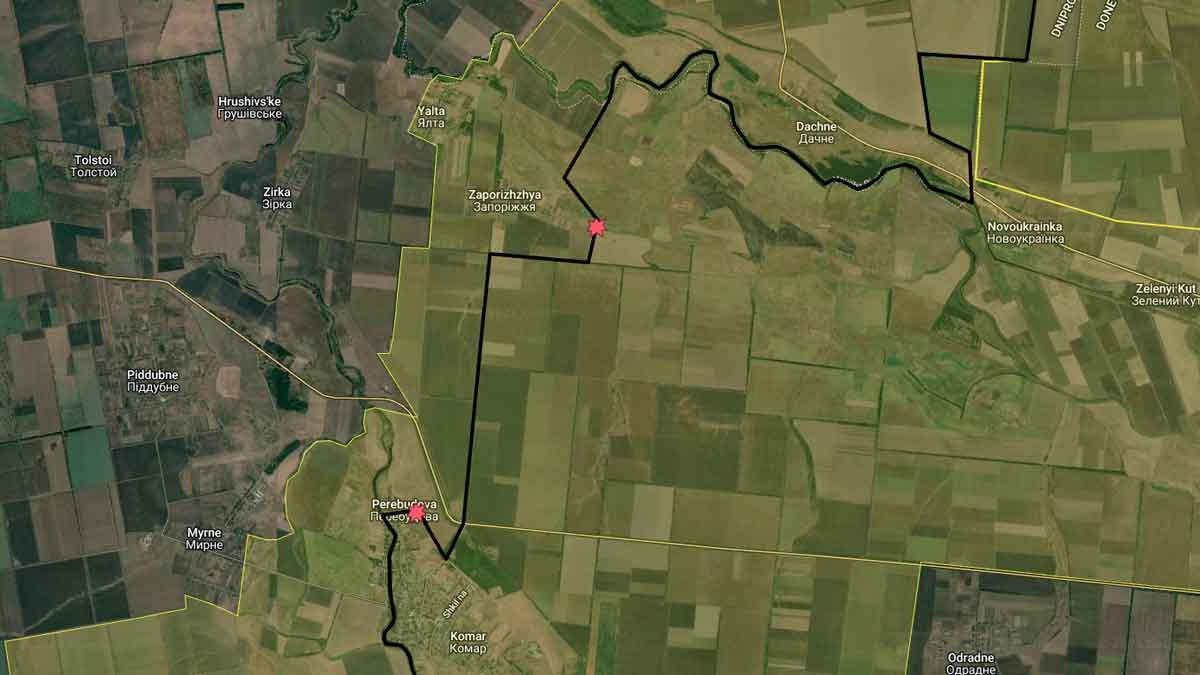
North of occupied Komar, Russian drones dropped munitions on Ukrainian defensive positions in the center of Zaporizhzhia [Donetsk], east of the Mokri Yaly River. The area of Russian control was reduced by 2.0 square kilometers.
Ukrainian USF successfully attacked the Unmanned Aerial Vehicle (UAV) assembly point in occupied Novopetrivka used by the Russian 89th Separate Rifle Regiment, 36th CAA. The site was hit by multiple drones.
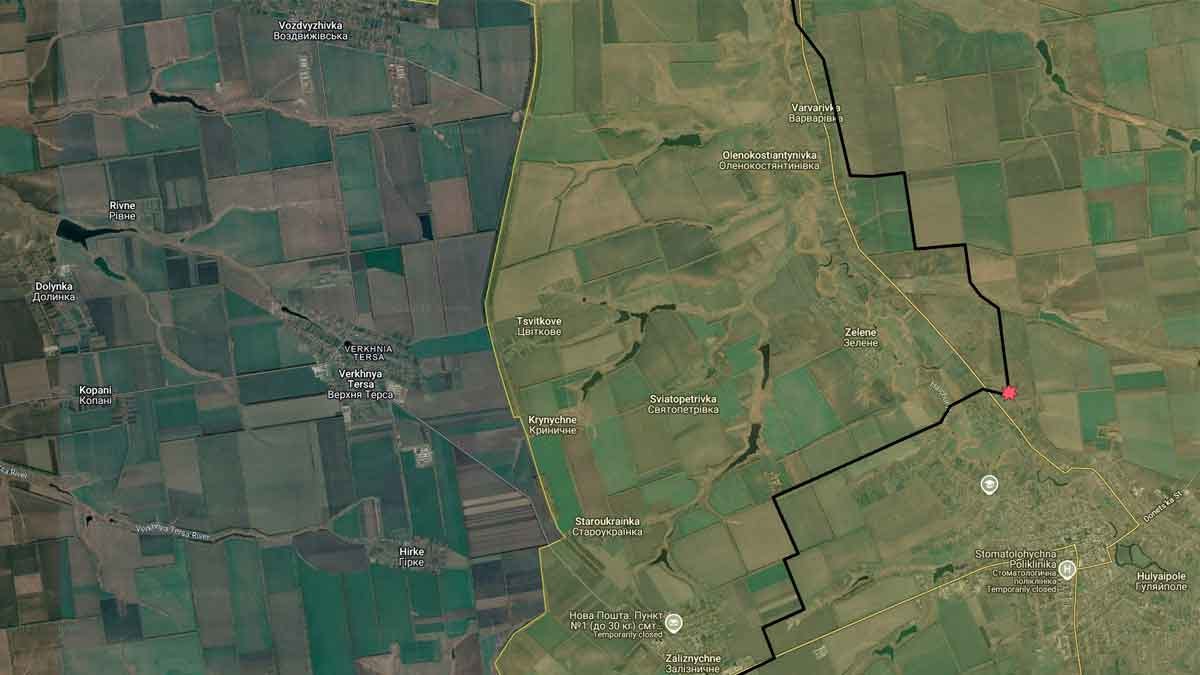
A Russian squad conducted two dubious flag wavings in Dolynka, 6.6 kilometers from the gray zone west of Tsvitkove and 13.7 kilometers from the known LOC. Russian units continue to produce picture reports for area commanders to hide the lack of progress in the region. Undercutting the claim, Ukrainian positions on the eastern edge of Verkhnya Tersa and Russian forces moved into Tsvitkove only last week, where positional fighting is ongoing. Further west, Ukrainian forces cleared Novosoloshyne after an earlier Russian flag waver infiltration.
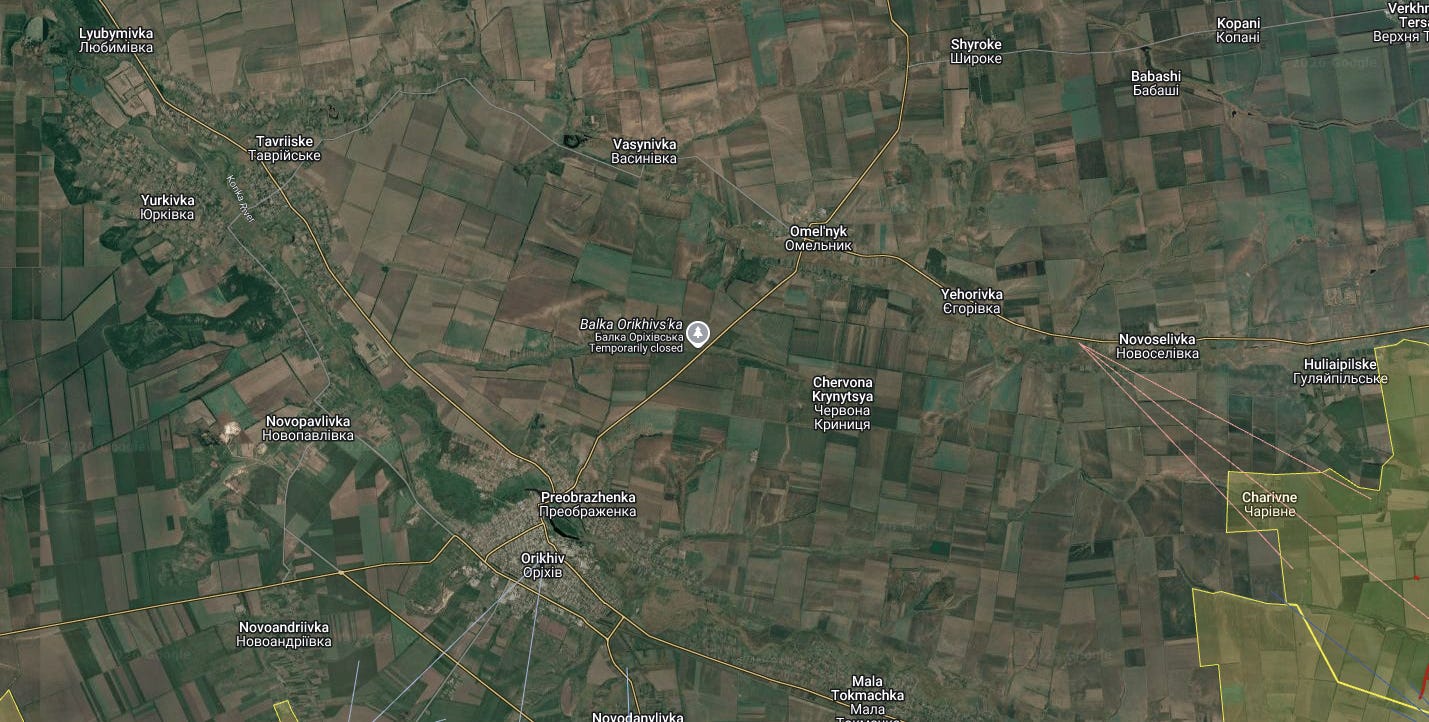
Northeast of Orikhiv, an isolated group of Russian flag wavers in Shyroke was cleared, with prisoners taken.
On August 20, a Russian attack in Dnipropetrovsk disconnected the 330-kilovolt (kV) Ferosplavna-1 off-site power line to Zaporizhzhia Nuclear Power (ZNPP). The International Atomic Energy Agency (IAEA) reported that an attempt to reconnect the line manually was unsuccessful, and Europe’s largest nuclear facility is relying on emergency diesel generators to maintain cooling of the six reactors and the spent nuclear fuel stored on-site.
Rosatom informed the IAEA that the diesel fuel storage tanks located adjacent to ZNPP have not been refilled since March 2026. An attempt to fill the tanks in May was unsuccessful. The last time inspectors were allowed to visit the site was in June. The IAEA reported there were 10 days of emergency fuel remaining. Currently, seven of the 20 diesel generators are providing power to the plant.
To prepare for a possible total power loss at the plant, Russian occupiers increased the amount of water in the spent fuel storage ponds, which will extend the amount of time needed for the water to boil off.
Our analyst team has repeatedly warned since June 2023 that the longer Russia occupies the ZNPP, the more likely a serious nuclear accident could happen at the facility. In the event of a total power loss, it would take approximately 14 days for the spent fuel storage ponds to boil off, causing a nuclear accident. All six reactors are in cold shutdown, but still require constant coolant circulation. They would start to melt down seven to ten days after the spent fuel.
Attempts to restore the 750 kV off-site power line in June failed due to an earlier Russian attack causing irreparable damage to a critical electrical substation 100 kilometers from the plant.
In occupied Kyrylivka, Ukrainian USF successfully attacked the Arkhangel UAV School, striking the compound with multiple FP-2 mid-range drones.
Multiple Ukrainian drones struck the Rosgvardia Russian Special Rapid Response Unit (SOBR) based in Strilkove. In Zaliznyi Port, a signal repeater used by Russian Geran long-range drones was destroyed.
In Rozdolne, a mobile19Zh6 ST-68U Tin Shield medium-range 3D early warning and tracking radar was destroyed. In Olenivka, Ukrainian FP-2 mid-range drones struck a Zala reconnaissance drone launch point and crew shelter. Near Feodosia, insurgents reported explosions at the air defense radar complex at Mount Tepe-Oba, where a fire is burning. Ukrainian drones also successfully attacked the 330 kV Zapadno-Krymskaya substation.
In the Russian region of Krasnodar Krai on the southern shore of the Sea of Azov, a Ukrainian drone strike destroyed a fuel storage tank in the port city of Yeysk.
Ukrainian long-range drones and cruise missiles successfully attacked dual-use infrastructure, energy production, and military facilities across Russia.
On the night of August 23-24 in the Rostov Oblast, drones attacked Millerovo Military Airfield. A MiG-29 and a Ka-52 decoy helicopter were destroyed. A pair of 39N6E Kasta-2E2 Squat Eye mobile, low-altitude 3D early warning and tracking radars were destroyed by mid-range drone strikes in Heraskin and Karaichev. In Hukovo, an 1L119 Nebo-SV mobile early warning and tracking radar was destroyed.
Ukrainian drones successfully attacked the Astrakhanskoye Gas and Condensate Plant in the Astrakhan Oblast. High-resolution satellite images we can not share publicly due to licensing requirements show that two of the gas separate units were severely damaged, reducing output by 25 percent. The compound is the largest producer of sulfur gas in Russia, which is used to make sulfuric acid. The acid is a critical precursor for explosives and is used to treat wood pulp and cotton to extract nitrocellulose.
Overnight, Ukrainian drones successfully attacked the Afipsky Oil Refinery and the adjacent fuel depot in Krasnodar Krai. The refinery has been repeatedly attacked and, prior to 2022, could process 6.25 million tonnes of crude oil per year.
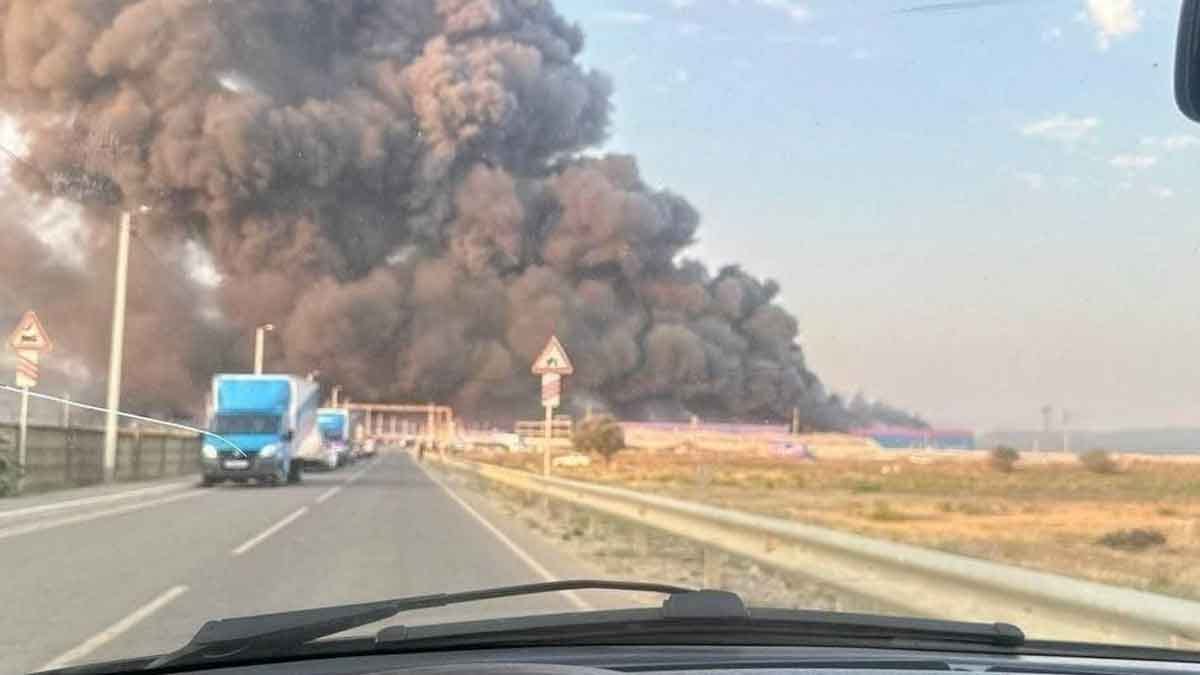
After destroying the backbone of Russian online retailer Wildberries’ distribution network, Ukraine has started attacking its competitor, Ozon. On the night of August 22 in the Samara Oblast, multiple drones hit the Ozon distribution center (DC) in Chapaevsk, which was severely damaged. On August 23, the DC in Orenburg was hit by two drones, but the fire was contained to a small area. Drones also hit the Ozon DC in Tyube in the Republic of Dagestan, destroying the building. Overnight on August 24, Ukrainian long-range drones struck the Ozon DCs in Adygea, Nevinnomyssk, and Makhachlaka. The facility in Nevinnomyssk suffered moderate damage while the warehouses in Adygea and Makhachlaka were destroyed.
In the week before the attacks, the number of drop shippers selling through Ozon had increased 300 percent, with small business owners moving from Wildberries. On the Moscow Stock Exchange, shares in Ozon plummeted 28 percent.
High-resolution satellite images show that the August 20 Ukrainian attack on the TANECO Nizhnekamskneftekhim Oil Refinery in the Republic of Tatarstan did not cause major damage. However, Ukrainian analysts with Dnipro OSINT discovered that between August 5 and 23, an explosion occurred on one of the technical pipelines, which likely impacted plant operations. It is unclear if the damage was caused by the Ukrainian drone attacks on August 10 or 20, or if there was an industrial accident.
The August 21 drone attack on the Lukoil-Permnefteorgsintez Refinery forced the shutdown of the largest crude distillation unit, which provided 40 percent of the plant’s output. Before the attack, the refinery in Perm was only operating at 64 percent capacity due to a drone attack on July 29.
Russian drones have come close to the borders of Romania and Moldova, and in some cases violated both nations’ airspace 18 times in the last 72 hours, according to Romania’s Defense Minister Radu Miruță. There were four incidents on Friday, eight on Saturday, and six on Sunday. There were two more significant airspace violations on Monday.
He said that detecting the Russian drones has become complicated because the new technology being used by Moscow is evading the NATO and US-built detection equipment.
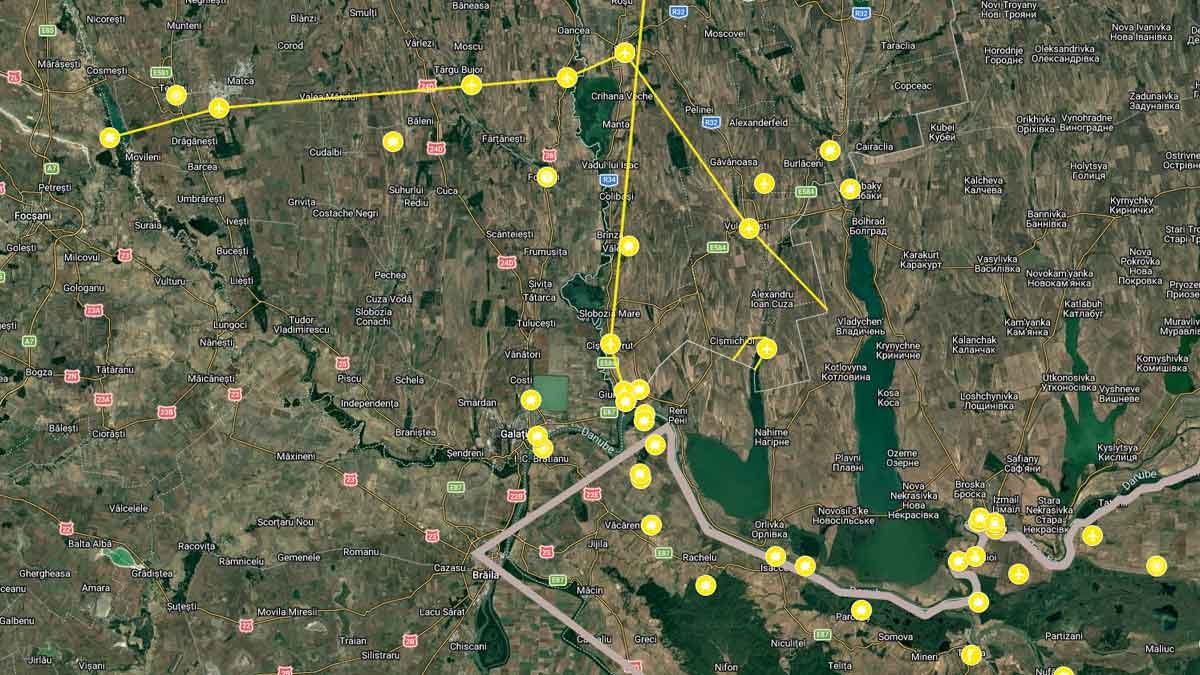
At 05:55 Hours local time, Moldovan radar detected a Russian drone crossing the border near Vladychen, Ukraine, and flying over Vulcanesti. The drone flew northeast toward Cahul, forcing a ground stop at Chisinau International Airport that lasted for 15 minutes.
The Russian drone turned west and crossed into Romania, flying over Umbraresti, Valea Marului, south of Tecuci, crashing in an uninhabited area near Ciuslea. The drone flew for 170 kilometers, and Romania admitted they couldn’t track the Russian drone after it passed Tecuci.
Comments
Nothing yet. Say the first thing.
Sign in to join the conversation.