
Teaching is a conversation. Board meeting are conversations. Disciplinary proceedings are conversations. Carline is a conversation. Each athletic season, for each team, is a conversation — on the field and in the stands. The school musical, in spite of all that singing, is a conversation. Curriculum is a conversation. Our schools are bound together by back-and-forth, formal and informal, hopefully healthy conversations.
Some conversations just drift along like low stakes tennis volleys. Others are highly staged and scripted. Either way, information flow helps schools grow and go.
The one-on-one (1:1) between “supervisor” and “report” deserves some special attention and time. Because of the alignment these meetings can promote, the re-alignment they can allow, the surfacing of the important amidst the urgent they can encourage, the support they can grant, and the well coordinated approach to a school’s essential strategic priorities they can makes possible, 1:1s can be an essential technology for school leaders. They can be only if they are approached, planned for, and treated as one of the most consistent, potent, and impactful conversations that happens at a school. Great 1:1s don’t happen by accident.
One caveat: Between formal 1:1s, as a way to maintain presence and connection, we strongly suggest that supervisors make an effort to “run into” their reports in their respective spaces. That is, over the course of the year, if you only see your reports in your scheduled 1:1s and team meetings, you are robbing those relationships of some of what they likely need to truly flourish. By expanding the definition of what is possible in a 1:1, a leader drives essential outcomes.
When you are in the power position, setting up the right kind of 1:1 meeting cadence with direct reports signals that they are consistent, valued members of your team.
Hopefully, at the most basic level, 1:1s are building blocks of trust.
They are also classrooms where the teacher and the taught should blur.
And for those who love a good “extended mind” concept, they are levers for leaders to support those not in the room.
And here are some ways to frame or approach 1:1s to generate as much value, across an institution, as possible. Think of them…
…as coaching oriented. In this mode, the supervisor might support a report who has a new employee under their care. The supervisor can support the report’s leadership by supporting the report’s leadership of others.
…as option oriented. Probably the most common, effective use of a 1:1 is to use it as a space for surfacing, exploring, and tracking options relevant to problems, opportunities, or challenges facing the report. Importantly, option generating should be viewed as both a task to be completed and a skill to be developed. That is, the supervisor should offer some but not all of the options. A 1:1 isn’t the moment for the supervisor to show how smart they are! It’s a chance to grow the report’s ability to generate options and then work within the room to select a course of action. If anything, the key discipline for the supervisor in this moment is to have a system in place to ensure the conversation picks up at another, appropriate time. That follow-up conversation should flow easily if a few questions are constantly in orbit of the 1:1: How did that choice go? Anything you would do differently next time? Anything you think we missed when we originally thought about our options?
…as post mortem reviews. Results matter, and sometimes things simply do not go as planned. The 1:1 becomes an ideal space to safely and productively explore a negative result. The best supervisors will work to help reports decouple process from results. A good process can sometimes lead to a bad result if bad luck is involved. A bad process can sometimes lead to a good result if good luck is involved. Would we call the play again? That’s the main question that matters.
…as a space to normalize and use feedback. Outside of their 1:1 cadence, if supervisors make a regular practice of asking the direct reports of those managers they supervise about how things are going, they can walk into 1:1s with a sense of what might need to be shared and/or adjusted. The ongoing sharing of small doses of feedback — leading to resets, revisions, or adjustments — builds trust that information will be handled with care and discretion.
…as analogous to teacher-student relationships. We believe that the strength of teaching comes from the amount of trust each student has that their teacher wants them to be successful AND will hold them, and everyone else, accountable to the classroom/school norms and standards. The same holds true for 1:1 meetings that unfold over the full year or over many years.
With high frequency, 1:1s can flow freely around updates and reflection regarding big projects/problems on which people are working. Supervisors should build up some of the conversational scaffolding with the ultimate goal of removing it. At their core, 1:1s are honest, simple exchanges that double as maybe the most important reminder for anyone seeking to participate fully in school life: We cannot do school alone.
From a business lens, 1:1s ensure that time and standards do not slip. They bring outcomes to fruition by offering accountability in different forms:
“Who needs to know about _____?”
“Who needs to be consult or informed?”
“How will you share the results?”
They also aid in the identification and remedy of leadership vacuums relative to projects or initiatives. Often the answer to the Groundhog Day question — “Why is this happening again this year?” — is simply that the project or initiative or problem resolution lacks an internal “champion” who takes ultimate responsibility.
They are also good for all kinds of institutional hygiene in that they prompt follow-up — helping leaders do what they say they do — and provide transparency — helping leaders talk about why they do what they do.
This last point does not mean that, in all 1:1s, everything is moved out into the open. There are times in 1:1s, for example, when a piece of information needs to remain closely held by one side or the other. But transparency can still be present if processes are articulated and clear and there are equally clear ways for someone to express a concern with a process or an issue.
And, while we’re on the topic, transparent conversations are good for two other aspects of school operations, at least. First, they keep the proverbial trains running. The ongoing “how’s it going?” conversation averts the number and kind of big surprises that accrue slowly, then all at once, as the saying goes. Also, they support an effective HR function. In an institution that has created a professional and healthy culture around 1:1 relationships, errors, mistakes, and harm will still occur. But there will be a strong web of trust that the institution will take the steps to repair and restore itself.
One way to associate a measure with the effectiveness of the internal (staff/teacher) 1:1 relationships is by looking at retention of employees across the school and in divisions/departments. Correlate investing in 1:1 relationships with retention of employees. The cost of hiring a new person, in our experience and observations, far outweighs the cost of retaining and developing folks who are already in your population.
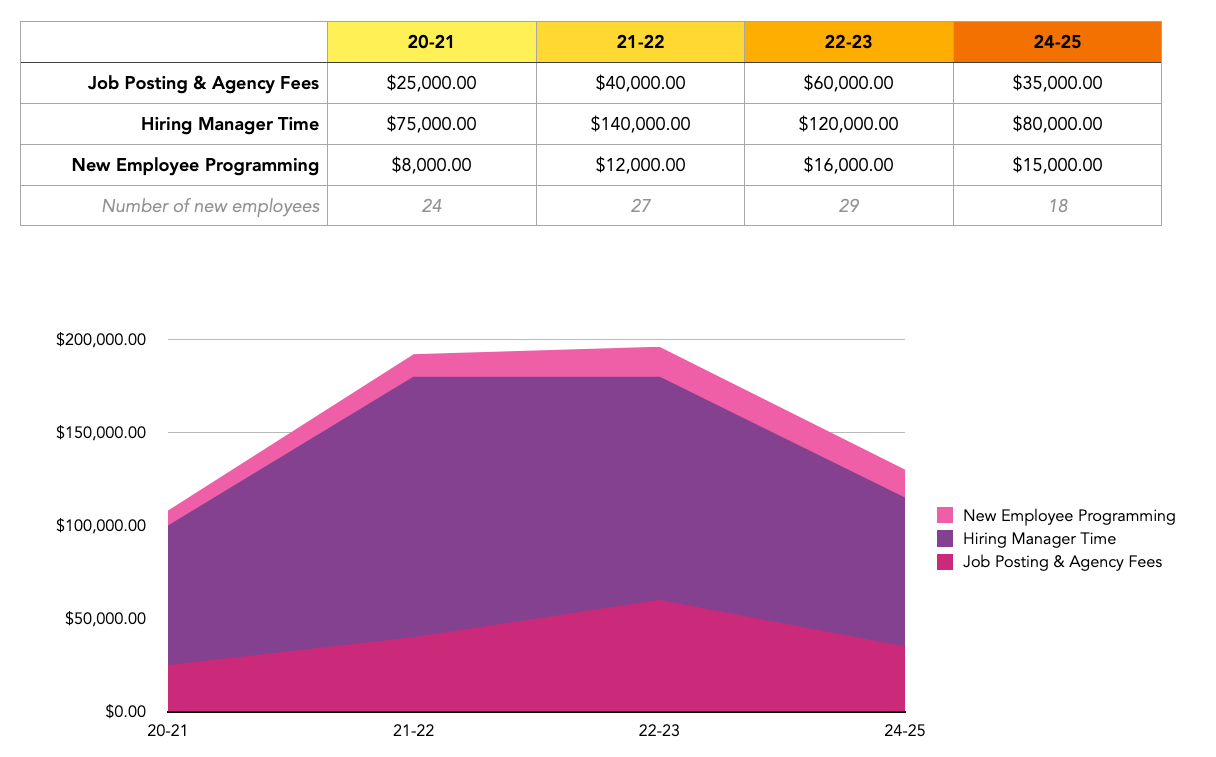
When healthy relationship practices, especially at the director/teacher level, are modeled effectively, setting a standard of relationship for teachers working with students becomes easier. Some teachers will implicitly augment their behavior based on how they, themselves, have been treated; others may need to be explicitly told to reflect on their experience of their own 1:1s and to then seek to build similar relationships with their students.
You can measure the return on learning by regularly surveying team members as part of ongoing feedback of their teacher/manager/leader. Do folks feel seen? Do they trust their supervisor in the same way that we hope that our students trust their homeroom teachers or advisors?
A disciplined cadence of 1:1s across a school bends the arc of that school toward something meaningful and specific, rather than reactive and scattered. What we promise becomes what we promote becomes what we attract becomes what we develop. The spokes in the virtuous circle are simply, foundationally, fundamentally, one person showing up in good faith for one person, and vice versa, over and over again.
💡 How to Have Effective 1-on-1 Meetings With Your Direct Reports
No posts
Comments
Nothing yet. Say the first thing.
Sign in to join the conversation.