
This is the second half of my birth story. Click here to read Part 1.
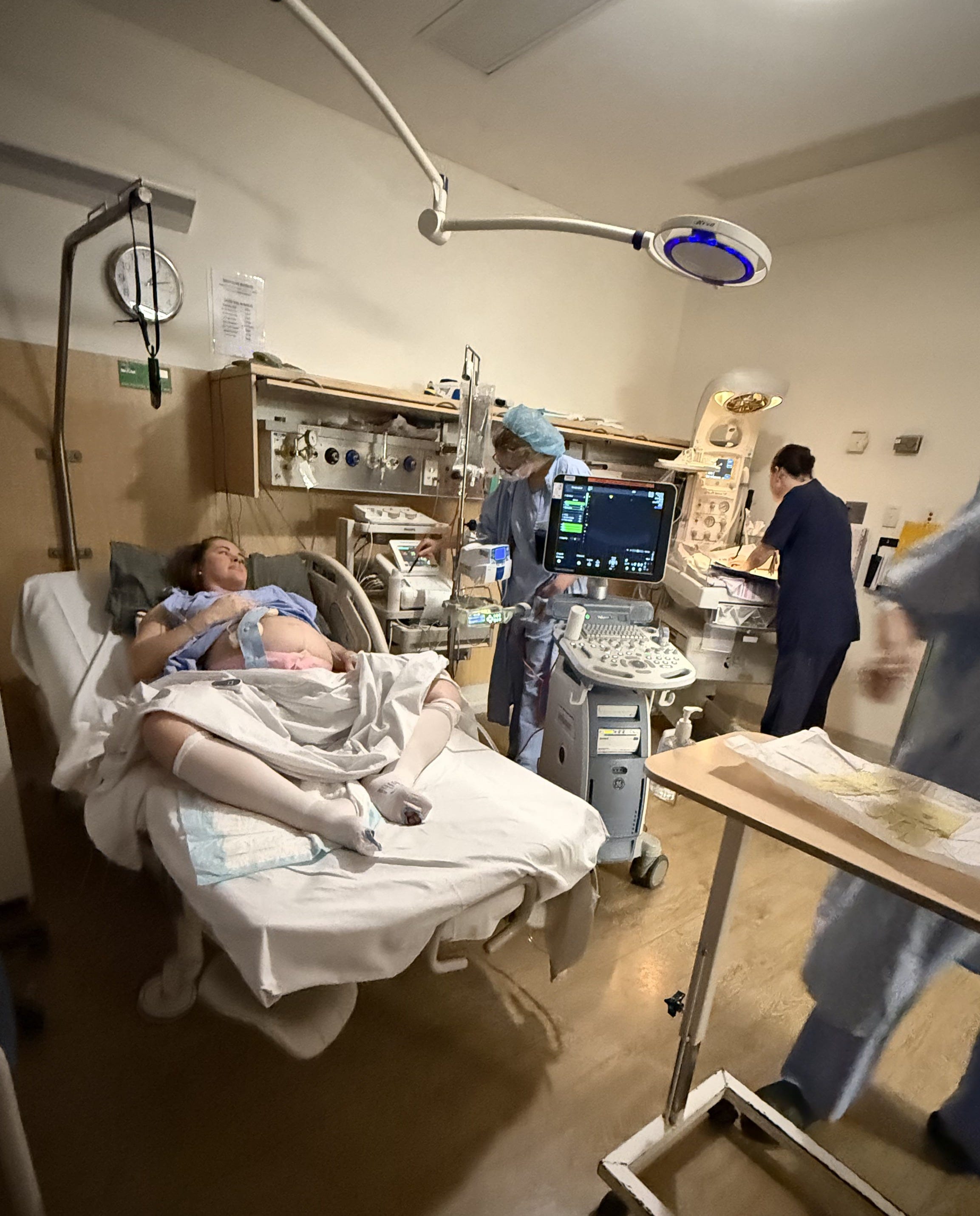
Close to midnight, the anaesthetist arrives to insert my epidural. I take slow, awkward movements until I’m bent over a pillow and gripping Matt’s hands tightly, my left leg giving an involuntary jerk as the needle is inserted into my spine.
I feel it work quickly and the contractions become a distant ache, like a group project I’ll still get a grade for despite no longer participating in.
Tuesday is a blur. There are no windows, so I have no concept of time.
Matt goes home to get a few hours of sleep while Mum stays with me, quietly sitting in the chair in the corner and refilling my cup of ice chips every hour.
I’ve been given the next set of steroid injections to strengthen the twins’ lungs, and another medication to try and stop labour.
We spend the day yo-yo-ing between two possibilities; either my contractions will stop and I’ll go back onto bed rest for three weeks, or they’ll ramp up and the boys will be delivered seven weeks premature.
At this point, I secretly hope the medication will fail and that the boys will come; I’m exhausted and impatient and I want something to look forward to.
It’s almost midnight on Tuesday when I feel the contractions again, despite the epidural.
There is a machine next to my bed that slowly spits out a long paper roll that looks like a seismograph plotting volcanic movement. It waves up and down gradually, keeping track of my abdomen’s tightenings. The paper is filled with rolling hills, not steep, zig-zag mountains, so the midwives aren’t worried about the contractions I’m feeling.
The next time a midwife enters the room, I make sure to moan aloud, thinking that if she knows how much pain I’m in, maybe she’ll check again. She does, and as she’s fiddling with the monitor bands around my stomach, notices that one is loose and incorrectly positioned.
Almost immediately, the seismograph machine starts drawing dramatic lines. “Oh,” she says with surprise, “it looks like the contractions have picked up.”
I ask for another check to see if I’ve dilated further. “I’ll speak to the doctor,” she says, and leaves the room.
An hour later when the doctor does her rounds, I ask to be checked. She obliges.
There’s a fat pause as she glances up at the midwife hovering to her left, and then she addresses me.
“You’re nine centimetres” she says, looking somewhat surprised, and within a minute the room changes.
More midwives enter, and two NICU nurses start moving furniture around to make space for the two incubator-looking cribs that the boys will go into.
“Can someone please wake up my husband?” I ask, and everyone turns to look at him curled up on a mattress on the floor, somehow sleeping through all the bustle. There are a few chuckles and a midwife nudges him.
He sleepily lifts an eye mask to look at me, and I’m smiling. “I’m nine centimetres”, I tell him. It’s go-time, my eyes twinkle.
I touch the arm of a midwife beside my bed. “Excuse me” I interrupt her, feeling sheepish. “We haven’t actually had our birthing class yet. So I don’t really know what to do.” She laughs and gives me a few quick pointers for pushing.
Like you’re on the toilet, I hear.
I push for an hour, the midwife’s gloved hand reaching inside, checking if Twin A is coming.
The midwife brings the doctor in, because she can feel an ear. I think this is a good thing, until the doctor explains that it means Twin A’s head has turned on its side and isn’t making any progress down the birth canal.
They present me with two options: I can keep pushing and see whether Twin A turns his head, or I can have a c-section. I’m so close to the end, and I feel like I’ve done all this work, so I’m determined to keep pushing. The twins’ heart rates haven’t dropped yet, so we still have time.
After a second hour of pushing, I hear the words I’ve been expecting: “I’m so sorry, but I think what’s best for you, and for these babies, is to pivot to a c-section. How do you feel about that?”
It’s now been more than 48 hours since I’ve slept and I don’t know how much longer I can try pushing for. The babies’ monitors are starting to pick up signs of distress.
I’m grateful it’s framed as a question, and not a flurry of emergency. Even though I don’t have much choice, it still feels like I’m the one making it, and that matters.
I nod, and then the excitement starts to build when it dawns on us that the boys will be born today.
“What’s the property market doing?” I ask Matt in an effort to distract him, my arms shaking uncontrollably from the adrenaline as I try to grip the table I’m on.
There are 18 people in here. 18. Matt counted.
The room smells like disinfectant and something burning, and when I say this to the anaesthetist standing over my shoulder, she laughs and tells me that the burning smell is me, my skin, being opened up.
I try to picture what’s happening but it doesn’t feel real, any of it, and all I can do is keep gripping Matt’s hand and smiling to reassure him while I take shallow breaths and try to ignore the tugs on my ribcage.
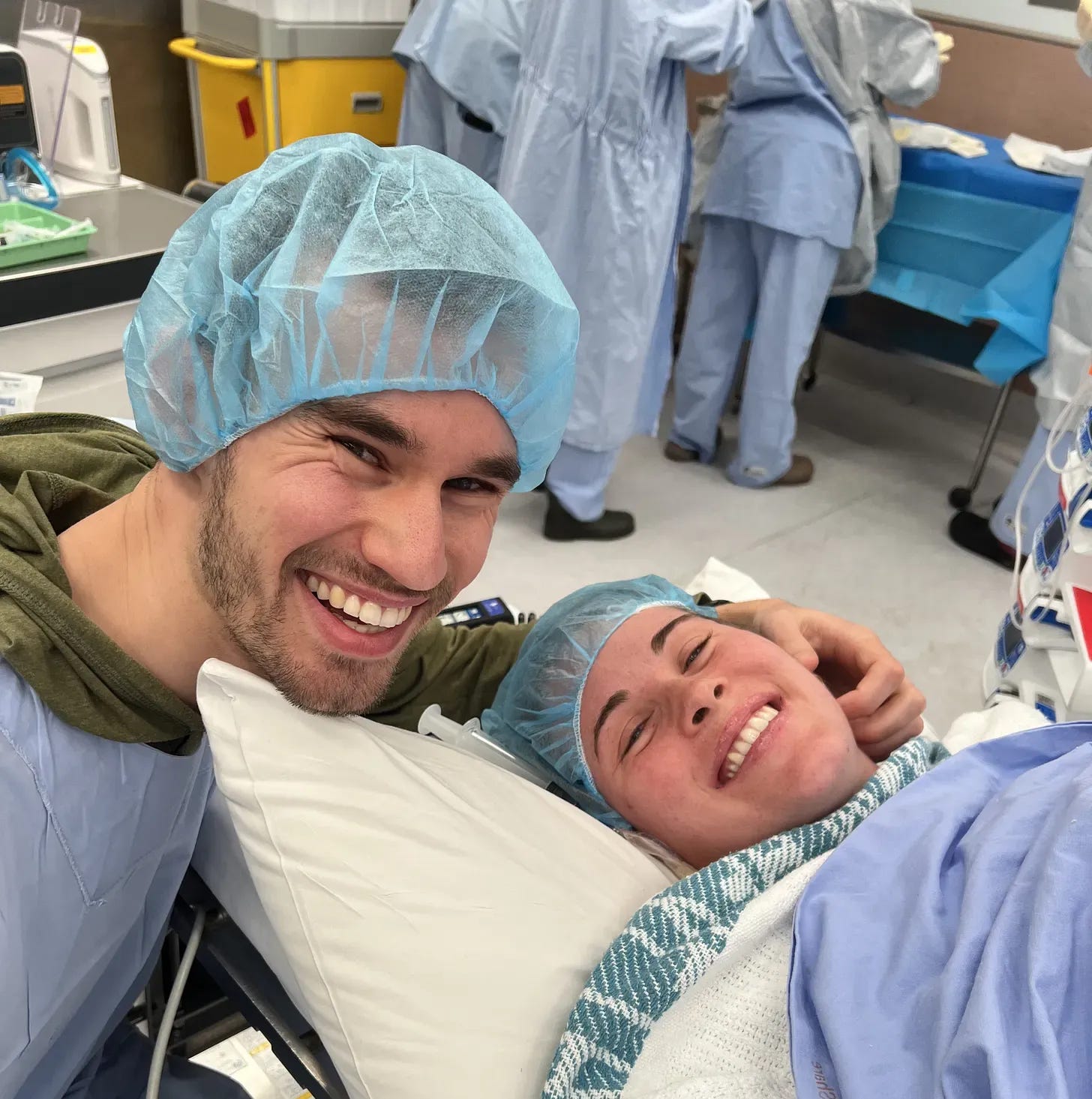
The energy in the room shifts and I can tell a baby has come out, even though I can’t feel it. Matt stands to look and the room is abuzz. I stare at the corner of one of the ceiling vents, listening for a cry, and after a long wait it comes, small and wailing.
I lie there waiting, picturing Matt cutting the umbilical cord and the baby–our first son–tiny and wriggly.
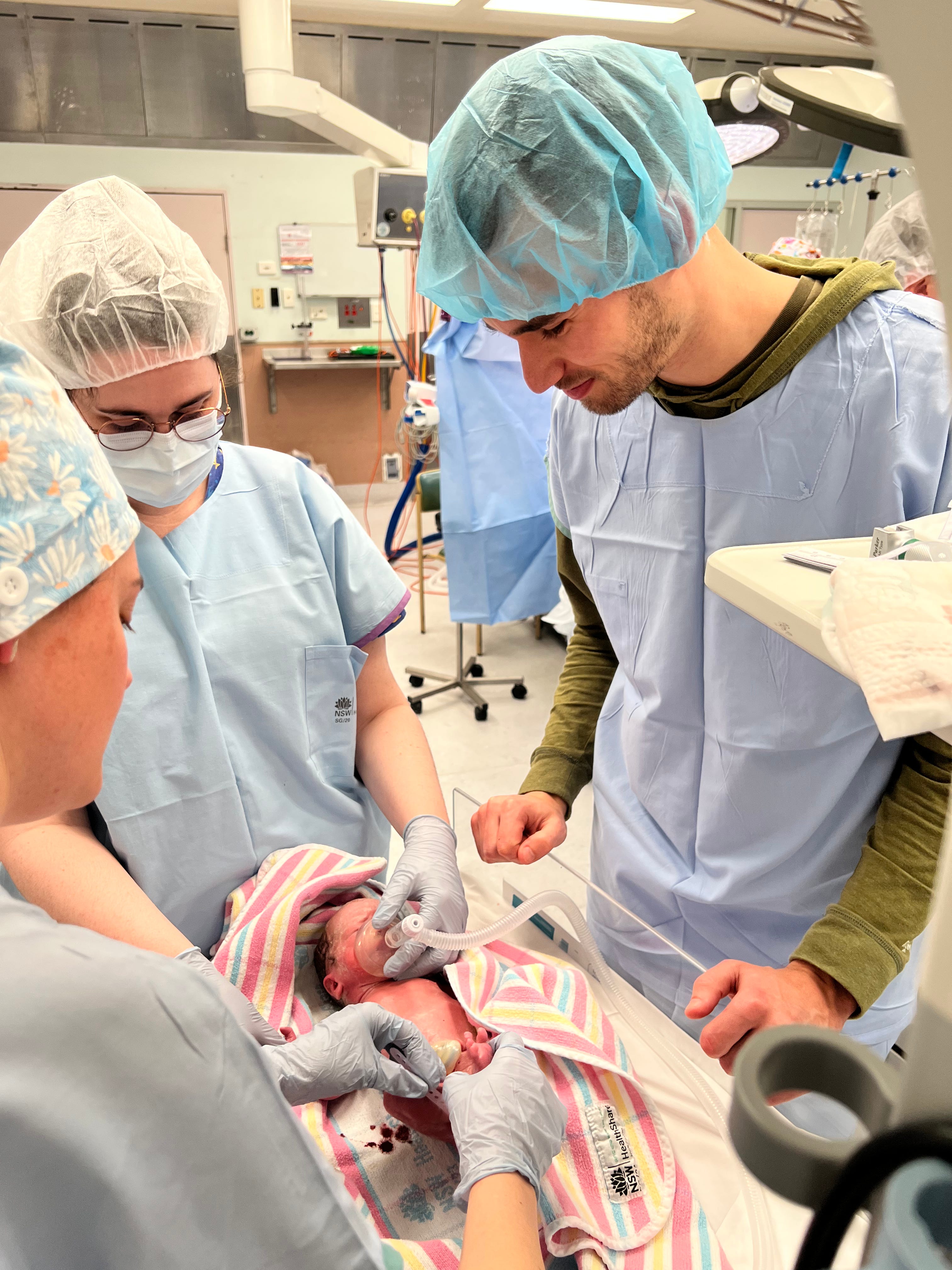
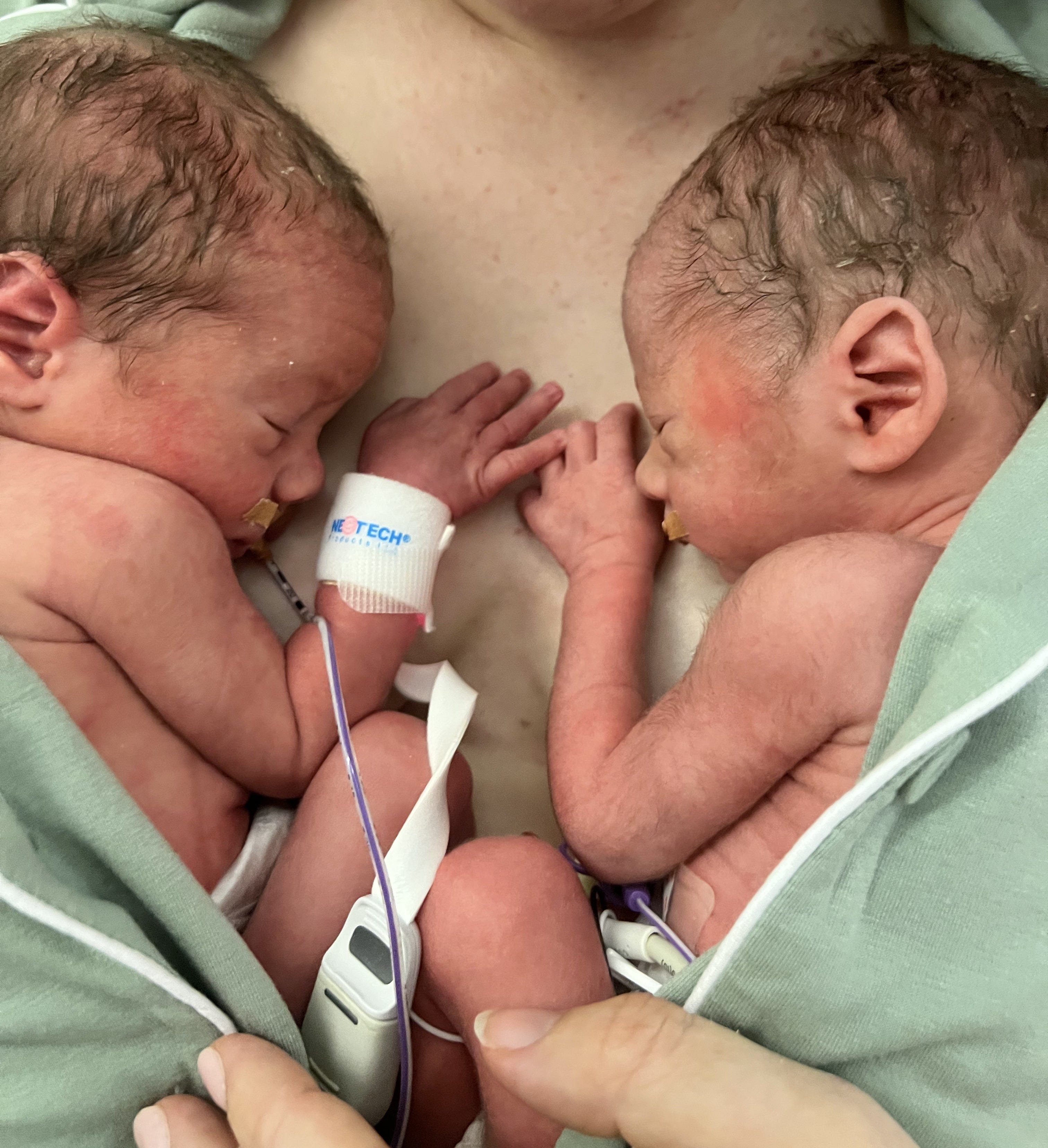
A midwife carries him over, but he’s engulfed in a stripy hospital towel and all I can see is one tiny hand, the palm smaller than the end of my thumb. I fight to free my right arm from the blankets and reach my hand up to his, holding it for a moment until he’s whisked away to an incubator, prepped and ready.
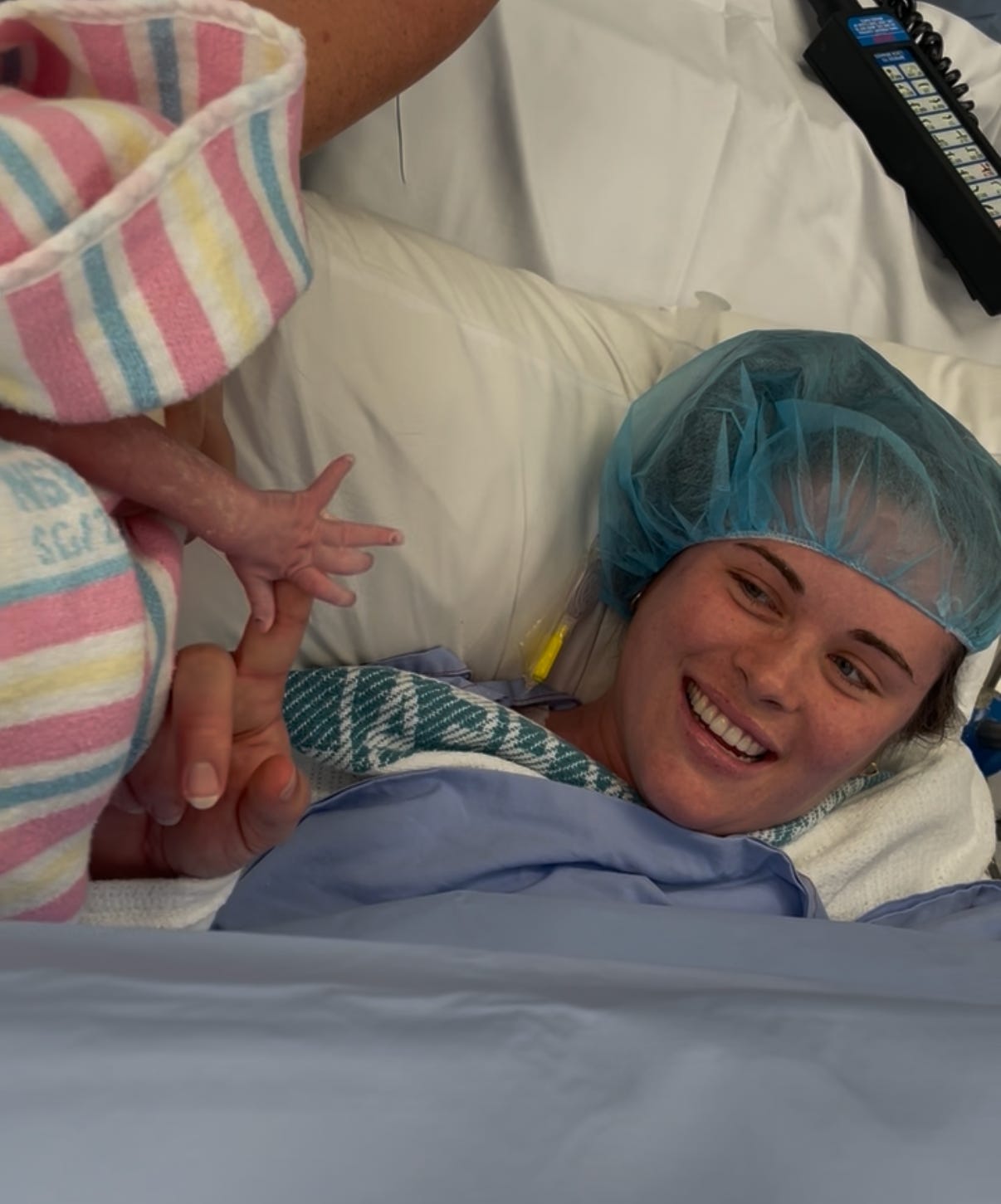
We barely have to wait before the next baby comes out with a tug, and in a few minutes I’m reaching for his outstretched hand, giving it a quick squeeze before they–my family, my three boys–head to the NICU and I’m left lying there.
The two doctors chat about their weekend plans while they stitch me back together, and I fight to stay awake but the adrenaline is wearing away and my vision slips in and out.
The last thought I have before sleep takes over is this:
I’m a MUM.
One year later, I’m still marvelling at it.
If you’d like to read more bits and pieces when I write again, you can click the button below — it’d mean so much!
Comments
Nothing yet. Say the first thing.
Sign in to join the conversation.