
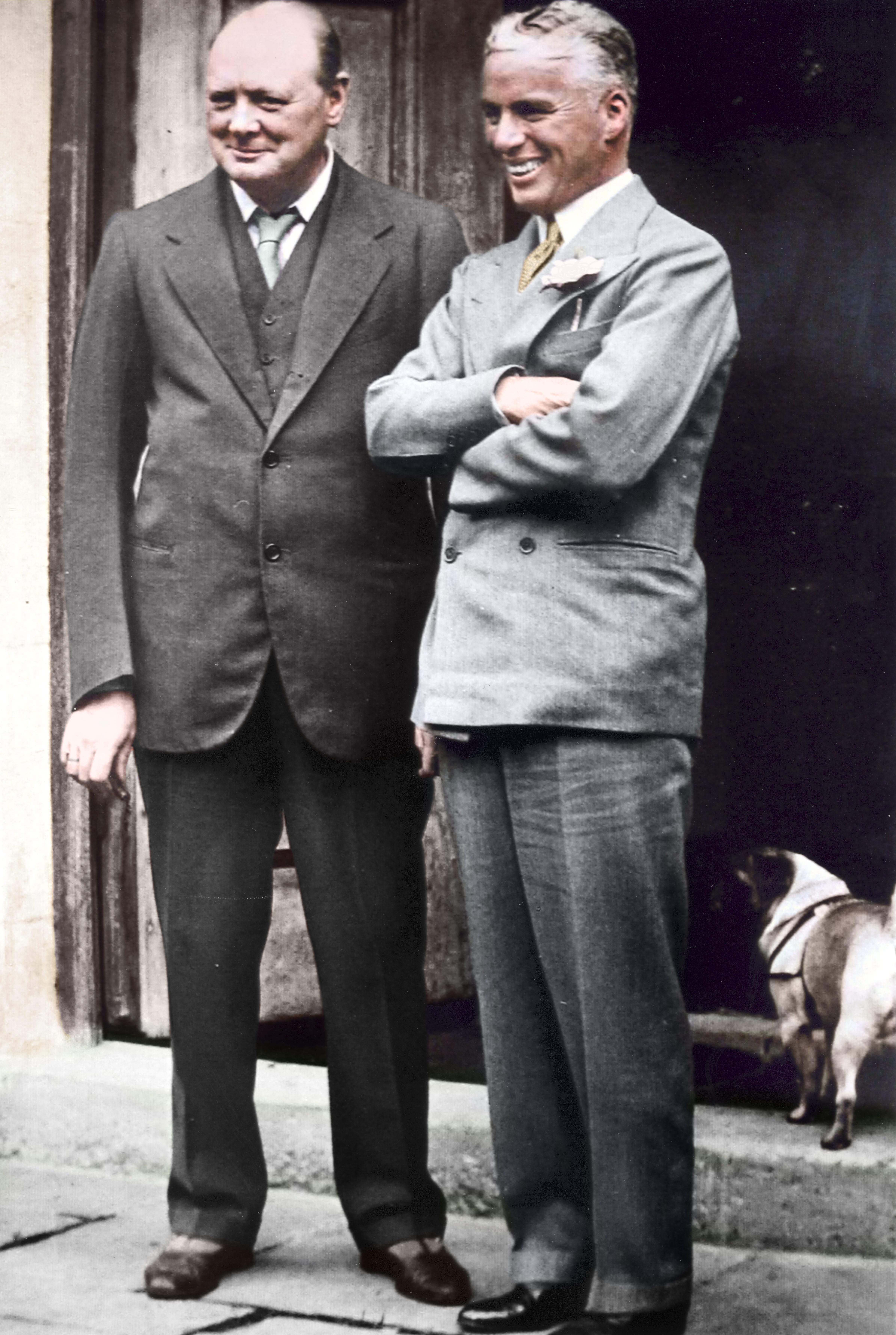
Winston Churchill was a pretty decent bricklayer. He spent a good part of his so-called “wilderness years” laying bricks at his country estate in Chartwell, Kent, building garden walls there with his own hands, and maybe took as much pride in a well-set course as he did in a well-timed quip. But he wasn’t only constructing walls - during that lost decade, he was also rebuilding his political career.
By 1929, Churchill was out of office, out of favour, and widely thought to be finished at Westminster, so he retreated to Chartwell and began laying the foundations for his return; preparing the groundwork for the arguments he would need to make, the relationships he would rely on, and eventually, the government he would lead. A big house, it turned out, offered more than shelter. In the right hands, it became an effective tool.
Yet every foundation needs a solid base, which is why Churchill sought out guests that could offer him expertise, information, and credibility. The physicist, Frederick Lindemann, or “the Prof” to his friends, was a brilliant Oxford scientist who visited Chartwell more than a hundred times between 1925 and 1939. Lindemann gave Churchill something no politician could — technical savvy. When Churchill later stood up in the Commons and warned that Germany’s aircraft production figures didn’t add up, Lindemann’s science was the scaffold that reinforced those warnings.
T.E. Lawrence provided a different kind of support when he came to dinner at Chartwell, dressed in his Arab robes, holding forth for hours on Middle Eastern politics. His expertise on the region far surpassed most of those in Whitehall, who knew only what they’d gleaned from government memos. Neither man was a conventional political ally, but both offered Churchill substance that he could build upon.
If Lindemann and Lawrence were the foundations, Charlie Chaplin was maybe the decorative facade. The two men met in 1929, during Churchill’s tour of Hollywood, and became genuine friends despite standing on opposite ends of the political spectrum. “He is a marvellous comedian—bolshy in politics and delightful in conversation,” Churchill once commented on his new friend.
Chaplin, a well-known “leftie,” visited the arch-imperialist grandee twice in 1931, and on one visit even berated Churchill over dinner for how he’d mismanaged Britain’s return to the Gold Standard as Chancellor. Churchill sulked until Chaplin grabbed two bread rolls, speared them with a couple of forks, and performed the “dance of the rolls” from his movie The Gold Rush. The evening was saved, and ended in good spirits.
“He is a marvellous comedian—bolshy in politics and delightful in conversation.”
It’s hard to imagine Donald Trump hosting George Clooney at Mar-a-Lago today (not only because Clooney would likely decline the invitation), which maybe speaks volumes about how much narrower the range of acceptable political friendship has become since Churchill’s day. While politics in the 1930s could apparently survive a dinner guest telling the host he was wrong about monetary policy, it’s pretty clear they couldn’t now.
James Holland suggested in his recent piece for this Substack that real alliances are forged over a meal, a walk, or a long evening in someone’s home, away from the media and political intrusion. That same logic may explain why we see foreign leaders like Xi, Zelenskyy, and Netanyahu showing up at Mar-a-Lago today. It’s not the building itself but rather what it enables — hours of unstructured, unwatched time with the right person.
Chartwell and Mar-a-Lago may be separated by a century and an ocean (and millions of dollars in membership fees), but they do share one fundamental similarity in so far as they remind us that politics is still a very personal business, and that real decisions are made in rooms the cameras never see.
But what may set Chartwell apart is how Churchill filled his time there with real disagreement, real expertise, and years of hard graft — brick by brick, argument by argument, idea by idea until he had a structure that could support the weight of a country at war. No doubt, Mar-a-Lago has hosted real, consequential meetings too, but nobody outside of its rooms yet knows what was truly achieved there.
Churchill’s decade at Chartwell is now an open book. We can review the visitors log, read about the arguments and disagreements, dissect the letters Churchill wrote and received. It’s all there for us to study. What history will make of Mar-a-Lago and its high-society dinners and galas only time will tell. Will we ever know whether they produced anything as durable as the alliances Churchill built at Chartwell? That is a verdict only time and, eventually, the archives will be able to deliver.
Comments
Nothing yet. Say the first thing.
Sign in to join the conversation.