

Compare your product to a nuclear weapon for long enough and don’t be surprised when the government agrees with you. For three years the leading AI labs have told anyone who would listen that the systems they are building are among the most dangerous things ever made: able to engineer pandemics, break critical infrastructure, and one day outwit the people who built them. They said it under oath, in safety papers, and on every podcast that would have them. On Friday the bill for that rhetoric arrived.
At 5:21 that evening the US Commerce Department ordered Anthropic, the most safety-haunted lab of the lot, to bar every foreign national from its two most capable models, Fable 5 and Mythos 5, on grounds of national security. Because the order caught foreigners on American soil as well as off it, the firm’s own staff included, Anthropic could find no way to comply by halves and switched both off for everyone on earth within the hour. As I wrote over the weekend, a technology its makers insist is a weapon was, in the end, treated like one. There is little mystery in that, and not much to mourn in the logic of it.
Aesop's Fable 5
·
Jun 13

I couldn’t help but be reminded of Aesop upon reading that Anthropic had, on Friday, begun switching off its two most capable models.
The mystery, and the matter for Britain, is on the other side of that coin. Set aside whether Washington was right to pull the trigger; the colder question this forces is what it means to be the country left on the wrong side of the cut-off.
The alarming part is not the directive but what it reveals: that Britain’s current trajectory is poor, and that the constraint holding us back is one we built ourselves. Tom Tugendhat, the former security minister, caught the shape of it, noting that the episode makes sovereignty “more about code than cannons”, and that Britain has spent years building “the brake” through high energy costs and a temperament that prefers safety to opportunity. The diagnosis points inward, and it is correct. The thing this ban exposes does not sit in a directive from the Commerce Department. It sits in a planning regime and a power grid of our own design.
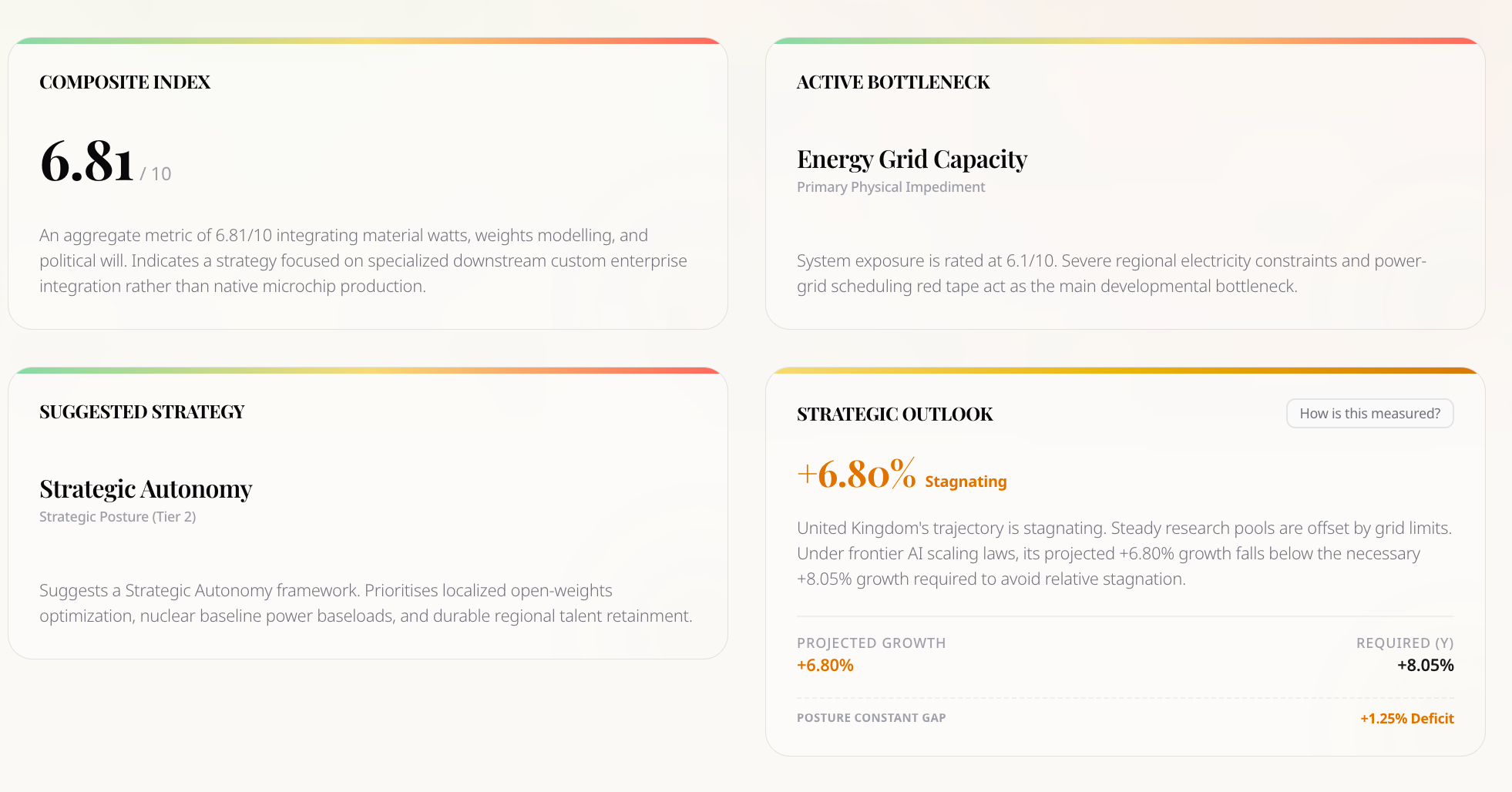
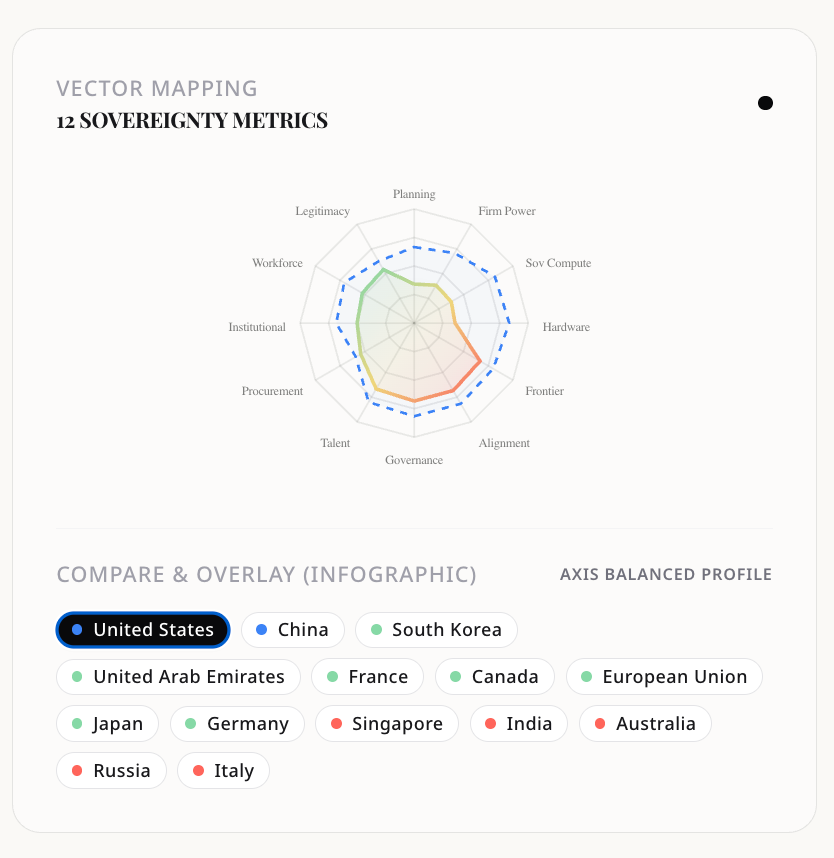
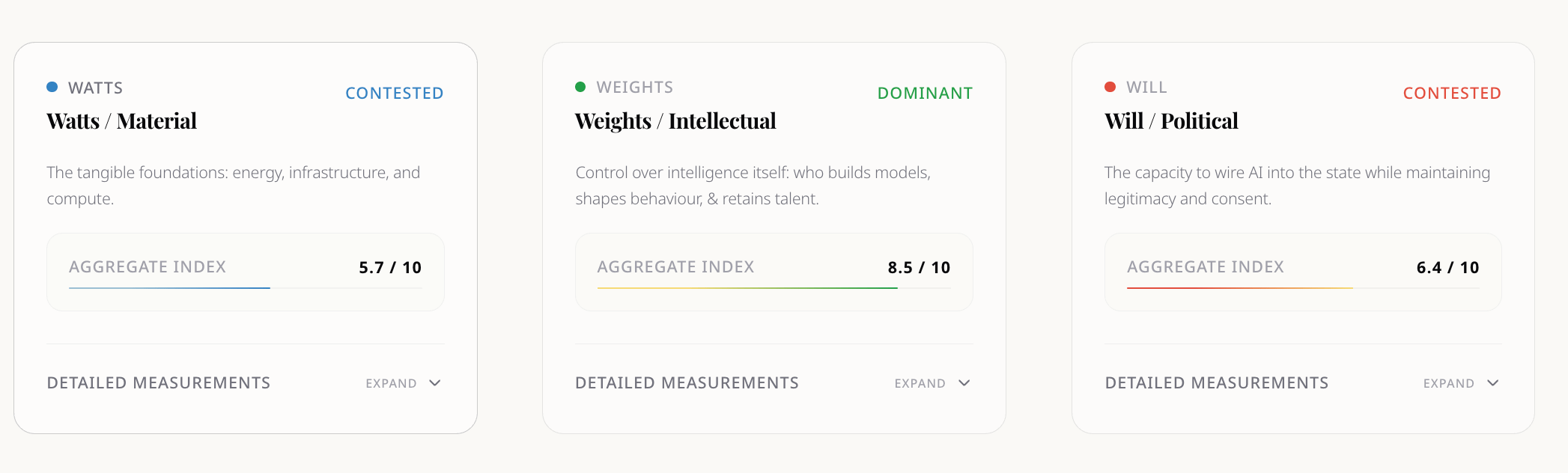
Consider where we actually stand. On the Machinepower Index, the cross-dataset measure of national AI sovereignty I keep, Britain comes out as a bifurcated power: world-class on research, talent and safety, and starved of the physical substrate that turns clever ideas into leverage. The score is respectable and going nowhere, which is the worrying part, because in this field standing still is a form of falling behind. We have the brains. We cannot reliably get them the electricity.
The clusters that train frontier models are vast, hungry machines, and they are built where power is cheap, plentiful and quick to connect. That is increasingly Indiana, Texas and the Gulf, and decreasingly the Thames Valley, where a data centre can wait years for a grid connection that an American developer secures in months. Capital follows the megawatts, and talent follows the capital. A country that cannot power the machine ends up doing the one thing left to it: exporting the people who know how to build it. We are becoming an intellectual supplier to an industry we have decided we cannot host. There is a version of this in which Britain plays Greece to America’s Rome, the clever tutor to the richer power. It is not a flattering role, and it is not a stable one.
The honourable response is not autarky. Nobody sane proposes that Britain clone Fable from scratch; Europe’s entire data-centre fleet holds less training compute than a single American site, and no white paper will close that gap by Christmas. The argument is for strategic autonomy: the targeted capacity that makes a cut-off cost something. That means cheap, abundant power first, which in practice means nuclear baseload, and then sovereign compute to run on it, with open-weight models held in reserve as insurance and the conditions to keep our best researchers from boarding the next flight to San Francisco. Power is the rung on which all the others hang. Get it wrong and the rest is decoration.
“You can’t regulate your way out of a blackout” — Machinepower Index
The government has started to act on the right diagnosis. Last week’s AI Hardware Plan put £1.1 billion behind domestic chip design and named real contenders building the bespoke inference silicon the next phase of AI will run on: Fractile, Olix, Lumai, Callosum. This happens to be the one rung where Britain has an inheritance. Arm’s designs sit inside most of the world’s devices, and the market’s shift from general-purpose chips to bespoke ones plays straight to that strength. “The countries that control the hardware behind it will hold the keys to the future,” Liz Kendall said, unveiling the plan.
Some will balk at the sum, a billion pounds being a rounding error beside what a single hyperscaler spends in a quarter. But that is to measure the wrong thing, because the frontier is not bought with billions alone. DeepSeek trained the reasoning run of its R1 model, a genuinely new direction, albeit a resurrected one, that rattled every assumption in Silicon Valley, for roughly £230,000 — the average price of a house in Newcastle.
The base model beneath it cost a good deal more, but the new idea, the part that mattered, was the cheap part. Scaling a known model costs a fortune; exploring an unknown one does not. That is the single feature of this race that rewards what Britain still has in quantity, brains rather than balance sheets, and it is the lane we should be sprinting in while we build the power to scale whatever we find.
Britain’s problems aside, it is worth mentioning that America’s entire strategy rests on making the world run on the American stack, and on Friday it took a hammer to its own shop window. By proving that access can be revoked on a whim, even for the closest of allies, the United States has handed every government and company on the planet a standing reason to hedge: toward open-weight models like China’s DeepSeek, toward self-hosting, toward exactly the sovereign and open alternatives Britain is well placed to build. Do this often enough and you accelerate the fragmentation you set out to prevent. Dependence, it turns out, is a two-way contract, and the lender has just shown he will call the loan without warning. The opening this creates is genuine, and it rewards research and design over raw capital, which is a hand Britain actually holds.
So the story to hold onto is not the comfortable one in which a fickle ally let us down. It is the harder one in which we were handed fair warning. You cannot build a national future on a stack another government can switch off at twenty-one minutes past five on a Friday. The fix is unglamorous and entirely within our gift: build the power, fund the exploration, and keep the people. Do that, and our research edge becomes the lever it ought to be. Fail, and it becomes something sadder, a parting gift to the country that is struggling to keep the lights on.
No posts
Comments
Nothing yet. Say the first thing.
Sign in to join the conversation.