
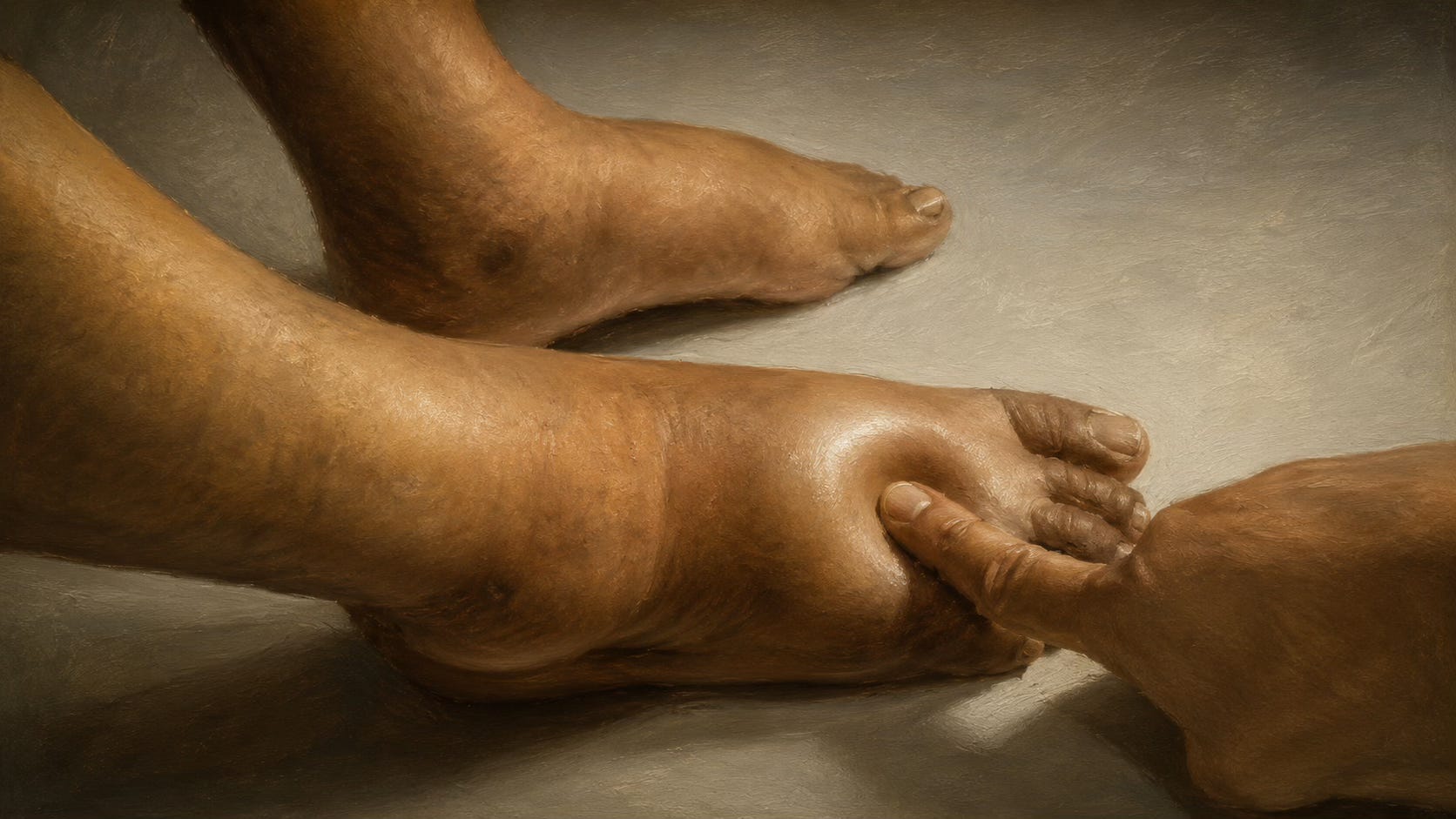
Chronic swelling is a problem that usually gets managed instead of truly understood.
It gets a name, a few common suggestions, and often a prescription.
The swelling may go down for a while. Then it comes back. Sometimes the relief lasts longer. Sometimes it doesn’t.
Either way, the real reason behind it is often left alone.
I’ve seen this pattern enough times to question the usual answers.
The standard approach is good at naming the swelling you can see and offering something that moves fluid for a short time.
Water pills can force the body to get rid of fluid. Eating less salt can help a little. Raising the legs or wearing tight socks can move fluid that has already pooled.
These steps often make a clear difference on the surface.
But what they rarely do is fix the deeper reason the fluid keeps building up.
That gap matters more than most people realize.
Ongoing swelling is almost never just too much fluid sitting in the wrong place.
It usually means something in the body’s ability to control fluid, move it, and pull it back where it belongs has been under strain for a long time.
Different systems in the body work together.
When one part gets overloaded, other parts try to help. Over time, those other parts can start to struggle too. An imbalance builds. The body is asked to handle more than it can easily clear day after day.
The usual medical response does not always ask why the fluid keeps coming back.
It treats the swelling itself as the main problem. Short-term fixes become the normal plan.
This happens even more as people get older and the issue starts to feel familiar.
Looking for deeper causes stays optional.
Many people slowly lower their expectations.
They accept ongoing management as the best they can get.
The swelling becomes something they live around instead of something they fully resolve.
There are simple things that already point beyond this limited approach.
Moving the body every day affects how well fluid flows through the tissues. It also changes how much work the kidneys have to do.
The kind of food someone eats affects the balance of minerals in the body. It also affects the natural forces that help pull fluid back into the blood vessels.
Sitting still for long periods often makes the swelling more noticeable by the end of the day. Eating a lot of highly processed food can do the same.
The standard approach often overlooks these clues. It prefers faster medical fixes that show results in a few days.
Noticing these everyday signals alone rarely fixes a long-standing pattern.
Most cases of ongoing swelling involve a few connected reasons that mainstream care rarely names clearly or deals with in any clear order.
One of the most common is a long-term overload of sodium.
Many people try to cut salt a little when they notice swelling. That step can help in the short term.
What often gets ignored is the other side of the balance — potassium.
When sodium stays high outside the cells for years and potassium stays too low, the body has a harder time moving fluid where it needs to go.
The kidneys can also become overloaded from handling excess sodium day after day.
Some medications make this worse by causing the body to hold onto even more sodium.
This kind of imbalance tends to grow slowly. It often becomes more noticeable with age.
Another frequent issue is poor movement of the lymphatic system.
When lymph flow slows down, fluid, waste, and excess sodium can stay trapped in the tissues instead of being cleared.
Stagnant mucus can add to the problem by making drainage even harder.
The result is swelling that feels stuck and does not respond well to simple measures.
Low protein levels play a role too.
A protein called albumin helps pull fluid back into the blood vessels. When albumin is too low, fluid has an easier time leaking out and staying in the tissues.
This can happen gradually and often goes unnoticed until the swelling becomes hard to ignore.
These reasons are not rare or strange.
They are common results of how many people eat, move, and age in today’s world.
They help explain why the problem often gets worse later in life. They help explain why water pills can stop working as well over time. They also help explain why simply cutting salt a bit so often falls short as a full answer.
When these deeper reasons stay unaddressed, the cycle continues.
A person may feel better for a week or two after a new prescription or a stricter diet.
Then the fluid starts to collect again.
The frustration builds slowly.
People believe this is just part of getting older.
They stop expecting real change.
Temporary relief becomes the only goal.
The difference between ongoing management and real improvement usually comes down to understanding the deeper drivers and supporting them in the right order.
Surface steps can ease discomfort for a while.
They do not rebuild the body’s ability to keep fluid from settling into the tissues day after day.
Behind this point you will find:
The main mineral imbalance that keeps fluid trapped
Why simple salt reduction so often fails
How poor drainage and low protein make swelling worse
The practical sequence that addresses these drivers together
If you want the full picture instead of another temporary fix, continue reading…
Comments
Nothing yet. Say the first thing.
Sign in to join the conversation.