

BEYOND THE PRESCRIPTION is a USA Today bestseller!! Thank you to everyone who ordered a copy and made this possible!
If you haven’t yet, you can purchase or gift the book here:
📣 TODAY! Join me and Dr. Ezekiel Emanuel, bioethicist and oncologist, at 1:45 pm ET right here to discuss The Future of AI in Medicine: Will Doctors Be a Thing of the Past?
The following questions have been lightly edited for length and clarity.
Dr. McBride, I have been reading more reports every summer about the brain-eating amoeba from swimming… and that infections are almost always deadly! That sounds terrifying! How worried should I be about this??
—Jamie
Hi Jamie,
As if we need more than diarrhea-inducing lettuce to worry about this summer!! Now the news is reporting cases of Naegleria fowleri, a free-living amoeba, a kind of one-celled organism, that lives in warm freshwater lakes, rivers, and hot springs. If water that contains the amoeba goes up your nose and travels to your brain, it can cause an infection called primary amoebic meningoencephalitis (i.e, an infection of the brain and surrounding tissues). Less than 10 people per year in the US get this, but nearly everyone who gets it dies from it.
Sounds terrifying indeed. But let me provide some context. While this critter has been found in poorly maintained swimming pools, splash pads, and other recreational venues, it is rare to become infected by it. Between 1962 and 2024, there were 167 reported cases of brain infections from this ameba in the US.
How to protect yourself from it? The CDC recommends the following:
Hold your nose or wear a nose clip if you are jumping or diving into freshwater lakes, rivers, etc.
Always keep your head above water in hot springs.
Don’t dig in shallow water because the ameba is more likely to live there.
Use distilled or boiled tap water to rinsing your sinuses or cleansing your nasal passages after exposure to water in lakes, ponds, etc.
Does that help?
I’ve seen more and more people talking about getting calcium scores (CAC) lately. When do you typically recommend those? I’ve seen doctors say everyone should “know their baseline” and get one regardless of risk factors but is that true?
-Mia
Hi Mia,
A coronary calcium score (or “CAC”) is obtained through an imaging study (basically a fancy X-ray) and can help determine the presence or absence of cholesterol plaque in the coronary arteries, the blood vessels that supply blood to the heart muscle. The presence of cholesterol plaque in these arteries is called coronary artery disease (aka CAD). Risk factors for the development of CAD include age, genetic factors, high blood pressure, high cholesterol levels, an elevated lipoprotein (a) level, cigarette smoking, diabetes, obesity, physical inactivity, and a high-stress lifestyle.
The accumulation of cholesterol plaque can, over time, impair blood flow to the heart muscle. This can result in a heart attack, where part of the heart muscle sustains permanent damage from the absence of adequate blood flow. It can also cause chest pain or “angina,” which is pain as a result of transiently insufficient blood flow to the heart muscle. CAD is a leading cause of death globally.
A CAC can help identify who is at increased risk for heart attack, stroke, and cardiovascular disease in general—in order to help direct treatment. Patients who are at low risk for CAD—that is, patients without hypertension, diabetes, cigarette smoking or other cardiac risk factors—usually don’t need a CAC test and rather should focus on preventing disease by maintaining a healthy lifestyle and having regular checkups of their cholesterol, blood pressure, etc. People at high risk for CAD should already be treated aggressively for presumed or existing heart disease with, for example, lifestyle changes and medications. In short, it’s patients at “intermediate risk”—for example, patients for whom we’re on the fence about starting a statin medication—who should be screened with a CAC.
Cheers to your heart!
Is the Berberine as a supplement any good? People say it is “nature’s Ozempic”?
-JP
Dear JP,
In a nutshell, the buzz around berberine being nature’s Ozempic is intriguing, but it’s a bit more nuanced than that. Berberine, found in plants like goldenseal and barberry, has caught attention for its potential in managing blood sugar levels, akin to the effects of Ozempic in treating type 2 diabetes.
However, it’s not a straightforward comparison, and the science is still unfolding. Some studies suggest that berberine could enhance insulin sensitivity and lower blood sugar. This can lead to better glucose control, which may indirectly support weight loss by reducing cravings and promoting better energy utilization. Other studies suggest that berberine may help lower levels of cholesterol and triglycerides, which are important markers of cardiovascular health. By improving lipid metabolism, berberine may indirectly support weight loss and overall metabolic health.
While these findings are promising, it’s important to note that research on berberine’s effectiveness for weight loss is still ongoing, and results from studies can be mixed. Additionally, berberine is not a magic solution for weight loss and should be used as part of a comprehensive approach that includes a balanced diet, regular exercise, and other healthy lifestyle habits.
As with any supplement, it’s essential to consult with your doctor before starting berberine, especially if you have any underlying health conditions or are taking medications, as berberine (like any supplement) may interact with other things you are taking.
So, while the idea of berberine for weight loss is intriguing, caution is key. Here’s to making informed choices about your health!
Over the past few years I've had trouble falling asleep. My husband wants me to try CBD gummies. I was never a big marijuana fan. Should I try them?
—Joan
Hi Joan,
In general, CBD (cannabidiol) is very safe. It is a compound found in cannabis plants, and it is often promoted as a safe and natural remedy for various conditions, including sleep disorders. So far the research on CBD seems to back this up.
The good news about CBD is that it is not psychoactive, meaning it doesn’t produce the “high” associated with THC, another compound found in cannabis. It is also generally well-tolerated, however some people may experience side effects, such as fatigue, changes in appetite, or diarrhea.
Some other things to consider:
The safety of CBD products depends on their quality and purity, so it’s essential to choose reputable brands that provide third-party testing for their products to ensure they meet safety and potency standards.
People may react differently to CBD. What works for one person may not work the same way for another. It’s advisable to start with a low dose and gradually increase if needed.
Regulatory issues: The regulation of CBD products varies, and the quality of products on the market may differ. It’s crucial to choose products from reputable manufacturers that adhere to good manufacturing practices.
Of course it’s wise to consult with your doctor before you start any CBD product, especially if you have any pre-existing health conditions or are taking medications, in order to get more nuanced advice. But given that Sleep is the glue that holds our body and mind together, I am a big believer in working on getting healthy zzzz’s!
🙏 Lucy

My book, Beyond the Prescription, is out now! I wrote it with you in mind. The book is a roadmap for navigating your health in real life without perfectionism, pseudoscience, or shame.
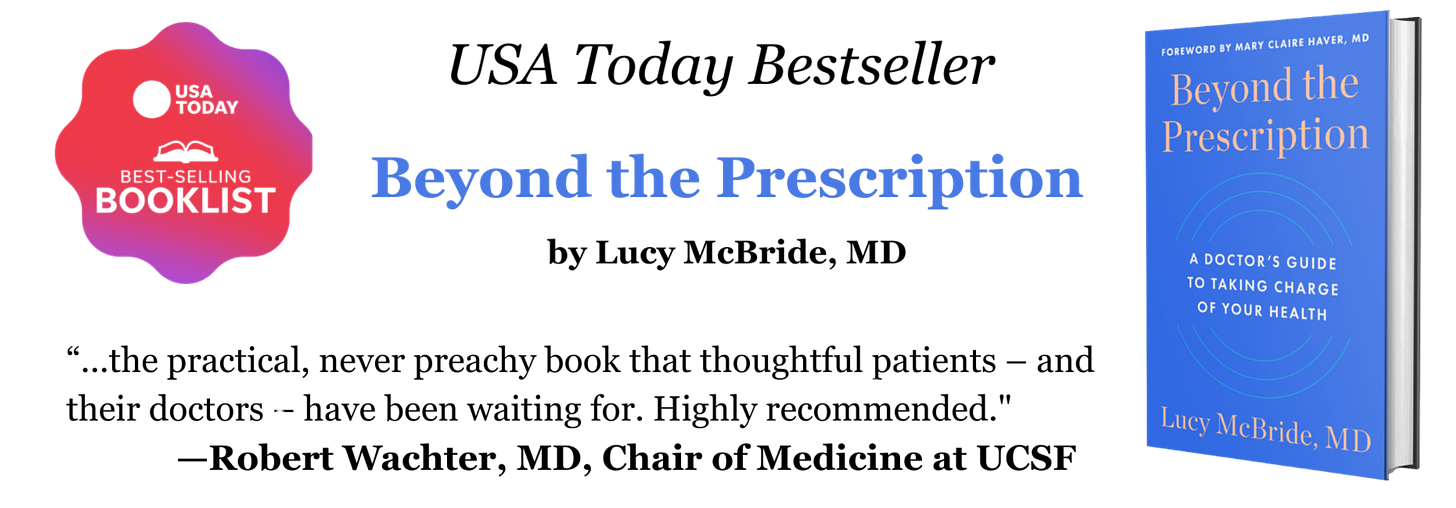
You can order your copy at Amazon, Bookshop.org, or Barnes & Noble.
Comments
Nothing yet. Say the first thing.
Sign in to join the conversation.