
FUN BOOK UPDATE 👉
I spent all day in NYC yesterday doing book-related media events. Stay tuned for fun podcast episodes, to be released during publication week (8/11)!

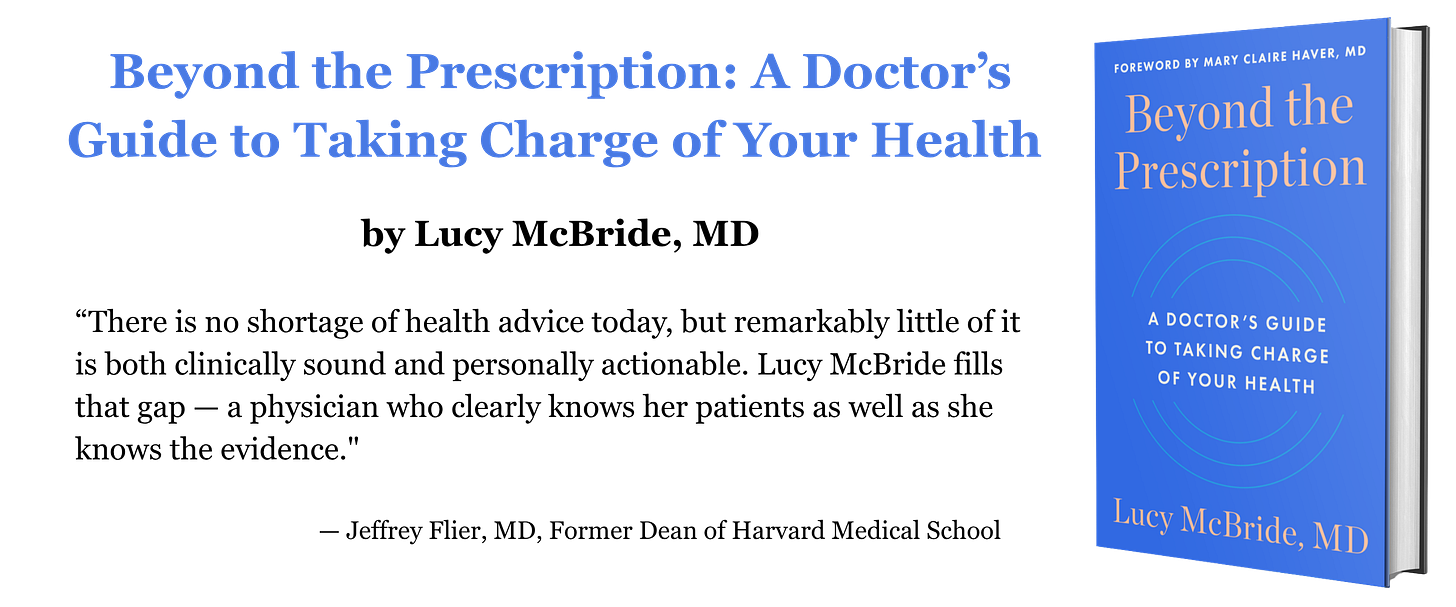
PRE-ORDER BEYOND THE PRESCRIPTION!
📣 Click here to send me your questions for future Q&As! ✍️
The following questions have been lightly edited for length and clarity.
Dr. McBride, I just read about the new cholesterol medication Lipfendra. Is it better than statins? Should I switch from Crestor?
—Dan
Hi Dan,
I’ve been getting a lot of questions like this since Lipfendra hit the headlines this week. Here’s the short answer: Lipfendra isn’t a replacement for statins—yet. Right now it’s designed to work alongside them.
Lipfendra (generic = enlicitide) is the first pill in a class of drugs called PCSK9 inhibitors. Until this week, these drugs required self-administered injections. PCSK9 drugs are impressive at lowering LDL (”bad”) cholesterol—often by 50% or more on top of a statin. But here’s what this week’s headlines miss: lowering a number on a lab report isn’t the same as preventing a heart attack. Statins have decades of data showing they reduce heart attacks, strokes, and deaths. Lipfendra doesn’t have that evidence yet. Those studies are still underway.
That said, the data on its cousins, the injectable PCSK9 inhibitors (called Repatha and Praluent) are impressive: they have been shown in large trials to reduce heart attacks and strokes, not just cholesterol numbers. Early data on Leqvio, which is a twice-yearly injection targeting the same pathway, also hint at fewer cardiovascular events, though its definitive trials haven’t finished. So the pathway Lipfendra targets is a proven one; the pill itself just hasn’t earned its stripes yet.
If your cholesterol is well controlled on a statin, there’s no reason to switch. If it’s not, Lipfendra may be worth a conversation with your doctor—as an addition, not a substitute.

Dr. McBride, I keep reading reports about wildfires creating hazardous air quality all over this summer, and I'm wondering what I should actually be doing to protect my health on bad air days. Right now, my weather app says the air outside is "unhealthy." I have mild asthma, and I'm trying to figure out what I'm supposed to do when the air we are supposed to breathe is unhealthy?
—Michelle
Hello Michelle,
Yes, it’s bad out there in various parts of the country right now. The sad truth is that staying indoors is your best bet on days when Air Quality Index, or AQI, is in the “very unhealthy” or “hazardous” range. I suggest checking AirNow.gov for real-time conditions in your area. (It’s more reliable than most weather apps for this specific purpose.)
“Unhealthy” air typically means AQI in the 151–200 range, at which point everyone can start to feel effects, and people with respiratory conditions like asthma are at higher risk. On days like that, the general guidance is to limit outdoor exertion (not necessarily to stay completely indoors) but to avoid anything that has you breathing hard outside, like running, cycling, or yard work.
When indoors, try to keep windows and doors closed and run your air conditioning if you have it, since AC filters and recirculates indoor air rather than pulling smoky air in. An air purifier with a HEPA filter can be well worth the investment (it’s not just a wellness gimmick), particularly for anyone with asthma living in a location where wildfires have (tragically) become part of summer.
For your asthma specifically, make sure your rescue inhaler is accessible and not expired, and if you notice your symptoms worsening on bad air days, e.g., more wheezing, tightness, or you’re reaching for your inhaler more than usual, call your doctor rather than pushing through. Wildfire smoke contains particulate matter that is particularly irritating to airways, and it can trigger flares even in people whose asthma is otherwise well controlled.
Here’s hoping the air clears soon.
I’ve been using a sleep app from my smart watch that says I’m only getting 20 minutes of deep sleep per night. I wake up tired most mornings even though I’m in bed for 8 hours. I’m 49 and wondering if I should do a sleep study, or if these apps are just making me anxious about normal sleep.
—Jennifer
Hello Jennifer,
You’re asking exactly the right questions. Consumer sleep apps and wearables are notoriously inaccurate when it comes to measuring sleep stages, especially deep sleep. These devices use movement and sometimes heart rate to estimate sleep phases, but they can’t actually measure the brain waves that define true deep sleep. That requires specialized equipment used in sleep labs. I’ve had patients develop real insomnia from obsessing over their sleep scores!
The more important question is why you’re waking up tired despite eight hours in bed. At 49, hormonal changes from perimenopause could absolutely be disrupting your sleep quality. Other common culprits include sleep apnea, medication side effects, caffeine later in the day, or even stress that doesn’t let your mind truly settle.
A sleep study might be worth considering if you have signs of sleep apnea—like loud snoring, gasping during sleep, or morning headaches. It’s also reasonable if you’ve addressed other factors like cutting caffeine after 2 PM, creating a cooler bedroom environment, and managing evening screen time without improvement.
In general I suggest focusing less on what the app says and more on how your body feels, then discussing this with your doctor. Sometimes the most helpful thing is to step back from the technology and tune into what your body is actually telling you.
I hope that helps!
I keep seeing mouth tape and nasal strips being promoted for better sleep, more energy, and improved athletic performance. I'm a decent sleeper and not an elite athlete, but maybe I’ve been breathing wrong for awhile. What do you think about trying these out?
-Donna
Dear Donna,
The short answer is that there's real science here, even if the marketing has gotten ahead of it. The nose filters, humidifies, and warms air before it reaches the lungs, and nasal breathing produces nitric oxide, which has real cardiovascular and pulmonary benefits. Chronic mouth breathing—especially during sleep—is associated with worse sleep quality, dry mouth, and dental problems. Athletes who’ve focused on nasal breathing during training report improvements in endurance and recovery, and there’s emerging research supporting this.
Nasal strips work by physically widening the nasal passages, which can reduce resistance and make nasal breathing easier, particularly useful if you tend toward congestion at night. They’re low-risk and a reasonable place to start. Mouth tape is a more significant intervention with an earlier-stage evidence base, but for people who are confirmed mouth breathers during sleep, the logic is sound, and some people find it genuinely helpful.
One thing worth knowing before trying either: mouth tape isn’t appropriate for anyone with undiagnosed sleep apnea. If you wake unrefreshed, snore significantly, or feel fatigued during the day, a conversation with your doctor is the right starting point before experimenting on your own. (I cover more on sleep apnea in this episode of my podcast here.)
For a decent sleeper who’s simply curious, nasal strips are an inexpensive place to start.

My book, Beyond the Prescription, comes out on August 11! I wrote it with you in mind.
Comments
Nothing yet. Say the first thing.
Sign in to join the conversation.