
BEYOND THE PRESCRIPTION is on sale now!
And it’s the #1 BESTSELLER in “Healing” on Amazon! 🎉
Purchase or gift the book here:

📣 Click here to send me your questions for future Q&As! ✍️

The following questions have been lightly edited for length and clarity.
Dr. McBride, I read a lot of books and listen to wellness-related podcasts. What do you think about the amount of daily protein intake as we age? I am almost 68 and want to stave off sarcopenia. Some professionals advise a lot of protein, preferably animal-based. Others say you can be healthy and Vegan. While others are somewhere in between. Are there really Vegans that are truly healthy in the long run?
—Joan
Hi Joan,
Protein is like premium gasoline. It is crucial for energy, weight management, lean muscle mass, post-exercise recovery, immune function, focus, concentration, and cognitive and mental health. Dietary protein need not come from animal products. It’s very possible to get adequate protein (and to be healthy) with a vegan diet.
How much daily protein does a body need? Ideally 0.32 to 0.45 grams of protein per pound of body weight. Some evidence suggests that people over age 65 should get at least 0.45 to 0.54 grams per pound. To determine your daily protein needs, use this online protein calculator.
Here are some excellent sources of lean dietary protein along with their approximate grams of protein per serving (this is pulled from my book!):
Chicken breast (skinless, boneless): 3 oz contains around 26 grams of protein.
Turkey breast (skinless, boneless): 3 oz provides approximately 26 g.
Fish (e.g., salmon, tuna, cod): 3 oz generally contains 20-25 g.
Lean beef (e.g., sirloin or tenderloin): 3 oz typically provides around 22-26 g.
Pork tenderloin: 3 oz contains approximately 22 g.
Eggs: One large egg contains about 6 g.
Greek yogurt (plain, non-fat): 1 cup generally provides around 20 g.
Cottage cheese (low-fat): 1⁄2 cup contains approximately 14 g.
Tofu: 1⁄2 cup of firm tofu typically contains around 10 g.
Lentils: 1 cup of cooked lentils provides approximately 18 g.
Quinoa: 1 cup of cooked quinoa contains about 8 g.
Edamame: 1 cup of cooked edamame typically provides around 17 g.
Chickpeas: 1 cup of cooked chickpeas contains approximately 15 g.
Almonds: 1⁄4 cup of almonds generally provides around 6 g.
Peanut butter (natural): 2 tablespoons contains approximately 8 g.
There’s also a lot of hype around protein these days (protein water? no thanks!) So, in real life, I advise my patients to simply try to get protein with every meal—and not to organize their day around it. I hope this helps!
Because of a diversity of health problems (everything seems to be falling apart at one time), where do we find someone who can take the diagnoses from all these specialists, plus a therapist who might not be in that network, and synthesis it into a treatment plan for the whole person: mind, body, and soul? My primary care physician doesn't have time to do that. Where does that leave us as patients?
—Diane
Dear Diane,
Great question—this is exactly why I wrote my book. Medicine has become so transactional and impersonal. Yet we know patients do better when they have a primary care medical “home.” I wrote a guest essay about the state of primary care in the U.S. for Katelyn Jetelina this week:
Everyone deserves a more integrated, evidence-based strategy to address our whole health. The American healthcare system is so broken that it’s nearly impossible for more primary care doctors to spend the time needed to synthesize patients’ medical issues, map out a strategic plan, and coordinate care. Just like patients, primary care doctors are increasingly frustrated with the system, and many are moving to direct primary care (DPC) like I did, taking matters in our own hands to care for patients in the way that allows for patient-centered, whole-person care.
This kind of care needs to be accessible for all. It shouldn’t be luxury to have a doctor who knows your name, not just your diagnosis codes—someone who treats YOU, not just your body parts. In the meantime, patients need to be strong self-advocates and to develop a vocabulary about their health and an arsenal of questions to ask themselves and to bring to their doctors. I hope my book helps you become your best self-advocate, well before you even step into the next doctor’s appointment.
With SO much information out there on medications, and with medications being marketed on TV (yikes!), coupled with the ability of consumers to research side effects, black box warnings, etc., I (and my other friends around my age - 50ish+) am becoming at times unbearably anxious about taking medications! Does/can health anxiety extend to anxiety about taking medications, do you see this in your practice, and how can we manage this form of health anxiety in addition to talking to our doctors?
—Lindsey
Dear Lindsey,
Yes! I have written a bunch about health anxiety. It’s real and can also pertain to worrying about medications. I see this a lot in my own patients. It’s normal to feel uneasy when you need medical help, are overwhelmed with information, and lack appropriate context to make an informed decision. It’s hard to know what to believe and who to trust!
As you know, doctors take an oath to first “do no harm“—which includes not prescribing medications whose known and potential harms outweigh the known and potential benefits. So, it’s important that a prescription is coupled with fact-based, nuanced advice from a physician who knows your clinical situation well. It’s also important to realize that those lengthy package inserts with warnings do more to provide legal “cover” for the drug manufacturer than deliver helpful guidance for the consumer. Does the fine print represent actual risks of the drug at hand? Sure, but how much you need to worry completely depends on the context and your medical issue. Remember that possible does not mean probable.
I wouldn’t want my patient *not* to take a drug I recommended simply because they freaked themselves out looking on the internet; I’d rather have a conversation about their particular concern and the fear itself. This is why you should have a doctor who knows you and who can explain the relevance of any potential side effect or drug interaction to your unique medical situation.
The upshot? Don’t believe everything you read, do your best to avoid Dr. Google, and ask an expert!
What is best advice regarding arthritic knees? There are so many claims & products advertised. I am 71 & working to avoid knee replacement if possible, however, there is a lot of confusing information. I am very interested in “natural” alternatives but would appreciate actual medical guidance. Thank you!
—Maryann
Hi Maryann,
I hear you! The public square is filled with gizmos and gurus, and it’s hard to know who to trust. The first person I recommend talking to is your own primary care doctor or orthopedic (knee) specialist. However, there are several non-surgical options to help manage knee arthritis symptoms. Here are some of the best:
Physical Therapy: I am a huge fan of PT. It is a woefully underutilized modality, and it is often covered by insurance. Exercises focused on strengthening the muscles around the knee can help stabilize the joint and reduce pain.
Weight Management: Maintaining a healthy weight can alleviate stress on the knee joints, reducing pain and slowing down the progression of arthritis. Of course it’s common to have difficulty managing weight when mobility is impaired!
Low-Impact Exercise: Activities such as swimming, cycling, and walking are easier on the knees compared to high-impact exercises like running. Movement is always a good thing for our skeletal health.
Medications: Over-the-counter pain relievers like acetaminophen or non-steroidal anti-inflammatory drugs (NSAIDs) can help reduce pain and inflammation. Prescription medications like corticosteroids or hyaluronic acid injections may also be recommended by your doc.
Cold Therapy: Applying cold packs can help alleviate pain and reduce inflammation. Grab that bag of frozen peas and park it on your knee while you watch the evening news!
Injections: Besides corticosteroids and hyaluronic acid injections, newer options like platelet-rich plasma (PRP) injections or stem cell therapy may be considered to promote healing and reduce inflammation.
Acupuncture: Some people find relief from knee arthritis symptoms through acupuncture, though scientific evidence supporting its effectiveness is mixed.
At the end of the day, arthritis is about “wear and tear” on the joints, so the mainstays of treatment involve reducing stress and inflammation until you need a new knee. Hopefully you can avoid surgery, however there’s no amount of ice or Advil to repair a “bone-on-bone” knee joint. So be sure to get personalized advice from a trusted medical source. I hope that helps!
🙏 Lucy

*BEYOND THE PRESCRIPTION* UPCOMING EVENTS 👉
August 15 @ 1-2 pm | Mitchell’s Book Corner | Nantucket, MA | book signing
My book, Beyond the Prescription, is out now! I wrote it with you in mind. The book is a roadmap for navigating your health in real life without perfectionism, pseudoscience, or shame.
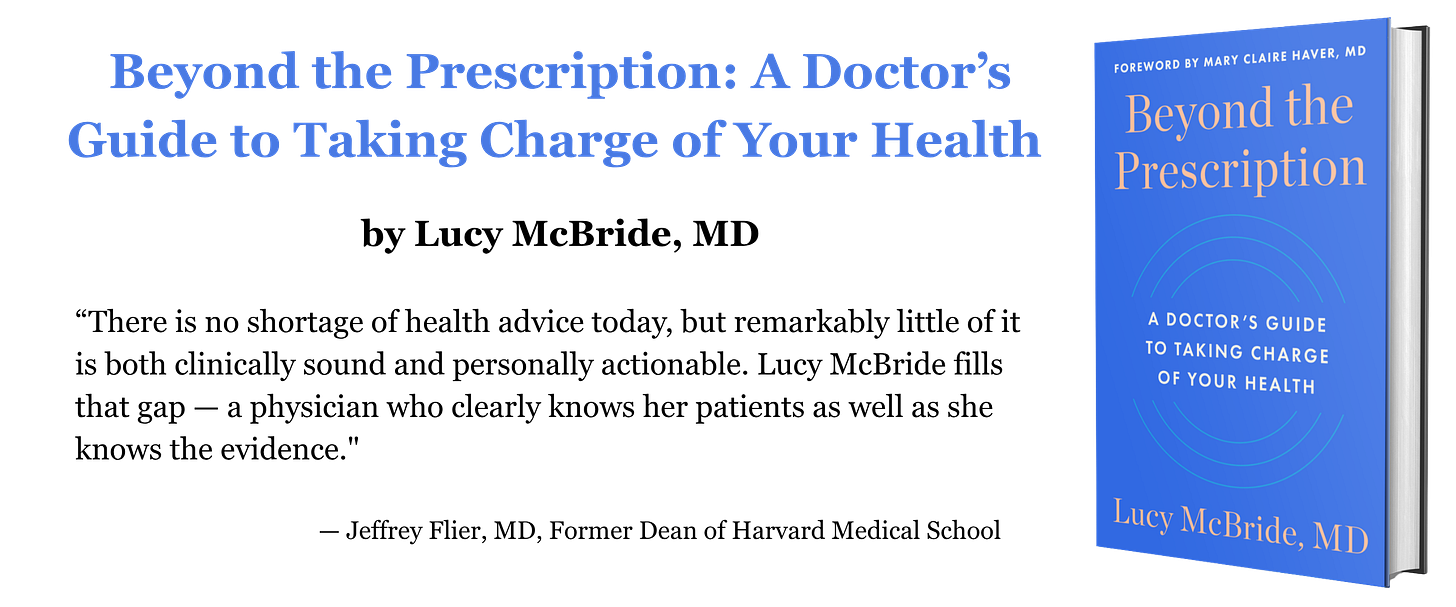
You can order your copy at Amazon, Bookshop.org, or Barnes & Noble.
Comments
Nothing yet. Say the first thing.
Sign in to join the conversation.