
The Jeffrey Epstein political scandal does not reflect a healthy period of responsible, sober-minded democratic governance in the United States. It does, however, provide a good lens into some of the crazier aspects of Chinese politics, especially during the chaotic years of Mao Zedong.
How does Epstein relate to Maoist China? Well, like today’s America, Mao’s China was dominated by a tug-of-war between political factions which tended to weaponize personal behavior as a way to take down powerful individuals on the opposing side.
One of my pet peeves in trying to understand Chinese history of the 1950s, 1960s and 1970s is the tendency to portray Chairman Mao as omnipotent and unconstrained by the ebbs and flows of competing political factions. Sometimes the motives ascribed to him (he was “bored”, he “decided to teach Zhou Enlai a lesson”, he “wanted to ‘lure the snakes out of their holes’”) don’t make much sense, unless you accept that he was not only all-powerful, but also all-knowing.
If you view the Maoist period as one, long, bruising political battle during which Team Mao took some hits too, it makes a lot more sense. The downside is that you are then forced to wrap your head around quite a few secondary characters, who aren’t household names even in today’s China. However, they had a few vulnerabilities in common, which gave the factional fighting a particularly potent nastiness. The Epstein scandal is a good analogy to illustrate that.
Let’s dive in!
First, a quick review of facts:
The historical fact is that Jeffrey Epstein was a nexus for debauchery by rich, powerful and smart men, who were attracted by:
a> his parties, because of the proximity to other rich, powerful and smart men (which made them feel more rich, powerful and smart), and
b> his parties, because of the calculated supply of attractive teenage girls (who made them feel sexy, and therefore even more rich, powerful and smart).
The relative attraction of factors a> and b> depended on the person.
The current political fact is that the Epstein scandal can be weaponized by most political factions in the US (Republicans, Democrats, progressives and right-wing conspiracy theorists), because of the names they hope or assume are in his contacts book. It is also scary to nearly everyone in the establishment, because of the names they fear or assume are in his contacts book (even if you never climbed aboard the Lolita Express, maybe your ally or patron did?) This combination of opportunism and fear lends a frisson of hysteria to the whole affair.
The cultural fact that allows this to bubble along is that sex scandals have been potent political weapons in U.S. politics since the days of the Founding Fathers. Plus, the whole saga looks completely suspicious, distasteful and outrageous, and is therefore fascinating to the public.
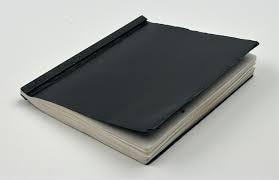
The Little Black Book (photo credit Alexander Historical Auctions)
In Mao’s China, political weaponization didn’t relate much to sex, because the Communist elite assumed that a powerful man was entitled to multiple younger women. However, sexual misdeeds did tend to be prominent among the charges after a person was down and out, because the Communist elite was also aware that the general public was much more conservative in their expectations for personal behavior. Shocking accusations of debauched living could retroactively justify any purge, no matter what the real reason was. This has continued to be true in today’s Chinese politics.
So what could be weaponized? Broadly speaking, during the Mao era nearly everyone in the political elite was vulnerable to three major accusations:
1> Having been in jail and signed a confession or recantation to get out, at one point or another during the messy decades of the 1920s and 1930 (in the case of urban revolutionaries), or having lost a battle (in the case of military men).
2> A wealthier (or at least, more prosperous) family background than ‘proletarian revolutionaries’ liked to claim.
3> A more privileged current lifestyle than devout Communists were supposed to have, especially compared to the impoverished general population.
All of these factors looked completely suspicious, distasteful and outrageous to the Chinese public, who didn’t have much insight into the personal histories or the lifestyles of the revolutionary elite.
As in the Epstein scandal, a factional flare-up in the Mao years would be marked by insinuations of guilt and demands for transparency by people who were fully aware that they themselves were potentially also vulnerable. This raised the stakes, and lent a shrill hysteria to any accusation. It also meant that if the attack didn’t succeed, it could ricochet onto the attacker.
Chinese talk a lot about the ‘spearpoint’ when they analyze factional fights. For illustration, the ‘spearpoint’ of the Epstein scandal has variously pointed at Prince Andrew, MIT, Harvard’s Kennedy School, and Bill Clinton, but now it is pointing at Donald Trump. He is responding in exactly the way that beseiged leaders would in Mao’s era – he is trying to deflect the spearpoint by bringing up the ‘crimes’ of people who had been out of power for years, in this case Barack Obama and Hillary Clinton. In Mao’s era, stolid military man Peng Dehuai was a perpetual deflection target, but so were a lot of other people. This explains, for instance, the waves of attacks that would recur onto individuals who had been purged from power or even died years before.
Needless to say, this is a deeply unhealthy way to conduct politics. The politics of Mao’s China were truly toxic, long before they exploded into the murderous frenzy known as the Cultural Revolution.
The trajectory in America is also not good. Politicians make choices to engage in this kind of toxicity, but once it has reached a certain level, it becomes harder for people to choose not to engage in it – especially when everyone shares similar vulnerabilities and fears.
If Epstein is a useful illustration of Maoist politics, can Chinese history offer any guidance to Americans on how to de-toxify our politics?
A lot of Chinese would say that Deng Xiaoping succeeded in doing just that, simply through the power of deciding not to indulge personal vendettas. In fact, this isn’t completely accurate. There was still nasty factional fighting during Deng’s reign, it just didn’t escalate to a level where it consumed a whole society. (Even the Tiananmen Square protests and the military suppression that followed were subdued, compared with the Mao era). Memories of the damaging Cultural Revolution were still fresh, and the generation of vicious revolutionary infighters was getting older, and shuffling off the political stage. Economic growth offered people a lot of other things to focus on.
In the 1990s and 2000s, most Chinese could live a pretty normal apolitical life, although at the cost of having no say in who ruled them (the public even gained considerable influence over policy in the Hu Jintao era). Xi Jinping has tried to reintroduce political slogans and expressions of loyalty into the civil service, army and education sectors, which many Chinese citizens don’t particularly welcome, but his political purges have stayed carefully firewalled.
Obviously, systems are different and comparative politics only take us so far. But I’d be curious what examples are out there of societies successfully de-escalating from toxic politics. Anyone?
No posts
Comments
Nothing yet. Say the first thing.
Sign in to join the conversation.