
When I left Beijing in the summer of 2019, I never wrote that “goodbye to China” article that was in vogue at the time. In my 20 years in the PRC I had grown up, gotten married and had kids, all in a foreign nation that had gotten much better in some ways, much worse in others, and in some respects hadn’t changed at all. I had no idea how to wrap that up in 1,500 words, so in the end I didn’t bother to try.
Six years later, it’s only slightly easier to write this “Hello again” essay.
When you have been bitten by the China bug, leaving means FOMO. Back in 1998, the first time I left without a clear plan to return, I told myself that China had been around for 3,000 years (or 4,000, or 5,000, depending on which dynasty you care to hang your historical reference hat). It would always be there, whenever I returned. And so it was. I returned, then left again, then returned… and didn’t leave again for another fifteen years, until 2019.
This summer, for the first time since packing up our lives six years ago, we went back to China for a family vacation. My husband and I wanted the children to rediscover the place where they grew up before their memories faded completely; visas were easy to come by, plane tickets had finally come within range, and who knows where US-China relations will be in a year? The time felt right so off we went. We stayed in the same neighborhood in Beijing where we lived from 2006-2019, but we also traveled to Northeast China, to see somewhere new.
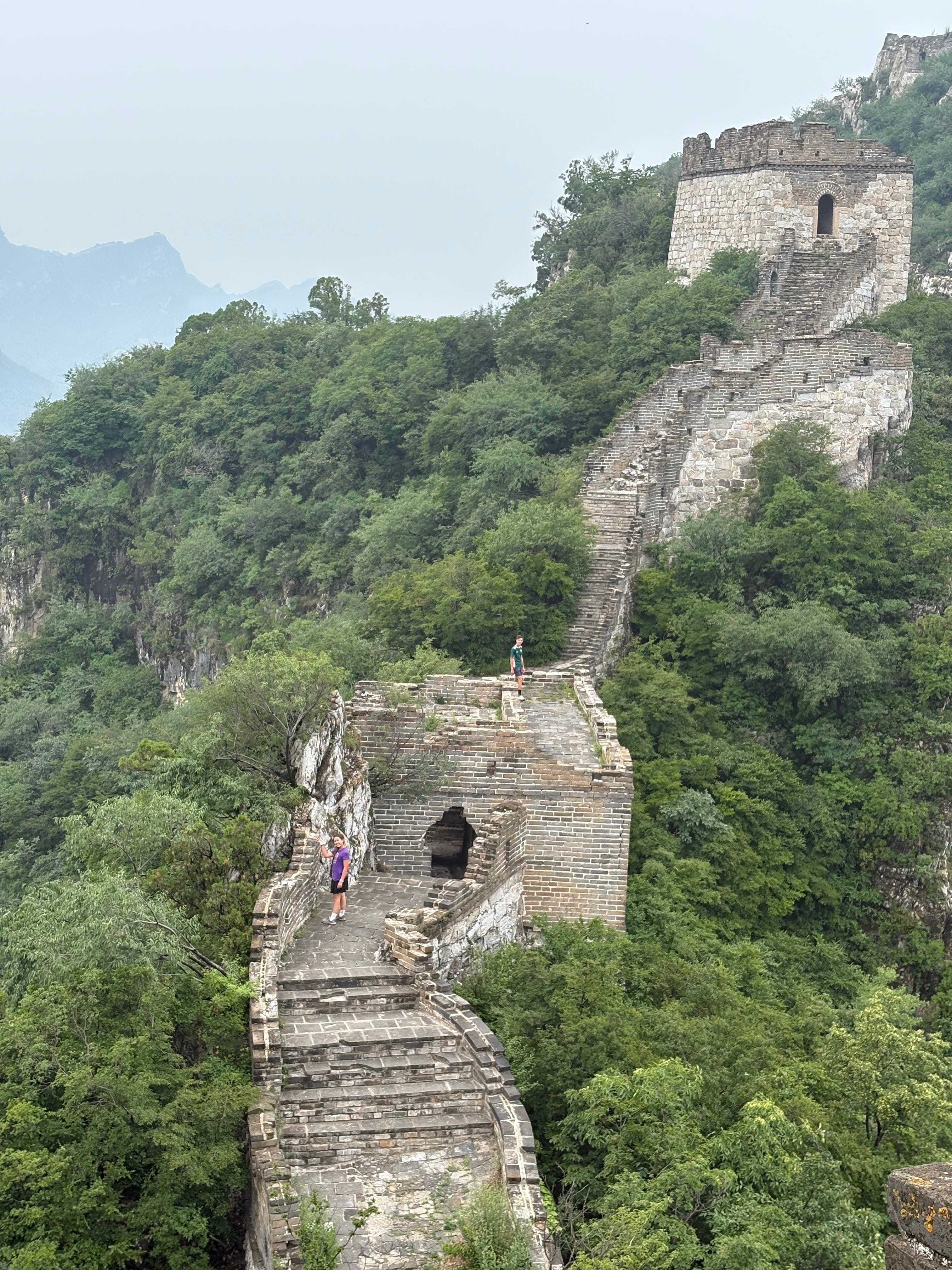
Back to old haunts, on the wild Wall.
The biggest takeaway was how normal everything felt. The China Watching crowd tends to be very politically attuned; meanwhile, here on Substack, I’ve encountered a fairly tech-forward community. The cumulative effect was that during six years of absence, I developed a mental image of China as a hyper-teched-up, bombastic shrine to Xi Jinping; that’s not what I encountered when I went back.
In fact, overall, I found China to be much less changed compared with 2019 than I had expected. In the six years between, Covid happened, but it didn’t leave many visible traces (one exception – the bank teller put on a mask before he touched any cash, and his bill-counting machine sported a little protective shield, to prevent germs from flying out).
The much more obvious change, in my neighborhood, was the evaporation of the foreign community. There were noticeably more empty storefronts in Chaoyang District, and our compound and the streets around it looked shabby. I was delighted to find familiar faces in neighborhood shops, restaurants and storefront businesses, but it was also strange to reflect that these people hadn’t changed jobs in at least 12 years, in contrast to the economic dynamism and social mobility that defined the 1990s and 2000s. But then again, everyone is in a different stage of life now. “When you and I first met, we were both young,” one neighborhood acquaintance mused. “Now I am 44 and I am losing my hair.”
It’s undeniable that quality of life for middle class Beijingers has transformed since I first encountered the city in 1995. The subway network is extensive, clean and quick, thanks to a massive infrastructure investment that began around 2004. The gleaming high-speed rail network and wide highways make it easy to take a vacation in previously remote and inaccessible regions of China (the most popular destinations this year are ancient temples featured in a hit video game).
The improvement in air quality was striking. When my kids were in preschool, they could glance out the window in the morning and accurately predict whether it was a green, yellow, or red flag day (the playground was closed on red flag days). Apparently, like riding a bike, pollution detection is a life skill that never goes away. From the subway platform at the T3 airport, my son immediately and correctly pegged the air quality index at under 100. Green flag days prevailed during our visit.
Beijing’s greening plan is well underway, and the results along the Liangma Canal are lovely. A long stretch of pathways, reeds and willows is complemented by happening restaurants, rentable boats and places for picnics and fishing. I saw a Mandarin duck with ducklings and a wading bird flying along the canal at night – a huge change from the stinky, garbage-lined ditches of 30 years ago.
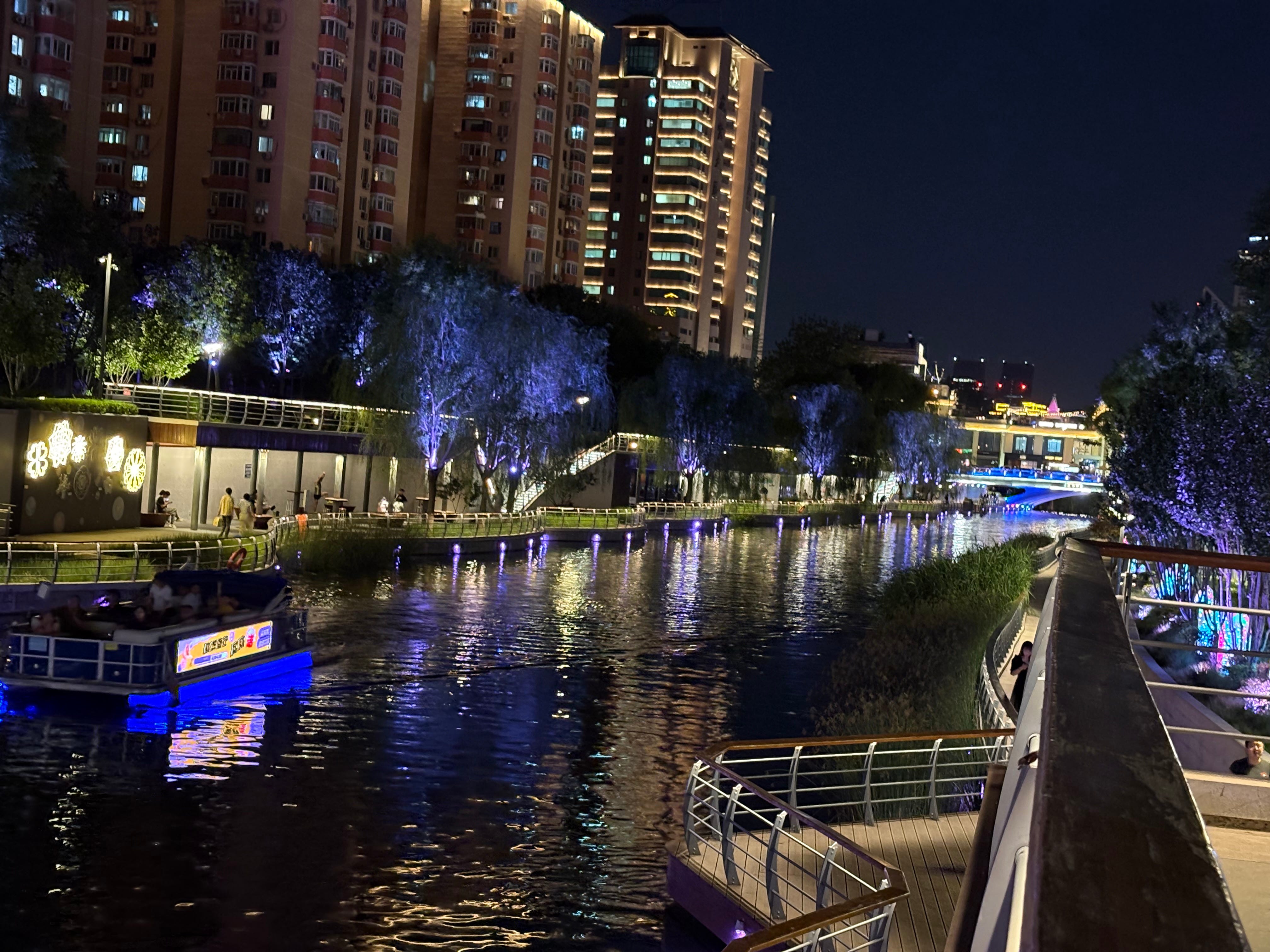
Nightlife on the Liangma canal. I wonder if they still allow ice skating?
Nonetheless, nearly every person I met in Beijing – friend or stranger, foreigner or Chinese, native Beijinger or migrant – mentioned how poorly the economy is doing. There are a few obvious reasons for this that are specific to Beijing. In addition to the drop in the high-spending foreign population, the capital has been on a multi-year campaign to move city offices and government ministries out of town. It’s been nearly impossible for non-Beijingers, even long-time workers, to get a hukou since around 2012, and even more new high-rises have been appeared on the periphery of the city, which must have more than soaked up any remaining local housing demand.
Our favorite neighborhood breakfast place, which attracted pensioners and migrant workers thanks to its extremely cheap yet tasty you.tiao and bao.zi, closed for relocation the week before we got there. We were disappointed, and so was the thin older lady who wandered up to the locked door. “They want us to consume, consume, consume,” she snapped. “How are we supposed to consume more if they don’t give us money?”
It wasn’t just economic energy. Political energy seemed missing too, given that Beijing is a city that exists for politics. I saw much less obvious political sloganeering than in the mid-to-late 2010s – far fewer slogans painted on the walls, less signage in the subways or in public places or in the smaller streets and alleys. On CCTV news, Xi Jinping looked grey-haired and tired. The messaging that I did see was heavily focused on environmental themes.
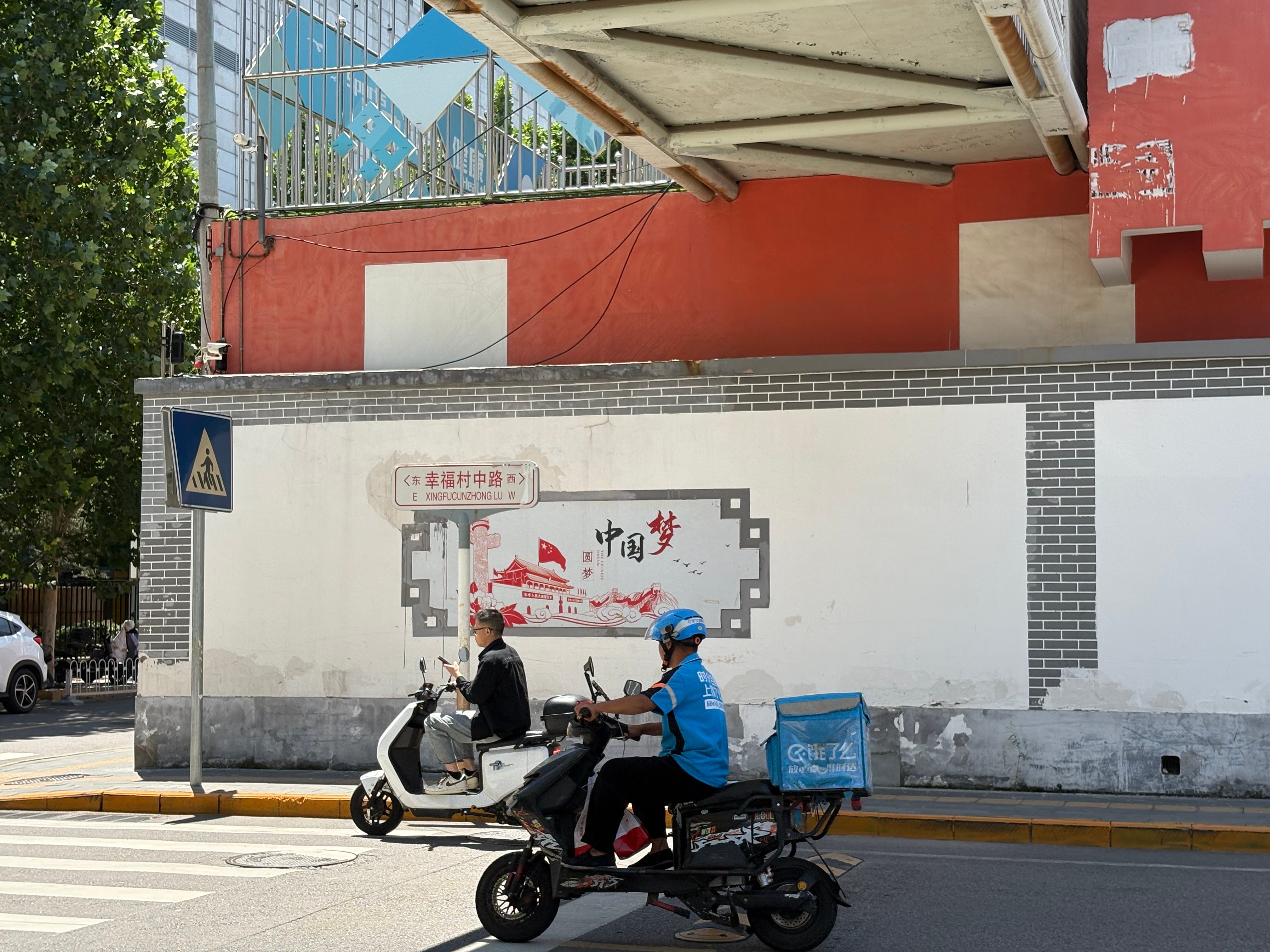
Faded “China dream” slogan in Chaoyang District. If memory serves, this one went up around 2017.
Campaigns that crested in the years before I left have faded away. Poor neighborhoods that were slated for demolition six years ago are still in existence (albeit with bricked-up entrances, so you don’t notice them from the main street). Balconies and pigeon coops have sprouted back onto buildings that were stripped bare during the “no poking out” drive. There were police booths and ‘community service’ stations everywhere, but many seemed completely unstaffed. There were cameras everywhere, too, but I felt there were not quite as many (maybe they are simply more effectively placed).
Overall, Beijing felt subdued. I finally decided it reminded me of the years after the Asian Financial Crisis – 1998 and 1999. Things were ticking along, but sleepily. Attention is elsewhere. It took me a little while to put my finger on that feeling.
Imagine my surprise at finding more energy in Dongbei, China’s rustbelt northeast, which has suffered an outflow of young people for decades. Granted, this was my first time visiting Shenyang, the region’s largest city, so unlike Beijing I have no apples-to-apples comparison. Another caveat – Shenyang and the three other big Northeast cities (Dalian, Changchun and Harbin) have absorbed most of the young people from smaller places where traditional state-owned industries have cratered. But still. In Shenyang, malls were hopping and the shopping streets were full of cheerful crowds. The subway was convenient, share bikes were everywhere, and air quality seemed decent.
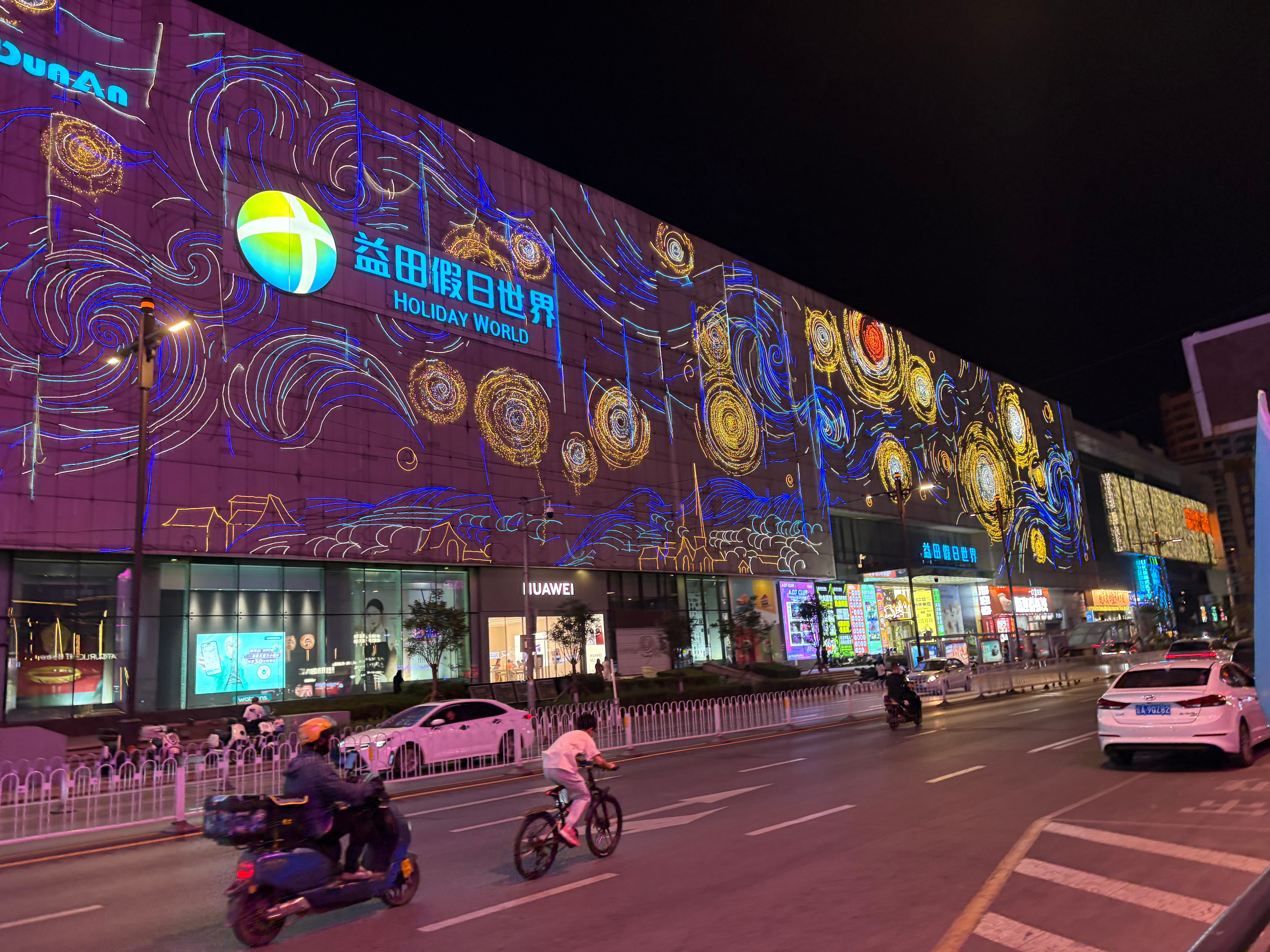
Starry, Starry nights in Shenyang
One striking phenomenon is that white is the fashion color in the Northeast. It takes a certain confidence in the cleanliness of your city to sally forth in white dresses, skirts or slacks, but the citizens of Shenyang and Harbin appeared to have that confidence. This would not have been the case several years ago.
Also in Shenyang, I noticed a group of ladies reciting Bible scripture in a park, and gay-themed material prominently for sale at a bookstore devoted to manga and graphic novels. This was a surprise to me, given the tightening social controls in the years before I left. Christians gathering in parks would have been far more common in 2010 than in 2019, and I don’t recall ever noticing LGTBQ+ lit for sale, although I didn’t frequent many bookstores when I lived in China.
On the other hand, expats who remain in China say that monitoring of foreigners has increased. Perhaps if I had stayed longer than a two-week tourist visit, the feeling of familiarity would have shifted to something more alienating.
I used to feel that China changed so noticeably after an absence of any duration, whereas the US seemed the same no matter how long I was gone. This time, after a six-year absence China didn’t feel so different while the US is giving me whiplash. Of course, Covid happened in the middle and I might have encountered a very different place, depending when I returned between 2019-2025. Maybe it’s safer to say that China has put Covid behind it, and reverted to the mean, while the US is still struggling with its legacy.
Rapid change has defined China since the reform era, whether exciting or upsetting. The profits to be made off that change were what attracted Beijing’s large foreign community, and what enabled me to stay comfortably employed as a foreign journalist for so many years while news media jobs cratered everywhere else. I understand that people visiting Hangzhou, or working in China’s EV sector, or monitoring military developments, still encounter that constant dynamic (and alarming?) change. But that sense of change has faded from Beijing.
When the PRC and I first met, we were both young. Now, it feels like the PRC is settling into a long middle age.
No posts
Comments
Nothing yet. Say the first thing.
Sign in to join the conversation.