
The grass at UVM soccer camp in the heat of mid-summer has a specific, heavy smell—a mixture of scorched earth, fermented Gatorade, and the desperate, electric ambition of a hundred teenagers trying to catch the eye of a scout. I was seventeen, a creature composed of pure momentum and an emerging, hungry strategy. I wasn’t just playing; I was calculating. I could see the vectors of the game unfolding before me, the way a physicist looks at a particle chamber, seeing the lines of force before the collision actually occurs.
I was on a break, pushing into the open space with everything I had. The ball had gotten a little ahead of me, bobbing on the uneven turf of the Vermont pitch, and I could see the defender closing the gap. In that split second, the math was simple and brutal: slide or surrender. To my left, Rosy, the UVM goalkeeper—a man who lived up to his reputation as a literal, unblinking wall—had been drawn away from the net. I had him out. I was out-maneuvering the wall. I could actually taste the score; it was a metallic, sweet tang on the back of my tongue.
I slid.
The world tilted as I went low, the horizon of the green field rushing up to meet my peripheral vision. I didn’t see the defender’s leap until it was too late. He went high into the air, a panicked, reflexive arc, and as he came down, his full weight landed on a single, focused point: his foot drove with the force of a falling anvil directly into my fibula.
There was a pop.
It wasn’t a small sound. It was a structural failure, audible and definitive. It echoed across the field, a dry snap like a dead branch breaking in a winter forest, or the crack of a whip in a silent room. The coaches heard it from the sidelines. The players heard it in the box. I heard it inside my own teeth, a vibration that traveled through my skeleton before the pain even arrived at the station.
I tried to stand. I was driven by that adolescent delusion that you can simply “walk off” a shattered geometry, that the will of a seventeen-year-old is enough to override the laws of physics. But the leg was no longer a pillar. It was a suggestion. It was a hinge where there should have been a beam. I collapsed, the earth coming up to meet me with a sudden, jarring finality that felt like the end of the world.
The medical golf cart was there in seconds, the whine of its electric motor a funereal hum against the backdrop of the sudden, stunned silence of the camp. Everyone knew. The coaches knew. My teammates knew. The scouts knew. The summer was over. The camp—the gateway to my future in the game—was over. At least, for me.
The next six weeks became a monastery of recovery. I entered a focused, quiet existence of healing, a period of forced stillness that felt like a prison until I realized it was a laboratory. I did endless pushups to exhaust the energy that could no longer go into my legs, my chest hovering over the carpet as I counted the repetitions of my own resilience. I read. I immersed myself in books, wandering through physics, philosophy, and the mechanics of the universe, learning to be still while my architecture attempted to remember how to be whole. I was watching my body rebuild itself, marveling at the sheer, silent audacity of a bone that refuses to stay broken.
When I finally sat in the clinic, a few days later, the crinkle of the sanitary paper beneath me didn’t feel like the prelude to a death sentence. It felt like a threshold.
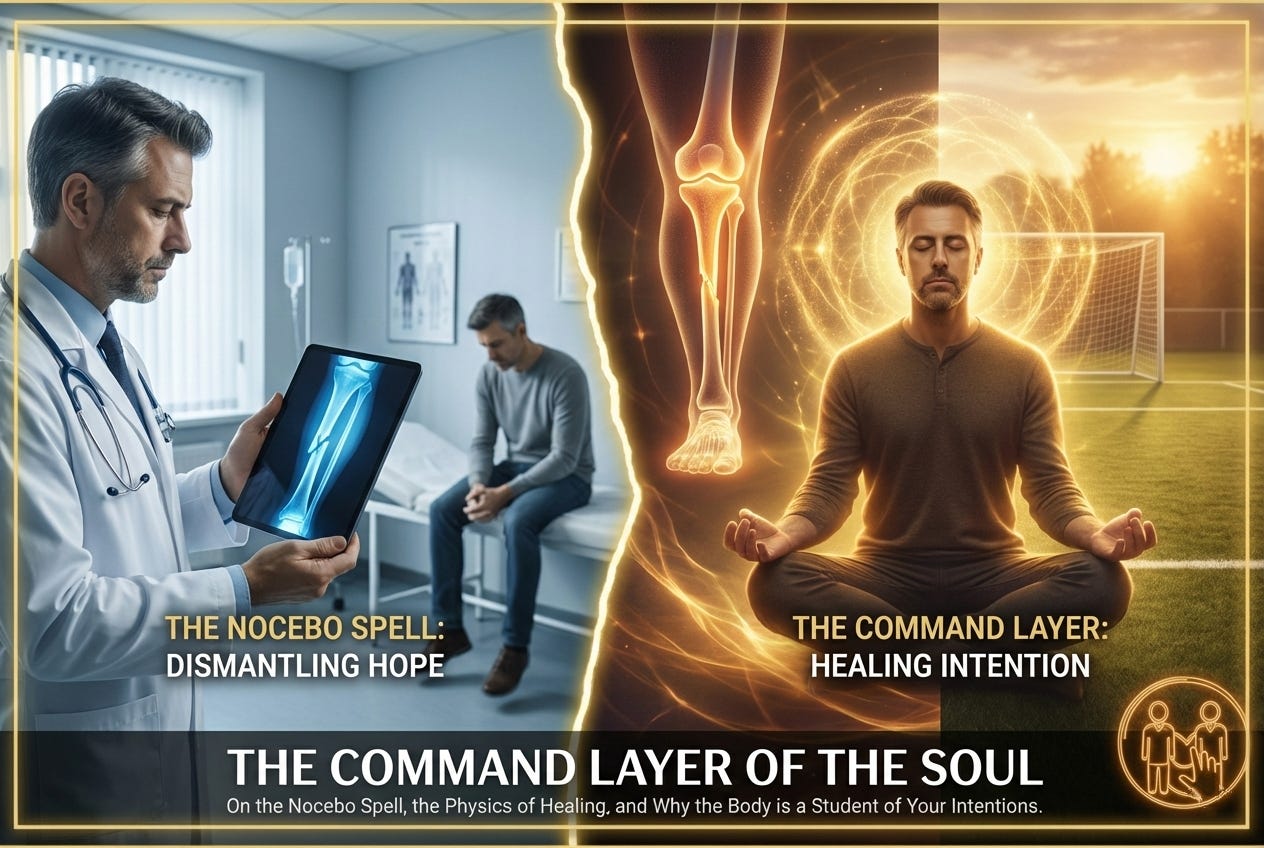
The doctor was Dr. Stephanie Landvater. In the summer of ’98, she was still young, radiating an energy that was the polar opposite of the weary, clinical detachment I had expected. She didn’t look at the X-rays as a record of a broken, diminished thing; she looked at them as a blueprint for a reconstruction.
She was positive. She was optimistic. She spoke to the seventeen-year-old me—the one who still believed he was a superman with unlimited physical capacity and a body that had no interest in slowing down—and she validated that belief. She didn’t tell me I was permanently altered. She didn’t tell me I was less than I had been. She told me I was in the process of remembering my own structure.
She didn’t cast a nocebo spell of permanent deficit. Instead, she offered an incantation of inevitability. My body, she seemed to suggest, was a master builder, and her job was simply to support and then confirm the quality of the work.
But as the nearly thirty years have piled up since that Vermont summer, I have come to realize that Dr. Landvater was an outlier—a bright, rare light in a landscape that has grown increasingly dim, transactional, and dangerously cynical.
The medical world of the last three decades seems to live in the secret, dark hope that its nocebo spells will work. There is a thriving, trillion-dollar economy built on the maintenance of the malady, a system that flourishes only when you believe you are a fragile, failing machine in constant need of an external mechanic. It is a world where the practitioner too often delivers a prognosis as if it were a life sentence, collapsing the horizon of possibility until the patient believes that their only hope lies in the next prescription, the next procedure, the next scheduled appointment.
I have watched this paradigm harden like a shell. I have seen the way it treats the human organism as a passive host for interventions, ignoring the profound, documented power of the bio-psycho-social-informational reality. We live in a world where doctors—the very people tasked with our vitality—will look a patient in the eye and tell them to eat more “heart-healthy” whole grains and soy.
Let’s be clear: this is perhaps the worst thing a human can do for their inflammatory state and metabolic health. It is a dietary lie that fuels the very chronic diseases the system claims to be fighting. We live in a world where they will directly deny that diet, lifestyle, or even the mental framework through which we view our illness can influence the outcome in the least.
It is a dangerous, documented, and systemic falsehood. It is a betrayal of the very physics of life.
Because of this, I have learned to move through the medical world with a calculated, steely distance. I do not go to them unless the structural reality absolutely demands it—unless there is a bone that needs setting or a wound that needs stitching. When I do cross that threshold, I steel myself against the poison of their pessimism. I allow them into merely the antechamber of my mind. I let them handle the mechanical data—the X-ray, the blood count, the structural assessment—while I keep the inner sanctum of my belief system locked tight behind a wall of sovereign will.
I refuse to let their nocebo spells take root. I refuse to let their limited expectations, their “standard of care” which is often just a standard of decline, become my biological forecast. I extract their information and I leave. I do not stay for the narrative.
Their spells are often far more damaging than the toxins we find elsewhere. We worry—rightly so—about the garbage dumped into our food supply, the heavy metals in our air, the flame retardants in our furniture, and the microplastics in our clothing. These are real, material assaults on our architecture. But the nocebo spell—the spoken, authoritative conviction that you are a passive victim of your own biology, that you have no agency in your own recovery—is a deeper kind of rot. It is a toxin that targets the command layer of the soul.
In a world where the body is inherently designed to heal itself, why have we built a system that treats that healing as an accident rather than a biological requirement?
Why do we accept a care model that ignores the interface between meaning and matter?
The “Placebo” is just the word we use for the healing we haven’t learned to patent yet. It is the evidence of a deep, ancient capability that modern medicine treats as a nuisance to be “beaten” in a double-blind trial. If a drug barely outperforms a “sugar pill,” we call it a success. But we never stop to ask why the sugar pill performed so well. We never stop to study the mechanism of the meaning.
I know better. I remember the light in Dr. Landvater’s room in 1998. I remember the refusal to let the cold in. I remember that my seventeen-year-old body was a student of my own intentions, and it was a brilliant student. It didn’t just knit a bone; it rebuilt a pillar of movement because I refused to accept any other outcome.
We are not just billiard balls bouncing in a void of chemistry. We are sovereign participants in an ongoing, transactional reality. The math of the break is only half the story; the other half is the forecast we choose to believe.
If we are brave enough to walk past the antechamber, to ignore the “poison” of the standard prognosis, and to claim the responsibility of our own state, we might finally find a medicine that is worthy of the life it seeks to protect. We might find that the “miracle” was always just the system functioning as it was designed—with the light turned on and the spirit engaged.
The fire crackles, whether we call it contentment or just combustion. But we are the ones who crackle when the warmth and the purpose align. And when we sit on that high, paper-covered table, we must remember: the crinkle is just a sound. The real work is the refusal to be diminished by a story that isn’t yours.
The medical world can have my data. They can have my X-rays. But they cannot have my horizon. I am the architect of my own recovery, and I have no interest in slowing down.
Dr. Lucas Root
Techno-Shaman. AI Strategy Advisor. Author of “THE FORGE & THE FLOW.”
I am a storyteller, but above all, a permanent student of human potential. My work is a deep exploration of the unseen contracts and hidden systems that exist at the intersection of technology and humanity. Here on The Lucid Path, we practice learning in public and building with purpose. I’m a rabid enthusiast for finding the patterns that help us build better, more human ways of being, freeing ourselves from the complexity we create.
If this piece resonated, consider sharing it with someone who might also be walking this path.
Explore My Work Further: https://smartpa.ge/LucRoot
No posts
Comments
Nothing yet. Say the first thing.
Sign in to join the conversation.