
Christine Conradt is TV movie ROYALTY.
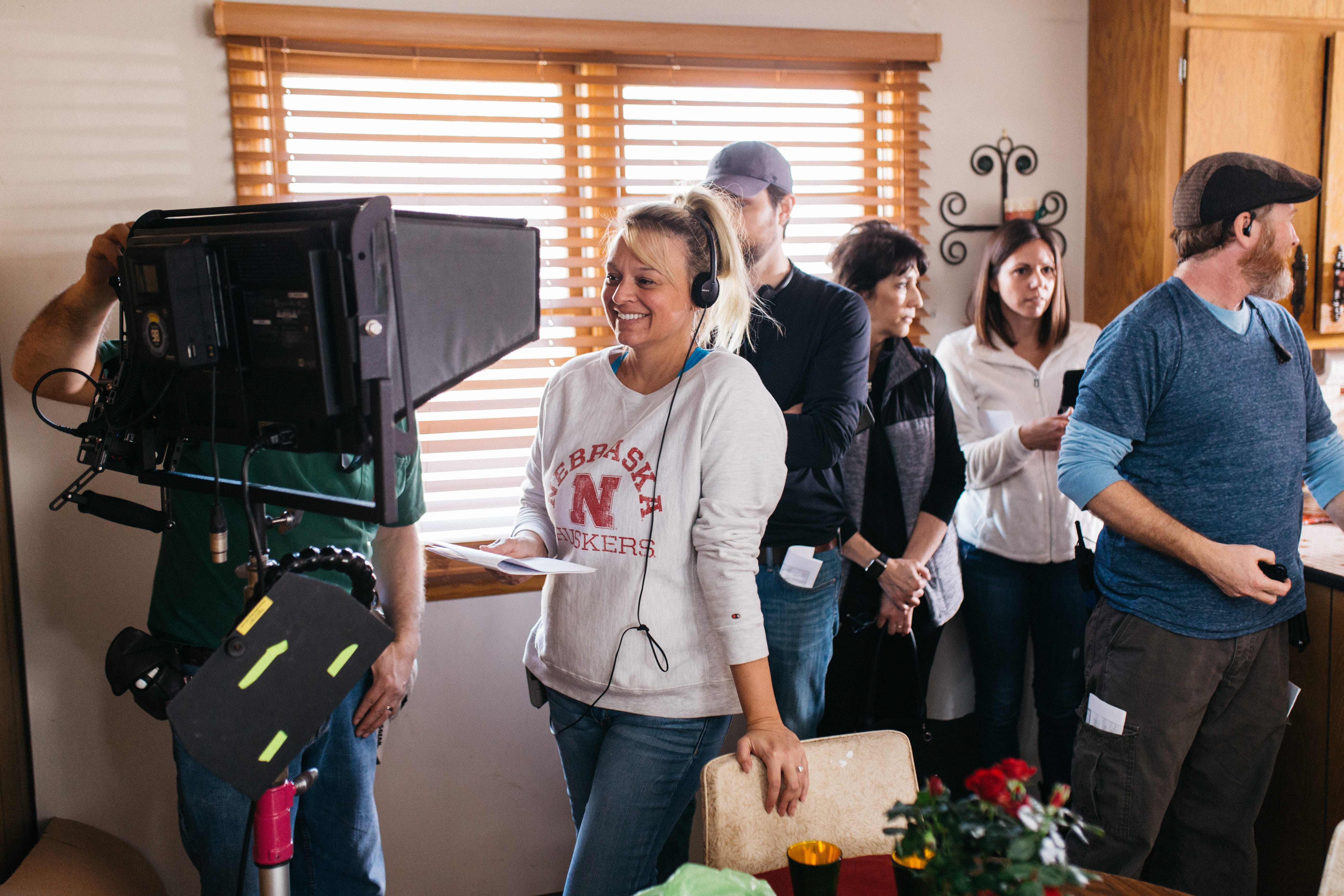
She’s written over 70 TV movies. Produced another 30. And she’s directed 13. I would struggle to find someone who knows this genre better, which is exactly why I had to interview her.
Her adventure into TV movies began in the University of Southern California's Cinematic Arts program where she earned a B.A. in Screenwriting.
How it progressed from there… well, we’ll get into that below…
Lauren: Welcome, Christine! I want to know every detail about how you got into TV movie writing.
Christine: I went to film school at USC—I have my bachelors in screenwriting—it was a four year program. When I got out of that, I started working in development pretty quickly as a creative assistant. I didn’t like it at all at that time because I just wanted to be a writer, not the person reading the script and giving notes and doing the weekend reads and all that.
While I was in college, I was working for a YMCA and they kept promoting me. So when I couldn’t be the writer I wanted to be, I just went ahead and quit my development job. The YMCA wanted me to take over my own branch and, to do that, I had to make a five year commitment to them. It really held up the mirror. I thought, “Well, this isn’t what I went to college for. It’s not what I really wanted to do.” So I quit that very good, lucrative job.
I said “OK, I’ve got enough money to live on for six months. I’m going to try to be a writer, and if that doesn’t work, I’m going to give up that dream forever.” I ended up writing two scripts and, while I didn’t sell either, they both got me work.
So then I was doing rewrite jobs, but it still wasn’t enough to live on. I ended up getting another job as an editor for a Korean publishing company creating English books for Korean kids.
Eventually, I said to the producer I was working for: “I want to start the scripts. I don’t want to be the person that just fixes other people’s writing”.
So he said “OK, I’ll let you start a few.”
It came to a point when he wanted me to come to a meeting one day and I was working this other job at the Korean publishing company and he said: “What do I have to do to get you to come to the meetings when I want you to come to the meetings?!”
“Well, you need to supplement my income.”
“OK, I’ll make sure that you make enough in a year so that you’ll come to the meetings whenever I want you to come.”
And that’s how I started doing it full time. I eventually started working for multiple producers in that space and started producing myself.
After being such a screenwriter at heart, what made you want to get into producing and directing?
I just wanted more creative control. As you know, the writer sort of gets cut out of the picture as soon as that script is ready to go into production. Like, “Goodbye! I will never see this again until it comes out.” If you’re even lucky enough to be told when it comes out. A film would come out and no one would even tell me. I’d have to put up alerts on IMDb.
So I asked one of the producers who was shooting in Canada a lot, “I want to produce. I’ll pay my way to come up there. You don’t have to pay me. But, if I come up there, will you let me shadow the producers?” He did that twice and then he felt comfortable letting me produce and get paid for it.
So I was the on-site producer working right next to the director being the liaison between the network. And that’s when I fell in love with what the director was doing. So I was like “Oh, hey, I think I could do that!” Which is really funny, cause in film school, I kind of just phoned in all my directing classes, cause I never thought I wanted to be a director.
I ended up doing a project that caused me to join the WGA and, at that point, I couldn’t write the low budget, non-union movies anymore. But I can direct them and produce them! Which is why, a lot of times, I write the ones that are the bigger budget union projects and then I produce and direct smaller ones that I’m not allowed to write. So I just develop those with a different writer and then I direct them and produce.
It’s so cool that your path into directing organically developed from just being on set and witnessing it in person.
Ok, pivoting now: So you make both romcoms and thrillers: which do you prefer to write?
Probably a thriller. I have a Master’s degree in Criminal Justice [from Boston University], so I could more believably write crime dramas and thrillers. During the 18 months it took to get that Master’s degree, I was still working, which gave me zero sleep. But right after that, I started getting offers for romcoms.
Isn’t that just the way it goes!
One of my professors had some really great advice: “Never say no, because even the opportunities you’re not really that excited about might lead you to something that you are excited about” and I found that to be true 100%.
I agree completely. One of my greatest flexes as a writer is that I can find the fun in basically anything I write.
What’s the biggest difference writing holiday movies versus thrillers?
The biggest difference is that in a thriller, you have a little more latitude. You can follow the antagonist, you can create mystery beats, you can do red herrings, you can do truly thriller beats where we’re seeing what’s going on and the protagonist doesn’t know. With a romcom, most of those that are on the networks are two-hander romcoms, so it’s equal time your male and female lead, and you know your ending. At the end of act one is your meet cute. So you know you’re building a romance story. There’s usually an A story that drives that romance story. But the undercurrent of that is the romance story that ultimately gets you to the end of act 7 or the end of act 8, depending on which is your all is lost moment, which is usually a miscommunication or some low angst betrayal. In a thriller, we don’t know what’s going to happen. I’ve done open-ended thrillers where the bad person gets away with it. In a romcom, we always know they’ll end up together.
In a thriller, as a writer, you have to be… not necessarily more creative because I think sometimes the more parameters you have give you more creativity… you just have more options in terms of the storytelling.
Ok, so when you’re writing a TV movie, what’s your process?
I write to the 9 Act Structure, even if it’s something on spec that I know doesn’t need to work for any of the networks, I still write to it because I feel like it just keeps me on track.
To have those sequences of 7 to 12 pages and to know where I’m going from here to here, it’s sizeable enough but a manageable chunk to write versus writing act one [in the three act structure] then running to the midpoint.
I do know people who write to the three act structure. The nice thing about the three act is it gives you more time to develop. That first act of a 9 act is 18 to 20 pages and you’ve got to hit all these beats. It’s the same when you’re writing romcoms, there’s all these beats you have to hit in that first act. So with the three act, it’s nice having a little bit more time to develop and not front loading so much information. But I don’t really use the three act structure because I’m just so used to writing in this structure that I’d just continue to write to that structure anyway.
And you would know since you’ve written 75 films. 75 FILMS! Your brain is such an amazing machine.
Looking back on it now, I didn’t get married until I was in my 40s and I think that was partly because I was just working. When I wasn’t on an assignment, I was working on a spec or I was networking, going to the screenwriting meetups or volunteering at film festivals so that I could try to get in and watch the films for free and meet the producers.
That’s how I did that stage of my life. I don’t do that anymore. I do maybe two to three movies a year either producing, directing or writing. That’s enough. And right now, I’m working on some spec stuff and I’m supposed to go direct a film in Atlanta that I didn’t write.
I just don’t do as much as I used to do. I think it was all consuming and I don’t know, looking back, how healthy that was. I don’t think I had any life balance at that point in my life, but it helped me get to where I’m at in my career.
You’ve written, directed, produced so many thrillers, so many romcoms… Do you still get excited when you see them?
When I’m producing them, by the time they come out I’ve probably seen them 40 times, so, no, I don’t even watch them when they come out. If it’s one that I wrote and I kind of just got pushed away from the project because another person produced and directed it, then yes, I do. How about you?
I do get so excited. The one that’s coming out this summer is “only” my fourth. I get so excited, I bounce off the walls. It’s so wild to be able to say “there are four feature length films out there that I wrote that you can just watch on TV right now if you want to.” I feel as if that coolness never really truly goes away, because it’s just magic. It’s why we’re here and it’s what we want to do.
You know, the crazy part of it is that there could be someone watching your movie right now! When I first started, I used to have screening parties for every single one of them and all my friends would come, and then I’d get annoyed when they would talk during them.
With the ones I was just directing, you’ve seen them so many times because you’re involved in the cut and, by the time it comes out, you’re like “Thank god it’s out now. I don’t have to ever watch it again.” But not in a bad way. I’m very proud of the movies I’ve worked on.
You’ll see what you think after your short [Lauren’s directorial debut short film SWATHE] drops and if you’re still excited to watch. If it’s at a festival or in a theater, then you’re actually not watching the movie, you’re watching everyone else in the audience watching your movie.
What is your best advice for screenwriters writing TV movie specs?
Learn the formula for the network you want to write for. As a consultant/coach, I sometimes get scripts from new writers who tell me that their screenplay is perfect for Lifetime or Hallmark or some other network, and it's not at all what those networks want.
If you want to write for Lifetime, watch a lot of Lifetime movies. Same with romcoms for Hallmark or GAC Family or UPtv. Break five or six of those movies down into a beat sheet as you watch them and really absorb the formula.
And finally, I have to ask, what’s your…
…favourite film you’ve written? Either 12 DAYS OF GIVING because it was such a labor of love and has a sweet message, plus I wrote, produced and directed, or... PEARL IN PARADISE because of the mystery aspect. Funny that neither of those are thrillers. It’s hard to pick just one.
… favourite film you’ve directed? Again, so hard to pick! I’ll say... THE BRIDE HE BOUGHT ONLINE because it was my directorial (feature) debut.
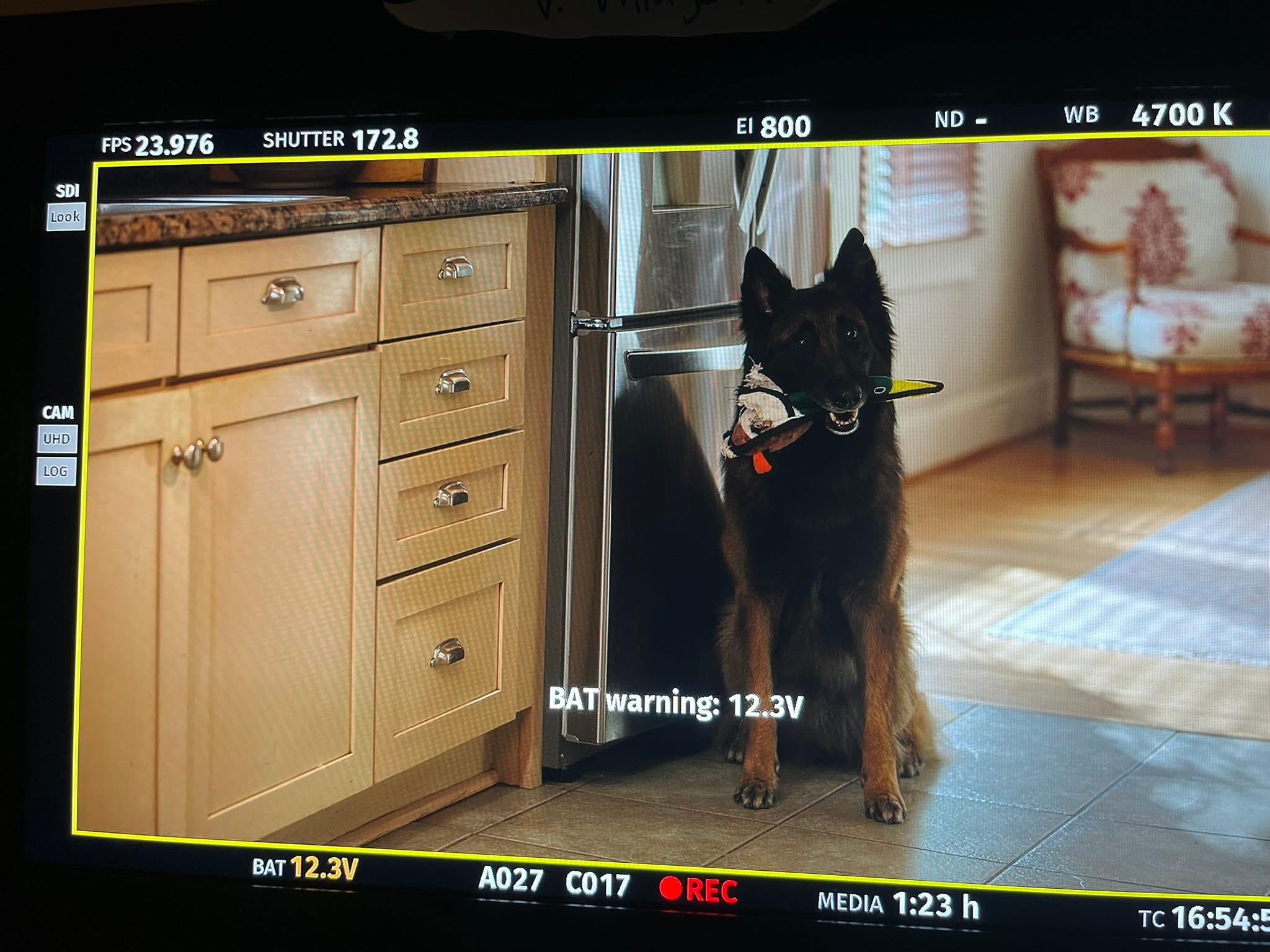
… favourite film you’ve produced? I’d say it’s probably 12 DAYS OF GIVING or THE PAST IS NEVER BURIED. That one was memorable because there was a dog in that movie and I got to cast and direct a beautiful Belgian Tervuren and work closely with his trainer/owner, which was a fun experience.
Christine! This was so helpful and so fun and honestly, I’ve been looking forward to this interview for so long. Thank you for joining me!
If your singular goal is to become a screenwriter, you’ll find a way to make it happen (because there is really no alternative).
You can make your own opportunities if you lead with curiosity, humility and an eagerness to learn.
Opportunities are often disguised as something else. If you approach your career with a “yes, and” attitude, you’ll start to uncover them.
Writing any film to the 9 Act Structure really does keep you on track (now you don’t just have to take my word for it!)
Lauren Greenwood is an award-winning screenwriter, story editor and soon-to-be-director. Lauren’s fourth TV movie THREE HOUSEWIVES AND A BODY is premiering summer 2026 on Lifetime Movie Network. Want to work together? DM me or reach out here.
Comments
Nothing yet. Say the first thing.
Sign in to join the conversation.