
Climate change is almost impossible for me to comprehend.
I can read the figures. I can listen to scientists describe rising temperatures, disappearing species and changes taking place across vast oceans.
But the scale is too large to hold in my mind.
Then I think about my grandchildren.
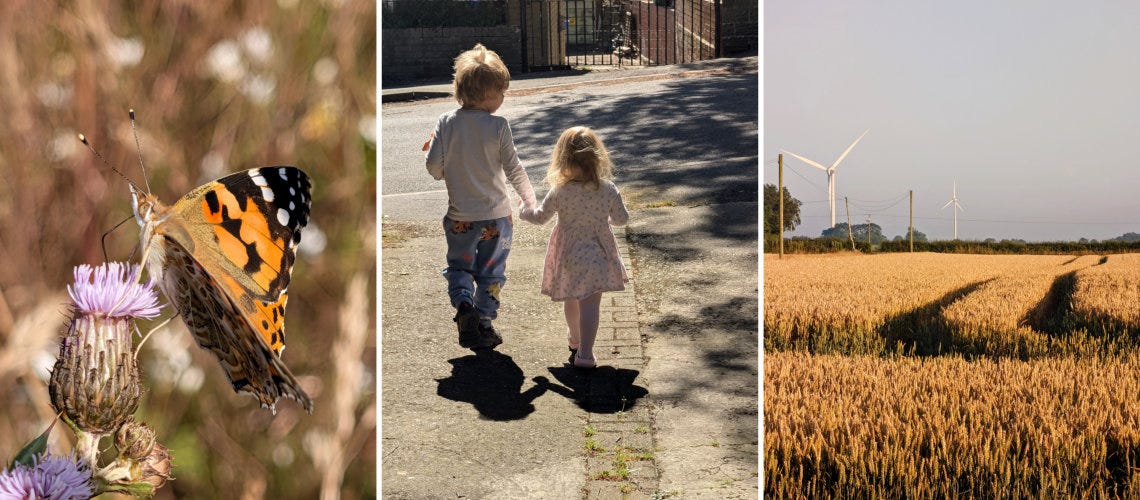
I imagine them growing older in a country where the seasons they depend upon have become increasingly hostile and unpredictable. Summers of extreme heat and drought. Winters which could become far more severe if the great currents carrying warmth across the Atlantic were seriously disrupted.
I imagine the effect on the food we can grow, the homes we live in and the health of people whose bodies were never designed for those conditions.
And I wonder what I will say if they ask what we knew and what we did.
That is when climate change stops being an abstract global problem for me.
It becomes personal.
At the People’s Emergency Briefing in Sheffield yesterday, we heard about the Atlantic Meridional Overturning Circulation, or AMOC. This vast movement of ocean water carries warmth northwards across the Atlantic before colder water sinks and returns south.
Scientists expect it to weaken as the world warms. They can’t yet tell us precisely how close it may be to a tipping point. A complete collapse this century is still considered unlikely, but some research suggests we could cross a threshold within decades which commits future generations to what follows. The UK Parliamentary Office has summarised the present evidence.
The image used to explain this was pretty simple.
Think about tipping backwards on a chair.
At first, each movement feels harmless. You lean a little further, and then a little further still.
Eventually, your centre of gravity passes a critical point. You can flail your arms and legs, but it’s already too late to stop the fall.
The climate doesn’t change as quickly as a chair falls. Its consequences can develop across decades and centuries. But the principle is similar. A system can absorb pressure until it reaches a point where the change begins to sustain itself.
For Britain, a major shift in the Atlantic circulation could mean much colder winters, stronger storms and much drier growing seasons. One study found that it could lead to the widespread loss of arable farming across Great Britain. You can read that research here.
The thought of my grandchildren inheriting that possibility is difficult to bear.
But fear wasn’t the strongest feeling I brought away.
It was hope.
I have come to see climate change as one consequence of our broken relationship with nature.
We have behaved as though nature were scenery around human life. Something to visit, manage, purchase or use.
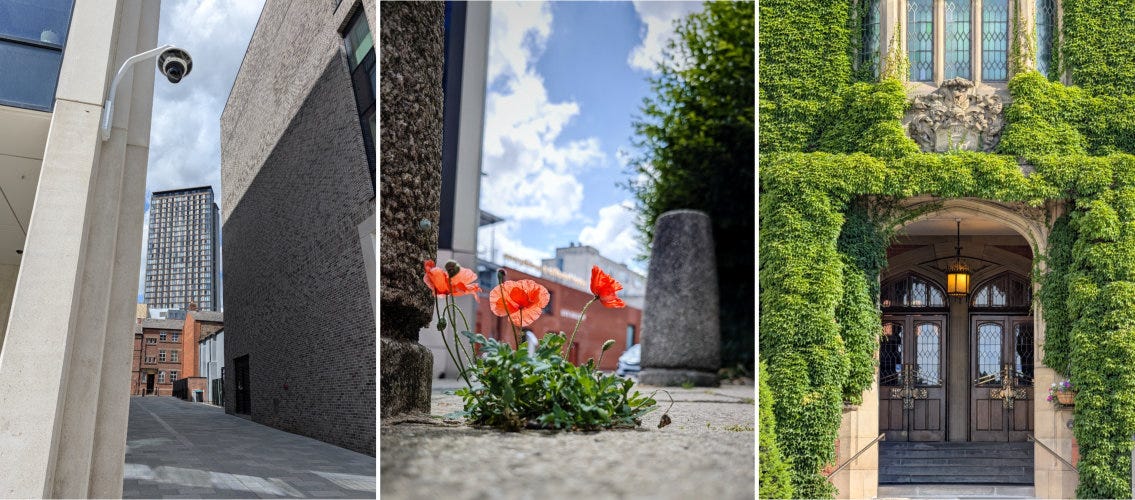
But nature is the living system which makes human life possible.
It creates the soil that grows our food. It cleans our air and water. It regulates temperature. It supports our physical health and gives our minds places in which to breathe.
We are not separate from it.
When we begin living with the grain of nature, many of the changes that protect the environment also make human life better.
Food grown closer to home can be fresher and help communities become less dependent on distant supply chains. Walking and cycling improve our health while reducing pollution. Trees cool our streets. Community gardens bring people outside, grow food and create opportunities for neighbours to meet.
Using less, repairing more and sharing what we already have can reduce waste while saving money and building relationships.
None of these actions appears large enough to change the climate alone.
But nature itself teaches us something about scale.
A seed is small. A forest is not.
One neighbour creating a pond may seem like a modest act. Then children begin stopping to look at it. They become curious about the life gathering there. Other neighbours see what is possible. Another piece of neglected land becomes a garden.
One action creates the conditions for another.
When that happens across a street, a neighbourhood, a city and eventually a culture, the effect can be dramatic.
This is not about placing the weight of the climate emergency onto individual shoulders. Governments, industries and institutions hold responsibilities which can’t be replaced by personal choices.
But those larger systems do not exist separately from culture. They respond to what people expect, what communities demonstrate, what voters support and what society begins to consider normal.
That gives me massive hope.
Things which appear impossible at a global scale can begin with actions that make life healthier, kinder and more connected where we are.
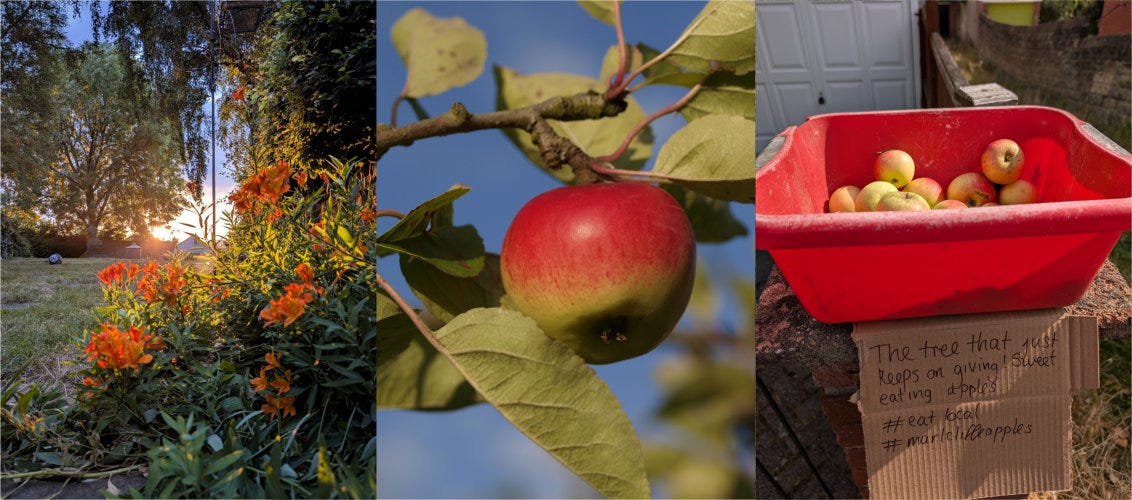
Yesterday, I saw two different attempts to bring Sheffielders together around that possibility.
Earlier in the day, I attended the Sheffield Creative Assembly: City of Nature at the Botanical Gardens.
The event was helping to shape Sheffield’s UK City of Culture 2029 bid. We were told that successful programmes can involve investment of between £30 million and £50 million, so this represents a significant opportunity for Sheffield.
Before the workshop began, I spoke with an artist called Vic about individuality, nature and connection.
We talked about how modern society encourages us to see ourselves as separate people competing against one another, even though no human being exists entirely alone. We are shaped by our relationships, our communities and the living world around us.
That conversation followed me into the workshop.
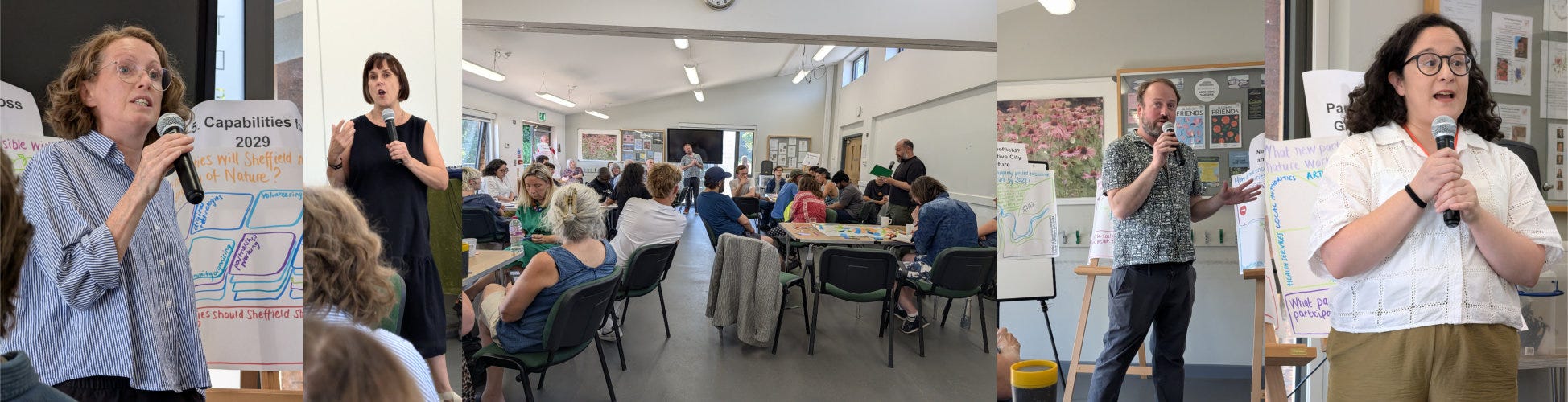
We were invited to gather around eight different themes. I chose nature, neighbourhoods and participation because it sat so closely beside the questions I have been exploring through Love Sheffield and Seven Hills.
Around the table were artists, filmmakers, community organisers and people working with land, food, young people, culture and wellbeing.
I found the experience genuinely inspiring.
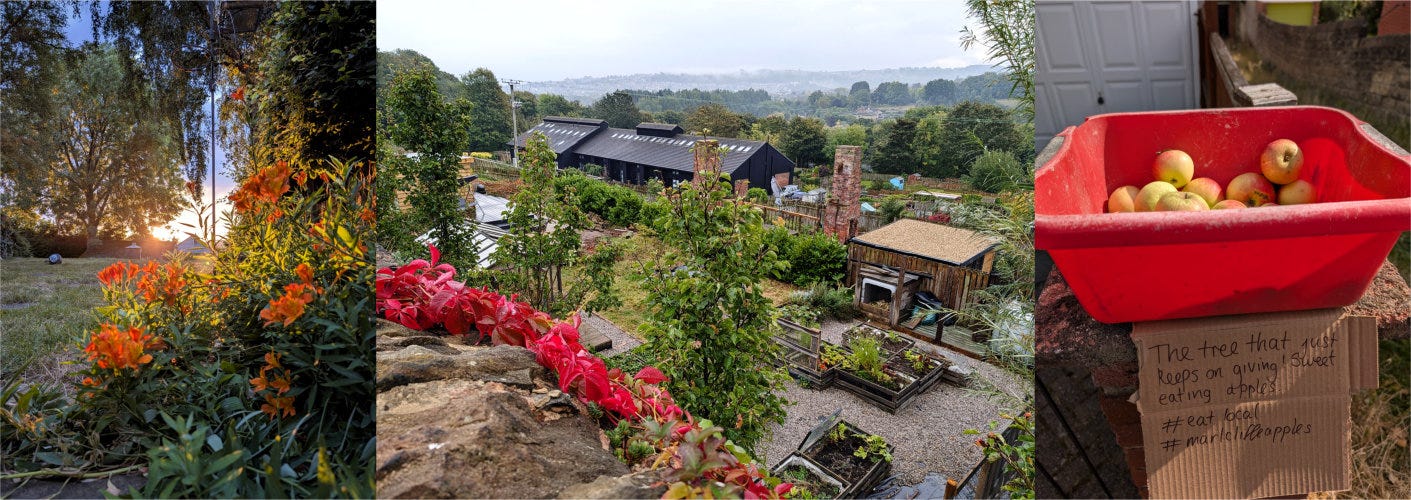
One person described a neighbour in Meersbrook who had created a pond at the end of her garden. Children now stop to look at it on their way home from school.
We heard about community gardens appearing on overlooked pieces of land, and cherry and apple trees providing food. Charu spoke about trying to offer open-air yoga in Norfolk Heritage Park. Others raised the difficulty of travelling between Sheffield’s neighbourhoods and how rarely people experience what is happening on the other side of the city.
Each person brought a different kind of awareness. One experience sparked another thought, which opened another possibility.
This was Sheffield thinking together.
It was also a glimpse of what becomes possible when people are invited to contribute as creators rather than treated simply as an audience.
The conversation went much deeper than coming up with a few impressive events for 2029.
When the tables reported back, people spoke about connecting organisations which already know how to make things happen. They discussed helping neighbourhoods tell their own stories, developing skills among young people, supporting local entrepreneurs and paying freelancers properly for the knowledge and creativity they contribute.
There were ideas for community gardens, local food, neighbourhood walks, storytelling, shared spaces and small amounts of seed funding that could allow something new to begin.
The desire was clear.
We didn’t simply want investment to arrive, put on a show and leave.
We wanted it to help Sheffield become more capable of creating for itself.
Investment can purchase a performance. Used differently, it can leave behind stronger relationships, greater knowledge, new skills and people who feel more confident in their ability to act.
That is how inward investment can become lasting capability rather than a fleeting moment.
But as the workshop ended, another question stayed with me.
What happens to all that awareness, experience and energy after everyone goes home?
What happens if the funding doesn’t arrive?
How do the relationships continue beyond the event which brought them together?
And how does someone outside the city’s cultural, charitable and professional networks become part of that creative process in the first place?
That evening, around 250 people gathered at Sheffield Hallam University for the People’s Emergency Briefing.
The film brought together evidence from climate scientists, economists, health professionals and military leaders. It showed how changes in nature connect with food, health, energy, national security and the stability of society itself.
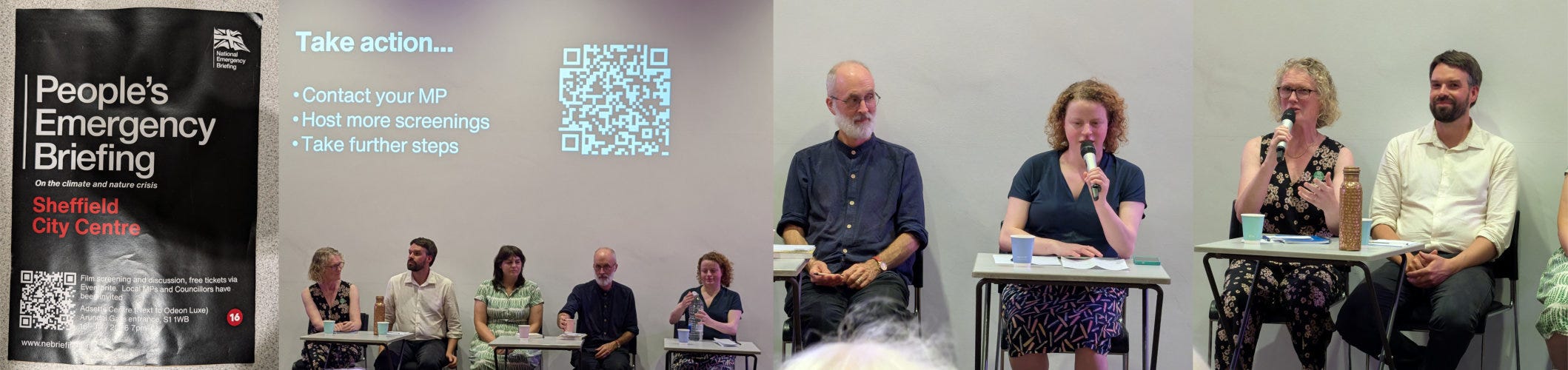
Olivia Blake MP reflected that politicians often consider these questions separately. Water becomes one area of policy, food another and energy something else. Seeing them together made the seriousness of the situation much harder to avoid.
We also heard from a Manor Castle resident who had smelled burning plastic and wanted to know what was coming from Sheffield’s incinerator.
In that one question, a vast global issue became something being breathed by a person on a Sheffield street.
Much of the proposed response involved spreading the film, joining an existing environmental group or contacting our political representatives.
All of those things matter.
Climate change requires government action, regulation, public investment and decisions at a scale individuals can’t deliver alone. Politicians need to know what people care about, and they need public support to make difficult changes.
But one comment from Jonathan Hind at SY Ecofit came close to naming what I had been feeling throughout the day.
He said that we spend a lot of time waiting for “buttons to be pushed somewhere else”.
Then he asked what might happen if people combined their resources, skills, experience, talent, wealth and time.
He thought we might be surprised by what we could achieve.
I think he is right.
Both events showed me that Sheffield does not lack people who care.
It does not lack knowledge, imagination, experience or willingness.
What we lack is an easy way for all those separate contributions to find one another and become something larger.
At the Creative Assembly, we were told that we were the right people, in the right place, at the right time.
Perhaps we were.
But that room was full of the right people, and so was every street outside it.
I was one person attending two events. Across the rest of Sheffield, people were working shifts, caring for children or relatives, worrying about bills, struggling with their health or simply trying to get through another demanding day.
They may not have had the time, energy or invitation to enter either room. But these are not distant or disengaged people.
They are our families, friends, colleagues and neighbours.
Between us, we carry knowledge, experience, kindness and ability.
We care about nature, crime, waste, poverty, isolation, corruption and the future facing our children. Some of us have ideas. Some know how to fix things. Others might have an hour to offer, a useful contact or simply the willingness to stand beside someone who has decided to begin.
Our city is not created only in council offices, charities, businesses, committee rooms or organised events. It is created every day through the choices, relationships, care and contributions of all of us.
We are not merely an audience waiting for somebody else to act.
We are Sheffield.
We have become used to experiencing society as consumers.
We consume news, culture, services and politics. We vote, pay our taxes, follow the rules and hope politicians, professionals and public servants will sort out the difficult things.
We need those people and institutions.
But they can’t create every relationship, notice every opportunity or connect the knowledge held across every street and neighbourhood.
Perhaps the deeper change we need is to stop seeing ourselves principally as consumers of society and begin recognising ourselves as its creators.
Every person carries something that could become useful to somebody else.
When those contributions connect, we do not simply divide a fixed amount between us. We create more friendship, confidence, knowledge, belonging and practical ability than existed before.
That is what I mean by becoming producers of abundance.
I don’t mean producing more possessions or consuming more of the planet.
I mean releasing more of the human wealth already present within our communities.
Kindness allows us to approach one another without seeking to dominate.
Compassion keeps what we create connected to the reality of people’s lives.
Creativity helps us discover possibilities which none of us could see alone.
When we connect through kindness, compassion and creativity, things which appear overwhelming when faced alone can begin to move.
That is when human beings reach our greatest heights.
Covid showed us something of this capacity.
That was a frightening time. People became seriously ill. Families were separated. Jobs and businesses were placed in jeopardy, and many people are still living with the consequences.
But within days, roads fell quiet. Aircraft disappeared from the sky. In the mornings, we could hear birdsong which had always been there but was usually buried beneath the noise.
Before Covid, we were repeatedly told that society had too much momentum to change quickly. The economy was too complicated. People would never alter their routines. The world could not simply stop.
Then it did.
Covid did not show that rapid change was easy or without cost. It showed that human beings and enormous institutions can respond with astonishing speed when we recognise a shared threat, understand what is being asked of us and see other people responding too.
Perhaps society is not incapable of coordinated change.
Perhaps that ability is present but rarely connected until an emergency activates it.
What if we could develop that ability deliberately?
What if we could connect around love for our families, neighbourhoods, city and natural world before another emergency forced us to?
When I wrote Uniting Hearts, Igniting Change: The Journey of Connection, I was trying to understand connection as a journey.
It begins within each of us. It reaches towards another person. Then, through what becomes possible between us, it begins to change the world around us.
I think Sheffield is on that journey too.
I don’t have the answers to climate change, poverty, crime, isolation or all the other things which trouble our city.
I have some experience, my own perspective and a desire to do my best to help.
But I need friends who bring their own experience, perspective and willingness too.
The strange thing is that those people may live only a few houses or streets away, yet we still find it remarkably difficult to find one another.
That is why I have started to create the Seven Hills community.
Seven Hills will not speak for Sheffield’s communities or replace the council, charities, campaigns and community organisations already doing important work.
Its purpose is much simpler.
It is intended to help Sheffielders find one another, share what they care about, offer what they can, learn together and form small groups around things they want to change.
It might begin with four simple statements:
“I care about this.”
“I know something that might help.”
“I can offer an hour.”
“Let’s try.”
Those actions can become relationships. Relationships can become shared confidence and practical capability. Over time, they can change what a neighbourhood, a city and perhaps a wider culture considers possible.
You can join Seven Hills here https://sevenhills.community, take a look around and tell me what you need from it.
I can’t promise to have every answer.
I can promise to listen, learn and do my best to make it useful.
My hope is that Sheffield can become a beacon of what is possible when a city makes it easier for people to connect.
Not because we have solved everything, but because we are willing to begin, learn openly and share what we discover with others.
Sheffield can’t become a beacon of hope simply by calling itself one.
We have to find one another, recognise the power already here and learn how to use it together.
We may be closer than we realise to changes in our climate that we can’t easily reverse.
But perhaps we are also closer than we realise to a human tipping point.
Not one heroic act.
Just the moment when enough of us begin to move.
To inspire others, we first have to find ourselves.
With hope and determination,
Brian Mosley
Founder, Love Sheffield and Project Ignite
Creator of Seven Hills
Author of "Uniting Hearts, Igniting Change"
Comments
Nothing yet. Say the first thing.
Sign in to join the conversation.