
A few days ago, I found myself reading a new article on OpenAI’s website by Dean Ball, introducing the work of its Strategic Futures team.
It asks a huge question: how might a free society need to change if we’re going to preserve individual rights and agency as artificial intelligence becomes much more capable?
But one much simpler question caught me.
“Will I lose my seat at the table?”
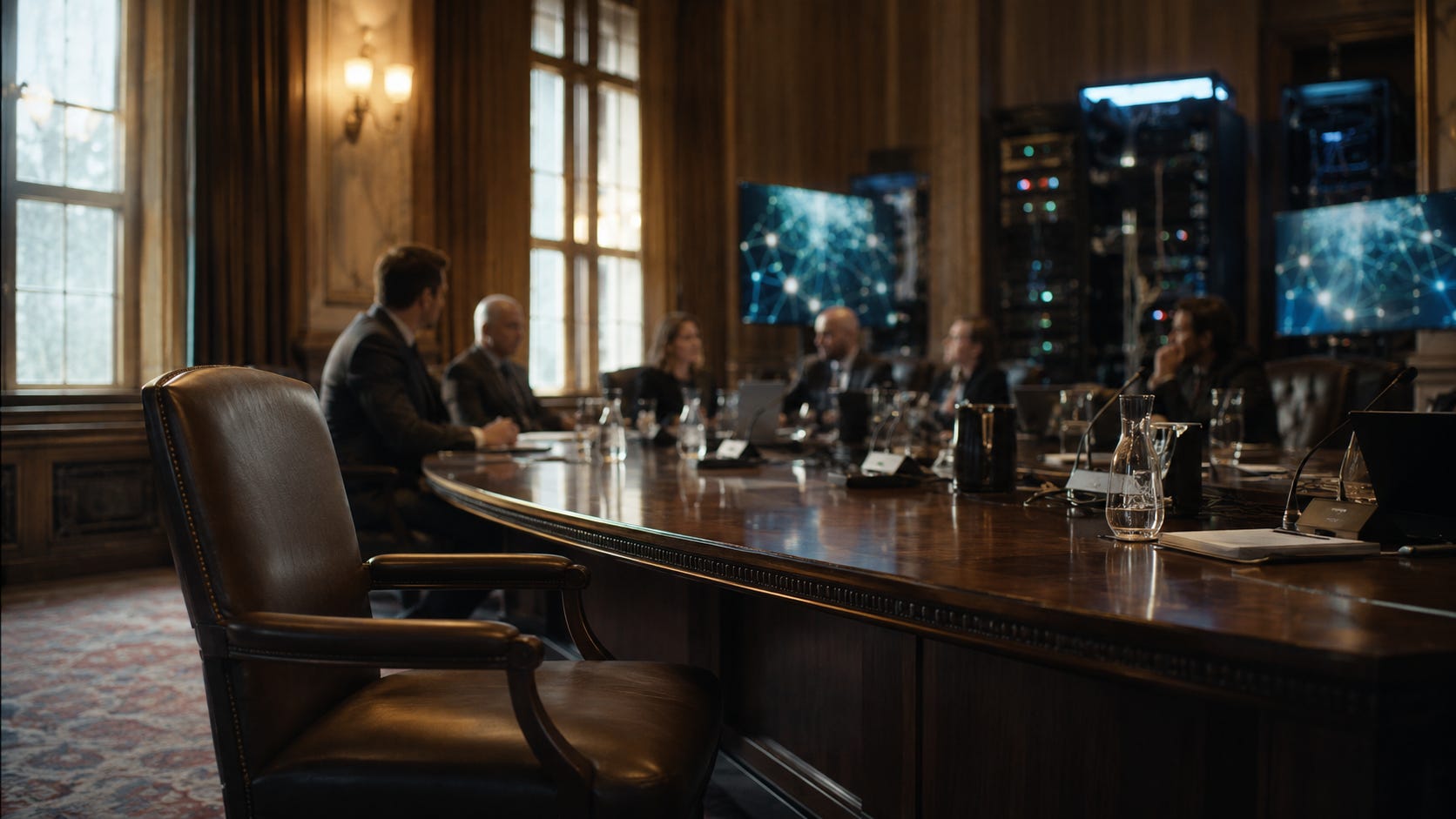
Ball uses it to describe something he thinks sits beneath a lot of our anxiety about AI. He imagines a future in which increasingly capable machines allow governments, businesses and other powerful institutions to function without depending quite so much on ordinary human participation.
Could we keep our familiar rights, perhaps even continue voting and speaking freely, while gradually losing some of our practical ability to shape the world around us?
That’s a scenario, not something we can say is happening at that scale today.
But what if that changes?
And as I read it, I kept thinking about all the people who don’t really feel they have a seat at the table now.
Then, a few days later, another conversation made the problem feel much less abstract.
On Dwarkesh Patel’s podcast, semiconductor analyst Dylan Patel described a possible future in which a huge amount of the world’s AI compute, and therefore potentially a huge amount of effective working capability, becomes concentrated inside just a handful of frontier AI companies.
His description was pretty stark:
“Every force is screeching towards centralization.”
He and Dwarkesh were pretty worried about that. They were trying to understand whether the economics of advanced AI naturally pushes us towards a world where increasingly capable systems, resources and decision-making power end up concentrated in very few places.
Again, that isn’t a prediction we should treat as settled.
But it raises an important question.
What if the issue isn’t simply that AI changes people’s jobs?
What if, over time, some of the most powerful institutions in society become less dependent on human labour, knowledge and participation than they are today?
That took me somewhere very familiar.
For much of the last decade, through Love Sheffield and everything that’s grown from it, I’ve been trying to understand connection.
Not networking. Not simply being surrounded by people.
Something deeper.
The way I’ve come to understand it is expressed in a definition I carefully formed in Uniting Hearts, Igniting Change: The Journey of Connection :
Connection allows life energy, experienced as love, to bring our inner selves to engage with reality.
I know that sounds a bit philosophical written down like that, but the experience itself is very ordinary.
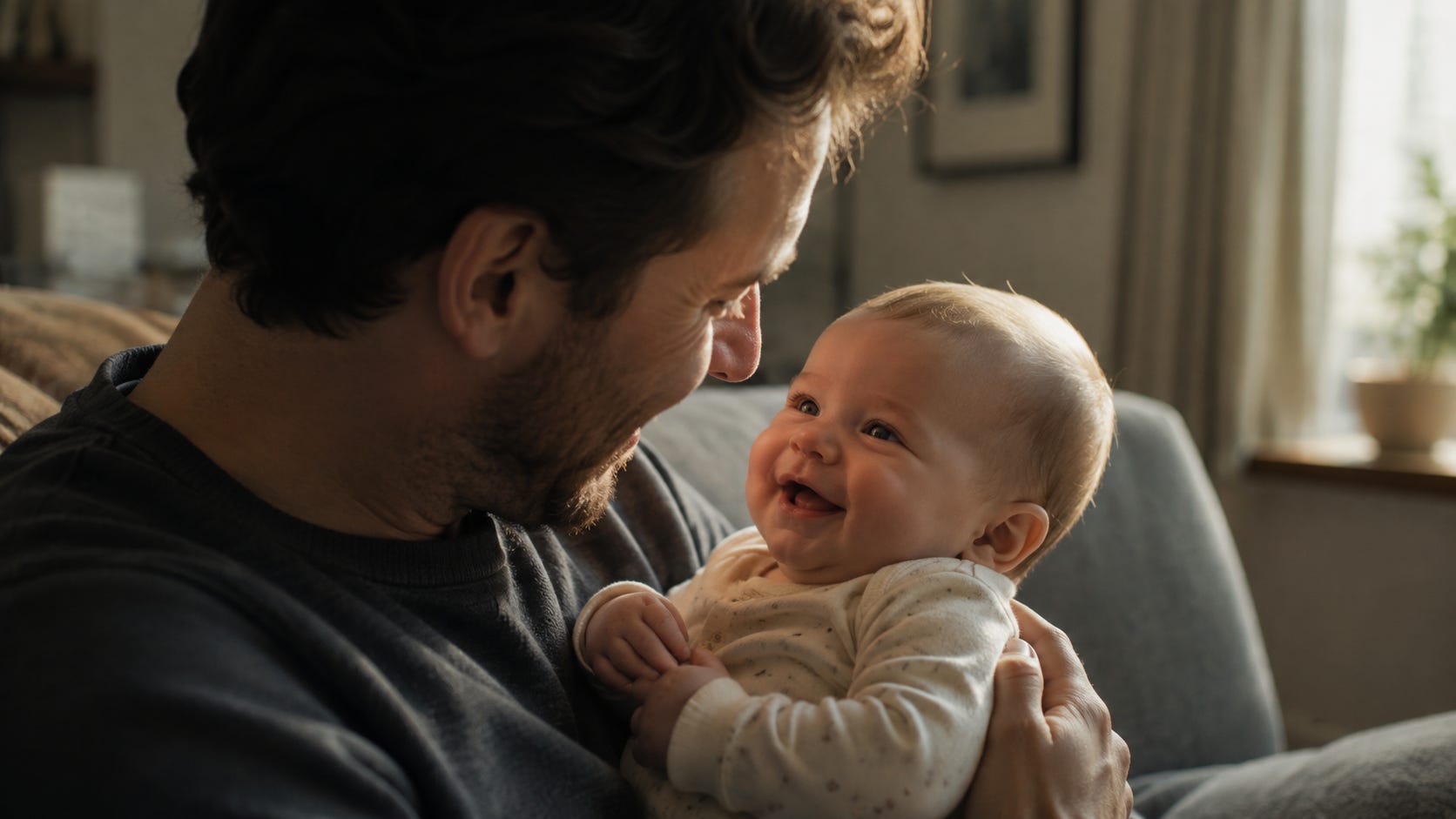
We know what it feels like to see a smile returned for the first time by a baby in our arms.
We know what it feels like to come alive in a conversation.
We know what happens when somebody genuinely sees us.
We know the difference between sitting in a room full of people and actually feeling connected to them.
And we know the energy that can appear when people care about something together and decide to do something about it.
For me, connection has never been a destination.
It’s the way life moves.
We experience that flow as love. Purpose is how we express ourselves through it. Creation is what happens when that expression meets reality.
And there isn’t really an end to the process.
Something we create affects somebody else. A conversation changes a thought. A kindness changes a day. An idea sparks another idea. Somebody notices something and another person acts on it.
The flow continues.
What’s developed in my thinking over the years is a much deeper understanding of the conditions around that flow.
Because people can carry incredible amounts of care, experience, intelligence and creativity while the systems around them make it very difficult for any of it to find expression.
They can be consulted without having much influence.
Employed without being able to bring their full intelligence to the work.
Connected online while feeling emotionally isolated.
Helped by services which, despite good intentions, leave them with less agency rather than more.
That’s where recognition, security, agency, contribution and power have increasingly entered my work.
Not as replacements for connection.
They’re part of understanding what allows connection to become meaningful participation in the world.
That journey has gradually taken me towards an idea I now call the Contributive Society.
The starting point is simple.
Every person has inherent dignity.
That dignity doesn’t depend upon having a job, being productive, being independent, being clever, or being able to do something that an artificial intelligence can’t.
That last part suddenly feels pretty important.
We’re going to hear a great deal over the next few years about what humans can still do better than machines.
I understand why.
I’ve written about the Human Edge myself, and I remain fascinated by empathy, moral judgement, creativity, presence and the things that happen between human beings which can’t easily be reduced to computation.
But I think there’s a trap here.
Human worth can’t depend upon finding a collection of tasks at which we can still beat the machine.
And perhaps it can’t depend upon the economy needing us either.
A child doesn’t need to outperform AI to matter.
Neither does somebody living with profound disability, an elderly neighbour receiving care, somebody who’s lost their job, or someone whose greatest contribution today might simply be sitting with a frightened friend.
Dignity comes first.
Contribution is one way an already-dignified person can express what’s within them when the conditions allow it.
And contribution is much bigger than employment.
It includes care, presence, knowledge, creativity, challenge, memory, practical help and the countless things people bring into the life around them which never appear on a balance sheet.
This is why the possibility of a future where a tiny number of organisations possess enormous amounts of machine capability concerns me.
Even if such a future made us materially richer, that wouldn’t necessarily make us more free.
A society can be comfortable while leaving people with very little say over the world they inhabit.
Being provided for isn’t the same as having agency.
And agency doesn’t only belong to individuals.
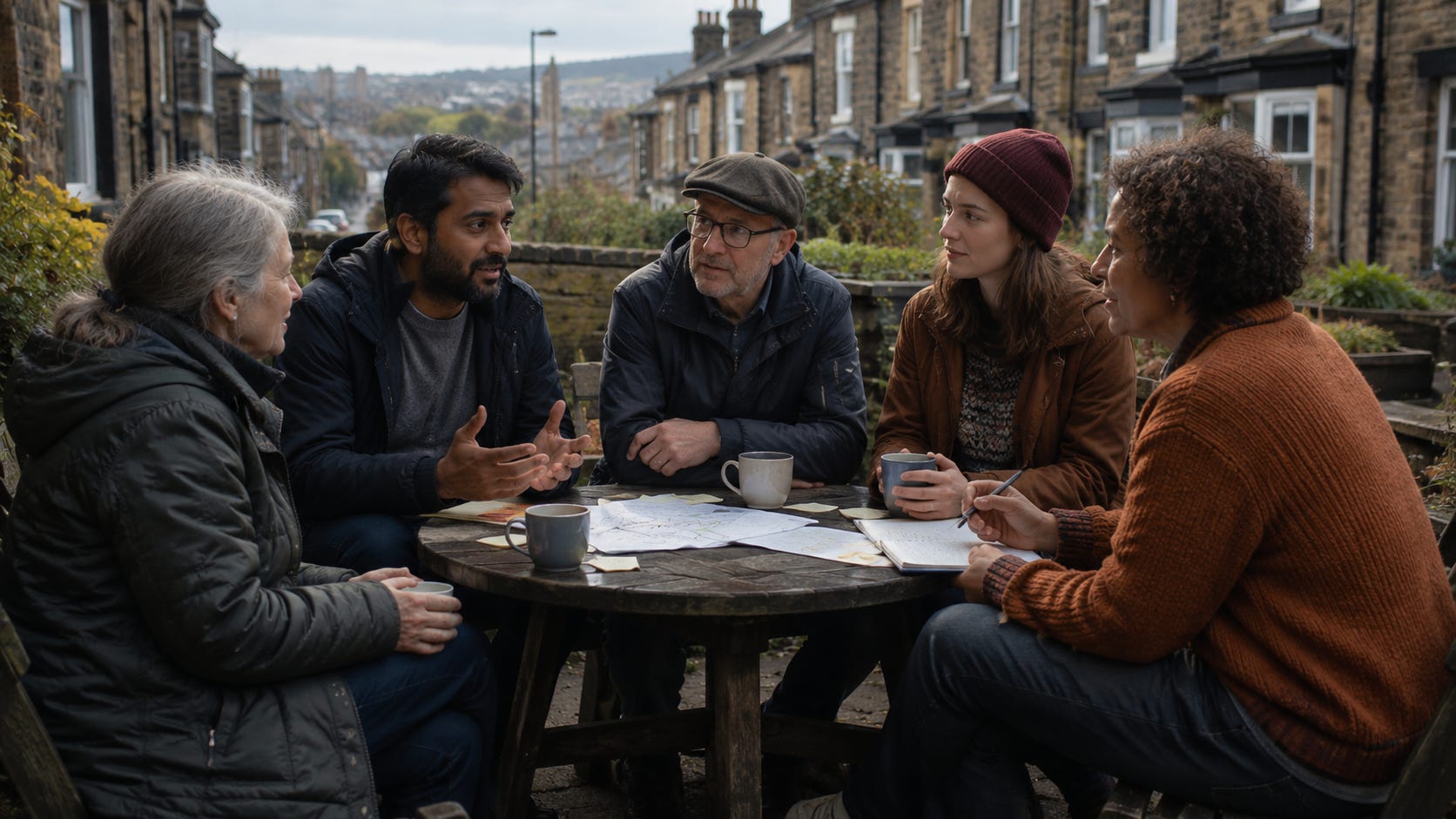
Five neighbours who know and trust one another, who bring different experience and abilities to a shared problem or expression, can suddenly become capable of something none of them could do alone.
Of course, connection itself doesn’t guarantee good outcomes. A connected group can exclude as well as include.
That’s why questions of power, responsibility and answerability matter too.
But one of the most important things I’ve learned through community work is that connection can allow capability to circulate.
That’s power with.
And this is where AI becomes really interesting.
Because the very technology that could concentrate huge amounts of power could also distribute capability in ways we’ve never had before.
AI can give a tiny organisation capabilities that once required a large team.
It can help somebody make sense of a difficult document.
It can help a young person explore an idea they wouldn’t previously have known how to begin.
It can allow somebody with decades of practical experience to turn what they know into something other people can use.

I’m already considering how experienced human judgement, emerging talent and frontier AI can come together around real problems in ways that simply weren’t possible a few years ago.
So perhaps the interesting question isn’t simply:
What work can AI do for us?
It might be:
Whose contribution becomes possible because AI exists?
But there’s a complication.
AI could widen the capability of millions of ordinary people while widening the power of a handful of organisations by vastly more.
Those two things aren’t opposites.
I might gain access to an incredibly capable AI assistant and become much more able to learn, create or solve problems.
At the same time, the organisation controlling the underlying models, compute, infrastructure and terms of access may become more powerful too.
The tool in my hands can increase my power to act, while the wider system increases somebody else’s power over the conditions in which I’m able to act.
That feels like an important distinction.
Access to capability isn’t the same as control over capability.
And it means the question isn’t simply:
Who gets access to AI?
It’s also:
Who controls the systems on which that access depends?
This is part of why my developing principles for a Contributive AI Future start with a wider picture.
Human dignity comes first.
Responsibility should follow real power.
Protection matters, but protective power itself needs limits and answerability.
AI should increase our shared capability without leaving humanity irreversibly dependent on a handful of incredibly powerful systems.
And as consequential power grows, it should become more visible and answerable without making everybody else continuously visible.
These aren’t finished answers.
They’re working principles which need challenge from people who understand technology, rights, government, community, care and many things I don’t.
And interestingly, the people in these frontier AI conversations certainly don’t seem to believe they’ve got the answer either.
Towards the end of the Dwarkesh conversation, he describes one of the big intellectual tasks ahead as imagining a “decentralized, broadly empowered future after AGI” while taking seriously the economic forces that could push in the opposite direction.
I found myself thinking:
Yes. That’s exactly the sort of conversation we need to be part of.
Not because Sheffield has some magic answer to Silicon Valley.
We don’t.
And not because everyone in Silicon Valley thinks alike.
They clearly don’t.
But this discussion needs voices that begin somewhere other than compute, intelligence, productivity and economic growth.
It needs people thinking about dignity.
Care.
Community.
Agency.
Power.
Participation.
The relationships through which people become real to one another.
And what it means for a person to have a meaningful part in shaping the world they share.
That’s where Sheffield becomes important to me.
Project Ignite has been asking what happens when we stop approaching communities mainly through what they lack and begin by recognising the knowledge, relationships, creativity and capacity already there.
Seven Hills takes that thinking into neighbourhood infrastructure, designed to help neighbours connect, learn, organise and contribute without the platform claiming to represent them.
None of that proves we’ve solved anything.
We’re still learning.
We’ll need to find out who participates, who doesn’t, whether people genuinely gain more agency and whether the technology behaves in practice as we hoped it would.
The bigger future scenarios may or may not arrive.
But we don’t need mass unemployment, AGI or some machine-only economy before these questions become important.
Technology always arrives inside the institutions, businesses, neighbourhoods, relationships and patterns of power we’ve already created.
If those systems make people passive, invisible or valuable mainly for their economic output, AI could make them more efficient at doing so.
But if we can build systems around dignity, connection, agency and contribution, perhaps AI can magnify something else.
Human possibility.
And perhaps that’s the deeper question underneath the AI future.
If AI really does change almost everything, what do we want to save?
For me, it isn’t simply jobs, human superiority, or some nostalgic version of the world as it is today.
There’s plenty about today’s world I’d happily change.
What matters is preserving our ability to meet reality as human beings.
To connect.
To care.
To express ourselves.
To create.
To shape the world we share.
To bring something of ourselves into that world.
AI is moving incredibly quickly.
Perhaps our most important task isn’t simply deciding what we want artificial intelligence to become.
It’s making sure that, whatever comes next, the flow of human life still has somewhere to go.
With hope and compassion,
Brian Mosley
Founder, Love Sheffield and Project Ignite
Creator of Seven Hills
Author of “Uniting Hearts, Igniting Change“
Comments
Nothing yet. Say the first thing.
Sign in to join the conversation.