
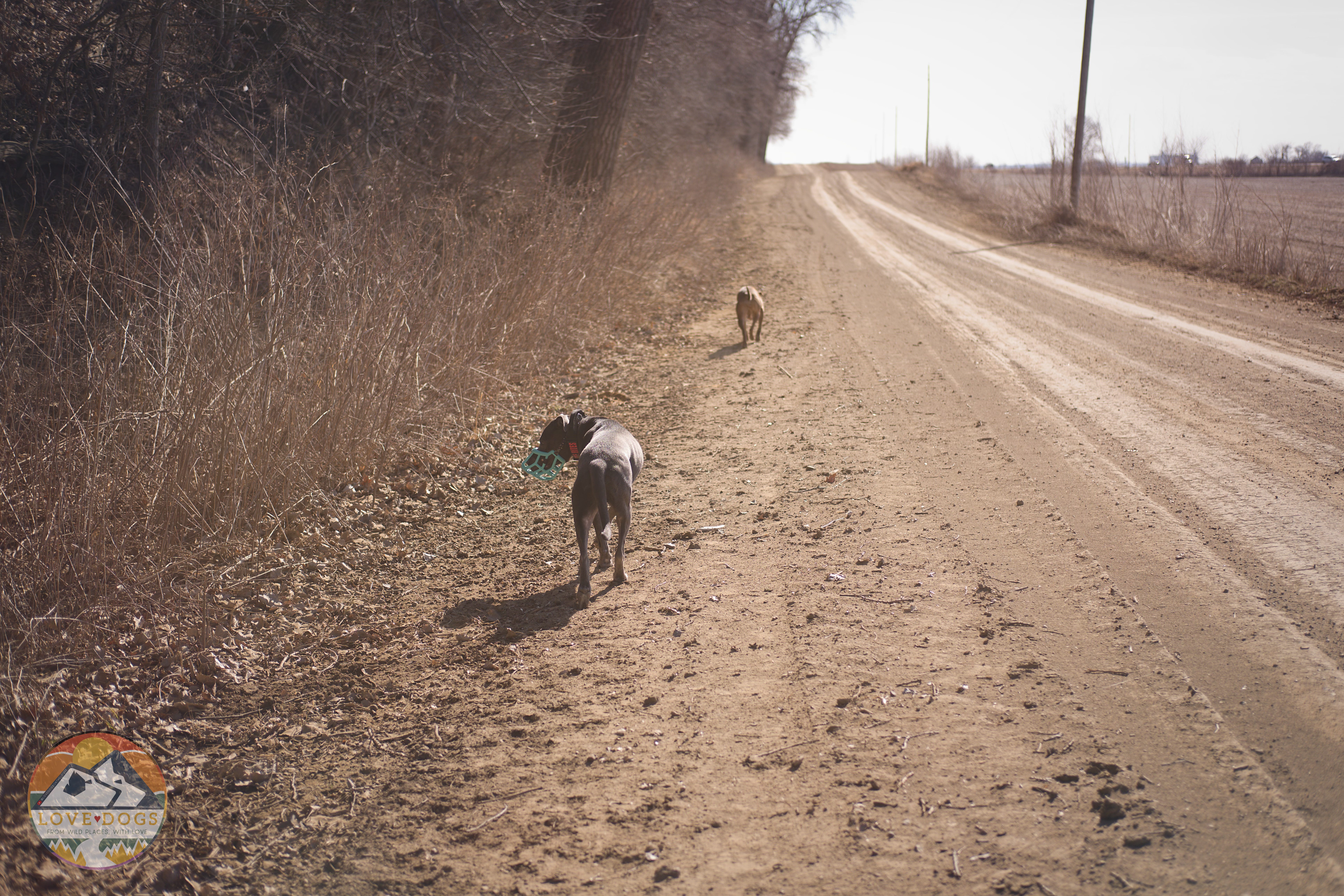
The dirt road that the dogs and I walk here at my folks’ place in the midwest is bordered on one side by hardwood forest. For the first mile or so of road, that forest is private land, marked with purple paint on the occasional tree to warn people to stay out, but just beyond that is public land, and as soon as I see the Department of Conservation signs, we jump into the woods for a romp.
The dogs love it.
Occasionally, they’ll try to jump into the woods before we’ve reached the public land, and when that happens, I give them the “out” cue to get them back on the road. They’re very familiar with this cue.
Lately, just for fun, I’ve been giving them the “out” cue from inside the forest, encouraging them to find their own way out of the woods and back to the dirt road (instead of following me), and ultimately testing their woodland navigational skills (nose, sight, internal compass).
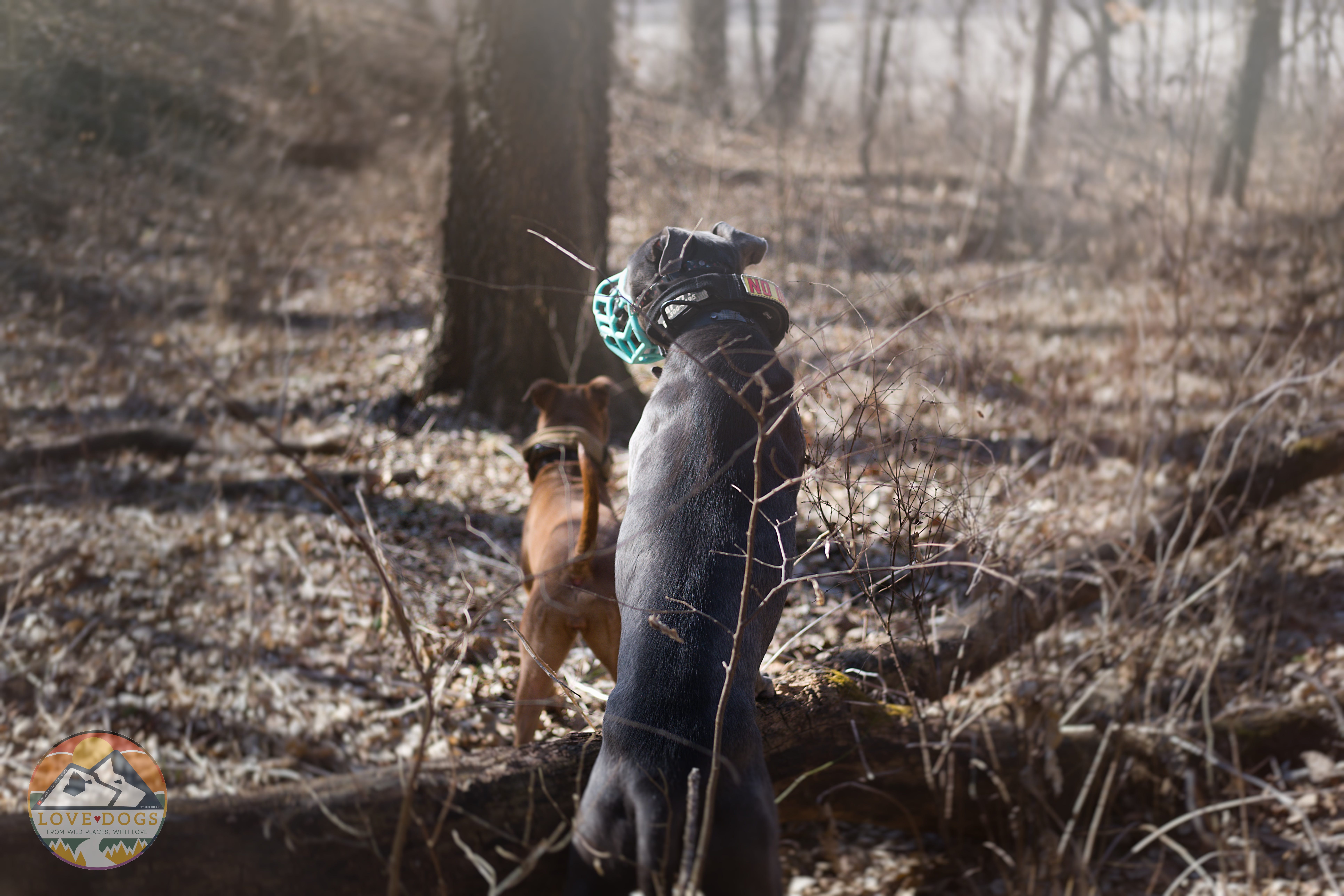
While they’re familiar with the “out” cue, they aren’t familiar with it in this particular context, and that confused them at first. This is why trainers often seek to “generalize” cues when they teach them. By teaching a dog to respond consistently to the same cue in different environments, slowly changing one aspect of the environment (location, adding distractions, distance, different people giving the cue, etc.), we’re training adaptability. Without generalizing a cue, a dog might only understand what’s being asked of them when certain circumstances are present.
Ideally, we might spend a significant amount of structured “textbook” training time on this, ensuring that dogs respond with at least 90% reliability in each scenario; however, I’ve learned with my own dogs over the years that even the smallest amount of unstructured training and generalization can be effective.
For example, years ago when I had Mani, I used to hide things around the house and out in the yard and then tell her to “find it.” It wasn’t structured. It was a game more than actual training. I’d take an item that she already knew really well, like her ball, and hide it somewhere. Then I’d say to her, “Ball. Find it.” At the time I hadn’t gone through a dog trainer certification course to learn the “textbook” way to train a cue, and I had no idea if I was even doing it correctly. I didn’t care. It wasn’t imperative that she learn to “find it” with 90% reliability. We were just playing around, and it was fun for both of us. I would guess that most people with dogs fall into this category.
Fast-forward to a time when Mani and I were backpacking with friends in the Colorado Rockies, and a friend had brought her dog along, too. Gyorgy, my friend’s dog, was off-leash, and he’d dart off-trail into the forest for just a minute or two and then rejoin us on trail. At some point, my friend realized she hadn’t seen Gyorgy in a little while (like 5 minutes or so), and she began to worry. We started calling for him and walking around the forest looking for him, but he was nowhere to be found. Then I had an idea. Remembering the relatively brief unstructured “find it” games I’d played with Mani, I figured what the hell. It couldn’t hurt to try. I looked down at her and said, “Gyorgy. Find it.” She was leashed, but I let her take the lead as she walked through the forest, nose to the ground. Within a few minutes she led us right to Gyorgy, whose pack was caught on a tree branch. I was beyond proud of my girl who’d just successfully generalized a silly game into a rescue mission. Needless to say, she was highly rewarded for her good find!
Since then, I’ve been a huge advocate of unstructured training and game-playing with dogs. If you need at least 90% reliability in response to a specific cue, there’s a “textbook” way to train that. If not, go play with your dog and have some fun. You might be surprised by what they’ll learn in the process.
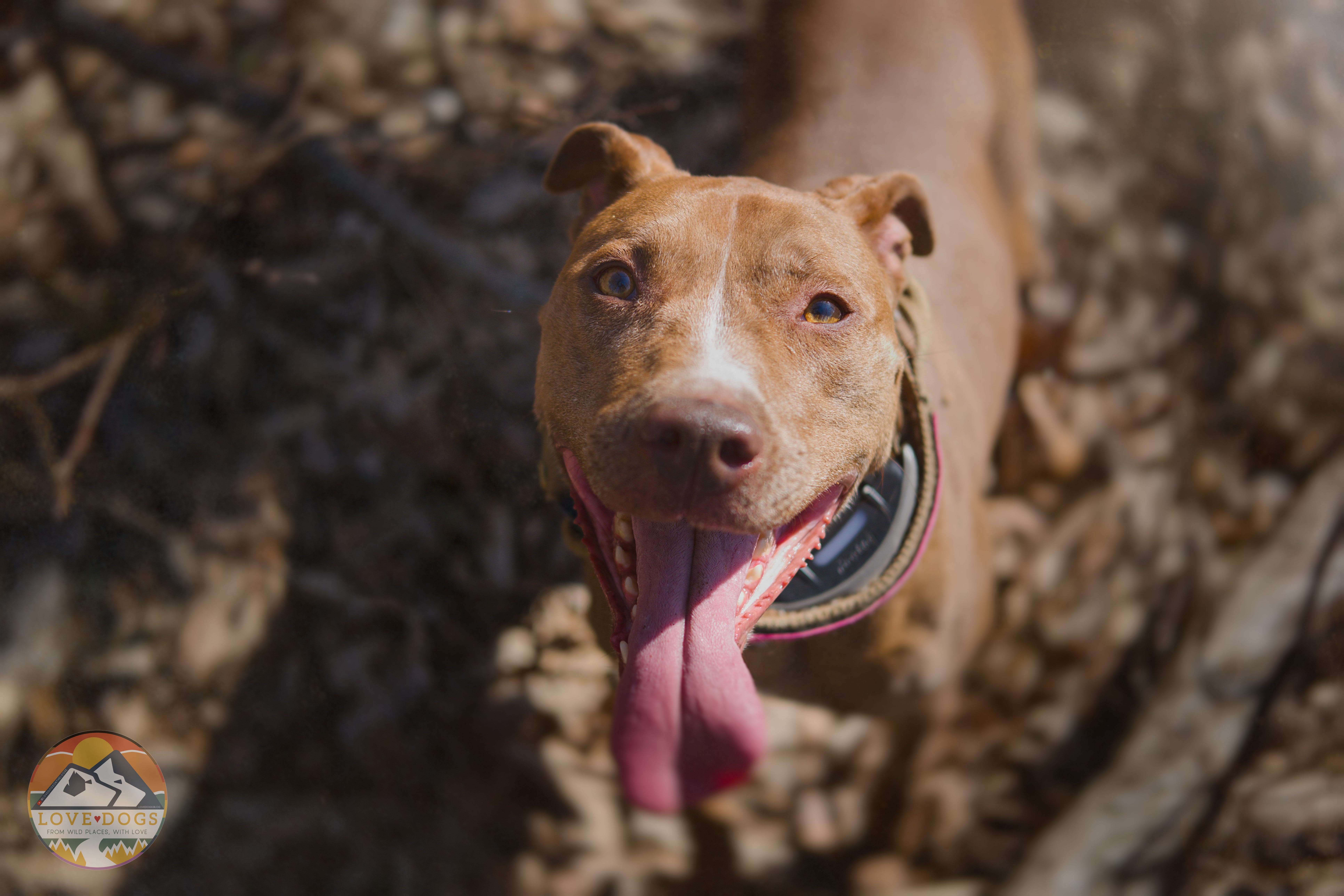
Tomorrow, I plan to take these two even deeper into the woods to see if they can navigate back to the road from a farther distance. What I observed today is that Hazel very clearly runs down to a draw and follows it out to the road (smart!). Even more, when she finds a deer trail, she’ll take it out to the road because it’s the path of least resistance (smart!). Do I have a specific reason to be training this? Nope. Maybe it will come in handy someday while backpacking. Maybe not. We’re having a lot of fun either way. And oh how I love to watch my dogs’ brains (and instincts) work!
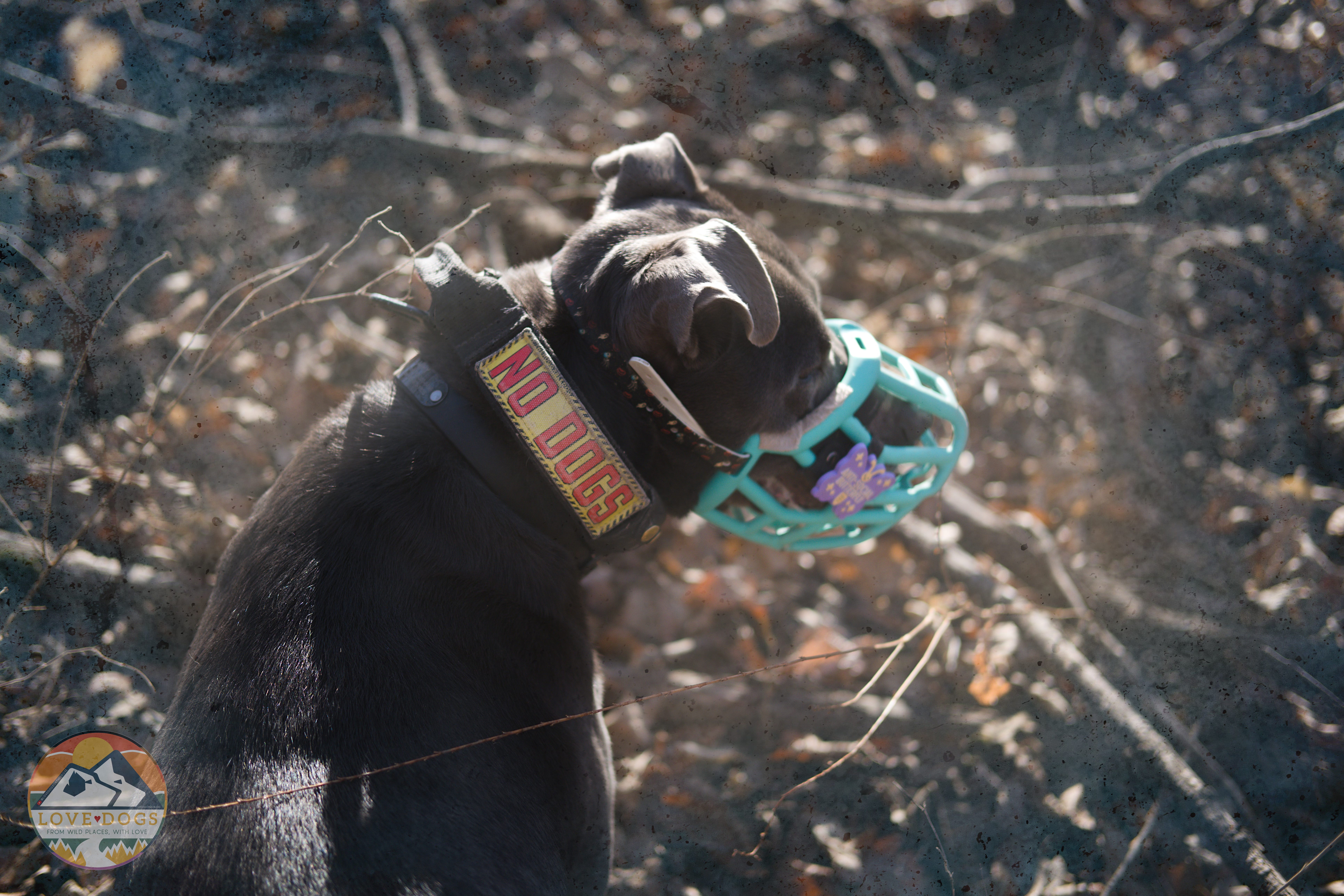
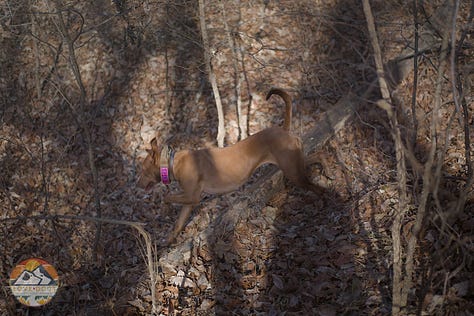
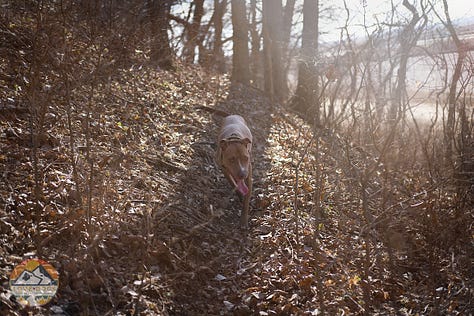
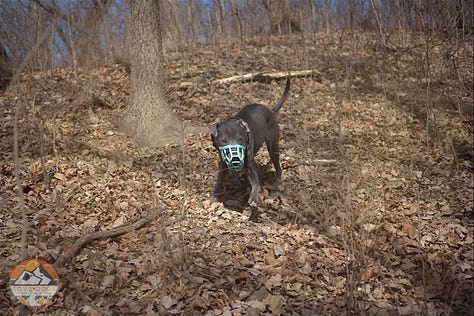
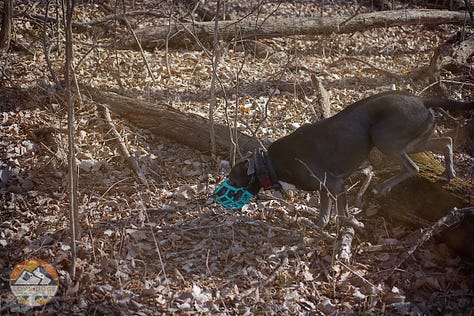
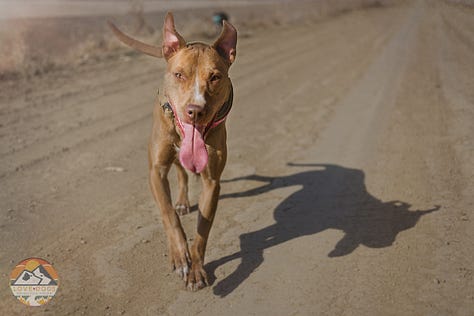
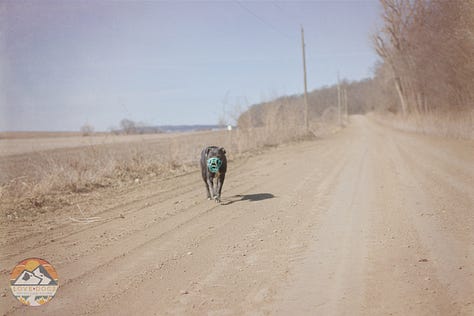
Enjoy some photos from our recent woodland romps. :)
Comments
Nothing yet. Say the first thing.
Sign in to join the conversation.