
Contrary to the belief I held for years, I didn’t actually lose my social circle when I stopped drinking. Instead, to my surprise, I gained more friends. Not because I suddenly became more outgoing overnight, but because sobriety allowed me to become more present, more open and ultimately more social.
We have this misconception that drinking alcohol is a social activity. We think of meetings in the pub, conversations in bars and parties we attended when we were younger. Alcohol is intertwined with socialising in our minds because that’s what many of us have always done and it’s the cultural narrative we’ve been sold. When we think about going out and not drinking, it can feel alien.
Yet since quitting alcohol at the end of 2022, my social life has improved not inspite of, but because of sobriety.
I wanted to bring a slightly different spin on this topic today as well. Often when people talk about gaining a social life in sobriety, it’s because they’ve joined sober groups and made friends who share their sober identity. That’s fantastic, and I’ve done some of that myself. But for some people, that doesn’t fully appeal. I didn’t want drinking, or not drinking, to become the defining feature of my friendships. That’s the point I’ve now reached, three and a half years sober.
It was a journey to get here.
I’m not going to pretend that I cut alcohol out of my life and immediately started going out and partying sober because I didn’t. In fact, the first year of sobriety saw me retreat into what I often call my hermit phase. I kept myself incredibly safe. I didn’t want to go anywhere or do anything. I didn’t want to be around alcohol and, most of all, I didn’t want to be around drinkers.
So I listened to my intuition and stayed away.
The friends I’d had for years completely understood my need to turn down invitations or swap a pub meet-up for a coffee shop. Later, I went through a phase of actively seeking out sober friendships. I joined communities, attended meet-ups and made some genuinely lovely connections. Some of those friendships remain important to me today.
But it wasn’t the be-all and end-all. I didn’t want sobriety to define me to that extent.
What I’ve realised now though, from the vantage point of being at the mid point in my fourth year sober is that I’m more sociable now than I’ve ever been. More than when I was a teenager, a boozy twenty-something and even a drinking ‘Mummy loves wine’ 30+ year old.
Alcohol threatens more than it gives
Don’t get me wrong over the years I have been sociable whilst drinking but actually it’s very often the thing that’s threatens our sociability. It certainly threatened mine at times. When I think to my latter years of drinking, I was actually incredibly antisocial. I’d gone from going out and socialising with friends when I was younger to then being stuck at home, partly because I was a single Mum, but also because I didn’t have the energy or inclination to then go out and do things. It was isolating for so many reasons and wine became my friend at that point. It became my focus for the long evenings.
I also didn’t have the confidence to try new things or even the inclination to. I was very often in a closed off mindset. Then I met Dale and drinking was our bonding activity as we got to know each other. It was how we socialised as a couple and also how we dated. Sometimes we would go out to friends houses for drinks, or go to the pub but often we’d just stay in, him with some lager and me with a bottle of wine. Then let’s fast forward to the next day because the next morning I wouldn’t really want to do things. I was in recovery mode and survival mode. In fact, drinking often and saw me cancel things the next day or at the extreme, to avoid making plans in the first place. And also if I did do things, I wasn’t going to whatever it was, at my best. I wasn’t feeling my most sociable. So even if I managed to get to the gym or to go out to the coffee shop, I wouldn’t want to talk to anybody. I felt depleted before I’d even started.
The loss of mental capacity
I also think we have to really honour how much headspace alcohol takes up when you’re a grey area drinker and you’re trying to stop because often, even if I was drinking and sat in a room with other people, I would be counting the units. I’d never switch off it. I’d be worrying I was too drunk or wondering if I should have another glass or bottle of wine when I got home. I was never really in the room or fully present. I was never really relaxed.
Alcohol became my life in more ways than one. Either I was drinking it, thinking about it or I was recovering from it. I was obsessed with it most of the time and then I’d go to the other extreme and I’d flip the script, becoming obsessed with sobriety. I’d hyper focus on taking a break and listening to quit-lit and then my head would be consumed by that instead.
When you consider how it sees you less likely to engage with others on a deeper level, more likely to cancel and less likely to be present, alcohol isn’t the sociable thing it’s painted as… in fact it’s the thing that threatens your sociability.
Fast-forward to today
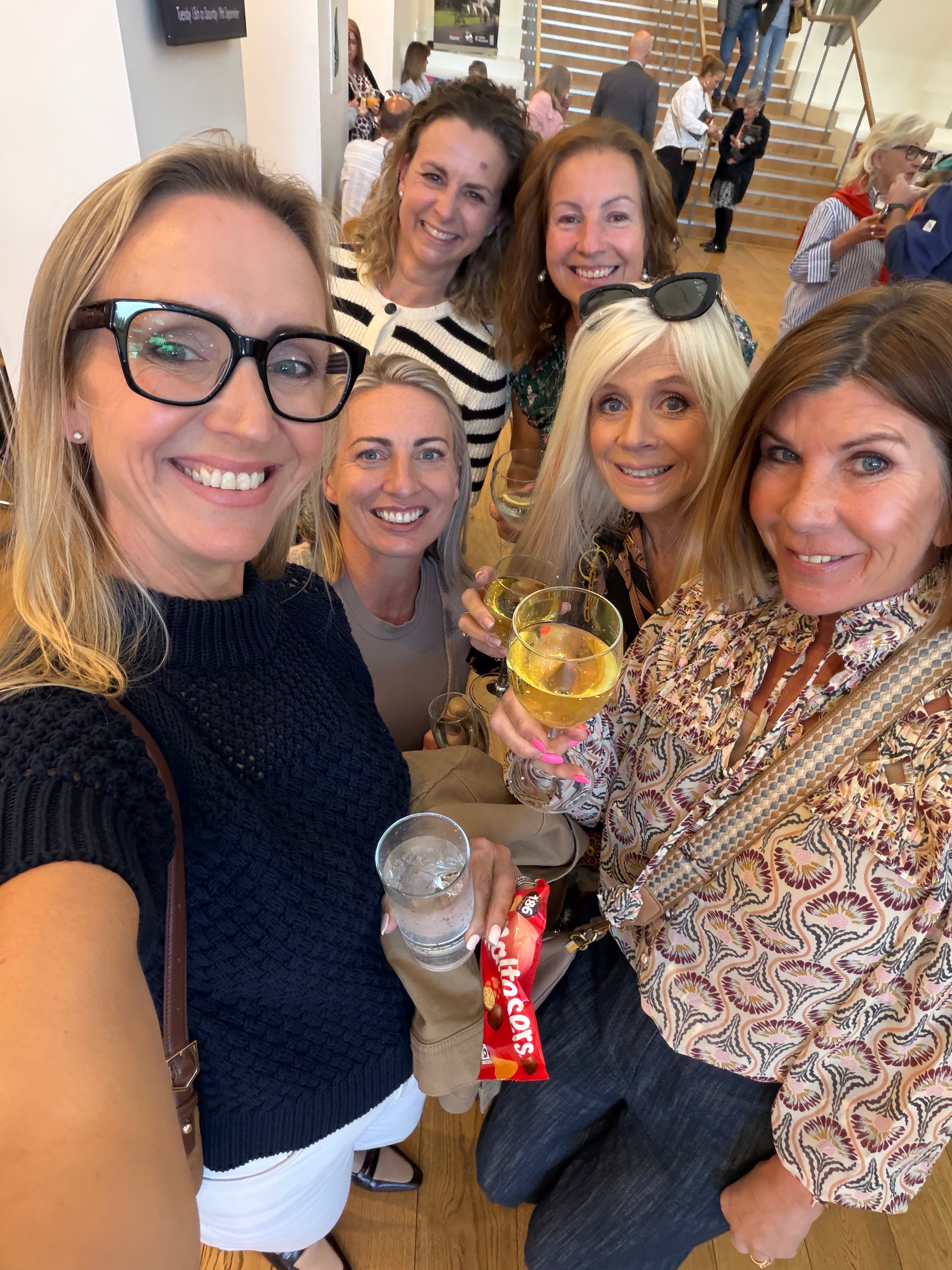
Last night I went out to the theatre with a group of friends I’ve met through the Pilates studio I joined last year when I was a couple of years into my sobriety. Even the fact I joined that class was down to sobriety and something I just wouldn’t have done years ago. When I was a drinker, I’d fallen into a rut of going to the gym three times a week, not really talking to anybody and being incredibly frustrated that I wasn’t seeing results. I actually felt quite isolated. My job can be quite isolating working one to one with clients and not in an environment with colleagues and so not having that sense of community really impacted me at times. Every time I thought about going sober and then considered my social circle getting even smaller, that thought would panic me. I actually thought that I would be removing the one thing that was giving me an element of sociability, but the opposite it’s been true because I’m more willing to go and try new things.
Like I say, I wouldn’t have gone to a Pilates studio full stop. I wouldn’t have walked into a reformer class and struck up conversation with others. I wouldn’t have approached these things with an open mindset, being chatty and being confident in the way that I did once I was sober. Sobriety built my ability to say yes to things no end. I then said yes when I was invited out by the lovely group of ladies there who welcomed me with open arms. All these things wouldn’t have happened and I know this to be true because I’ve lived in this area now for 12 years and I hardly knew anyone… these days I know so many people because my head is finally up and looking around.
Last night we watched an amazing play, had laughs and some of the group had a drink, a few of us didn’t. That’s refreshing in itself where alcohol isn’t the sole focus. At one point it would have been my only thought process whether I was drinking or not. In early sobriety, it had to be my focus and now I’m so pleased it doesn’t need to be. The best bit of advice I would give would be to do things that don’t revolve around alcohol. Do different things. We’ve done the odd boozy lunch in the past that I’ve always slipped away from when I wanted to, but we also do lots of other interesting things too… next week it’s an escape room! I actually can’t believe that sobriety has opened the door to connecting with others in more meaningful ways, and it doesn’t matter whether they’re drinking or not. I’m happy to be me. The bonus is that no one in this group knows me as a drinker either so I can really sit firmly in my sober stance and not need to defend it whatsoever.
It’s taken me a long time in sobriety to feel comfortable being around people who drink. In the early days, there can be a huge focus on meeting other sober people and building a sober community, which can be incredibly valuable. But I’ve also learned that it doesn’t have to be limited to that. Some of the most meaningful connections I've made have been with people who do drink, because what mattered wasn't whether alcohol was present, it was whether the activity, conversation or shared interest genuinely brought me joy. The older I get, the more I realise that connection is connection. What matters is finding your people, not necessarily finding people who are exactly the same as you… though a similar sense of humour helps!
Join me in the comments… have you found sobriety changed your social life? Was it for the better or worse?
If you’d like a session 1:1 with me to talk about sobriety or any other challenges you’re facing that you’d like support with, head to my website and send me an email or message me on here.
Louisa Evans is a UK-based practitioner specialising in behaviour change and helping people change their relationship with alcohol. With a background in Cognitive Behavioural Hypnotherapy and a Master’s degree in Psychology, she combines psychological understanding with practical, compassionate support to help people build self-trust, develop healthier habits and create lasting change.
Her work is informed by psychology, cognitive behavioural approaches and hypnotherapy, with a focus on making complex ideas accessible and practical. Alongside her one-to-one work, Louisa is the creator of online courses, a podcast and educational resources designed to help people understand themselves better and make meaningful, sustainable changes in their lives.
She is a Graduate Member of the British Psychological Society (BPS), a Senior Member and Registered Supervisor with the ACCPH, and a registered member of the General Hypnotherapy Register (GHR). Through her clinical work, writing and teaching, she has supported thousands of people to build confidence, strengthen resilience and create lasting change.

No posts
Comments
Nothing yet. Say the first thing.
Sign in to join the conversation.