
We worry about doing so many different things without alcohol as a companion or crutch when we first go sober. It’s only natural really as this liquid has been our ‘friend’ for decades a lot of the time. It’s been there when we’ve been worried, when we’ve celebrated and even when we haven’t wanted to feel anything at all.
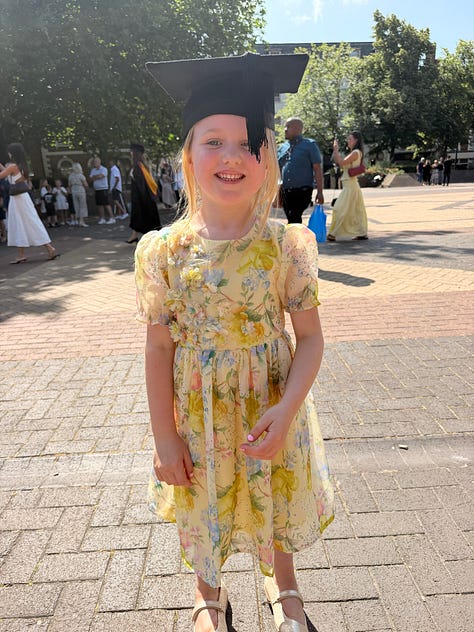
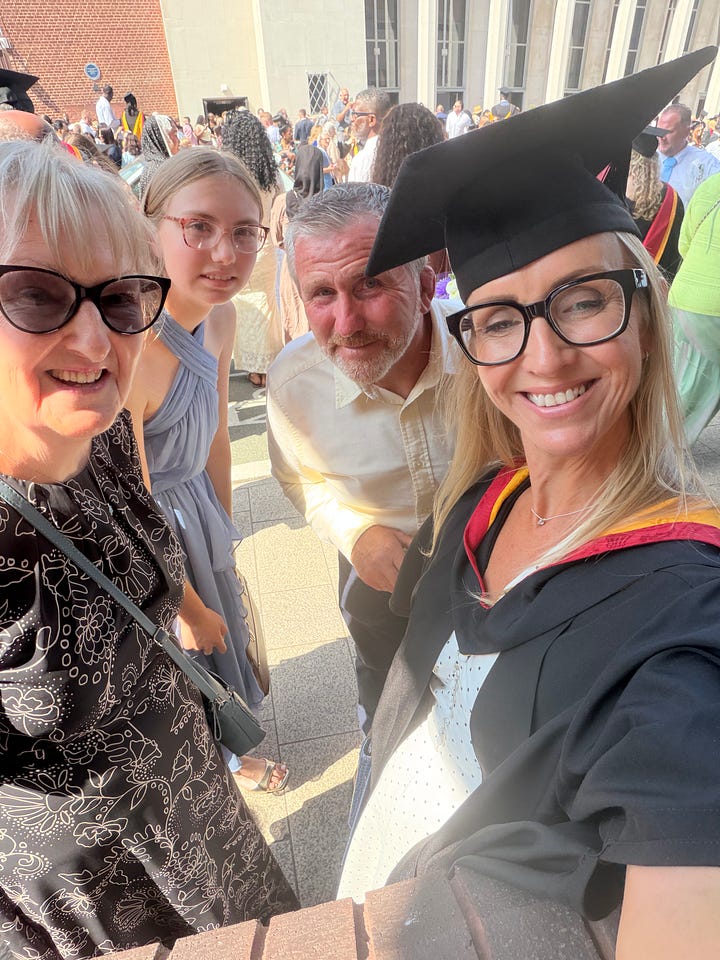
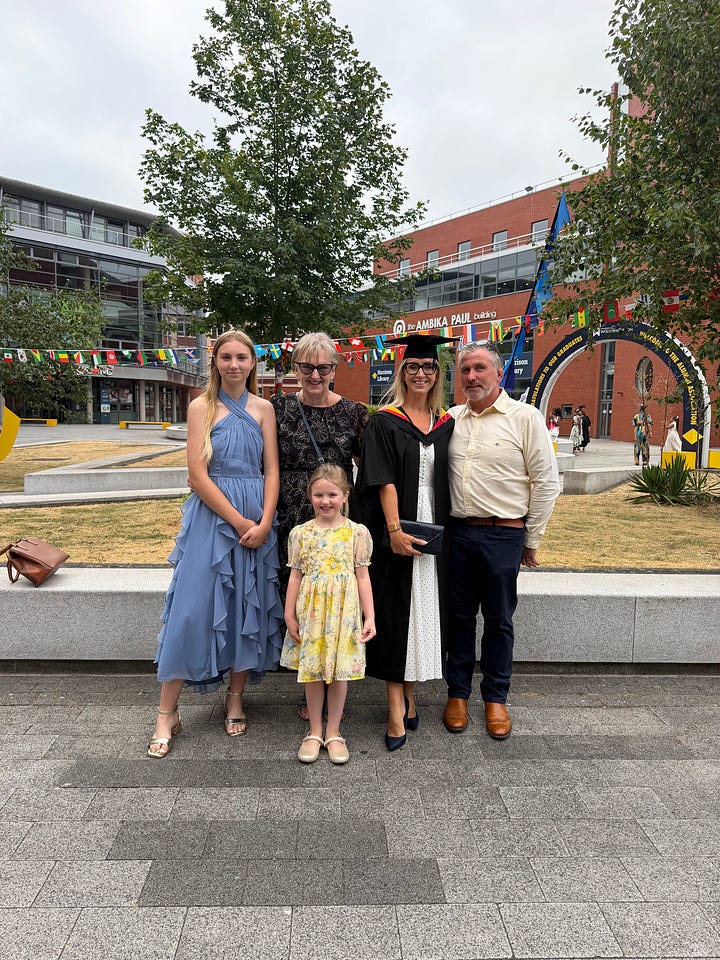
This week I had a celebration myself in the shape of graduating from my Psychology Masters, and like I do with all situations, I reflected on how things have changed now that I don’t drink. This is something I do regularly. In fact, if you follow me over on Instagram you’ll see daily reflections in my stories as it’s an amazing way to keep consolidating everything I’m learning as my sobriety evolves. It keeps me focussed on the gains and keeps any romanticising of alcohol at arm’s length. You don’t need to publicly post on social media to do this… simply making a note in your journal or stopping each morning to take a moment of gratitude for being sober will keep building your sober identity over time.
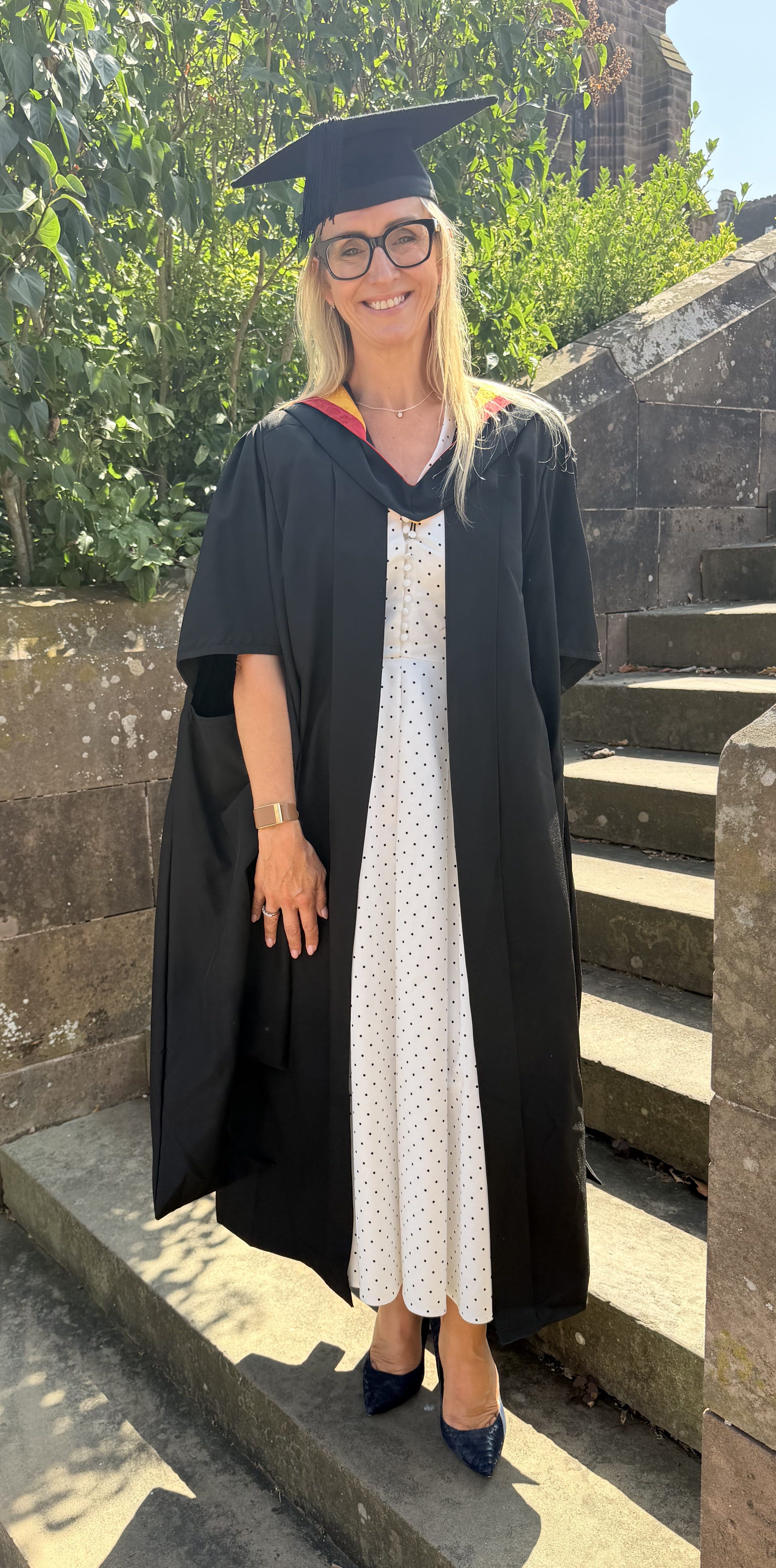
As I was queuing to go in and even as I was sat in the graduation hall, I noticed a few things that were markedly different to the last time I’d graduated for my degree and they are all benefits.
Comfort
The first was a sense of calm that I felt. When I had my ceremony for my degree I was still drinking and even the weekend of the event was a bit of a boozy one. We’d gone up to London and made a few days of it which meant by the time the actual day came around I was a bit jaded. The priorities were all wrong. I was an older graduate even then. I’d studied whilst Izzy was a baby and I was a single Mum working full time so it was no mean feat! But still this culmination of all that hard work and effort went by in a bit of a blur. There were all sorts of thoughts running through my head the whole morning we were there from “how long is this going to go on?” to “I wonder where we will eat for lunch (and have a top up)?” and “I hope my stomach is okay…”.
Apologies for too much information but if there’s one thing alcohol reliably did for me, it was to flare up my anxiety and also my IBS. Not great when you’re sat in a hall, penned in and unable to leave. Thankfully both of those things were kicked into touch when I went sober. In fact, pretty much straight away. So working out where the bar is, where the exits are or even where the loo is, is no longer a worry I have. That’s freeing in itself!
This time I just felt so much more comfortable. It’s a long old ceremony but I was present for all of it. My mind wasn’t drifting to worries, it was very much in the moment and no headache in sight.
Presence
Which brings me to expand on not having anxiety in these situations. The last time I walked across a graduation stage I sprinted across. I recall wanting to “get it over” and to make sure I didn’t trip up. It’s sad really when you think about the amount of time and energy that goes into some of these things we want to celebrate whether that’s an academic achievement or even a celebration like a wedding.
It’s normal to feel a few nerves at events like this but it shouldn’t override the experience.
This time I actually wanted to slow things down. I wanted to walk across that stage, look around the room and remember it. There was nowhere else I wanted to be and nothing else I was waiting for. I wasn’t counting down until the ceremony finished because the ceremony itself was the thing I’d come to enjoy.
Freedom of thought
This was probably the biggest thing I noticed, although it’s much harder to explain. My mind just felt so much quieter.
There wasn’t a constant little commentary running alongside everything that was happening. I wasn’t wondering how I’d feel later, whether we’d stop somewhere for a drink afterwards or what the rest of the day looked like. I wasn’t thinking about alcohol at all.
It’s shocking how much space alcohol used to occupy in my thinking. Not just the drinking itself, but everything around it. From planning it, then managing it or even recovering from it. Wondering if I’d overdone it, overthinking everything and telling myself I’d be sensible. Above all it was drinking with one eye on my watch and unit consumption, hoping I’d feel alright the next day.
Even the night before events like this I’d often find myself mentally counting. How much had I had? Could I get away with one more or would I regret it in the morning? Maybe if I drank a big glass of water before bed I’d be alright. It wasn’t something I consciously thought about, it was just part of the routine and it was exhausting. Without alcohol there’s no mental chatter of trying to control it.
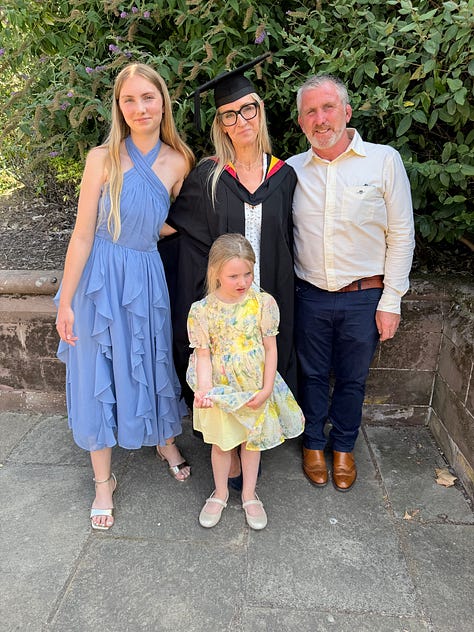
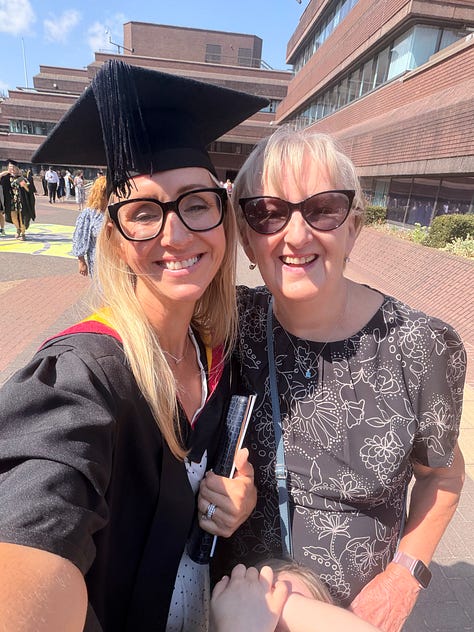
Sitting there this week, all of that had gone.
Instead I found myself watching people’s reactions as they crossed the stage. It was an amazing atmosphere and I soaked it all up. I wasn’t distracted by what came next because I was actually enjoying where I already was. I don’t think I’d realised until that moment just how much attention alcohol had demanded over the years.
Then even afterwards when everyone gathered outside in a marquee before heading off for the rest of the day, I was happy to leave and move on to our private celebration. Years ago I’d almost certainly have been scanning to see where the wine was being served before grabbing a glass just because it was there. It wasn’t something I’d have deliberately set out to do, it was just what celebrations involved in my mind and if the opportunity presented itself I would have taken it. This time it honestly didn’t cross my mind. We wandered around taking photos and then went for a lovely meal together. It was only later that I realised I’d never once looked for the bar.
I was really present throughout and the result was that I came home with memories rather than a headache or even regret. I remembered everything… the people, the feeling of walking across the stage and the meal we enjoyed afterwards. Most importantly, I remember feeling proud of myself and on so many levels. I always credit my sobriety with the fact I even did the Masters in the first place. If it wasn’t for the boosted confidence I experienced after hitting a year sober and a need to fill the extra time that had opened up to me, I’d never have had the idea.
One of the biggest worries people have when they first stop drinking is how they’re going to celebrate without alcohol. I completely understand that because I worried about exactly the same thing.
Alcohol wasn’t making these occasions better, it was just making me experience them differently. I spent so much of my previous graduation thinking about alcohol without even realising it. Beforehand I was counting drinks and wondering how I’d feel the next morning, during the ceremony I was worrying about my stomach, thinking about lunch and wondering when I’d next have a drink. Afterwards I’d almost certainly have been looking for the bar before I’d really taken in what had just happened.
On so many levels, sobriety is the gift that keeps on giving.
If you’d told me a few years ago that I’d enjoy a day like this more without alcohol than I ever did with it, I honestly wouldn’t have believed you.
But here we are!
Signing off,
Louisa Evans, MSc Psychology, GMBPsS
I’m always here if you need a session to talk about an event or for support in going sober. If there was anything here that resonated or you’re worried about doing sober events then this is also where my Sober Resilience course can help. It takes you through the psychological side of lasting change. We look at habits, identity, emotional regulation, confidence, relationships and the beliefs that keep pulling people back towards alcohol, with practical exercises and hypnosis sessions to help you put everything into practice.
About Louisa
Louisa Evans is a UK-based practitioner specialising in behaviour change and helping people change their relationship with alcohol. With a background in Cognitive Behavioural Hypnotherapy and a Master’s degree in Psychology, she combines psychological understanding with practical, compassionate support to help people build self-trust, develop healthier habits and create lasting change.
Her work is informed by psychology, cognitive behavioural approaches and hypnotherapy, with a focus on making complex ideas accessible and practical. Alongside her one-to-one work, Louisa is the creator of online courses, a podcast and educational resources designed to help people understand themselves better and make meaningful, sustainable changes in their lives.
She is a Graduate Member of the British Psychological Society (BPS), a Senior Member and Registered Supervisor with the ACCPH, and a registered member of the General Hypnotherapy Register (GHR). Through her clinical work, writing and teaching, she has supported thousands of people to build confidence, strengthen resilience and create lasting change.
You can find out more at www.louisaevans.com.
No posts
Comments
Nothing yet. Say the first thing.
Sign in to join the conversation.