
Welcome to my catch-up for July. I hope you enjoy reading about what I have been sketching this month in south-west Ireland.
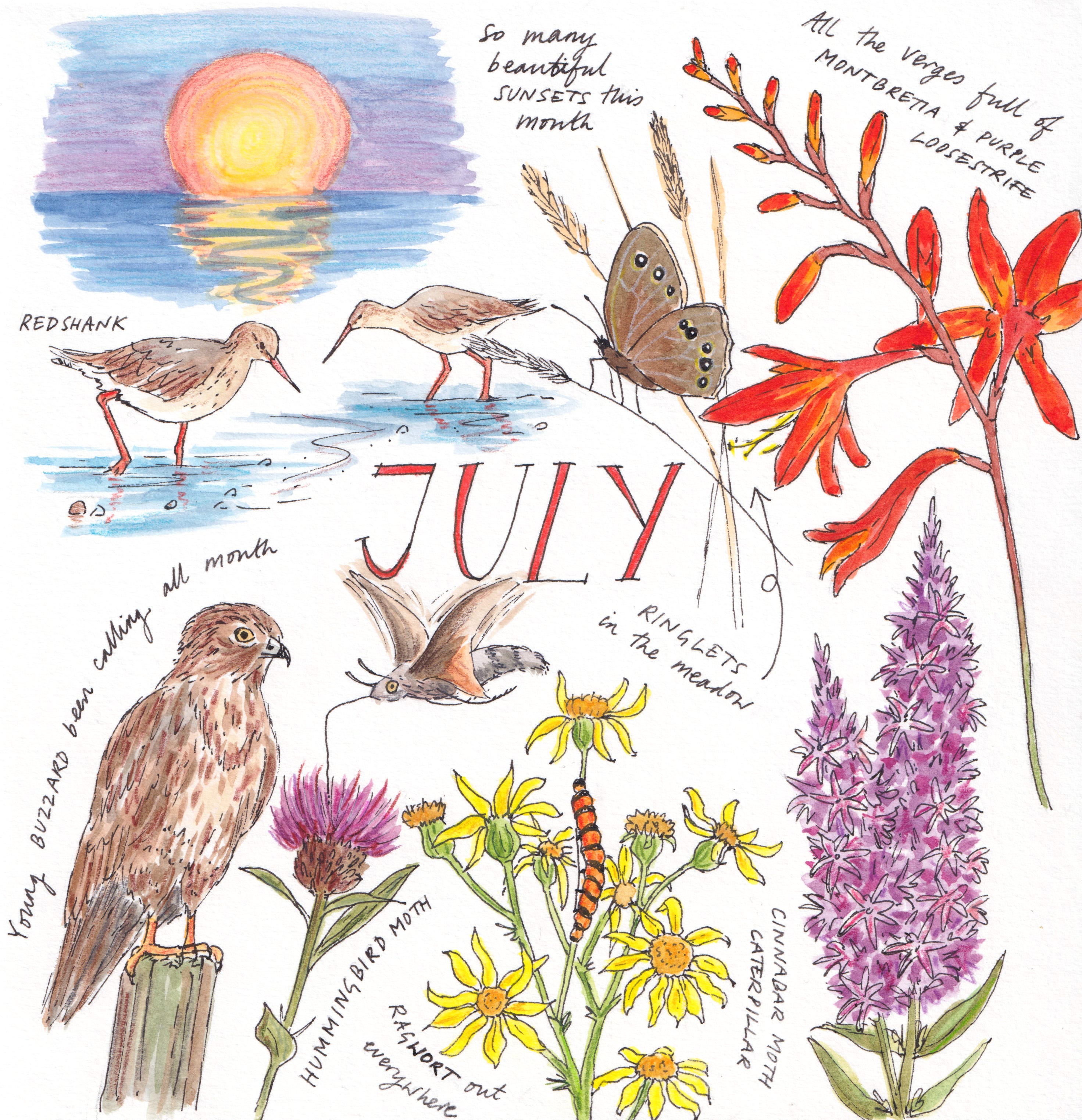
Sometimes it helps to go away for awhile to appreciate what you have closer to home. This was definitely true after my holiday to Tuscany in June (you can read about it here), where I was enamoured with the mountainous woodlands, wild flowers and beautiful butterflies, set against ruined castles and stately cypress trees. It all seemed so romantically beautiful. Then arriving back in Ireland, and driving home, I was reminded by how much lush colour we have here. While I’d been away, the verges had burst into a riot of yellow, purple and orange, as all the exuberance of July got underway.
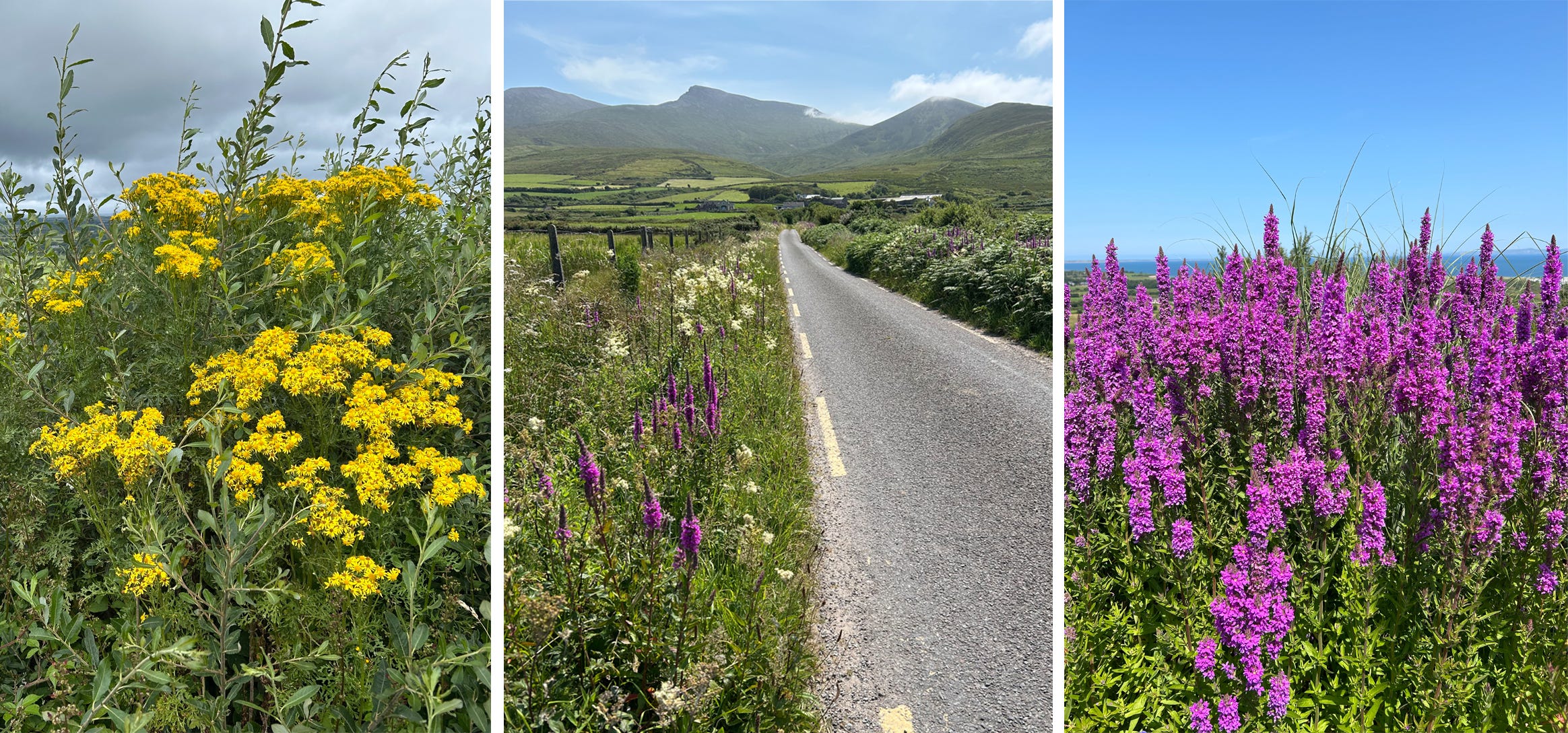
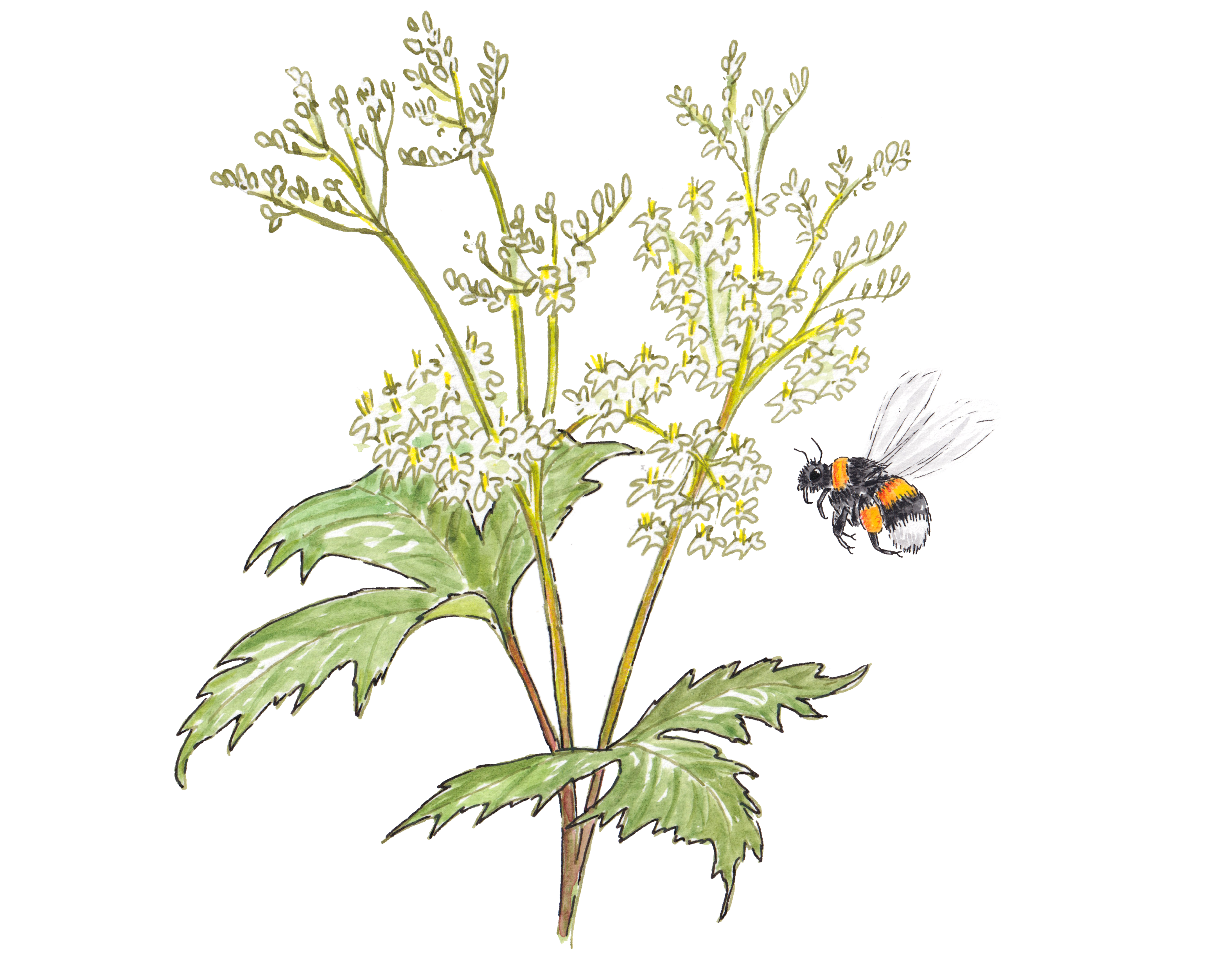
Early in the month frothy plumes of creamy-white meadowsweet (Filipendula ulmaria) have appeared in damp fields and verges. They mingle in one of my favourite summer combinations, with purple loosestrife (Lythrum salicaria) which is sending up great spires of magenta flowers. Meadowsweet lives up to its name, and indeed has a sweet scent, but the name actually doesn’t relate to meadows, but comes from the Old English word meodu-swete meaning ‘mead sweetener’, and has been long used to flavour mead, beer and wines. It also has been used traditionally as a painkiller, and cure for other ailments, which has some medical basis, as the plant contain salicylates, the ingredient in aspirin. In Irish folklore, sleeping with meadowsweet under the bed was said to help alleviate any affliction the fairies might have bestowed1.
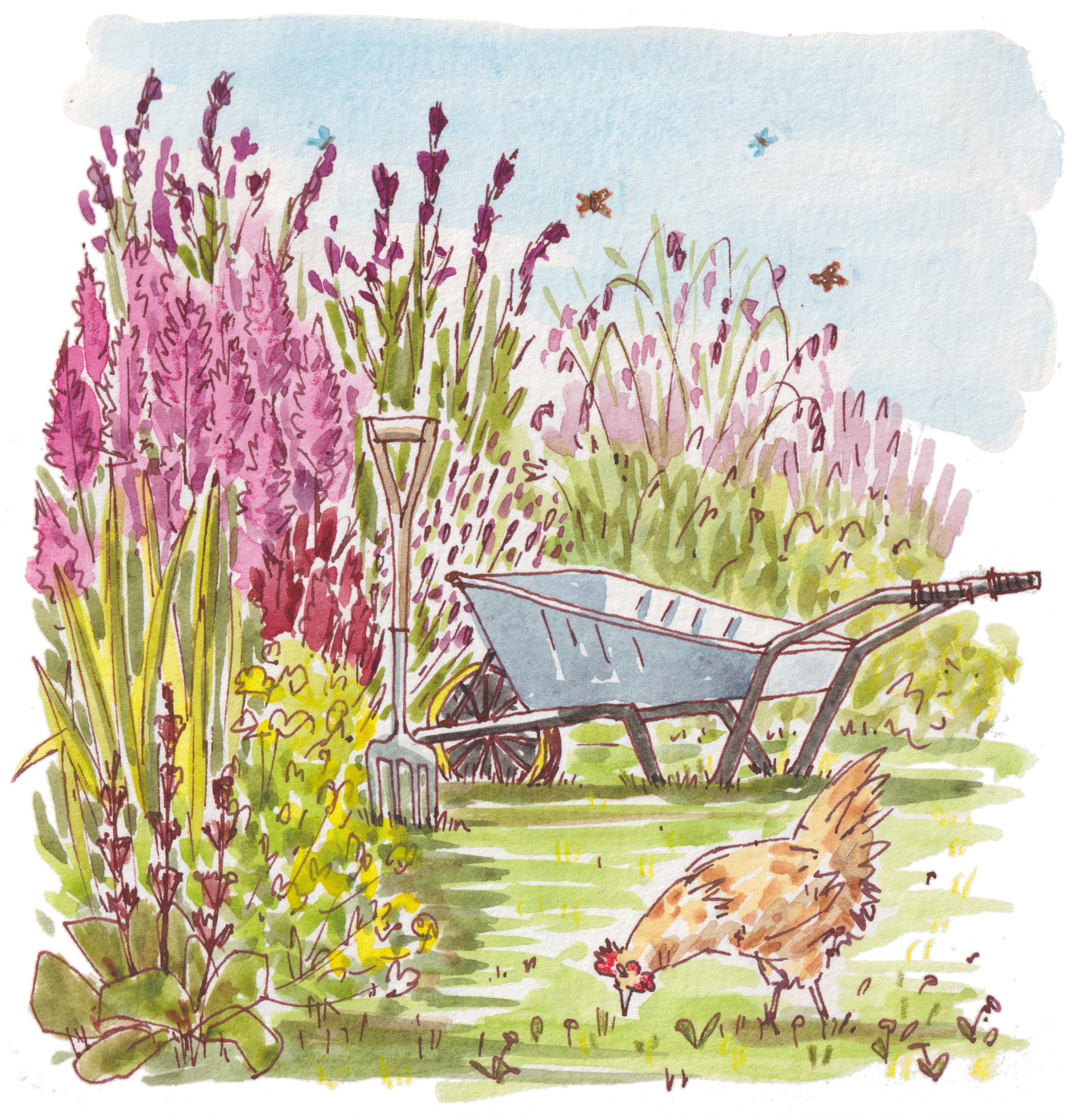
Another flower making a big bold splash is ragwort2, a member of the daisy family, with clusters of golden yellow flowers standing tall in big clumps along the roadside. The county colours of Kerry, where I live, are green and gold, and ragwort seems at its brightest during the lead-up to the All Ireland Football final3, so coordinates perfectly with all the flags flying in support.
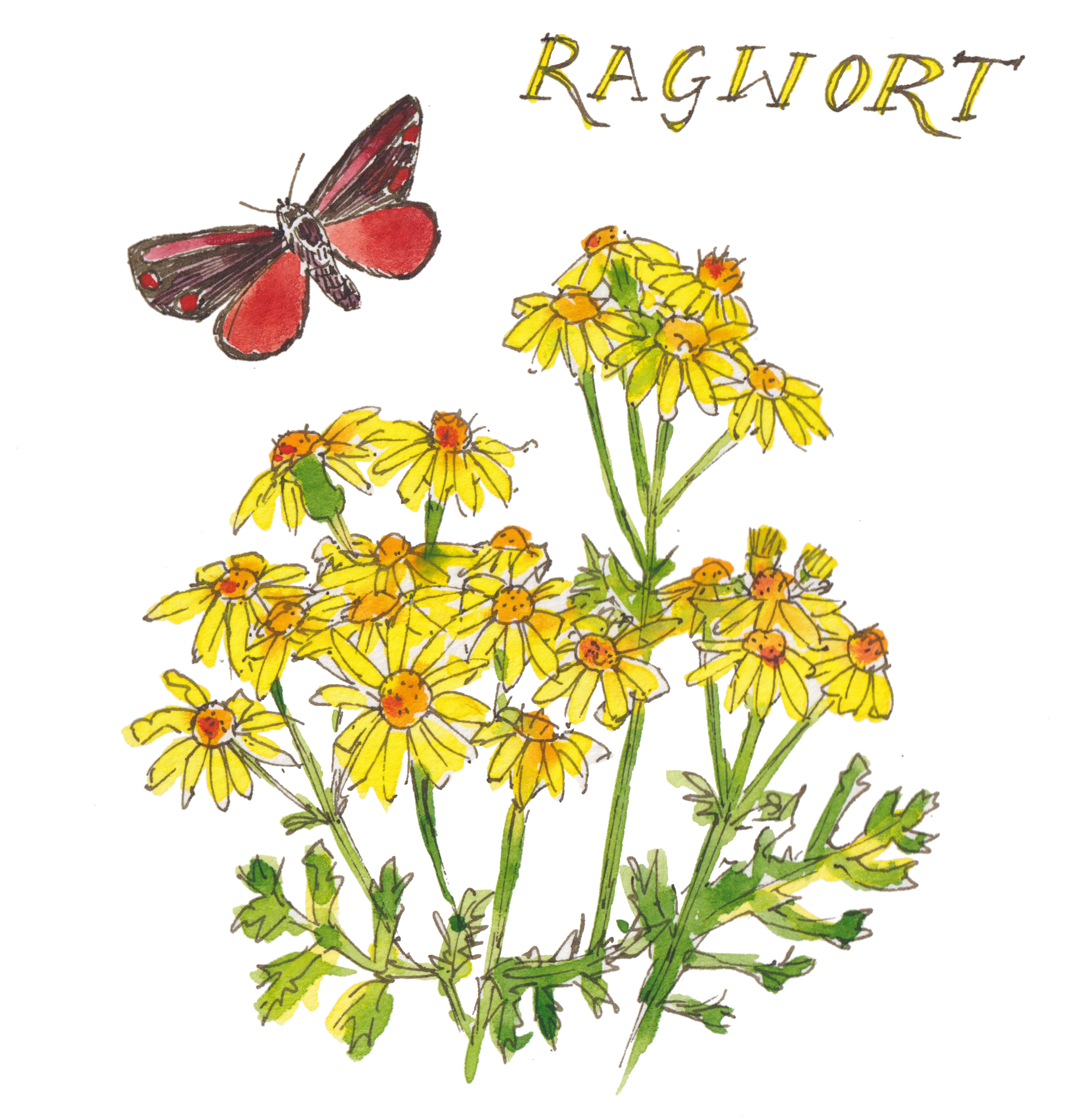
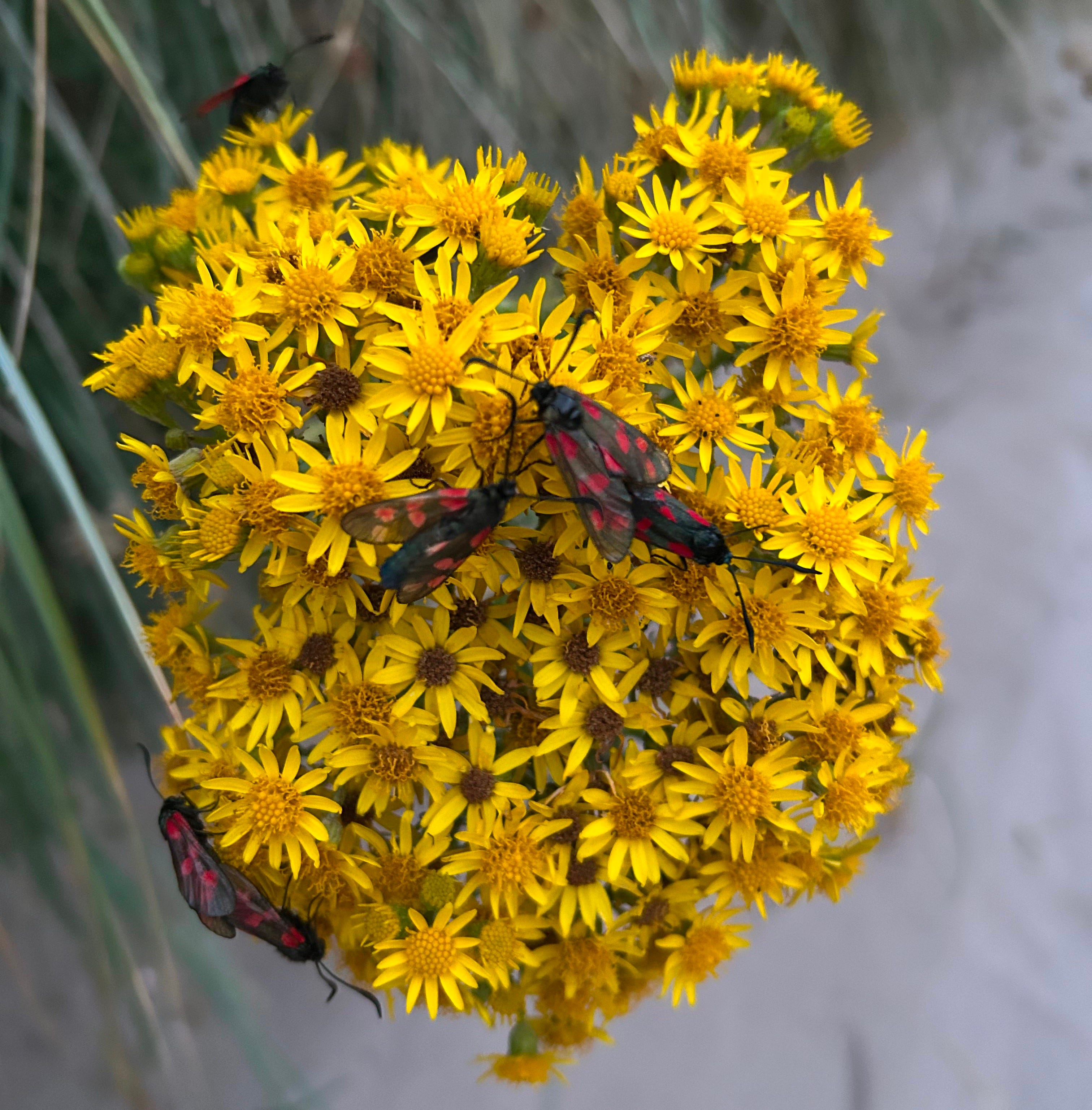
Ragwort (Jacobaea vulgaris) itself in not a well loved wildflower, disliked by farmers especially, as it is toxic to livestock if eaten in large enough quantities. Animals generally avoid it, due to the unpleasant taste, but it can cause problems if it works its way into hay or silage where it is harder to detect. But is it is great for insects, supporting at least 150 species, with about 30 that rely on it almost exclusively. One creature that has exploited this toxicity is the cinnabar moth at caterpillar stage. Dressed in a ‘warning’ suit of vivid orange and black stripes, ragwort at this time of year can be covered in these caterpillars. Munching the leaves builds up the toxic alkaloids in their bodies, so acting as a bitter deterrent for any predator wishing to make a meal of them. After overwintering in their cocoons, the cinnabar moth will emerge next summer in its bold red and black colours, often flying during the day around ragwort flowers. A similar coloured moth, the six-burnet moth, is also a fan of ragwort, and on an evening beach walk we spotted them covering some ragwort growing out of the dunes.
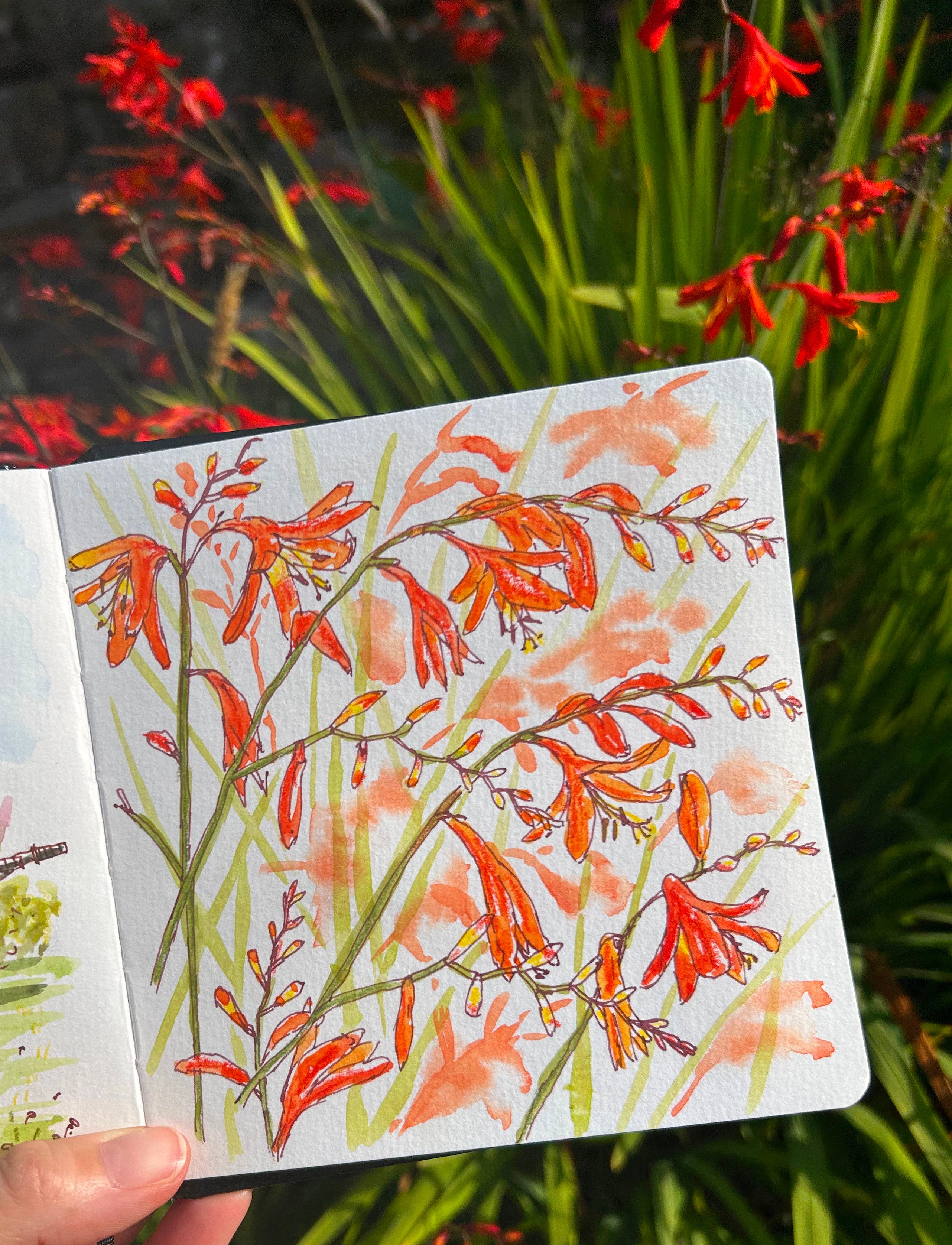
The last summer flower to mention is synonymous with late July and August in the west of Ireland; montbretia (Crocosmia x crocosmiiflora). This horticultural hybrid from South Africa has spread all along the lanes and road verges, and is considered an invasive species due to its vigour. It spreads by small corms that grow in ‘chains’ and each plant can produce up to 14 new corms a year, so clumps can quickly become huge. It is undoubtedly very pretty, and probably loved by visitors as it frames their views of the Irish countryside so well, especially on a sunny day. It grows in the less well managed corners of our garden, and is a great subject to sketch, with the lovely trumpet shaped flowers on long stems. Next month for paid subscribers I will be doing in a step-by-step of this sketch, showing how I approach drawing and painting flowers quickly.
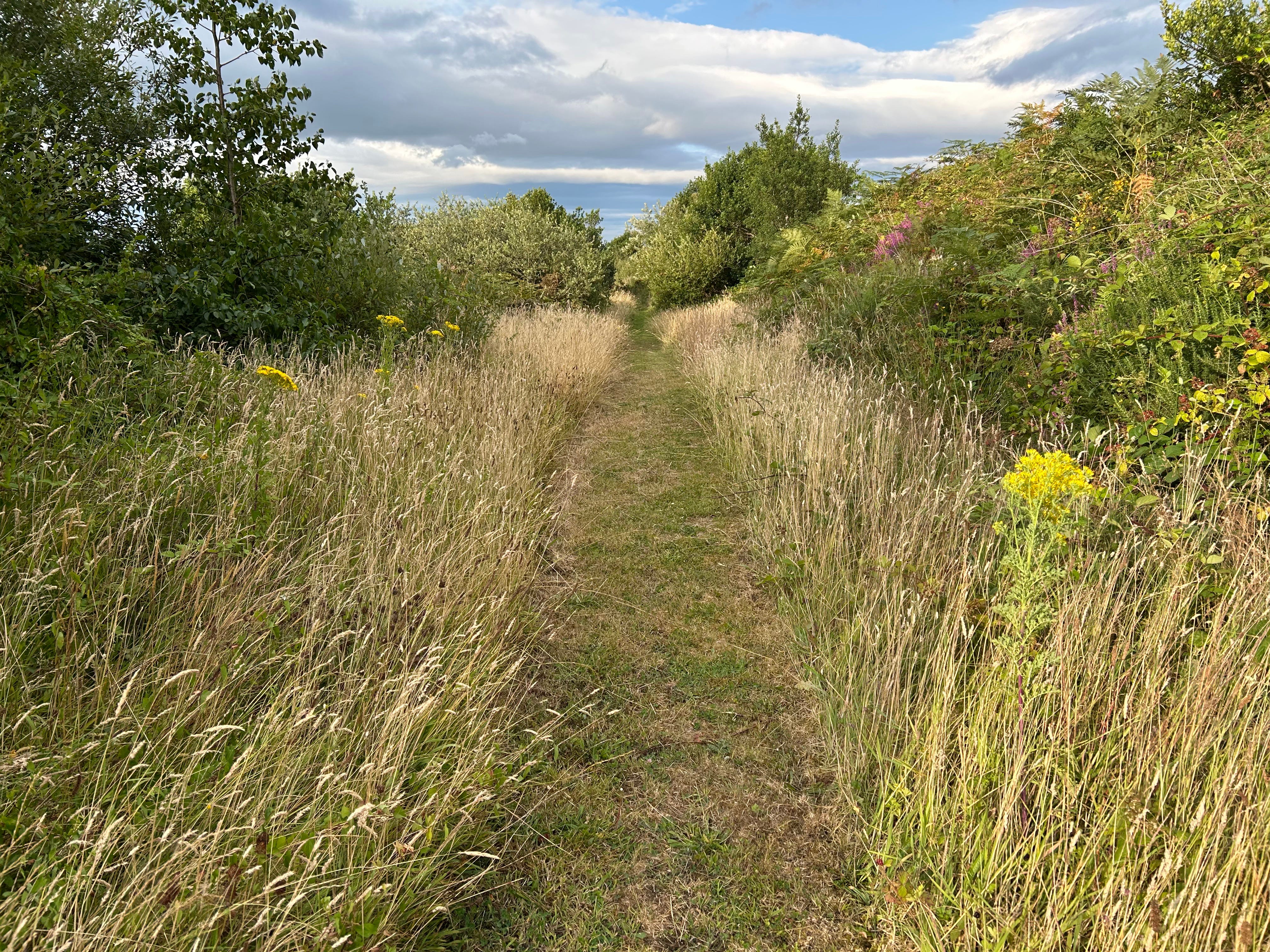
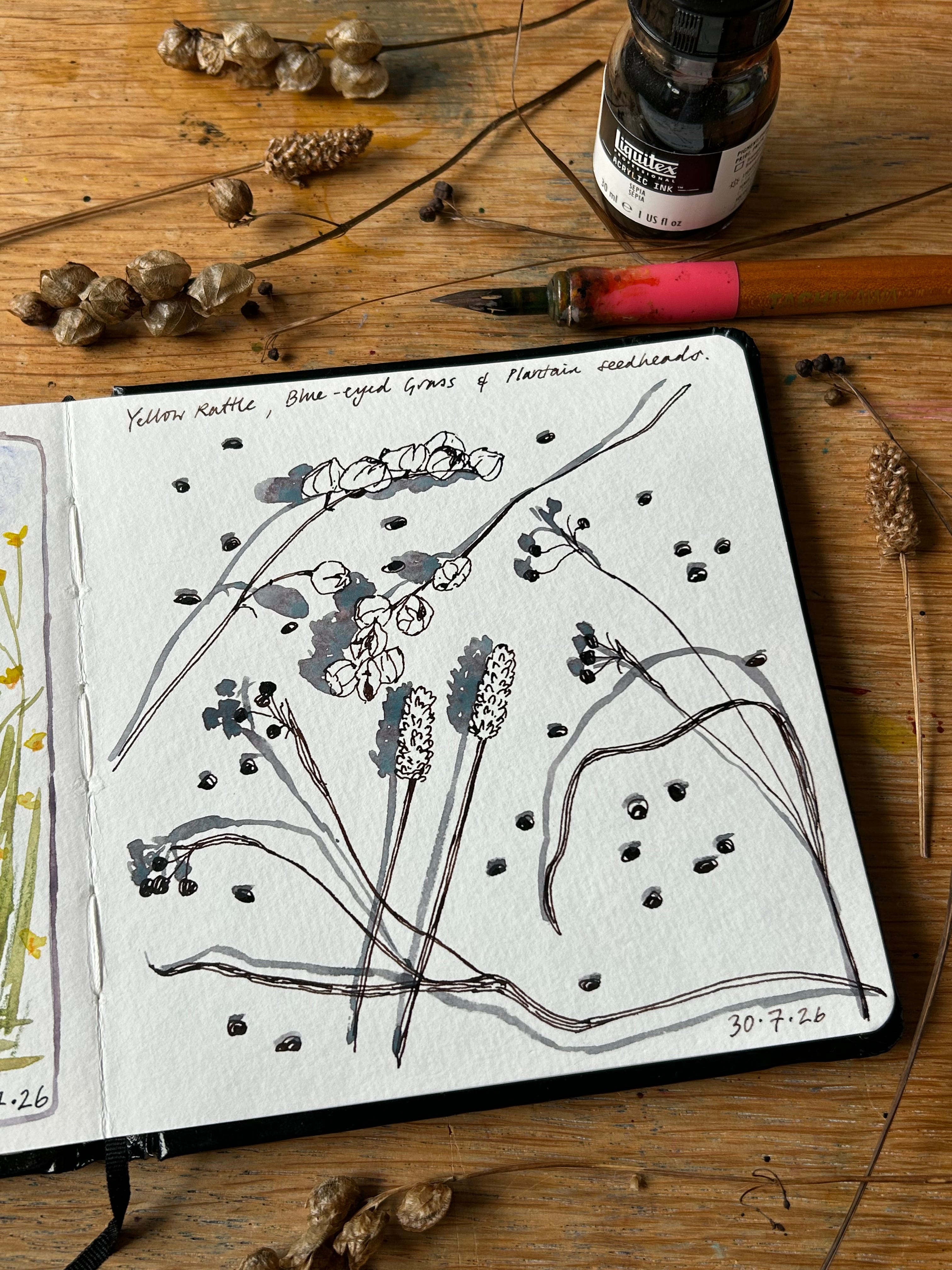
By the very end of the month, the dry weather has meant some of the early flowering meadow flowers have gone to seed. Even in this stage of their life cycle I think they are intrinsically beautiful and make great subjects for a quick monochromatic sketch. I will be collecting the yellow rattle seeds to spread in other areas, as it is a great plant for helping reduce grass growth and allowing other wild flowers to flourish.
July has been unusually hot and dry, with only a fraction of the rain we normally received on the west coast of Ireland. Although the temperatures have been well above average, it has been nothing compared to the fierce heat that much of Europe has experienced this month; with tinder-box conditions leading to wild fires across many countries (including Ireland). With fires destroying homes, wildlife and habitats, it is becoming a worrying reoccurrence of our summers4. Being on the very edge of western Europe, facing the tempering effect of the Atlantic Ocean, it makes me appreciate our ‘cool climate’ summers all the more.
This weather seems to have particularly favoured some wildlife, and butterflies especially have been very abundant. In May there was a huge influx of painted lady butterflies, which I mentioned in my May update, and this month I have seen lots of ringlets, meadow browns, peacocks and holly blues, to mention a few. It has been a joy to sit in the garden and see them flitting around.
Bird song has been quieter this month, especially in the mornings without the loud dawn chorus, now that most birds have found a partner and raised a brood. But there was one call that has been consistent the whole month; a mewing cry that almost sounds like a cat. Buzzards circling on the thermals overhead, and gliding past in the fields below us. It seems likely they are nesting very close by, as while we often hear them as they fly over, it is unusual to hear the calling go on all day. Buzzard chicks fledge after about 55 days, but they continue to use the nest, and are fed by the parents for another 6-8 weeks5. A few times looking out of our bedroom window into the field below, I have seen a buzzard perched on a fence post, which maybe is a juvenile.
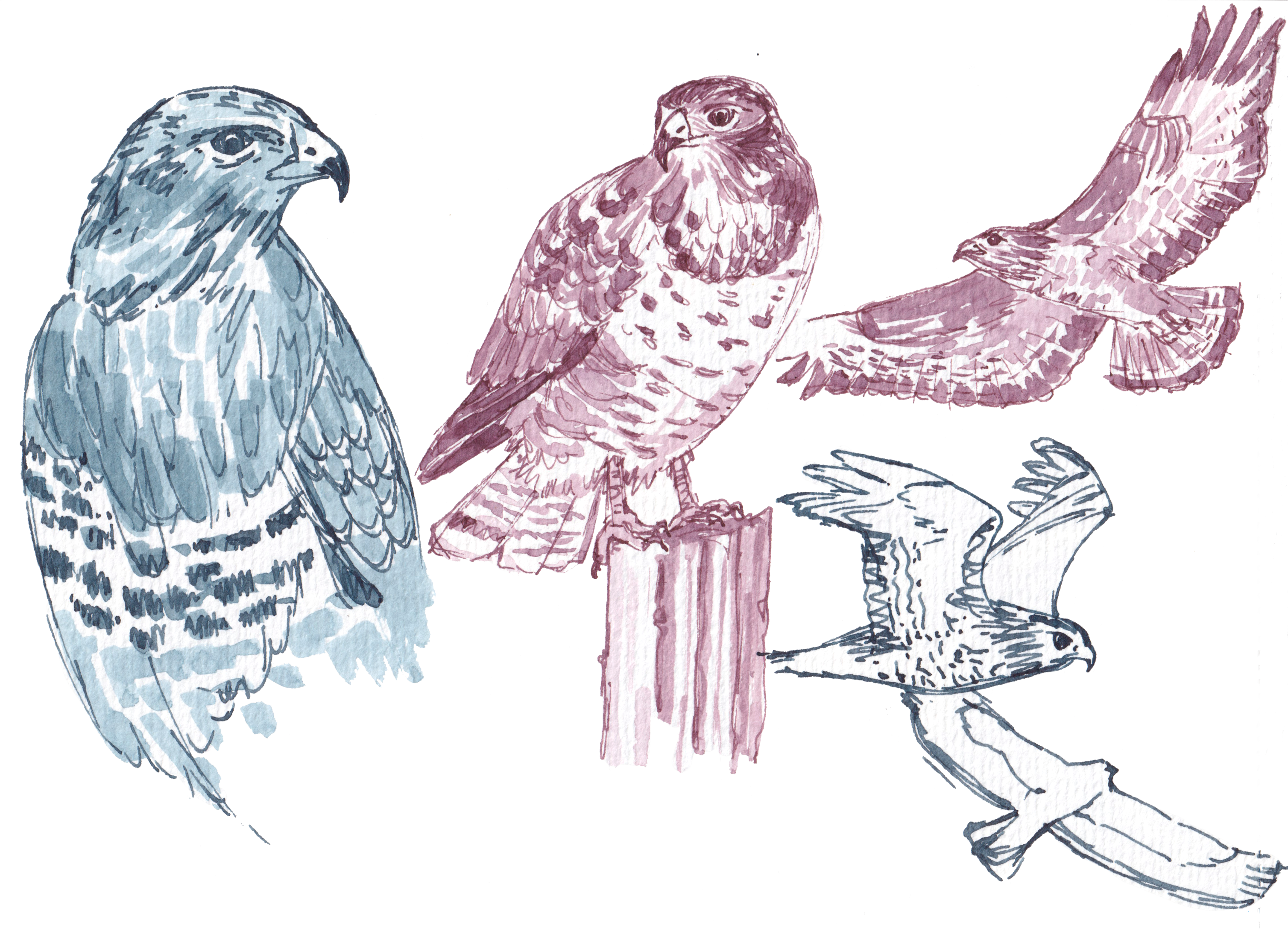
Buzzards are common throughout Europe, but were driven to extinction in Ireland in the late 1800s. But in a remarkable comeback story, they have spread from Scotland and Wales, and are now found in every county in Ireland, but with a stronger bias to the east side of the country. They are big raptors, with a wing span of up to 1.3m (4 feet), so look quite majestic flying above the house. They are a key apex predator, feeding on small mammals and young birds, especially corvids, so help keep the ecosystem in balance.
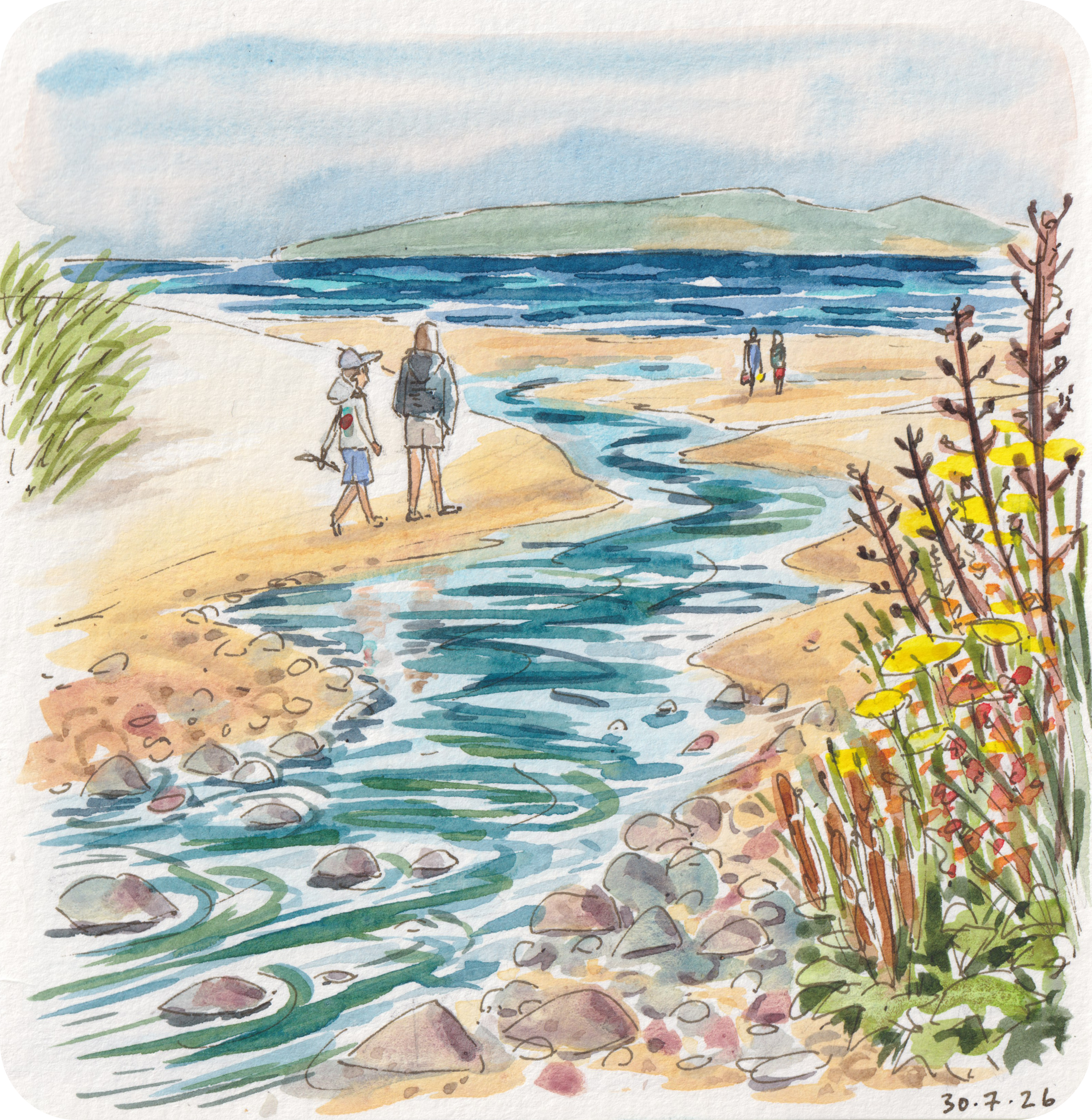
Despite the warm, settled weather, looking back I see I haven’t done many sketches at the beach this month, perhaps being too busy with the family on the days we went. So I was glad, at the end of the month, when the kids asked for a mid-morning visit to the ‘stepping stone beach’. This is a lovely stretch of local beach where a small river runs down through woodland and out to sea. Some large stepping stones and a convenient plank mean that it is easy to hop across to the other side. While the kids played, I sat on a rock and did a quick sketch, capturing the deep blue water and the bright ragwort and montbretia growing on the sandy bank.
It isn’t always easy to find the opportunity to sketch, especially with a busy family life pulling in all directions, so I always try to ‘make’ a little extra time for sketching if I can. One morning I had an appointment in town, and left 45 minutes early, so I could stop and sketch the windmill at Blennerville on the way. The weather was a bit overcast, but it made for softer, more interesting colours, and some nice reflections when the sun broke through.
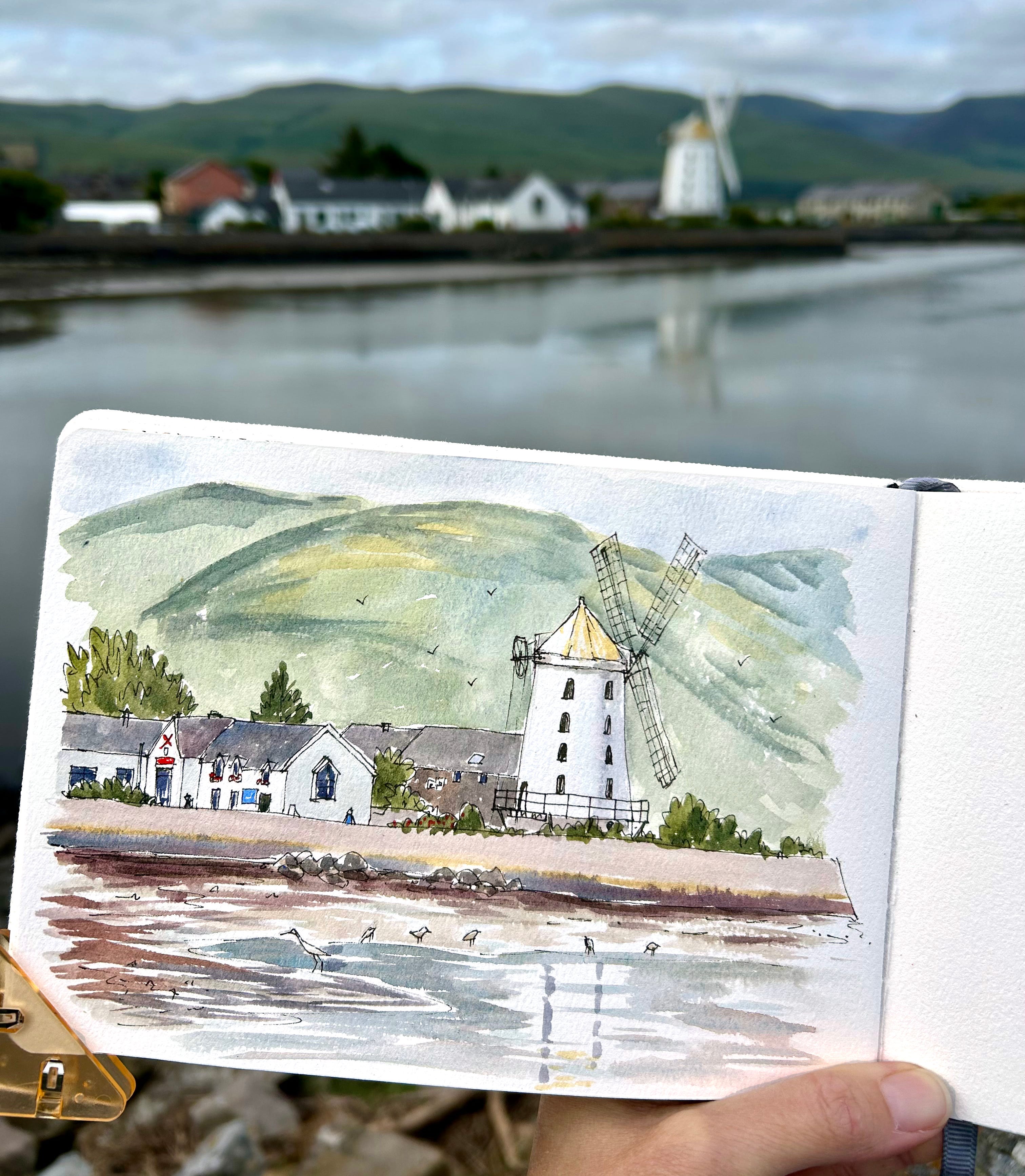
I wrote more about how to keep your sketch practice going in this post, in case you missed it.
Thanks for reading; I hope you enjoyed my catch up for July, how has it been in your part of the world? I always love to hear, so leave me a comment…
From Ireland’s Wild Plants by Niall Mac Coitir.
There are actually five different varieties of ragwort in Ireland, but this is common ragwort Jacobaea vulgaris.
This is the final of the GAA (Gaelic) Football championship. Kerry reached the final, but lost to Mayo.
No posts
Comments
Nothing yet. Say the first thing.
Sign in to join the conversation.