
Welcome to my catch-up for the month of April. Here I give a little insight to what I have seen and sketched in my corner of Ireland during the month.
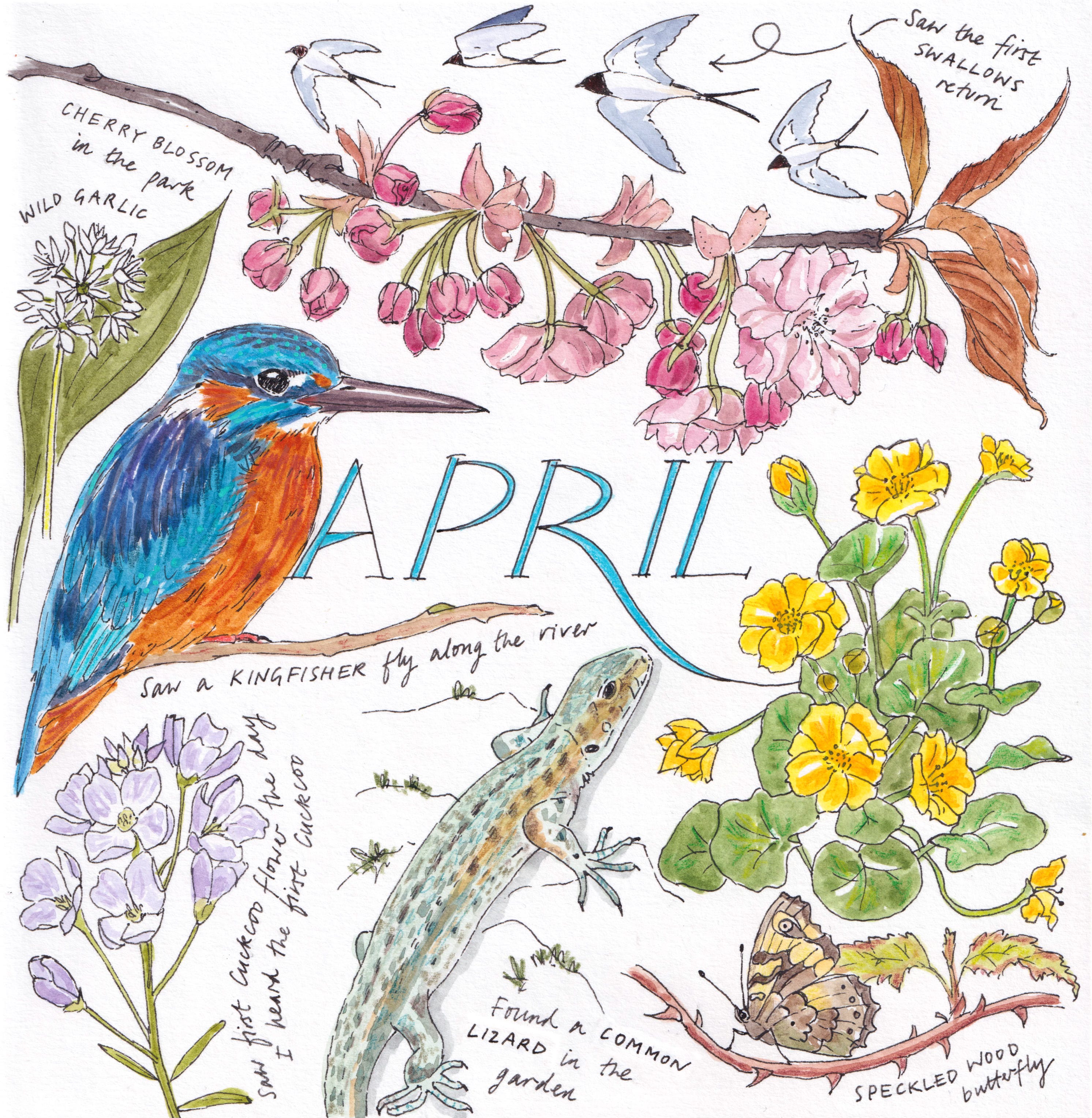
I am always amazed by the speed of change in nature during April. The days, where I live, have lengthened considerably over the month, increasing by almost two hours, to about 15 hours of daylight, from the first to last day. Nature is responding to the extra light, and the increase in temperatures, with plants of all types rapidly bursting into life; pushing up, unfurling, extending their reach and generally filling out as the weeks go by. The trees have a soft verdant haze around them, as their leaves appear with a lushness of zingy spring green.
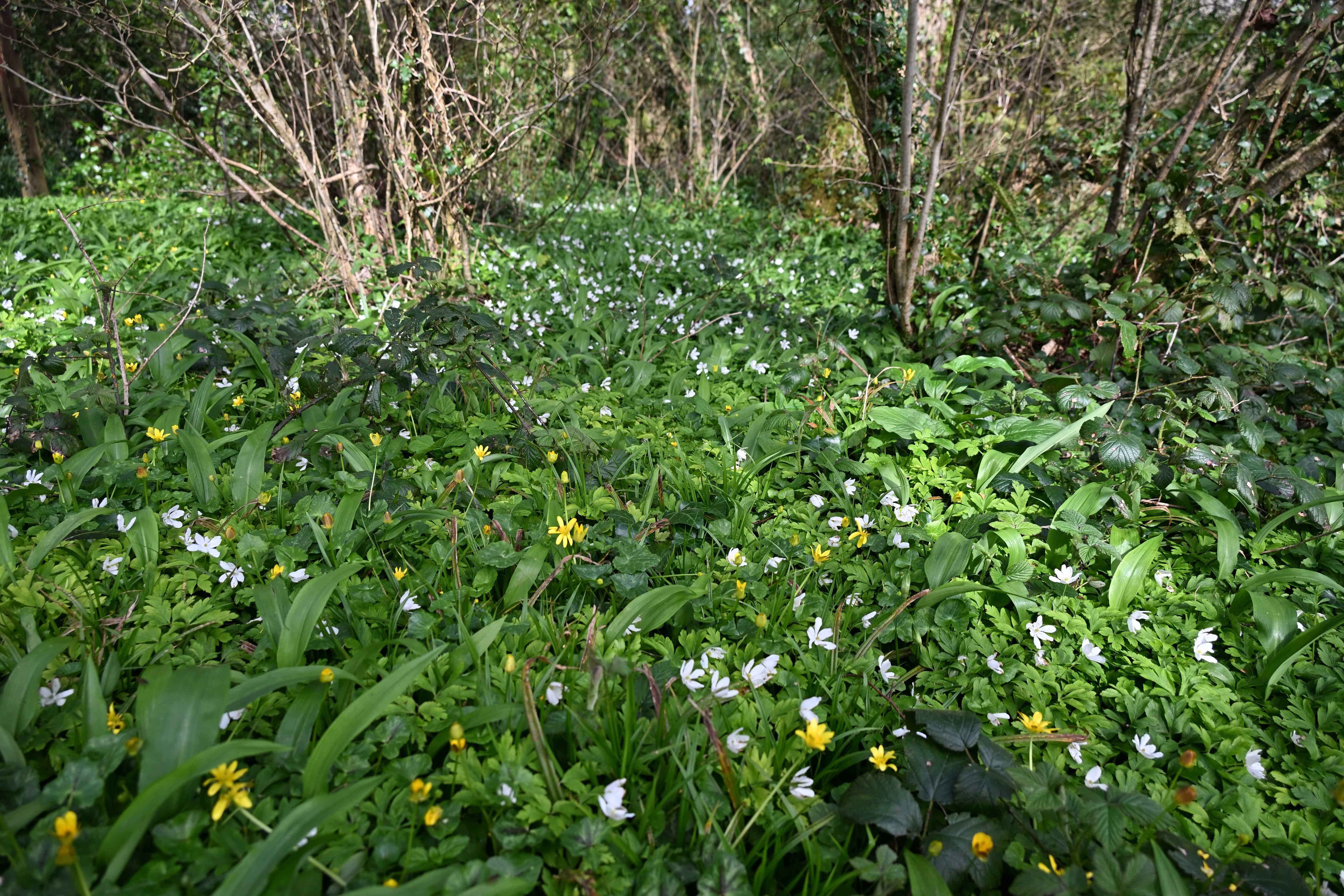
For some plants there is a real urgently, the need to grow up, flower and set seed before the canopy above them closes over. These are the spring woodland plants, sometimes called ephemerals, due to the brevity of their appearance. A walk through my local deciduous woodland, early in the month, I saw big clumps of delicate wood anemones, their shining white flowers glowing in the patches of sunlight. There was also a carpet of green pointed broad leaves covering the ground, and on the air was the scent of garlic. Here and there I could see the occasional white star shaped flower, just beginning to open. This is ramsons, Allium ursinum, or wild garlic, a native of woodland floors throughout Europe and Asia.
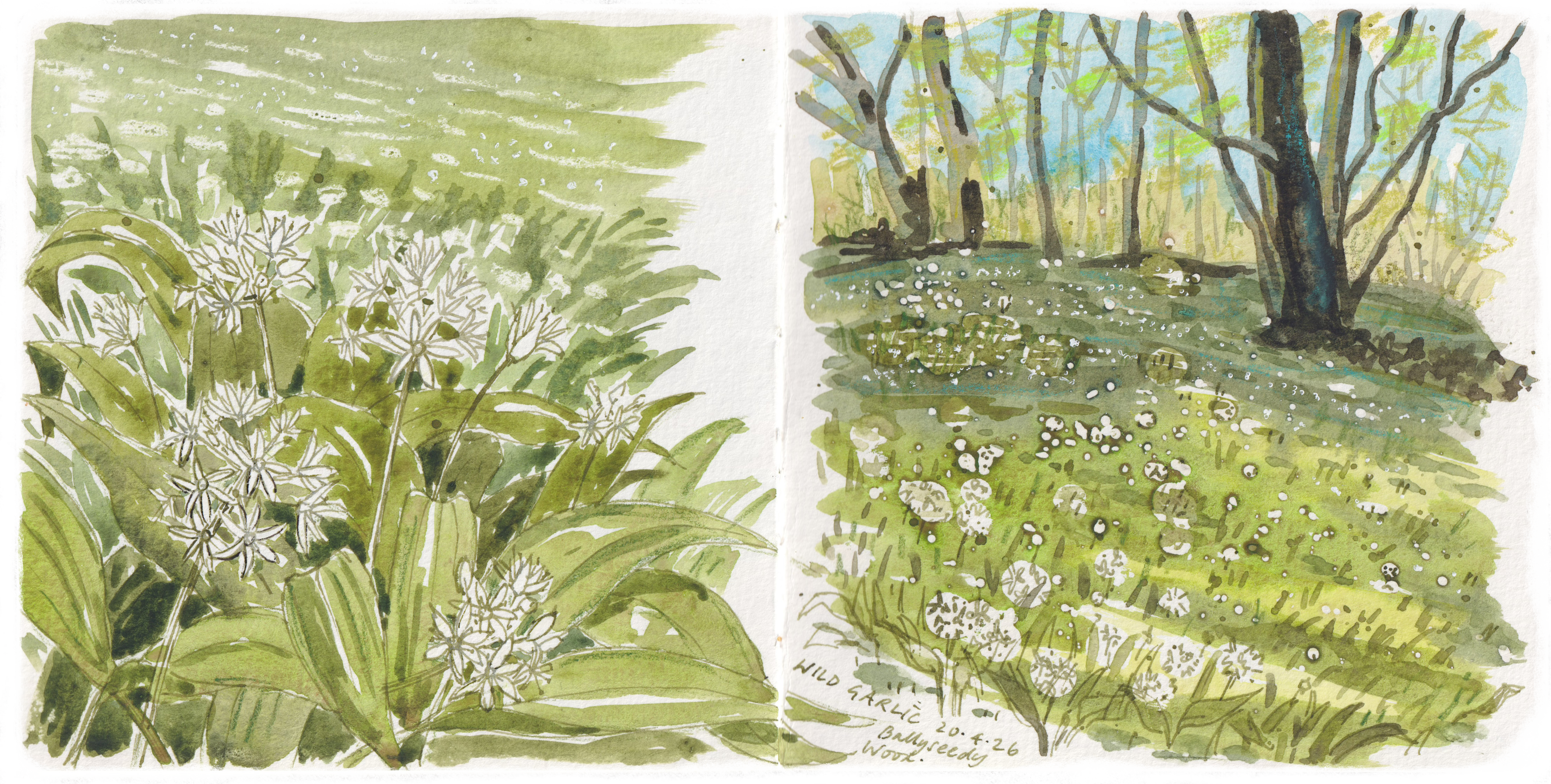
When I visit the woods again toward the end of the month virtually the whole floor is covered in white pom-poms, with the clusters of star flowers now fully open, providing a rich source of nectar for pollinators. Wild garlic is a favourite of human foragers, collecting the nutritious leaves, which can be eaten raw, cooked, or, often, made into a pesto. But humans aren’t the only ones partial to the leaves, and it is supposedly the first food Asian bears eat after waking from their winter hibernation. Which gives wild garlic its botanical name, as ursinum comes from the Latin for bear. But the bears, and humans, need to be quick, as the flowers and leaves will be past their best soon, as the woodland canopy closes over, and their chance in the sunlight is gone.
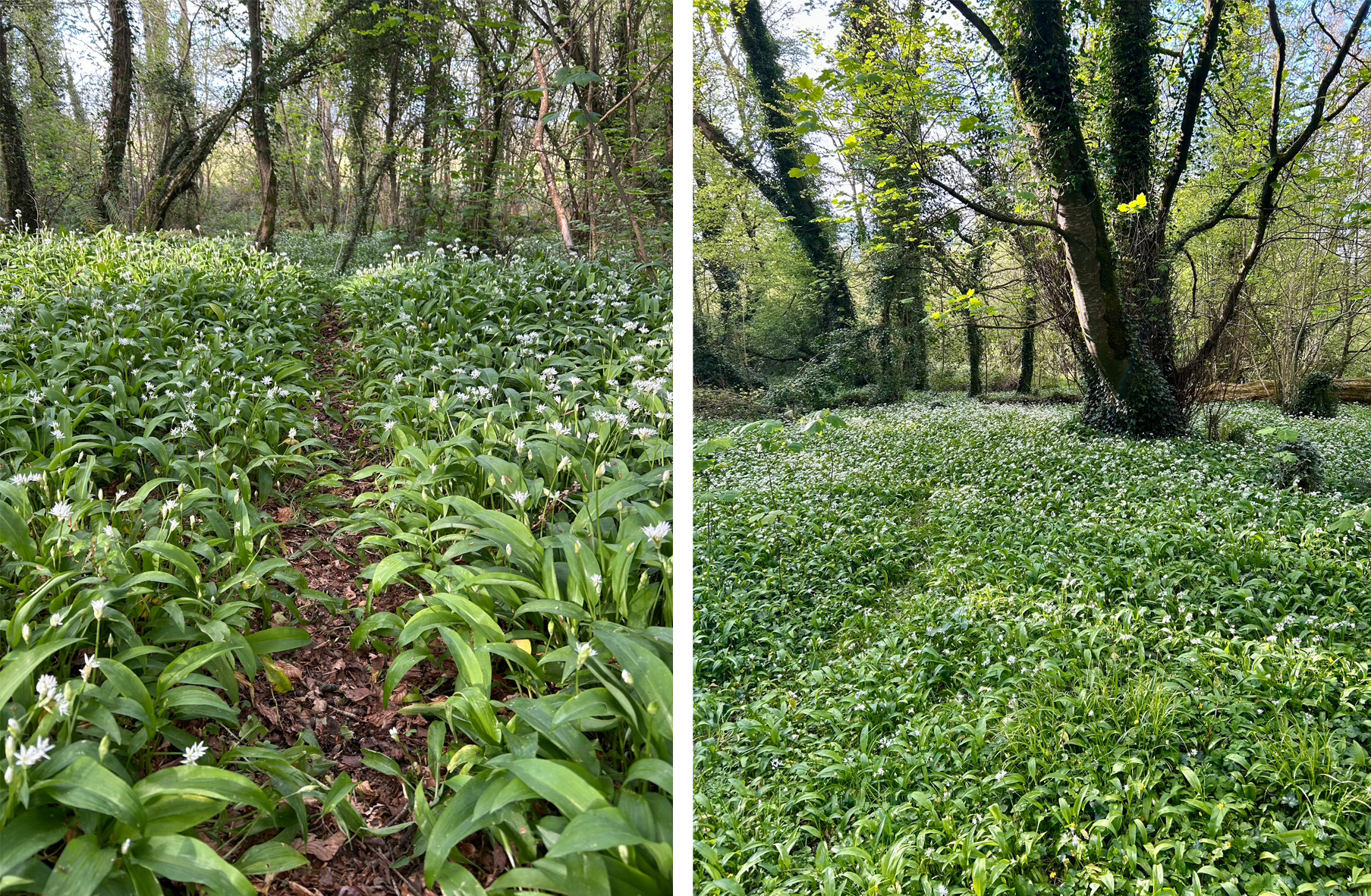
Wild garlic is an ancient woodland indicator, as is another woodland favourite, bluebells1. These also carpet woodland floors (although not usually mixed with the wild garlic, as they tend to out compete one another), and I have seen some patches on my woodland walks, but in this part of Ireland, they will be at their peak next month, so I’ll save them for my May post.
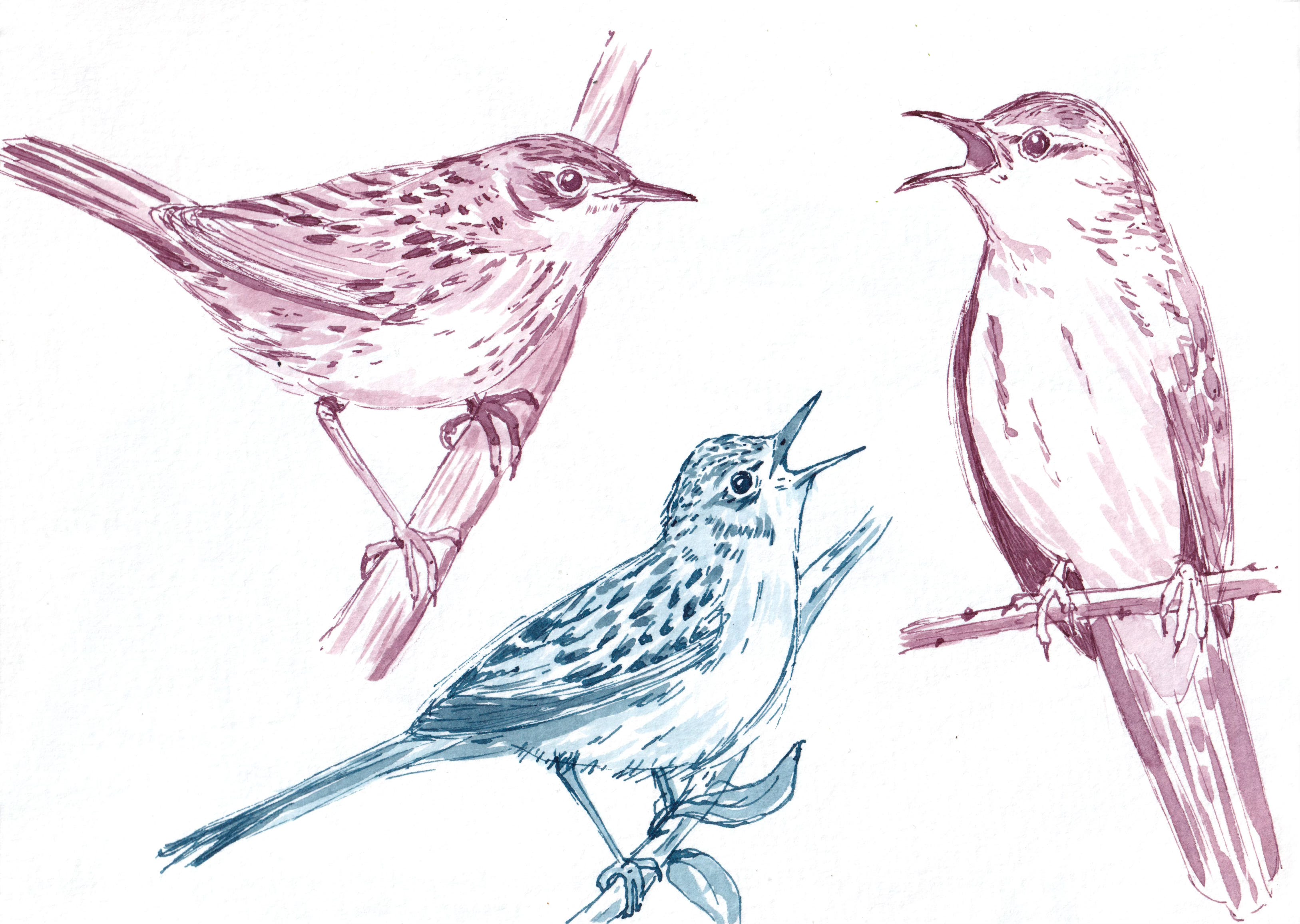
As I was finishing my evening walk in the garlicky scented woods, I heard an unusual, but unmistakable call that sounded like a cricket. It was in fact the grasshopper warbler, a small passerine summer migrant, that breeds in Ireland and Europe, but over-winters in north-west Africa. They are very difficult to spot, hiding in rough grass, or tangly thickets in woodland and scrubby fields. I walked quietly along a path, following the sound, until it was drowned out by the burbling of the river I was approaching. I didn’t spot one. I stood for a moment watching the water swirl, when suddenly a flash of blue was racing towards me down the length of the river. A tiny blur of peacock-blue and orange; a kingfisher! I was delighted! Even though it was only a brief glimpse, it is the first time I have seen one of these colourful birds, and the encounter felt quite magical.
The weather for the last two weeks of April has been very settled, with warm, sunny days that have come as a relief from all the winter rains. So it was wonderful to spend a few hours down at the local beach with the children and their friends.
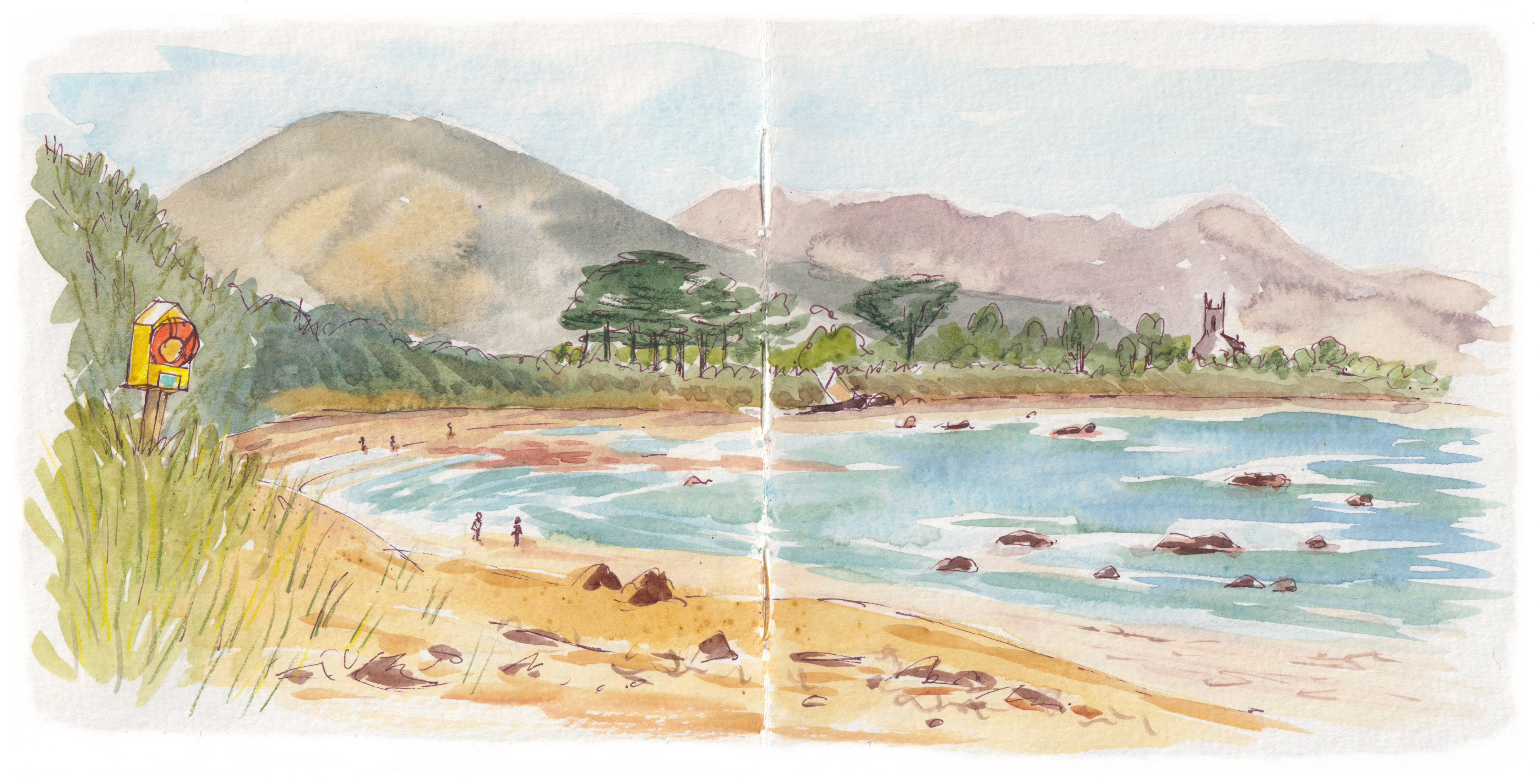
While they played games, I enjoyed sketching the broad sweep of the bay. In the background I could hear chatting sea birds, and see them at a distance swooping over the waves. I checked on my Merlin app2 and discovered they were Sandwich terns3. These are the largest terns we have in Ireland, with long elegant wings and a distinctive shaggy black cap. There are five species of tern that breed on Irish coasts, and they are often called ‘sea swallows’, due to their long forked tails and the fact they, like swallows, return from a winter spent in Africa. The largest breeding colony for Sandwich terns in Ireland is at Lady’s Lake, Co. Wexford, on the east coast. There is a long running conservation project here, managed by the National Parks and Wildlife Service, that monitor and protect the nesting terns (in fact all five species breed here), including providing nesting boxes for the rare Roseate tern4.
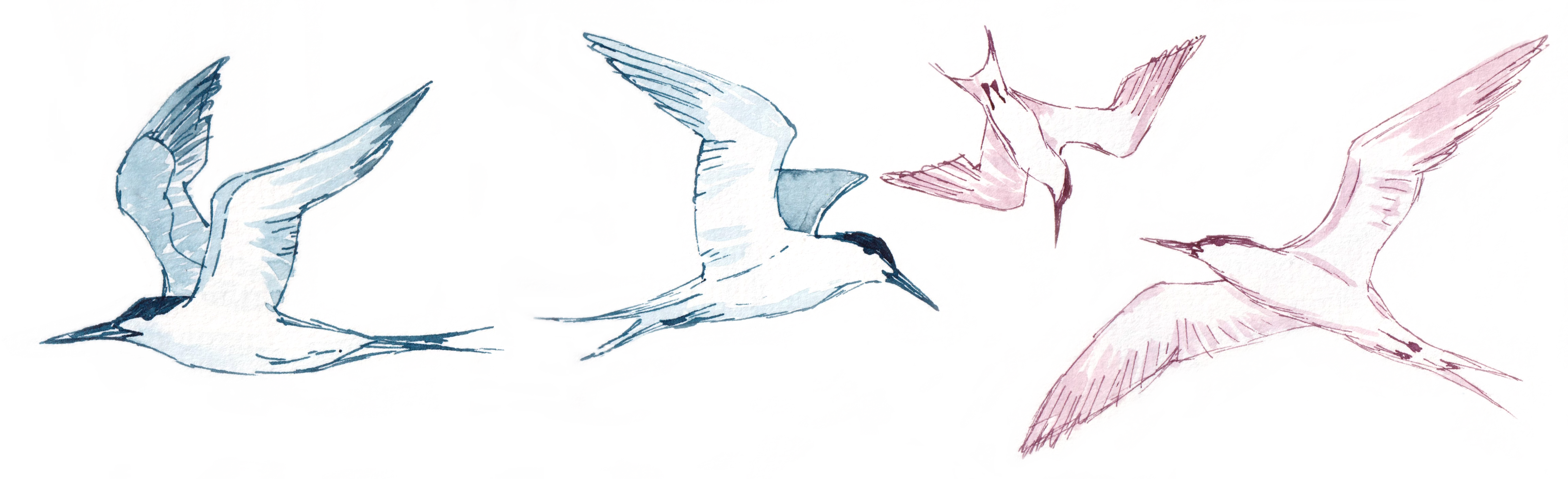
As I didn’t get a good look at the Sandwich terns on this occasion, I went back a few days later with my camera, hoping to see them. The morning was unusually calm and the sea in the bay so still it looked more like a lake. My son and I were up early, and he was happy to play in the rock pools while I kept a lookout for sea birds. Low cloud hung over the hills and everything was strangely quiet. No noisy terns, only the occasional cry of one common gull on a rock. Then suddenly out of the quiet I heard a very different bird to what I was expecting; ‘cuck-coo, cuck-coo’! A bird, I’m sure, most people could recognise from that call.
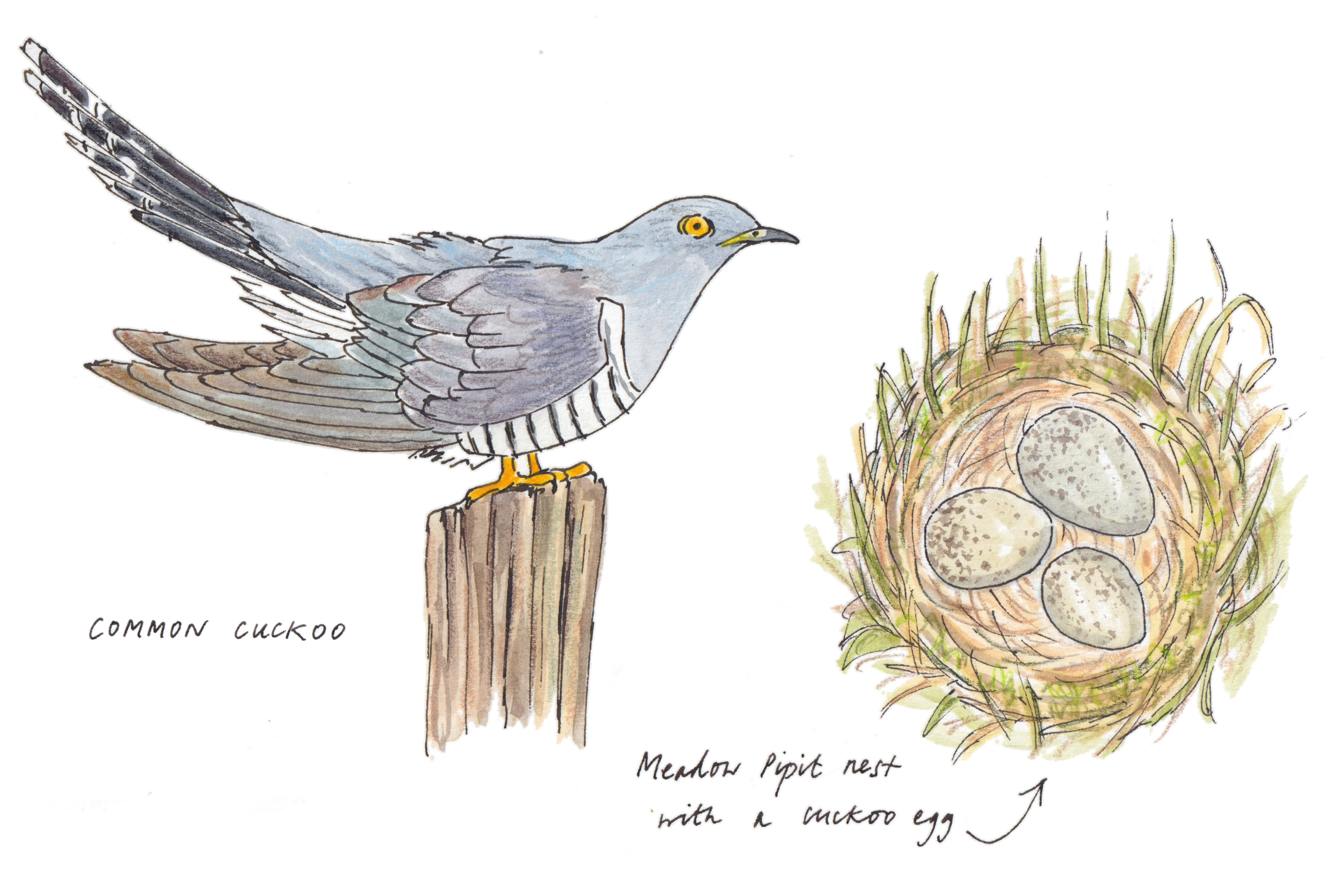
Like the terns and swallows, the common cuckoo, also migrates from western and central Africa, back to Europe to breed. But unlike all other birds in Ireland, the cuckoo is famous for laying their eggs in the nest of another bird, who become surrogate parents to the fast growing chick. The nest they chose varies, but in Ireland it tends to be a meadow pipit, a small common bird that resembles a petite thrush. Remarkably the female cuckoo that favour a particular host nest, lays eggs that mimic that bird. So for meadow pipit nests they would be pale with brown speckles, but if the cuckoo favoured a dunnock nest, for example, the eggs would be duck-egg blue. This loyalty is passed on to their offspring, who will go on the lay in the same type of nest as the ‘parents’ who raised them. This is why cuckoo often return to the same area to breed, to ensure they will always find the right host nests. A cuckoo tagged in Killarney National Park, Co. Kerry, three years ago, has returned back to the same area each year, after a 9,000km trip from Ghana. You can follow the journey made by Cores (named after the mountain he was tagged on), along with some other cuckoos here.
I have since heard a cuckoo calling closer to my home, and I wonder if this is the same one I heard this time last year?
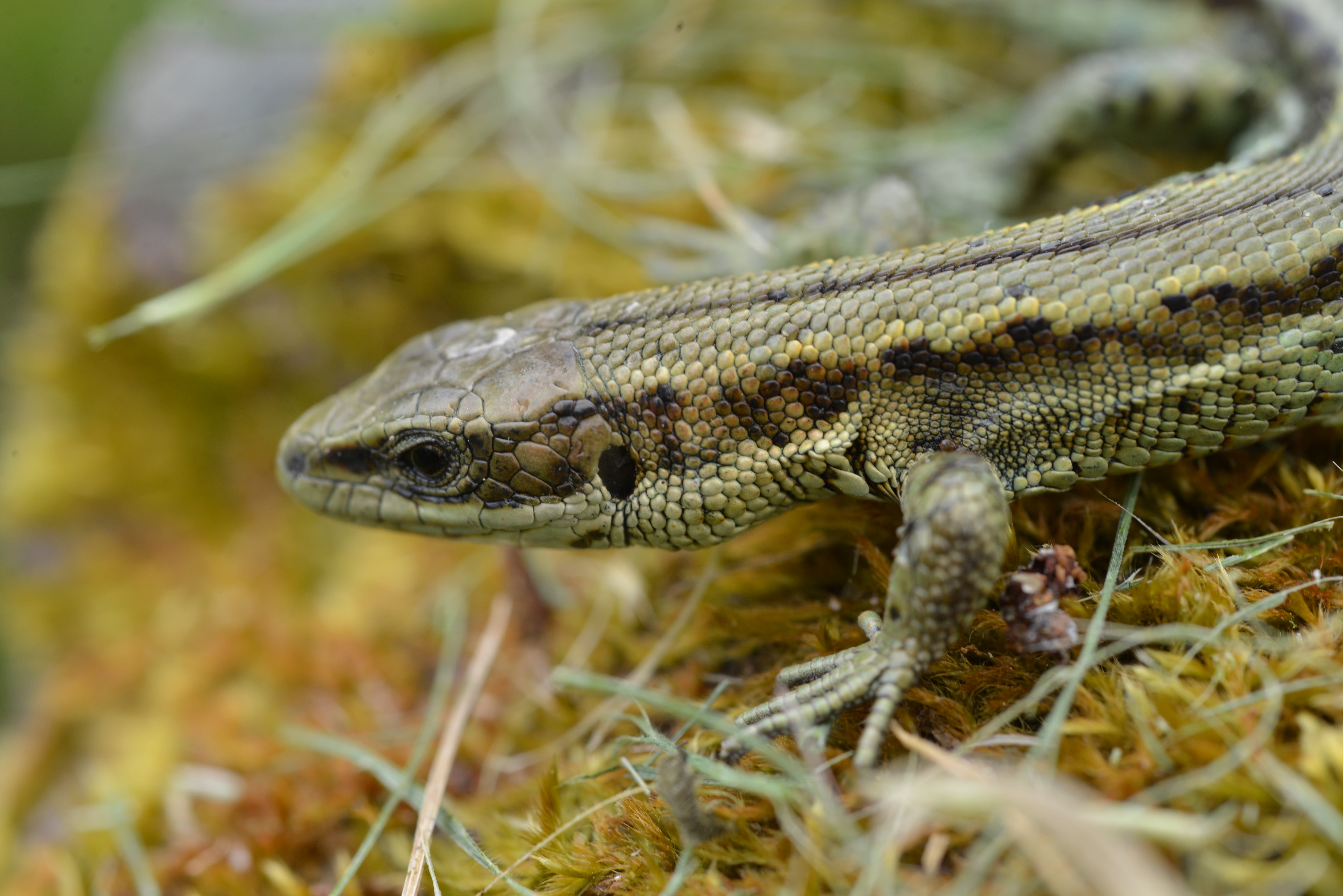
We found a common lizard in the garden, which even though they are native to Ireland, was a bit of a surprise (especially on a cool, over-cast day). At first we thought it was a newt, but on closer inspection realised it was a reptile, not an amphibian. The common lizard is, in fact, the only native reptile we have on this island (if to be believed, St. Patrick drove out all the snakes), and although wide-spread, not necessarily easy to spot. So it was wonderful to see one, and to know that they are living in our garden.
If you want some further information on cuckoos, terns or wild garlic, you might find these interesting:
The series of podcasts Feather & Flock are a wonderful listen, combining ecology, folklore and music on a variety of Irish birds. You can listen to their episodes on the cuckoo and terns.
This short podcast gives some more information on wild garlic in Ireland.
I have been reading Ireland Through Birds by Conor W. O’Brien, which has a chapter on the cuckoo. The book is a fascinating, personal journey discovering twelve iconic birds of Ireland, combining natural history with Conor’s quest to see all twelve birds in different parts of the country.
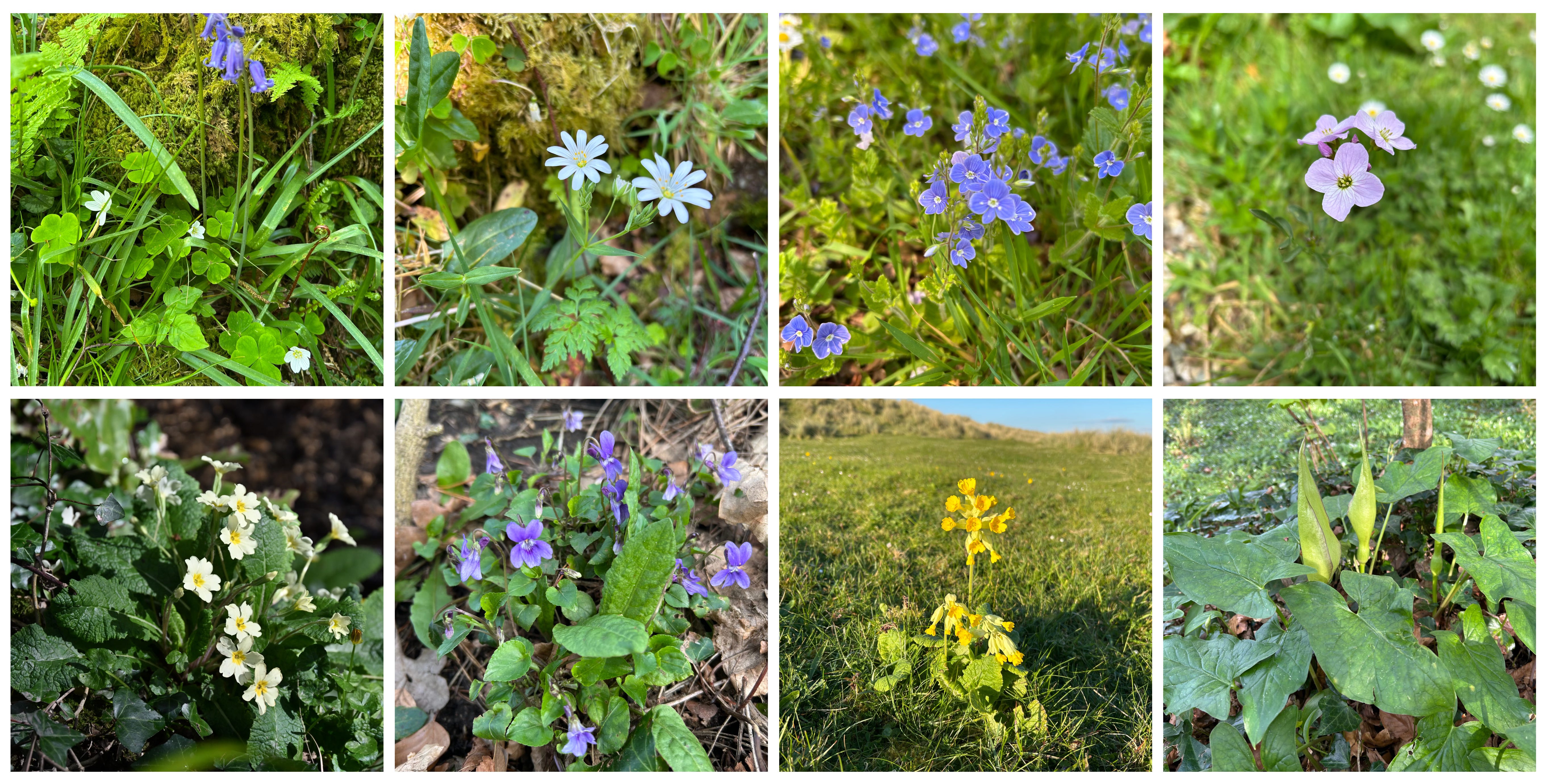
I really hope you have enjoyed reading about what April has been like in my corner of Ireland. There has been such a burst of growth, I didn't even mention half of the things I had spotted, so I’ll leave you with some of the wild flowers I saw…
I’d love to know what April has been like for you in your part of the world…
Hyacinthoides non-scripta, is the native variety here in Ireland.
An indispensable app for identifying bird sounds, if you don’t already have it.
Named after Sandwich Bay in Kent, UK.
No posts
Comments
Nothing yet. Say the first thing.
Sign in to join the conversation.