
Some of you know me for Hell of a Hat, the newsletter I started in 2021 to promote my book Hell of a Hat: The Rise of ’90s Ska and Swing. This is something different. It’s a love letter to freestyle music, and if you’re not sure what that is, please check out the introductory article I published last year.
In the ’80s, you couldn’t throw a neon scrunchie without hitting a freestyle girl group. There was Exposé, The Cover Girls, Sweet Sensation, Sequal, Seduction, and Pajama Party, to name just six. If you were a producer with three pretty girls and a catchy song, you had a decent chance of scoring at least a club hit.
In terms of freestyle boy bands, there’s really only one to know: TKA, the first, best, and most famous male singing group the genre ever produced. These are curious superlatives, considering that when they started in 1984, TKA were a four-piece rap outfit, and at one point, they even had a female fifth member.
The two studio albums TKA released at the peak of their powers contain mostly freestyle tunes, but there are also chintzy R&B ballads, energetic house workouts, and enough pure-pop hooks to court crossover success, though that never quite came.
TKA’s story is complicated—just like the meaning behind their name—but in some ways, it centers on one man, Louis Sharpe Figueroa, aka Kayel (derived from KL, or “Krazy Louis”), aka K7, the only founding member to survive every iteration of the group. He also forged a successful mid-’90s solo career and notched a surprise dance-rap smash that—at least in terms of chart position—eclipses everything else he’s ever done.
K7 is a multi-hyphenate New York hip-hop Zelig, and he’s still out there singing the hits, recording new tunes, and even acting in the musical Freestyle: A Love Story.
Straight Outta Spanish Harlem
According to most sources, K7 was born in 1966 in Ponce, Puerto Rico. He moved to New York City at a young age and grew up in Spanish Harlem, aka El Barrio, an area he remembers more for its sense of community than for the drugs and crime others associate with New York in the ’70s and ’80s. That said, the neighborhood was home to larger-than-life street characters like drug lord Alpo Martinez, whom young K7 would see popping wheelies on his motorcycle all the way from East 96th Street to East 125th.
K7’s love of music stemmed from his mother, a native Puerto Rican who’d spin homegrown salsa records by El Gran Combo and Ismael Miranda, as well as the day’s Motown hits. The first concert he attended was Spanish singer Raphael with The Four Tops at Radio City Music Hall. K7 apparently imitated Raphael in the aisles, and when the Four Tops sang their immortal hit “Bernadette,” they brought K7 on stage to dance with them. At least that’s the story his mother tells.
K7’s early years are proof of what real New Yorkers know to be true: The city is basically Mayberry. Even in boroughs packed with millions of people, neighborhoods feel like small towns where everybody knows everybody. K7 attended Julia Richman High School on East 67th Street. While there, he had a crush on classmate Lisa Velez, soon to be known as Lisa Lisa, and he was best buddies with Marco Antonio Muñiz, who would become global superstar Marc Anthony.
K7 and Marc Anthony would ditch class together and write songs in East River Park. They both tried out for The High School of Performing Arts, immortalized by the 1980 film Fame, but neither got in. The other guys who would make up TKA were also hanging around Spanish Harlem, finding their way into some new forms of music bubbling up in NYC.
As K7 recalls, the early ’80s were a “bugged-out time,” musically speaking. Disco was on the way out, and that left a vacuum for new genres to fill. First and foremost was hip-hop, a sound K7 fell hard for. As a dark-skinned Puerto Rican, K7 was able to venture up to the predominantly Black nightclub Harlem World, located at East 116th Street and Lenox Avenue. The club would host the day’s leading rap groups, and K7 volunteered to hand out promo flyers in exchange for cassettes of the previous week’s gig. He would learn all of the routines by groups like The Force MCs and The Furious Five, and before long, he formed his own group.
Future Force
They were called Future Force, a foursome comprising K7, Fareed Abdallah, Andrew Welsh, and John Lindsey. According to a blog post by famed freestyle producer Carlos Berrios, Future Force played a couple of shows at The Roxy on West 18th Street, though they never got around to releasing any records. If K7 is to be believed, however, Future Force made one major contribution to the history of popular music—and to freestyle in particular.
At some point in their short lifespan, Future Force befriended Brooklyn drummer and showbiz aspirant Michael Hughes, who worked with K7’s girlfriend’s sister. Hughes was tight with Full Force, a six-piece family band of instrumentalists, songwriters, and producers from his neighborhood of East Flatbush. Hughes told K7 that Full Force were looking for Latino rappers, so Future Force made the trek out to Brooklyn to record some demos. During the session, Full Force played Future Force (the names get a little confusing) “Roxanne Roxanne,” a not-yet-released single by the hip-hop group UTFO.
“I was like, ‘This record’s gonna be big,’” K7 told Sway’s Universe in 2017.
K7 was right. “Roxanne, Roxanne” went 1984’s equivalent of viral, spawning dozens of answer tracks, most notably “Roxanne’s Revenge” by Roxanne Shante. “Roxanne Roxanne” is now regarded as a hip-hop classic, the template for all future wax wars. And that’s not all K7 was correct about.
At the Brooklyn session, Full Force also mentioned they were looking for a Latina singer. K7 claims he instantly thought of his groupmate Fareed’s sister’s best friend, Lisa Velez—and that wound up being a great suggestion. Lisa Velez auditioned for Full Force and became Lisa Lisa, frontwoman of Lisa Lisa and Cult Jam, the group that would define freestyle with 1985’s “I Wonder If I Take You Home,” then push the genre to its poppiest extremes with the twin No. 1 smashes “Head to Toe” and “Lost In Emotion” in 1987.
The Birth of TKA
During Future Force’s brief existence, K7 wrote a song called “Scars of Love,” and after the group split up, he felt like it deserved another shot. (Side note: Future Force’s Abdallah and Welsh went on to form Spirit Matter, who were responsible for the underground freestyle gems “Crimes of Passion” and “Betrayal.”) As K7 tells it, he bumped into local rapper Tony Ortiz on Park Avenue between East 96th and East 97th Street and sang him the song on the spot. Ortiz thought it was cool, and the pair discussed forming a group. Ortiz wanted to bring his cousin Aby Cruz, who’d sung with the East Harlem Boys Choir, while K7 suggested adding his buddy Spyder, who was known around the neighborhood for impersonating Prince and George Michael.
K7 had a handful of songs written, and as he remembers, the four became “inseparable.” While trying to think of a band name one day, K7 suggested TKA—short for Tony, Kayel, Aby—but promptly took it back, since there was no S for Spyder. Another idea was The Disciples, so they combined the names and christened themselves TKA Disciples.
That’s one telling. At different points in their career, TKA has said the name stands for Total Knowledge in Action and even Totally Kicking Ass. On his blog, Carlos Berrios has another account of how the group and its name took shape. Berrios says they were originally a trio sans Aby, and that they performed as The Disciples before adding the TKA part. It’s a minute detail that doesn’t change the narrative all that much. The important thing is that the quartet—which focused on rapping, not singing—began playing sweet 16 parties around the neighborhood.
Now it was time for destiny to intervene. One day, while walking down First Avenue between East 90th and East 91st Street, K7 saw the distinct mohawked figure of Afrika Bambaataa—the hip-hop trailblazer behind the earth-shaking electro jam “Planet Rock”—walking into what looked like a soccer supplies store. K7 followed Bambaataa into the building and up the stairs, and he discovered that 1747 First Avenue was the headquarters of Tommy Boy Records. Bambaataa gave K7 a Tommy Boy T-shirt, and K7 met the label’s receptionist, Joey Gardner, who would play a pivotal role in the TKA saga.
In some interviews, K7 has said that on the very day he stumbled into Tommy Boy, he convinced Gardner to come see TKA perform at St. Francis De-Sale High School, located at 97th Street and Park Avenue. Other times, K7 has said he popped into Tommy Boy on numerous occasions to drop off demo tapes before he was able to coax Gardner out to a show. Either way, Gardner wound up going to see TKA, and he was moved by the song “Scars of Love,” which the foursome would perform over instrumentals of popular rap hits. Gardner saw potential and worked to get TKA a deal with Tommy Boy.
There was just one catch. Tommy Boy was flush with hip-hop acts. They had Stetsasonic and Queen Latifah, as well as the aforementioned Afrika Bambaataa. They even had the novelty act Rappin’ Duke. “They said, ‘We don’t need another rap group, especially a Puerto Rican one,” K7 told Sway’s Universe, explaining why K7 abruptly pivoted from rapping to singing. At the time, there weren’t many Latino MCs in the rap game, and most were seen as novelties.
“There was a time when we weren’t allowed in,” K7 told the podcast The Chapter of the Architech. “And I’ll tell you this: A lot of Puerto Rican rappers in NYC influenced a lot of NYC rappers to be better. But we weren’t accepted, so we had to find our own way.”
TKA’s best chance of breaking through would be adopting (and innovating) the new style of electro-influenced club music that artists like Arthur Baker and Shannon were pioneering. K7 would later say that this emerging sound—initially called Latin hip-hop and later dubbed freestyle—spoke to him in ways hip-hop couldn’t.
“Growing up, I listened to rap, and I enjoyed listening to rap, and that would describe what I was growing up around—what, when I walked down the street, I would see,” K7 said in a rare TV interview from the early ’90s. “But it wouldn’t express what I felt deep inside, what I was going through … If I was in love, talking about wearing a gold chain doesn’t really do anything for me. So I would write about how I felt.”
Freestyle was a way for young Latinos to find their voice in hip-hop. But first, TKA literally had to find their voices. Because they’d primarily been rappers, Tommy Boy put them through a singing bootcamp led by Robin Halpin, wife of label founder Tom Silverman. After some intense vocal training, they made their recorded debut—billed as TKA Disciples—singing the hook on the electro-rap group Rock Squad’s 1985 single “Facts of Life.”
Around this time—though it’s unclear exactly when—TKA briefly became a quintet with the addition of Linda Caballero, a singer from the South Bronx who called herself La India. K7 and the gang met La India when TKA played The Devil’s Nest, the Bronx nightspot that became the epicenter of the freestyle scene. La India recorded some demos with TKA but left before they made their debut album. (She’s pictured on the artwork for their second single, “Come Get My Love.”) Which is too bad, because her outsider street style would’ve given TKA a welcome edge.
“She was Lady Gaga at 13, before Lady Gaga existed,” K7 told Red Bull Academy. “She would have these odd outfits she would wear, like she’d wear a witch’s hat with a sports bra and a pair of jeans tied with a black rope and the pointiest shoes ever. Before the kids in the Village were doing Goth, she was doing Goth up in the Bronx.”
La India did just fine after TKA. She signed to Madonna producer John “Jellybean” Benitez’s Warner Bros. imprint and debuted with 1990’s Breaking Night, an album of well crafted, if commercially overlooked, freestyle, pop, and house. She subsequently pivoted to salsa and became one of that genre’s leading lights. Celia Cruz even dubbed her the “princess of salsa.” To date, she’s had 11 No. 1 hits on Billboard’s Tropical Airplay chart.
Scars of Love
It wound up being a long road to the release of TKA’s 1986 debut single, “One Way Love.” Written by Jeff Feldman and Marco Olivo, the song came to the group half-finished, but Joey Gardner—who’d become TKA’s manager and producer—liked it and wrote a third verse he thought would echo “Scars of Love,” the original song that got the foursome signed. The bones were there, but it took some time to get the song ready for public consumption.
On the original version of “One Way Love,” which was never released, all four members sang verses, and the track was slower than the one that eventually saw the light of day. It was also in a different key. Tommy Boy wasn’t happy with the results, so Gardner went into the studio with The Latin Rascals, the famed editing and production duo of Tony Moran and Albert Cabrera. Together, Gardner and the Rascals gave the song a sonic overhaul, tearing it down and starting from scratch. When it came time to re-record vocals, Aby got to sing lead. According to the blog post by Carlos Berrios, it was because K7 fell asleep after suffering a bad allergy attack.
Regardless of what went down, Aby seized the moment. “One Way Love” is a tense freestyle banger about a guy whose girlfriend leaves him for another dude. Aby’s jilted narrator thought he and his girl were rock solid, but she was running around behind his back. On the chorus, his gruff, everyman singing style underscores his anger and frustration.
One-way love
Thought we had somethin’
Girl, you played me for a fool
Shoulda held back all of my lovin’
Didn’t know there were no rules
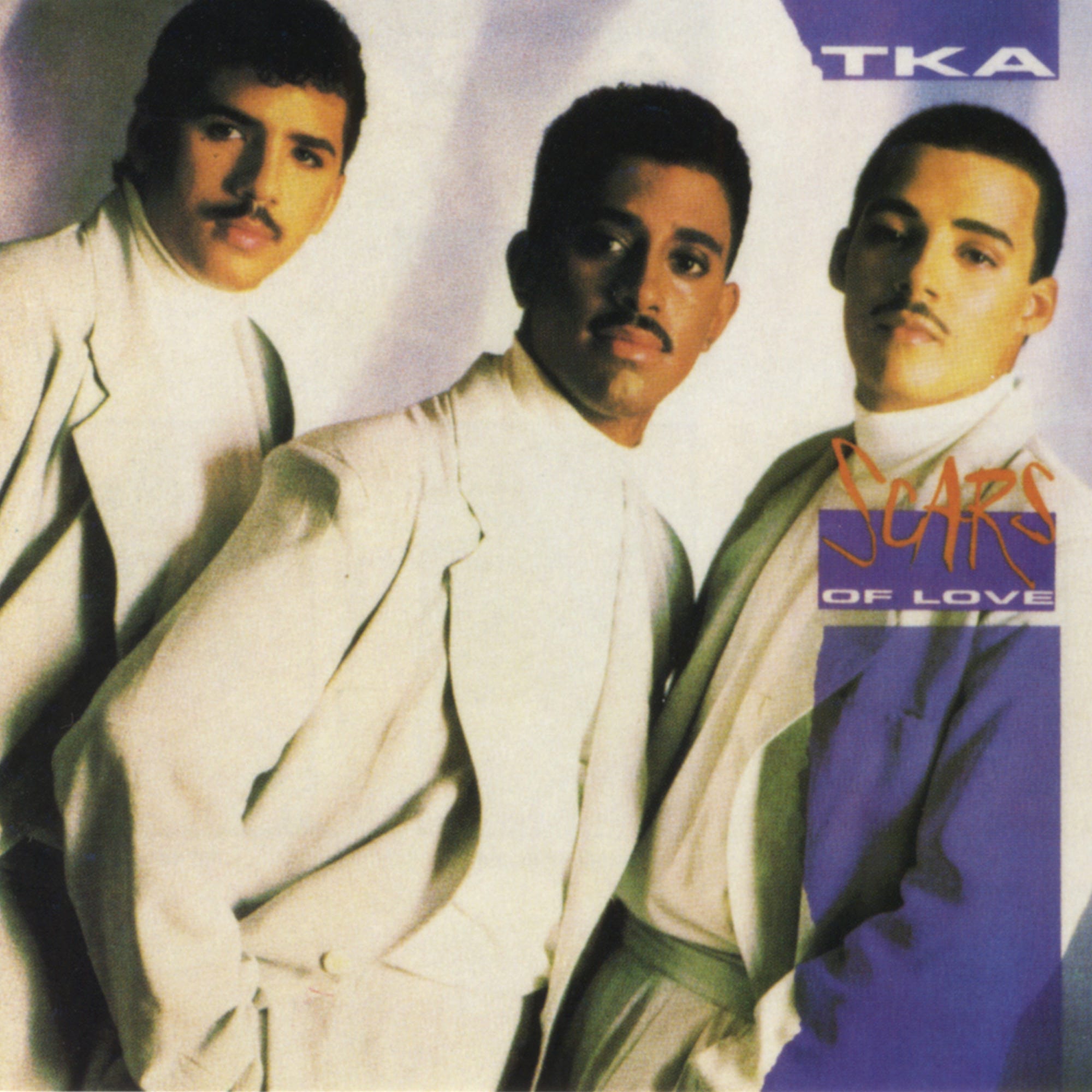
“One Way Love” reached No. 8 on Billboard’s Dance Club Songs chart and even scraped the lower reaches of the Hot 100, peaking at No. 75. Aby wound up singing lead on two other singles—as well two deep cuts—from TKA’s debut album, Scars of Love, which dropped in October 1987. By this point, TKA had become a trio, as neither Spyder nor La India is pictured on the cover.
The second single, which also reached No. 8 on Dance Club Songs, was “Come Get My Love,” a super-clubby freestyle track with drums set to clobber. Here, Aby plays a confident lothario who notices a girl noticing him. He spends the whole song urging her to make a move—not so much for his benefit, but for hers.
One more chance to give you, girl
All my love tonight
Come get my love
Before I walk out of sight
Those first two singles came out in 1986, before the album landed, and initially, TKA struggled to get radio airplay in their hometown. The urban contemporary station 98.7 Kiss FM played their singles, K7 explained in 2014 on the Staten Island talk show Late Night With Johnny P, but once program directors found out TKA were Puerto Rican, they pulled the plug. Fortunately, they were getting spins in other cities, most notably Miami, where a parallel freestyle scene was springing up simultaneously.
TKA’s luck changed in New York City when the rock station Classic 103 changed formats and became Hot 103 in August 1986. Hot 103 was an early adopter of what would be called “rhythmic contemporary,” and the station played freestyle artists in heavy rotation. This presumably helped TKA’s third single, a reworked version of “Scars of Love” co-written by Joey Gardner.
“Scars of Love” is a slick freestyle groover, complete with that cool synth effect where a human voice is sampled and played with a percussive stutter on the keyboard. It’s also unique in the TKA catalog in that K7 and Aby share lead vocal duties. K7 has dedicated the song to his first love, and she must’ve done a real number on him, because the lyrics present a guy who’s fated to stick by his girlfriend, even though all of his friends are telling him she’s no good. The narrator himself can see the writing on the wall, and he’s prepared to continue loving her even after she’s dumped him for someone else.
Girl, maybe you’ll find somebody new
So now I tell you this
That when you’re gone, you’ll be the one I love
When you’re gone, you’ll be the one I miss
The single peaked at No. 25 on Dance Club Songs but missed the Hot 100 entirely, and that’s basically how it went for the final three singles off the album. First up was “Tears May Fall,” sung by K7, a smoother crooner than Aby, and produced by the Latin Rascals along with freestyle great Andy “Panda” Tripoli, whose credits already included Nayobe’s seminal “Please Don’t Go.” “Tears May Fall” centers on two young people who accidentally fall in love. Now there are real feelings, and that means there will be real emotional consequences. K7 makes it sound like they’re swimming with sharks.
So now we must be careful
‘Cause the danger waits nearby
(The danger waits nearby)
The game of love’s a gamble
And the stakes are much too high
With the next single, “X-Ray Vision,” featuring an Aby lead vocal, TKA finally got their first music video. The boys wear dark suits with white turtlenecks (except K7, who’s dressed like a priest for some reason) and practice their dance moves while a sexy woman walks around outside the building. Every now and then, the camera cuts to a trio of modern dancers making dramatic movements in brightly colored leotards.
“X-Ray Vision” is as sonically streamlined as the emotions are messy. The narrator can see through his girlfriend’s lies, but he still thinks they should be together. It’s all done with an icy sleekness that makes perfect sense once you learn that TKA were listening to a lot of Depeche Mode and Erasure in the mid-’80s. (The distance between new wave and freestyle was often negligible at the time.)
For the final single, TKA opted for the Latin Rascals-produced “Don’t Be Afraid,” which would be a fairly standard freestyle song if not for it morphing into a house track midway through, then switching back. Lyrically, it’s also a bit unusual. K7 is front and center, and as he sings to the girl who’s about to leave him, he selflessly lets her off the hook for whatever romantic treachery she’s committed.
I hope you’re happy, that’s my only wish
’Cause for you I will always care
I’ll forget you, but it’s your love that I’ll miss
But who says love is always fair?
Seeds of Discontent
All told, TKA had notched seven straight Top 30 dance hits, and the future must’ve looked bright. But before they got around to recording their sophomore album, K7 and Gardner asked Aby—who’d sung lead on the majority of the first album’s freestyle bangers—to leave the group. It seems the reasons have never been publicly discussed. Aby was replaced by Angel Vasquez, and for a while, at least, the new lineup held promise.
“We’re not only signers,” K7 said in the aforementioned rare TV interview, filmed sometime after Angel’s arrival. “We’re entertainers. We are studio musicians that go and work hard at what they do. We’re choreographers. We’re acrobats. We’re comedians. TKA is all these things put into one.”
But by the time sessions were due to start for TKA’s second album, there was trouble brewing. “The group had run its course,” K7 told The Chapter of The Architech. “The seeds of discontent had begun to sprout and spread themselves really out.”
With one eye on his eventual solo career, K7 began working with a variety of outside producers, including Frankie Cutlass, another Spanish Harlem native he’d known for years. One of the songs K7 brought to Cutlass was called “Give Your Love To Me,” and even though it was freestyle, not hip-hop, K7 was inspired by the early Cold Crush Brothers rap routines he’d memorized in his youth.
Cold Crush Brothers would do a thing where they’d mute the beat for the first line of each MC’s rap, then slam the drums back in. K7 wanted to try something similar with “Give Your Love to Me,” a song inspired by his Italian Argentinean girlfriend and her parents’ misgivings about their daughter dating a dark-skinned Puerto Rican.
K7 and Cutlass recorded a demo of “Give Your Love to Me” at the Bronx studio run by freestyle singer Chrissie I-Eece, best known for the 1988 hit “Love Desire.” At the same time K7 cut early versions of two other tunes: “More Than Words Can Say” and “I Love to Turn You On (Zunga Zeng).” K7 played all three demos for Joey Gardner, and unfortunately, the producer hated them.
“Joey Gardner would often reject my demos, and it would drive me crazy,” K7 told Carlos Berrios. “He would turn them down but then later come up with something similar only transformed in a different way.”
Dejected, K7 gave “Give Your Love to Me” to Cutlass and suggested that the producer—who was not known as a singer—make like NYC salsa heroes Fania All-Stars and invite a bunch of friends to guest on the record. Cutlass did just that and recorded a version of “Give Your Love to Me” featuring Chrissie I-Eece, fellow freestyle singers George Lamond and Joey Kidd, and Marc Anthony, who was mentoring the Puerto Rican boy band Menudo and dabbling in freestyle.
Cutlass shopped this posse-cut rendition of “Give Your Love To Me” to Fever Records, the label started by Sal Abbatiello, the South Bronx mover-and-shaker who also ran The Devil’s Nest. Except there was a fight over who owned the master recording, so the single never got an official release. Instead, bootleg tapes circulated among freestyle heads, and the genre had a legit underground street record. With fans buzzing about the track, Gardner decided he actually did like K7’s song—and maybe he dug those other two, too.
Berrios writes on his blog that K7 had designs on recording “Give Your Love to Me” with George Lamond and Joey Kidd, and that this trio was to become the new lineup of TKA. At one point, K7 also thought about bringing Marc Anthony into TKA, but Gardner apparently felt Anthony would out-sing everyone. Plus, Berrios writes, K7 and Anthony were notorious ladies men, and the label was worried about what might happen with both Casanovas on the road together.
“To this day, I feel it was the worst mistake they ever made, to not put Marc in the group,” K7 told Berrios.
Louder Than Love
In August 1990, TKA—still consisting of Tony, K7, and Angel—returned with their sophomore album, Louder Than Love, sung almost entirely by K7. As the new decade dawned, freestyle was losing its position as America’s go-to dance crossover genre, and that’s evident in Tommy Boy’s choice of singles. First up was “I Won’t Give Up On You,” a new jack swing tune about a dude who wants to stick with his girl, even though she has doubts about their relationship. It was another Top 20 club hit, and it dented the pop charts, reaching No. 65 on the Hot 100, TKA’s best showing on that tally to date.
TKA fared about as well with the album’s second single, the pumped-up house jam “Crash,” featuring Michelle Visage of Seduction, the freestyle and dance trio that launched the career of future MTV VJ Idalis DeLeón. “Crash” made it all the way to No. 7 on Dance Club Songs but stalled at No. 80 on the Hot 100. For whatever reason, in a year that saw Technotronic and Black Box make once-exotic house music safe for middle school dances, TKA fell short of a massive crossover.
Louder Than Love wasn’t completely devoid of freestyle. The third and fourth singles found TKA returning to their bread and butter. K7’s reworked version of “Give Your Love to Me”—recorded without George Lamond, Joey Kidd, or Marc Anthony—missed the Hot 100 and Dance Club Songs but reached No. 37 on Dance Singles Sales. K7 tried to account for the missing guest vocalists by ad-libbing various outro parts in the voices of different characters. Marc Anthony coached him on exactly what to sing.
Last up was the title track, which had evolved out of “More Than Words Can Say,” one of the three songs K7 had played for an unimpressed Joey Gardner at the start of the recording process. “Louder Than Love” is a high-drama freestyle all-timer with more than a little Depeche baked into its minor-key piano figure. The song seemingly takes place in the aftermath of a breakup precipitated by lots of screaming and shouting. But as K7 told NBC Latino, the lyrics were actually inspired by two female friends who had a falling-out. “They really loved each other but couldn’t be in the same room,” he said.
“Louder Than Love” peaked at No. 62 on the Hot 100, a new pop pinnacle for the group. Unfortunately, TKA were unraveling, and while touring in 1991, the three members began arguing all the time. K7 already had one foot out the door, as he’d envisioned an offshoot band—his own version of the New Edition splinter cell Bell Biv DeVoe—with George Lamond and Joey Kidd. He’d even earmarked some songs for the project. Among them: “Maria,” a freestyle ode to a beautiful girl from the projects who’s dating a drug dealer.
That storyline would have given “Maria” more than enough intrigue. With the exception of Nayobe’s “Please Don’t Go,” freestyle songs almost never delve into topics like crime or violence. But K7 was actually exploring his own dichotomous personality and the heartaches it caused his girlfriend. Or something like that.
“When I originally wrote the song, I was arguing and asking, ‘Why are you dating the bad side of me?’” he told NBC Latino. “I made myself the drug dealer mentally. One guy who didn’t care and did all this wrong to her. The nice side of me was against the bad side of me.”
That psychological subtext is just one reason “Maria” is a great song. It’s also a forwarded-looking genre hybrid infused with heavy hip-hop elements, such as a recurring sample of Bob James’s oft-plundered jazz-fusion jam “Take Me to the Mardi Gras.” K7 was hoping to use “Maria” as a launching pad for his solo career, but then TKA’s management approached him with the idea of releasing a greatest-hits collection. The label wanted a new single to further entice fans into buying the album, and K7 reluctantly gave “Maria” to TKA.
When TKA Greatest Hits dropped in 1992, “Maria” went all the way to No. 44 on the Hot 100. It was the trio’s biggest-ever pop crossover, and the success prolonged the life of the dying group.
“We start doing more shows than we had prior for this one song that starts popping off,” K7 told The Punchline Academy on Shade 45. “It becomes the theme song for every single girl on the East Coast—any girl whose middle name is Maria, whose first name is Maria, who ever watched West Side Story and wanted to be Maria.”
Swinging for the Fences
TKA did eventually sputter out, and K7 was able to move ahead with his solo project, K7 and the Swing Kids. He released the album Swing Batta Swing in 1993 and smashed a towering homer with the leadoff single, “Come Baby Come,” a hot-stepping hip-hop jock jam that made No. 18 on the Hot 100 and No. 9 on Hot Rap Singles. If you were a teenager in the early ’90s, you’re likely way more familiar with “Come Baby Come” than you are with anything in the TKA catalog.
K7 and the Swing Kids scored two more minor hits with “I Love to Turn You On (Zunga Zeng)”—one of the songs K7 played for Gardner in advance of Louder Than Love—and “Move It Like This.” “Hi De Ho,” which samples jazz great Cab Calloway’s indelible “Minnie the Moocher,” turned up on the soundtrack for the 1994 Jim Carrey movie The Mask. Somehow, K7 was tapping into the same retro energy that was fueling the swing revival out on the West Coast.
Forever and Beyond
Remarkably, there was never a K7 and the Swing Kids follow-up. In 2001, K7 reunited with Tony and Angel for the TKA comeback album Forever, a largely ignored collection of then-modern dance tunes and boy-band-worthy ballads. The only remotely freestyle-sounding song is “In a Manner,” which marked Tony’s first time singing lead for TKA.
Forever failed to chart or spawn any hits, and as K7 recalls, members of the day’s nascent online freestyle communities “trashed” the LP for its unfamiliar sounds. But as he rightly noted, TKA had never been exclusively a freestyle group.
In the years that followed, as freestyle nostalgia shows became a viable income source, two versions of TKA made the rounds competing for fan dollars. K7, who owned the name, led a trio featuring Wilson “Tre Deuce” Vasquez and Carlos “LOS” Reyes, while ex-members Aby, Angel, and Tony joined forces and offered an alternative. This caused all sorts of controversy on the freestyle message boards, and in 2018, when he spoke to the podcast The Freestyle Club, K7 seemed over the drama.
“The majority of TKA stuff is sung by me,” K7 said, justifying his right to remain the face of the brand. “I don’t like looking like the bad guy. I just like to keep my mouth shut because I don’t need to shit on anybody. What was TKA is not TKA anymore. It’s a fond memory, but it’s exactly that.”
In 2020, K7 and Aby squashed their beef and reunited for some live performances, and the following year, they formed a new group, AKtual. (The first three letters are TKA in reverse.) Why not a proper TKA reunion? Now that K7 owned the name, he didn’t feel comfortable hiring Aby as an employee of his company. Plus, Aby had established his own solo freestyle career, and he wasn’t looking to reenter the TKA fold.
AKtual was something new these old friends could build together, and in 2021, they released “Don’t Forsake Me,” a 21st century freestyle track built on atmospheric Latin-style electric guitar and a clattering hip-hop beat. The chord progression, syncopated bass throbs, and general yearning mood make it feel like freestyle, and in a promo interview with CPR’s Clubhouse, K7 lamented the lack of creativity exhibited by many latter-day genre practitioners.
“We can do so much more with freestyle than what we’re currently doing,” K7 said. “If you put one record next to the next record next to the next record, it seems like the same record is being played consciously. That’s because we’re stuck in a rut.”
In the future, there will likely be many more records credited to K7, TKA (who released Love Goes On in 2016), Aby Cruz, and perhaps even AKtual. Freestyle still lives and gives, though K7 has a bittersweet view of the genre’s place in pop history.
“When we first started his movement, I thought, ‘The sky’s the limit,’” K7 told The Chapter of The Architech. “There were some great pop bands that came out of this, like Exposé, that had Top 40 hits. But for us who were Puerto Rican or Hispanic, they put a negative label on us. In music, we call that putting us in a box. Anything we did to try to get out the box, if it became a success, they would automatically try to put it back in a box. I loved freestyle. I always did. But when I first got into the music scene, I didn’t want to be a ‘freestyle artist.’ I wanted to be an artist. My major influences were Prince, Michael Jackson, Lionel Richie.
“But they didn’t necessarily want us to be part of their gang. With freestyle, I was like, ‘I can live in this box for a period of time, but I’m gonna try to figure out a way to get out of this box.’ Not because I don’t love the music, but because I want to show people we can be more.”
Ultimately, K7 sees freestyle as “hip-hop’s cute sister that hip-hop didn’t want their friends to know about.”
“Everything that is freestyle is everything that is hip-hop,” he said on The Punchline Academy. “We sample the same beats. We’re basically from the same neighborhoods … We basically grew within a stone’s throw of each other. We’ve influenced each other so much.”
And yet at some point, K7 concedes, freestyle “traded places with [its] older brother.” In the late ’80s, every radio station in New York City played freestyle, while hip-hop existed under the radar. Now, it’s flipped: Hip-hop rules the world, and freestyle is being kept alive by pockets of loyal fans who associate the music with the greatest years of their lives. The trouble is, these true believers aren’t always willing to let new freestyle music into their hearts.
“It’s gonna take something really special to take the music back [to the mainstream],” K7 said. “But it can’t be done by we who created it. It has to be a younger generation that comes forward and takes it and changes it for themselves.”
No posts
Comments
Nothing yet. Say the first thing.
Sign in to join the conversation.