
In February 02025 our theme is "Planetary". We will meet on Thursday 13th at the RSA. For further information on this and future gathering, please see our Luma events calendar.
As a localised community of practice, our focus has been primarily on meeting in person to exchange and encourage ideas about long-term thinking. Our monthly in person gatherings have evolved over the years and we thought it might be of interest to experiment with the content of this email newsletter.
Inspired by Patrick Dowd's recent piece "Reframing the Future" for the Long Now Foundation, we asked members of our community to offer their thoughts on the topic of "Planetary". What follows are brief introductions to perspectives you might encounter in the bar with some of us. However they land with you, we'd love to have you join our conversations.
Christopher Daniel
on behalf of Long Now London
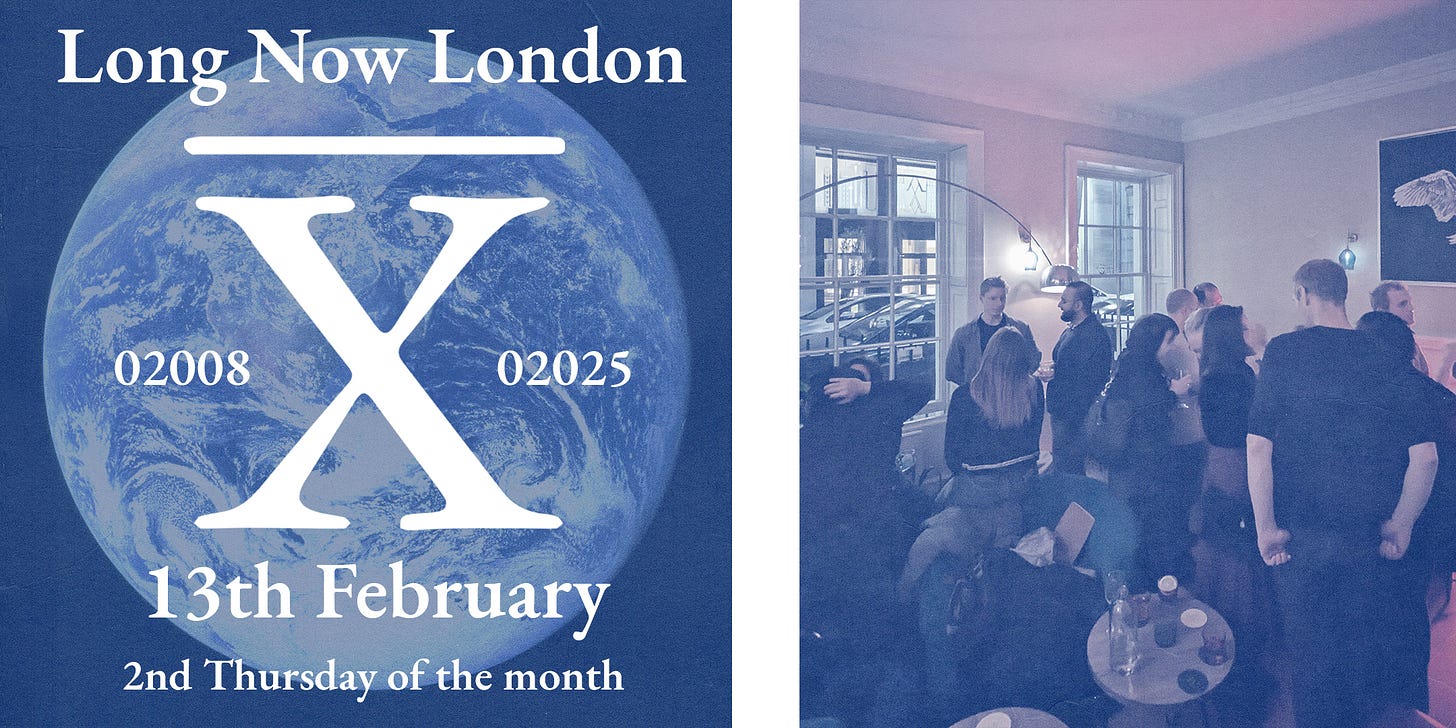
With a topic as broad and deep as this planetary home of ours, we have solicited a range of responses and perspectives for your consideration.
Philosopher Jonah Wilberg explores various conceptualisations of the planetary from Kardashev to Lovelock, and how these framings affect our interactions with the biosphere.
Media historian Jamie Stantonian reflects on our evolving awareness of the planetary system through the medium of myth.
Historian of ideas Thomas Moynihan, writes that the process of producing artificial intelligence might also artificialize our entire planet as byproduct, in a story of how studying crabs led to suggestions we are unintentionally building a world brain.
Cultural ecologist Rina Atienza asks us to question the concept of mechanical, planetary time.
Permaculture educator James Piers Taylor explores a range of political responses to the challenges of climate change.
Neurodivergency consultant Ali Northcott discusses ancient cultures’ deep connections to celestial cycles and the implications for human perception of time and nature.
Jonah Wilberg is Head of Data at the Science Museum Group, a member of the Life Itself Research collective and has recently started a newsletter at The Wider Angle.
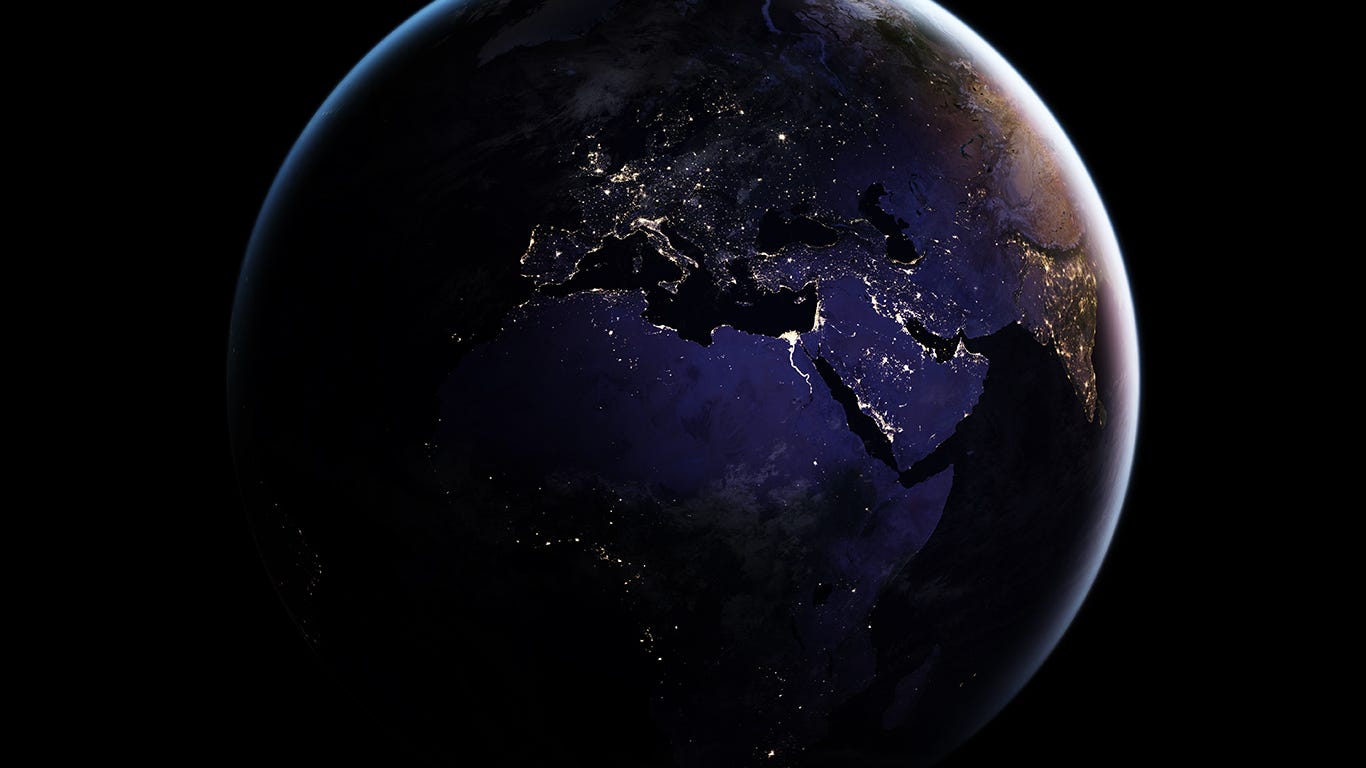
The term ‘planetary civilization’ is often associated with the first rung on the so-called Kardashev scale. In a technical paper exploring the physical difficulties of detecting extra-terrestrial life as part of the SETI programme, Soviet astronomer Nikolai Kardashev proposed a method of classifying civilizations according to their energy consumption:
Type 1 civilizations - called ‘planetary civilizations’ in later iterations of the scale - are those that make use of all energy available at the surface of a planet, including the sun’s radiation.
Type 2 or ‘Stellar’ civilizations - make use of all energy generated by an individual star, for example by using a megastructure completely enclosing a star - a so-called ‘Dyson sphere’.
Type 3 or ‘Galactic’ civilizations - make use of all energy available in a galaxy.
Taken the way it was intended, as a technical and methodological reflection on the search for extra-terrestrial life, Kardashev’s scale has significant merit. As a normative measure of the development of civilization, it is dangerously wrongheaded, leaving out almost everything that corresponds to true cultural ideals: ascending the rungs of the Kardashev scale is quite compatible with the worst forms of authoritarian dystopia.
This has not prevented the concept from entering the discourse of today’s technological elites: last year, for instance, tech billionaire Elon Musk referenced the Kardashev scale in an implicitly normative way, using it to support his view of solar power as the inevitable next step for the energy industry.
Jamie Stantonian is a multimedia creative, experience designer and a co-host of Long Now London, currently writing about myth and media ecology at The Resonant Interval.
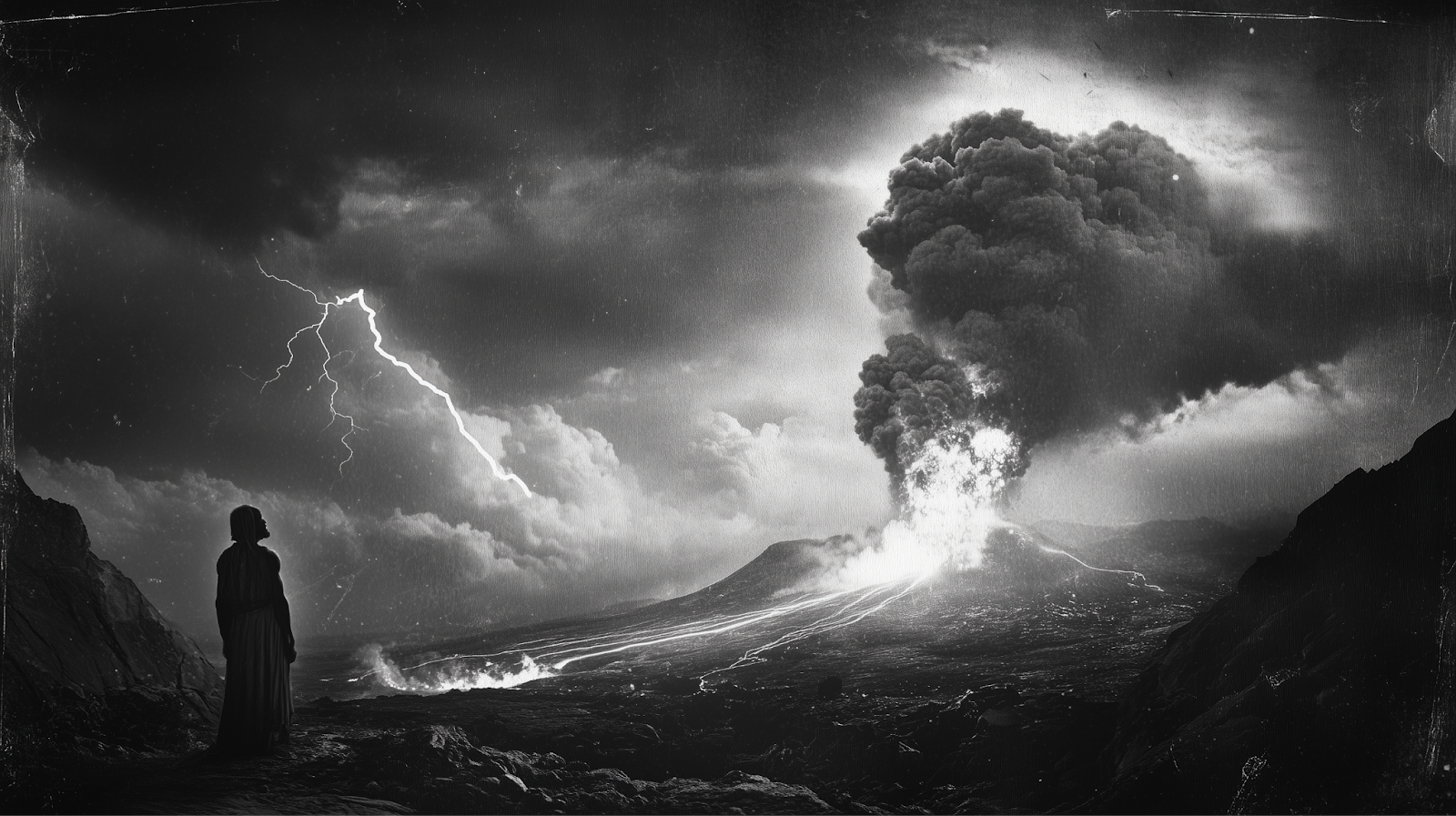
Humans have perceived the planetary long before we knew we inhabited one. While few of our ancestors had eyeballs on the slowly melting Laurentide Ice Sheet in North America, we have vivid memories of its demise in an assortment of flood myths recalled thirteen thousand years later. Likewise, Mount Tambora’s mega-colossal eruption in 1815 was apocalyptic to the hundred thousand Indonesians who lost their lives, but its effects were perceived on the other side of the planet as a world-embracing gloom of crimson snow, weird weather, famines, and sunspots visible in blood-red skies, making Byron lament that:
“the bright sun was extinguished, and the stars Did wander darkling in the eternal space, Rayless, and pathless, and the icy earth Swung blind and blackening in the moonless air; Morn came and went—and came, and brought no day.”
The volcanic fallout ruined Shelley’s vibes on her Swiss holiday, leading her to write her modern Prometheus, Frankenstein, an ominous portent of the mechanised world-to-come, and first great mythology of an emergent modernity. The famines that stretched across Eurasia also led to new laws and trade tariffs, a spike in migration to the Americas, and a hardship on its East Coast that accelerated the colonisation of the West. Back in Europe, the unseasonal rainfall caused by Tambora lashed down on Waterloo, thwarting Napoleon’s comeback and altering the course of European and world history.
Read more at The Resonant Interval
Thomas Moynihan is a UK-based historian, writer, and researcher specializing in the history of ideas, particularly those related to existential risk. His book X-Risk was published in 2020.
One Sunday in April 1930, actors in “little shiny pants” performed an extremely strange play in London titled, “Brain: A Play of the Whole Earth.”
A blurb summarizing the plot stated: “A Brain is constructed in the Sahara Desert — presently It grows larger than the Desert — out of pure mechanism, by the whole of the human race, It controls the whole activities and does all the thinking of the world.”
Written by obscure outsider Lionel Erskine Britton, a working-class intruder within London’s literary elite who had first worked in a factory at age 13, the play depicted the construction of an artificial superintelligence, in the form of a synthetic brain “creeping over the world
Humans in the play slowly lose all autonomy and come to function — in strict unison — like neurons making up one vast global ganglion. The play revolted most critics.
But Britton, an ardent socialist with Stalinist sympathies, openly celebrated this imagined future. While he was not alone in predicting something like it, others, by contrast, portrayed it as an oncoming catastrophe.
Rina Atienza is a Cultural Ecologist, currently teaching at Kingston School of Art, and curator of Holy Hand Grenades.
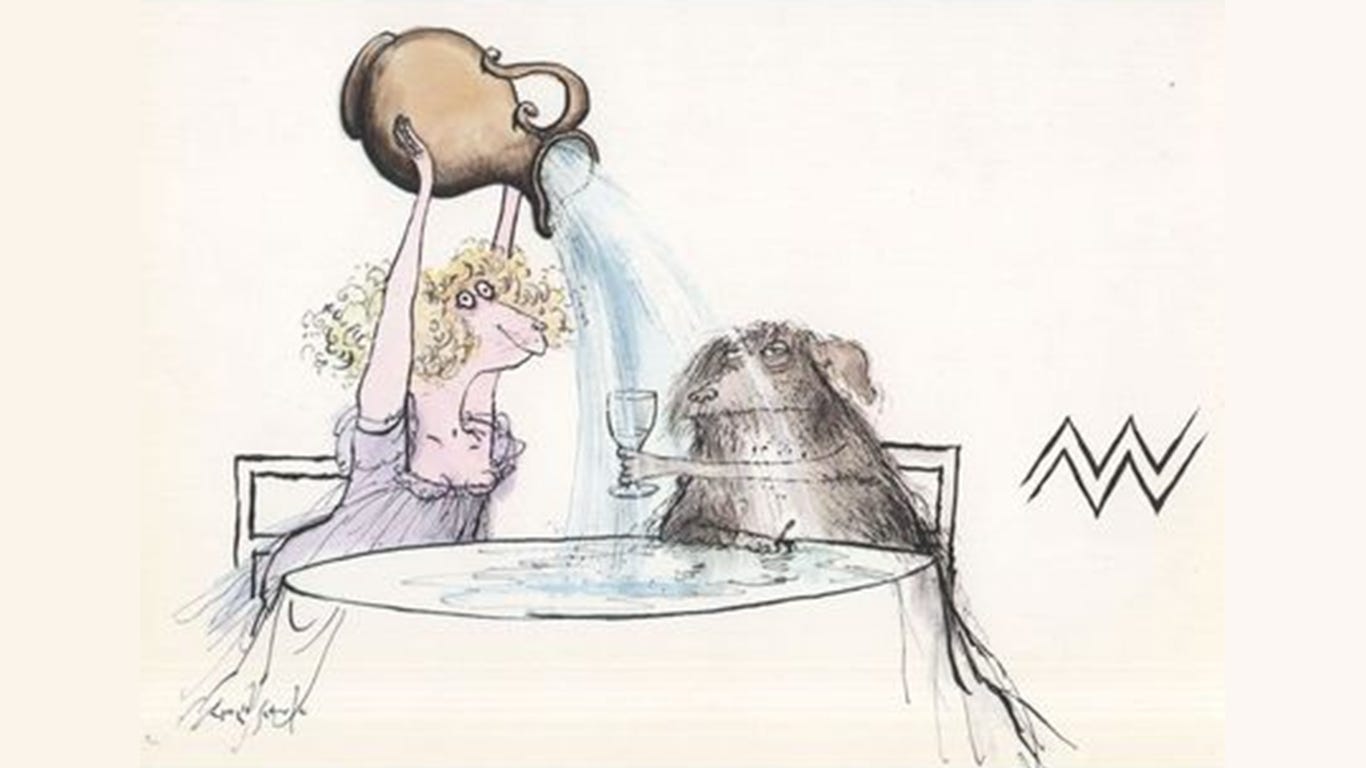
To those playing the 'C-suite' game with its futures forecasts, let it be remembered that successful chief-tains of indigenous villages, and sovereign leaders of empires, ruled with the appointment and support of shamans, seers, and magicians. A notable example is Queen Elizabeth I, who employed John Dee - a mathematician, astronomer, astrologer, teacher, occultist, and alchemist. Timing is a crucial factor in our comprehension of destinies, dreams, and achievements. We’ve always been subject to Planetary Time, yet why stubbornly remain adamant about the rationality of chronological and mechanical time machines?
Since horoscopus (ὡρόσκοπος), in Greek means time-watching, or 'observer of the hour [of birth]', from ὥρα (time, hour) + σκόπος (purpose) or σκόπελος (scope) - maybe the Call to Action, is to observe the bigger picture and long-term timings. For the next 20 years, the astronomical framing, is that Pluto will be in Aquarius.
James Piers Taylor is a Chair of the Dengie Climate Action Partnership, permaculture educator and founder of Managed Retreat, a bioregional magazine and project.
“Think Globally: Act Locally” has been a familiar refrain of the Green movement for decades now. It poses the problematique at the planetary level but advocates for action at a smaller ‘here’. The scale of this here is never entirely clear but the bioregionalist Raymond Dassman confronting the ecological crisis in the 1970s made a distinction between “biosphere people,” who exploit resources from the entire planet and “ecosystem people,” who are able to achieve a high quality of life within their local bioregions. The bioregionalists encouraged us to provision ourselves primarily from our local watershed and to reinhabit this more discrete bio-geo-ecological unit as other species do. “The world”, poet Gary Snyder wrote “is “places.”
In the half a century since, planetary data collection has presented increasingly worse information largely following the modelling of 1972’s Limits to Growth report. The private ownership of capital and the price signal have done nothing to abate these trends. The capitalist system has ill-served a more- than-human world and clearly lost the mandate of heaven. Central planning is back on the agenda - now at a planetary scale with missions to mitigate climate change, pollution, biodiversity crash, water depletion and the peaking of finite resources.
I find the political scenarios of Geoff Mann and Joel Wainwright’s Climate Leviathan: A Political Theory of Our Planetary Future (2018) instructive here.
Read more at Dengie Biogregion
Ali Northcott is a neurodiversity consultant and multi-disciplinary researcher based at UCL, she has a background in embodied practice and ritual from different traditions.
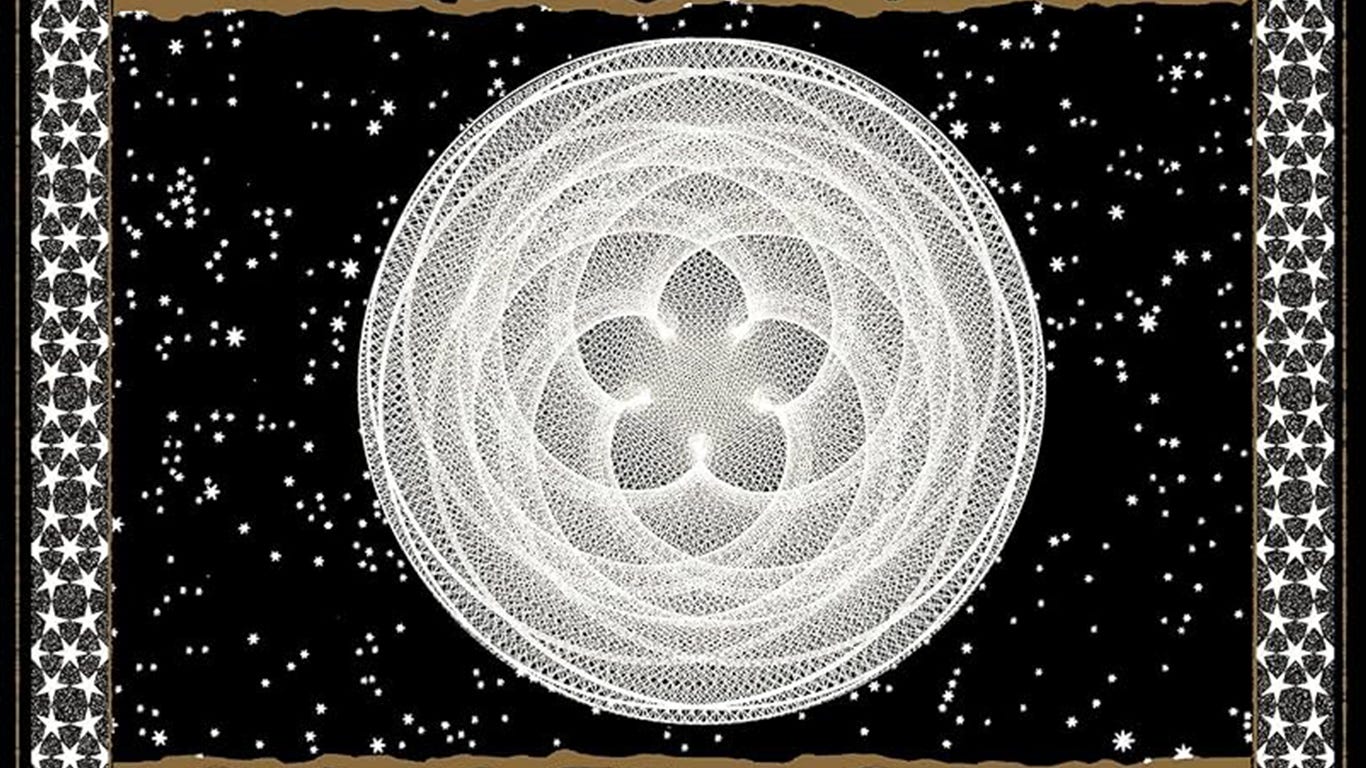
Planetary brings to mind the work of John Martineau, who originally studied philosophy before completing an MA in Traditional Arts at Kingston University. His exploration of the patterns and relationships of the planets within our solar system culminated in the creation of A Little Book of Coincidence, published in 2001. Martineau describes his primary hobby as “collecting solutions to the Cosmological Anthropic Principle.” Beyond this, he has gone on to publish over a hundred beautiful little “Wooden Books”.
A Little Book of Coincidence blends exquisitely hand-rendered diagrams with science and mathematics to reveal harmony within the mechanics of the orbits of celestial bodies. It is a much-loved pocket book that has been with me for many years. Its intricate geometric patterns, representing the dances of the planets, bring my imagination to life. Here are a few sections and thoughts:
While some of the mathematical relationships Martineau proposes and references contain a touch of artistic license (for instance, orbits are generally elliptical rather than circular), some of the calculations are precise and compelling.
Right. That’s it from this, our first attempt at broadcasting a flavour of our London conversations out into the digital ether. Whatever your thoughts on any or all of it, we would love to hear from you, whether via email or in person.
Hearty thanks to all who contributed their thoughts, and to Jamie Stantonian & Jon Hoare for their editorial eyes.
Oh, and while we’re experimenting… here’s a poll!
Comments
Nothing yet. Say the first thing.
Sign in to join the conversation.