
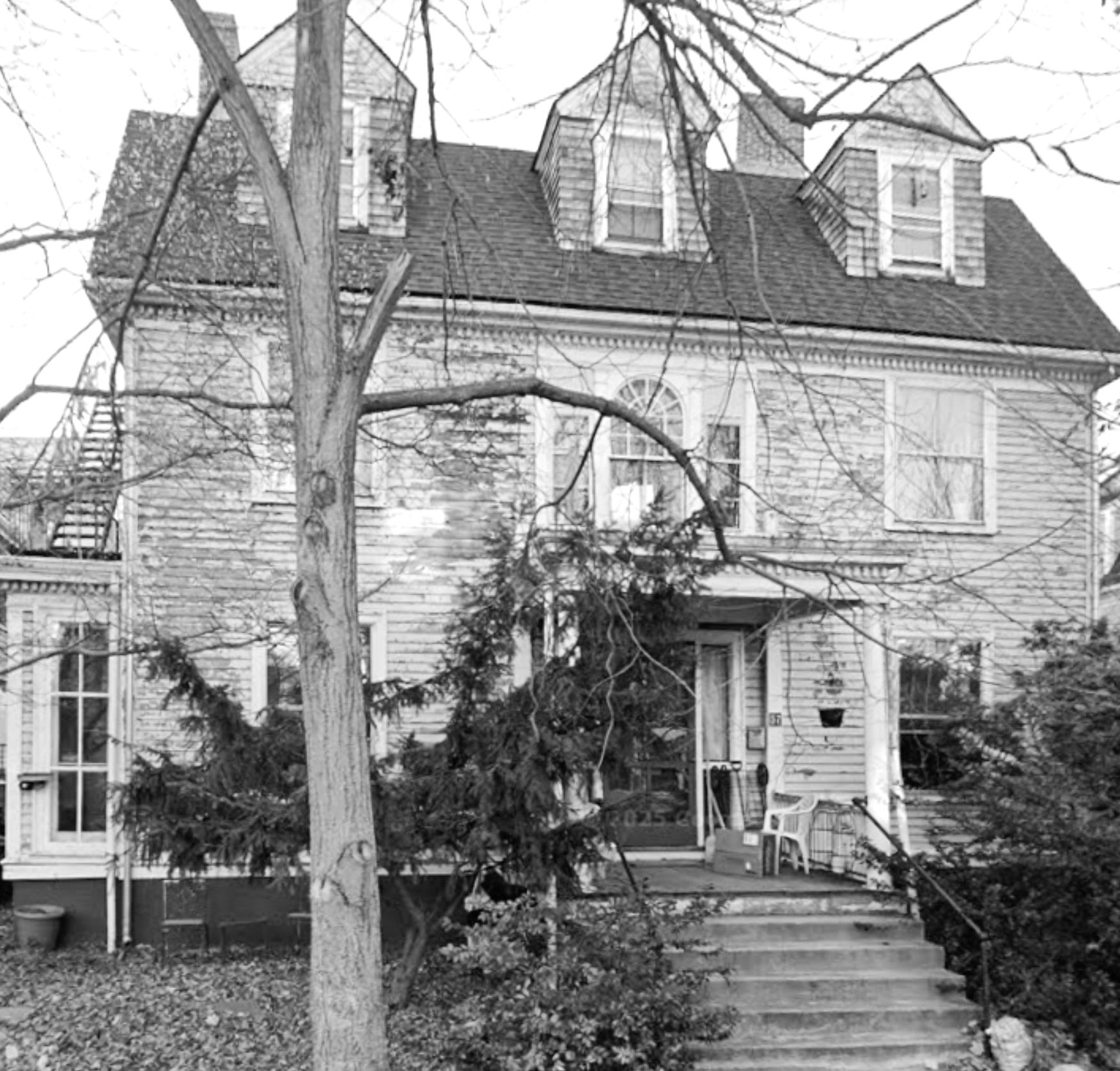
In the winter of 1893, several of Ethel's letters were written from a house on Gorham Street in Cambridge, where she was serving for a time as "nursery maid" to her young cousins. The home stood only a short distance from Harvard University — close enough that the intellectual atmosphere of that world was impossible to ignore, even from a parlor full of children.
The central figure of the household, at least from Ethel's perspective, was her Aunt Carrie. Caroline "Carrie" Bottum was the beloved sister of Ethel's father, Elias. Like her brother, Carrie had grown up on the Bottum family farm in Vermont before leaving home in pursuit of education. She graduated in 1874 from Mount Holyoke College and pursued a career as a teacher. By 1876 she was acting as Assistant to the principal at Brunswick High School in Maine. The principal happened to be Edwin Hall, a young scholar whose career in science had not yet begun. The two stayed in touch and were eventually engaged.
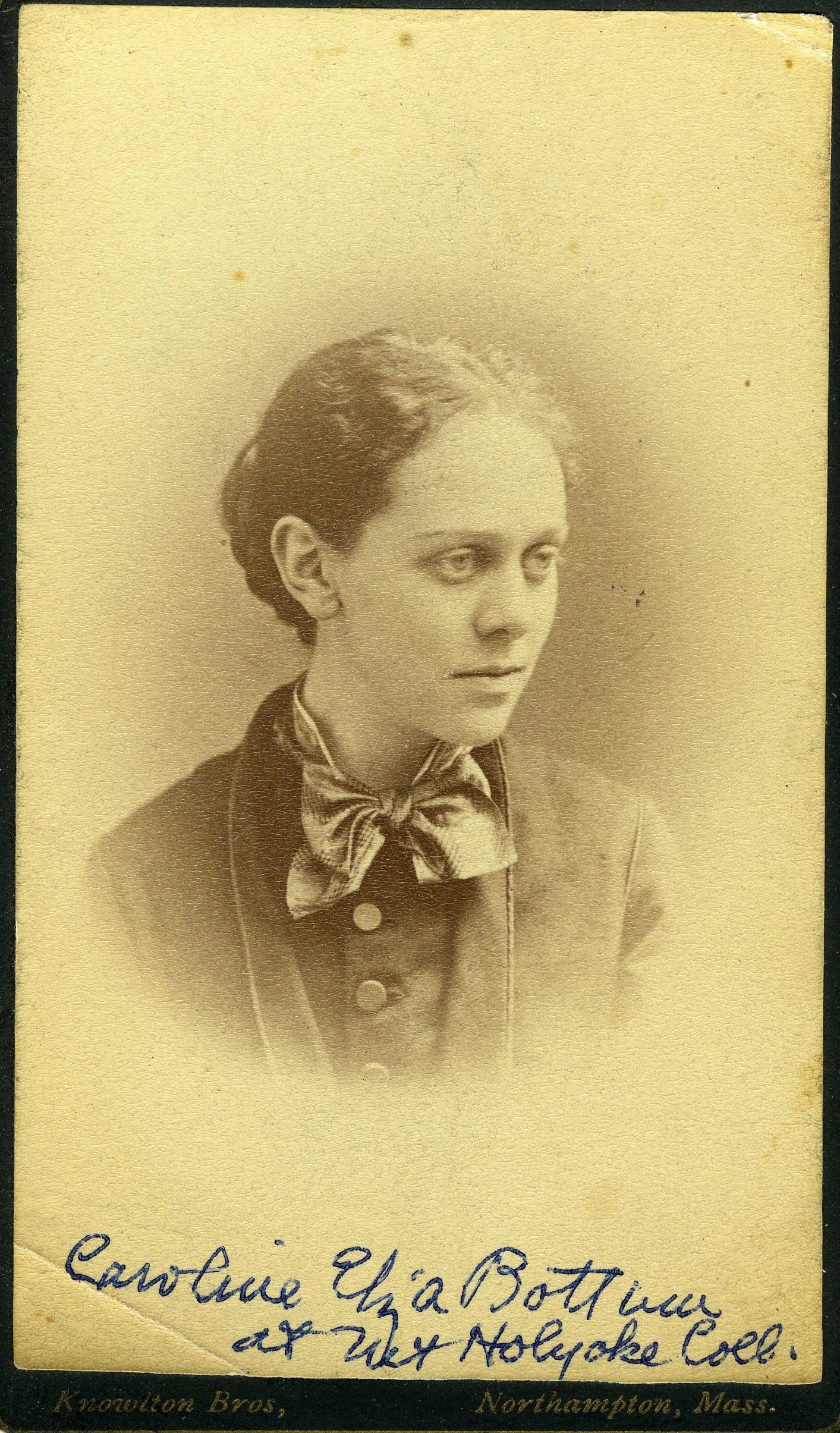
When Carrie and Edwin married in 1882, she was thirty and he twenty-six — an age difference that ran slightly against nineteenth-century expectations, when husbands were typically older than their wives. Both Carrie and Edwin had pursued education and early professional work prior to marriage, a pattern becoming more common among the academic households of New England.
Timeline
1851 — Caroline “Carrie” Eliza Bottum is born in New Haven, Vermont. She is the second of seven surviving children on the Bottum family farm.
1855 — Edwin Herbert Hall is born in Gorham, Maine. He is the first of five children born on the Hall family farm. He is one of two who survived to adulthood.
1874 — Carrie graduates from Mount Holyoke College and begins teaching.
1875 — Edwin graduates first in his class from Bowdoin College.
1876–1877 — Edwin serves as principal of Brunswick High School in Maine, where Carrie is his assistant.
1879 — While studying at Johns Hopkins University, Edwin discovers the Hall Effect, demonstrating that a magnetic field can influence electric current in a conductor.
1880 — Edwin earns his Ph.D. in physics from Johns Hopkins, one of the first American universities devoted to advanced scientific research.
1881 — Edwin joins Harvard University as instructor.
1882 — Carrie and Edwin marry. She is 30; he is 26.
1886 — Daughter Constance is born.
1890 — Son Frederic is born.
1895 — Edwin is appointed full professor of physics at Harvard University.
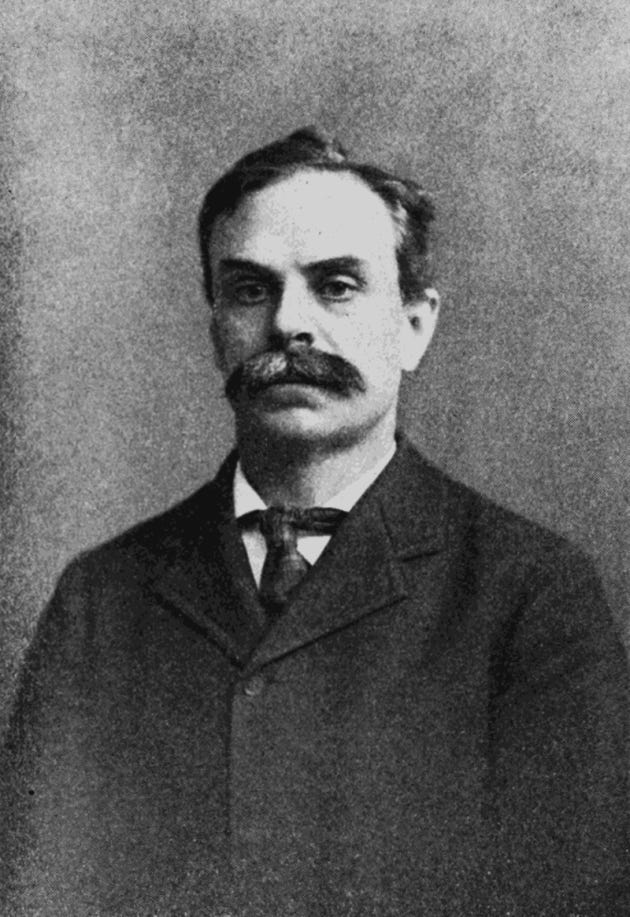
By the early 1890s, when Ethel came to stay, the Halls had established themselves firmly in the Cambridge world. To the outside world, the most notable member of the household was Professor Hall. Born on a farm in Maine, he had already made a quiet but important mark in physics through his discovery of what became known as the Hall Effect — demonstrating that a magnetic field can influence electric current in a conductor. By the time Ethel arrived, that discovery had secured his reputation among physicists, even if its significance remained largely invisible in the domestic rhythms of the household in which Ethel referred to him affectionately as her “Professor Uncle.” Regardless of his impact in the larger world, it was Ethel’s Aunt Carrie who was the most influential member of the Hall household.
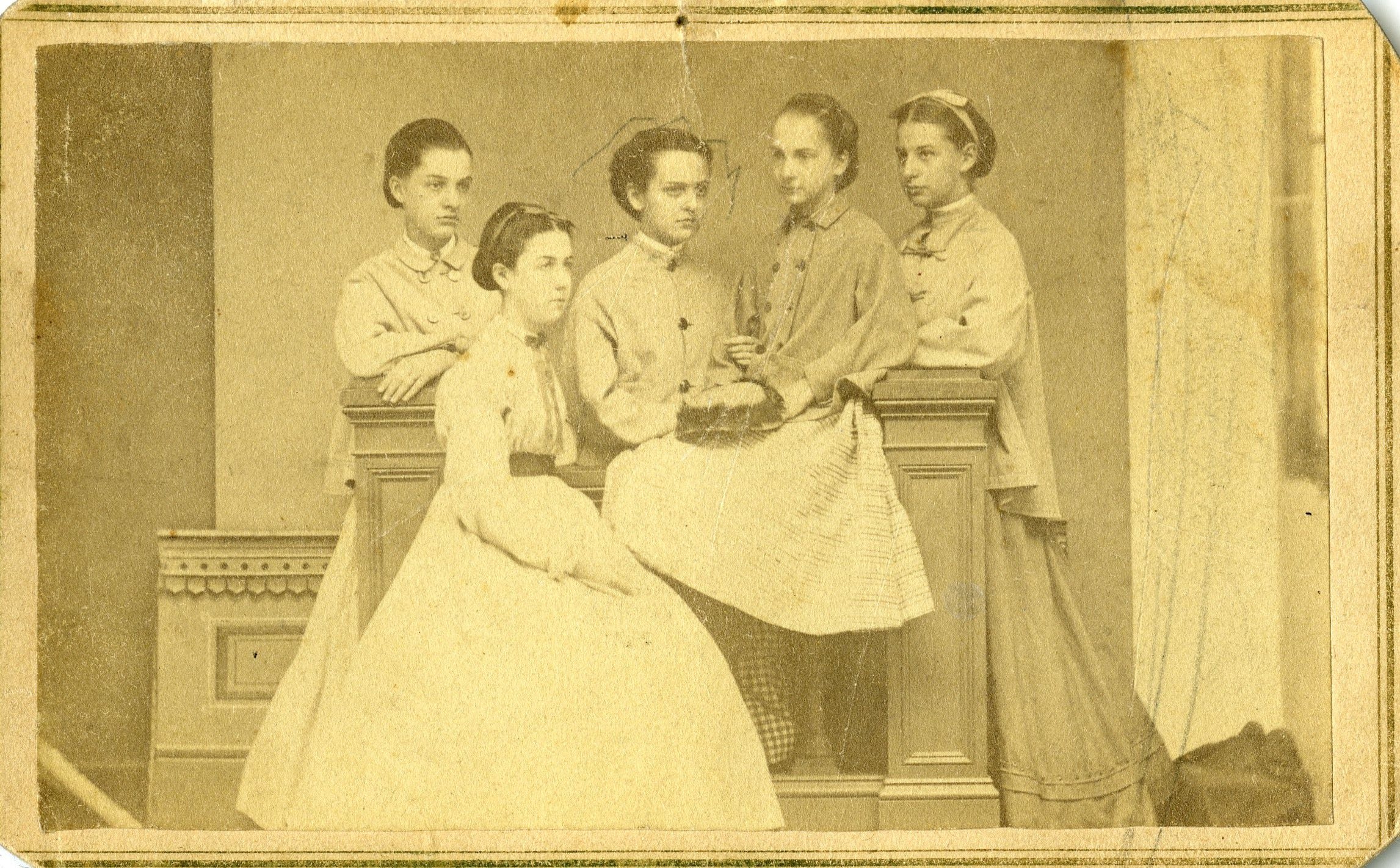
Carrie Bottum did not begin her life as the commanding household figure Ethel would later know. One surviving photograph shows her as a young woman among classmates. At some later point she circled her own face in pencil — a small, playful annotation that seems to say simply: This is me.
By the time she was managing a household in Cambridge, Carrie had grown into an independent and confident woman with a respectable teaching career behind her. Family letters suggest the Halls were known for entertaining guests from the lively intellectual community surrounding Harvard. Ethel occasionally glimpsed that world. In one letter she describes an especially interesting gathering at her aunt and uncle’s home, remarking — somewhat mischievously — that Cambridge society seemed far more stimulating than the social life she had known in Milwaukee.
Despite living within this intellectually adventurous environment, Carrie herself appears to have held relatively traditional religious views. In a later letter Ethel would quote her aunt dismissing Ethel’s growing interest in Unitarianism as merely a “phase” — the influence of Cambridge on an impressionable young mind. The remark rankled Ethel, though it may also reflect Carrie’s sense of responsibility as a watchful stand-in for her niece’s parents.
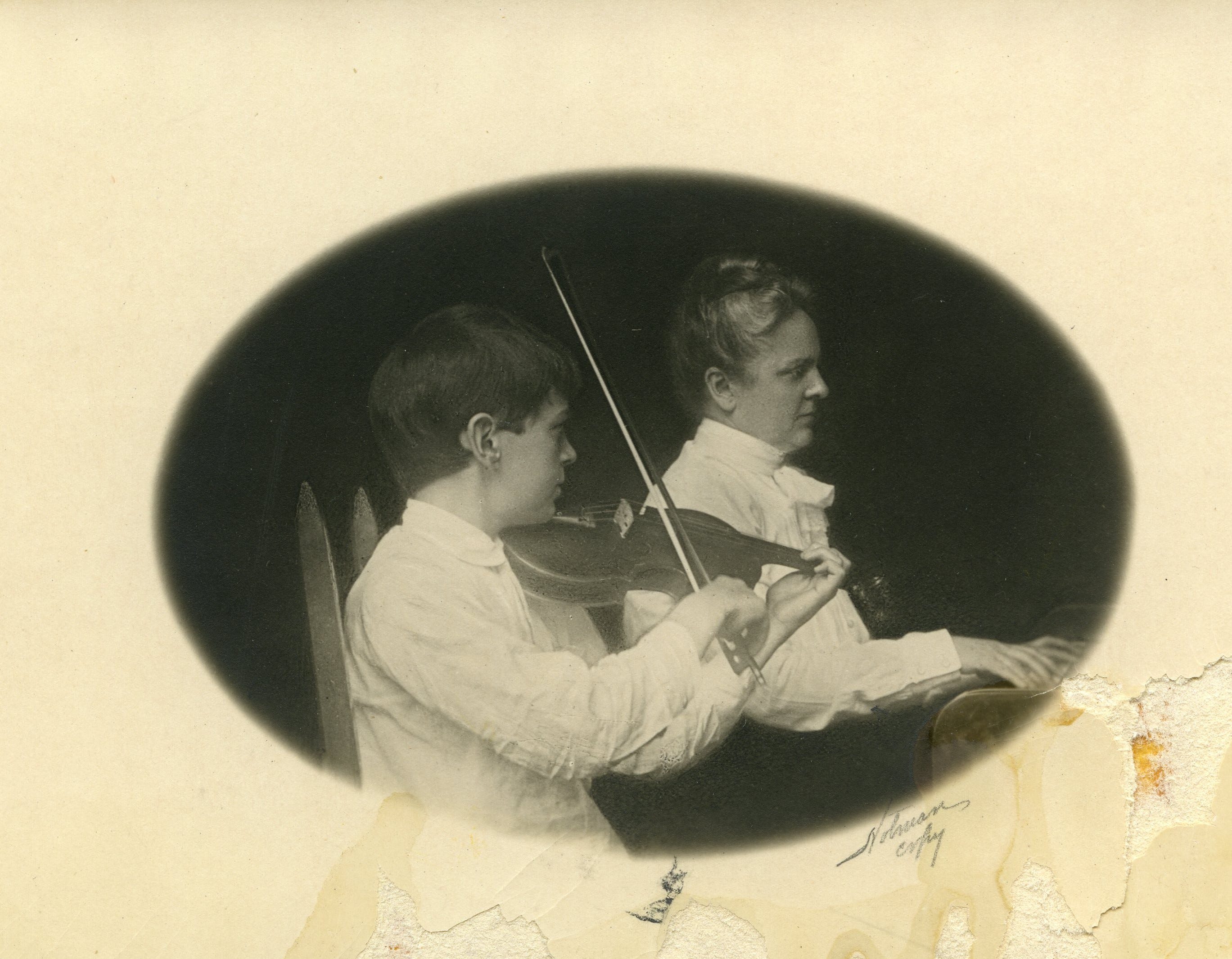
Music appears to have been part of the Bottum family inheritance. A favorite family photograph shows Carrie at the piano while Frederic plays violin beside her — suggesting that the musical life so evident in Elias Bottum’s household was shared by his sister’s as well.
While Ethel's role in the household occasionally involved attending Cambridge society gatherings, it was typically far less glamorous. When her aunt and uncle went out for the evenings in 1893, Ethel cared for their two children: seven-year-old Constance and three-year-old Frederic.
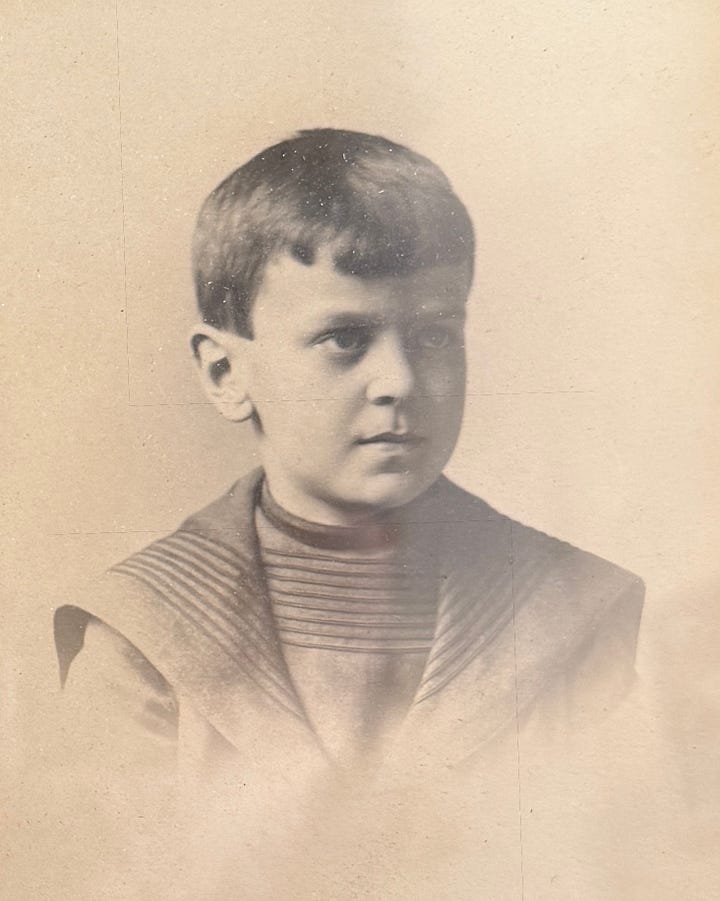
Constance would grow up to become one of Ethel’s closest family friends and confidantes, and in later years she remained heavily involved in the Harvard and Radcliffe communities. She lived for decades in the home her parents later purchased on Garden Street — just outside the Harvard campus — tutoring Harvard students and offering room and board to a small number of them each term.
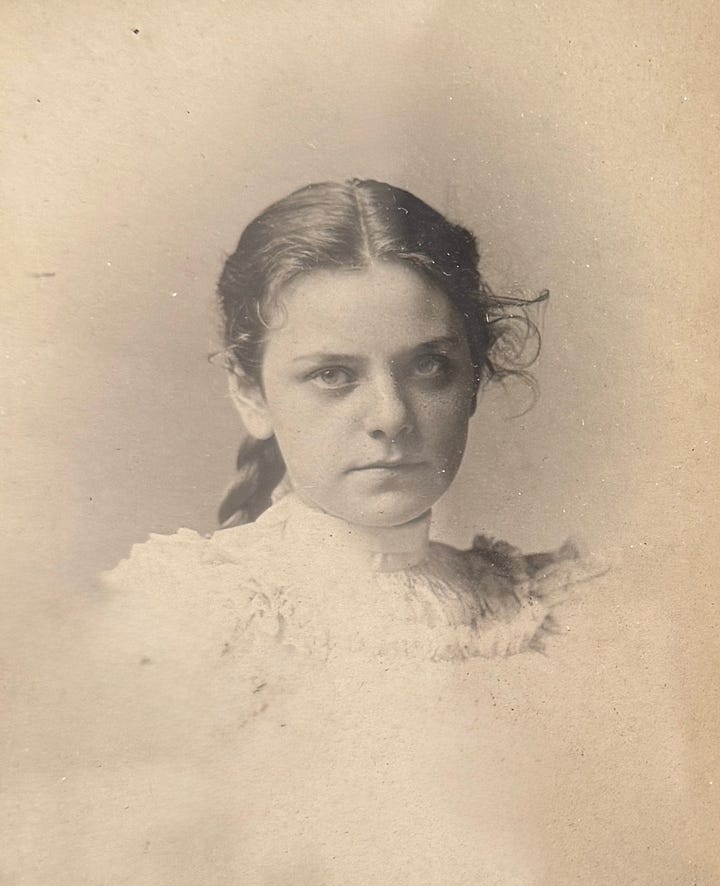
Frederic’s life would be much shorter. He died in 1910 at the age of twenty, while a senior at Harvard, after a sudden illness related to rheumatic fever. In early family photographs, he appears as Ethel knew him in childhood: a thoughtful boy in a sailor-collared suit.
Over the years the connection between the two families remained strong. Later photographs show frequent visits by Ethel’s daughters to the Hall household in Cambridge, where Constance continued living long after her mother’s death in 1921 and her father’s death in 1938.
For Ethel, the Gorham Street household was less a place of scientific renown than a working home — one where this young woman from Milwaukee found herself minding children, absorbing adult conversations, and catching glimpses, through an open door, of a much larger world than the one she had left behind.
New here? Start with the Welcome, or navigate the correspondence through the Letters Index.
[TLC-1893-51]
Comments
Nothing yet. Say the first thing.
Sign in to join the conversation.