
This is my annual rapid-fire book reviews post. This year I’ll use my four-level rating system, whereby each book is
Essential: a book everyone has to read at least once in their life,
Standout: a great book within its genre, worth prioritising for fans of the category,
OK: a decent time-filler, but nothing remarkable,
Letdown: you’ll regret spending time on this book.
I’ve not sorted books by genre, or even fiction vs non-fiction, because I believe in serendipity: maybe, if you read this through, a book that you’d normally overlook will capture your interest. If it does, consider ordering it from an independent bookshop using Bertie.
Standout
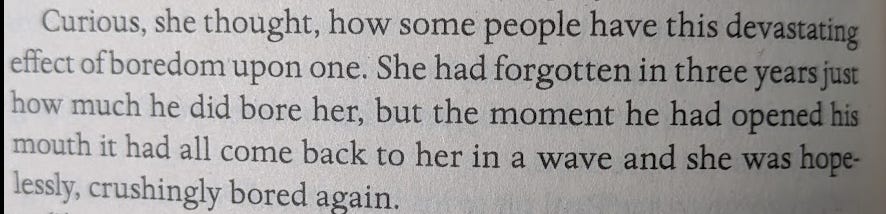
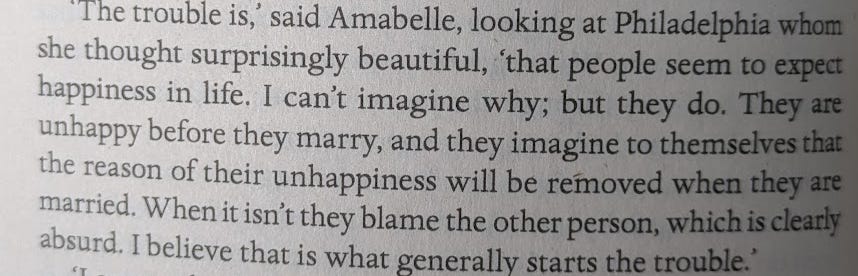
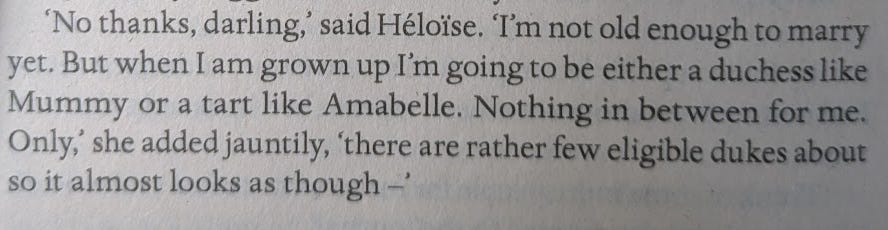
Biting comedy of manners set at Christmas in the Cotswolds.
OK
An overly long and detailed biography of Elon Musk. It was written prematurely (it’d be much more interesting would it have been had it been written now), and it doesn’t succeed in articulating what Musk truly believes in and why, and how his philosophy has evolved over time.
It does a better job explaining why Musk has been so successful: it’s a combination of extremely hard work, a strong bias to action (e.g.: he famously started migrating servers from a server farm himself, using standard tools, after being told by Twitter execs that the migration would take months and cost $$$), and a habit of questioning everything. This has led him to challenge things that most people take for granted, the downside being that he sometimes knocks down Chesterton’s fences, and has to scramble to re-erect them (as he did in his short stint in government). But, he argues (correctly in my view) that backpedaling is much easier than most people assume.
OK
A collection of thoughts on leadership by the ancient Greek historian and philosopher (which for some reason my mum thought would make a good Christmas gift for me). It suffers from an issue common to many self-help books: their advice is either superfluous or useless. You should be a leader for the right reasons, says Plutarch. But if you seek power to make things better, the advice is unneeded; and if you seek it because you’re power-hungry, vain, and ambitious, it’s not like you’re going to change because you read a 2,000-old essay.
Still, there are several nuggets of gold, including the reminder that a leader’s job is not to pander to their followers, but to educate them and improve them: that’s what true leadership means. It brings to mind that clip where a woman in a townhall tried to slander Obama, and John McCain interrupted her to defend him. An interesting thought that arises here is that populists don’t ever have true power: they can only exercise the will of the people who supported them, they cannot really direct it, except in small ways. See the review of Fountainhead further down.
Standout
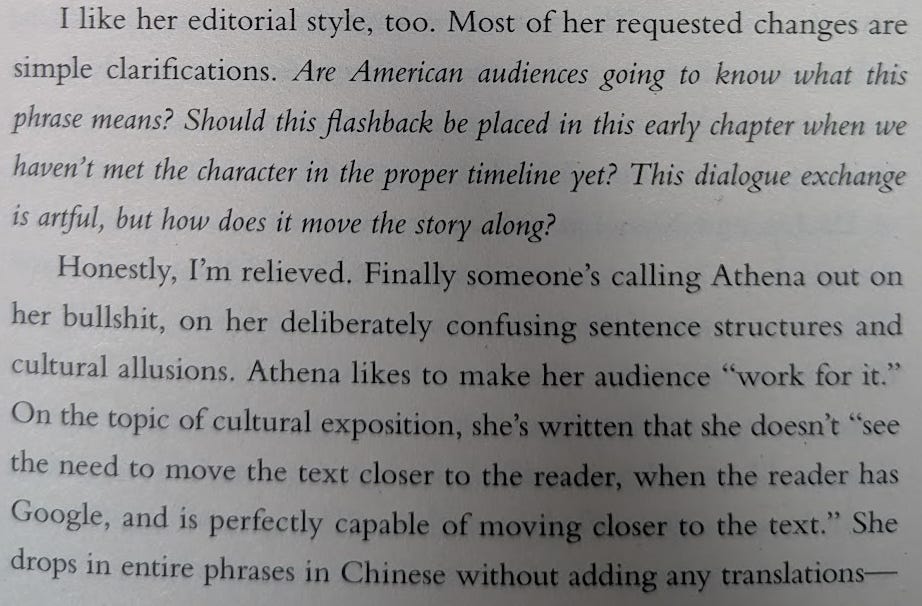
Excellent satire about an author who steals and publishes her much more successful friend’s manuscript after she (the friend) dies. It’s a very funny (albeit as subtle as igniting fireworks in a gunpowder store room) takedown of the publishing world, (the dumbing-down of) literary fiction, and (the dumb) contemporary portrayal of race.
OK
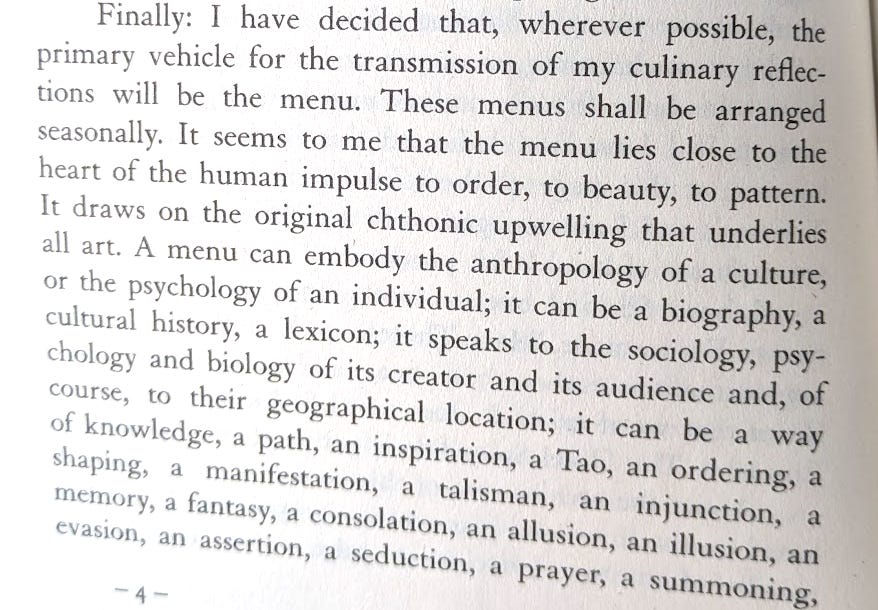
Hard to give a review of this book without spoiling it. Let’s say it’s a sinister, epicurean memoir / recipe book that is entertaining, quotable, evocative, well-written, but ultimately forgettable.
It is also, I think, a good parody of that genre of art that elevates some practice to a guide to life: think of Chocolat, or The Karate Kid, or (more obscurely) Take the Lead, or a thousand other books or films that suggest that mastering baking or a martial art or music leads to enlightenment. In fact, there are life lessons in these pursuits, not because they are somehow special, but because they are part of life, and as we’d expect, there are life lessons in life.
OK / Standout
A Void is an Oulipo tradition book. Oulipo authors apply constraints to writing, thus forcing innovation: in particular, A Void omits our ABC’s fifth symbol. It’s an astonishing stunt of skill, not only of Void’s author, but also of G. Adair, who brought A Void to anglophonic crowds.
That said, though I was in constant admiration of author and translator’s linguistic facility, I found this book hard-going and tiring. Turns out innovation can turn grating, and wordplay contours may astonish, but can also form syntactic constructs that don’t flow all that smoothly.
Apropos, I took half an hour to draft two paragraphs without that symbol… I’m curious how long I’d toil for a full book.
OK (barely)
Waaaay too long book on the history of taxation. There are a few fun anecdotes on different kinds of tax people have devised in the past, but they don’t merit hundreds of pages.
Still, the concept of tax incidence is extremely important to understand: it refers to understanding who ultimately pays for the cost of a tax. This, and the distorted incentives introduced by poorly thought out tax policies, are worth reading about.
Still. The entire book could have been an essay.
Standout
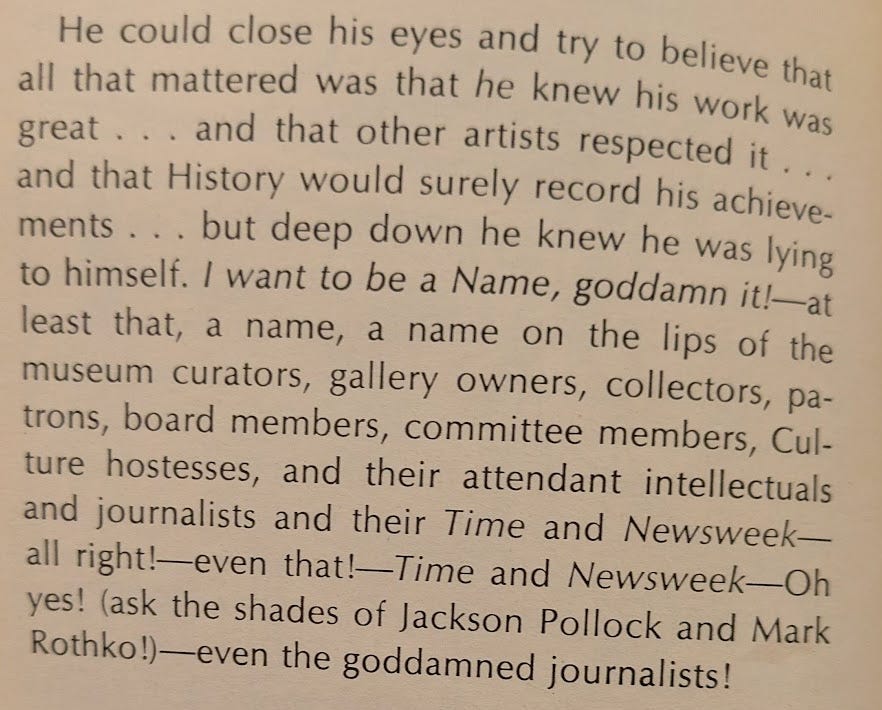
From Bauhaus to Our House is Tom Wolfe’s critique of modernist architecture, and The Painted Word is his takedown of modern art (ACX has an extensive review of the former). What I’ll say here is that both books are lots of fun, like all of Wolfe’s writing is, but:
First, one can enjoy his brutal takes a little too much. Reading these books because you enjoy the schadenfreude from the humiliation of the pretentious cultural elite is somewhat ignoble in my view. Tom Wolfe is mean, and though, yes, he is punching up, not down, we shouldn’t celebrate meanness.
Second, here’s a funny thing: Tom Wolfe and Ayn Rand (see below) despise leftwing intellectuals: pompous people who pontificate but can’t execute, people who care about status games and not work (see On Seriousness). This is the common theme in both of Wolfe’s books: that modern art has turned too much towards theory instead of practice. Paintings and architectural styles are celebrated because of what they mean, not because they are beautiful — in fact, beauty is looked down upon: too shallow, too bourgeois.
Yet Wolfe’s dislike of faux intellectualism leads him to mock modern architecture, whereas Ayn Rand’s causes her to make her protagonist… a modern architect. What are we to make of this?
I think that in damning an entire movement, Wolfe fails to notice beauty in what he criticises. Some brutalist buildings really are elegant; some modern art really is captivating. Some of the theory behind modern architecture happens to be right and interesting. Ultimately, and ironically, Wolfe ends up conflating theory and practice, so that in his mind, an artist can’t possibly create good art because their art belongs to a canon favoured by the intelligentsia. He himself ends up evaluating a work of art (negatively) because of its association with some theory.
Standout
This is the second volume of Roald Dahl’s autobiography, and it’s a great read. Dahl belonged to the last Victorian generation. He attended Repton, before joining Shell to sell oil in Tanzania, and fighting in WWII as a RAF pilot. What a life people lived back then! Anecdotes from the book include his witnessing an elderly couple taking their morning exercise aboard a ship in the nude, the capturing of a black mamba, seeing a lion snatching a cook, surviving a plane crash, and, very movingly, his capture of Germans in Africa when he himself was barely a man rather than a boy.
OK / Standout
Last year, I wrote about Bianca Bosker’s immersion in the art world. Before she became an art expert, she became a wine connoisseur. This is her journey, which takes her from the cellar of NYC restaurants to vineyards and tasting courses. It’s a good read, the main lesson of which is the same as in Get the Picture: pay attention to the world around you. You will find it rewarding.
Extreme Letdown
This is one of the worst books I’ve ever read in my life. It’s marketed as a behind-the-scenes account of the author’s time at Softbank, but honestly, it’s nothing more than a few hundred pages of artless name-dropping and showing off the author’s supposed erudition (through shoe-horned references to Dostoyevsky), taste in wine, and jet-setting lifestyle. A single article from the WSJ sheds more light on what happened at Softbank.
Letdown
Extremely forgettable story about a corrupt financing house.
Standout
Good history of the countries around the Mediterranean, from Ancient Egypt to WWI. Two things I found particularly interesting: the first is that there were few truly consequential moments in history: the development of the Greek city states, the Persian wars, the Roman empire, the advent of Islam. And then, there are entire centuries where even though there is war and conquest, nothing really changes. Most of the crusades achieved nothing; vast territories changed hands multiple times with no real impact.
The second is that historians waaay underestimate the importance of economics and technology. There is scant mention of these forces in the book; instead, Norwich focuses on military and civilian leaders, and armies, and sieges, and naval battles. All very dramatic, but with little effect on the daily lives of civilians. I venture to say that changes in taxation, or innovations in architecture and transport, had a much bigger impact on people, yet these are overlooked.
Standout
A collection of short stories by the author of Dracula. I’m rating this as standout for lovers of horror fiction, and I’m not including the final story in the collection in this rating. That story is The Lair of the White Worm, which has got to be the trippiest thing written in English: the premise is that a 3,000-year old dragon has evolved to look like a female human aristocrat (Stoker clearly misunderstood Darwin), who is destitute and is trying to find a buyer for her country seat, while also attempting to murder that buyer (??!).
The other stories include that of a young mathematician haunted by a judge’s ghost, a traveller braving bandits, a cat extracting gruesome revenge for the killing of her kitten, and a couple of others. Most are gripping and atmospheric, and a good read for fans of the genre.
OK
I loved this book when I first read it as a teenager, but it’s objectively pretty badly written, mostly because of its over-reliance on cliches (linguistic and plotwise). It’s the interwoven story of two men from very different walks in life — a Boston Brahmin and the illegitimate son of a Polish baron — and, like most Jeffrey Archers, it has good pace and helps pass the time. It is, however, entirely predictable.
Standout
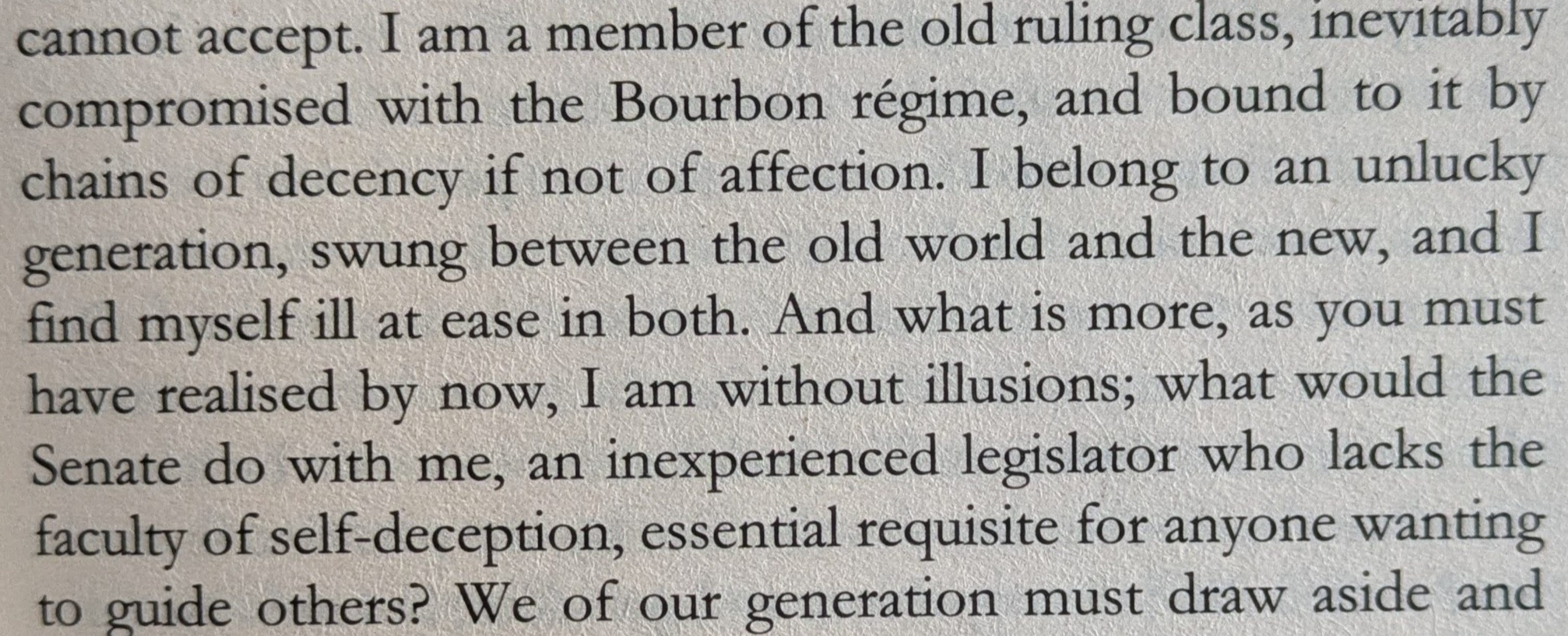
A poignant tale of decline and social change, inspired by the history of the author’s own aristocratic, Sicilian family. It’s an excellent insight into the cause of decline, which applies to institutions as much as it applies to families: the Salinas are reduced to irrelevance over two short generations, not so much because of inexorable external forces, but because of the Prince’s surrender to them. It’s not a case of lack of ability, but of lack of dynamism and ambition. Salina is too eager to lean on tradition, to rest on the past, to take comfort in his visible superiority over the nouveau-riche upstarts —
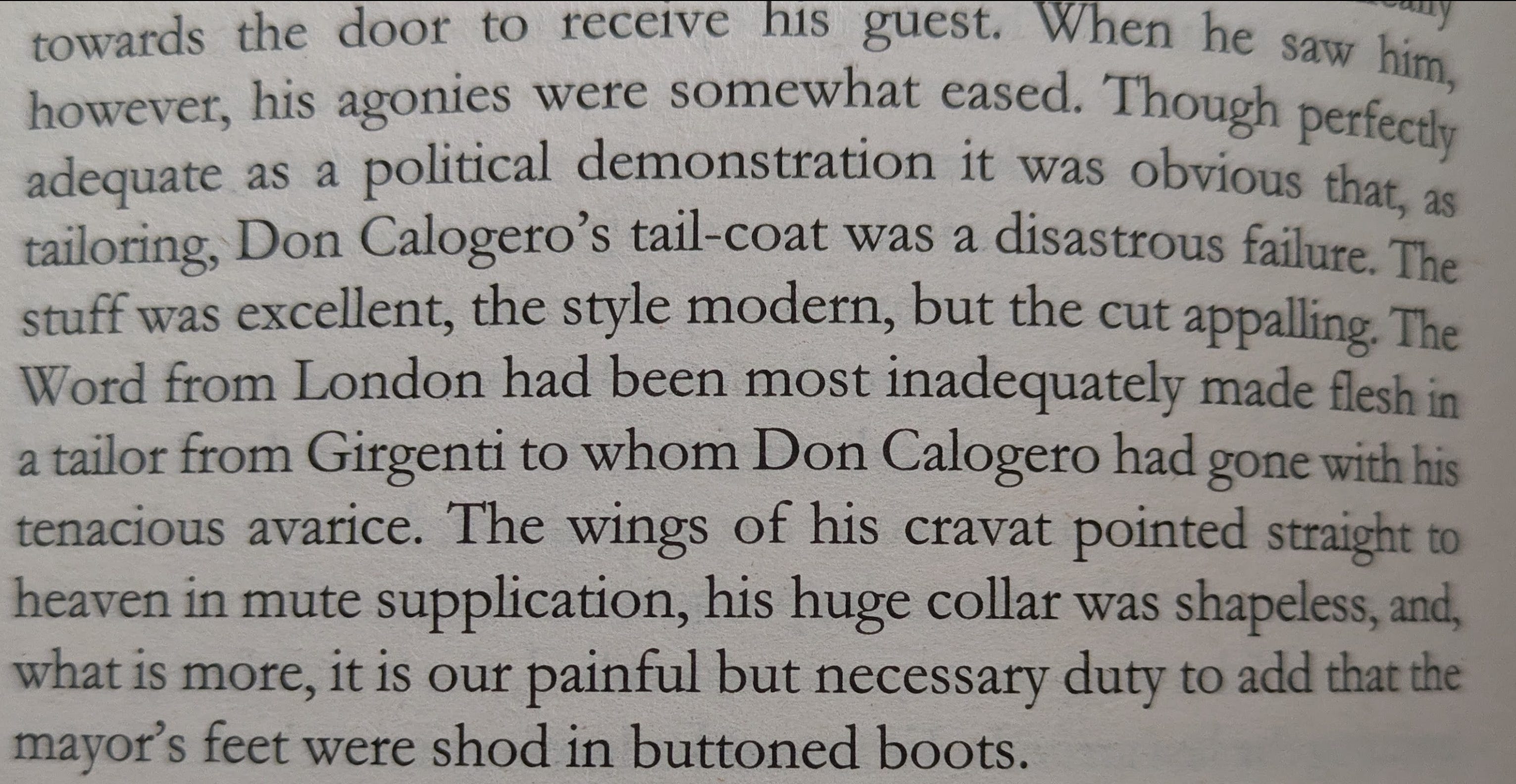
— in short, too complacent (even if self-aware) to change:
Letdown
Indifferent collection of short crime stories set in summer months.
OK
Here Bosker contemplates the phenomenon of the Chinese copying Western architecture wholesale: you can find entire cities modelled after Paris or Venice in China, as well as towns that have replicated whole villages.
She doesn’t succeed in explaining this, mainly because she doesn’t focus on a crucial difference between Chinese and Western thinking: originality just isn’t particularly valuable in China. I remember once visiting a temple in Beijing, which was described as dating back hundreds of years; but then we noticed a small plaque explaining that the temple had been demolished (presumably during the cultural revolution), and rebuilt sometime in the past few decades. In Chinese thinking, that discontinuity was of no consequence: a temple had existed on that spot hundreds of years ago, and how it was rebuilt exactly as it was back then. So… it’s clearly the same temple, with the same long history. In the West, this would be awkward. If we rebuilt the Colossus of Rhodes, we wouldn’t claim it dates back 2,000 years: we’d call it a replica or an homage.
Well. It’s fair to say we know that the Chinese would be baffled by the idea that the Ship of Theseus is a paradox.
OK
A roadtrip from Nebraska to NYC, set in the same universe as The Rules of Civility. Not particularly memorable, too stylised.
Standout
Short novella about a chess game aboard a passenger liner, between the world champion and a former prisoner of war who learnt how to play chess from a handbook as escapism from his crushing isolation.
It’s hard to say why I liked this book so much. There isn’t much point to it, but it’s very engrossing, and does a great job of describing the challenger’s psychology and his unravelling.
Essential
C.S. Lewis attempts to define good art by observing the habits of good consumers of art. Long review here.
Letdown (sorry Manu!)
A horror story, gripping and moving at times, but very badly written (or at least badly translated in English). Much too long.
OK / Standout
Uneven collection of surreal short stories: some very forgettable, some only relevant to those with an understanding of the politics of the period in which Calvino wrote, but some truly hilarious in their originality. As in, laugh out loud hilarious.
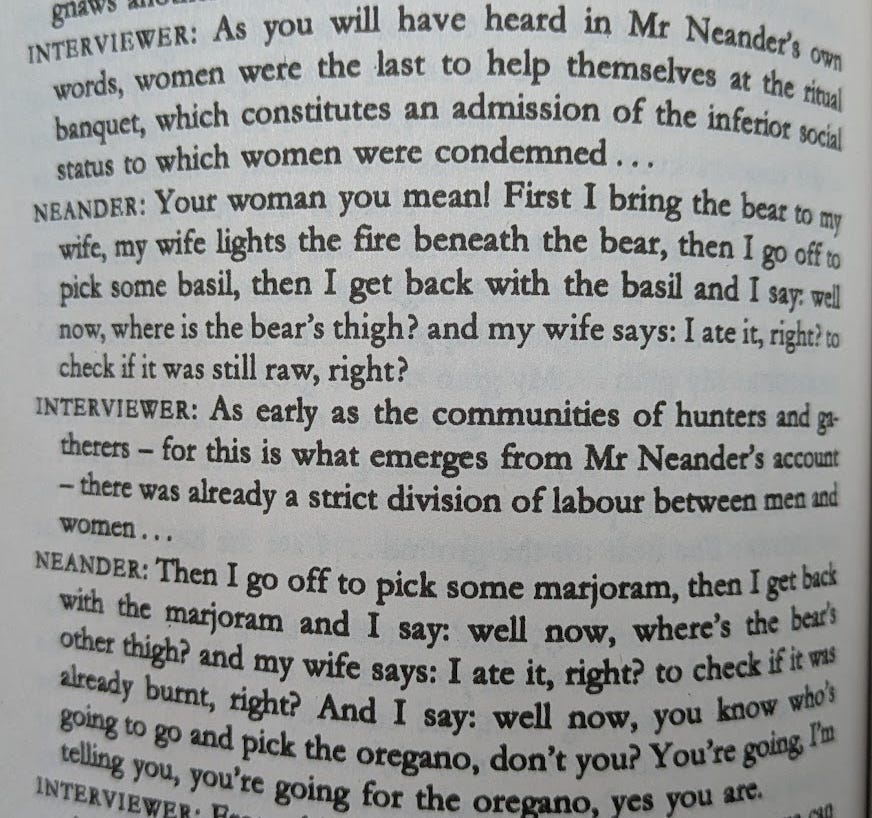
‘I ate it, right? to check if it was still raw, right?’ / ‘you know who’s going to go and pick the oregano, don’t you? You’re going, I’m telling you, you’re going for the oregano, yes you are’. Come on. This is great stuff.
OK
Forgettable though at times suspenseful and tense. Can’t really tell much about it without handing out spoilers; you’ll like it if you enjoy tightly-wound psychological thrillers.
OK
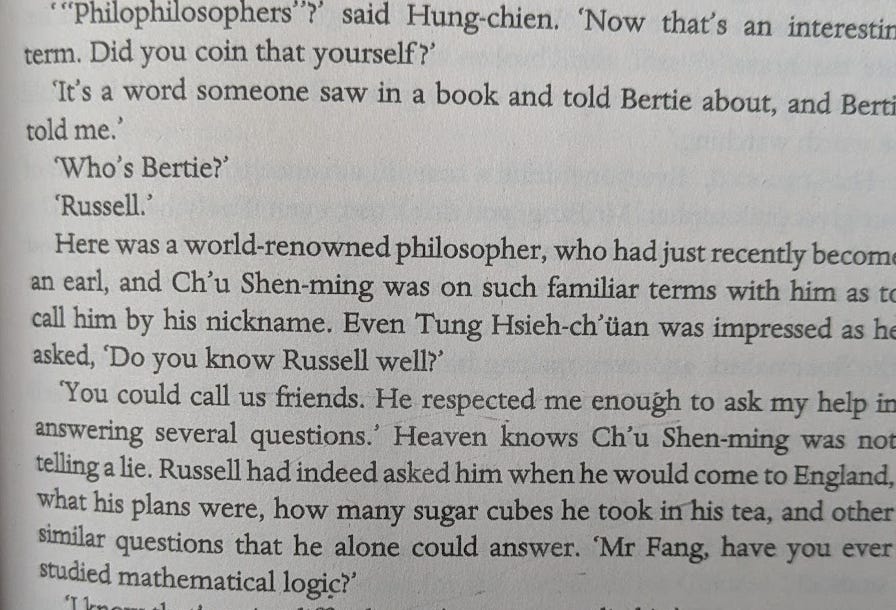
Think of Evelyn Waugh’s Decline & Fall set in China, but not as good. Qian Zhongshu mocks the pretentiousness of Chinese wannabe intellectuals who study abroad and come back home pompous and full of themselves, but he himself cannot resist quoting various authors and philosophers. Still. Quite funny.
OK
Japanese whodunnit, or rather, howtheydunnit: we know who’s committed the crime early in the novel, which then follows the police’s investigation on how (and why) they did it. Not particularly thrilling, no big twists, no ingenuous plots, but a fun, calm read, which is interesting to contrast to the more suspenseful western murder mysteries.
OK / Essential
I don’t think any single Spillane book can be rated as anything above ‘OK’, but his writing as a whole is probably the best example of fast-paced, hard-hitting, action-packed pulp fiction you can read; so I’d say it’s essential to read a Spillaine book at least once. His novels are sexist, the prose so over-the-top sensationalist that it hurts (‘she punched me in the gut and hurt her fingers’), yet the writing is careful, and the plots gripping. The moral worldview of the books alone (cynical nihilism coupled with inviolable moral codes) is worth a full essay.
Essential
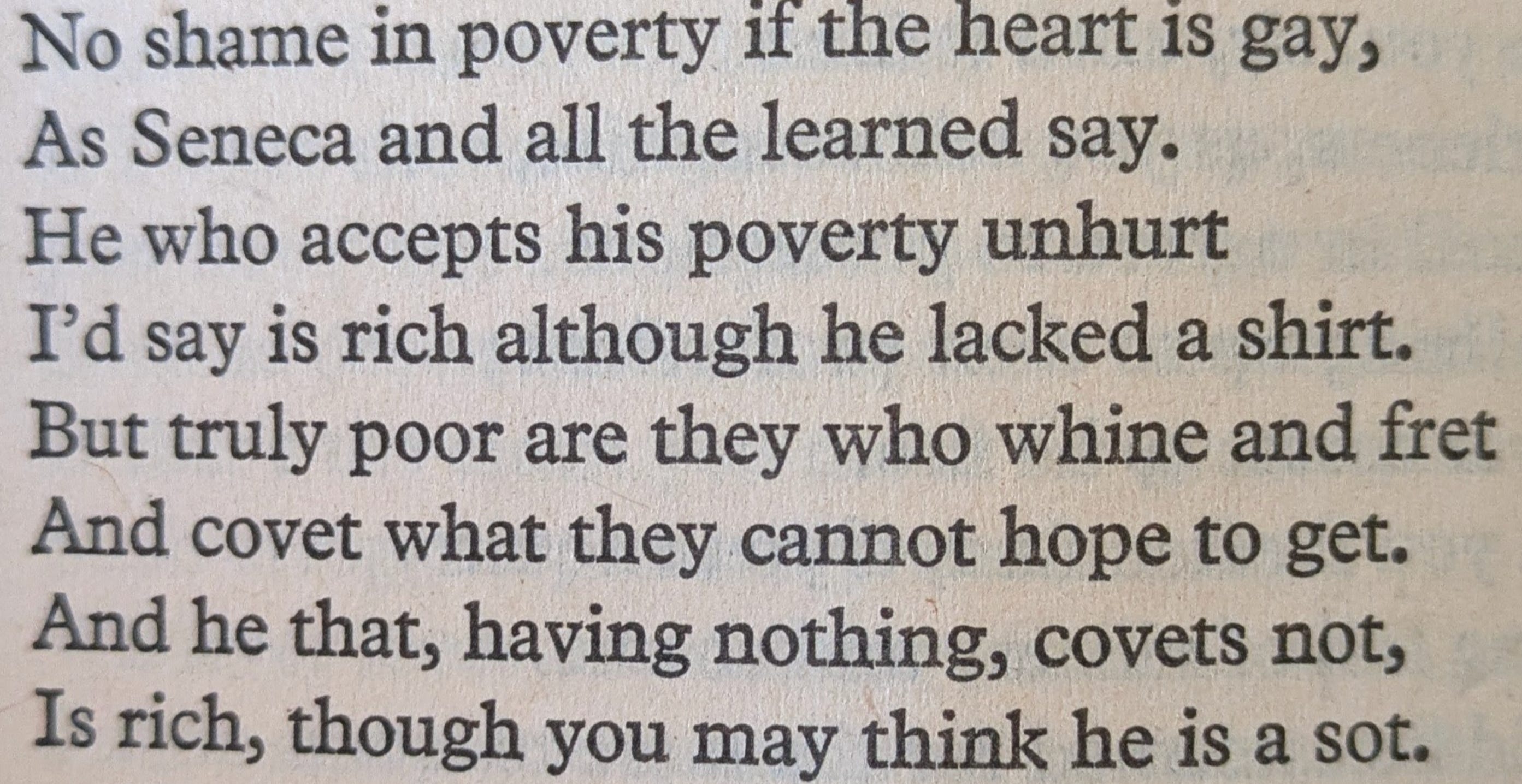
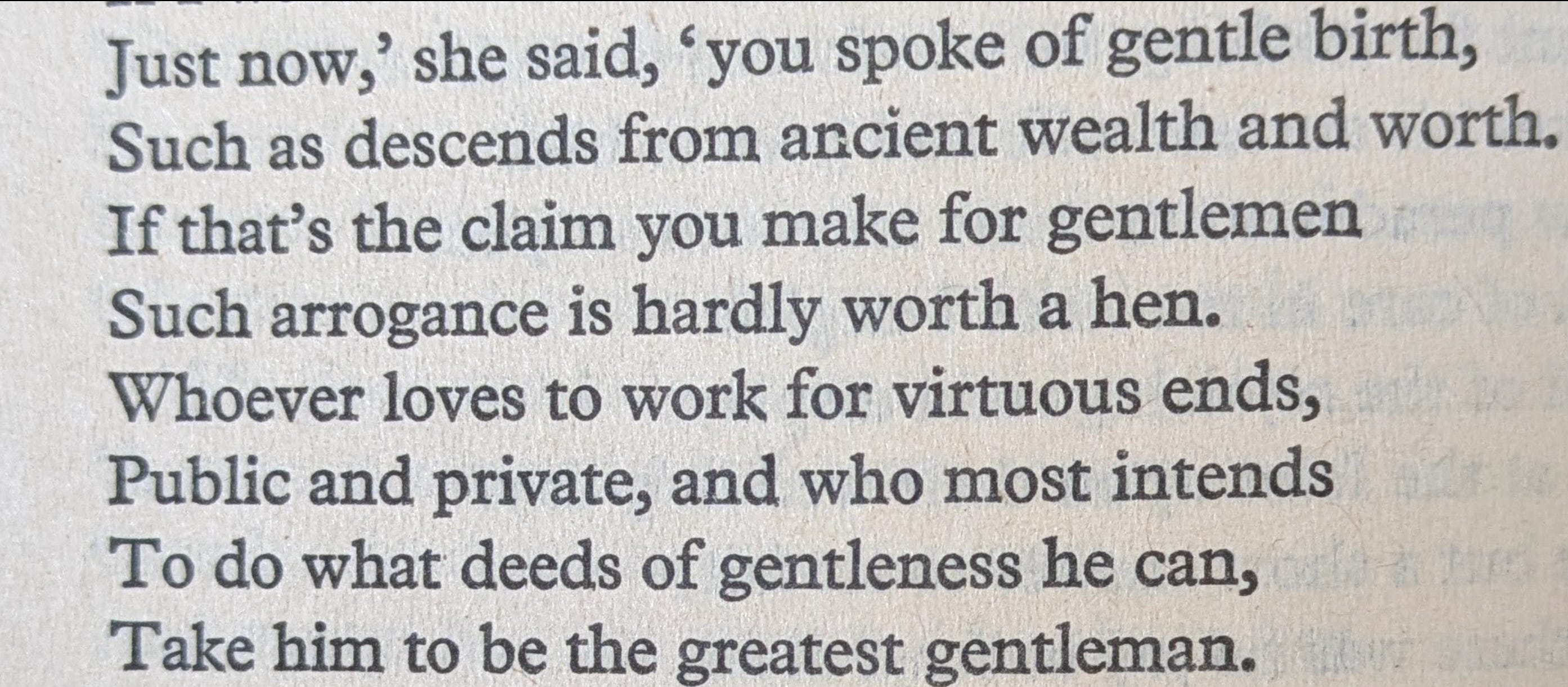
You can find everything you might be looking for in Chaucer: life lessons & morals, character studies, human psychology, good prose, humour, action, knights, love affairs, pranks. Reading stories written from the 14th century, which could equally well take place in the year 2025, drives home how little human nature (and what makes for a good story) has changed.
I particularly enjoy the raunchy tale of the Miller (what can I say, it’s funny), and above all, the moralistic tale of the Wife of Bath, which includes these gems:
Letdown
One of Grisham’s weakest efforts, about the son of a judge who discovers a secret pile of cash in his deceased father’s house. Meh.
Standout / Essential
One of Christie’s best Poirots.
Standout / Essential
I was re-reading this, sitting in Potter’s Fields, when a random man next to me started quizzing me: ‘what are you reading? what is it about? why do you like it’?
Answer to question one, The Blind Assassin. Answer to question three, among others, for sentimental reasons (one of which is that my wife gave it to me very early in our relationship). The answer to question two is a bit harder — plot-wise, it is about a love story and an unhappy marriage and a tragedy and a book within the book, but what is it about? I think it’s about the choices we make, and how most bad decisions come from lack of courage — primarily the courage to be honest with ourselves.
I think it is far and away the best book by Margaret Atwood.
Essential
A paean to creativity, originality, and individuality, told through the story of an iconoclastic architect. As I’ve said before, critics often unfairly dismiss Rand’s work as ‘rich people porn’, but in fact Rand doesn’t idealise the rich: she idealises the original thinkers, the builders, the people who get things done; and, like Tom Wolfe, she despises the talkers and armchair theorists.
The Fountainhead’s protagonist, Howard Roark, is a modern architect. Unlike the villains in Tom Wolfe’s telling, Roark doesn’t turn to modern architecture because he’s incapable of mastering the difficult styles of the past, but because he’s tired of rehashing cliches of the past. Unlike the modern architects criticised by Wolfe, Roark builds houses beloved by their occupants — houses that are modern, and shorn of superfluous ornamentation, but still beautiful and functional.
The thesis of the book is that it’s a vice to live your life through others — being a second-hander, in Rand’s words. These are people whose sense of value comes from the opinion of others; and the worst example of this is people who feel important because of the power they exercise over others — except, unless this power comes from a standalone source (e.g. excellence, creation of value), it is illusionary. Someone who attains power by channeling the voice of others — which is what populists do — doesn’t have real power, they only have the semblance of control. The moment they try to channel their power towards a direction other than the one it follows naturally, they will lose it.
Like all theories, it is not absolutely true. No-one is an island. No-one is impervious to the opinion of the crowds, or at least, of their loved ones — nor should they be: being deaf and blind to feedback, to contrary opinion, isn’t a mark of strength of character, but of stupid stubbornness. Nevertheless, it’s a theory worth engaging with seriously; besides, the book is a page-turner.
OK
Fun memoir from Vanity Fair’s former editor, but it doesn’t do much beyond induce envy at the lush lifestyle that working at Conde Nast used to afford.
Letdown
I had high hopes for this: I was looking forward to learning how one goes about creating a new bank from scratch (Anne Boyden founded Starling). Sadly, Boyden glosses over a lot of the details (which were given to consultants to work out), and gives a one-sided, elliptic view of her fallout with Tom Blomfield and the rest of Monzo’s founders. And she frequently laments how difficult it is for a woman to make it in male-dominated industries — never mind that she got high-priced consultants to work for her for free. Come on: you can’t portray yourself as the outsider, the underdog, the unlikely champion, when you’re a senior banking executive, when people are offering their services to you for deferred payment, when you can get meetings with billionaires without any difficulty.
OK / Standout
Too long and overly detailed (hence the OK) biography of the UK’s youngest ever prime minster, who took office aged only 24, yet stabilised England’s economy, maintained order in time of massive transition in the Continent, led the country in the Napoleonic wars, and helped pave the road towards the abolition of the slave trade (though he didn’t accomplish it during his lifetime).
Are there any lessons for hyper-ambitious politicians? To what can we attribute Pitt’s extraordinary success (both in terms of rapid ascension to power, and length of service)? To summarise a 800 tome in a few bullet points, Pitt was
Exceptionally intelligent, and a mesmerising orator — this was the foundation of his domination of politics; his father (a prime minister himself) specifically trained him for office from an early age. (I have to say though, the excerpts of his speeches that are included in the book seem long-winded, at least to a modern audience.)
Pragmatic and not overly beholden to principle: for example, though he believed in electoral reform, he opposed it when he felt the situation in England was too volatile to push for drastic changes.
Absolute when it came to his exercise of power: he centralised power more than any PM before him, and he refused to serve when he felt his power would be curtailed by the King (and in fact, when he left office briefly, it was precisely because he felt undermined by the King).
Exceptionally lucky, but adept at recognising this luck: he was at the right place and the right time, but he also took the opportunities offered to him, and played the cards dealt to him masterfully.
The contrast between the two middle points above is interesting: Pitt would make compromises on his principles, but never on his independence.
Standout
Winner of the lost Booker prize (Got muddled up — Farrell won the lost Booker for Troubles, not The Singapore Grip). The Singapore Grip tells the story of the fall of Singapore, primarily as experienced by one of the city’s merchant families. It’s a poignant critique of colonialism and capitalism, without the sanctimoniousness and shallowness of similar modern criticism. Perhaps a bit too long.
Standout
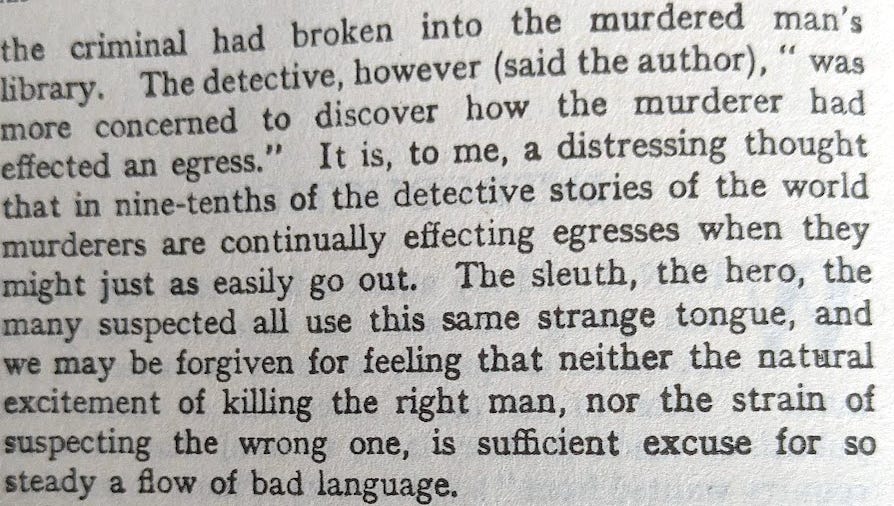
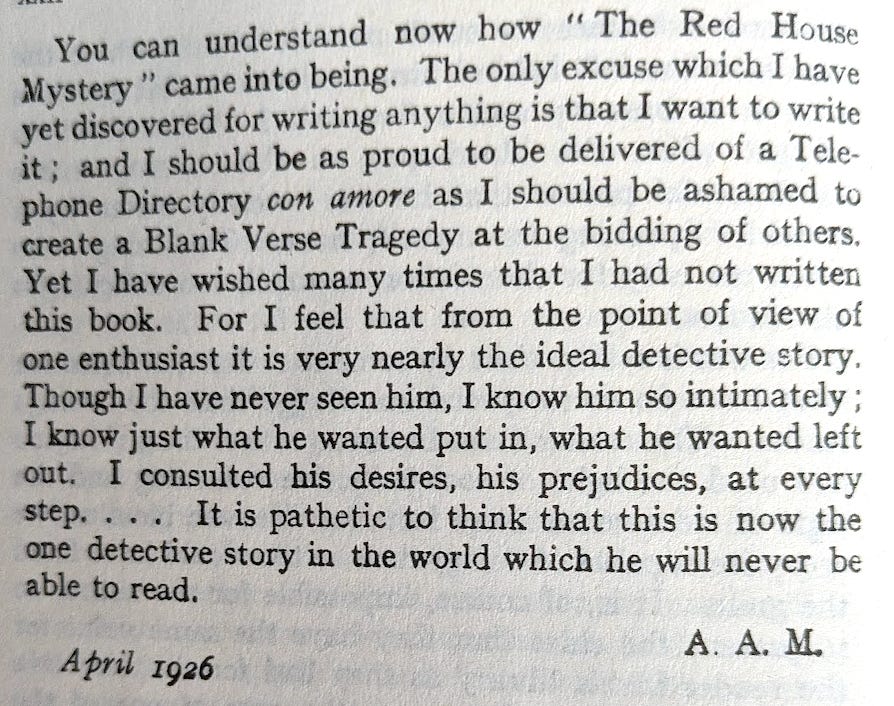
Probably the best non-Agatha Christie murder mystery I’ve read. Perhaps a little too cutesy with its Sherlock-and-Watson references, but fair to the reader — it gives you everything you need to guess who did it (and unlike Japanese murder mysteries that claim to do the same, it doesn’t rely on some overly-elaborate murder plan).
Almost as good as the story itself is the author’s introduction:
Standout
The history of General Electric’s rise and decline, focused much more on the latter than the former. Very well researched and written, though (like several of the history books reviewed this year), too long.
There’s a good review of it here, according to which the key takeaway from the book is that GE failed because of intellectual laziness: its executives bought their own false grand narratives, instead of focusing on fixing actual problems facing the business. This seems to be true to a large extent, especially under Jeff Immelt, who fostered a culture of ‘success theatre’ and who did not tolerate any dissent or pushback: unlike Jack Welch, who encouraged straight talk and debate, Immelt fired executives who did not toe the line. But I don’t think it’s the whole story: for one thing, most of GE’s core businesses were well-run, which is hard to explain if intellectual laziness were pervasive.
I think there are several factors that contributed to GE’s downfall (as far as I can tell from this book), many of which came down to really bad luck:
The aforementioned cultural change under Immelt, which rewarded artificial gains instead of substantial and sustainable improvements (for instance, selling billions in infrastructure to developing countries on credit, just to make the numbers).
The blow up in its insurance businesses, which were hit by the increase in their insured customers’ life spans and increased healthcare costs.
The financial crisis that caused liquidity in the commercial paper market to dry up and almost bankrupted GE Capital.
The cyclical nature of many of GE’s businesses, especially its power business.
Poor M&A — GE bought high (Alstom) and sold low (NBCUniversal).
Changes in investor sentiment and preferences (away from conglomerates and towards more focused businesses).
GE did not handle these well: for example, its executives did not see the boom in the power industry cycle as a peak in a cyclical market — they considered it a permanent plateau. Or, they did not have a plan B in case demand for their commercial paper dropped; or, they did not get rid of all insurance businesses when they sold some of their subsidiaries. But it’s easy to make these judgements with hindsight, just like it’s easy for critics to blame Jack Welch for massaging earnings to deliver consistency growth, when what he was doing was exactly what investors and markets demanded, without breaking the law (if someone is to blame here, it’s investors, not GE, for confusing consistency in earnings with genuine operational consistency).
And that’s a wrap! If you enjoyed these reviews, or looking for more suggestions, here are the entries for 2023 and 2024. And here’s my evergreen business & management reading list.
No posts
Comments
Nothing yet. Say the first thing.
Sign in to join the conversation.