
I’m an encore career chef living in a place I couldn’t imagine loving more. I use TASTE | Pacific Northwest to advocate for immersing ourselves fully in our own food locale, for using every cooking adventure as a learning-teaching experience, and for protecting the food and land resources that allow us all to thrive.
TASTE has gratitude for every subscriber. Our particular thanks to our paid subscribers, our TASTE Buds, whose generosity supports every reader.
Every TASTE | Pacific Northwest post is human-created: personally written, personally read to you… with every human flaw.
Buy Me a Pint of Hood Strawberries!
Share TASTE | Pacific Northwest
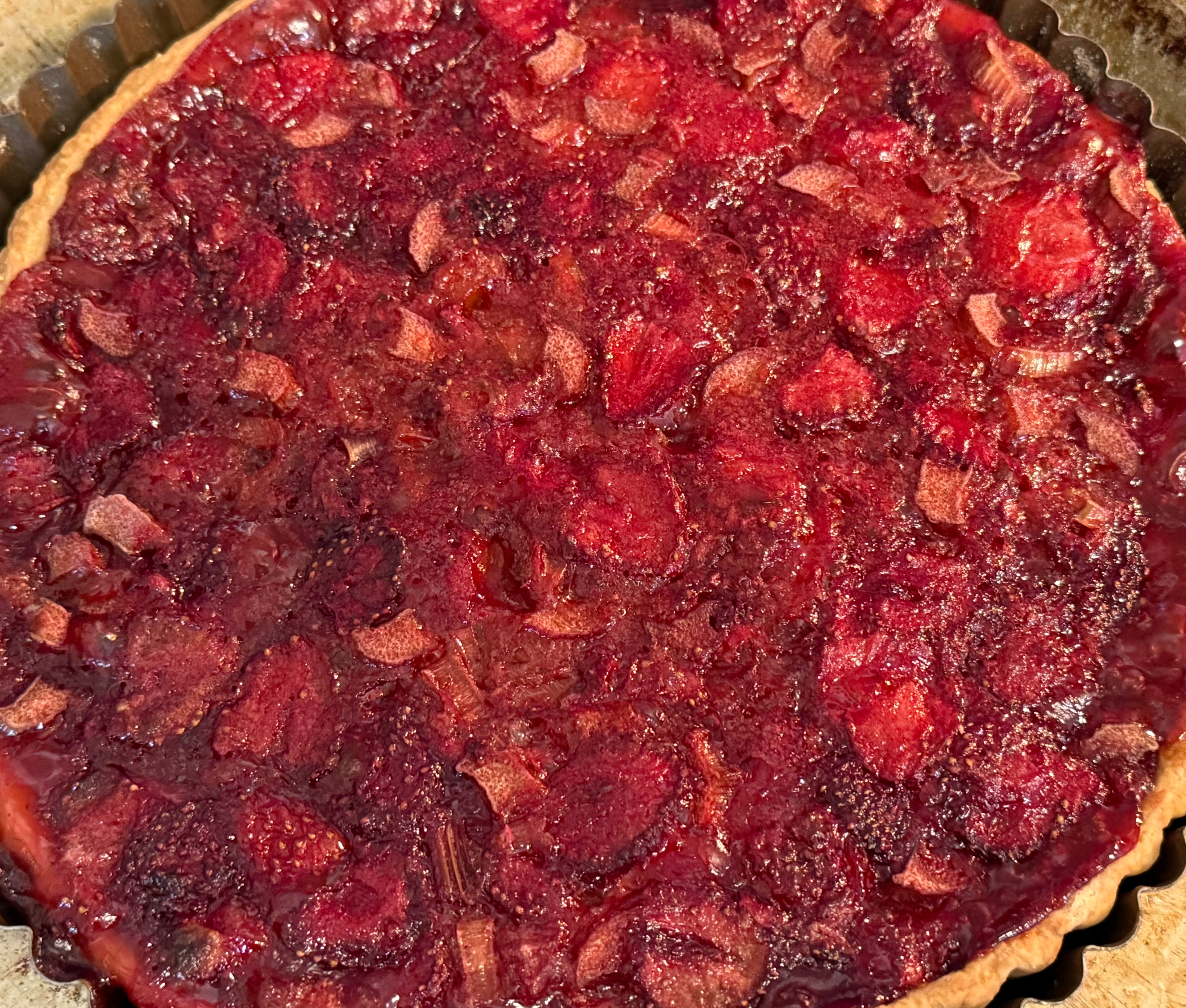
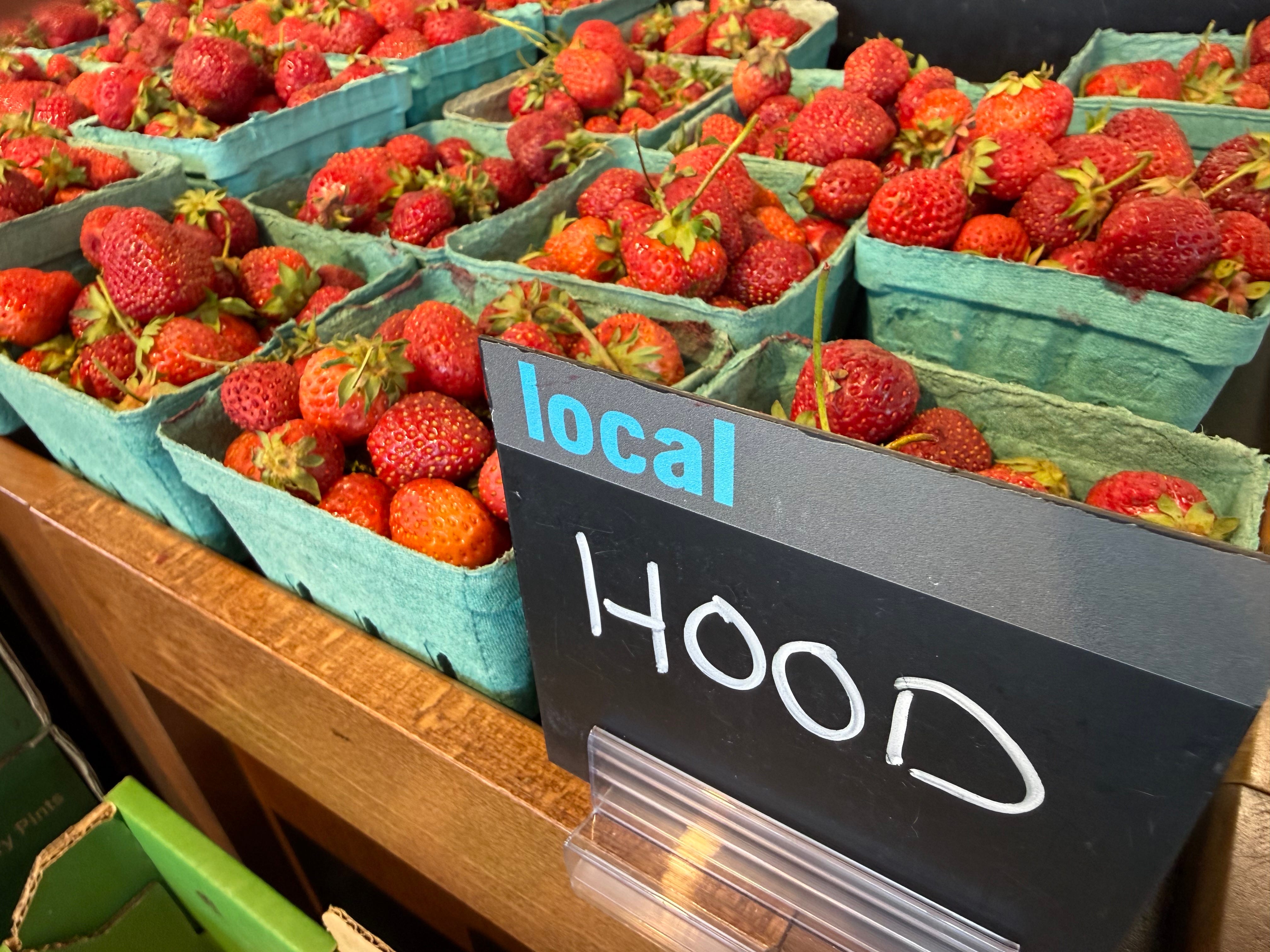
Living among us are tiny fairy-tale characters masquerading as fruit. Each June, as if a progenitor of its storied lineage, Oregon’s smallest citizens peak out of mossy cottages to teleport us into a sustained summer exhale.
The fruit’s honeyed taste, textural qualities and fragility reveal it as something ethereal and fleeting. Oregon’s beloved mad scientists work tirelessly to coax ~ perhaps better said, to curate ~ its descendants into the state’s love story.
In Oregon, we call them Hood strawberries.
We tread fast and light to keep up.
Some years ago I recognized that I could distill my beliefs about cooking and baking to just three:
Quality endures.
Texture elevates sensation.
Memory lives in aromatics.
These are guideposts through which successful recipes must pass.
In the century-plus partnership between the Oregon State University and the U.S. Department of Agriculture (USDA), a quiet love story has borne the fruit of science and soil. That research and experimentation continues.
Two unnamed advanced strawberry selections, identified as 2678-1 and 3009-1, have been in process for several years, not yet given to growers for testing. The former, a later-season variety designed to extend the harvest window beyond traditional Oregon “June bearing” berries, also offers the high-quality flavor characteristic of the Pacific Northwest. The latter is a mid-season variety noted for its deep, rich color and superior flavor profile.
These are the qualities we all value in strawberries, yes?
Here’s how Hood strawberries’ “quality” is best stated:
Oregon Strawberry = (Sun x Soil) + (Aromatics²) + (Texture ÷ Time) - OR…
Quality = Flavor + Fragility + Fragrance
Sun x Soil: Oregon’s long daylight hours and volcanic, loamy soils
Aromatics²: the scent blooms before the berry even reaches your mouth
Texture ÷ Time: the shorter the fleeting season, the more precious the texture
Oregon’s Hood strawberries hit an unusual textural sweet spot. They’re intensely sweet, highly aromatic and exceptionally soft-fleshed.
They also have zero shelf life.
At market or at select retailers we buy them with an immediate use in mind. Not a tomorrow-or-the-next-day project, today. My work day took a turn when I spotted the berries and knew that today was strawberry-rhubarb tart day.
I wanted the exceedingly soft texture to contribute that particular quality to the tart. It could easily have been overpowered by the hefty structure of rhubarb, so I sliced the rhubarb very thinly ~ and I minimized its use in the tart by weight.
The Hood strawberry’s aromatics precede its taste. It’s a little portal into the nostalgia many of us feel for childhood kitchens, roadside stands or the warmth of June. Crush Hood strawberries, and memories flood back.
In a time of monoculture crops, Oregon’s strawberry culture differentiates itself. It’s built on diversity, (smaller) scale, and the intention to create thriving local businesses and unique fruit.
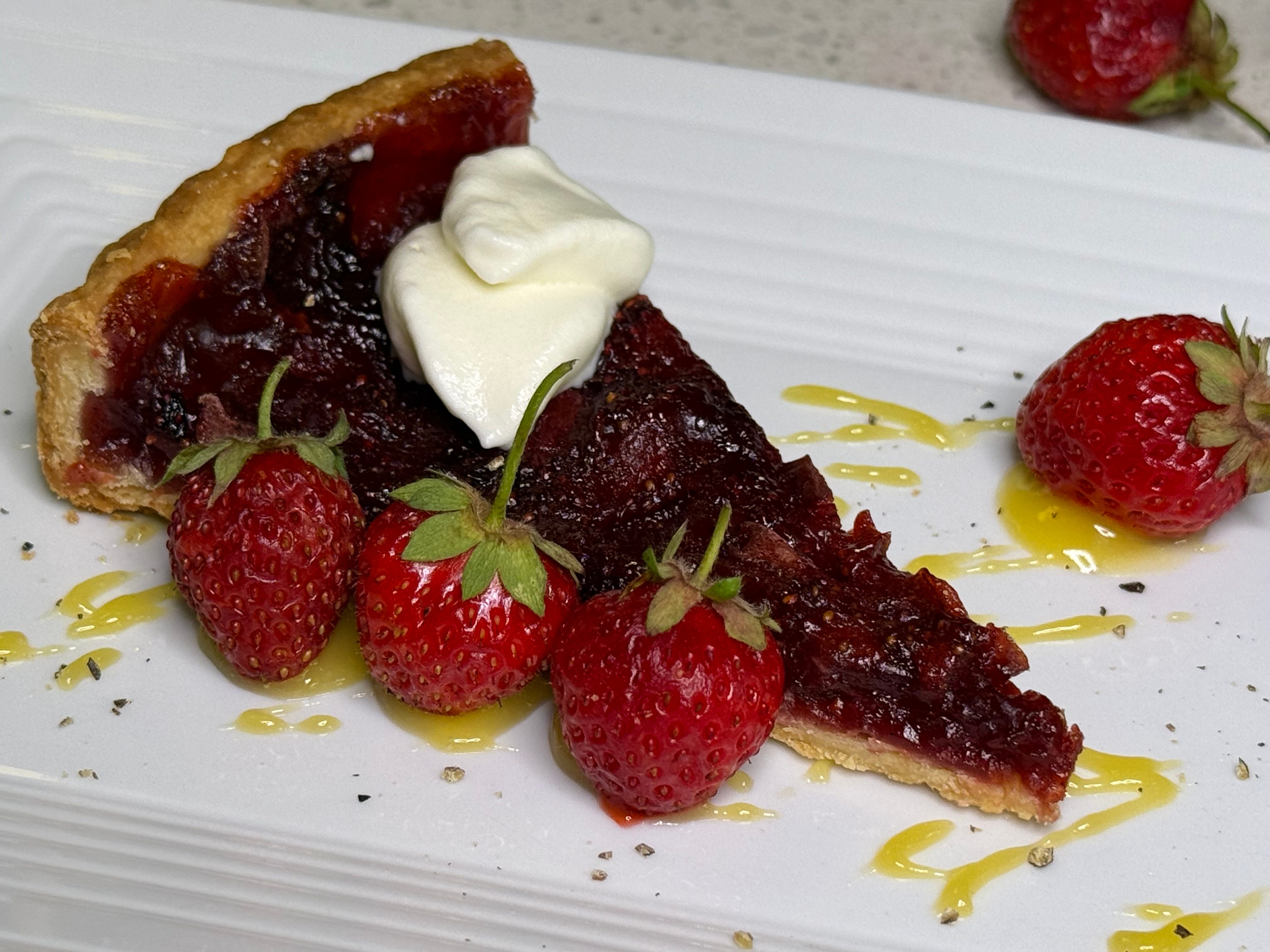
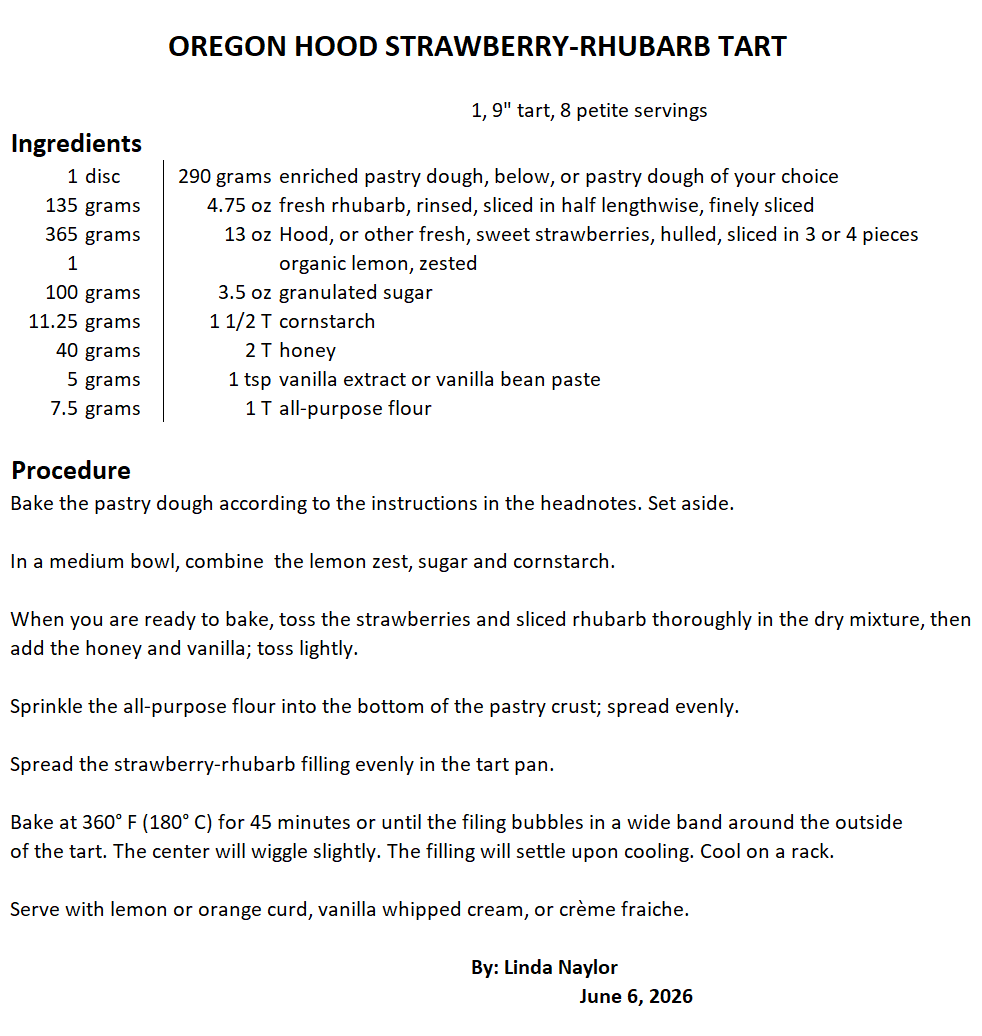
Headnotes
This tart is intentionally small scale, centered around showcasing the berry itself. In all honesty, I’m not a rhubarb fan, though I love the way rhubarb complements strawberries. In this tart rhubarb is just over 25% of the total weight of the fruit, where the strawberries are a bit less than 75%.
I kept the sugar level at 20%, and chose to add a bit of honey, lots of lemon zest and vanilla extract.
Strawberries and rhubarb have numerous flavor affinities in common. They are: cinnamon, cardamom, ginger, honey, lemon (juice, zest), orange (juice, liqueur), vanilla (extracpaste).
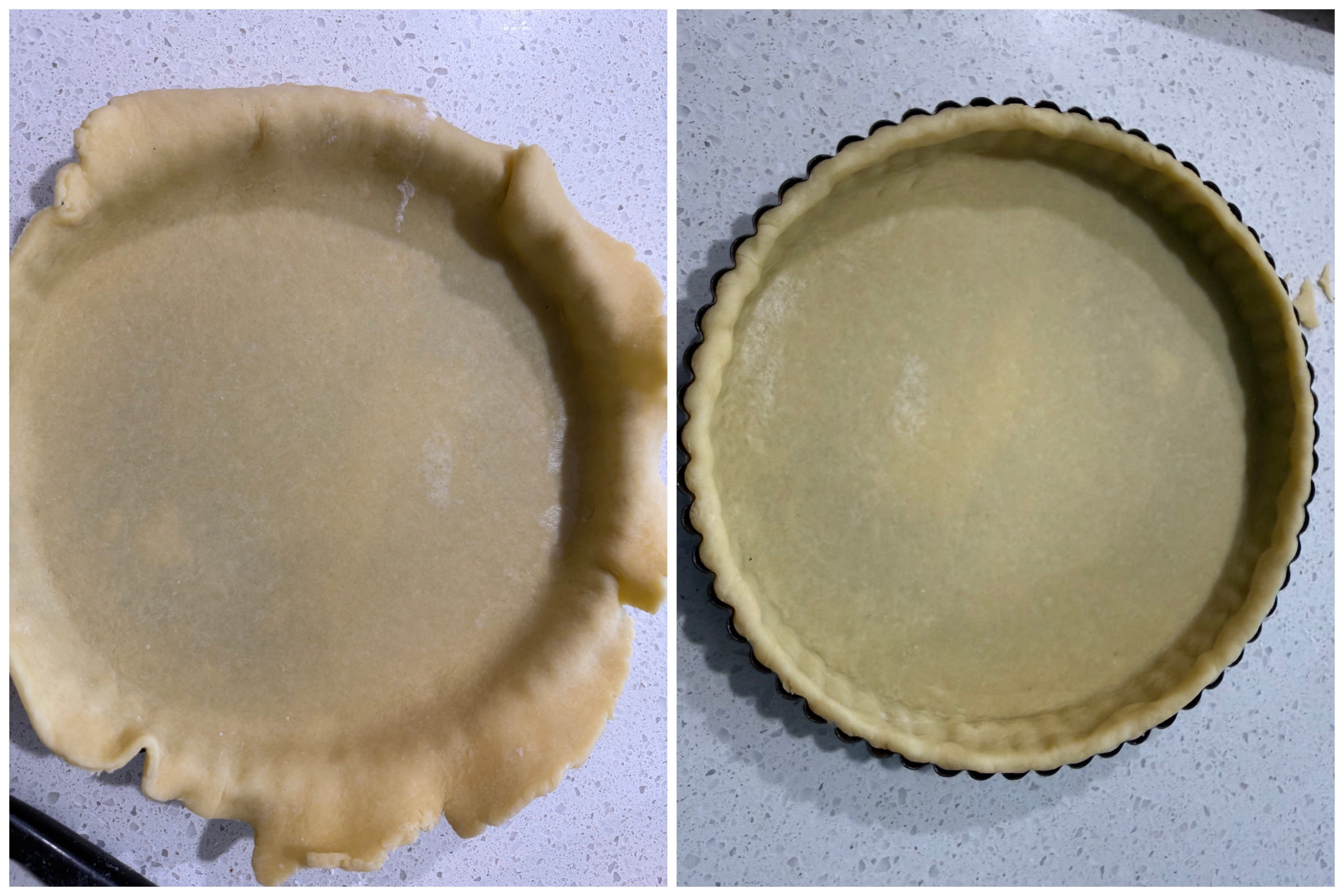
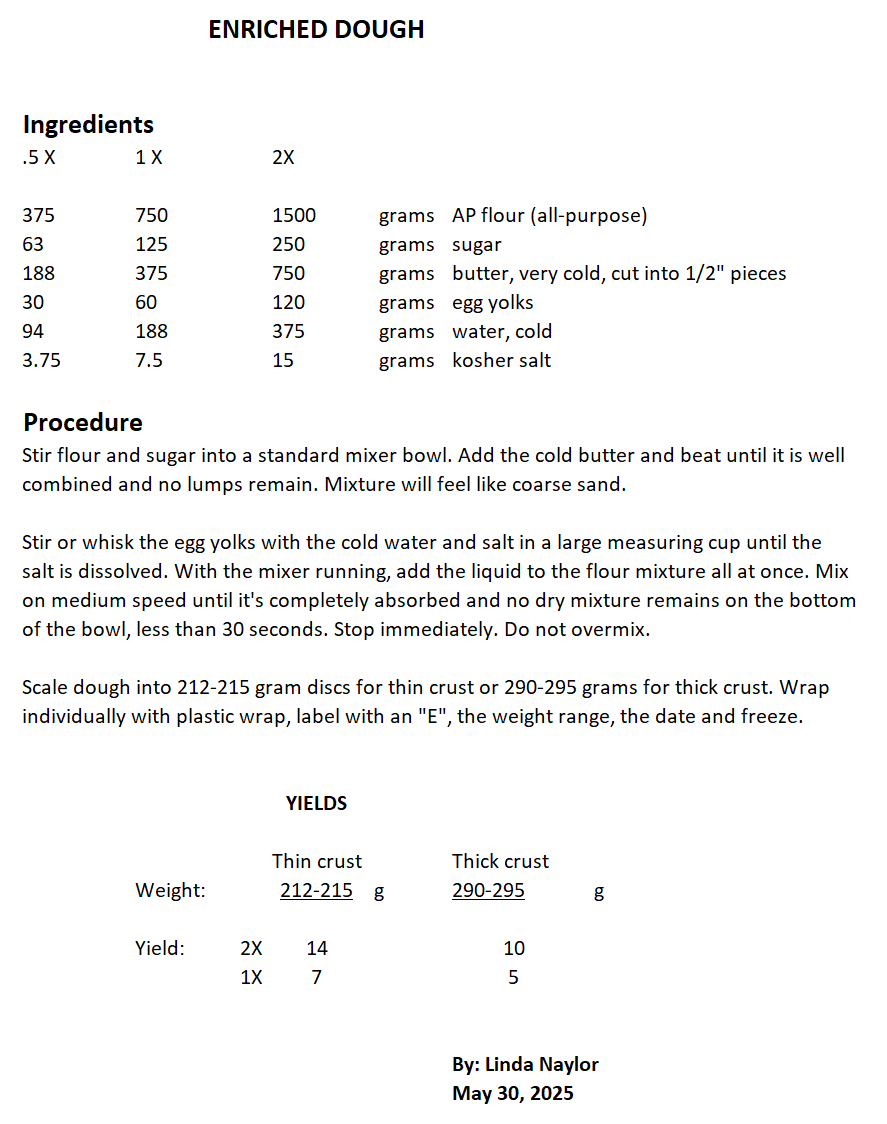
A note on the pastry. As is my practice for tarts and pies, I use enriched pastry dough. I always use Lindsey Shere’s method (Chez Panisse) of par-baking crust. Roll it, fit into a lightly sprayed 9” tart pan, and freeze it solid. Wrap the crust tightly with foil, securing the edges well to avoid shrinkage. Now you get to choose how the crust bakes off. Par-bake it for 15 minutes at 360° F (180° C) in a conventional oven, then remove it from the oven and allow it to sit, still wrapped, to cool slightly while you prep the filling. Alternatively, par-bake it for 20-22 minutes and remove the foil immediately. The second method will yield a bit darker, more shortbread-like crust ~ which is a good contrast to the tender filling.
Wouldn’t you agree that soft, sun-soaked fresh fruit isn’t meant for travel? We’re on the cusp of the most generous food season of the year ~ and it’s in your markets right now.
Find those tiny fairy-tale characters masquerading as fruit. Find those beautiful, sweet berries. Make a simple tart. Experiment with flavor combinations.
Where in your markets do you see the reddest red, smell the headiest perfume? Where do you see a memory already forming? What’s extraordinary? Follow your nose!
Enjoying flavor, aromatics and texture is a uniquely human experience, a true form of enchantment for what is everywhere around us.
Quality endures. Texture elevates. Memory lives in aromatics.
If you enjoy learning how to coax out flavor; if you feel inspired to protect the beautiful food environment around you; if you enjoy more personal essay, you’re very welcome to push the Subscribe button.
Perhaps, even share with a friend. It’s nice to share.
TASTE | Pacific Northwest includes a voice for the land and the simple riches of our food system.
Linda Naylor is an encore-career chef with a passionate fire for helping others learn to love our food system and the land that supports it. She teaches simple techniques to enhance flavor, and to help readers enrich their own lives through food, wherever they live.
Your subscription today directly funds the research and advocacy needed to keep these scents and flavors, and the beauty of all our treasured environments, alive.
A note. Our use of a tilde (~) in text is an homage to the brilliance of Judy Rodgers’ The Zuni Cafe Cookbook. The em dash (—) and the colon (:) are mine alone. Please never mistake them for AI.
Likes, Comments and Restacks are highly prized! Please click on the ❤️ icon to let the algorithm know our work is worth supporting.
More strawberries?
Comments
Nothing yet. Say the first thing.
Sign in to join the conversation.