
Let’s get to the bottom of the aesthetics of food… what underlies our devotion that often goes unsaid.
I teach applied recipe development to help readers create the aesthetic of living and cooking they want in their lives. I don’t just publish recipes; I teach you how to become a better cook, a better baker ~ aesthetically.
Share TASTE | Pacific Northwest
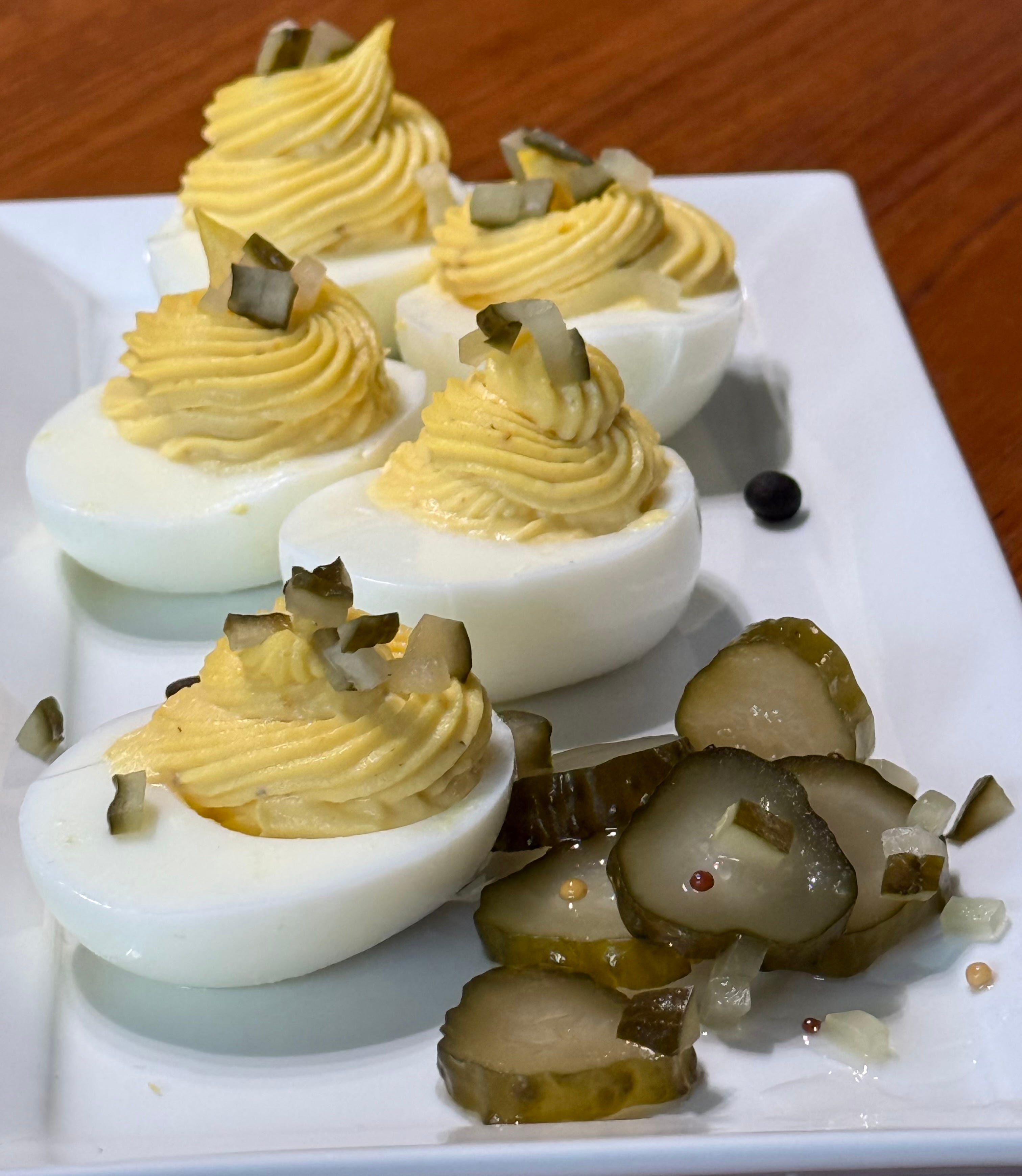
I think of the beauty of food, not as convenience; I think of flavor, not as an accessory; I think of aromatics, not as superfluous, but the actual energetic result of soil rich in an ancient seabed, volcanic ash and that extraordinary mélange of nutrients that are present only in the Pacific Northwest.
Each geographical region, of course, has its own unique historical and current cocktail that results in the most valued features of its foodstuffs.
I’d like to invite you to fall in love with the land, your land.
The land is a living entity, and it’s nothing less than life sustaining.
Certainly not all, but many farmers, specialty growers and chefs live a dedicated connection to the land. In a real sense, they know themselves as midwives, birthing what the land might offer through rigorous work and instinctual ~ or intuitive ~ creativity.
For these stewards, a trusted relationship with the land is not one of convenience, but one of deep reciprocal care.
What’s particularly lovely about farmers, growers and chefs who live and work in this space is that they admire ~ even strive for ~ simplicity. The only way to truly honor their ingredients is to insist on quality: intensely flavorful grains, the subtle sweetness of over-wintered greens, the perfect drippy, in-season peach.
Through their professional growth, they learn to protect ~ in fact, they culture ~ that simplicity.
VOICES OF THE LAND
Other voices lose their voice when family farmers lose theirs.
The neighbor.
The miller.
The baker.
The restaurateur.
The host.
The waiter.
The bus-boy.
The customer.
So many easier ways exist to live in the world than prioritizing the deep care growing quality foodstuffs farming requires.
As observers, perhaps it’s easier for us to question our thinking about what land represents to those caretakers. These farmers treat soil, water, biodiversity, and ecosystem resilience as primary assets to be protected, not constraints to be overcome or over-used.
The word “stewardship” is simply defined as a temporary relationship of care, where the lived expectation is to preserve the entrusted land for a future caretaker or purpose.
“Oregon Tilth” is a leading certifier, educator and advocate for organic agriculture and products. Its accreditation requires documentation and audits to ensure steward practices match ecological claims.
Originally a grass-roots community effort founded by farmers, processors, government agencies and consumers, Oregon Tilth’s mission is “to make our food system and agriculture biologically sound and socially equitable.”
The Oregon Tilth process has evolved into one of the U.S.’s primary organic certification bodies.
What would it be to perceive the land differently? What if we all knew ourselves to be caretakers, to be guardians of the land?
Distilling the elegant simplicity of caring for the land into food we love feels easy. We rarely contemplate how deep, how sophisticated, how scientifically rooted the food we enjoy truly is. The United States has an extraordinary food system.
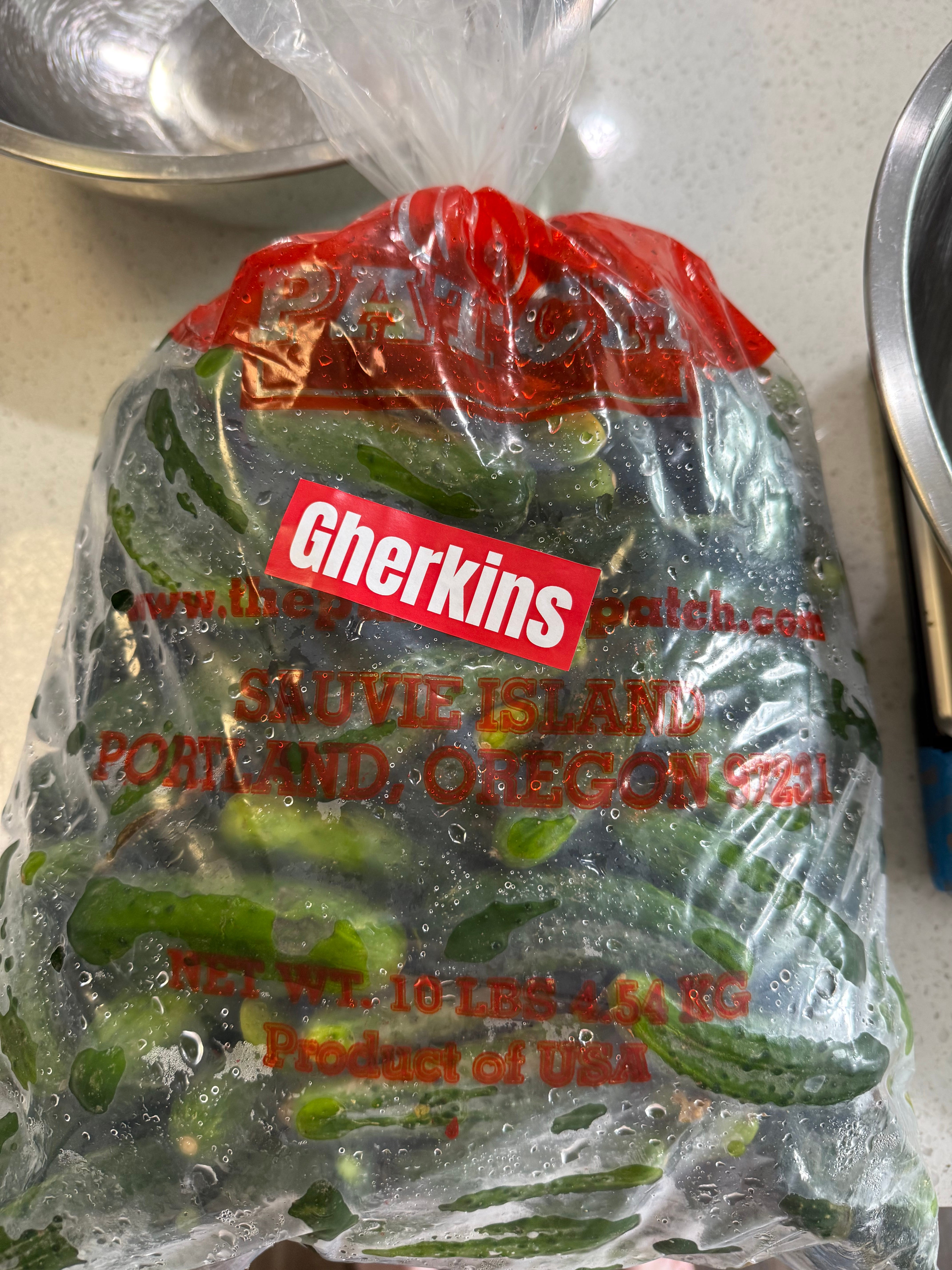
Each week for three consecutive weeks I called The Pumpkin Patch, the Sauvie Island family farm whose petite, gherkin-size pickling cucumbers I revere. For 55 years, The Pumpkin Patch ~ GAP-certified (Good Agricultural Practices) ~ has grown 60 varieties of produce and fruit on 1,500 acres. They grow a variety of pickling cucumbers ranging from jumbo to petite, and are picked daily by hand. Each week I was kindly told that, “the farmer says they not yet ready.”
Off we went to the farm when the go-ahead was given.
Headnotes
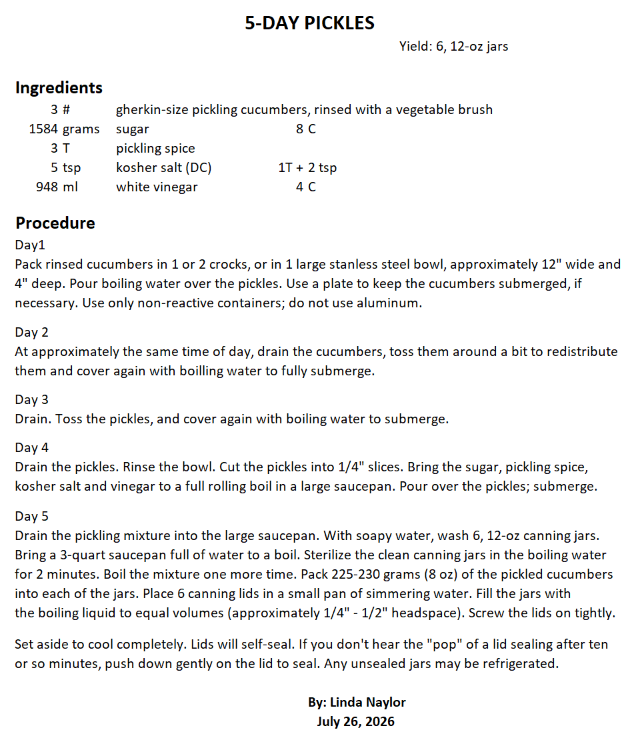
The recipe for 5-Day Pickles originated in the 1970s with my then-husband’s mother. Heaven only knows who may ~ and likely, did ~ give it to her.
Sweet, spicy, crunchy no-cook pickles using low-cost, readily available ingredients.
Two quick suggestions:
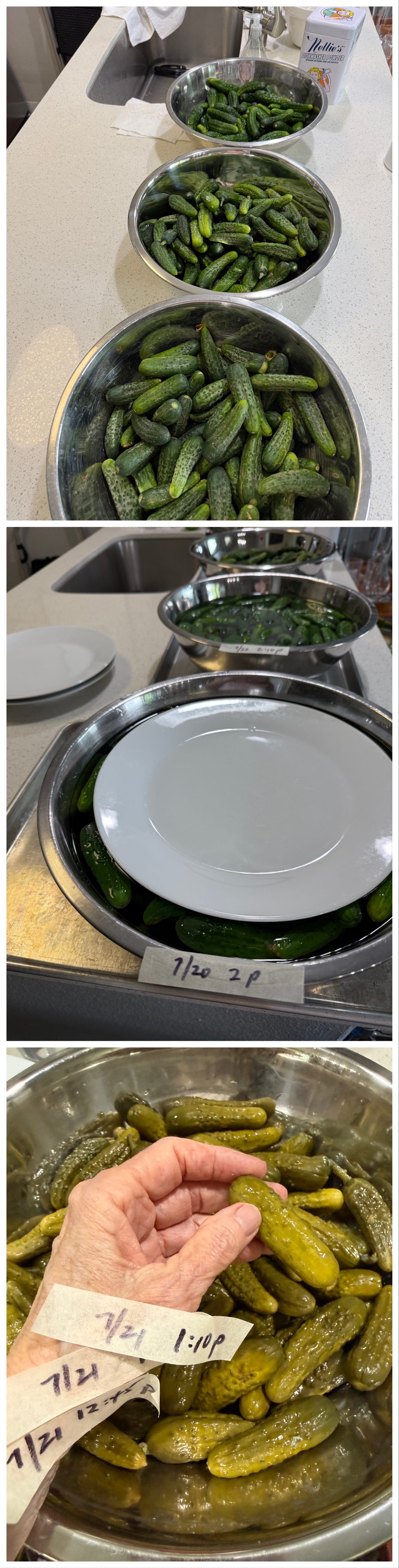
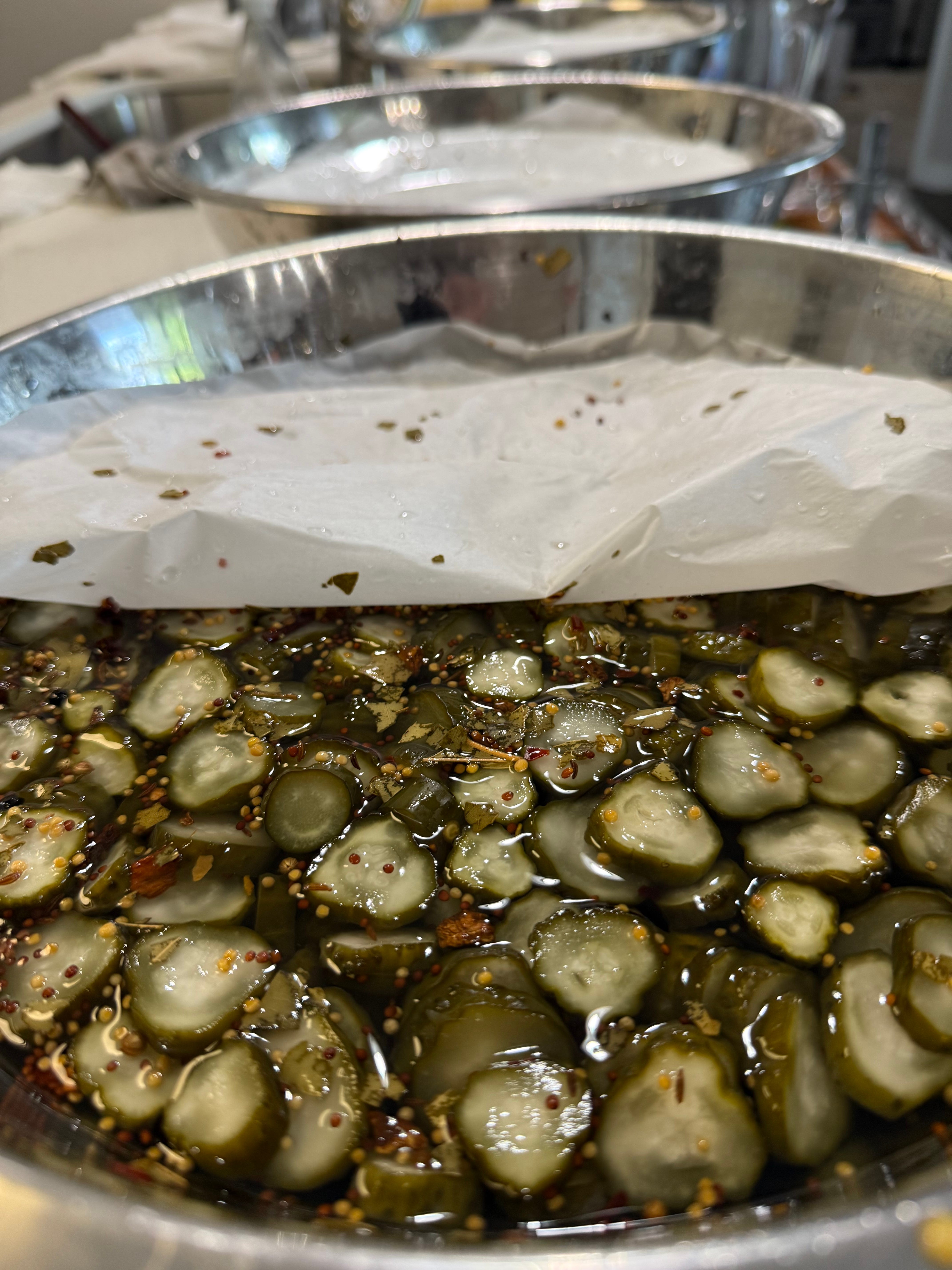
On Day 4 when you first pour the pickling mixture over the softened cucumbers, slip a sheet tray under your bowl or crock. I’ve learned over the years to minimize drops of the sweet, sticky concoction using any method possible.
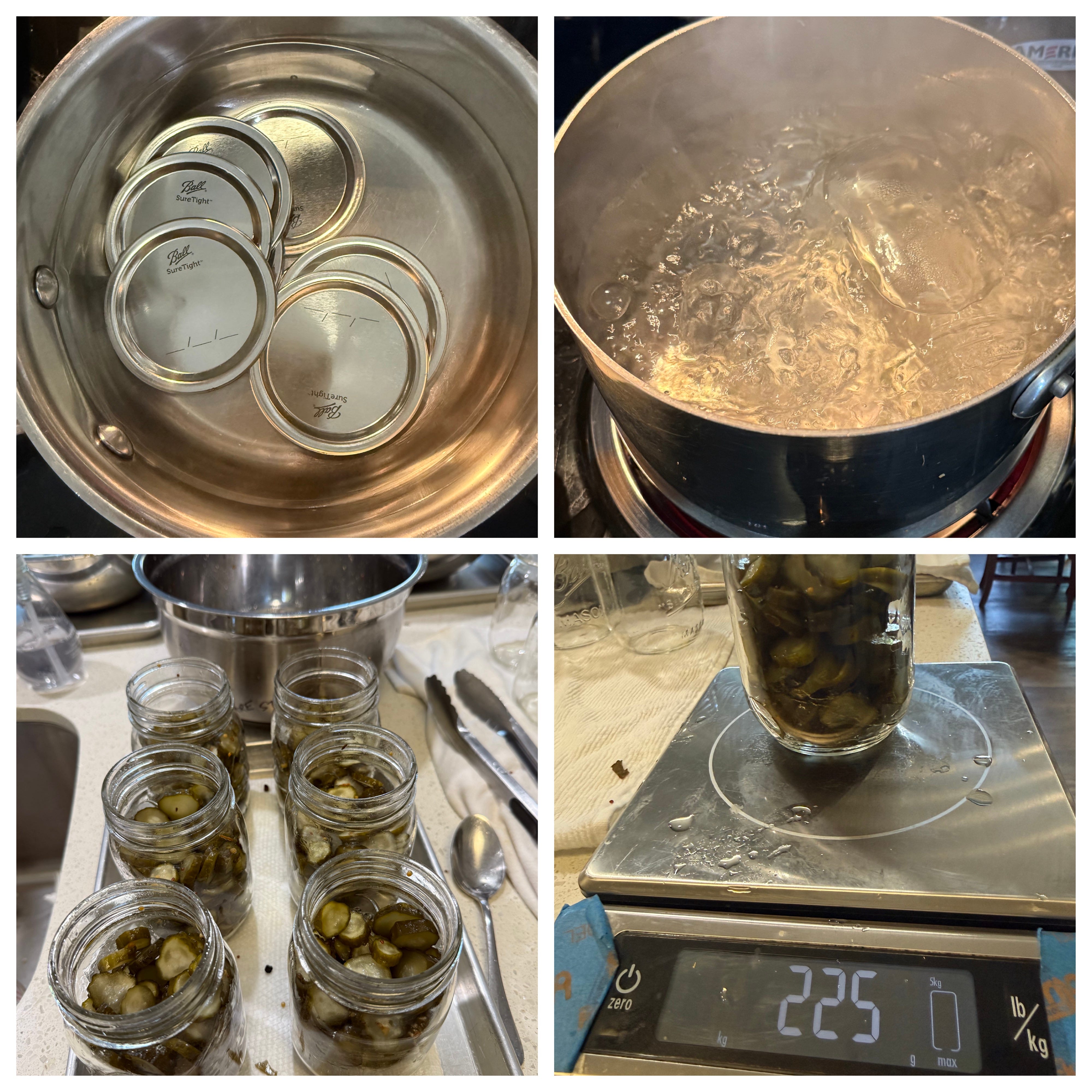
The other suggestion on Day 5 is to keep a hot water pot going to easily supplement the boiling water you use to sterilize the jars.
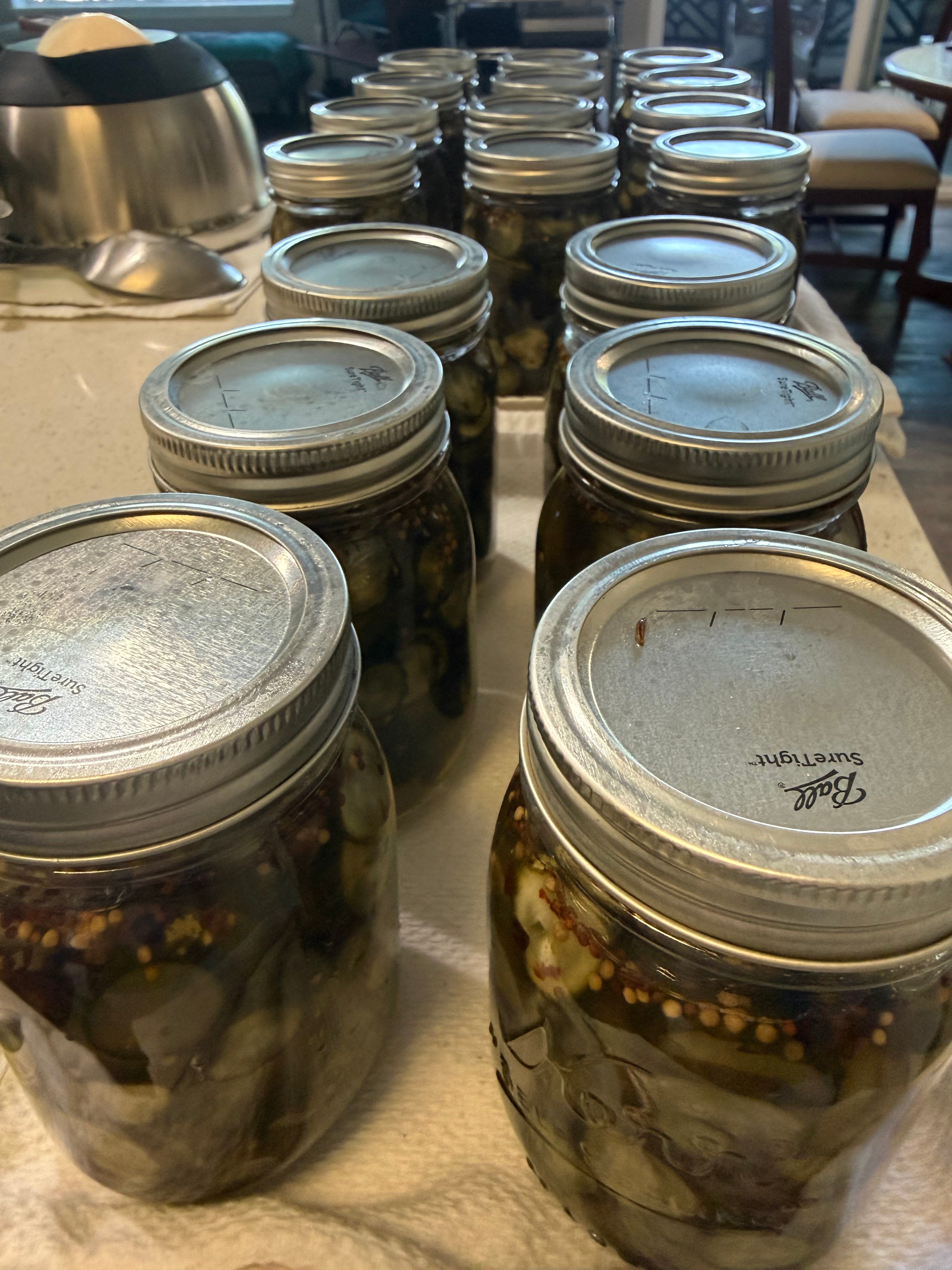
My yield was 18, 12-ounce canning jars. The recipe I wrote for you yields six.
To know the land is alive in myriad ways ~ that the soil has intelligence; that the land’s energetic source directly contributes to the flavor of our food; that humans have a living relationship with the land ~ is to truly see what the land offers us.
Let’s allow ourselves to feel into that relationship.
Likes, Comments and Restacks are highly prized! Please click on the ❤️ icon to let the algorithm know our work is worth supporting.
If you enjoy learning how to coax out flavor; if you feel inspired to protect the beautiful food environment around you; if you enjoy more meaningful personal essay on what truly feeds us, you’re very welcome to push the Subscribe button.
Perhaps, even share with a friend. It’s nice to share.
TASTE has gratitude for every subscriber. Our particular thanks to our paid subscribers, our TASTE Buds, whose generosity supports every reader.
Every TASTE | Pacific Northwest post is human-created, personally written, personally read ~ to you.
If you’d like to read my complete AI-Use policy, please visit my About page.
A note. Our use of a tilde (~) in text is an homage to the brilliance of Judy Rodgers’ The Zuni Cafe Cookbook. The em dash (—) and the colon (:) are mine alone. Please never mistake them for AI.
Comments
Nothing yet. Say the first thing.
Sign in to join the conversation.