
Today—to celebrate its upcoming 25th anniversary—I share a new book trailer for my first (and still best-selling) novel, UNDER A WAR-TORN SKY. I’m releasing it today (July 14th, France’s Bastille, or independence, Day) in tribute to our nations’ long entwined histories—a mutual life-or-death pact poignantly realized during WWII and the source of survival for American flyers like my father and the novel’s hero, Henry Forester:
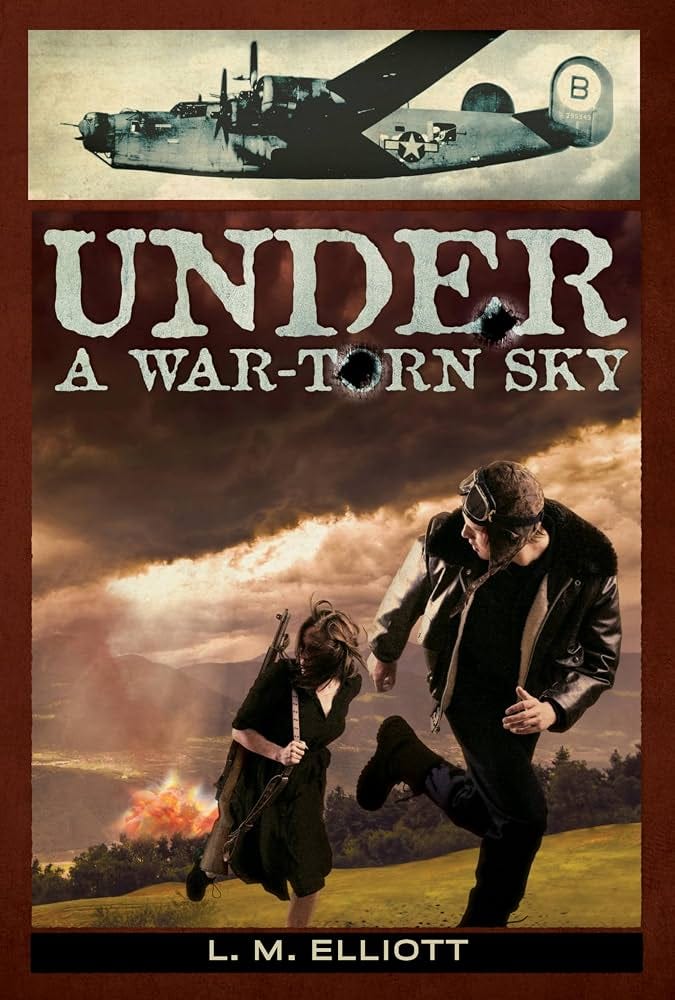
For those who don’t know it, UNDER A WAR-TORN SKY was inspired by my father, a B-24 copilot, and flyers like him who fell out of burning planes onto Nazi-occupied France. It was behind-the-lines territory, roiling with round-ups, deportations, and horrific retributions for any act of resistance—even ones as minute as scrawling Viva la France on a wall during the night. A land where a startlingly large number of citizens agreed with Hitler’s antisemitism and embraced the iron-fisted nationalism preached by the Vichy puppet-government the Nazis installed. If an American flyer survived the Luftwaffe dive-bombing his plane and setting it ablaze and could parachute out, and then his plummet through clouds exploding with flak and boiling debris, and if his chute didn’t get caught up in treetops or church spires, he’d drop onto ground where most everyone was an enemy.
And yet, I exist—more importantly, my beautiful children exist—because a handful of French teenagers, women, and old men saved my father. They risked everything—arrest, torture, execution—to help a lost, hurt, and frightened young American on the run from the Gestapo. The courage of their kindness, during a time of such carnage and vicious hatred, still takes my breath away.
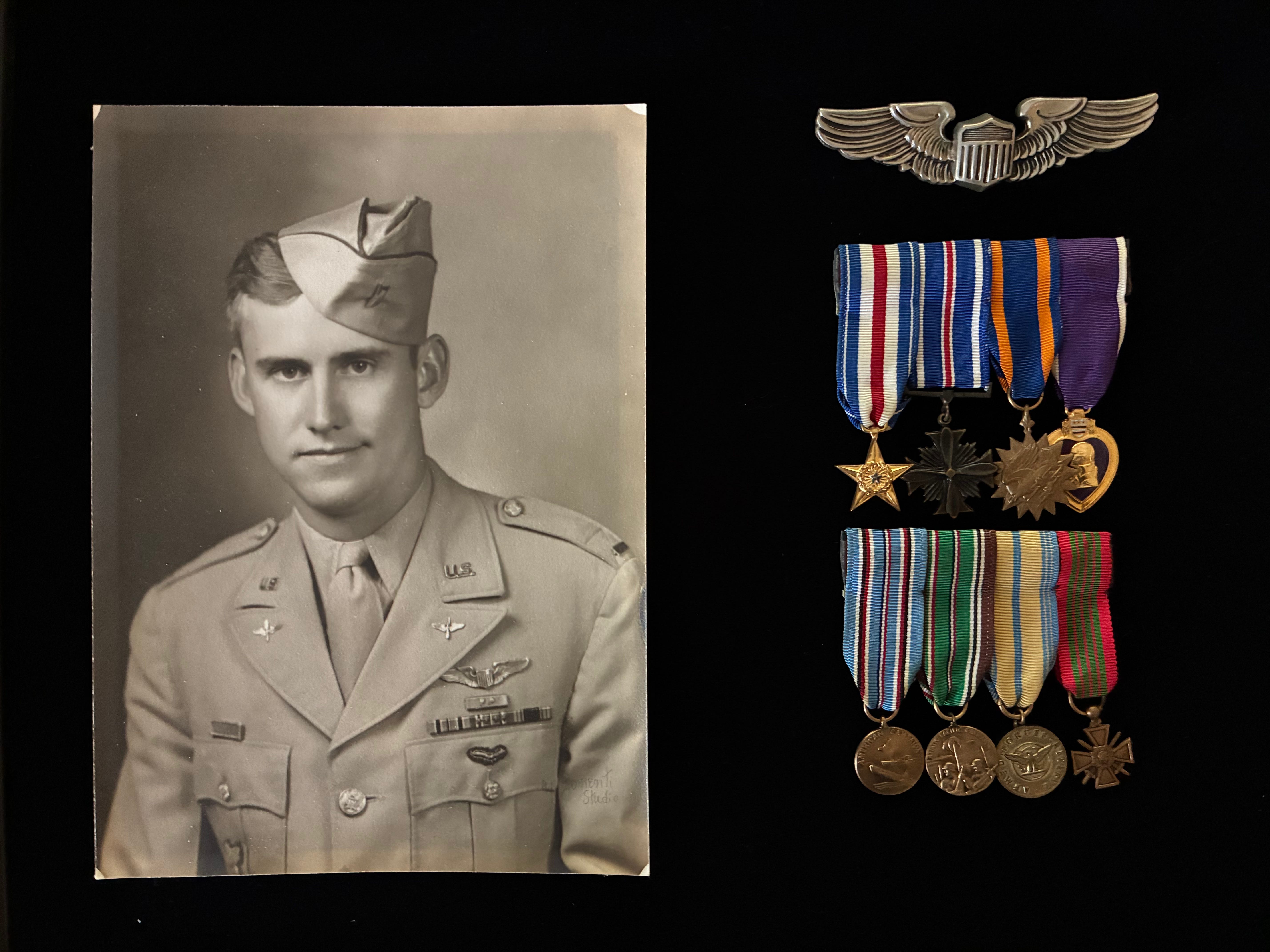
That’s what UNDER A WAR-TORN SKY is about—the shared experiences of an American flyboy and the French civilians who hid and guided him. People who typically couldn’t understand what the other was saying, but who were both steeled by a commitment to save one another from the Nazis’ methodical cruelty. Whatever it took. That sense of shared humanity and compassion—of restoring a global order of decency—is ultimately what WWII was all about too. A sense of universal responsibility I fear is being forgotten in our current political milieu and by a president who belittles our Allies.
I’ve jokingly called myself an accidental novelist. I was a reporter for the Washingtonian magazine, writing long narrative “human interest” articles. Some had become consequential in terms of bringing attention to important—and at that time, little discussed—women’s issues. Not because of me but because of the people who braved letting me tell their stories. People who’d been hit with crises and dug deep inside themselves to find stubborn revolve. Their grit became a beacon for others hit with similar challenges.
Even so, I was totally unprepared for the outpouring of heartbreaking and heart-lifting letters I received (yes, back then we received actual letters!) regarding a December issue “holiday story” recounting my father’s WWII homecoming.
Daddy had been missing in action for months from a bombing raid on a ball-bearing plant deep inside Germany. His parents and sisters were beginning to accept the tragic possibility that he was dead. And then…Daddy just showed up in the driveway of the family farm, five days before Christmas 1944. Unannounced. He was so wizened and starved from being on the run for so long at first only his dog recognized him.
WWII is full of anecdotes like that—as the letters I received testified.
Those letters shouted at me to expand the story. And so, a factual article about one individual flyer morphed and grew into a larger work, UNDER A WAR-TORN SKY—a novel that allowed many archetypes of the Resistance (or maquis as they called themselves) to come in and out of the pages. A novel invited metaphors, motifs, and questions that nonfiction couldn’t address with the same emotional immersion. My character, Henry Forester, could expand into an “everyman” emblem for the 51,000 American air crew members who went missing over Nazi-occupied Europe. And I could send Henry on two, simultaneous odysseys—an on-the-edge-of-your-seat escape as well as a pilgrimage of self-redefinition and redemption.
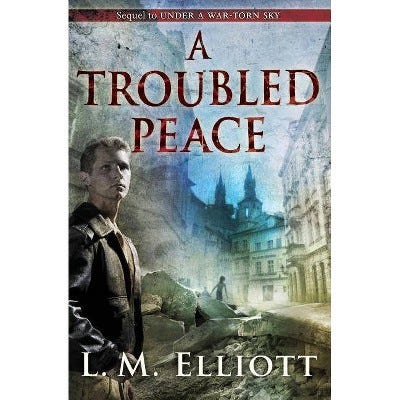
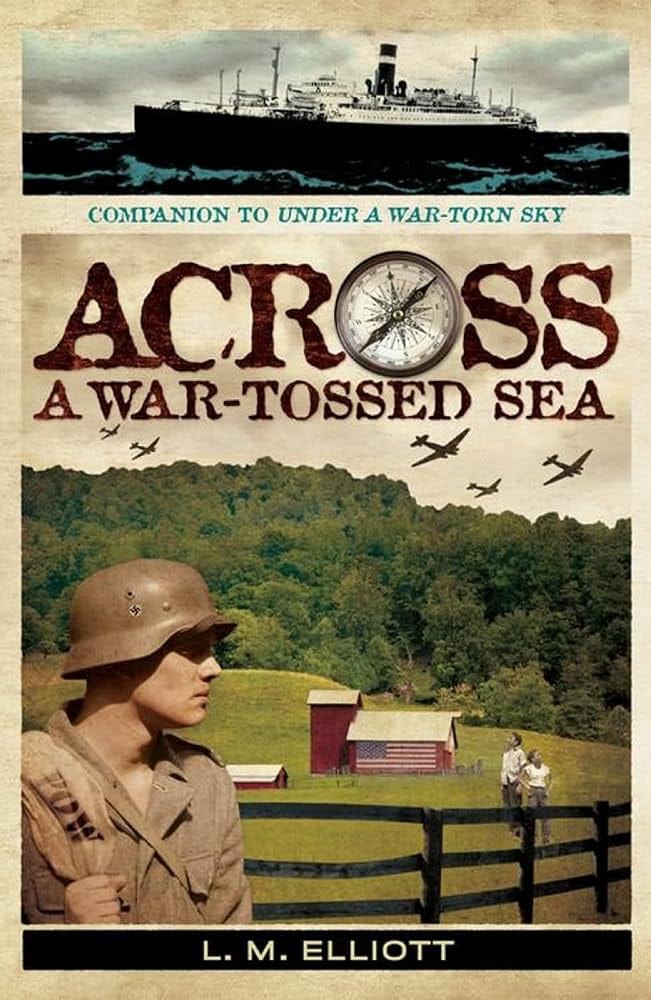
I’d always planned to celebrate the novel’s 25th anniversary in some way. Largely because the story has seemed to touch so many—teens and adults. It’s been included reading in high school and middle school WWII curriculum and Battle of the Books competitions across the nation for years. I’ve had the true joy and awe of speaking to hundreds of school groups. In fact, their concerned questions about what happened next to characters they’d come to love sparked a sequel, A TROUBLED PEACE—in which Henry returns to France to find Pierre, the boy whose family sheltered Henry but who then were brutally arrested. Readers also wanted more about Henry’s spitfire girlfriend, Patsy, which prompted my homefront narrative, ACROSS A WAR-TOSSED SEA.
Some of the most rewarding letters and emails I’ve received have been from teenage boys—blunt, often grammatically challenged, shall we say—who claim they hated reading books until they were handed Henry’s story. Recently, I’ve received a number from now 30-something adult men, saying the novel had a profound impact on them when they were teens, at a time they were struggling to define themselves and what being a man meant. I’ve teared up at those, as they reaffirm my favorite review of the book (from ALA’s Booklist): “It’s packed with action, intrigue, and suspense, but this novel celebrates acts of kindness and heroism without glorifying war.”
It’s a tone that feels important to maintain, as counterweight to this Pentagon’s norm-shattering, bro-culture bluster and video-game-style celebration of what before would have been sober military actions. Frankly, it was this callous, saber-rattling rhetoric and the president’s performance at the World Economic Forum in Davos in January that made me finally decide on how exactly to commemorate the novel’s 25th.
I’d been thinking a great deal about Daddy that week—the anniversary of our losing him to cancer in 2001. I deeply miss his no-nonsense wisdom, the innate largesse and matter-of-fact sense of responsibility to help others get back on their feet that he and his “Greatest Generation” contemporaries just seemed to exude. I felt nauseous listening to Trump demand ownership of Greenland and demean our European allies, even mocking French President Emmanuel Macron and braying, “Without us, right now you’d all be speaking German.”
I decided to go back to France. To thank them as the daughter of a WWII veteran, hoping my encounters might serve as small, one-person overtures—little moments of what the state department used to call “cultural diplomacy.” And I wanted to salute all those thousands upon thousands of Americans willing to join what they recognized would be an awful fight, because they knew how critically important to humankind their mission would be.
So last month, I traveled through France with my adult children—who live and breathe and bring their beautiful voices to this earth because of what “ordinary” French people dared to do in 1944. Their accompanying me made the mother’s gratitude I feel resonate to my bones.
We retraced their grandfather’s and Henry’s escape paths. We walked some of the same villages, stood on some of the same precipices, re-visited roadside memorials and small cemeteries that French townspeople still meticulously maintain. I asked people we met their memories and thoughts—on the war, its legacy, their sense of fraternity with us, and where our bond stands today. Their answers amazed me—they were all philosophic, patient even when incredulous about our current fractured politics, and always, always embracing of us.
Over the next weeks, I’ll be sharing Substacks about the trip (interspersed with my usual posts on political/historical anniversaries) as well as more UNDER A WAR-TORN SKY-related content.
Encouraged by the growing trend of “book-action/read-away/literary travel,” guided by the interdisciplinary study units I’ve seen teachers create for students reading UNDER A WAR-TORN SKY, and continuing my mantra of “exploring history to better understand today and each other,” the posts about the trip will be a mixture of things. There’ll be conversations with French people and travelogue about some stunning, less-visited regions of France—remote and rural areas where the maquis were particularly active and through which flyers were often moved in loosely held “ratlines.” When relevant, I’ll tuck in some literary sightseeing (Rousseau, Camus, Twain, Byron for fellow English lit geeks). There’ll be “insider” info for UNDER A WAR-TORN SKY readers about the origins of the novels’ characters, themes, and scenes. I’ll be going sequentially from place to place just as Henry would have, starting in Switzerland and ending at the Pyrenees. I’ll be sure to subhead topics so you can pick and choose what you’d like to delve into.
There’s already an “Easter egg” in the trailer for UNDER A WAR-TORN SKY aficionados. Most of our Air Force flyers were younger than the legal voting age of 21, many from small towns or farms. They were incredibly superstitious given the fact the average life span of crews—in terms of returning to base from a mission—was only 15 of the required 25 bombing raids. Most tucked good luck charms into their pockets that became sacrosanct talismans for survival. Henry’s was a “cloud” marble—the significance of which I’ll share in a later post.
For students and people interested in how a book trailer is made, its director, Alexander Sharp, talked with my son (and fellow novelist), Peter Malone Elliott, for an upcoming post. The two were film students and BFF roommates at Loyola Marymount University and straight out of college created a stunning, Hitchcock-style feature film now streaming on Amazon.
Come October 1st—UNDER A WAR TORN SKY’s actual 25th anniversary pub day—all posts will be put on the novel’s landing page, so educators and students have easy access to them in the future.
I’ll end today by sharing a tiny snippet of one of the most meaningful days of my month-long journey.
A very dear friend from Wake Forest University introduced me by email to her daughter’s new French family—the uncle and aunt of her daughter’s husband. They live in Annecy. The beautiful lakeside city was an important stop (Madame Gauloise’s home) and features in both UNDER A WAR-TORN SKY and A TROUBLED PEACE. It’s also the one place my father remembered being (like all downed flyers, Daddy walked the country on foot, moved by those helping him without being told where he was or where he was going next to prevent his divulging that info if caught).
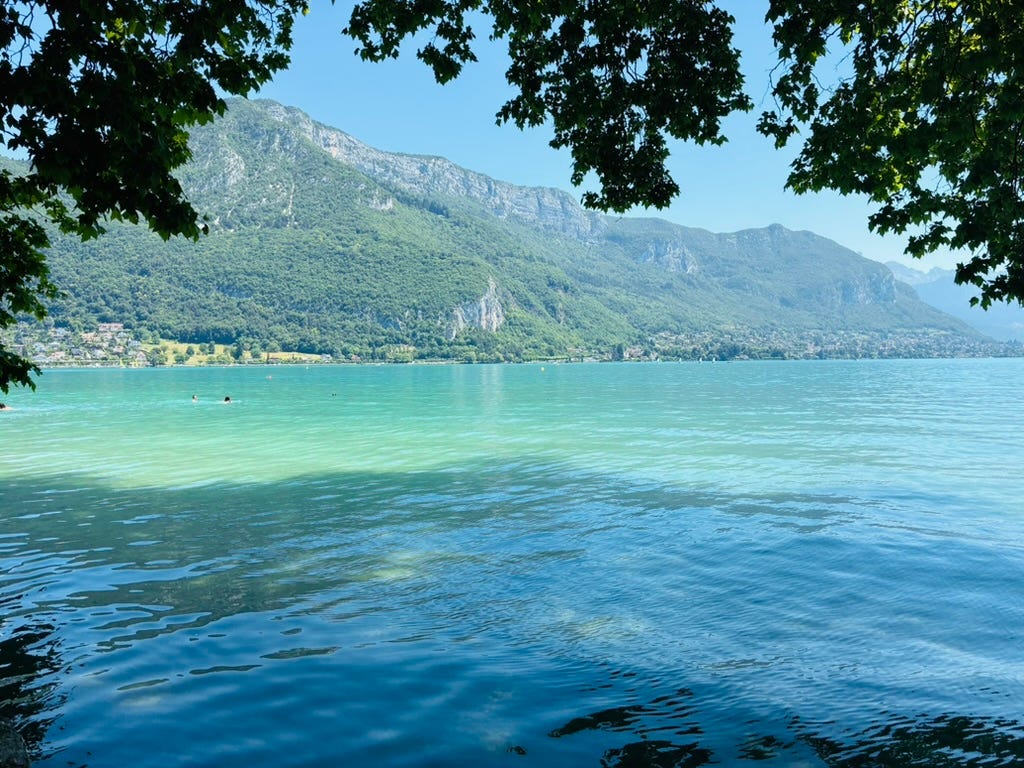
I’d simply hoped to ask Laurent if he could direct me to sources/memorials about the Resistance I could visit while in town. Instead, Laurent and his wife Pauline enveloped us with extraordinary generosity, treating us to a delicious dinner (Pauline could be a restaurant chef!) in their lovely home overlooking the lake (more on that and the stunningly informed conversation with their 19-year-old twins in another post. French college students are concerned about us!).
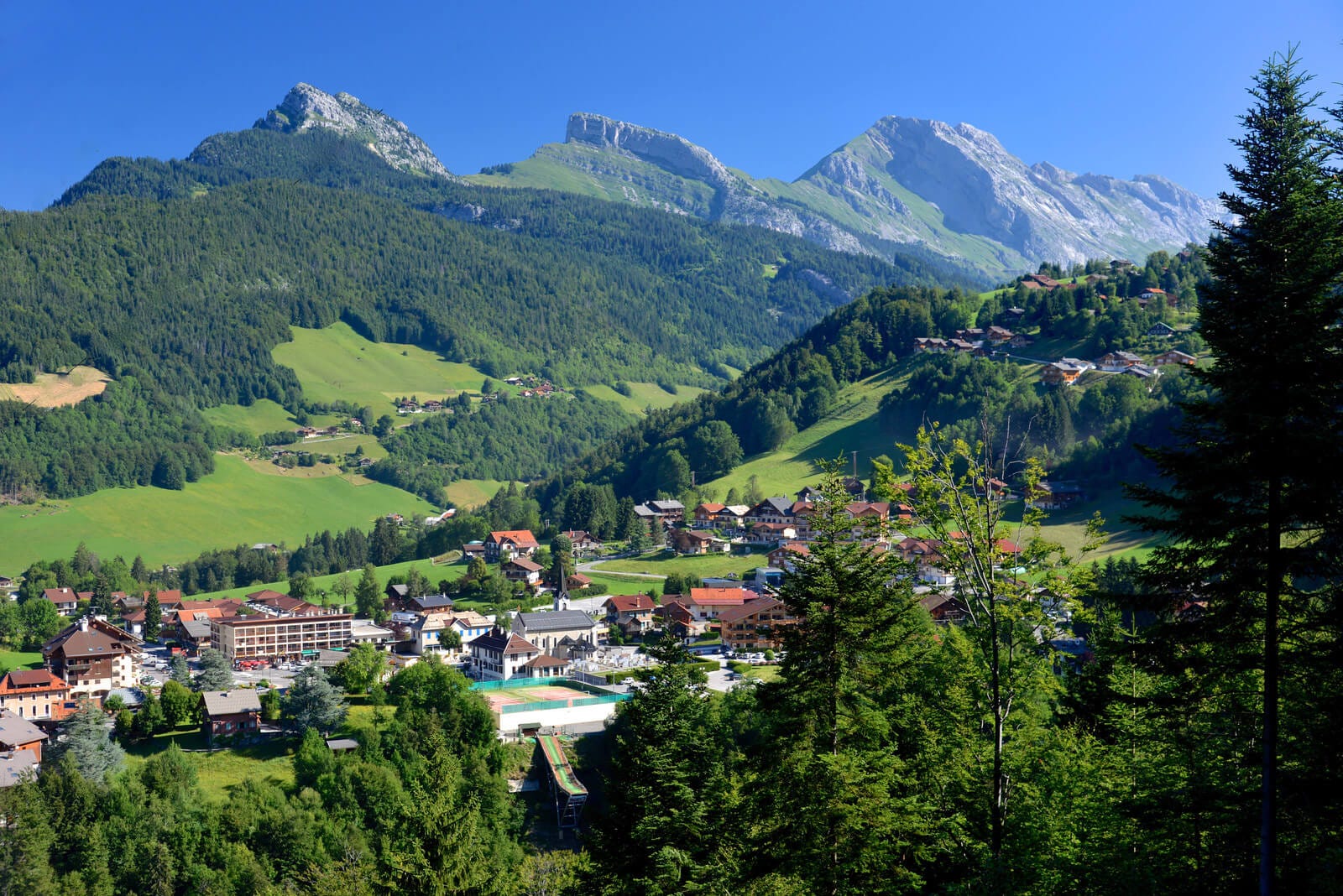
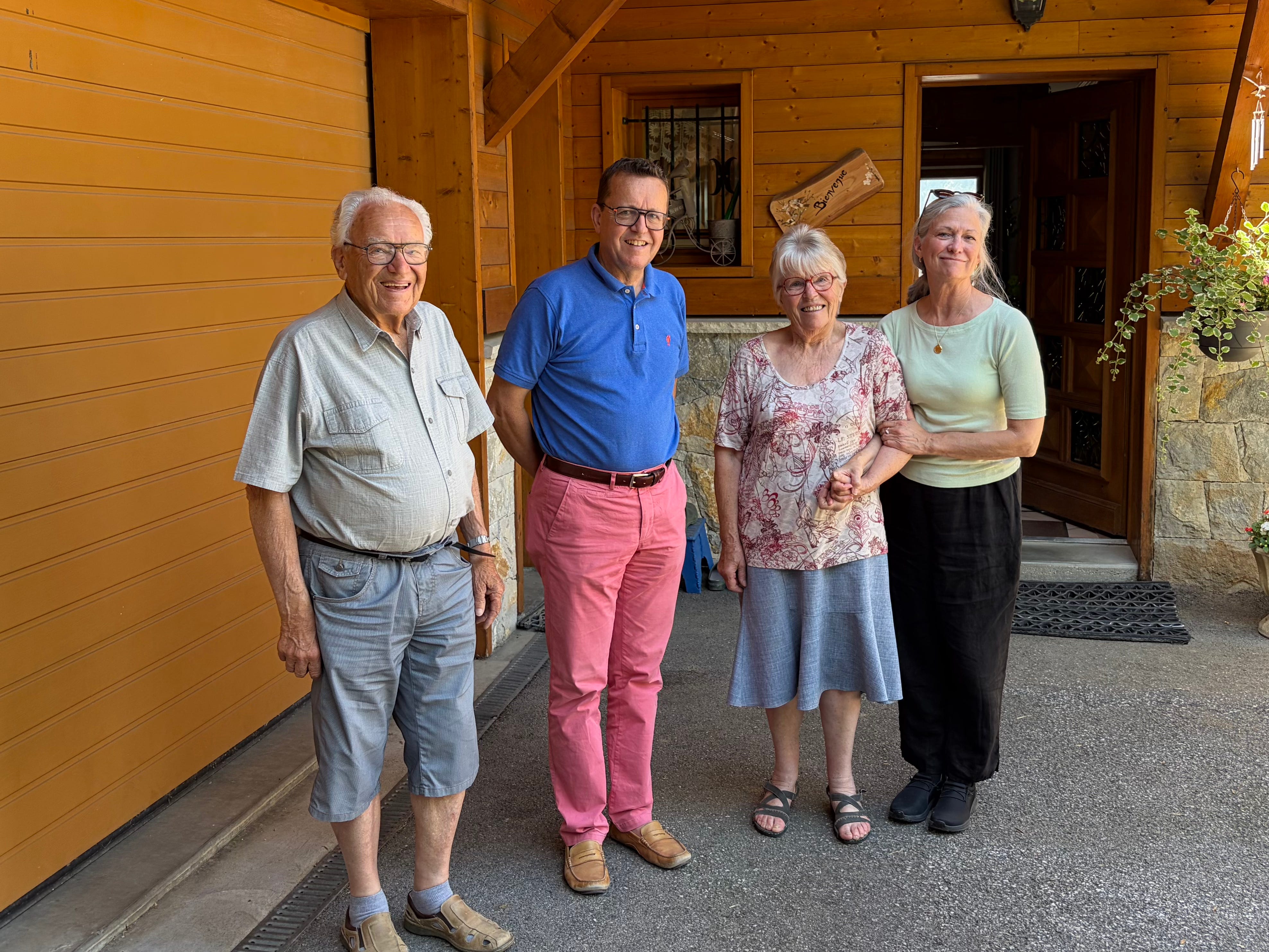
Then Laurent spent an entire precious Saturday driving Peter and me up into the Alps to the Glières Plateau (the scene of a heart-breaking stand-off between the valiant but tragically outnumbered, outgunned, out-trained maquis and the Nazi juggernaut). On the way, we visited his parents in the tiny village of Saint Jean de Sixt. Now in their mid-80s, Gérard and Collette were young children during the war. But they remember it and its aftermath vividly, and Gérard helped collect and publish memories of the Glières maquis and their families who survived the Nazi battle.
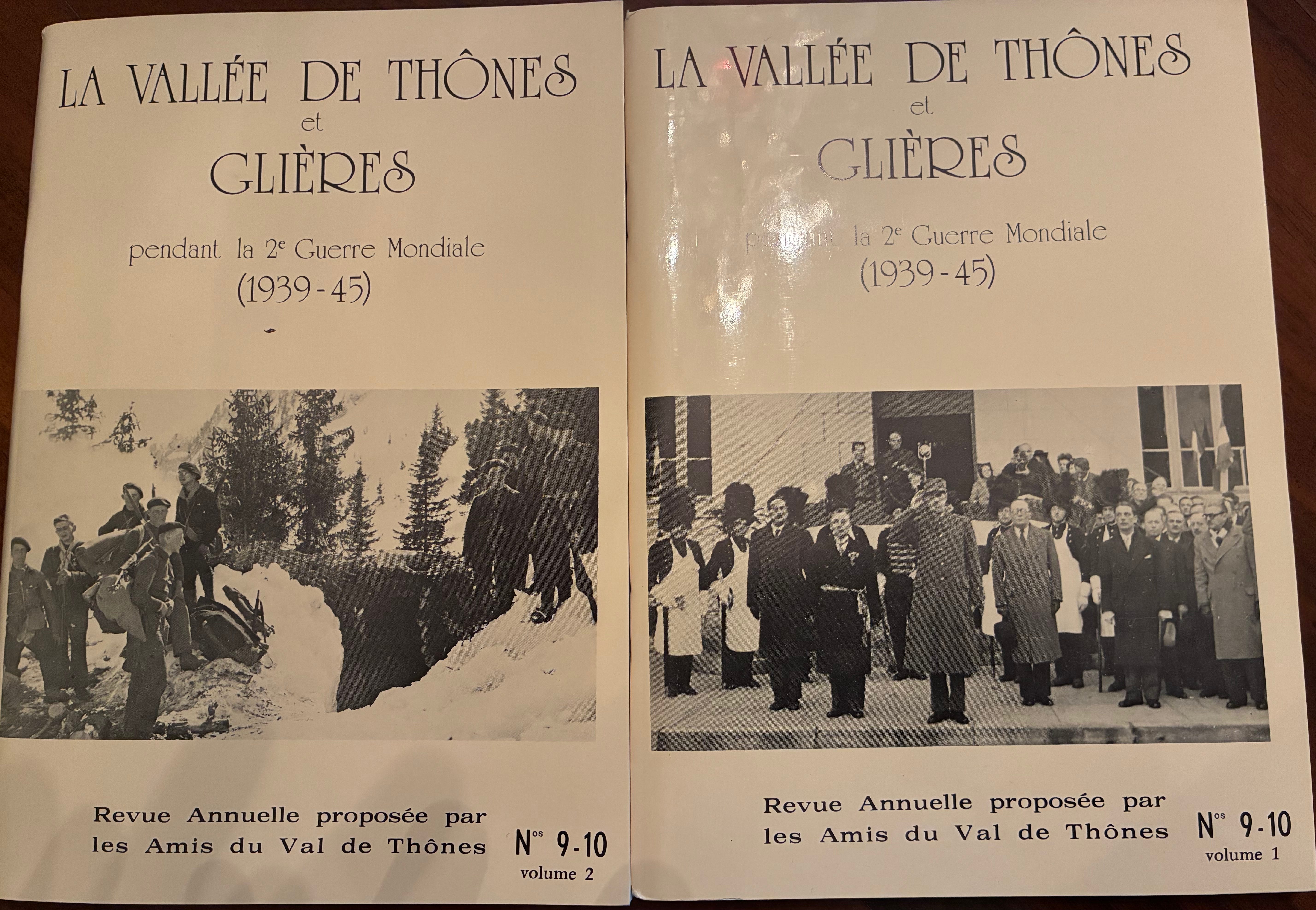
As gracious as their son, they wanted to know the details of my father’s journey—who among their French brethren had helped him. Laurent translated, since I, sadly, don’t speak French. Their concern for my father, that hurt and lost young man, was immediate, palpable, belying the passage of 80 years. Their empathy and sense of contentment that he’d been saved radiated from them with each nod of their heads at the details I was sharing and touched my heart so deeply it’s hard to describe adequately.
Of her own father, who’d spent five long years captured and working in German labor camps, Collette teared up remembering. “He could not talk about the prison. It was too terrible.” Her voice had grown hoarse. I took her hand, our connection as daughters in a moment of mourning made me bold. She squeezed back.
After a moment, she continued: “When he saw the Americans coming to give them freedom it was a tremendous thing. Tremendous. That he discussed. Without the Americans and the Brits, we do not know what would have become of us.”
She teared up again, worried that she and her husband are the last generation that remembers, that the world “is losing the power of memory from those who had to survive it all. We must remember. We must not lose the,” she paused, looking to her son to convey her urgency, “la mutualité.”
Fellowship. Standing together, arms linked, against a maelstrom’s cross winds so that no one person is knocked down, destroyed and lost, the group surviving together.
I took her hand once more, my voice hoarse this time. I wanted to reassure her that she and her husband had kept that flame of memory, that communion, alive and that I would pass it to others for her. “That’s my job,” I promised her. “My journey to take.”
And so, I take your hands now, friends. And hope you come with me.
More next week.
—L.M.
Comments
Nothing yet. Say the first thing.
Sign in to join the conversation.