

Get ready for next year’s CLIO advertising awards, or their Canadian equivalent, the EFFIES. They are going to go to whoever put together Alberta’s campaign selling gas-fired data centres- oh, sorry, just as methane was rebranded as “natural gas”, data centres are now “digital refineries.”
I am fascinated by marketing. I start every morning with my daily Seth Godin. I have written often about how to market Passivhaus. So I am absolutely blown away by the audacity and shamelessness of this campaign.
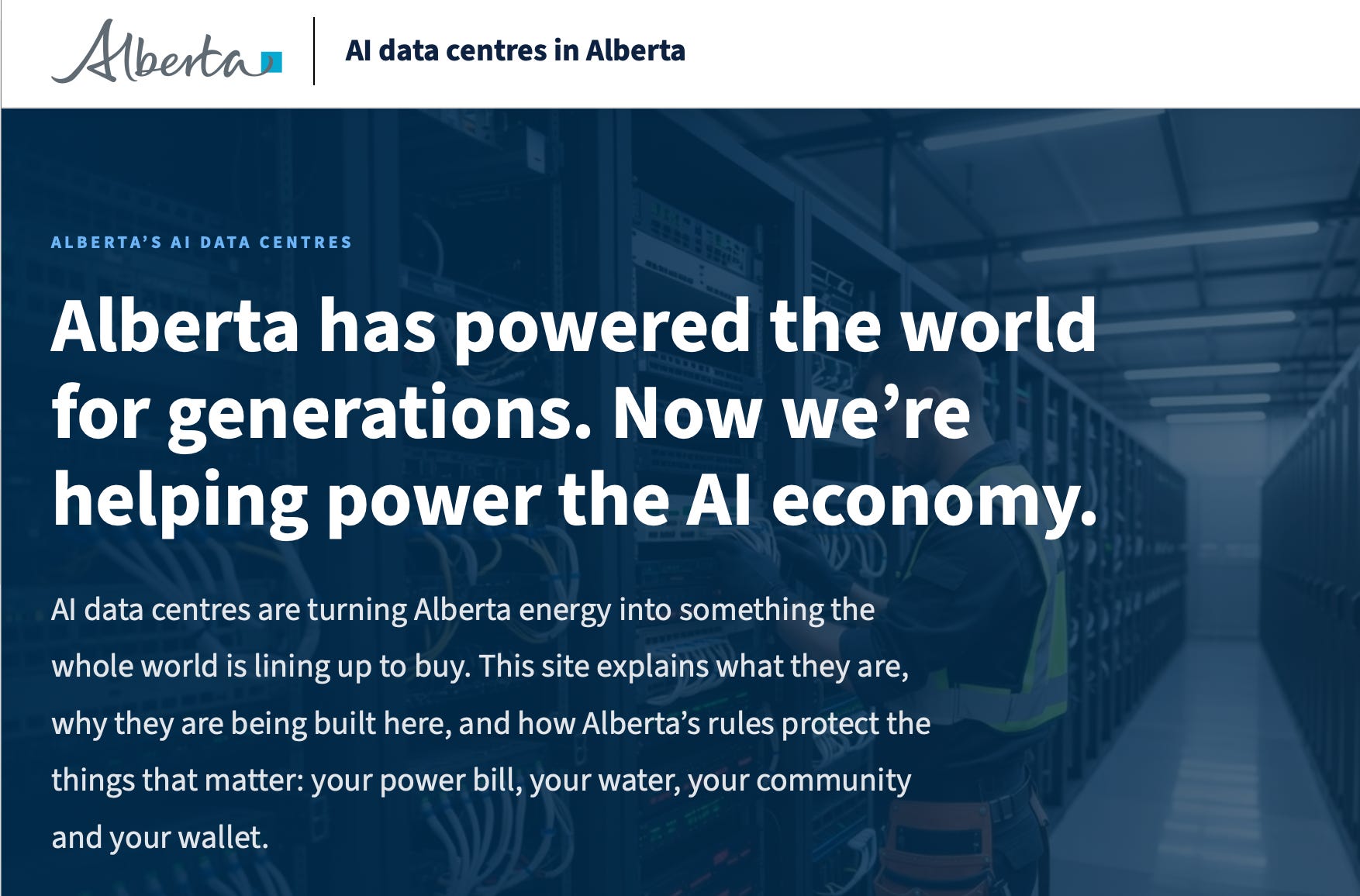
Natural gas has always had brilliant marketing, from the invention of its name (we should call it methane, and the US government wants us to call it “freedom gas”) to Bob Hope’s “now you’re cooking with gas” to Instagram influencers with their big gas ranges. However, Alberta takes it to a whole new level. The province is trying to justify the construction of massive new data centres powered by natural gas-fired generators, starting with a big one for Meta.
But first, they have to explain what data centres are and reduce our fear of them, suggesting they are no big deal; we have been relying on them for decades. And just as there was no spoon in The Matrix (it’s just digital code), Alberta explains:

“When people say “the cloud,” they mean a data centre. There is no cloud. There is just somebody else’s computer, in a big building, doing work on your behalf. AI data centres are the next generation of the same infrastructure. Instead of mostly storing information, they are built to think. Because they do far more work, they need far more power. Same concept. Much bigger engine.”
Then they take the creative leap: they are not turning natural gas into chemicals or heat, but into information and intelligence. So it’s not a data centre, it’s a “digital refinery.”
“Alberta produces about 60 per cent of Canada’s natural gas. A data centre refines that gas, in stages, into the most valuable commodity of our time. Gas becomes electricity. Electricity becomes computing power. Computing power becomes intelligence: the answers, predictions and tools the world is buying.”
Brilliant. And this intelligence is evidently worth a lot of money:
“Turning Alberta natural gas into AI computing multiplies its value about 1,000 times. A gigajoule of gas worth about $2 at the wellhead becomes roughly $2,100 worth of AI answers sold around the world. Not 5 times. Not 20 times. A thousand times.”
For whom? All that value belongs to Meta, but hey, that’s fair; “Meta paid 100 per cent of the costs and carries 100 per cent of the risk.” But as Sabrina Perić notes in her devastating takedown, which I discovered after writing this post but add here:
“This is the trick at the heart of the whole page. A data centre does not refine Alberta’s energy into something Albertans sell. It consumes Alberta’s energy to produce something a foreign company sells. The metaphor inverts the actual relationship. It takes a facility that is, in plain terms, an enormous new draw on our electricity, our water licences, and our industrial airspace, and re-describes it as a value-adding export industry. Consumption becomes production. A cost becomes a product.”
But there is another risk that is borne by Albertans and everyone else. The big multipage website never once mentions the words “carbon dioxide”, and its “by the numbers” page never lists how many tonnes of it will be released. However, they do list how many megawatts of power are going to be generated by burning methane, and it is a straightforward calculation:
Greenlight Power Plant: 932 megawatts.
Methane consumption estimate: 150 million cubic feet of natural gas per day, 56.4 million MMBtu/year.
Using EPA’s combustion factor (53.06 kg CO2/MMBtu) we get 56.4 million MMBtu × 53.06 kg/MMBtu ≈ ~3.0 million tonnes of CO2 per year, from the Greenlight plant alone.
That’s equivalent to the emissions from about 650,000 ICE-powered passenger cars.
And that’s just one of the power plants, and they don’t even mention it on their environmental page.
Writing in The Tyee, David Climenhaga suggests that the campaign is sort of preemptive propaganda.
“In fact, there are many persuasive arguments for Alberta to pause and think carefully about the environmental, social and financial impacts of these water and power greedy megaprojects. But a recent poll suggested most Albertans have not yet cottoned onto those concerns. So it was probably inevitable the UCP would turn up the pressure on this sales job while Albertans were still unsure of what to think.”
And what a sales job it is! Compared to the hassle of building pipelines for gas, turning it into a product called intelligence is so much better!
“The product ships through fibre optic cable, at the speed of light. A digital pipeline that crosses borders without a decade of regulatory battles, carries the finished product instead of the raw one, and never sells at a discount.”
Really. It’s as brilliant as the name “natural gas” was.

I don’t know who Alberta hired to come up with this campaign, but “Digital refineries” may be their best pitch in decades; it’s right out of Mad Men, and they should be up for a CLIO or an EFFIES.
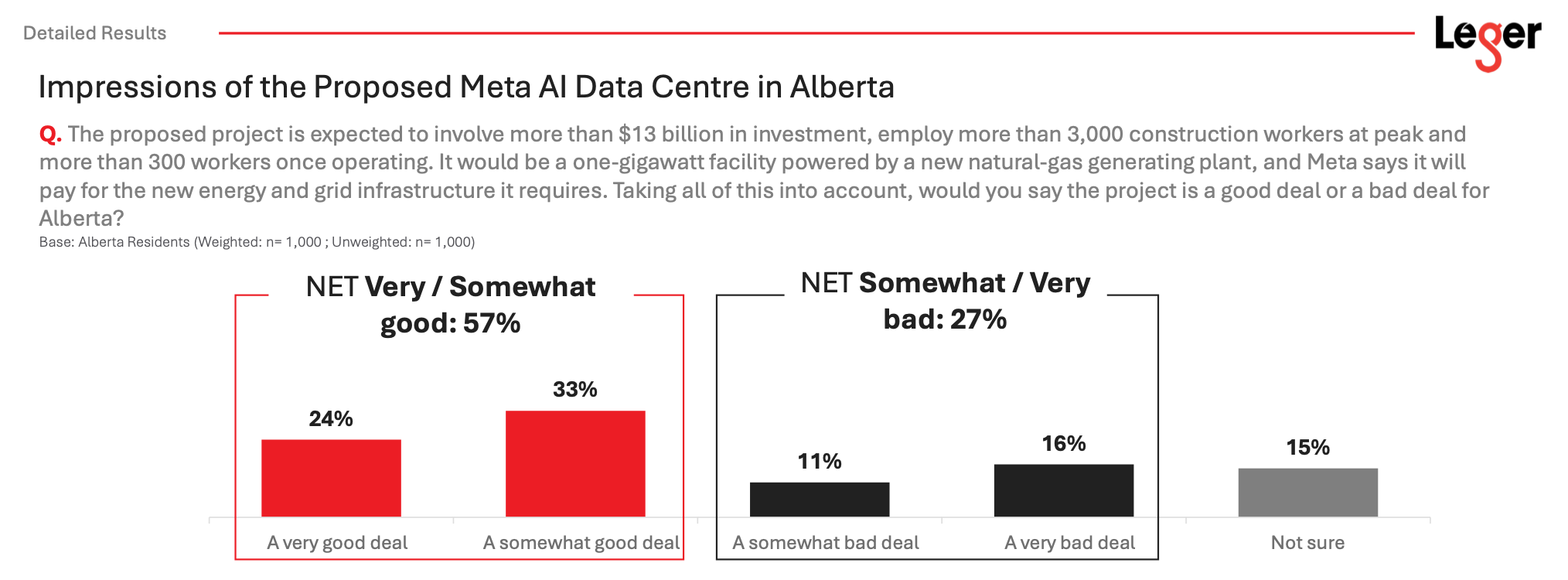
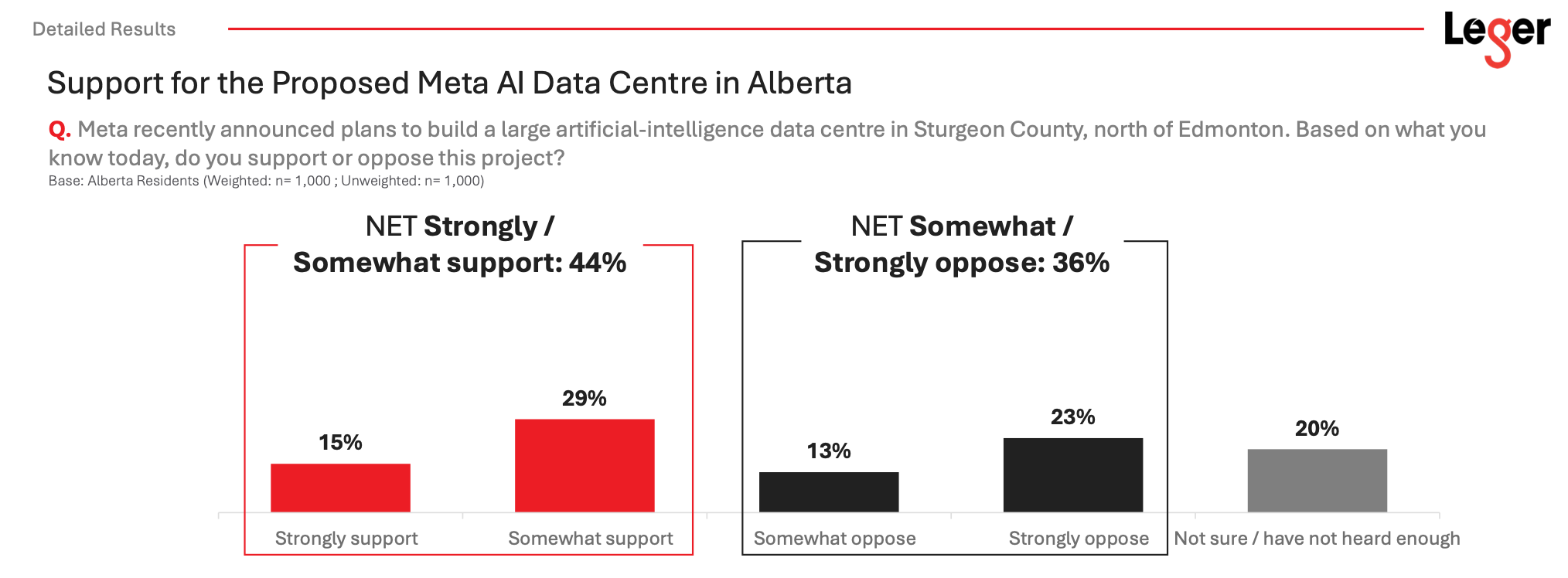
Climenhaga points to a Leger poll that found that after Albertans heard the Province’s “talking points,” support rose from 44% to 57%. The gas industry has never taken its foot off the gas with its marketing, but this campaign is just flooring it.
After all, according to the page titled Is Alberta selling out to big tech?
“Remember the value chain: about $2 of Alberta natural gas becomes roughly $2,100 of computing and intelligence.”
Digital refineries are going to print money. Who could say no to that?
Comments
Nothing yet. Say the first thing.
Sign in to join the conversation.