
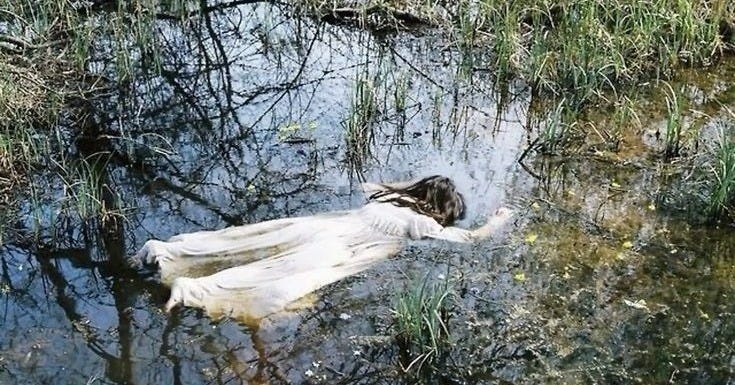
If you want to feel a little soggy today, check out my media list:
Though it might be an uncomfortable, tooth-grinding exercise, I want you to imagine a data centre. 100,000 square feet of pure efficiency humming somewhere just beyond the edge of the city slicker’s comfortable notice. A squat, quadrilateral testimony to a race catapulting themselves into the next century, without so much as a glance over the shoulder. Can you see it?
Now we might imagine the complete opposite; the antithesis to this buzzing bastion of productivity.
We find ourselves knee deep in muck, the air is damp and green — a far cry from the faintly discomfiting ozone of the server farm. Black sludge wells up through wefts of centuries old sphagnum moss, tannin-dark and resinous. The land is almost writhing with vegetation: hosta, meadowsweet, creeping jenny, perhaps a feathery tuft of pale astilbe; constellations of marsh marigold. What might first be taken for quiet is, in fact, many layers of lazy sound. A curlew burbles and beeps, insects murmur to each other, the sucking mud ebbs and pops. Something is happening here. Slowly, by degrees the land is consumed in great squelching gulps. What goes down won't resurface, reformed, in our lifetimes.
The bog appears to be lapping at the ankles of many a disillusioned soul. Increasingly, across popular culture we are seeing a rise in marshland spaces as the antidote to the gleaming minimalism of our technological age.
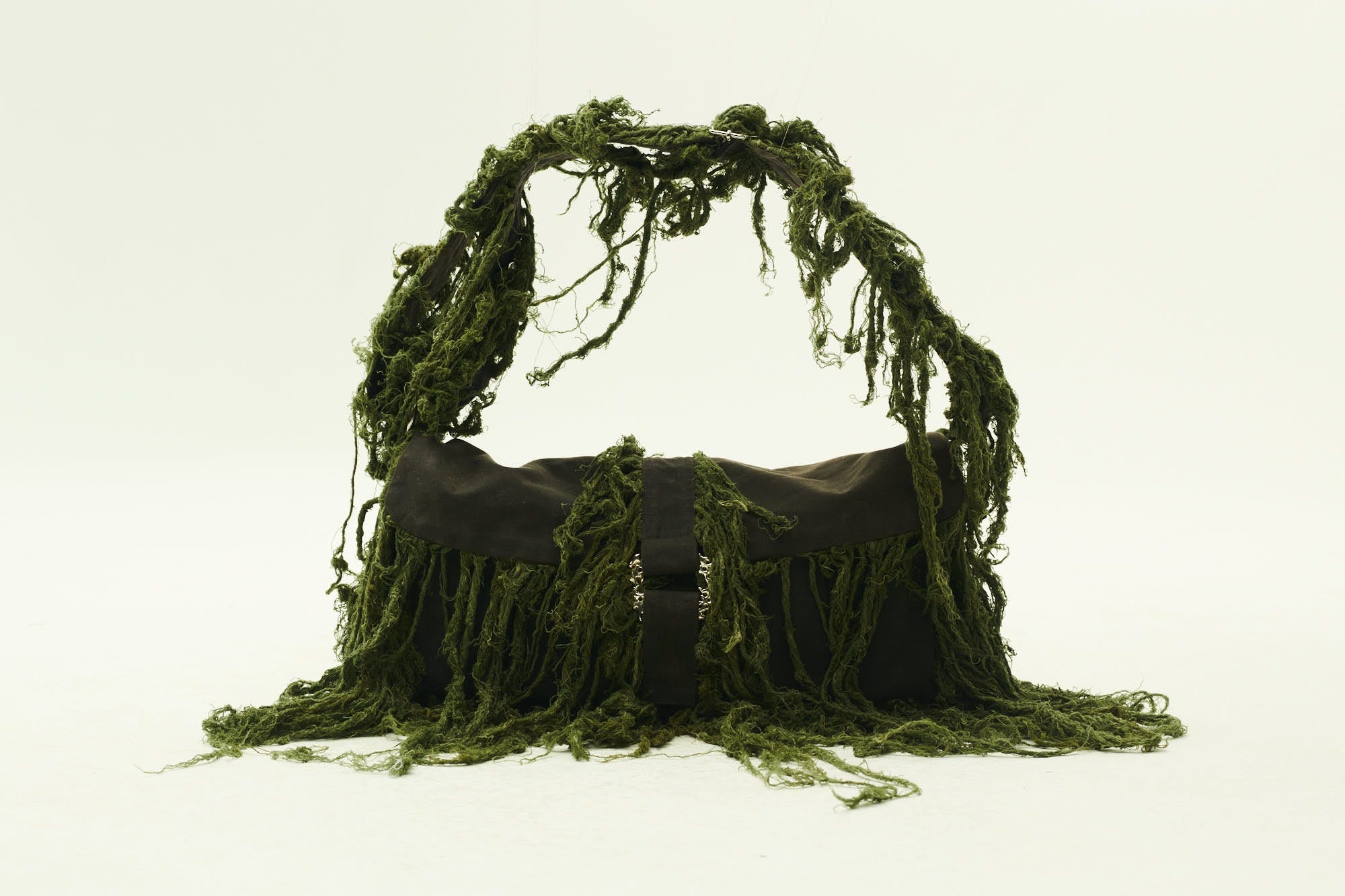
At Paris Fashion Week 2026, elements of the mire could be seen throughout the works of several major fashion houses. Hermes and Louis Vuitton staged runways amid great spongy, moss covered sets, and independent brands such as IAMSIGO and Solitude Studios have released collections inspired by, and in collaboration with peatland. Solitude even submerged some of their garments in Danish peat marshes to achieve a rather arresting distressed effect.
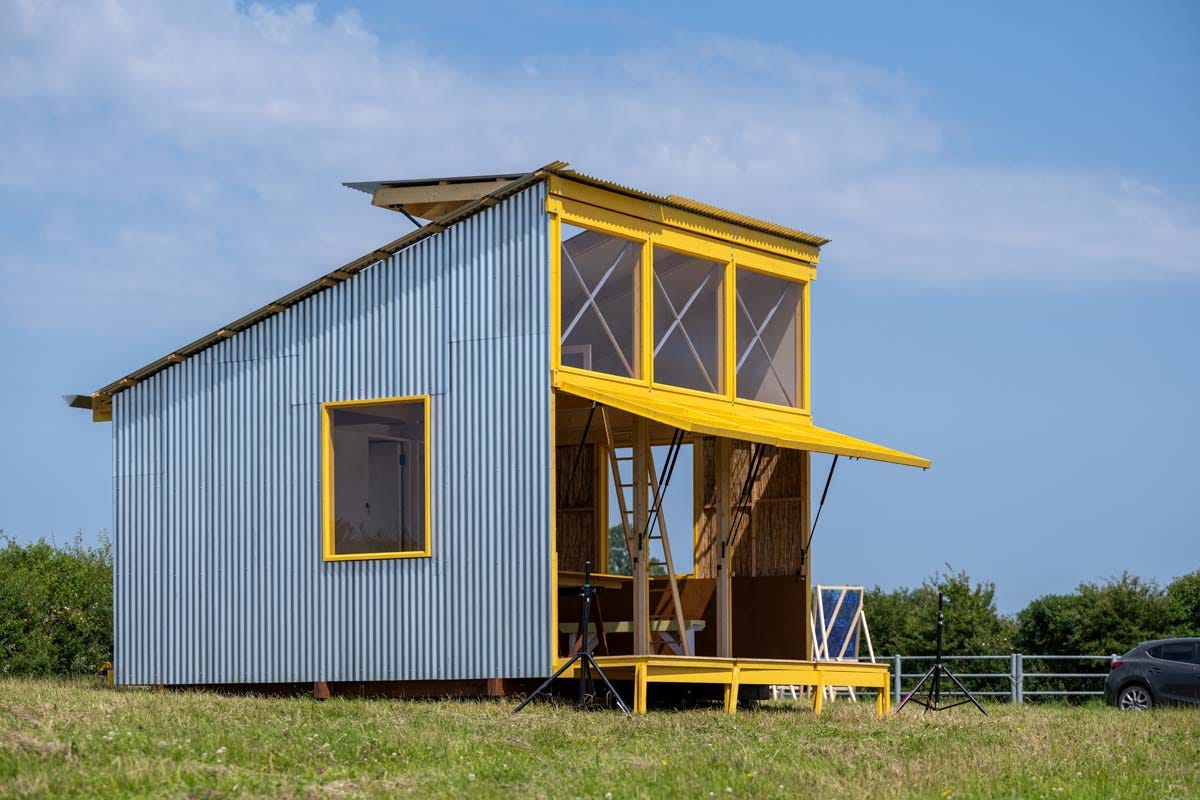
At California's San José Museum of Art, Chalon Nation artist Christine Howard Sandoval’s October exhibition will bring together sculpture, drawing, and plant-dyed pieces that trace how the state's wetlands once served as places of Indigenous resistance and community. Across the pond, The Bog Bothy, a mobile design project by the Dublin-based architecture practice 12th Field in collaboration with the Irish Architecture Foundation, was inspired by the makeshift huts used by peat cutters who harvested the material for fuel. The bog is even seeping into our homes, with Edinburgh based designer Oisin Gallagher fashioning unique doorstops from bog oak scraps, carbon dated to 3300 BC.
June saw the release of Maggie O’ Farrell’s highly anticipated Land, a historical fiction following cartographer and famine survivor Tomas, as he journeys through Ireland’s rich wetland, producing an unofficial map that documents the landscape through the Irish language.
Across TikTok and Instagram, the ‘bog witch’ aesthetic is bubbling up between curated videos of pristine kitchens and sponsored skincare demonstrations. This movement favours patina, unkempt hair, bare feet, wet earth, slow fashion, and a healthy dose of intolerance for the hyper-consumerism perpetuated by the popular ‘clean girl’ lifestyle. This is cottagecore’s grimy cousin, the crest of a growing cultural wave that rejects the pristine domesticity of its predecessor in favour of something looser and altogether stranger.
TikTok user Leah Thomas says:
‘bog aesthetics reject the idea that nature has to be pristine or productive to be beautiful. A bog is messy, a bog is weird, a bog is mysterious and kind of icky at the same time.’
But why bogs, and why now?
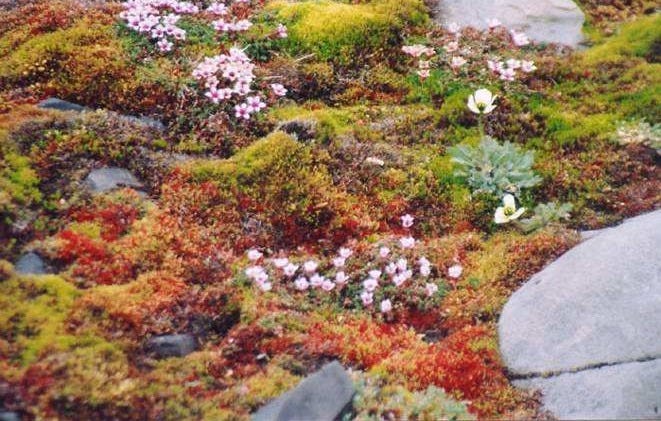
Inhospitable, intriguing and bleakly beautiful, our wetlands are deeply functional spaces. Despite only making up around 3 to 4% of the Earth’s terrain, wetlands are responsible for housing 40% of our carbon stores. The UK alone boasts around 5.5bn tonnes of carbon: that’s over half of the entire country’s current carbon storage kept in bogs alone. Sphagnum moss, that spongy carpet of ochres, umbers, scarlets, and tungstens, thrives in bogland areas, soaking up to 8 times its weight in water. This absorption acts as the driving force behind peat bog ecosystems. By trapping water, sphagnum creates a permanently waterlogged, oxygen-poor environment that prevents dead plant material from decaying fully, allowing rich peat to form and store this massive amount of carbon. The unique biodiversity this promotes means a specialised niche is carved out for the growth of rare plants such as sundews, with low oxygen and acidic conditions keeping aggressive competitor plants out. Abundant aquatic invertebrates and amphibians in bog pools feed endangered or declining wetland birds, such as curlews and cranes, allowing populations to thrive in densities seen nowhere else in the world.
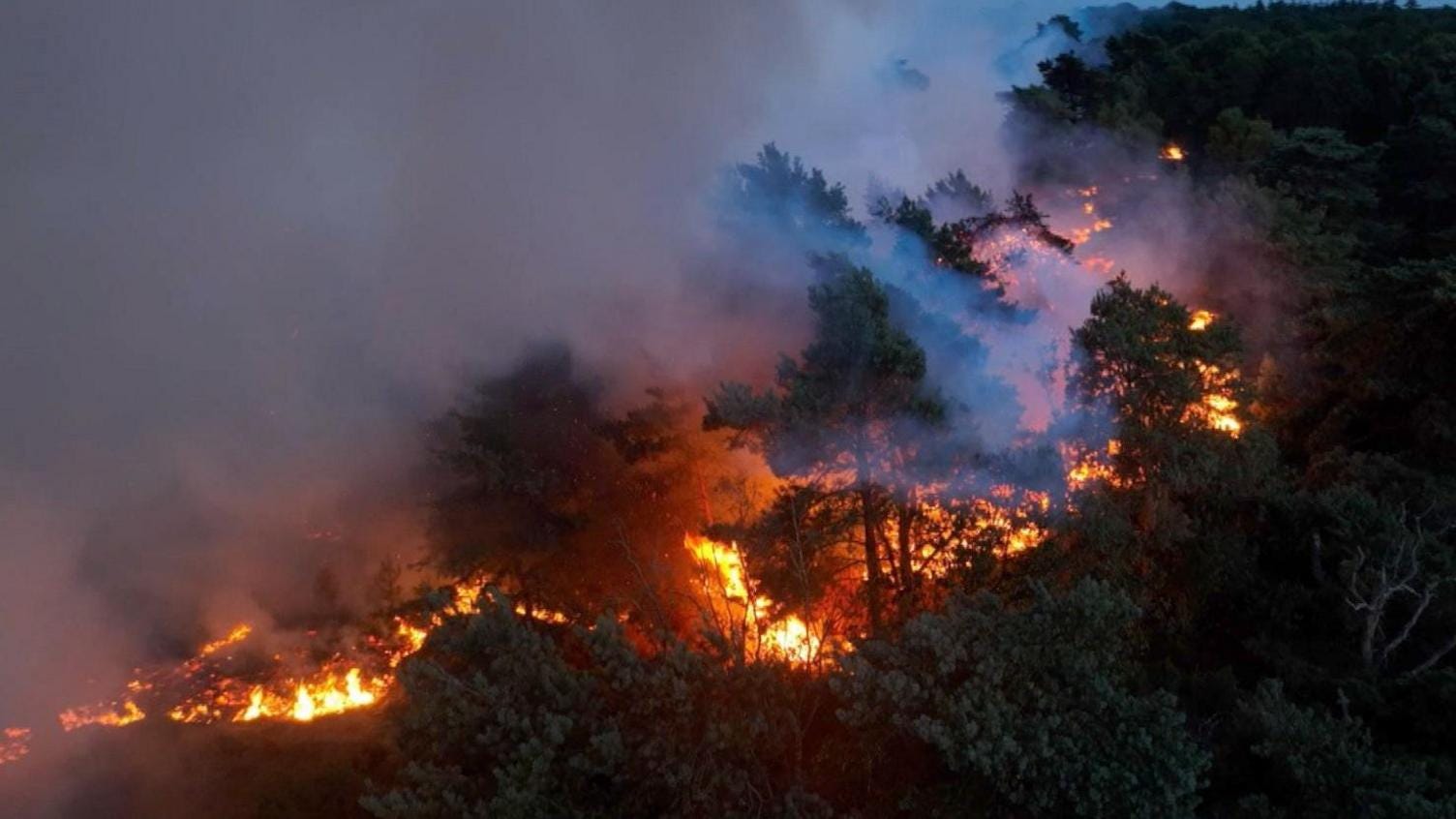
The UK and Ireland hold over 20% of the world’s blanket bog (a globally rare biome), making these rainy isles one of the most important places for this habitat. Unfortunately, these environments have borne centuries of misuse, and the land carries the scars. 94% of Britain’s raised bog and 99% of Ireland’s has been lost over the last century due to peat cutting, burning, drainage and afforestation. 44% of Scotland’s internationally important blanket peat bog was lost to afforestation and drainage from the 1940s to 1980s. Scientists now count this loss as a double blow: a hit to carbon storage, and a weakening of our defences against wildfire, just as the mounting climate crisis makes both matter more than ever. One need only look to the recent tragedy of Dunwich Heath, Suffolk to see the devastating effects of hotter summers and drier landscapes.
In this way, the bog and the data centre are opposites, not only in appearance, but in function. The bog takes centuries to become what it is. The data centre is built in months. And where the bog draws carbon down and holds it, layer upon patient layer, the data centre burns it up in real time, to keep the cloud, that great immaterial wilderness, running.
In prehistoric Europe, bogs were considered deeply productive sites, regarded with a spiritual reverence deserving of this unique, almost alien terrain. Clifton Bain, former director of the IUCN Peatland Programme. points out one can tell much about a community from its use of the terrain:
‘It’s an interesting part of the story. When you go to a peatland site, it’s all the stuff nearby that you should visit. The local culture helps you understand how the site has got to where it is. In Wales, for example, the old monasteries were industrial hubs of peat extraction. They can help explain the state of their local peatlands.’
The land produced fuel for industry, forageable plants and mushrooms, and quiet spaces for artistic creation. It also turned up something altogether spookier.
It is not uncommon to put an unwitting foot right through a centuries old skull, or to stumble over an ancient shin bone, newly spat up by the earth when tramping these strange lands. The phenomenon of bog bodies, is deeply ingrained in Northern European history and folk tradition.
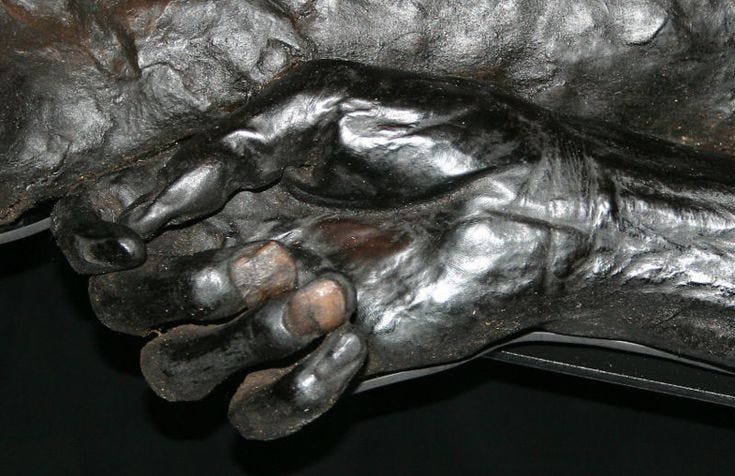
Tollund Man, pulled from a Danish bog in 1950, still wears the noose he was hanged with, along with a felt cap and belt, nothing else. His last meal, porridge of barley and flax, survived in his stomach for over two thousand years. Grauballe Man, found a few miles away, met a rougher end: his throat cut so violently the blade nicked bone, his body preserved down to a stomach full of grain laced with ergot, a hallucinogenic fungus that some read as a clue and others as mere coincidence. Lindow Man, dragged out of a Cheshire bog in 1984 and Britain’s most complete find, died three times over: struck twice on the skull hard enough to drive bone into brain, garrotted, and cut at the throat, then laid face down in the water. Archaeologists call this overkill a tripartite death, and it resists any reading as ordinary murder.
What these deaths meant is where the certainty runs out. The dominant theory holds they were sacrifices, offered to a fertility god after a failed harvest, the ergot and other findings in their stomachs sometimes read as ritual meals eaten shortly before death. But sacrifice is not the only reading on the table: some were likely executed criminals, others victims of what would now be called judicial killing, and a few scholars argue the whole framework of ritual sacrifice says more about what nineteenth and twentieth-century archaeologists wanted to find in the Iron Age dead than what the bodies themselves can prove.
I have written more extensively on this phenomenon here:
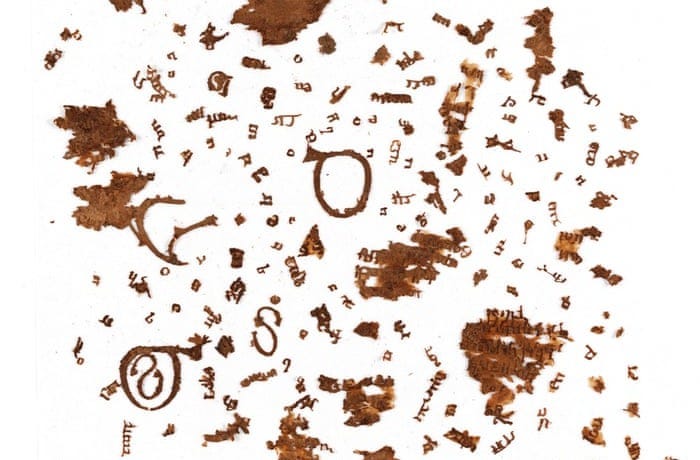
What we can be sure of is the bog as an incredible space for historic preservation. These unique habitats are perhaps some of the land’s most reliable archives, preserving right down to the laces of one’s boot or the hairs on one’s head. The Faddan More Psalter, found by a peat cutter in 2006 was hailed by the National Museum of Ireland as one of the most significant Irish archaeological finds in decades. The prayer book can be dated to the late 8th century, with fragments of hand written text still legible today.
The conservation effort was a harrowing prospect:
‘It was absolutely terrifying,’ Conservator John Gillis said of the responsibility he felt. ‘I heard from someone in the British Museum that there was a picture of the mass on the walls in a staff area there with the words ‘if you think you have a bad day ahead …’ You had this nerve-racking scenario of disturbing this material, which meant losing evidence, when the whole point was trying to gain as much information as possible.’
The work was dried out and stabilised over two years, and eventually conservators were able to physically pick out individual letters from the text, before restoring a large portion of the psalter itself. Absolutely cosmic stuff.
On the 28th of May, 1891, a group of Danish peat cutters working a small bog called Rævemosen, near the village of Gundestrup in northern Jutland, struck silver. The cauldron unearthed had been taken apart deliberately, its base, its five inner plates, and seven of an original eight outer plates, stacked one inside the other and buried together, as though someone had wanted it hidden rather than lost. Palaeobotanical study of the surrounding peat later showed the land had been dry ground when the cauldron went in, the bog grew up and sealed over it only afterwards. The government paid the finders a reward substantial enough that they fell to quarrelling over how to split it, a very human coda to a very inhuman find.
What the cauldron actually is remains argued over more than a century later. Its silverwork, the largest surviving example of European Iron Age silver, carries imagery that scholars read as broadly Celtic: gods, warriors, sacrificial scenes, animals both real and mythic. But other details, a leaping horned figure, elephants, griffins, point somewhere further east, toward Thrace or Dacia in the Lower Danube. No one agrees whether it was made by Celts, made for Celts by someone else entirely, or carried across a continent as loot or gift long before it ever reached the bog it was found in. It remains, perhaps one of the greatest finds in the long history of the bog archive.
Marshlands are a prime example of what ecologists term the ‘Edge Effect.’ Where two different habitats meet you get a border zone that's richer in life than either habitat in isolation. The bog, being neither solid ground nor open water, habitable nor inhabitable holds the boundary open indefinitely, century after century, becoming a meeting place of disparate species, cultures and items that otherwise would not meet anywhere else.
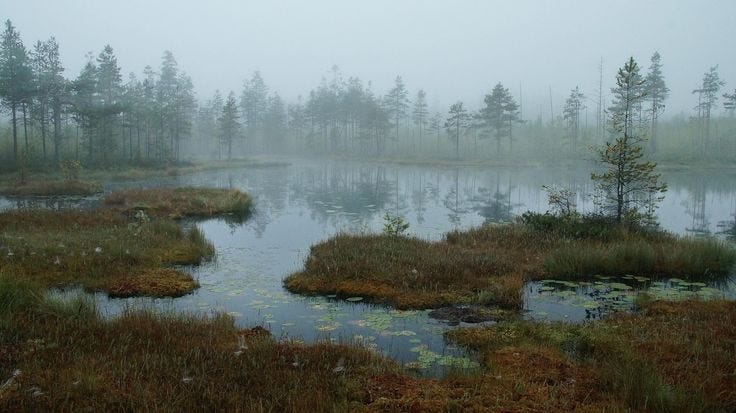
This ecological rationalisation certainly lends clarity to the folklore’s fixation on hems, bounds, and fringes. We have come to half expect the magic and mayhem of our folkloric canon to unfold in the spaces ‘betwixt and between.’
Consider the will-o'-the-wisp, known in various parts of Britain as jack-o'-lantern, hinky punk, or spunkie, a light seen hovering over marsh and bog at night, always a little further off than it appears, always leading the traveller from the solid path. Science has since supplied a tidy explanation of marsh gases, methane and phosphine, released by decaying plant matter and prone to spontaneous ignition in the right conditions. What the wisp actually does, regardless of its chemistry, is punish the traveller for trusting a light where no light should be. It is a boundary keeping its own boundary.
The Tiddy Mun, despite its silly name, is a brilliant example of folklore functioning as early conservationist rhetoric. The little old marsh man with shrill laughter like the pewit call of the Northern Lapwing, reportedly became enraged in the mid 16th century when his peatland home was drained and shrunken by the surrounding populous. Enraged at the disturbance to his home, the Tiddy Mun issued a curse of pestilence on the villages involved. After this, he was not completely without pity, however – when flooding threatened, townsfolk would chant his name until they heard the pewit call, whereupon the waters would miraculously recede. The custom is still acknowledged in the Lincolnshire area today. This disgruntled little fellow seemed to serve as a sort of proto-caution to leave areas of ecological intrigue to their own devices, lest we disrupt the course of nature.
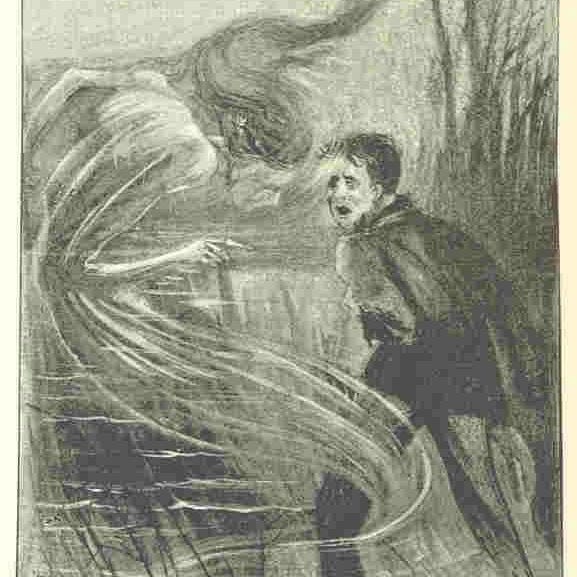
We can also see marsh folklore in its enduring function of childhood warning in the guise of bone-chilling dissuasive tale. The kelpie takes the shape of a horse, dark grey, black, occasionally white, found standing patient and riderless by a a body of water, mane always wet regardless of the weather around it. It looks tame. Crucially, it looks like something a child could climb onto. That is the entire mechanism of the story. Once mounted, the rider finds themselves stuck fast to the kelpie's hide, and the horse gallops straight down the bank and under the water, drowning its rider in the depths before eating what's left. It is sad to consider the very real origins of this tale: countless playing children pulled into the sticky peat, unaware of the true nature of the ground beneath them. In this we can see, the rhetoric built up around habitation in such areas, these stories simply part of a community’s navigation of the land over centuries. It is all in effort of giving some familiarity to a vast, ancient ecosystem continuously proving itself complex and unknowable.
More creatures can be read about here:
This is perhaps the crux of our growing cultural fascination with peatlands. We crave mystery in an age where everything is pulled apart and explained. We crave dirtiness in a society where cleanliness sits next to godliness. We crave slow, purposeful production in place of meaningless, quick-fix brainrot. We crave sacrifice in an age of rampant materialism. And above all, we crave a closeness to nature that is fast slipping through our fingers, a reverence for the living world that lets us stand alongside our ecosystems as marshals rather than owners.
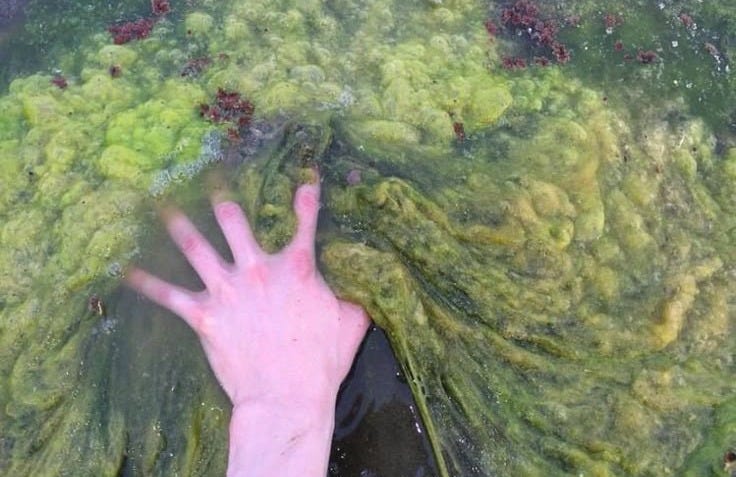
We leave the bog to its own devices, and it leaves us to ours. That is the whole arrangement. No management plan, no extraction, no return on investment, just two things existing side by side, each shaped slowly by the other’s presence rather than the other’s use. It is, perhaps, the last relationship of its kind we have left. Everything else has been improved, optimised, monetised, or explained into submission. The bog alone still gets to keep its secrets, we must ensure it remains this way.
I will leave you with a few verses of Heaney’s haunting Tollund Man:
I could risk blasphemy,
Consecrate the cauldron bog
Our holy ground and pray
Him to make germinate
The scattered, ambushed
Flesh of labourers,
Stockinged corpses
Laid out in the farmyards,
Tell-tale skin and teeth
Flecking the sleepers
Of four young brothers, trailed
For miles along the lines.
Thanks for reading Lurker! This post is public so feel free to share it with your marshy mates.
No posts
Comments
Nothing yet. Say the first thing.
Sign in to join the conversation.