
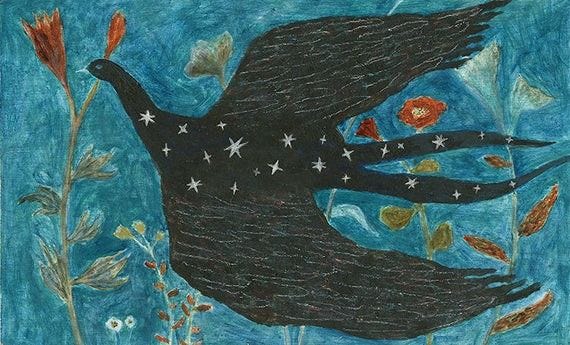
‘Pewit pewit, dee dee dee, grutto grutto grutto, hallloooo, tik tik tik, groor groor, roo roooo roo, chip chip chip chip, wacheeeer cheer, crex crex, quil!’
No better time than a midsummer dawn to hear a hearty avian discussion. It is easy to take such a magnificent din for granted when here in the UK we are surrounded by it constantly. Throw a stone in Britain, and you kill a bird (or two). Such common fixtures of our landscape are all too easy to overlook; but as we so often find with British vernacular tradition, it is out of the mundane that some of our most colourful lore unfurls. The mundane is held in common, and it's that very commonality upon which folklore depends to survive. We have all heard the doleful cry of the morning dove against winter’s white silence, all watched a comically round robin bobbing upon the arm of a park bench, all warily sheltered a portion of soggy chips as enormous gull shaped dive-bombers circle menacingly overhead.
The annals of British folklore are chiming with birdsong. Common garden birds, though seemingly unassuming, are among the most popular subjects of regional belief and tale. What unites these birds is constant, everyday visibility; familiarity breeds significance more often than it breeds indifference. It is easy to wish upon a bird, tell it your worries, feel it is hopping at your flat window for perhaps a more esoteric reason than the dried meal worms in your plastic feeder. Few creatures are as intriguing as birds, or as far removed from human beings. It is no wonder our innate curiosity, coupled with the mysteries of airborne life have given way to a plethora of magic ideology.
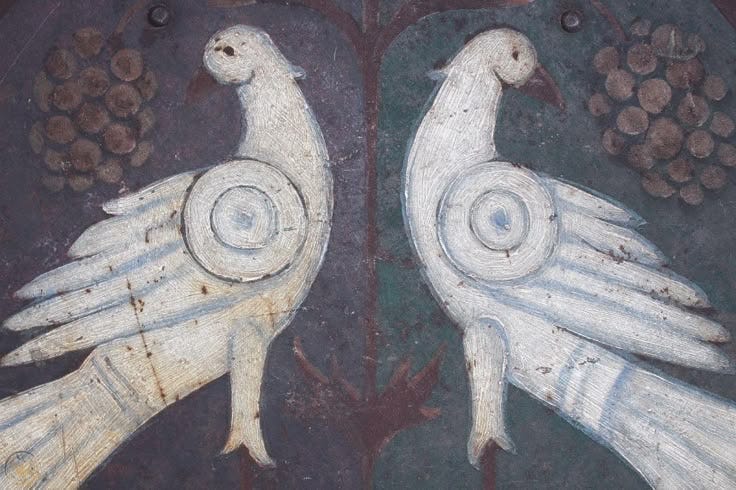
What exactly are the little birdies telling us?
If you have spent any length of time in rural Britain, you may well have heard the ever-popular nursery rhyme that informs listeners of near future happenings depending on the number of magpies or crows that appear at a given time. Though well known across regions, many reciters tend to trail off into nervous mumbling past the first two lines: ‘one for sorrow, two for joy.’ Perhaps we have all collectively held onto this line as really one only need know whether the next week holds good or bad fortune and work out the details later. Perhaps we are simply lazy. In truth, most variants of the rhyme are relatively short, often proceeding a little something like this:
One for sorrow,
Two for joy,
Three for a girl,
Four for a boy,
Five for silver,
Six for gold,
Seven for a secret never to be told.
A slightly longer iteration of the folk proverb has been collected from Lancashire, continuing on in:
Eight for a wish,
Nine for a kiss,
Ten a surprise you should be careful not to miss,
Eleven for health,
Twelve for wealth,
Thirteen beware it's the devil himself!
Those Lancastrians certainly like to be prepared. Though the rhyme simply appears to be a fixture of playgrounds up and down the country (and don’t get me wrong, it has an excellent beat for skipping), this strange little utterance in fact has deep roots in the practice of Ornithomancy
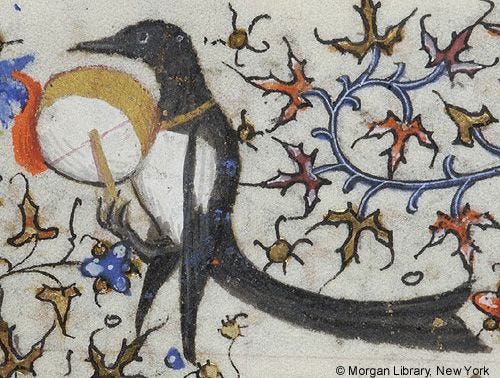
Ornithomancy is a strand of divinatory magic that has always particularly tickled my fancy. I have previously covered the practice in my Valentines day post (below), but I think a healthy recap might benefit us here.
Ornithomancy in some form has been found across an incredibly wide range of pre-industrial peoples. The modern term derives from Greek ornis ‘bird’ and manteia ‘divination’; in Ancient Greek οἰωνίζομαι directly means ‘take omens from the flight and cries of birds.’ Think of it as birdwatching but instead of ‘ooh, a blue jay,’ it's ‘ooh, a portent of sorrowful ruin.’ Extreme birdwatching. Prophesying by birds appeared among the Hittites in Anatolia, with texts on bird oracles written in Hittite known from the 13th or 14th century BCE. This early form of the practice likely paved the way for use by the Greeks and Etruscans. The practice also made its way over to ancient Rome, but the Romans, always wanting to be different, knew it alternatively as ‘Augury.’
Ornithomancy could happen spontaneously or through a deliberate ritual: the diviner would orient themselves facing north, so that birds appearing to their right—towards the sunrise in the east—signalled good fortune, whereas Roman augurs, who faced the opposite direction (south), read the omens in reverse (surprise, surprise). While bird flight patterns and calls were the primary focus, virtually any bird behaviour could be read as a sign of things to come or a communication from the divine.
Cultural echoes of this more ritualistic practice can be heard chirruping across Europe, with many serious predictions becoming folk superstition. For a practice built on feathers and wishful thinking, ornithomancy has remarkably good staying power. Medieval England saw plenty of bird-based decision making, with perhaps the most notable belief being the divination of romantic fortunes from the appearance of birds on Valentine’s Day. Women in particular were advised to awake early and keep a close eye on their gardens on this auspicious day. The appearance of certain birds was thought to foretell the circumstances of your love life that year.
Dove: Symbolises a happy, peaceful, and loving marriage.
Duck: Predicts a stable, domestic relationship.
Goldfinch: An omen that you will marry someone wealthy.
Woodpecker: Bad news! This means you will not get married that year.
Though the foundation of this past time reaches back millennia, the seasonal aspect of this English belief might feasibly be traced to some pretty popular contemporary literature. Geoffrey Chaucer’s 1382 poem Parliament of Foules, depicts a gathering of speed-dating birds, organised by the Goddess Nature for the 14th of February. Links made in this widely circulated poetry might have made quite the impact on medieval communities. The society of Chaucer’s era were firmly agrarian and therefore rather in tune with nature’s behaviour and habits, making this concept contemporarily logical and endlessly sensible for the wistful and lovesick.
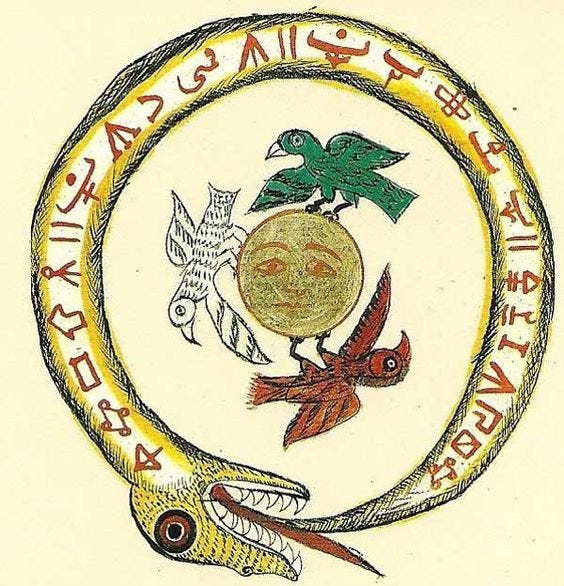
Unfortunately, our feathered friends did not always promise marital bliss or troves of silver and gold hidden down the back of the sofa. More often than not, the appearance of certain birds indicated it might be a good time to review your last will and testament. Across British folklore, the unexpected entrance of any wild bird into the home foretold grave consequence. The general consensus across regions is that a bird flying through the window, flapping about your rafters and then leaving indicates the imminent death of one of the dwelling’s residents. Some versions of this belief see a bird tapping on a closed window or coming down the chimney as just as disastrous. Researchers Opie and Tatem in their 2005 Dictionary Of Superstitions give an instance from 1792 where a bird that flew through a window and flapped around the bed of a sick girl. It was believed by all in attendance to predict that the child was ‘doomed to die.’ This, of course, came true a few days later.
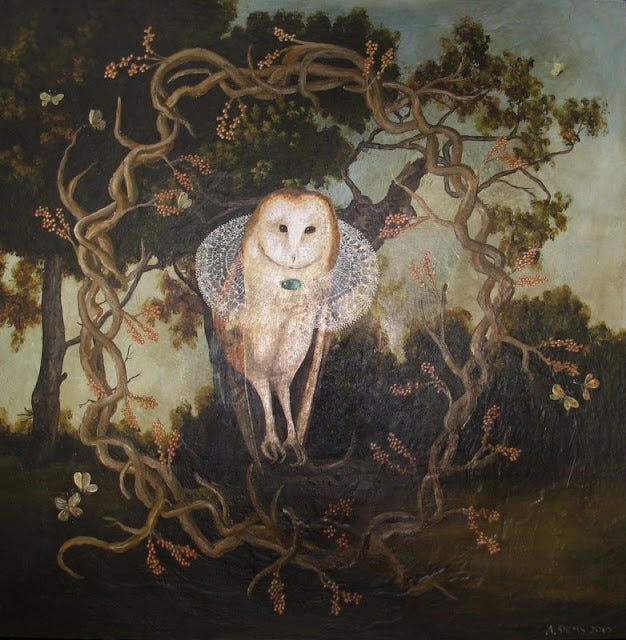
Owls of all shapes and sizes are particularly accurate death messengers. The Great Horned Owl’s call meant sudden death, while the Screech Owl foretold the death of a child, and the Barred Owl indicated the death of a relative.
‘Out on ye Owls! nothing but songs of death’,
cries Shakespeare’s Richard III, before striking the messenger delivering him news of war and rebellion, likening the poor boy to the folkloric harbinger of doom and gloom.
Thankfully, in some cases the owl's verdict wasn't final. Silence the bird mid-hoot, and you could potentially disrupt the omen. Tradition held that pulling off a shoe and flipping it over would do the trick. Propping a broom against the door or throwing some salt into a lit hearth might also postpone your doom. Could the banshee's legend have roots in birdsong? The wail that supposedly predicted a family death bears an unsettling likeness to the barn owl's screech, a familiar sound across the bird’s native Britain and Ireland. Two huge glowing eyes, the scratch of talon on beechwood, and that characteristic blood-curdling shriek are certainly excellent ingredients for fireside ghost stories.
Back to more parochial turf.
Take the plainest garden bird, murmur its name to the right book, give it a little shake, and any number of tales will fall out. This abundance comes down to the fact that farmers, working the fields all day, would be constantly surrounded by the blighters. They'd come to know their migration patterns, their particular calls, which crop they favoured nibbling on. Naturally, they'd humanise them, assigning personality and purpose beyond mere ingrained habit. Ecologically speaking, most of these birds are harmless and coexist peacefully with their agricultural worker neighbours. Despite this, all manner of strange stories have developed surrounding field dwelling species over the years. Birds move between realms humans can’t and sometimes seem to vanish and reappear entirely. Migration wasn’t understood for most of history, and people genuinely didn’t know where commonly spotted birds such as swallows disappeared to in winter; one popular theory held by famous naturalists of the 1700s held that they overwintered in mud at the bottom of ponds! Anything capable of crossing between the visible and invisible worlds gets read as having access to secrets we don’t, tipping birds into the realm of the uncanny and even untrustworthy.
The yellowhammer has been a common fixture of agrarian life since we first learned to till the soil. It can still be seen today perching on stiles and fence posts, or as a flash of bright yellow against muddy furrow. It is more often heard before it is seen and the yellowhammer’s distinctive song is subject of much rural superstition. The yellowhammer is (wrongly) much persecuted and as my favourite native bird I will defend these sweet fellows to the last.
In both Welsh and Scottish folklore, these creatures are regarded as having strong ties to evildoing. One dark myth, contrasting the cheerful nature of the species, insists that each May Day the bird dips its beak in the devil’s blood. Due to the unusual colouration of its beak, this myth proliferated widely and the yellowhammer came to be known colloquially as the ‘devil’s bird.’ Many Scots still insist today that the bird’s high tune sounds eerily similar to the phrase ‘devil take you, devil take you, devil take you.’
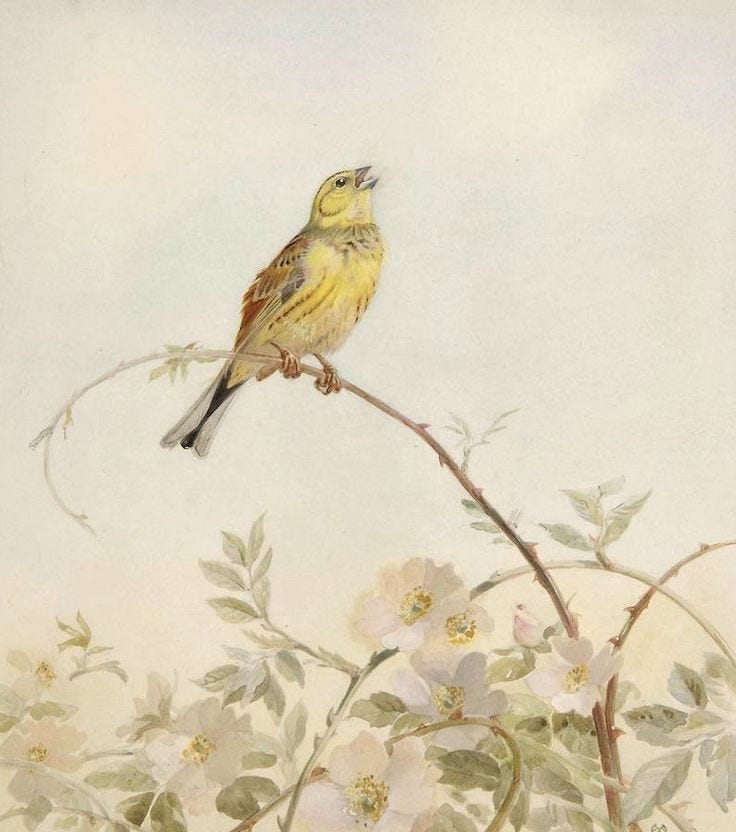
The yellowhammer’s eggs are also distinctively marked with rather arresting looking scribble-like markings. This has earnt the bird the rather more endearing nicknames ‘scribble lark’ or ‘scribble jack.’ In some cases, however, this has not helped the genus’s public image, with some swearing that the scribbles are actually decipherable satanic messages, waiting to be decoded. Poor yellowhammer!
As much as they were feared, birds have equally been revered across time and region. Sometimes the smallest specimens hold immense folkloric power.
The wren is a very tiny bird yet, old tales collected throughout Britain and Ireland say it is the ‘king of all birds.’ The famous folk story goes something like this:
Long ago when they could discuss their politics freely without human interference, all the birds gathered to determine once and for all who might rule as their king. Each bird put forward their case, detailing their unique powers. The starling boasted teamwork, the heron patience, the raven intelligence. The debate lasted through the night and well into the next day. Finally the owl piped up and, being wise as he is, suggested a far simpler method of election.
‘Whoever can soar highest without tiring,’ said owl ‘should surely prove themselves fit to lead.’
As soon as the birds took off into the air, the little wren hid in the feathers of the eagle. She knew he could fly the highest, she had seen it herself; and besides, the eagle was far too proud to even notice the small stowaway.
Lo and behold, the eagle soared into the sky, leaving the others as tiny dots far below. Then as he came down, confident that he had won, he heard a voice from above him claiming ‘I am the king, I am the king!’
It was Mrs Wren. She had flown above the eagle unnoticed, wheeling around far above them all without tiring herself in the slightest.
The eagle had won by strength, but the wren had trumped him by wisdom. It was agreed by all that such wisdom should serve their kind well, no matter how small the bearer.
And so Mrs Wren was crowned King of the Birds.
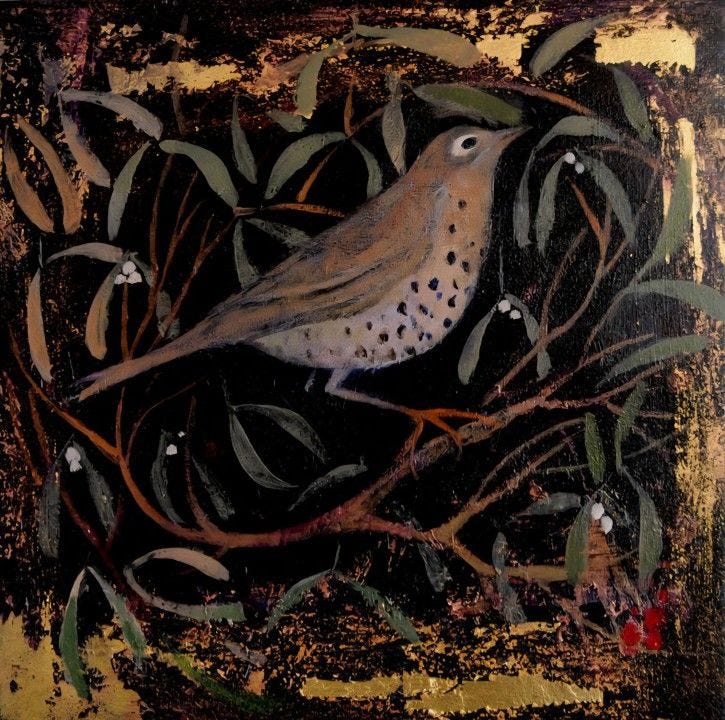
Wren Day is still celebrated by many in Ireland on the 26th of December each year. This custom is also kept alive on the Isle of Man, Wales, the south of France and Newfoundland. Up until the late 19th century, it was customary to see groups of ‘Wren Boys’ hunting the small bird through the hedgerows. Once the bird was killed, the boys would go from home to home, asking for a small amount of money to bury the wren. Some might sing as they went:
The wren, the wren, the king of all birds
St Stephen’s Day was caught in the furze
Up with the kettle and down with the pan
Give us a penny to bury the ‘wran.’
Though the tradition is often observed today, far more savoury means of honouring the wren are practiced, seeing the exchange of soft toys and figurines or the singing of wren themed folk songs.
Next time you see a magpie, tip your cap and ask him how fares his wife and children, leave a penny at your door for your resident raven, refrain from wiping the pigeon poo off your best coat—your fortune may appear just around the next corner. Do we truly know birds, or do we simply think we do? Perhaps what we're really after is a re-enchantment of the world. These tall tales and superstitions can be functionally figured as a way to honour the wisdom of the common and the hedgerow, to outsource our luck and our misfortune onto something smaller and stranger than ourselves. Humans sprouting wings any time soon looks unlikely. But if we can't follow birds' patterns in body, we can still follow them in imagination: dreaming up the unknowable lives of our garden dwellers until, one way or another, all our birds come home to roost.
Thanks for reading Lurker! This post is public so feel free to share it with your feathered friends.
No posts
Comments
Nothing yet. Say the first thing.
Sign in to join the conversation.