
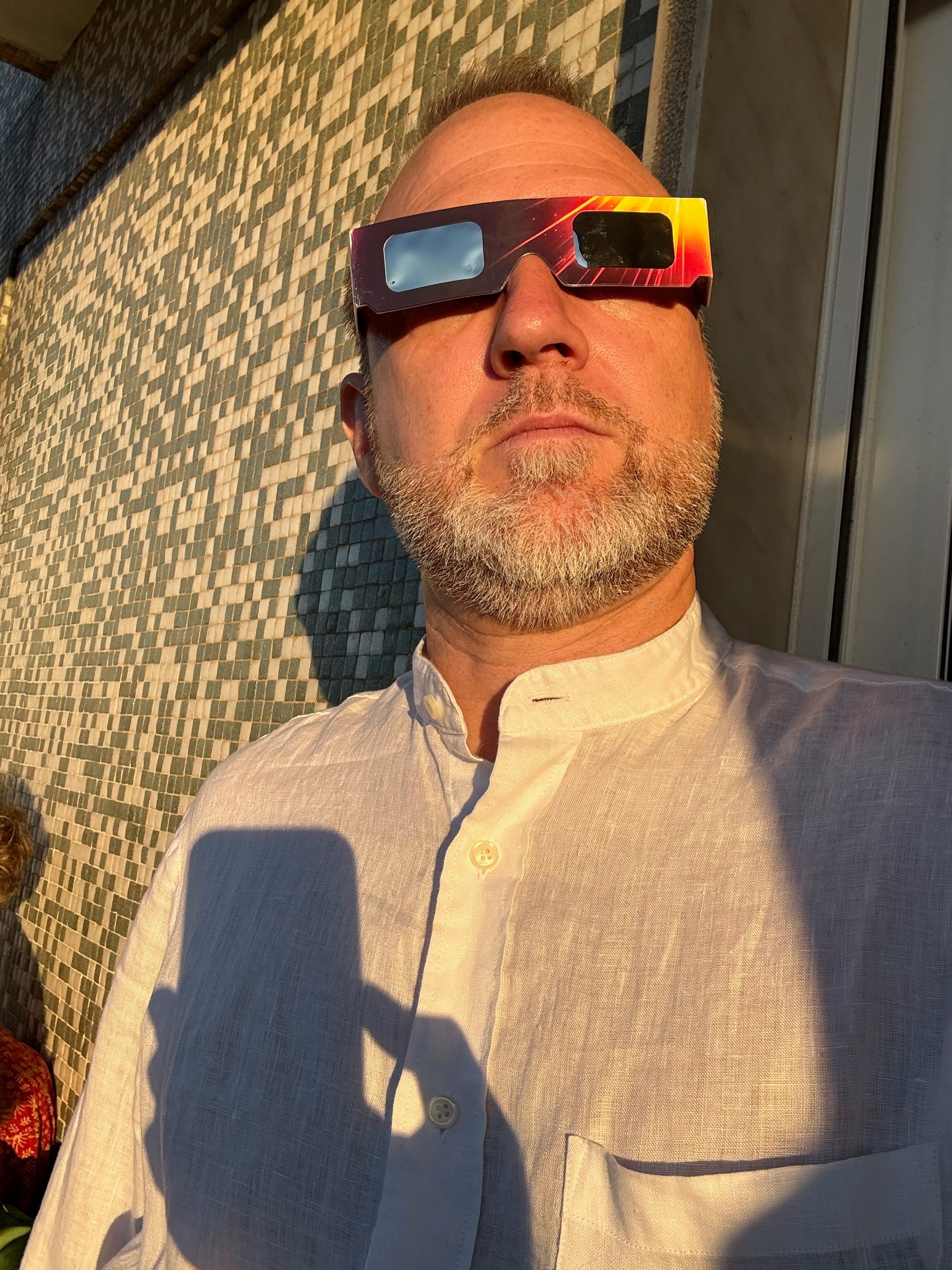
On August 12, 2026, there was a total eclipse of the sun on the Iberian Peninsula. At least, it was total within a certain zone. In all of the surrounding territory, it was a partial eclipse. Leading up to the event, there was much talk about where to go and how best to see the eclipse.
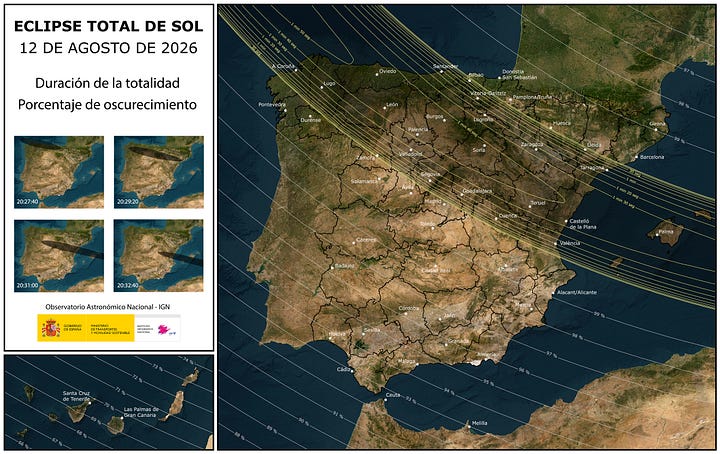
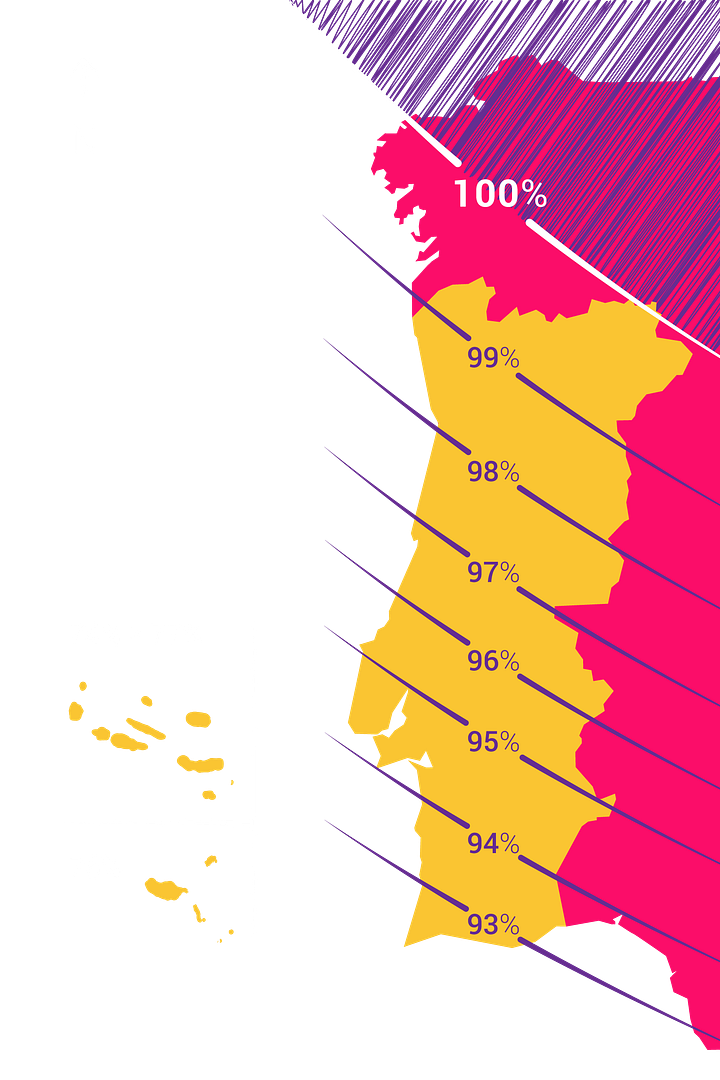
Elizabeth and I looked at the maps and tried to gauge our enthusiasm for the event. We considered whether it was worth driving six hours to northern Spain to see a 100% eclipse, or whether we would be content with a 95% eclipse as seen from our balcony at home. In the end, we decided that we were not astronomically enthusiastic.
So instead of driving to Spain, we planned a little cocktail party. Here, I want to tell you about our party, but even more, about my experience of the eclipse.
We invited Caroline Smrstik and her husband Christof. Caroline is a very talented journalist, a polyglot, and a good friend of mine who I met through Substack. I am perpetually grateful to this platform for bringing so many terrific people my way. Caroline and I try to get together every time she’s here in Portugal. (For more on why an American from Switzerland is often in Portugal, see her substack At Home Abroad.)
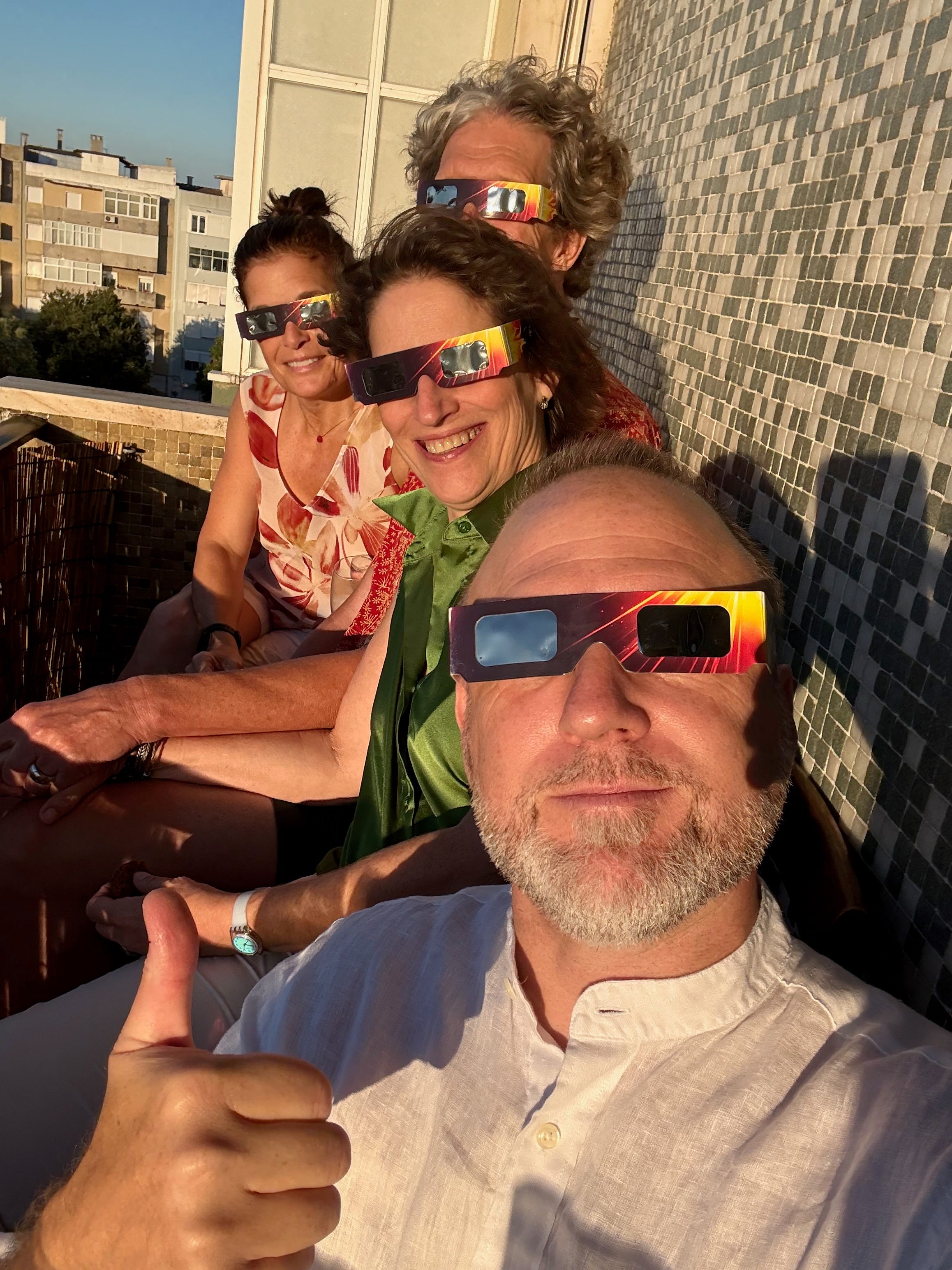
Caroline and Christof brought eclipse glasses, which about 80% of the residents of Portugal were scrambling to find in the days leading up to the event. Shops and pharmacies were plastered with signs saying “We have no eclipse glasses! Please do not inquire!” Clearly their usual business was being eclipsed by increasingly desperate queries.
I secretly enjoyed wearing the glasses—through which you can see nothing at all except the sun—because at some level it’s fun to have a good reason to wear something that makes you look completely ridiculous. (Hey, Swedes attending your kräftskivor, I’m looking at you!)
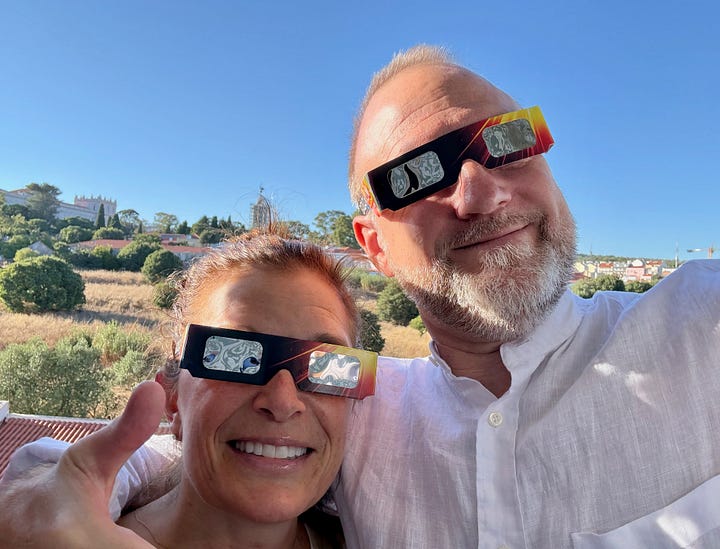
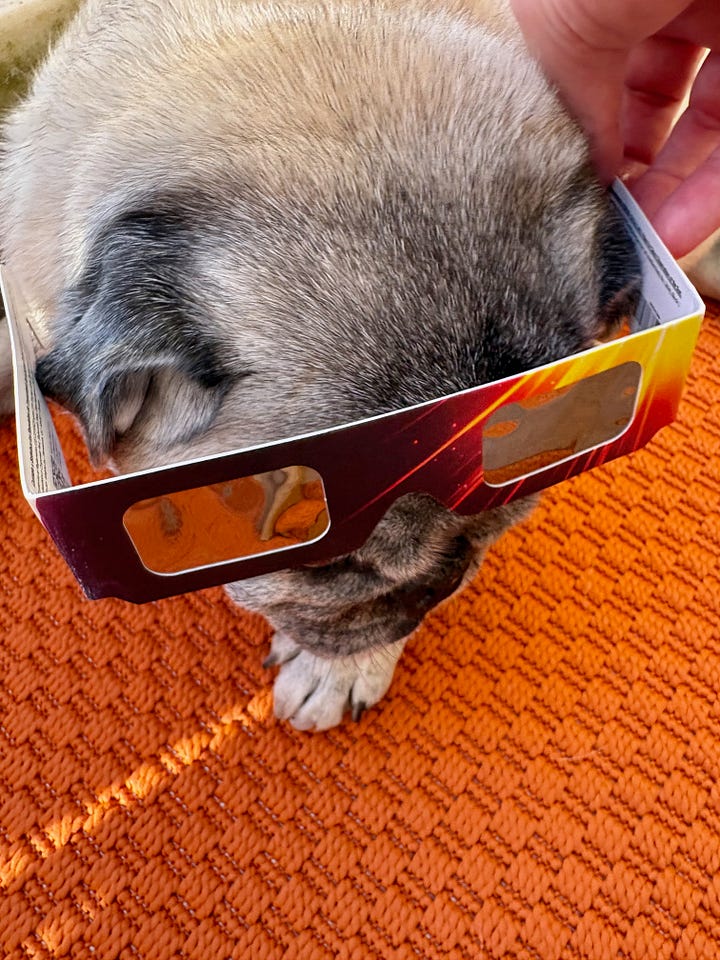
We prepared a little aperitivo out on the balcony for our guests. Nothing fancy, except for the cocktails and some of the actual dishes.
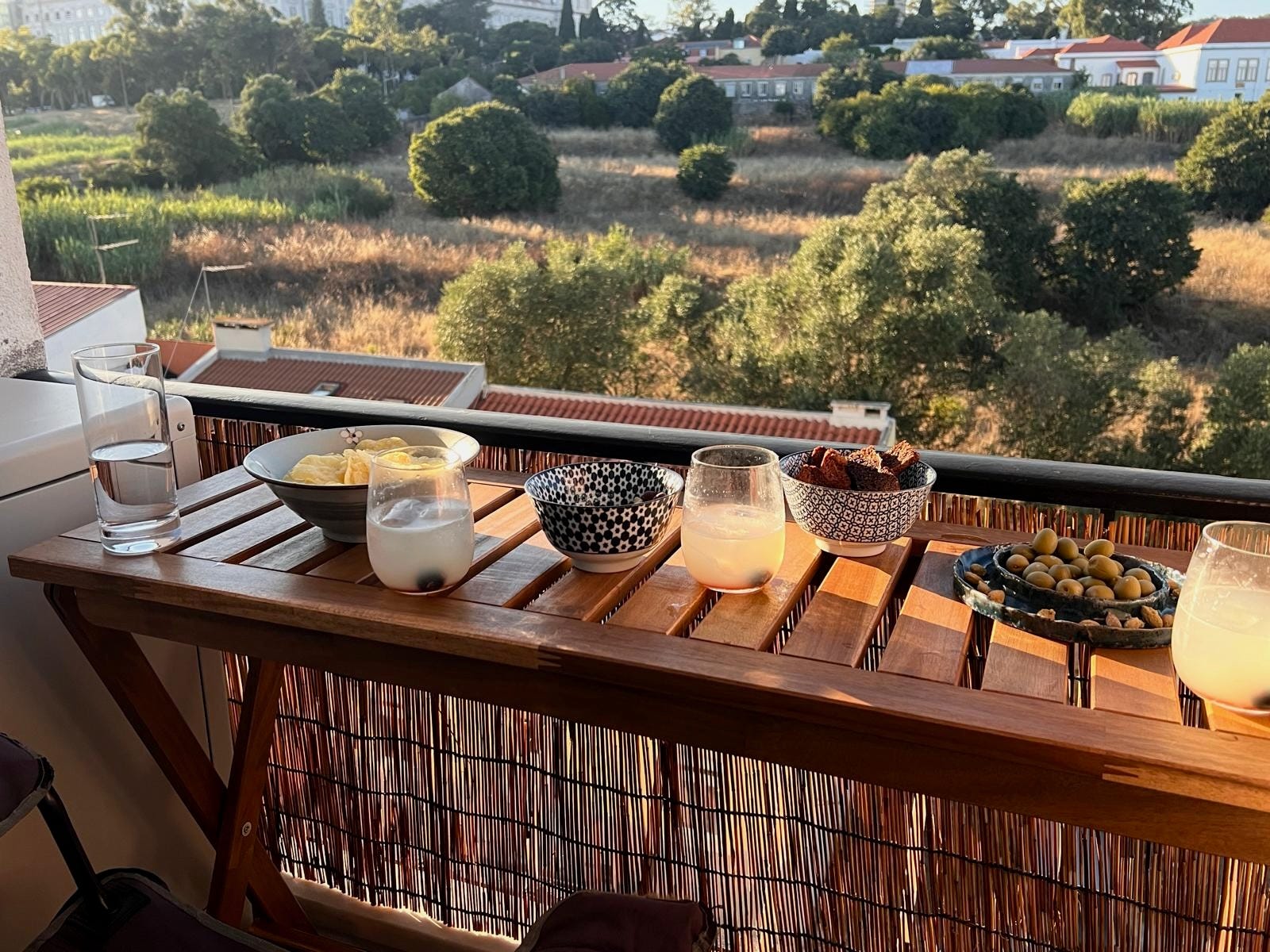
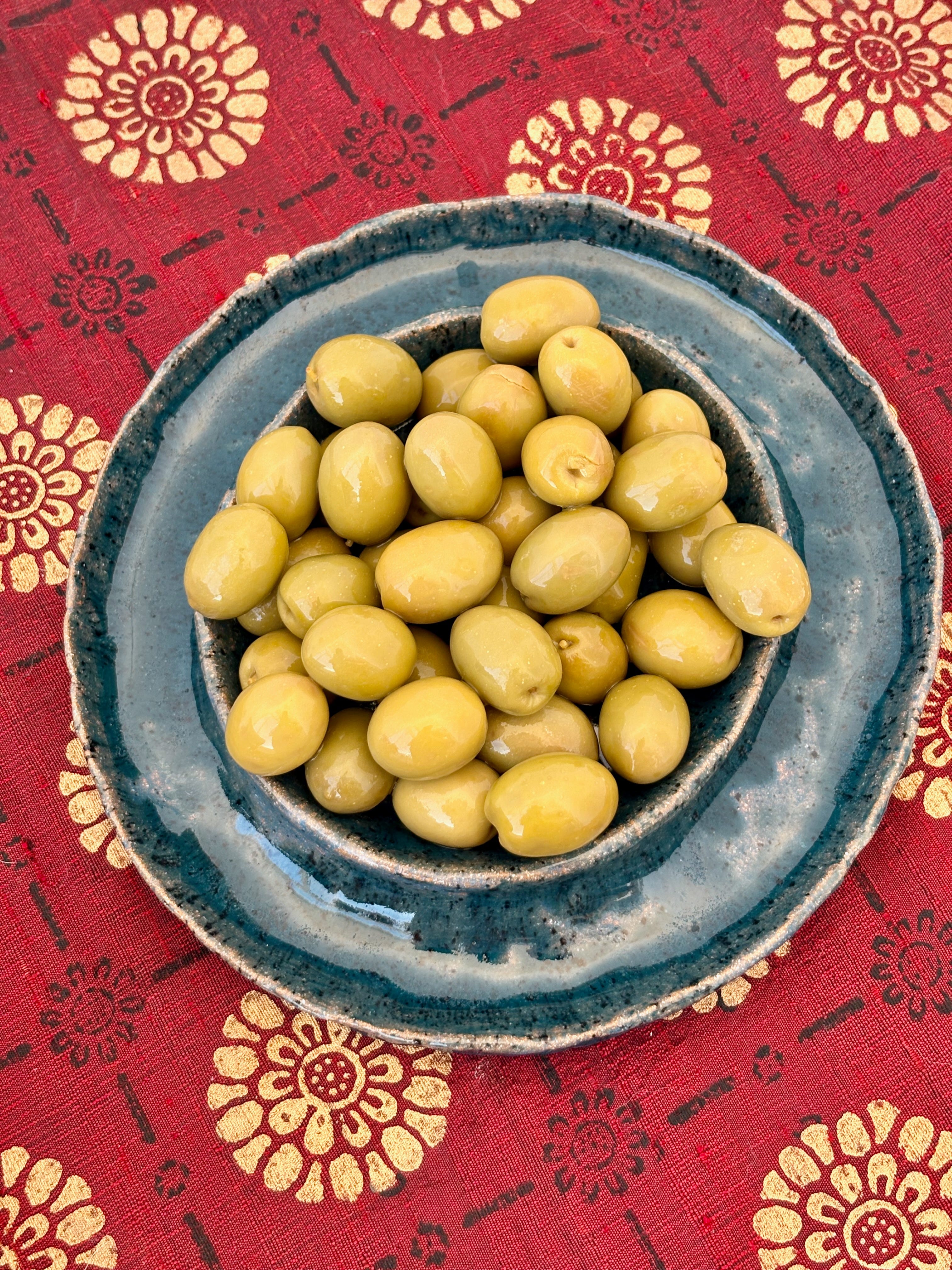
I was pleased to use for the very first time an olive dish that I had designed and made myself in the studio of my brilliant ceramicist friend, Witold Riedel. As I reported in a recent essay, Witold has recently dragged me into the world of ceramics, and I have enjoyed becoming an amateur potter, even if some of my friends think I’m a bit potty.
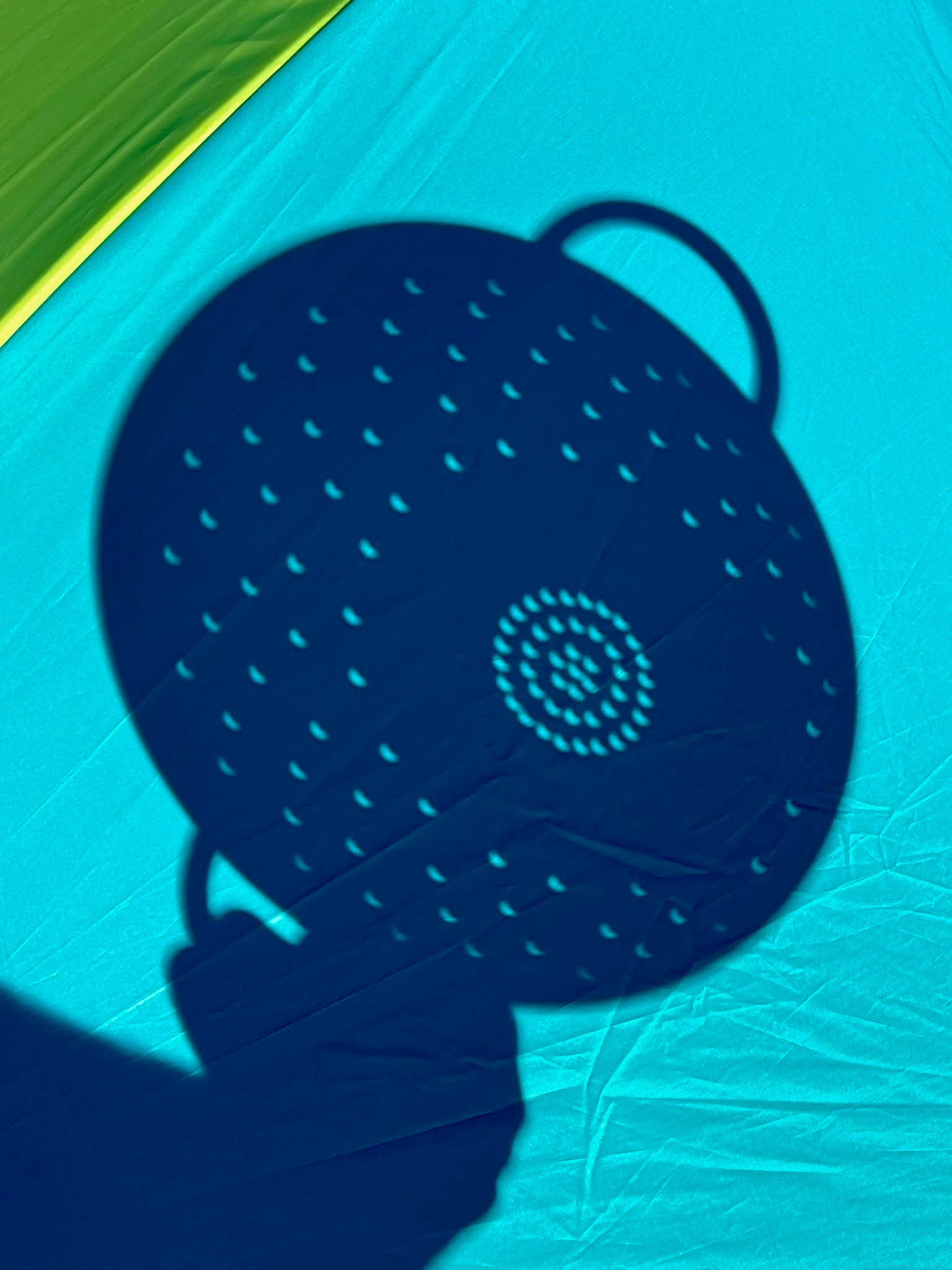
Speaking of Witold, we texted each other after the eclipse, and he shared how he had ingeniously put an ordinary colander to use as a pinhole camera, to view the eclipse indirectly.
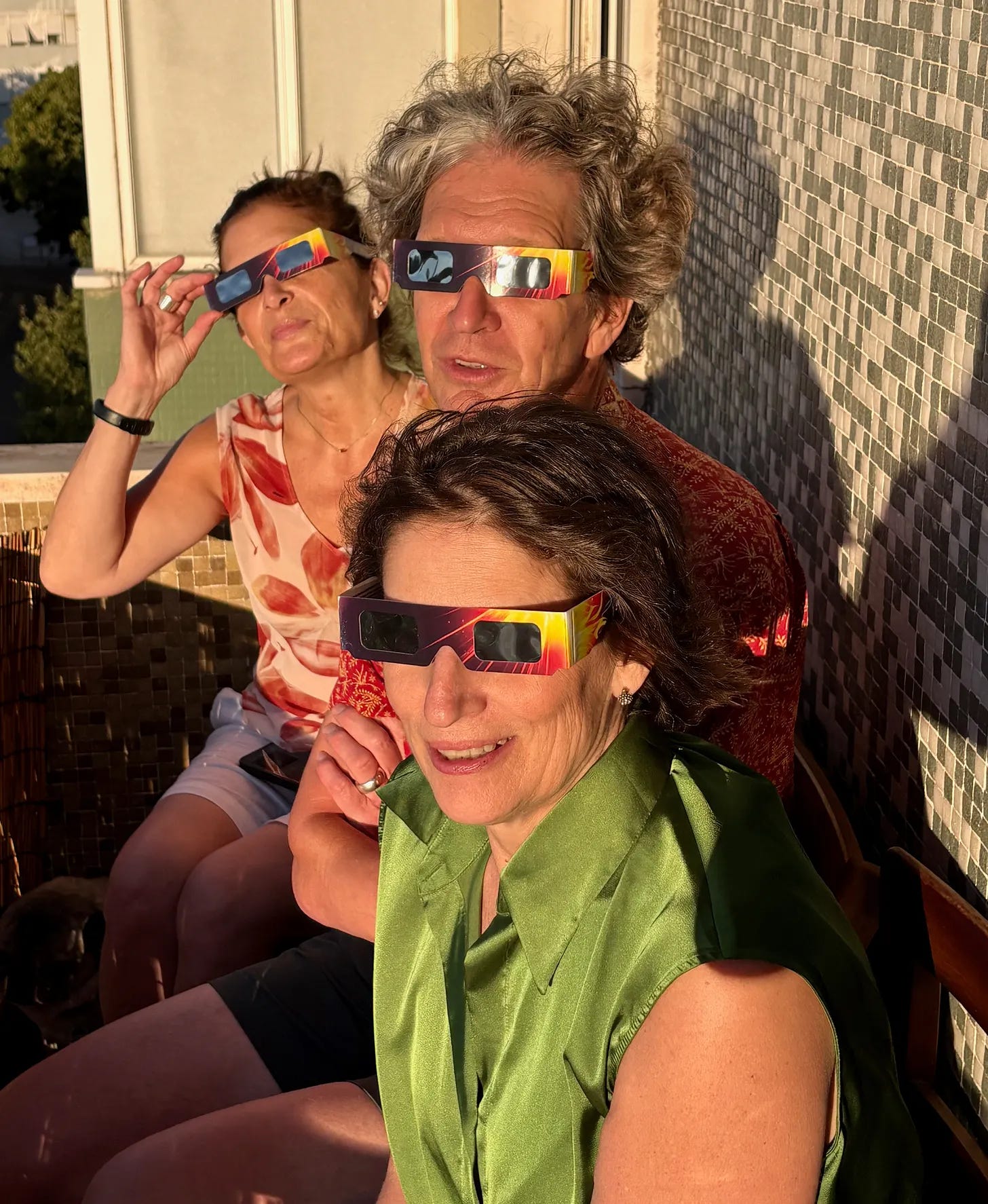
My main task at the party was to make the cocktails. We started with one of my most iconic drinks, enigmatically named Sniff the Ozone. Why is it called that? I honestly don’t know.
You see, this is a drink that I invented one night in a dream. I dreamt that I was in a cozy little cafe/bar—much like the Rosebud Diner in Davis Square, Somerville, MA—and the bartender said to me, “We have a new cocktail. Want to try it?” I asked him what it was called, and he said, “Sniff the Ozone”. I said, “That’s a strange name”, but agreed to try it. It was excellent, and I asked him what was in it. He told me the ingredients, and just then I woke up. Shocked by and grateful for this sudden gift, I wrote down the ingredients and later made the drink, adjusting until it was perfect. Since then, I have served it to many of my friends, all of whom like it but find the name weird.
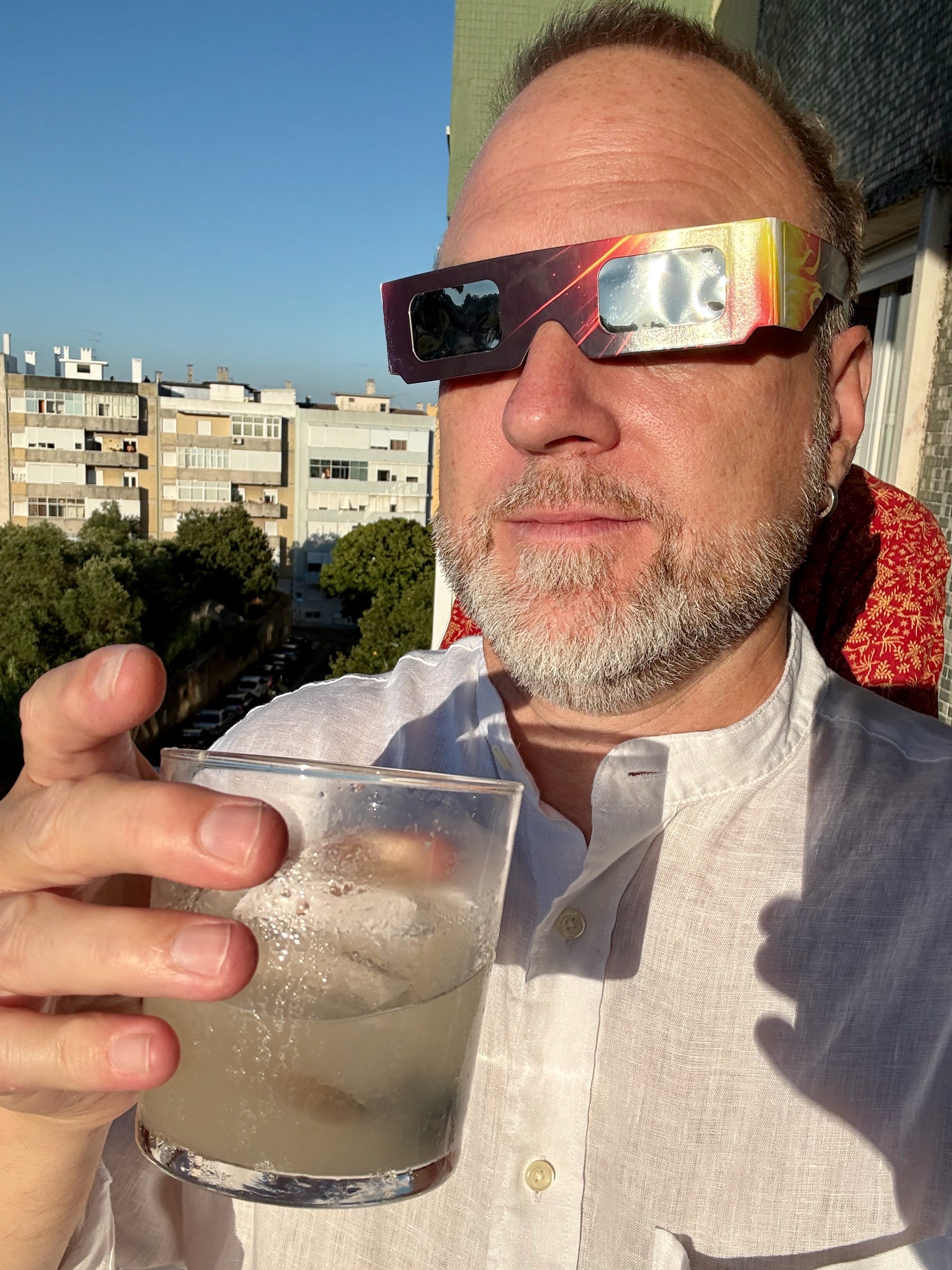
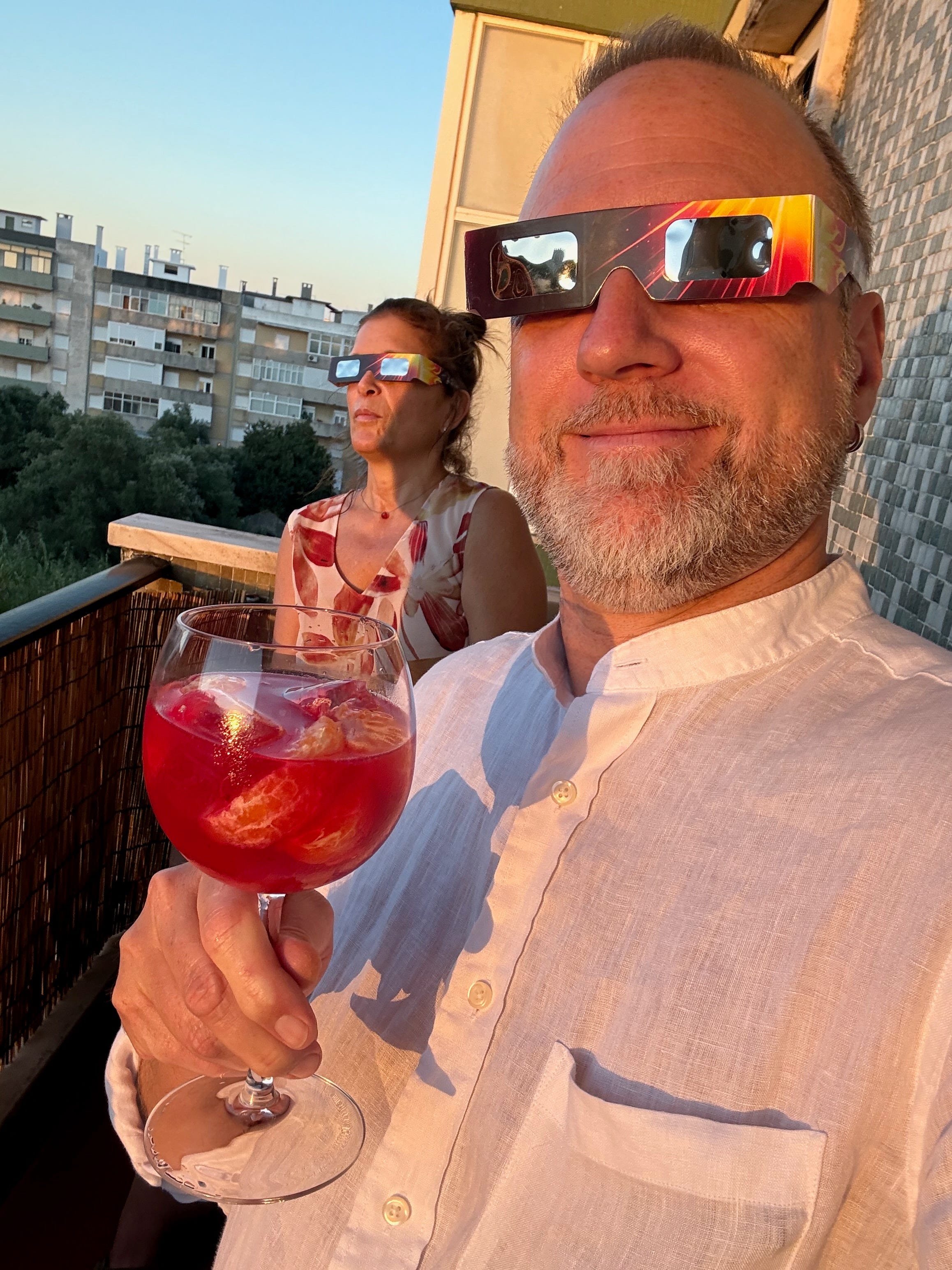
I followed that up with a drink that I had devised just for this occasion, named (much more transparently) the Solar Eclipse. It features little sections of clementine that look like partial suns. These are slowly eclipsed by a dark liquid, which is actually beetroot juice.
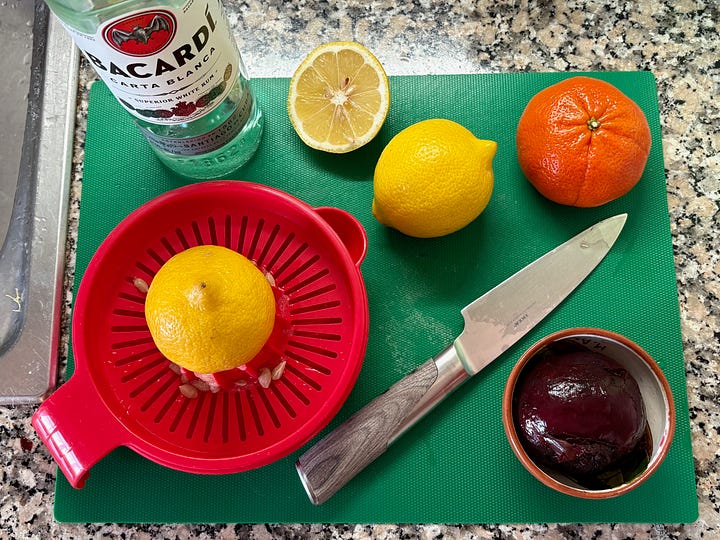
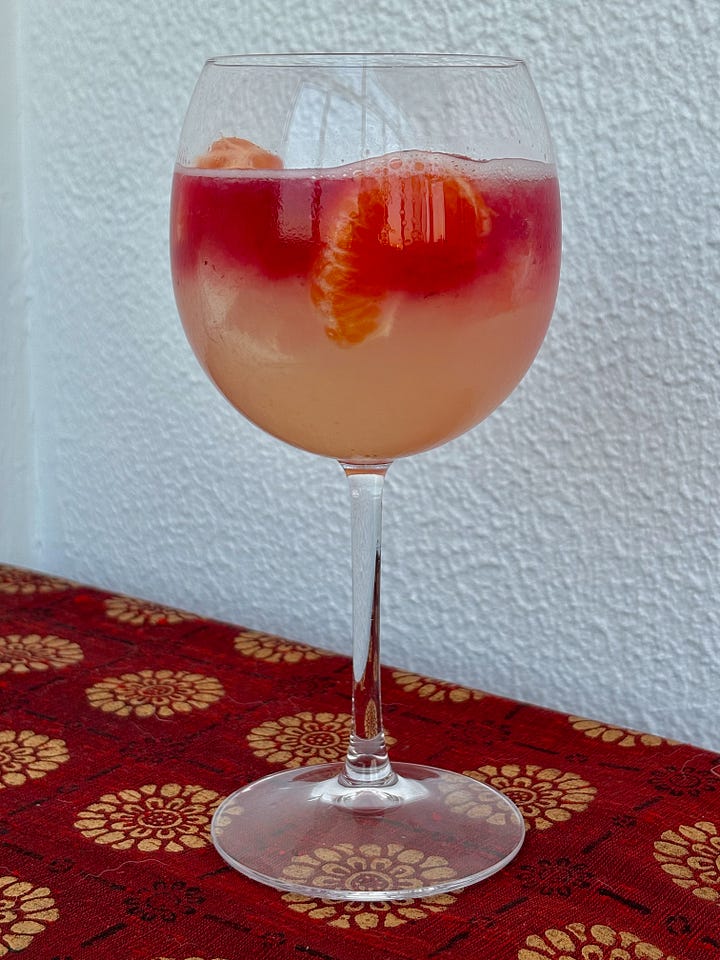
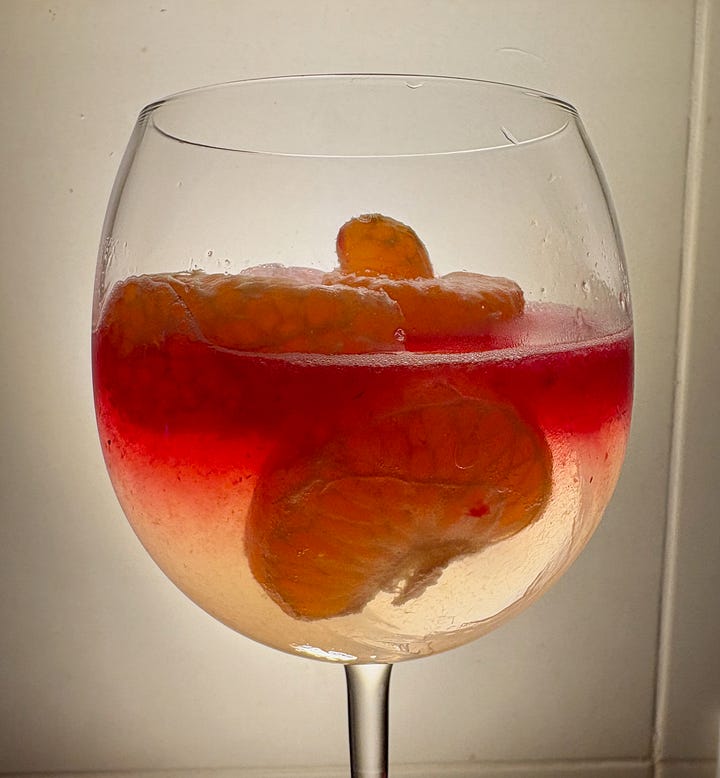

Just for fun, I’ll share the recipe with you.
Ingredients:
50 ml light rum
30 ml lemon juice
30 ml simple syrup (1:1)
5 clementine or tangerine sections
roughly 1 tablespoon of beetroot juice
ice
Procedure:
Mix first 3 ingredients in a shaker with ice
Prepare a large gin-and-tonic glass with ice and citrus sections
Pour drink in, and then carefully pour beetroot juice on top, without blending
If you don’t have beet juice lying around, you can try what I actually did, which is to take a cooked beet, cut it up into small chunks, and shake it in a shaker with ice. The resulting liquid, when poured off, and will be a lovely pink color. Just be extremely careful with your clothing!
So for a while, we were all occupied with our fancy drinks.
But then came the eclipse.
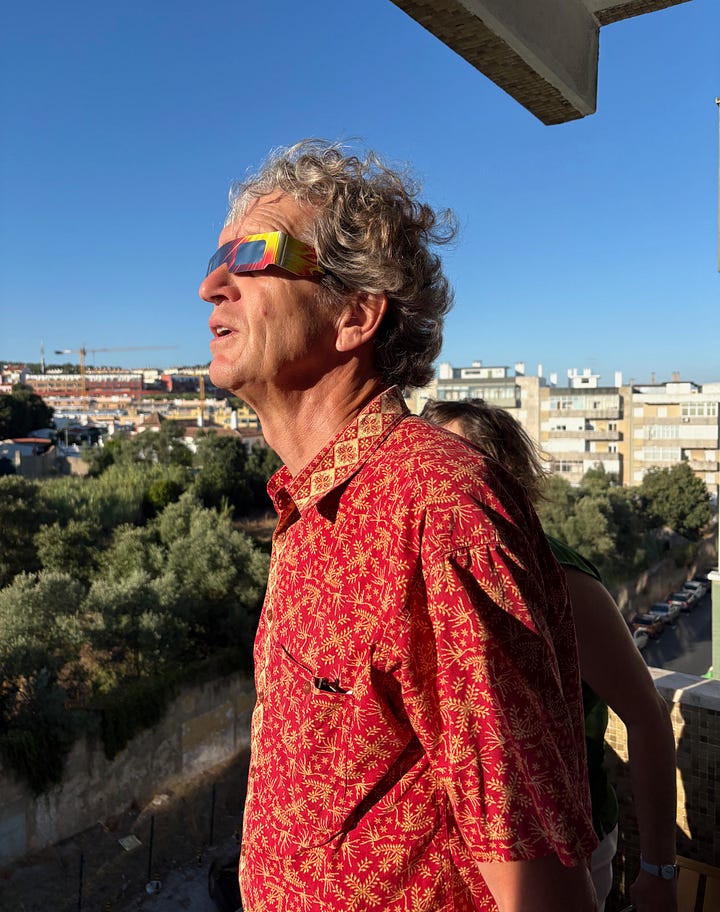
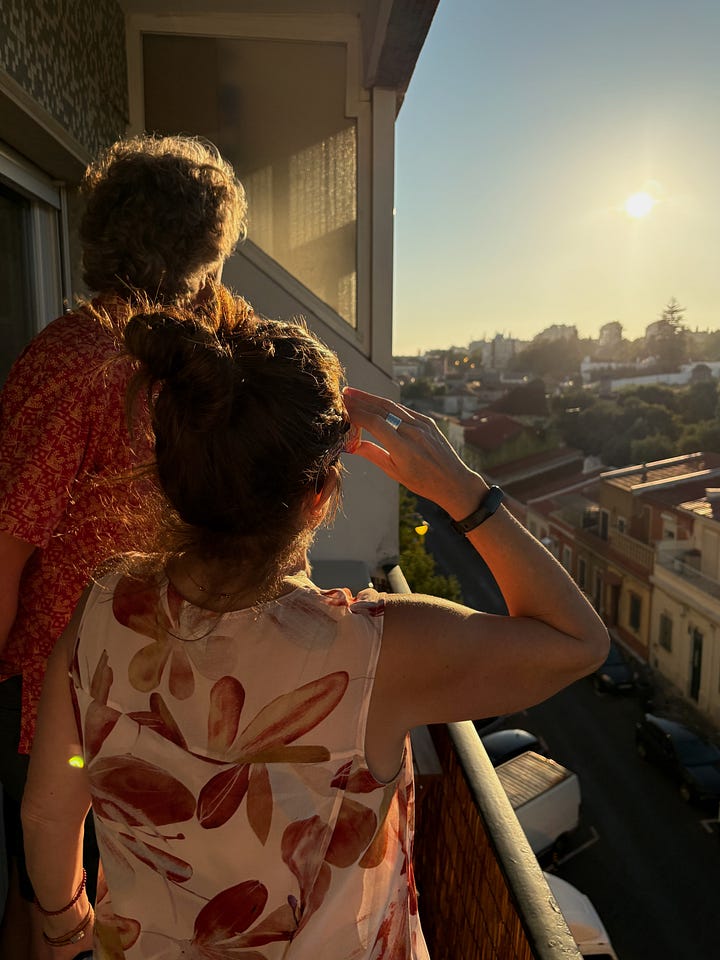
It is difficult to describe what it is like, watching the sun slowly be eaten alive. The moon first appeared as a little round slice advancing into the sun at about four o’clock on its face. Initially, this didn’t make a noticeable difference to the light; we could only see it through our special glasses.
As we watched, the black disk of the moon intruded further and further into the yellow disk of the sun, until suddenly, there was a perceptual shift: The sun became the moon! What we could see of the sun looked almost just like a crescent moon. It was like one of those drawings in which you see a young girl or an old woman, depending on how your brain interprets the scene.
I found it somehow very affecting to look at the sun but see the moon. I tried to take photographs, but to very poor effect. Here are two of the better ones.
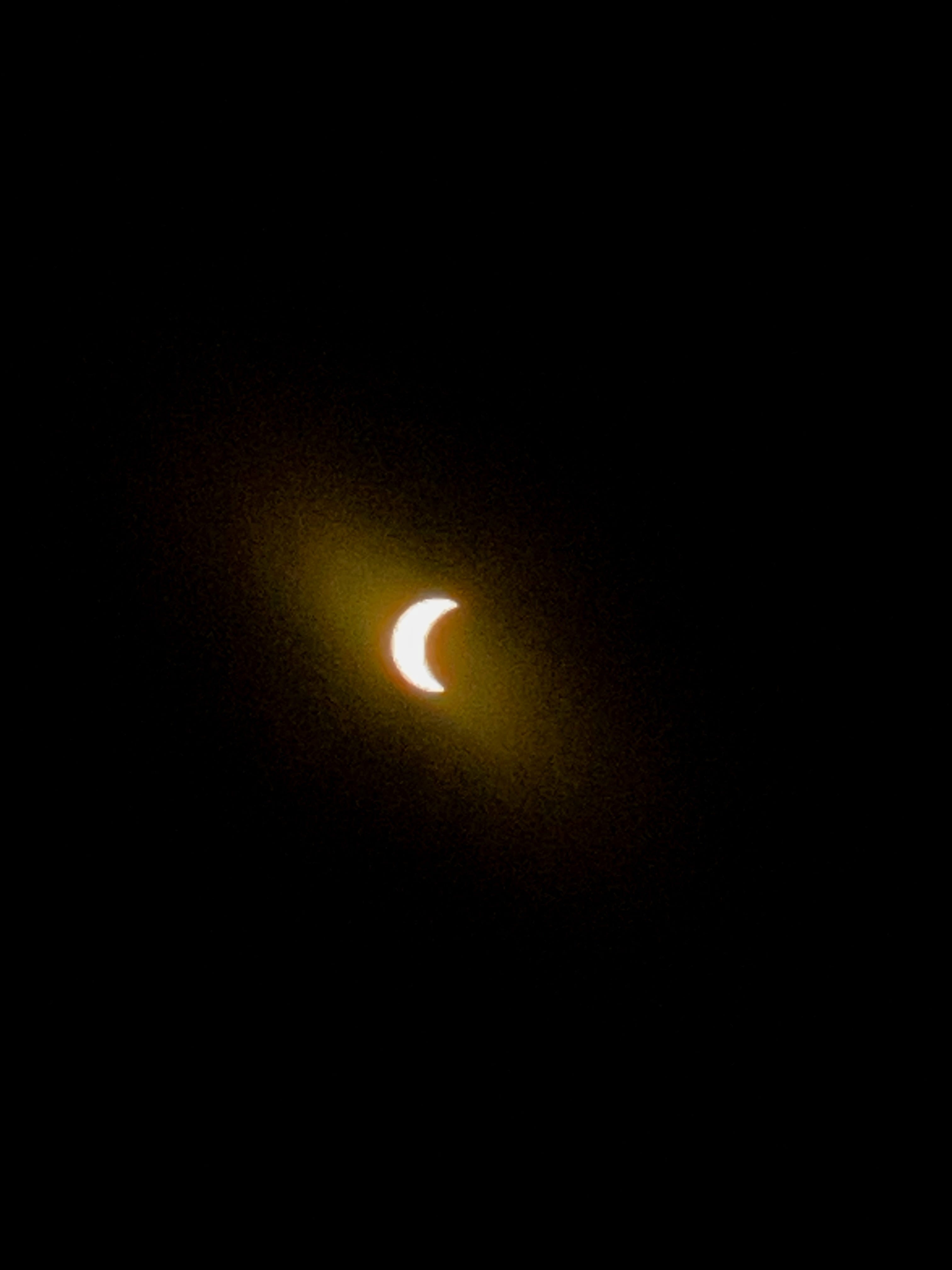
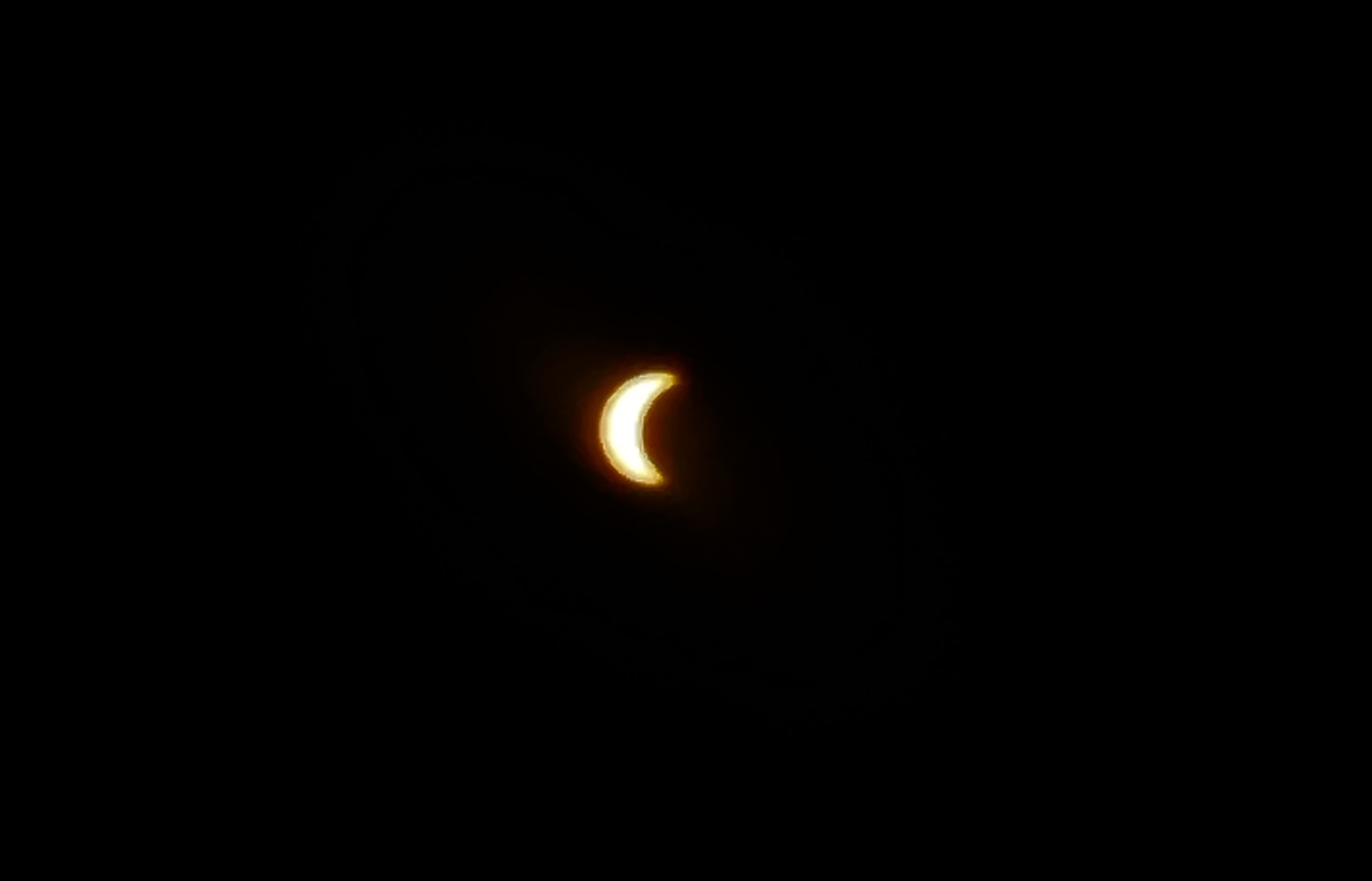
Over the course of about two hours, the moon advanced across the disk of the sun until the sun became an extremely thin, “waning” crescent. Then, because our eclipse was 95% and not total, rather than the sun blacking out altogether, the little crescent slowly swung around to the bottom, and then over to the right side.
In the meantime, there was a point at which I looked at the sun and said, “Look, it’s Pac-Man!”, and the others laughed and agreed. It did indeed look like a very hungry Pac-Man figure.
Christof and I joked that it would be extremely easy to simulate this event with simple drawing software. Watching it through the lenses reduced everything to curves of light and dark.
But what impressed me most was what I saw when I took off the glasses.
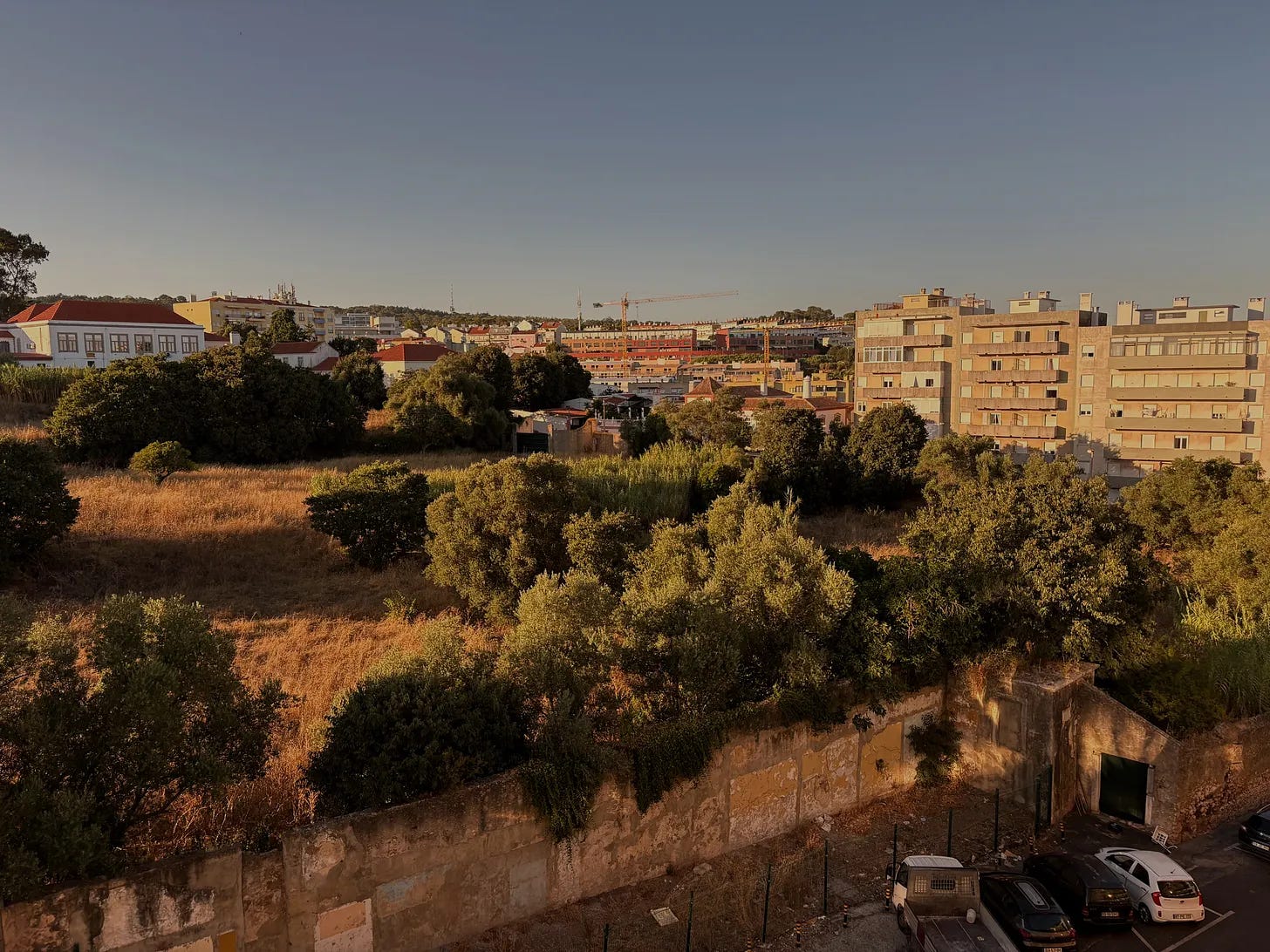
It is difficult to explain how our surroundings looked with ninety-five percent of the sun blocked. These photographs do not really convey the effect. It was a darkening that was not like a cloudy day, and not like evening. The thing that impressed me most was the fact that just five percent of the sun is still enough to produce daylight—but it was a weak daylight, somewhat akin to the light when forest fires have obscured the sky.
There was a sense that something was wrong. The birds in the fields and trees were making a ruckus, and the temperature dropped. This was actually welcome, as it had been extremely warm. So rather than chills, we felt relief. But it was a remarkable change.
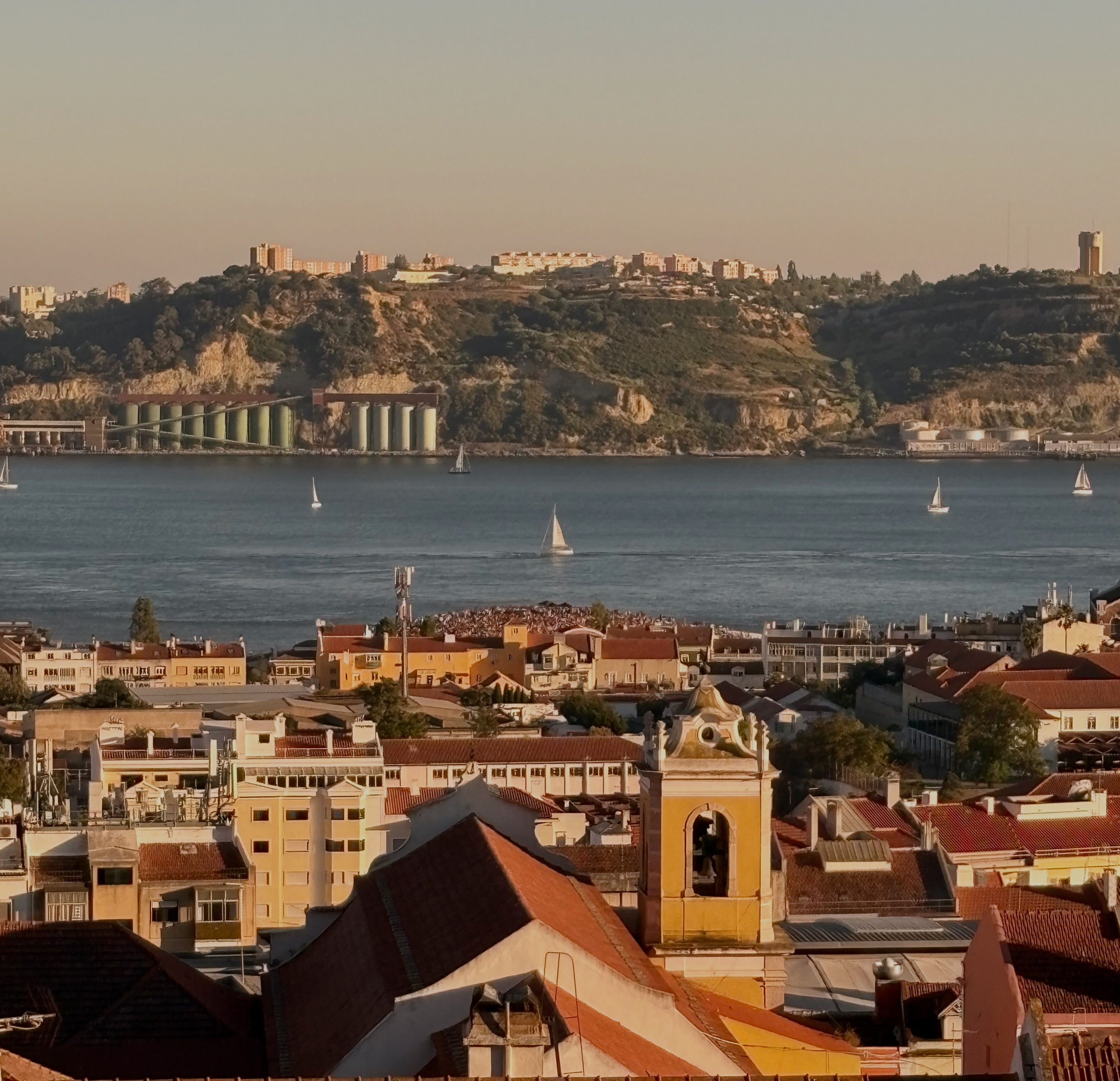
I went and looked in the other direction, toward the river, and saw that a crowd of hundreds of people had gathered on the domed roof of the MAAT museum—a perfect spot for watching this event. Around them, the buildings and the river had a flat color, as though a gray filter had been laid over them.
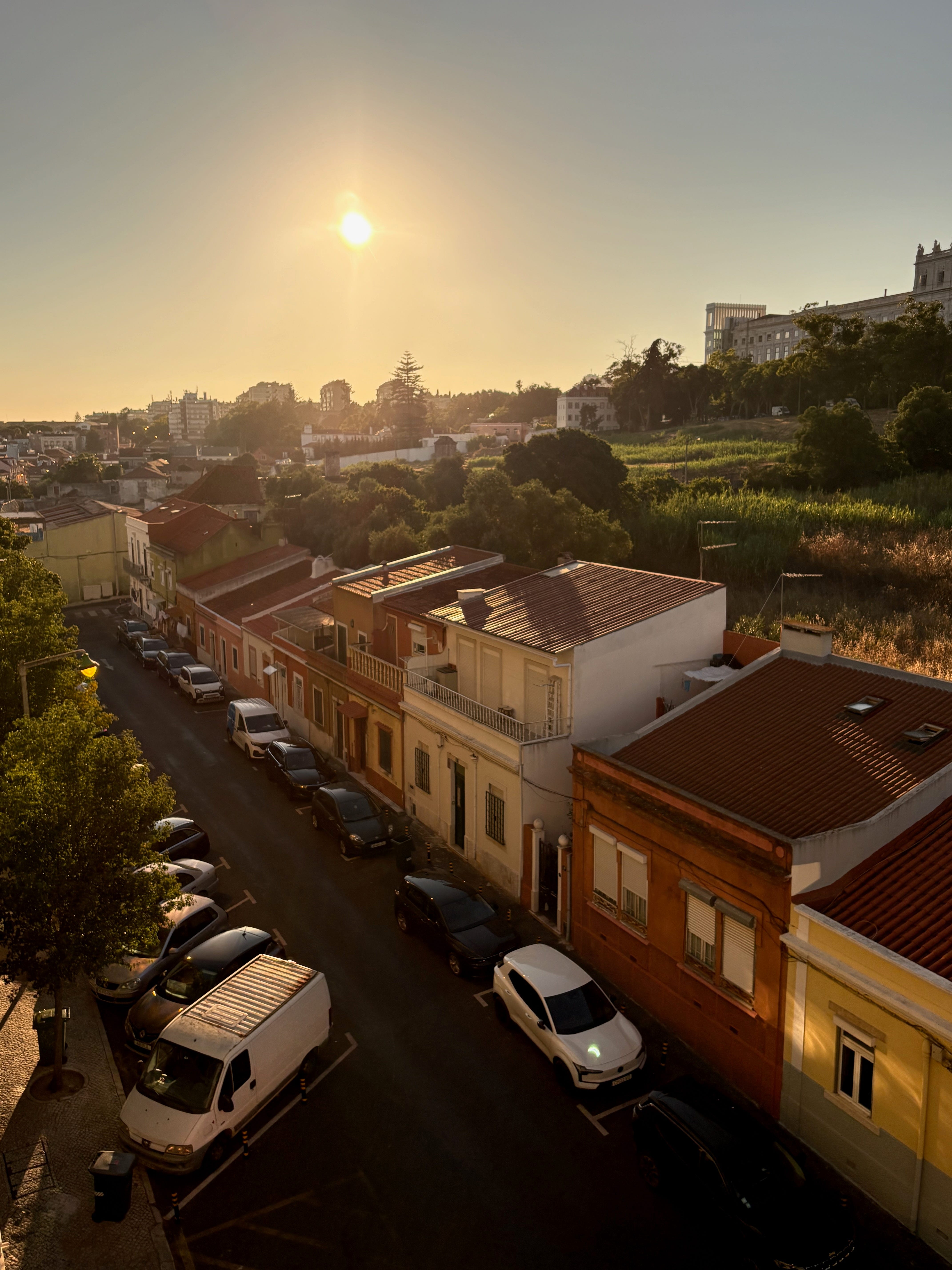
Meanwhile, looking right into the sun without glasses, you would hardly know that it was almost entirely covered—such is the immense power of this burning object at the center of our solar system. But the light, reflected off of the buildings, had an anemic quality. I thought, “Please don’t ever let the sun get sick.”
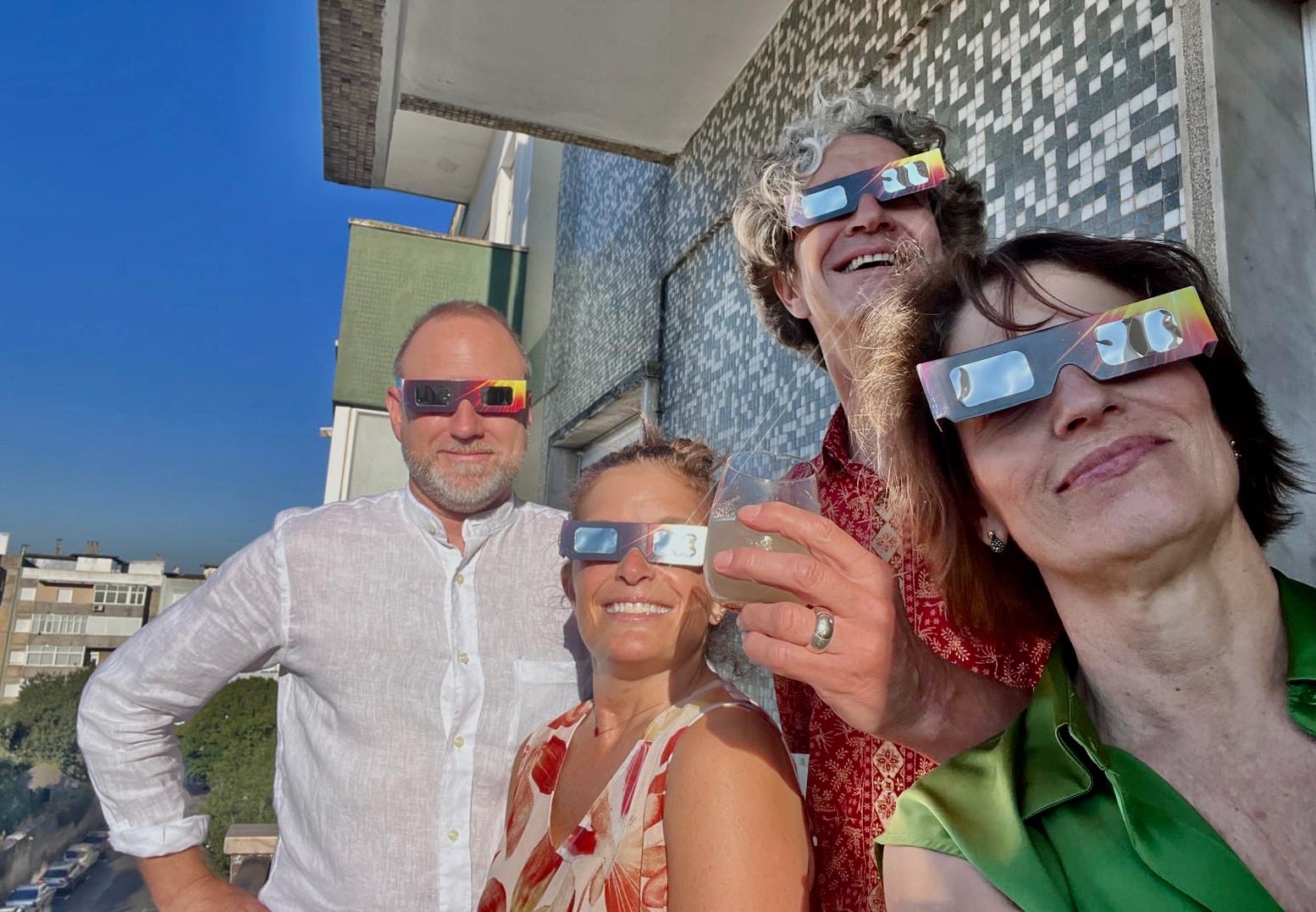
So as we stood, marveling at this phenomenon that is as bizarre as it is natural, I felt gratitude. I was grateful for our sun, for our moon, for our whole solar system—which continues to function while everything man-made on this planet seems to be coming apart.
During this long summer of record-breaking temperatures and horribly destructive fires, all ultimately caused by human selfishness, at least the solar system in which we are cradled continued to go about its business, unaffected.
Feeling gratitude for something larger than us that was still working, I raised a glass and toasted the solar system.
If you enjoyed this little experience in Lisbon, here are some other stories that might please you:
Comments
Nothing yet. Say the first thing.
Sign in to join the conversation.