
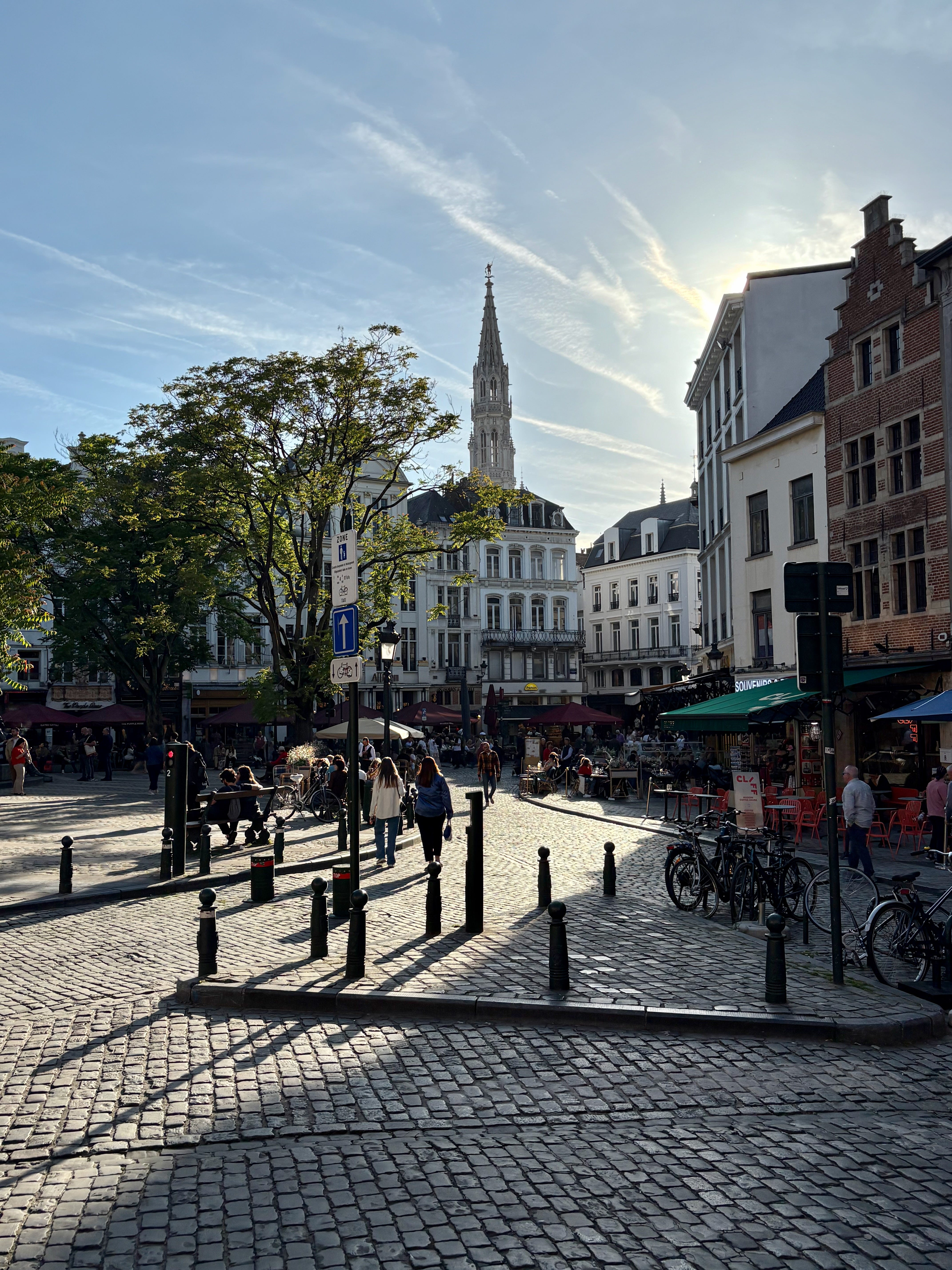
Bienvenue! Welkom! Last week I invited you to travel around Brussels with me, looking at beautiful buildings, visiting the European Parliament, and thinking about food, including beer and chocolate. All that is included in the photo essay “A Visual Trip Around Brussels (Part 1)”. This week we continue the visit, enjoying some fun places, fascinating things, and beautiful sights.
If I were a Walloon, I might greet you by kissing you on the cheek—three times, even. Instead, allow me to be a bit more Flemish and present you with the outline of this two-part photo essay:
Famous Belgian Things
Brussels Street Scenes
The European Parliament
Food in Brussels
Part 2 (this piece)
Three Favorite Places in Brussels
The Atomium and the Design Museum Brussels
Funny Belgian Stuff
Beautiful Brussels Images
I’d like to start this second half of our tour by taking you to three of my favorite places in Brussels: a café, a restaurant, and a music club.
📷 Photo copyright: All of the photos in this piece were taken by Gregory Garretson, and so that is where the copyright resides. Thanks! 📷
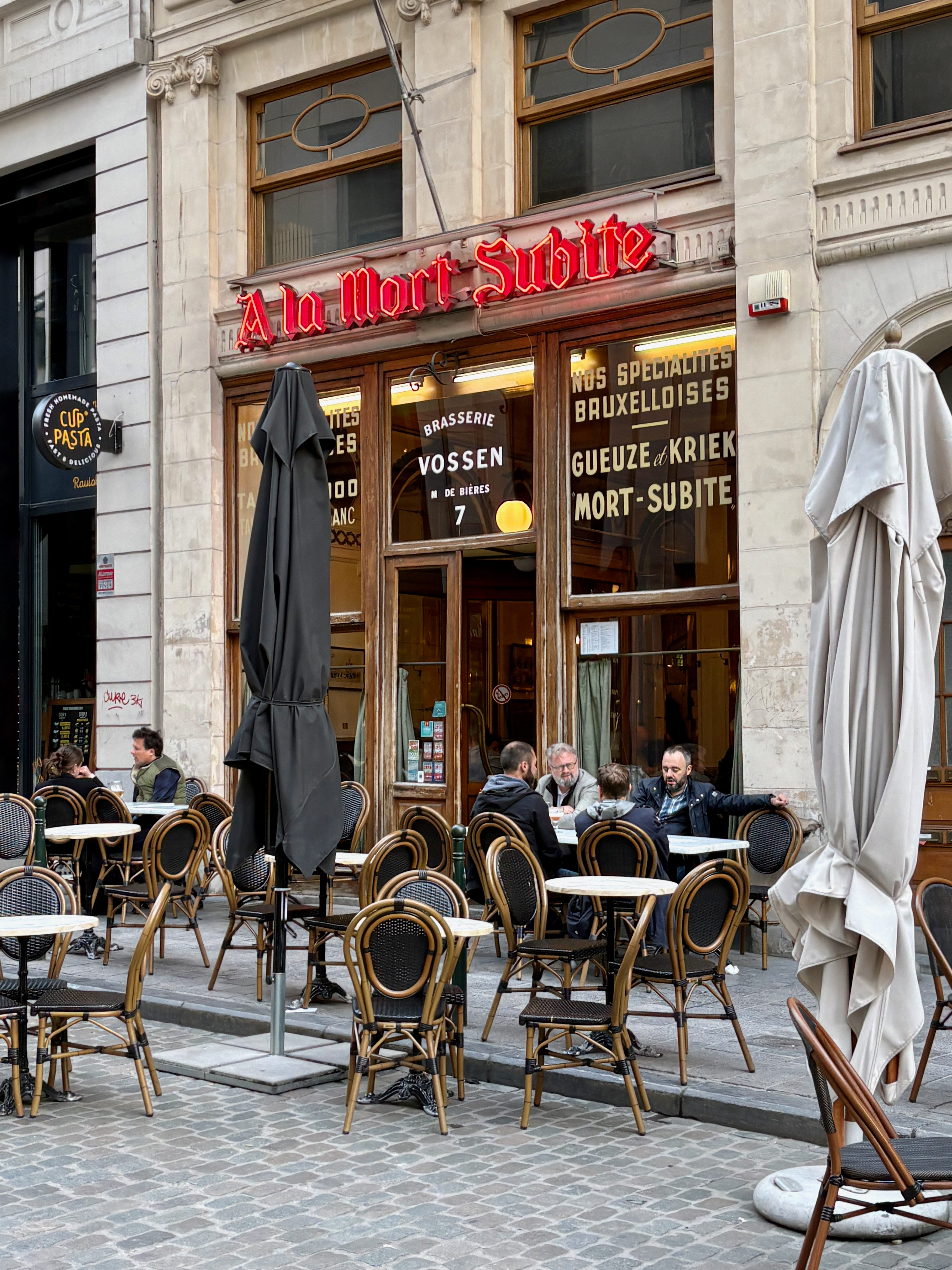
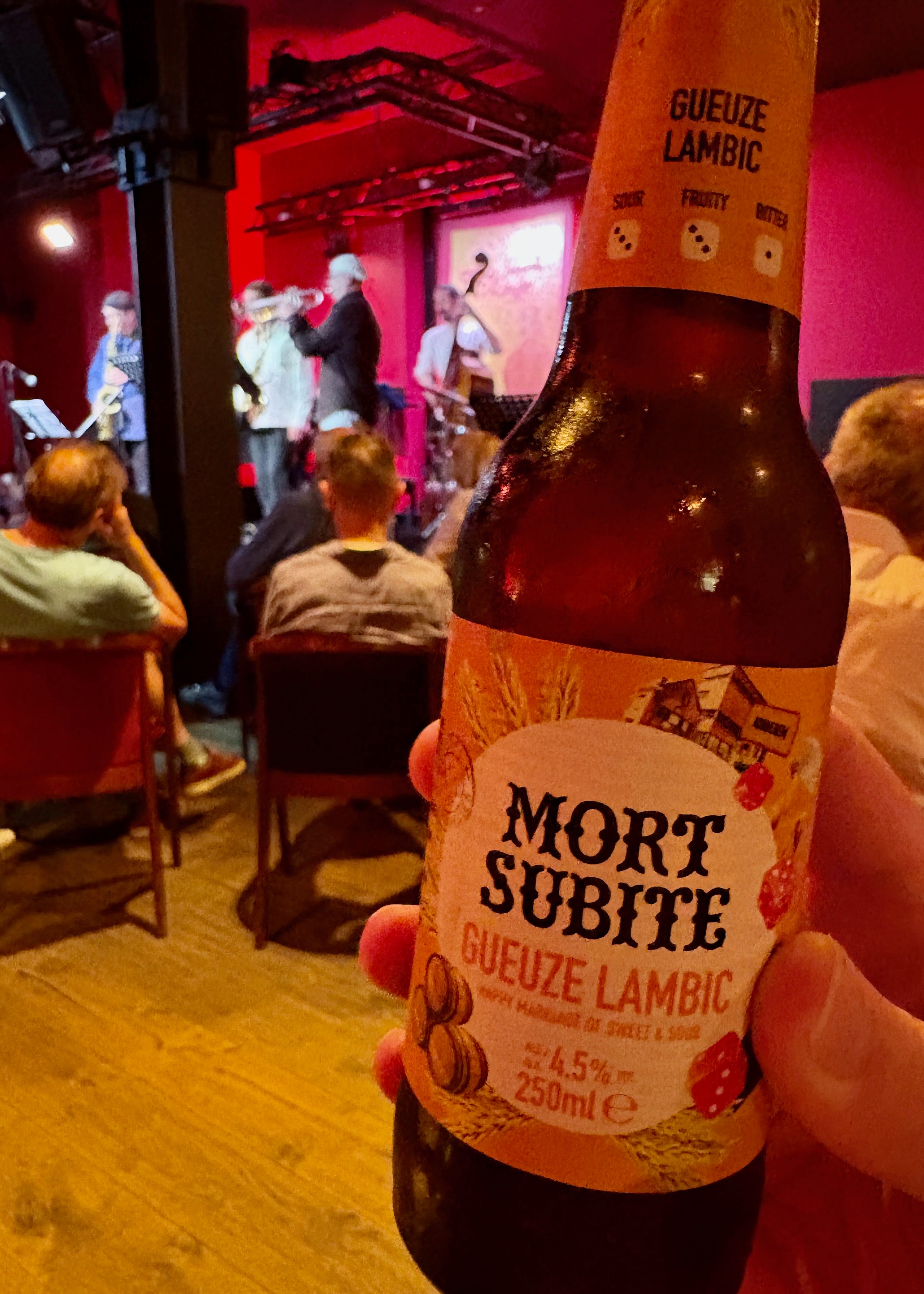
As I mentioned in Part 1 of this photo essay, in my opinion Belgian beer is the best in the world. Brussels also boasts wonderful places to drink it. One that I particularly like is a café/bar/restaurant/beer hall called À La Mort Subite, which translates to something akin to “The House of Sudden Death”.
The name of this establishment refers not to the experience of the customers (I have certainly made it both in and out on my feet), but rather stems from a dice game that regulars used to play there one hundred years ago. This led the proprietor (who clearly had a sense of humor) not only to change the name of his café, but also to christen his own beer, a fruity and cloudy gueuze, Mort Subite.
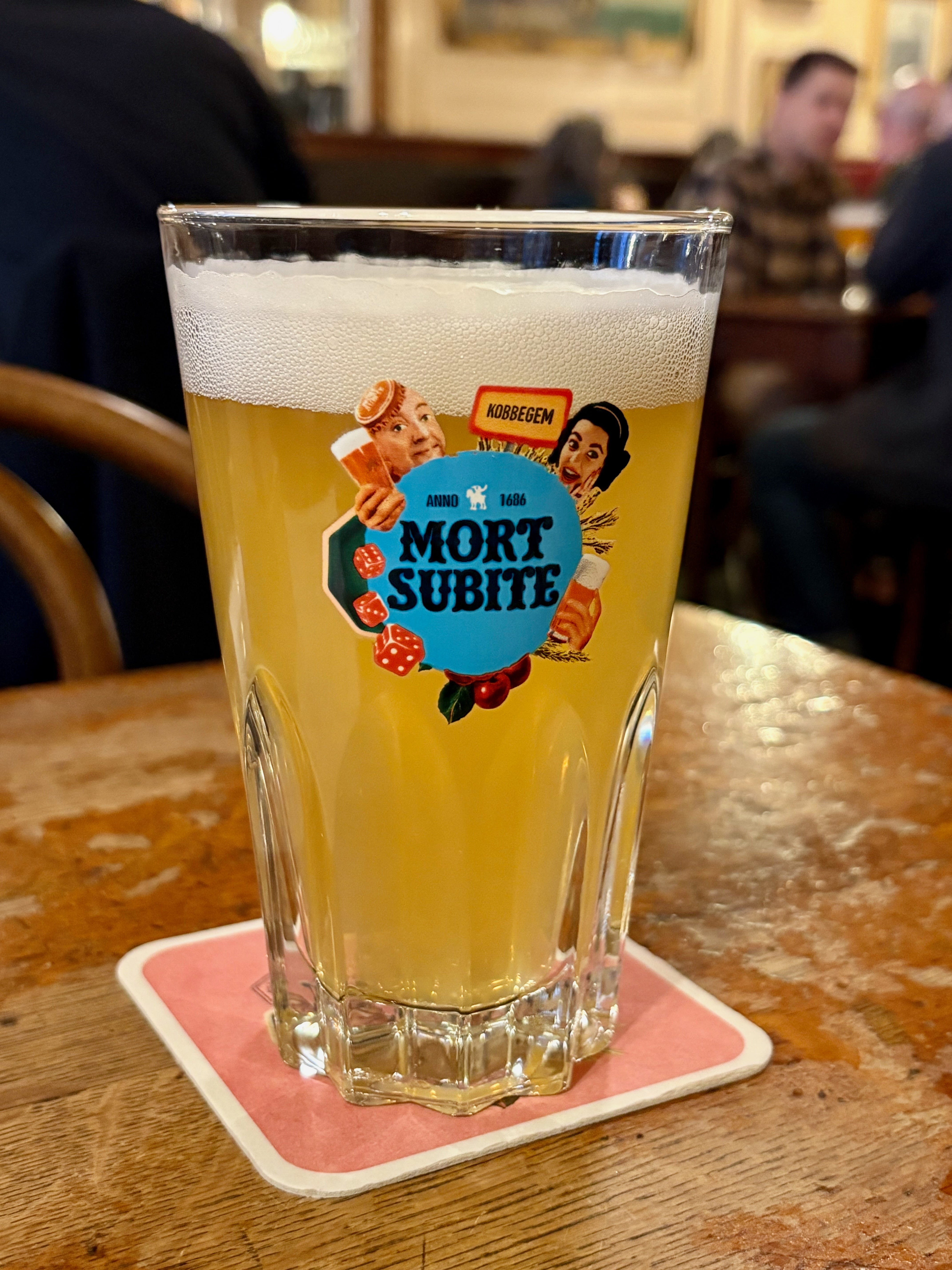
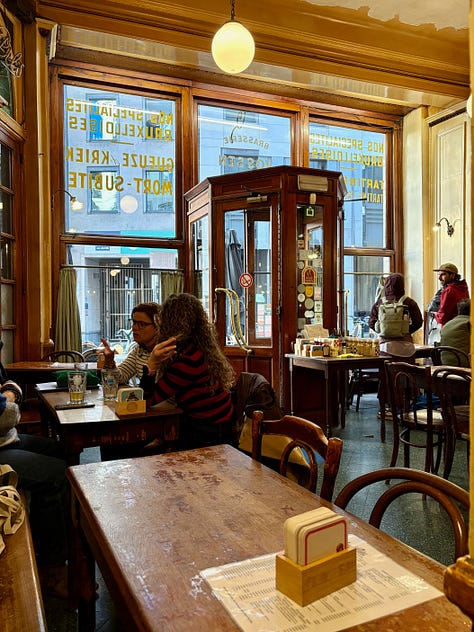
I love places like À La Mort Subite, where there are many delicious beers to try, the waiters are sharp and funny, and there is nothing wrong with just sitting with a glass of beer, feeling the company of the myriad patrons who have passed through over the decades.
Note: As always, if you want to see the entire photo corresponding to each thumbnail in a gallery like those below, you must be online, not reading this in your email. Just click on the title of the piece above to open it in your browser. Then you can click on the images to see them.


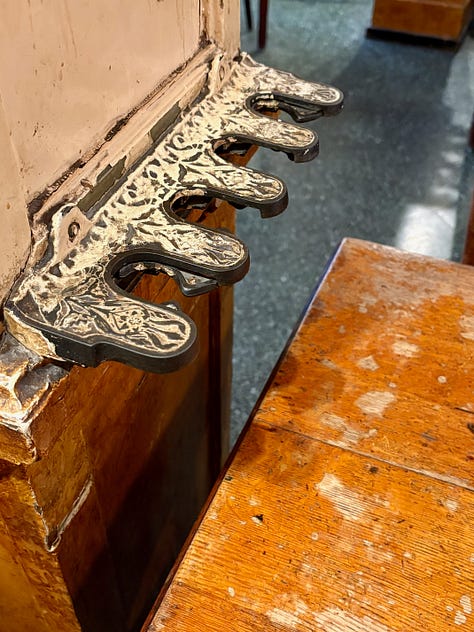


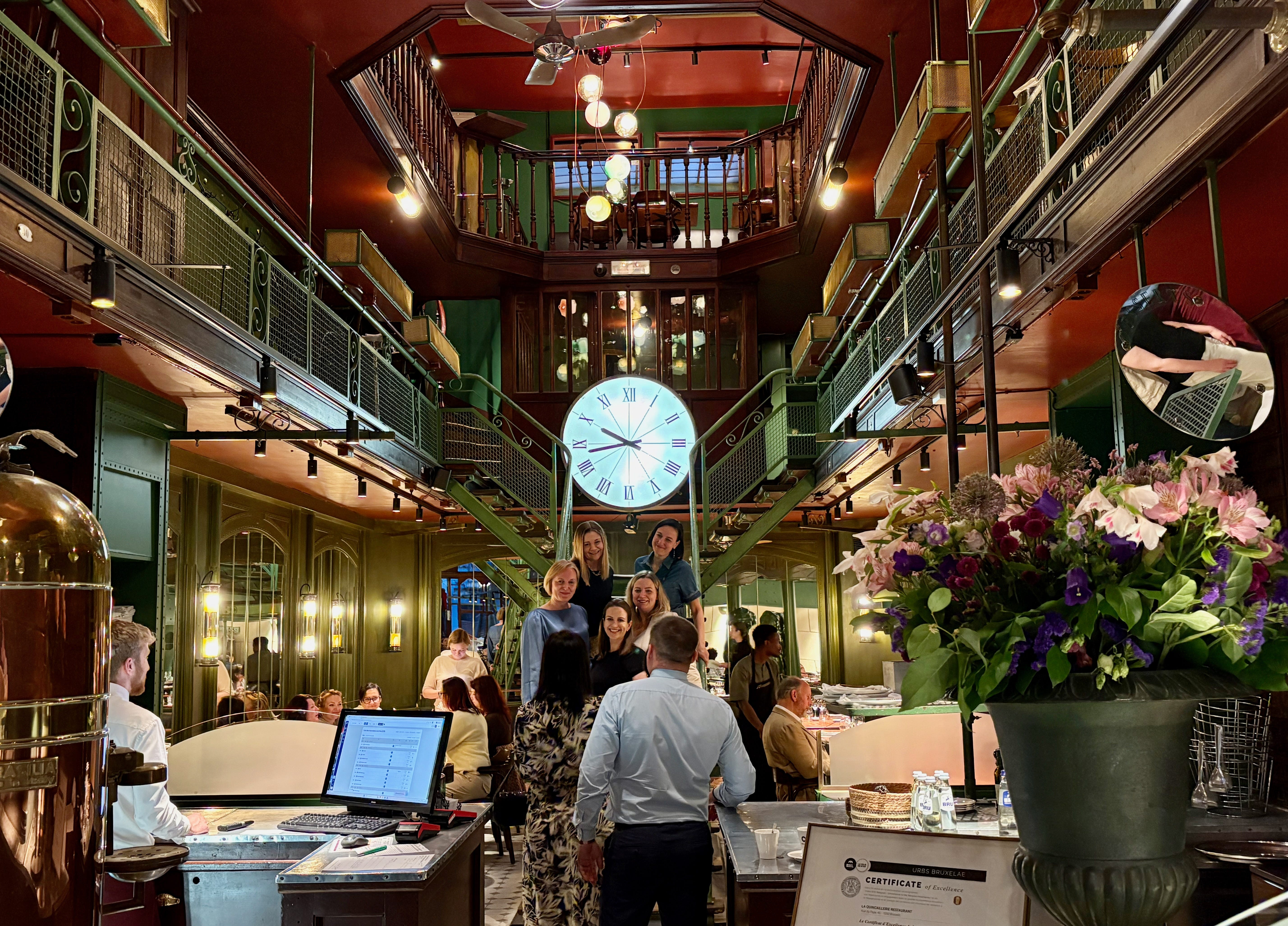
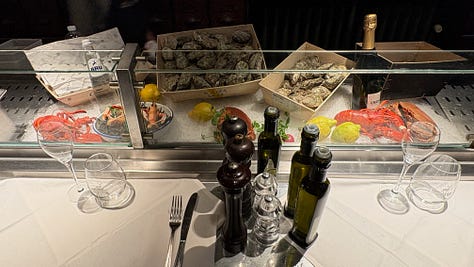
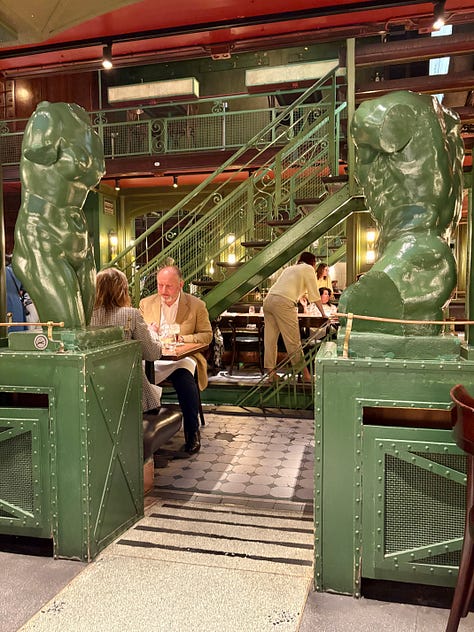
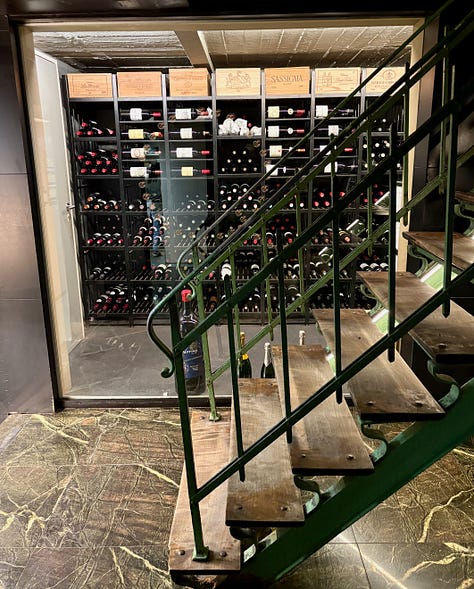
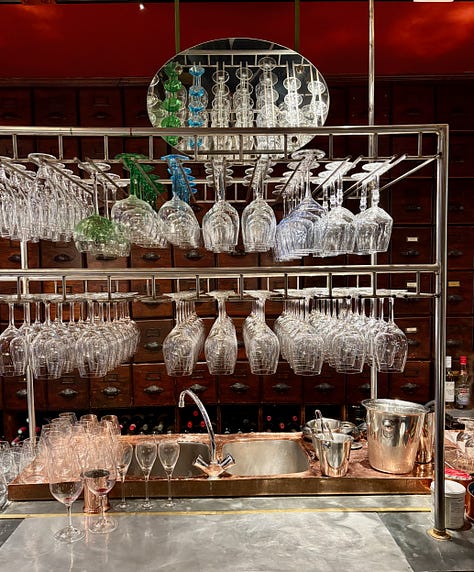
The next place I would like to take you is a restaurant—one that is somewhat unusual. La Quincaillerie means “The Hardware Store”, which is accurate and misleading at the same time.1
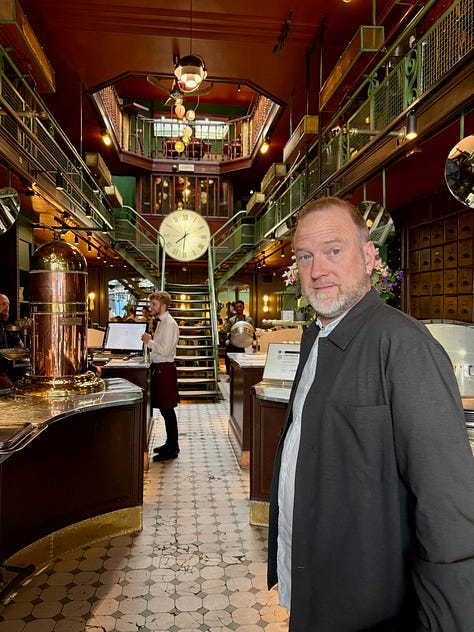
It is accurate in that this restaurant—outside the ancient core of Brussels in the area known as Ixelles—is housed in a building that used to be a hardware store. But what a glorious store it must have been!
It is misleading in that one might suppose that a hardware store would serve workmanlike fare. But no, La Quincaillerie is a fine-dining experience whose specialty is seafood, in particular oysters.
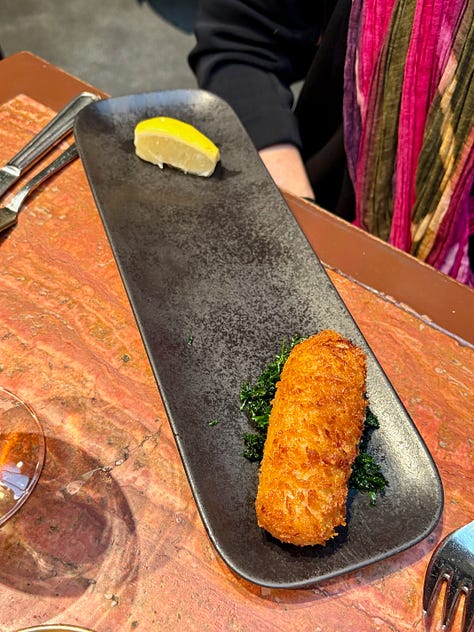
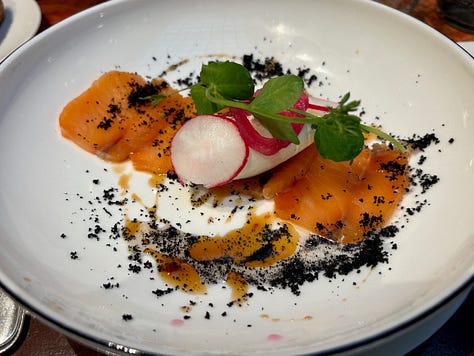
La Quincaillerie is the sort of restaurant where the food is prepared just so, at times with a bit more plate space than seems warranted. But the fare is uniformly outstanding.
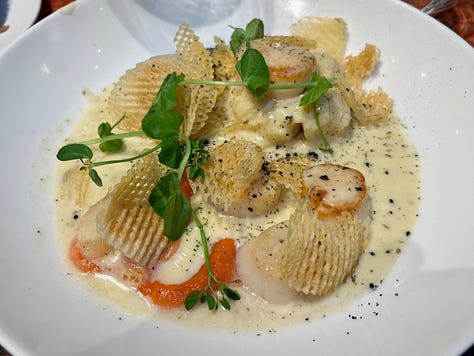
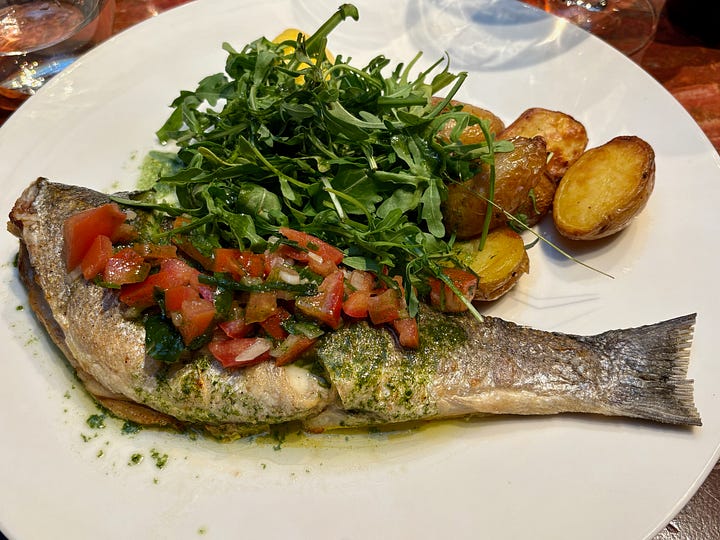
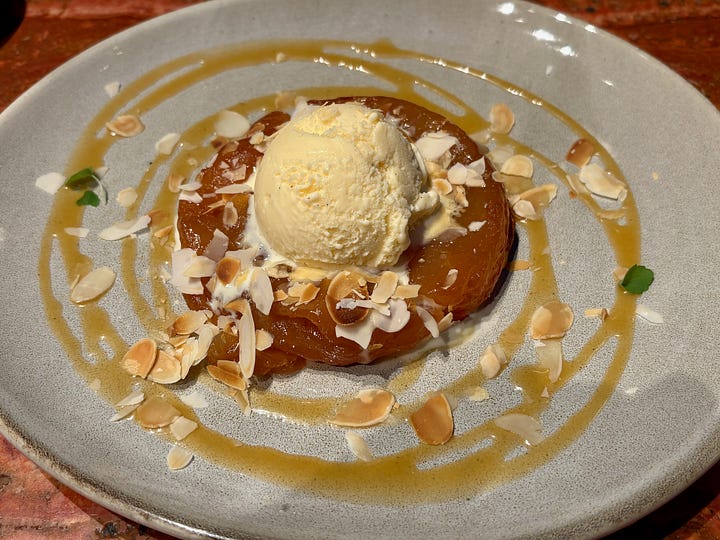
Part of the pleasure of dining here is the space itself. There are minuscule tables for two along the galleries overlooking the main room, which provide a romantic if spatially challenging experience. On this particular visit, we sat off to the side where it is admittedly more comfortable. Going to La Quincaillerie is a luxury that I look forward to permitting myself every so often.

The third favorite place I would like to show you is a music club called The Music Village. Like À La Morte Subite, it is right in the center of the city, and it is to jazz what that establishment is to beer.
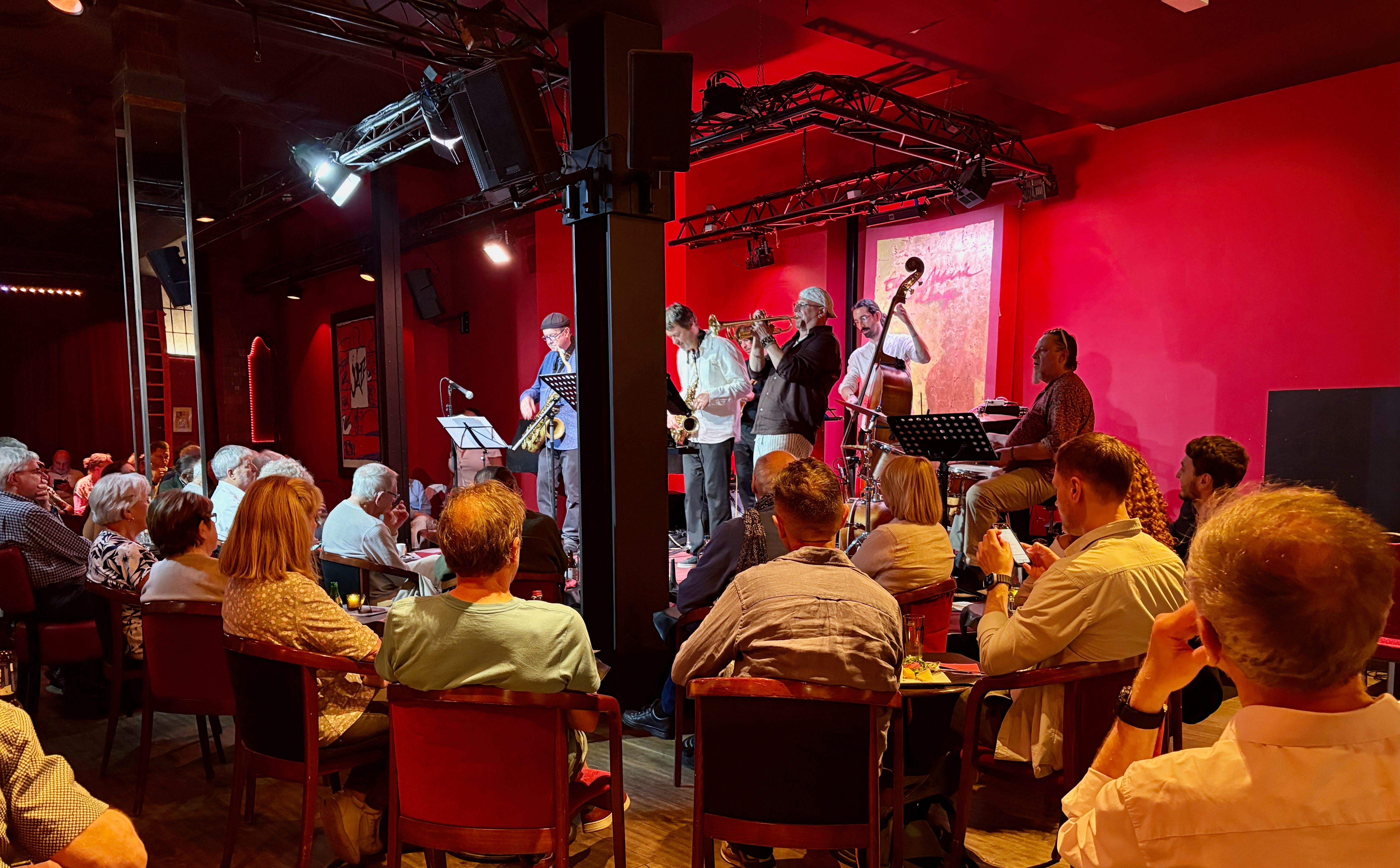
The Music Village presents over 300 concerts per year—one nearly every night of the week. It was the first place where I heard live Gypsy Jazz (or jazz manouche) in the style of Django Reinhardt, which blew my mind.
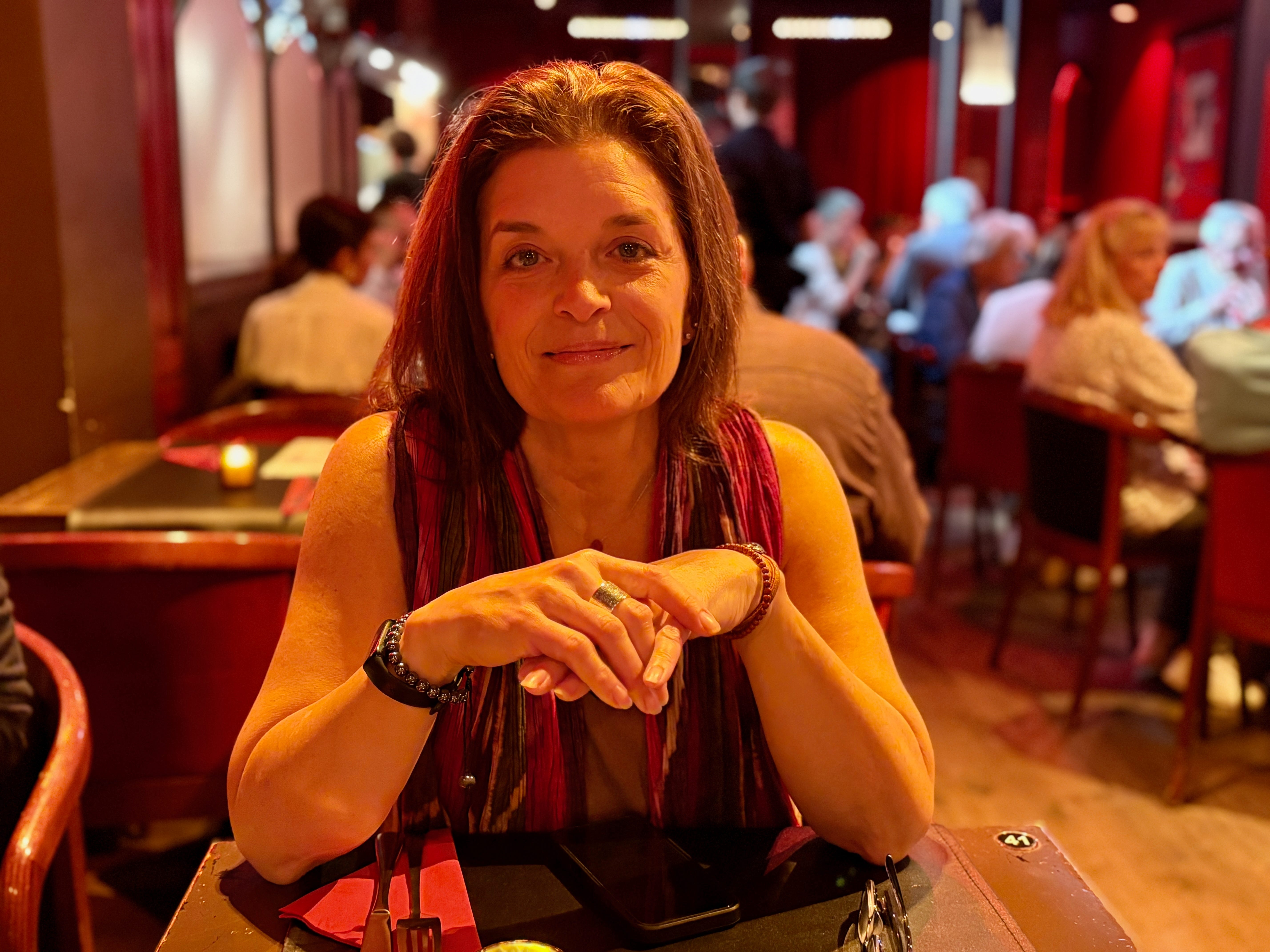
This latest visit was with my beautiful Elizabeth, with whom I was celebrating a respite from minding her group of students. We went to The Music Village to hear a six-person combo perform a tribute to Miles Davis’ album Kind of Blue—arguably one of the most important jazz records ever, and certainly one of my favorites.
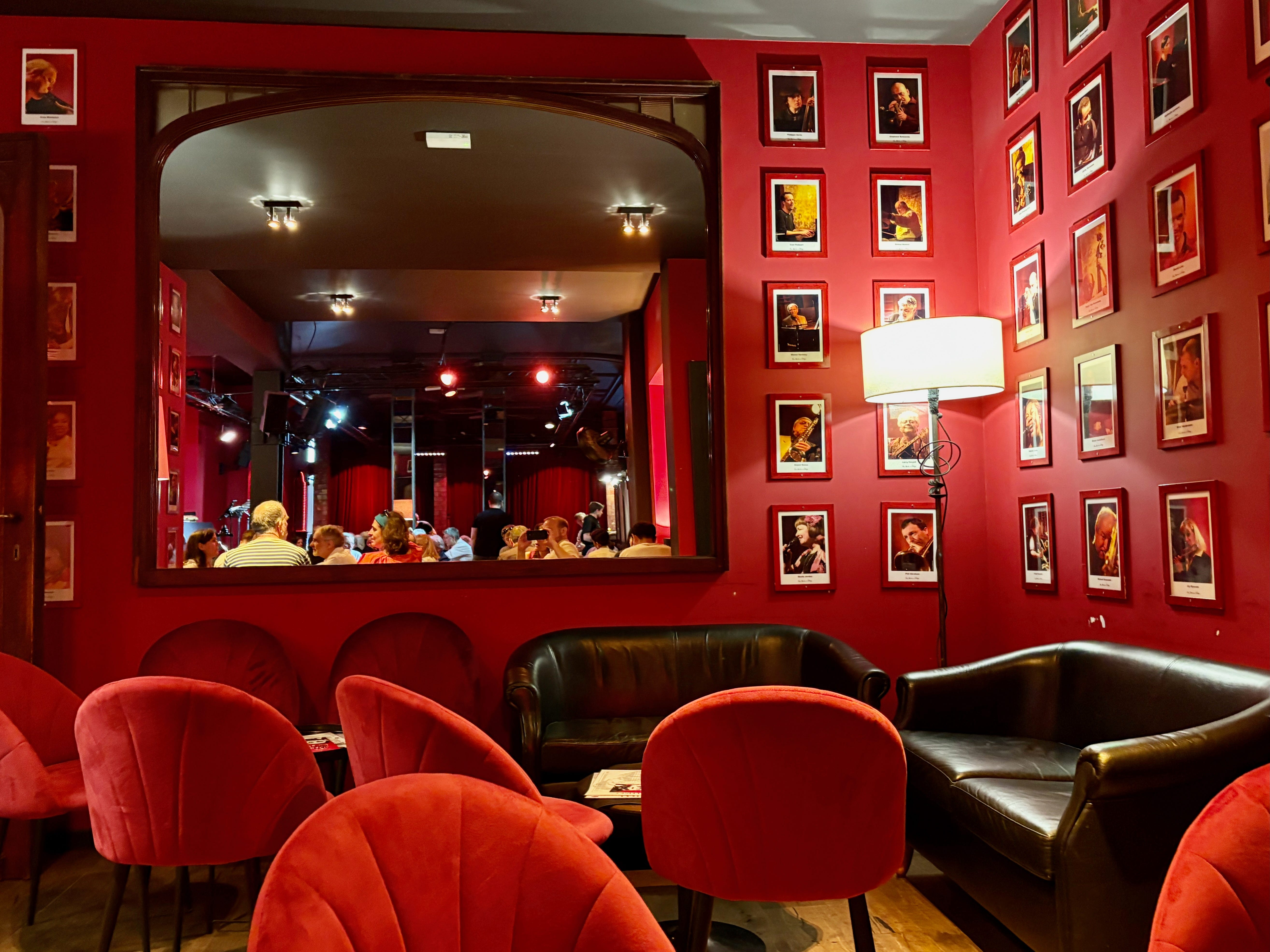
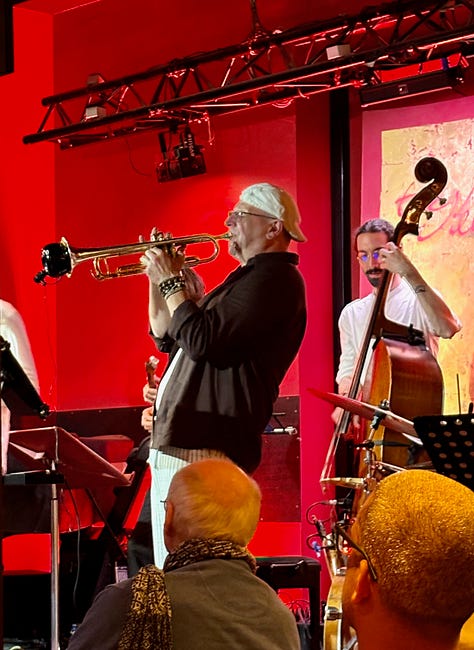
The music was excellent (interestingly, they had a guitarist instead of a pianist—imagine having to fill in for Bill Evans, but on the guitar!), and the crowd, with the exception of two young Spanish women, was attentive and appreciative.

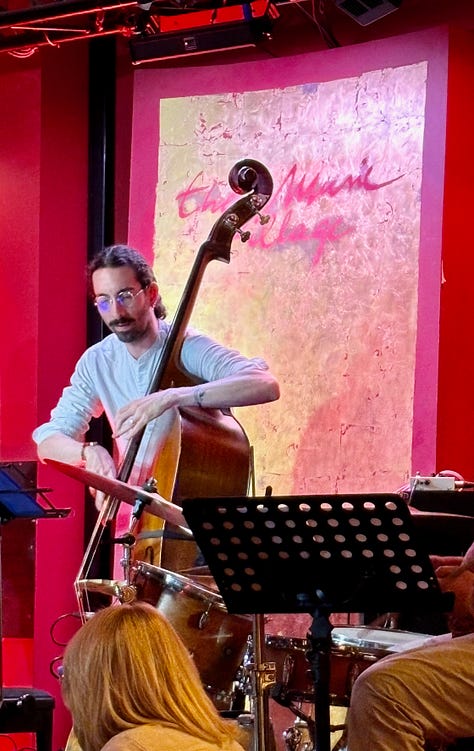
And of course, there was good beer.
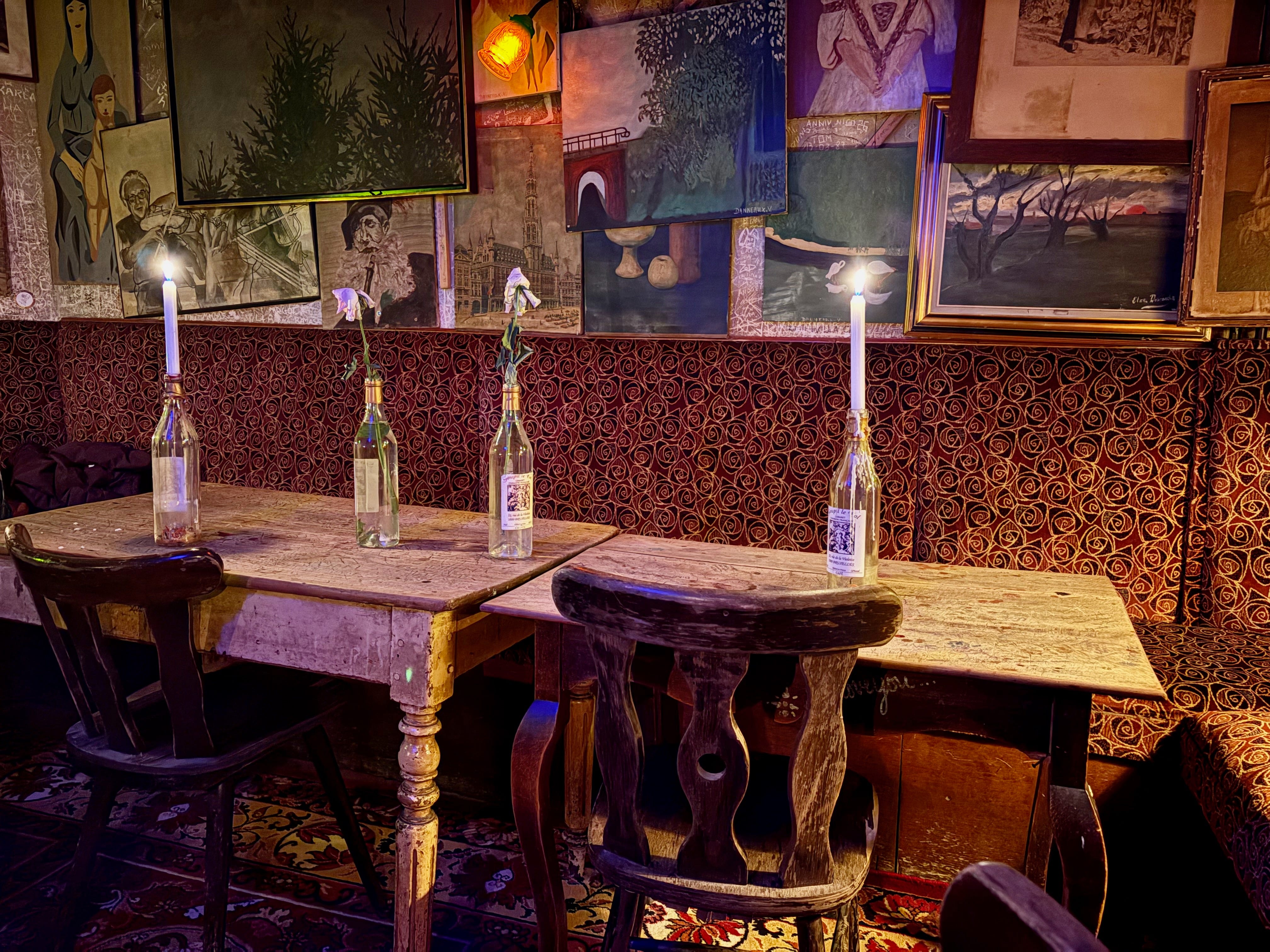
I would like to include an honorable mention in this list. There is a bar in Brussels that I count as my favorite. Goupil Le Fol (which means essentially “The Crazy Wolf”) is a unique establishment, though it is allied with the brown cafés of Amsterdam and certain student hangouts in Germany and Scandinavia. It is a three-story building that is a maze of rooms filled with eclectic and shabby furniture, questionable art, and candles burning in bottles in dim spaces. There is always classic French and Belgian music playing. It appears to nearly always be open. Small groups go there to celebrate; couples go there to make out. I took a few American students there (don’t worry, they were old enough to drink), and one of them said, “This is the coolest place I’ve ever been in my whole life!” Isn’t that lovely?
If you get on line 6 of the Brussels metro and take it north out of the city, you eventually arrive at the site of the 1958 Brussels World’s Fair. Much of what was constructed for that event no longer exists, but the most iconic, fascinating, and disorienting construction is still in place: the Atomium.
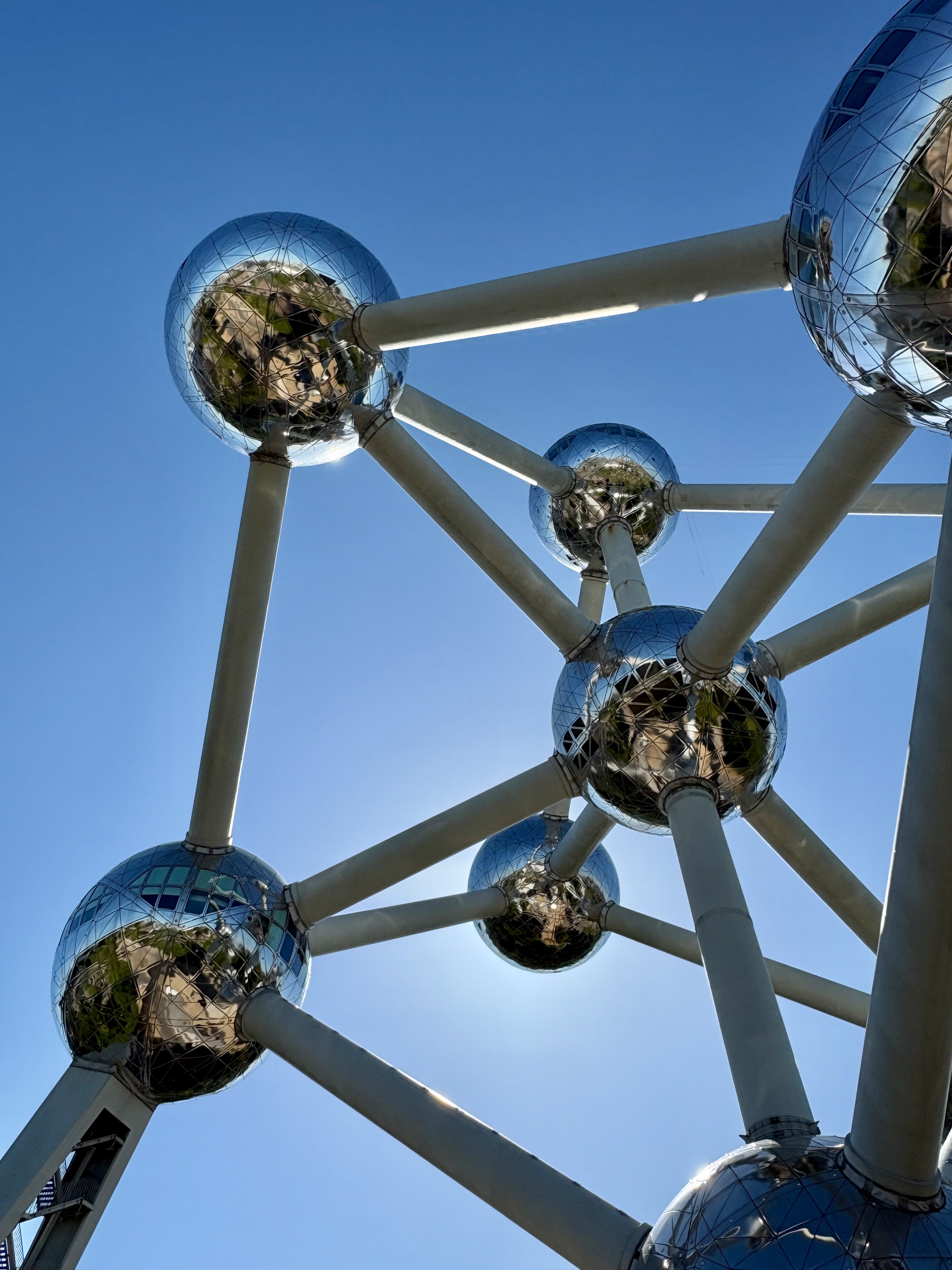
The Atomium is a…building? Structure? Monument? It is hard to characterize Brussels’ most popular tourist attraction. Seemingly related in spirit to Seattle’s Space Needle, Toronto’s CN Tower, Berlin’s Fernsehturm, etc., it was constructed in the optimistic 1950s as a tribute to industry, science, technology, and Belgian engineering. Consisting of nine spheres connected by tubes, it has the shape of an iron crystal, magnified 165 billion times.
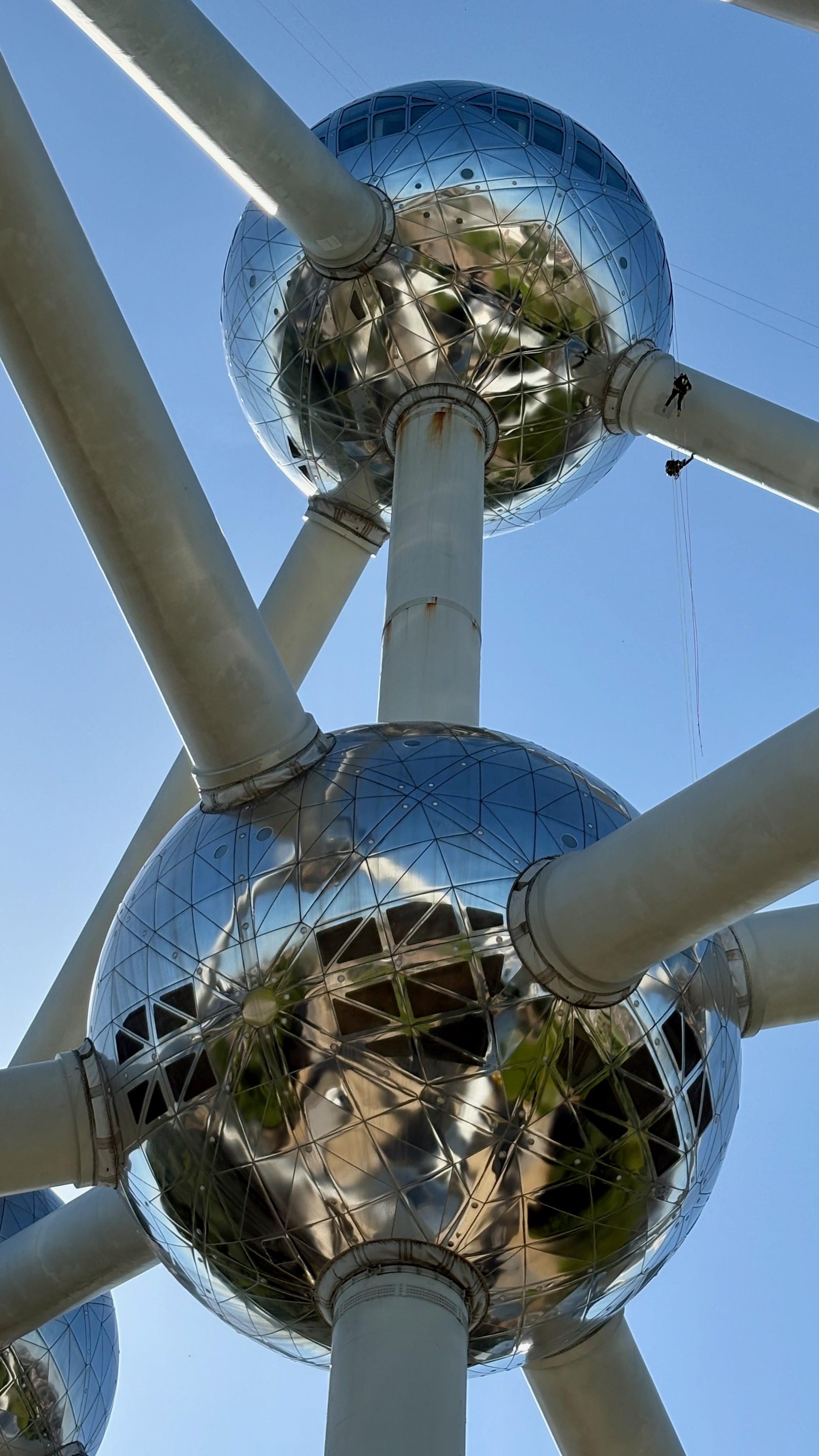
It’s not the biggest building you will see, but it’s probably the biggest iron crystal you will ever visit. See the men rappelling in the picture above for scale.
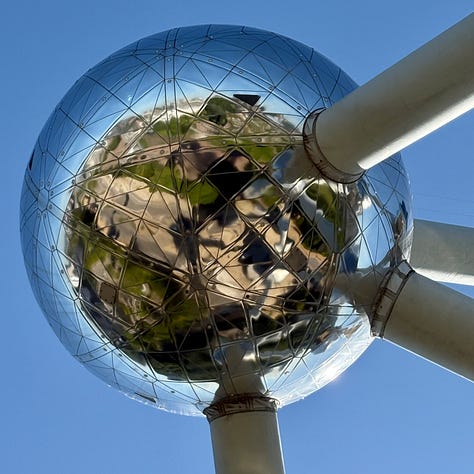

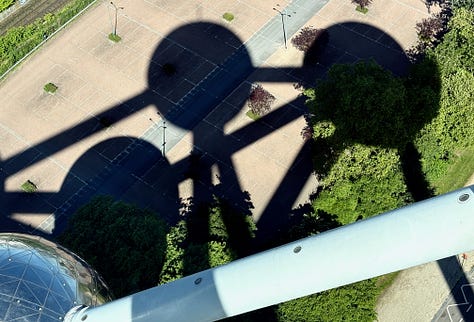


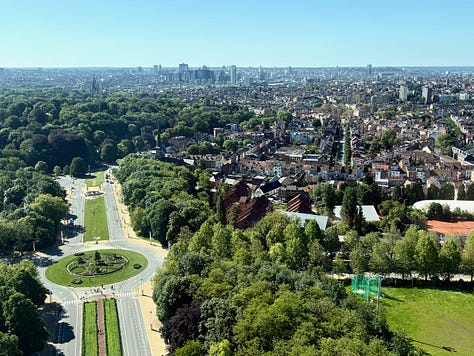
We took the super-fast elevator to the top sphere, where frankly, I found the way it wobbled ever-so-slightly in the wind subtly nauseating. I can’t imagine eating in the restaurant inside the Atomium. There is also an exhibit about the World’s Fair and the structure itself, as well as a multi-media exhibit hall. It was nice to see Brussels off in the distance, but it was also nice to get back to the ground.
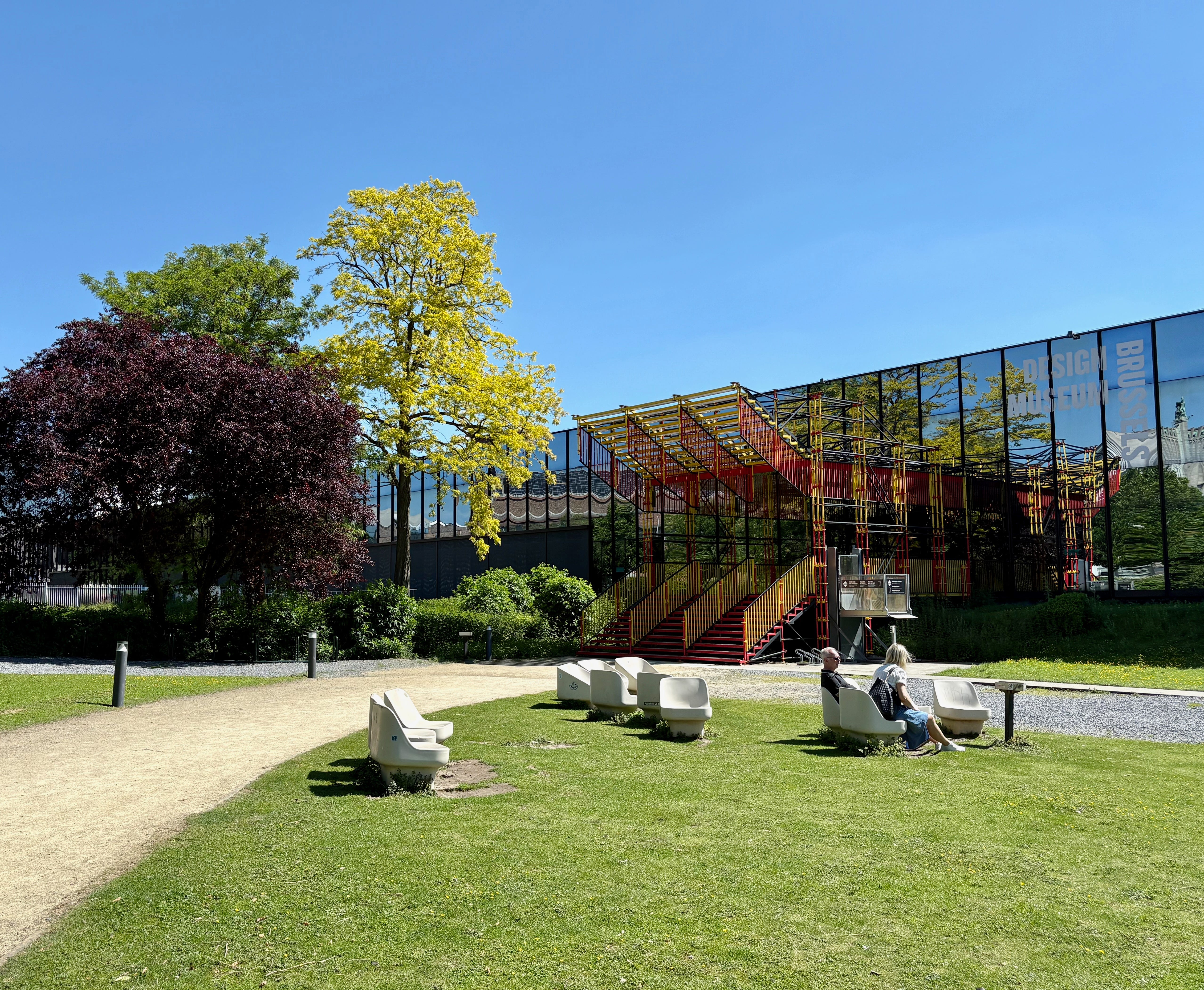
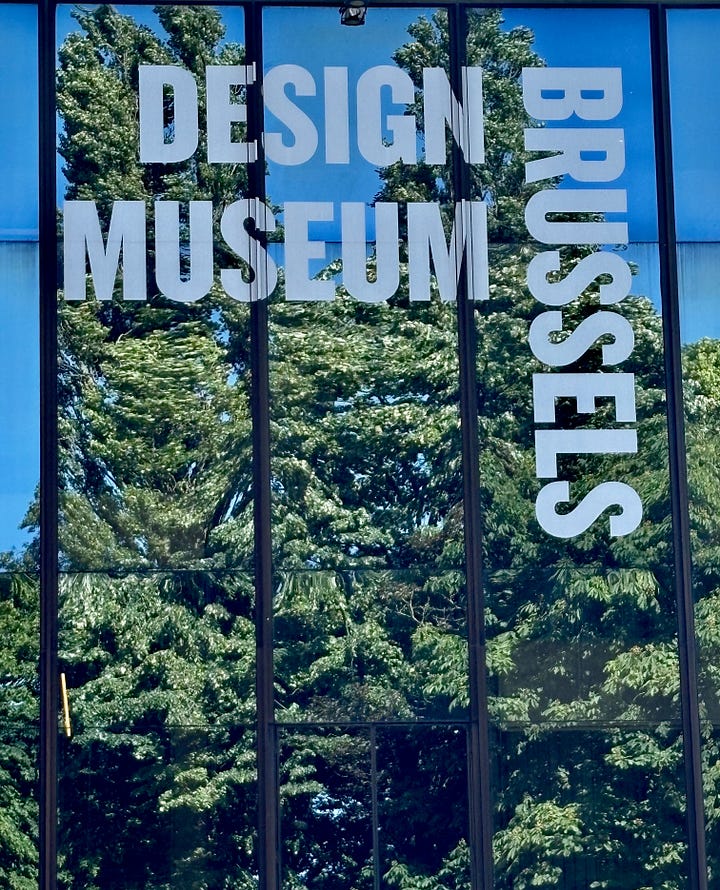
Right near the Atomium is the Design Museum Brussels, which showcases and interprets work by Belgian and other designers. When we were there, they had a small exhibit on design for children, and bigger exhibit on plastic, which was considered the material of the future back at the time of the World’s Fair.


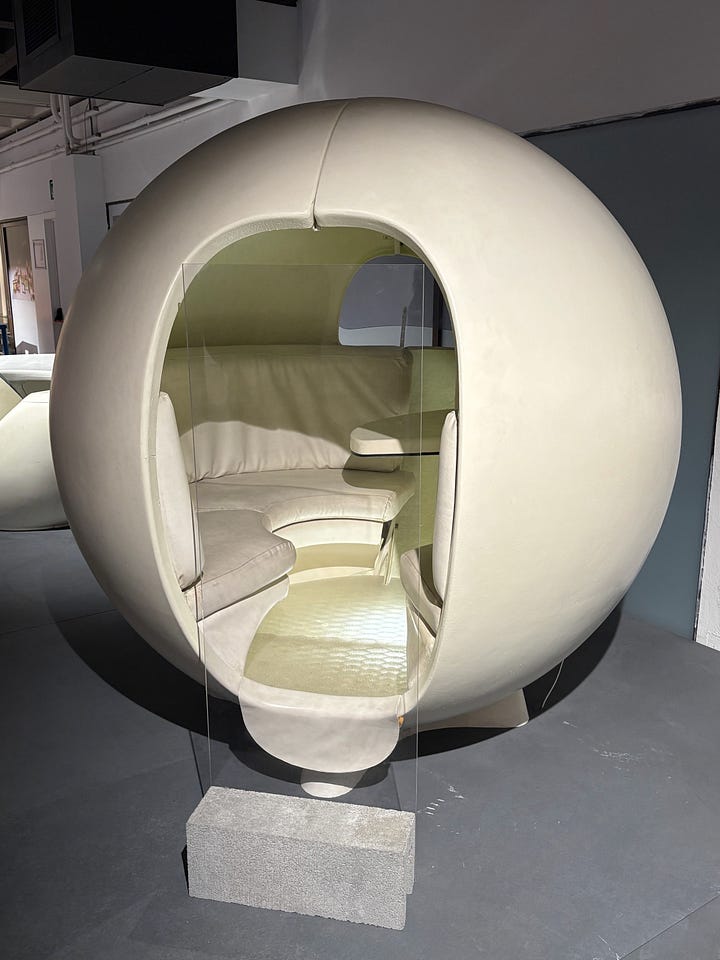
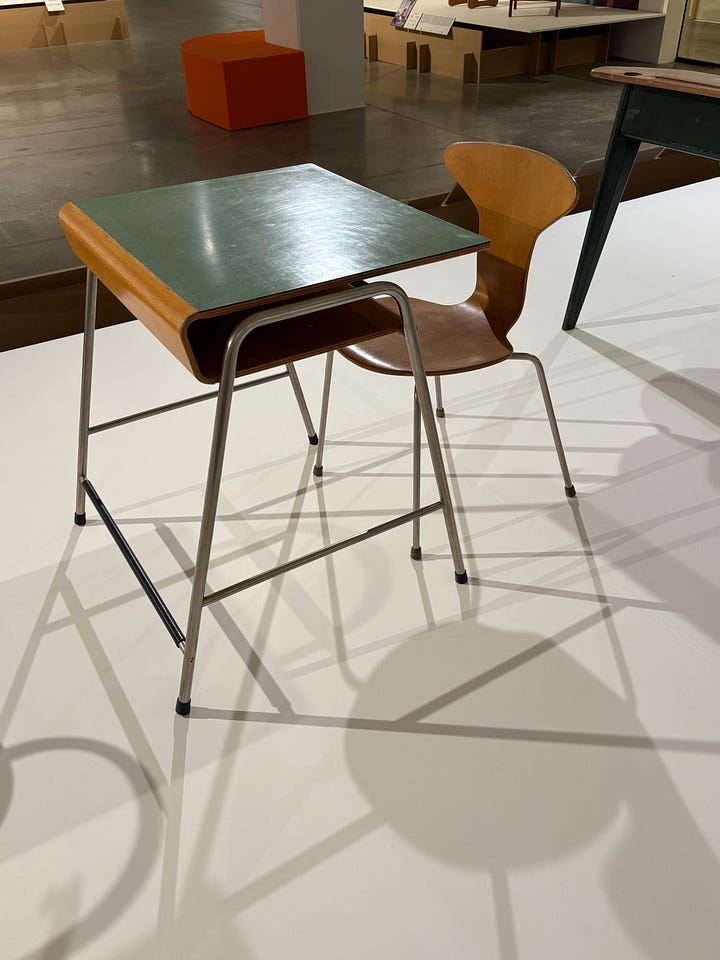

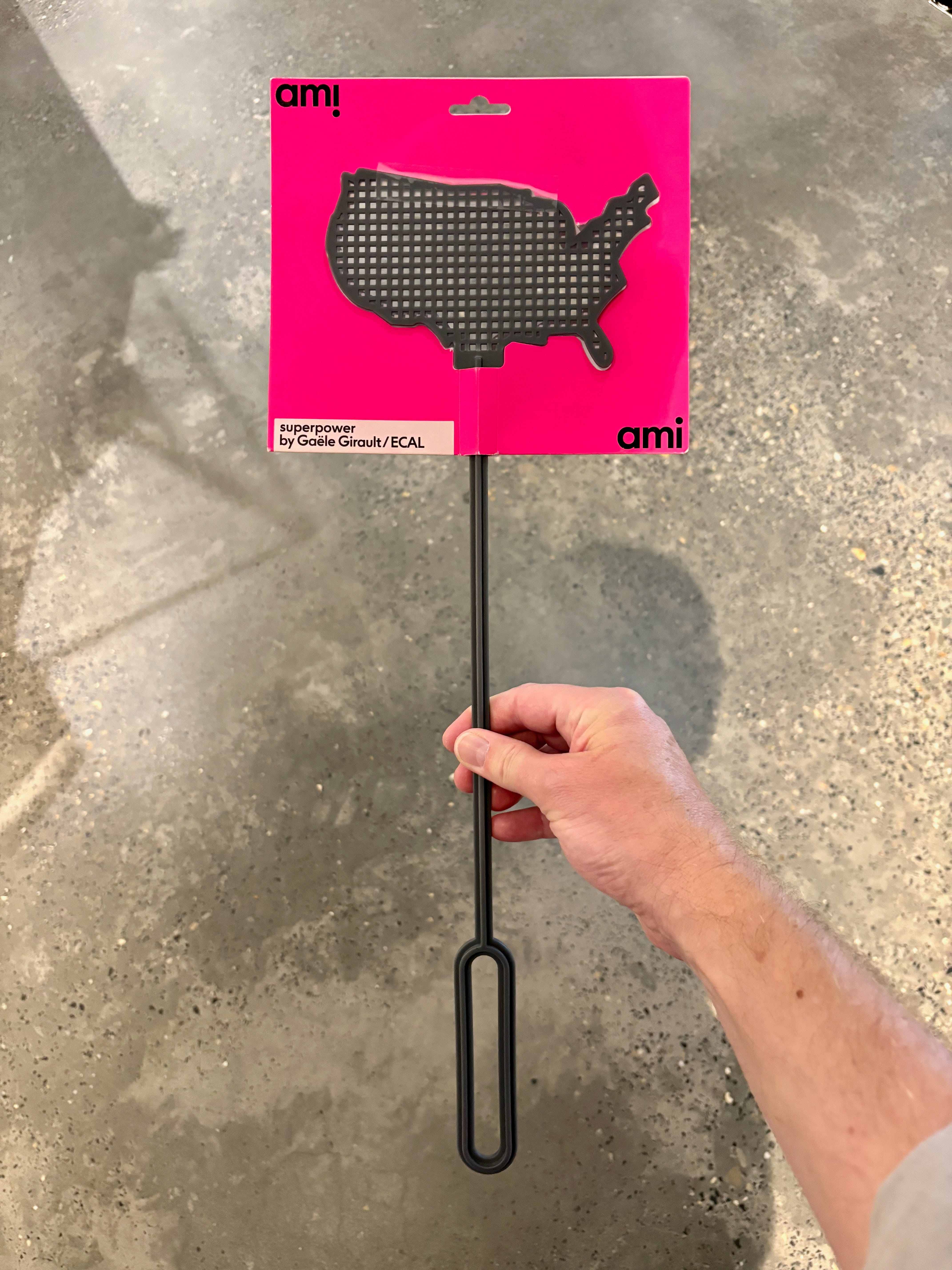
In the gift shop, my favorite item was a Belgian-designed flyswatter in the shape of the USA, called “Superpower”.
Whenever I’m in Brussels, I see evidence of a peculiar sort of humor. I’m not sure whether it’s really characteristic of Belgium, or just of Brussels, or just a fluke. But let me show you what I mean.
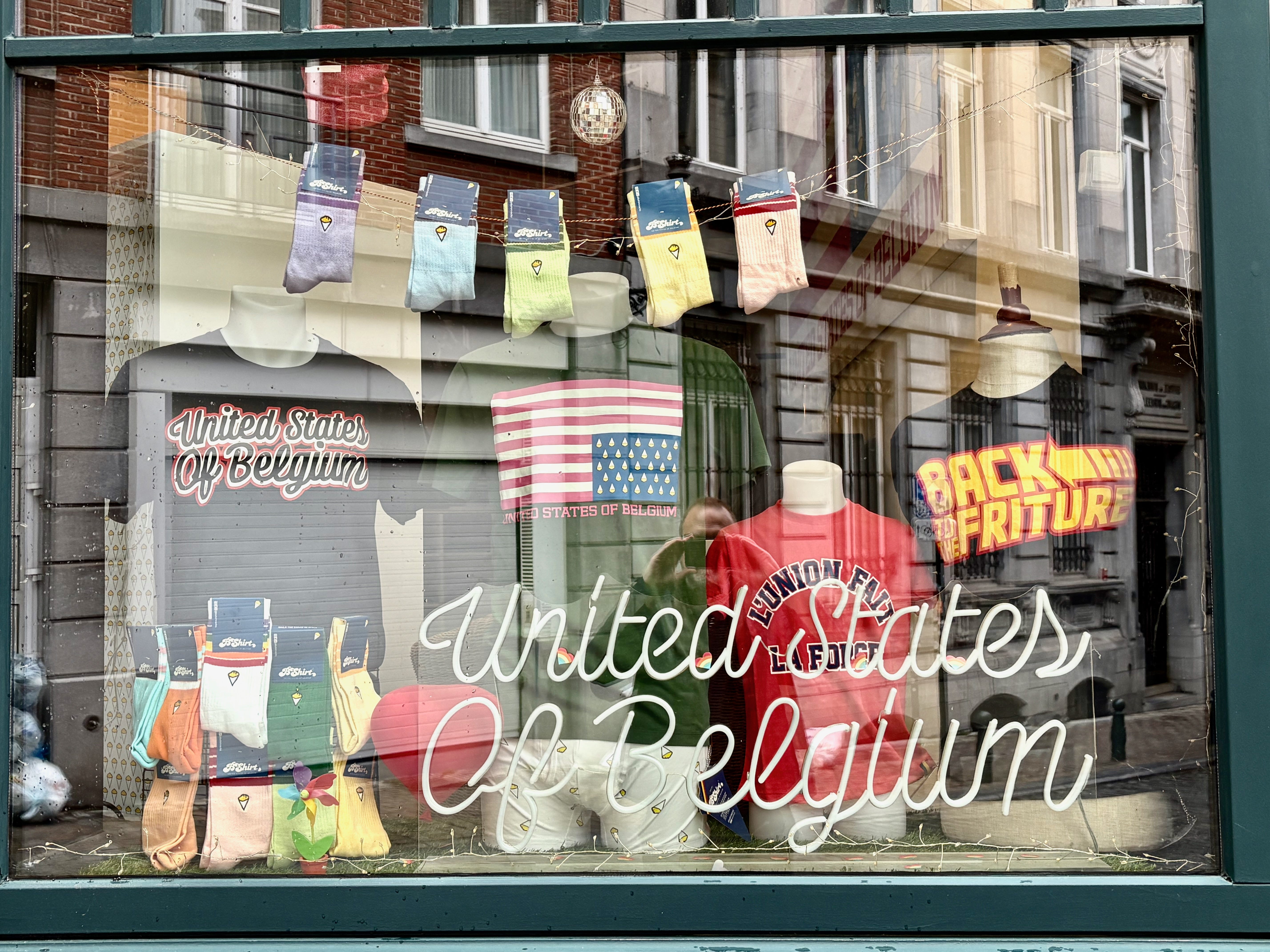
We can segue nicely from the flyswatter to this quirky shop, with its droll designs; I particularly like “Back to the Friture”.
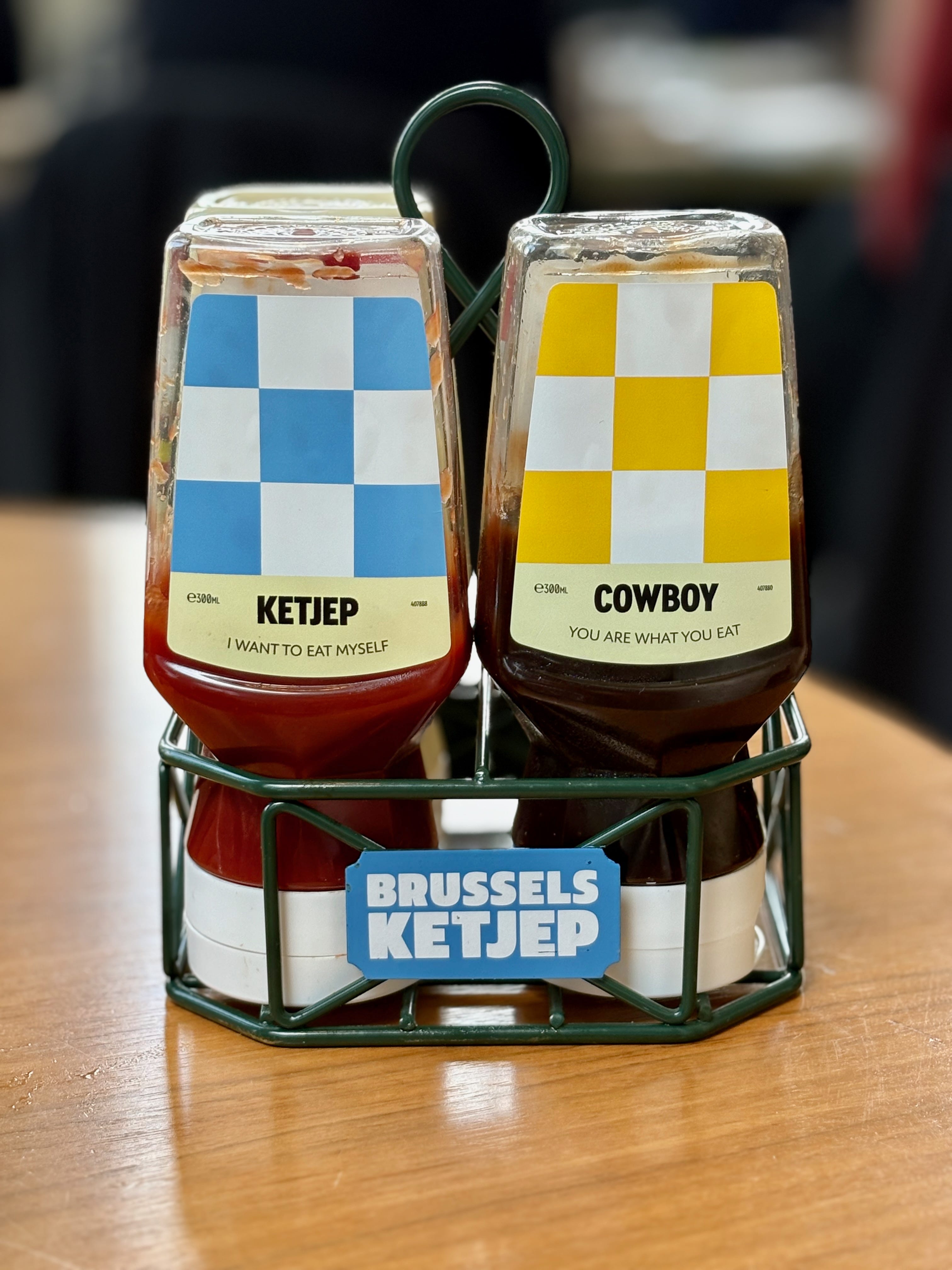
As in many European cities, English is very commonly used by establishments aiming for an arch tone. One restaurant offers these two choices for condiments.
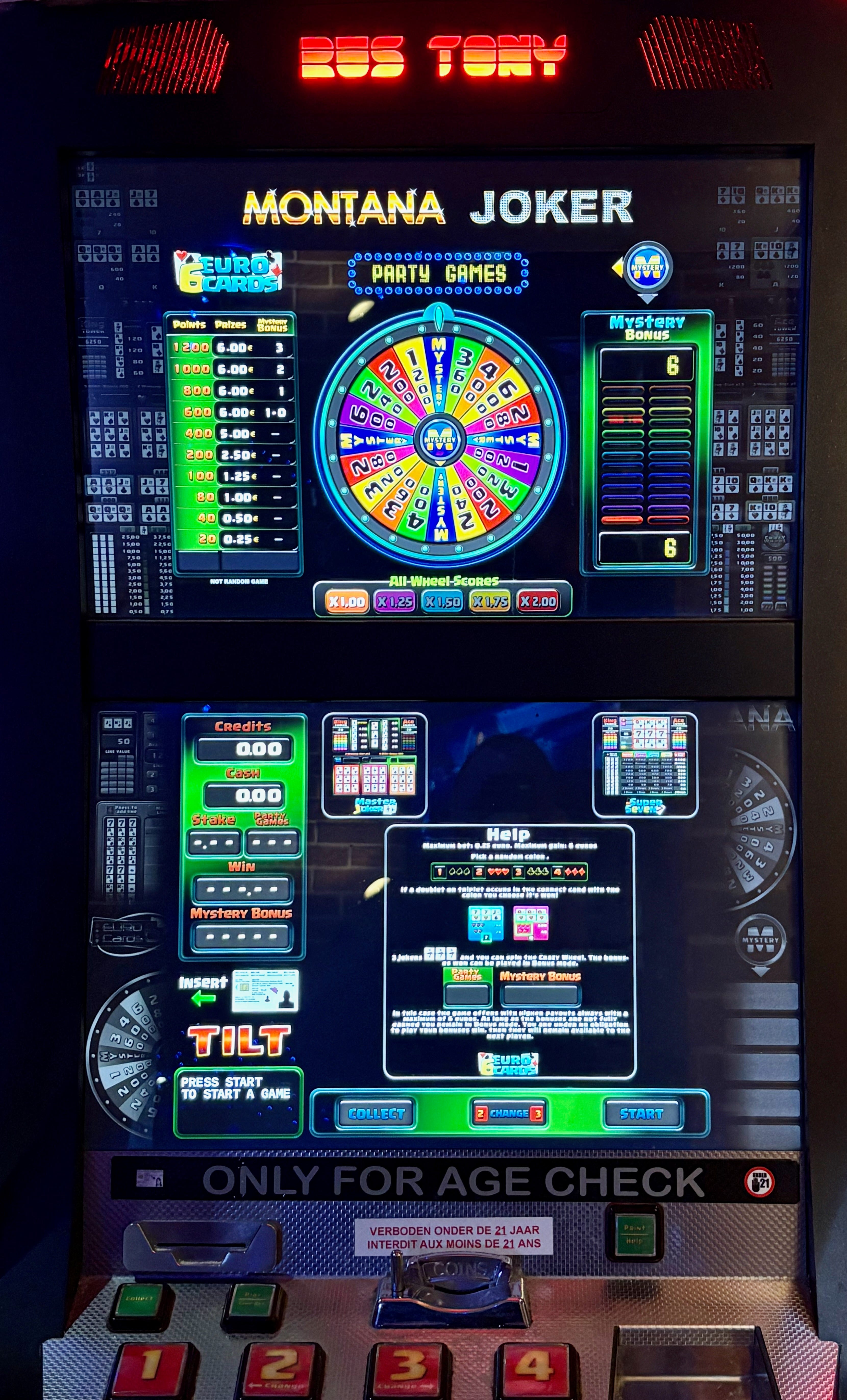
Brussels allows gambling machines in bars. One that I visited had this American-themed machine. I’m not familiar with the concept of Montana Joker—are you? (Maybe Janelle Holden can help here?)
You should be getting a sense here of how ubiquitous the United States is as a target for cultural imitation or parody. But that’s not the only funny thing going on in the area of cultural appropriation.
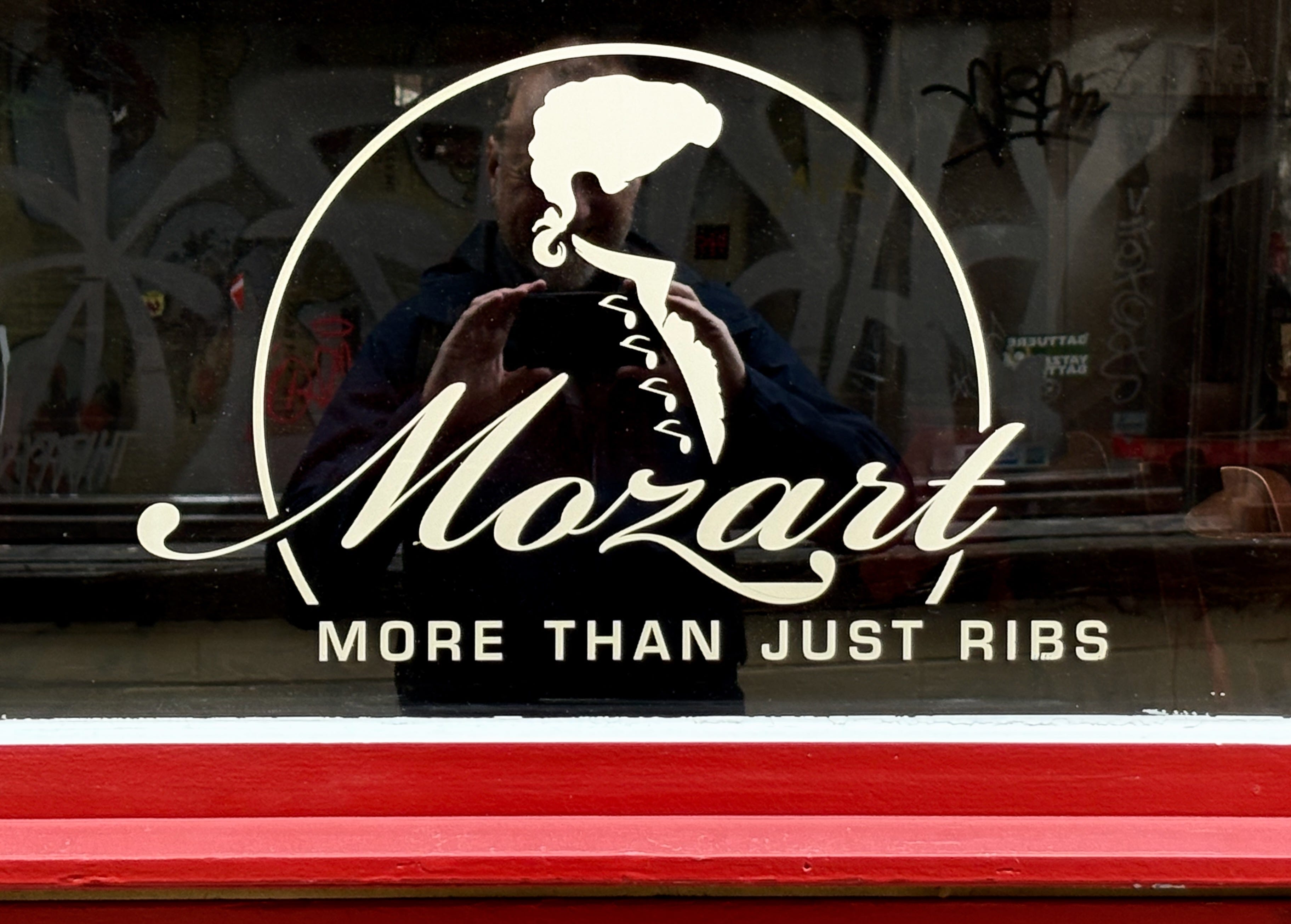
Readers may recall this image from a recent note I published with the caption, “This is a hard sell. I mean, who hears ‘Mozart’ and thinks of anything other than ribs?”
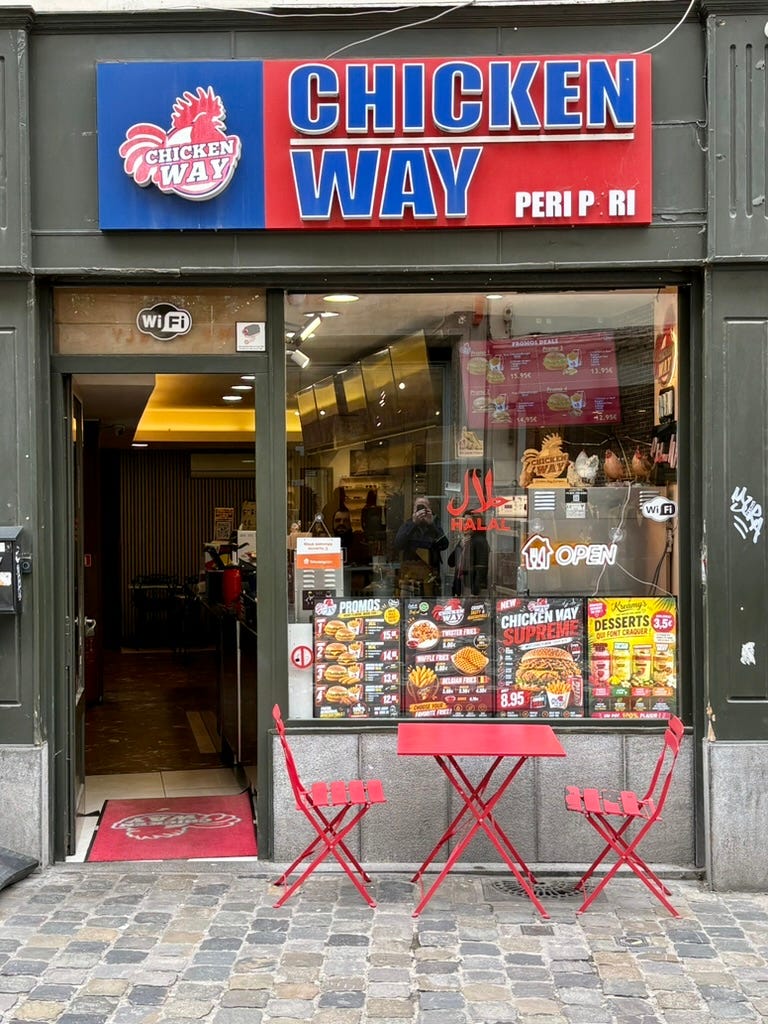
OK, let’s walk the streets of Brussels and look at some establishments. This chicken place readily captured the imaginations of the students we were with. Note also the (subtle?) use of red, white and blue here.
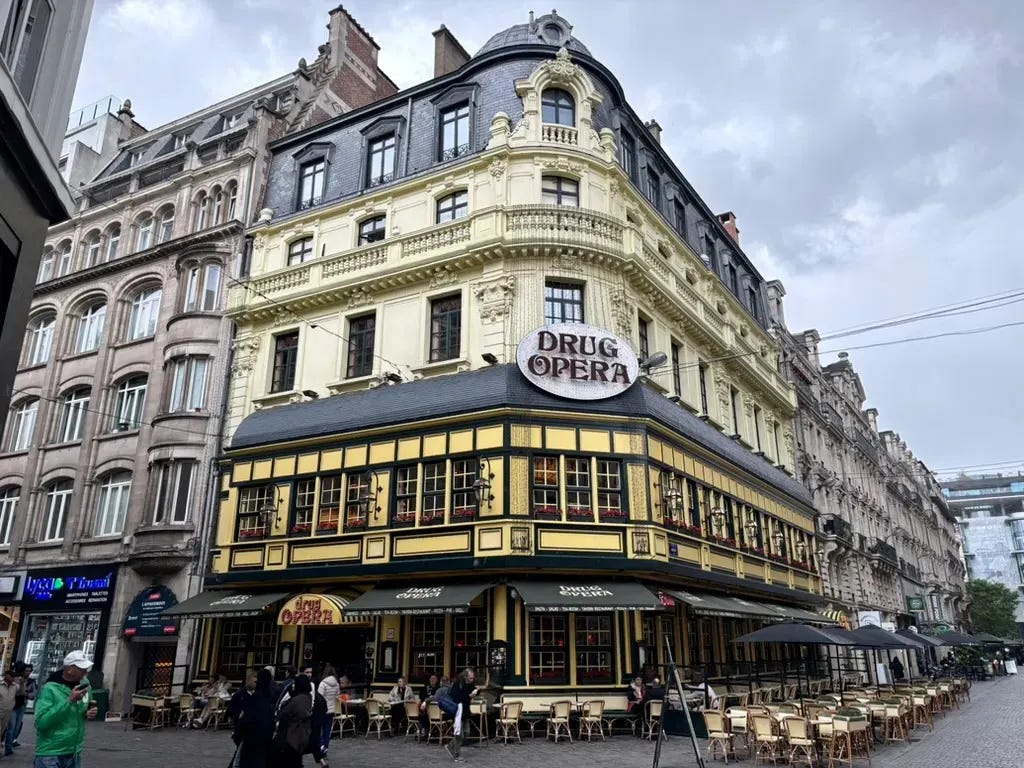
The classic multi-story pub Drug Opera has one of the strangest names you’ll see in Brussels. Its name seems also to be influenced by American English, as the building was once a drogisterij, or drugstore (and is located near the Opera).
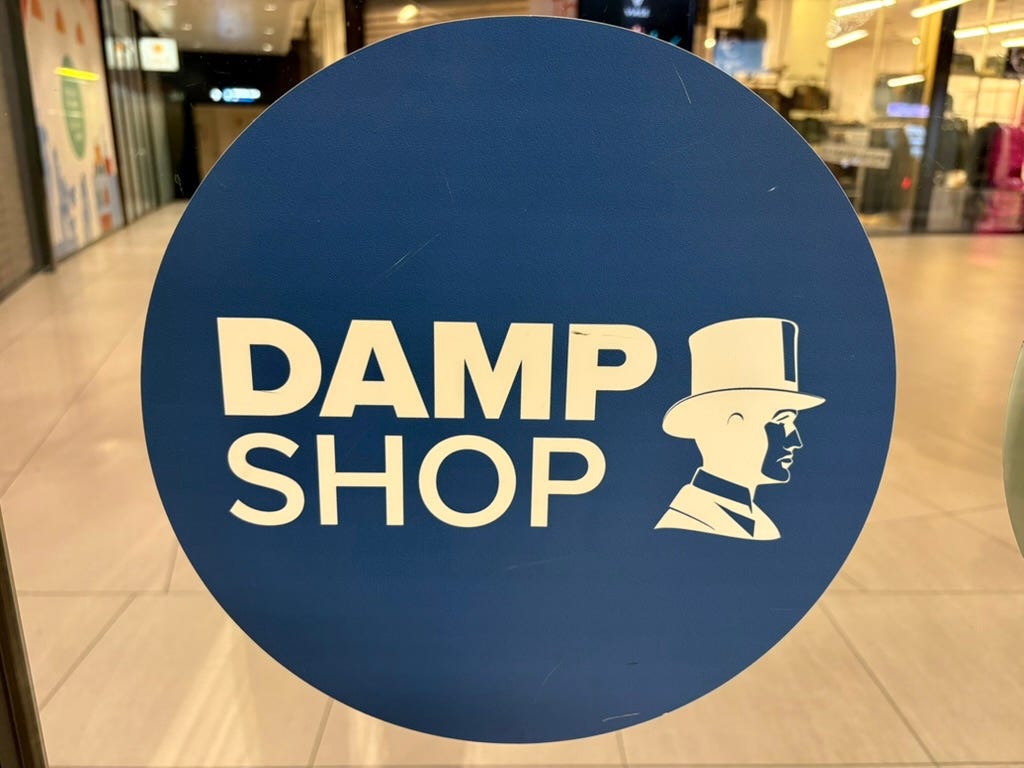
It would be very hard for an English speaker to guess what this shop sells, as both the (half-)Flemish name and the logo are misleading. In fact, it’s a vape store (damp = vapor).
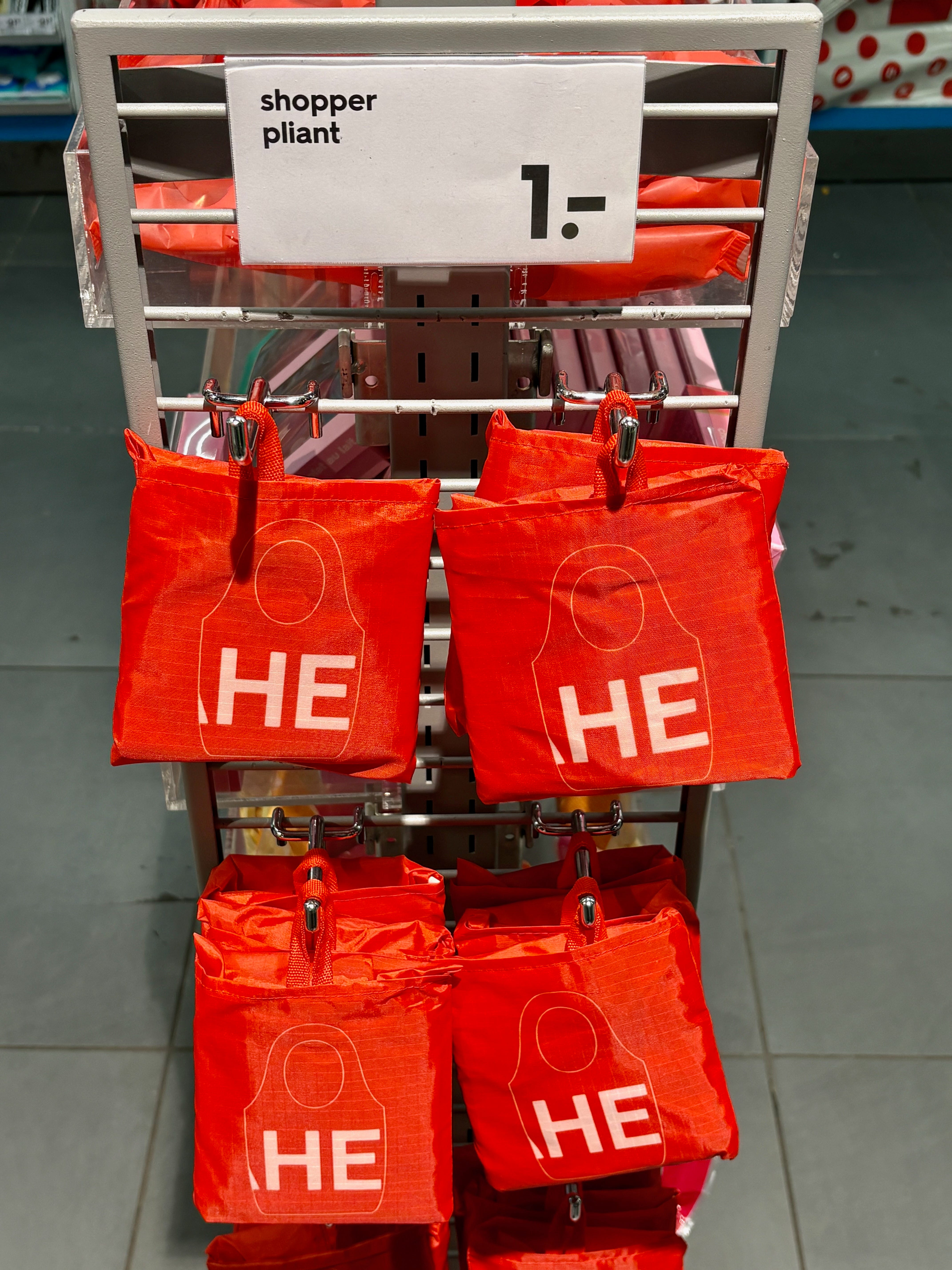
This shopper may be pliant, but he sure does laugh a lot.
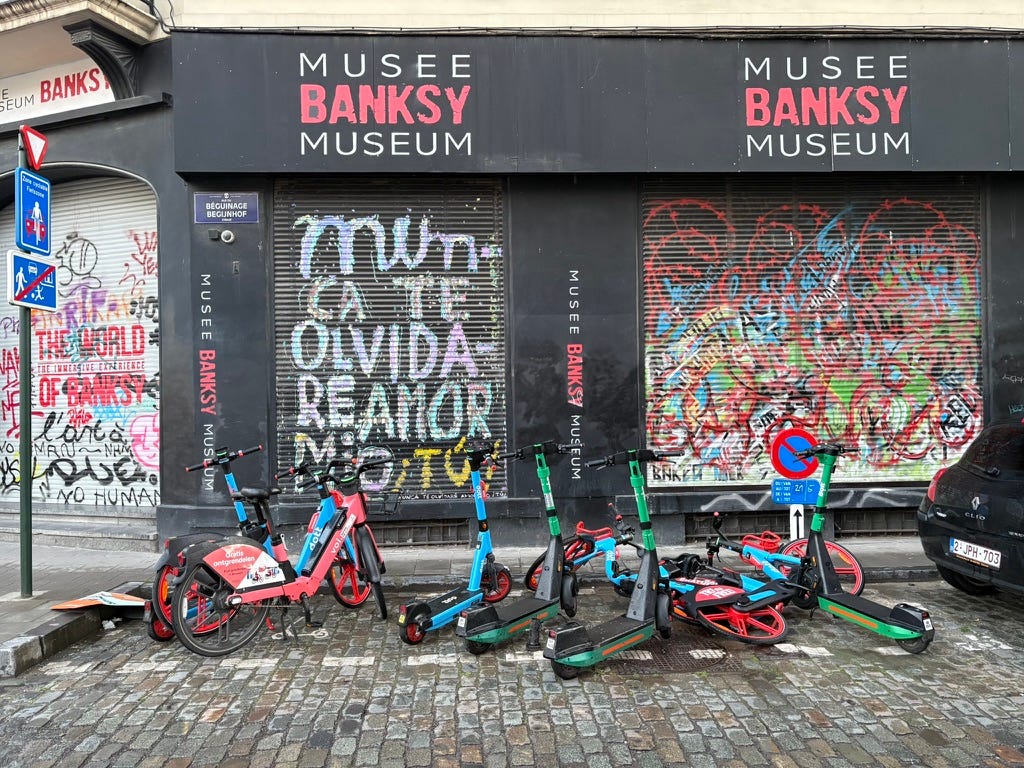
I think it’s only fitting that the Banksy museum should be covered with graffiti, don’t you?
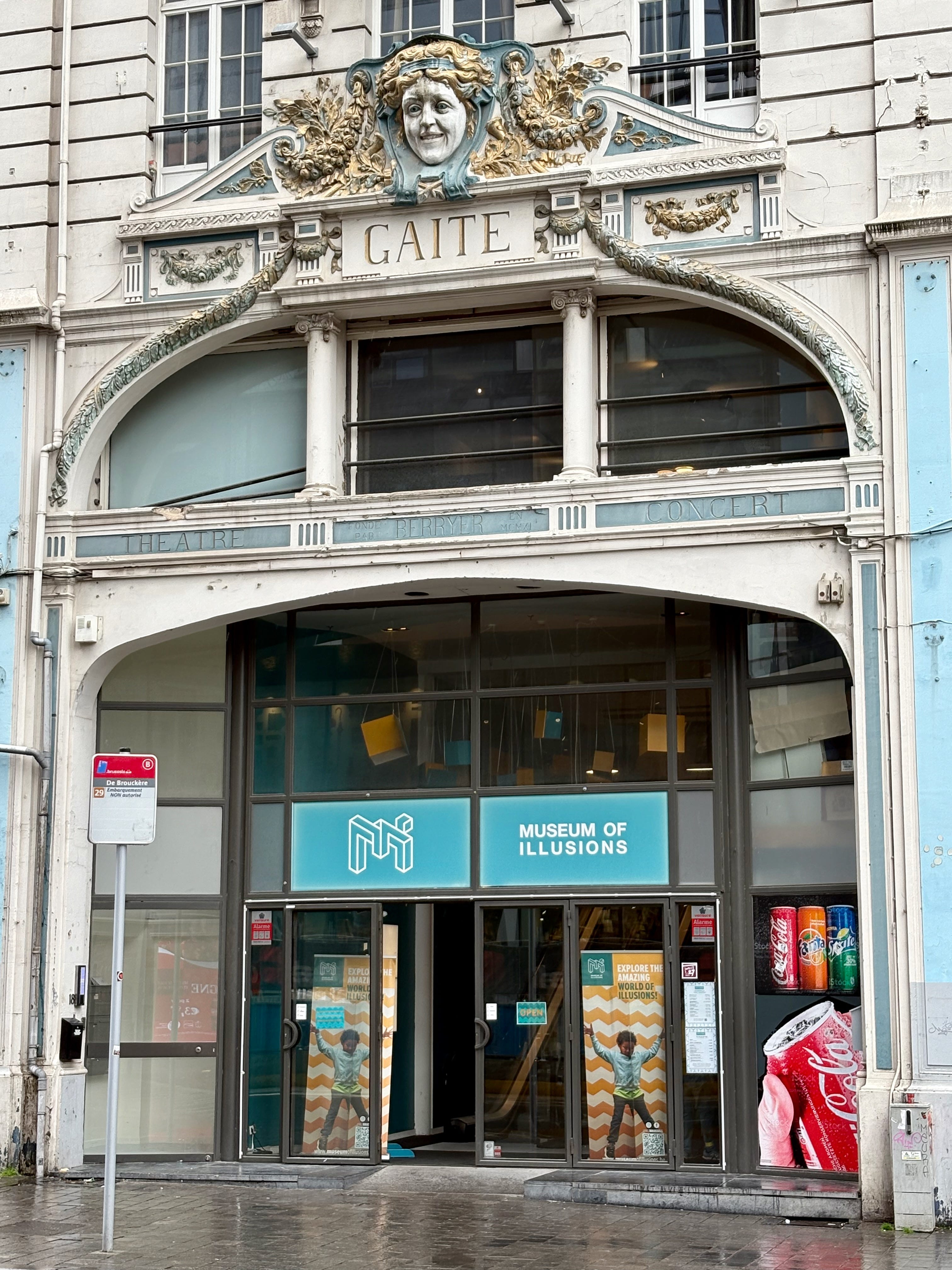
And this: is it really the Museum of Illusions, or does it just appear to be?
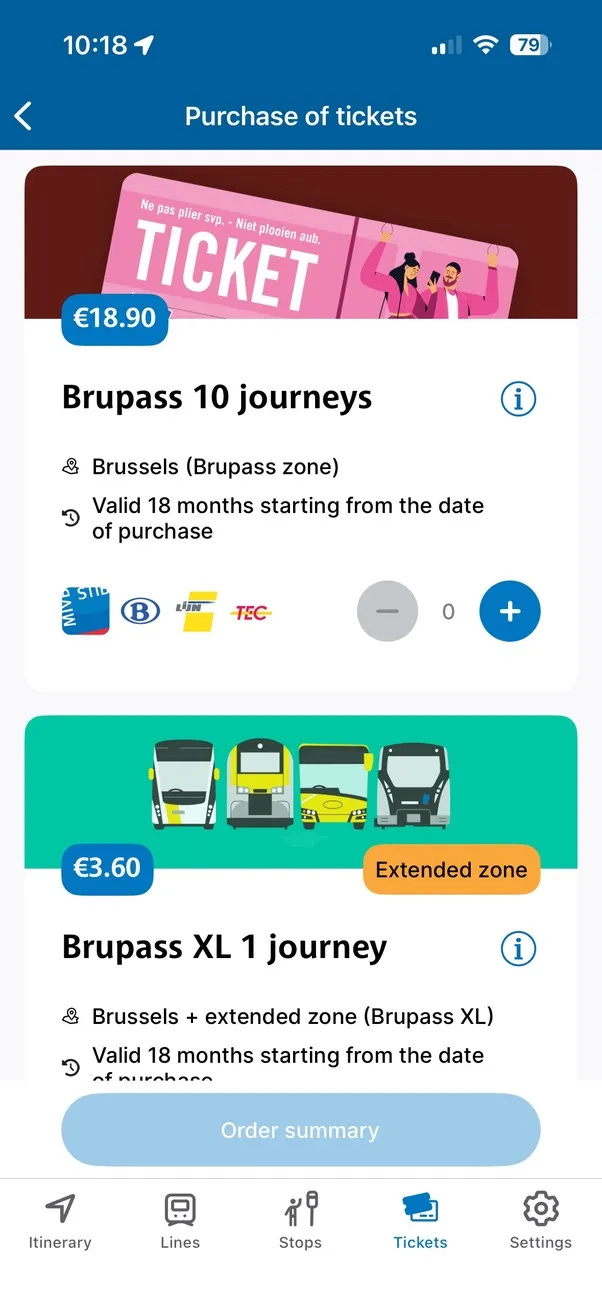
One thing that Elizabeth and I giggled at quite a bit is the non-euphoniously named transit app called STIB-MIVB (which sounds like something Steve Martin might come up with), in which you buy something called a Brupass. Note that this is parsed Bru-pass and not brup-ass, even though it is for Brussels and not breweries.
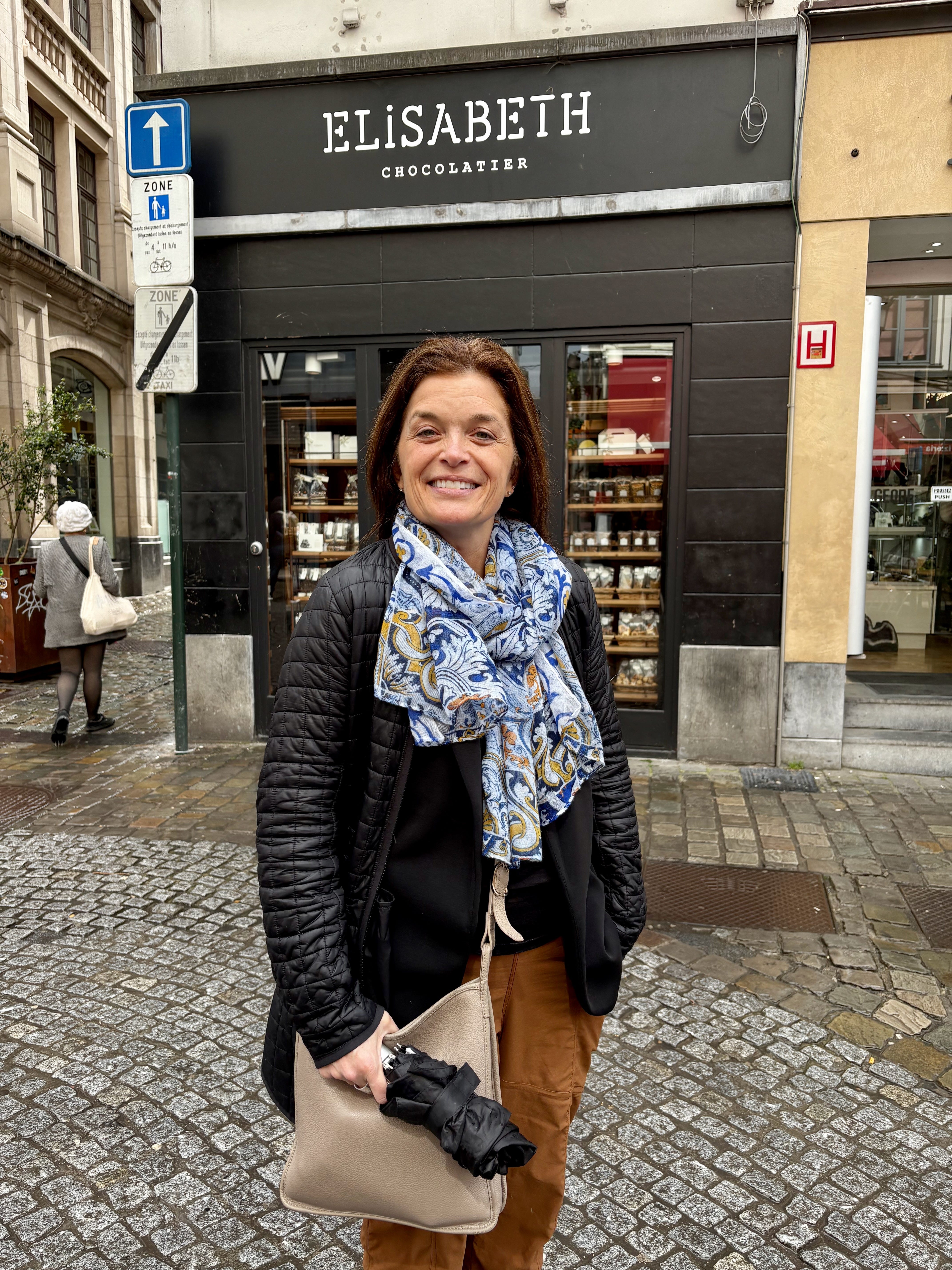
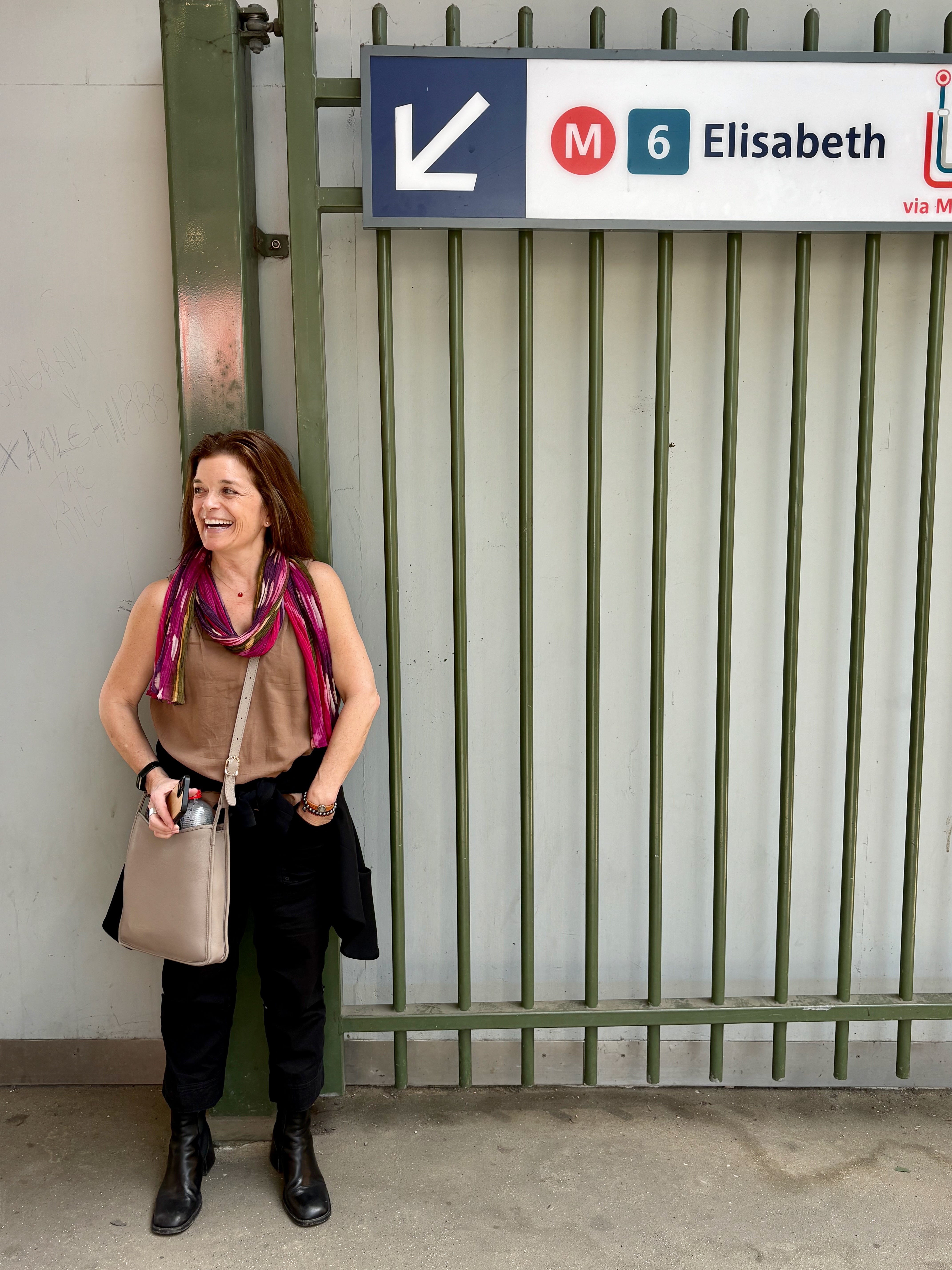
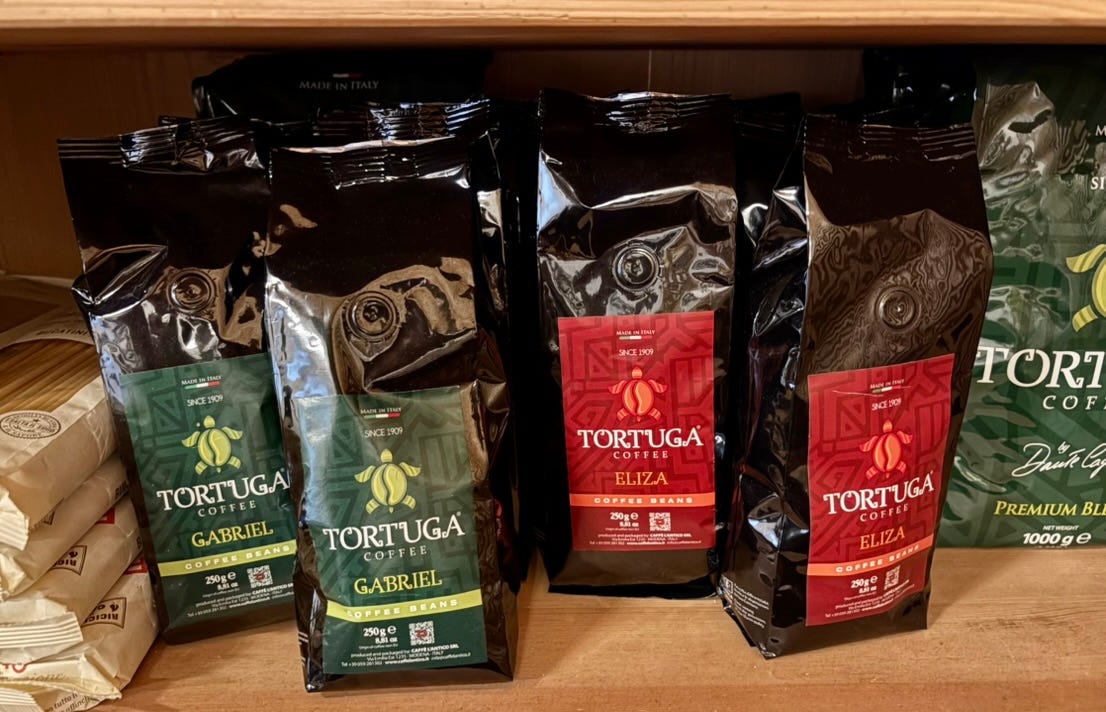
Speaking of Elizabeth, she and I spent quite some time finding her name around Brussels.
The best one, without doubt, is the fact that line 6 of the Metro actually ends at Elisabeth.
It was tempting for me, as a turtle owner, to buy a bag of Eliza from Tortuga Coffee (tortuga, of course, being turtle in Spanish). But I resisted.
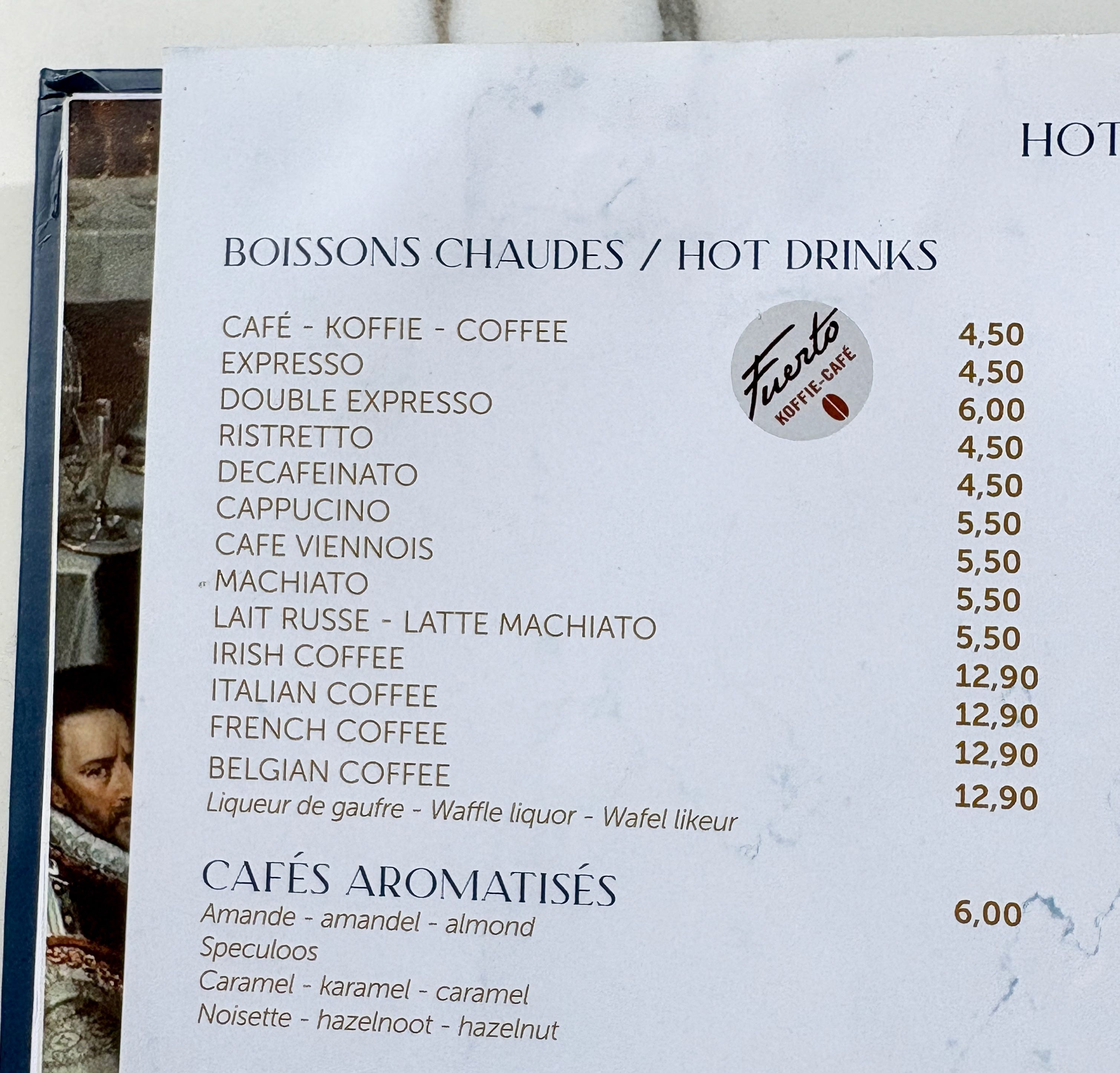
Speaking of resisting things, check out the “special” coffees with liquor added in this menu. You’ve probably heard of Irish Coffee, but have you tried Belgian Coffee—with a shot of waffle liquor?
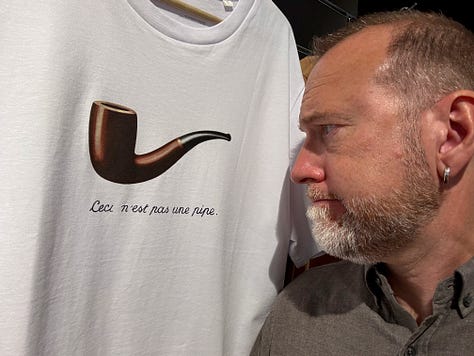
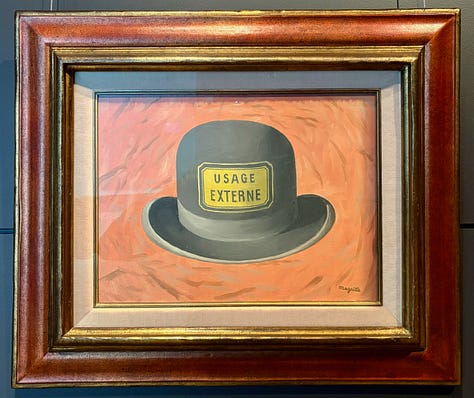
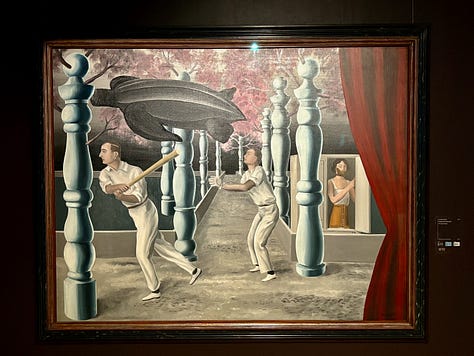
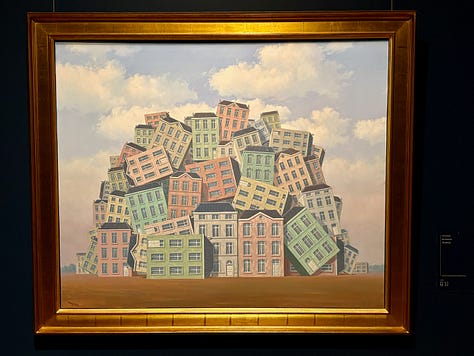
I feel that in speaking about humor in Brussels, I should put in a good word for my old friend René Magritte, the surrealist painter, whose sense of humor has always intrigued me. The Magritte Museum in Brussels is definitely worth a visit.


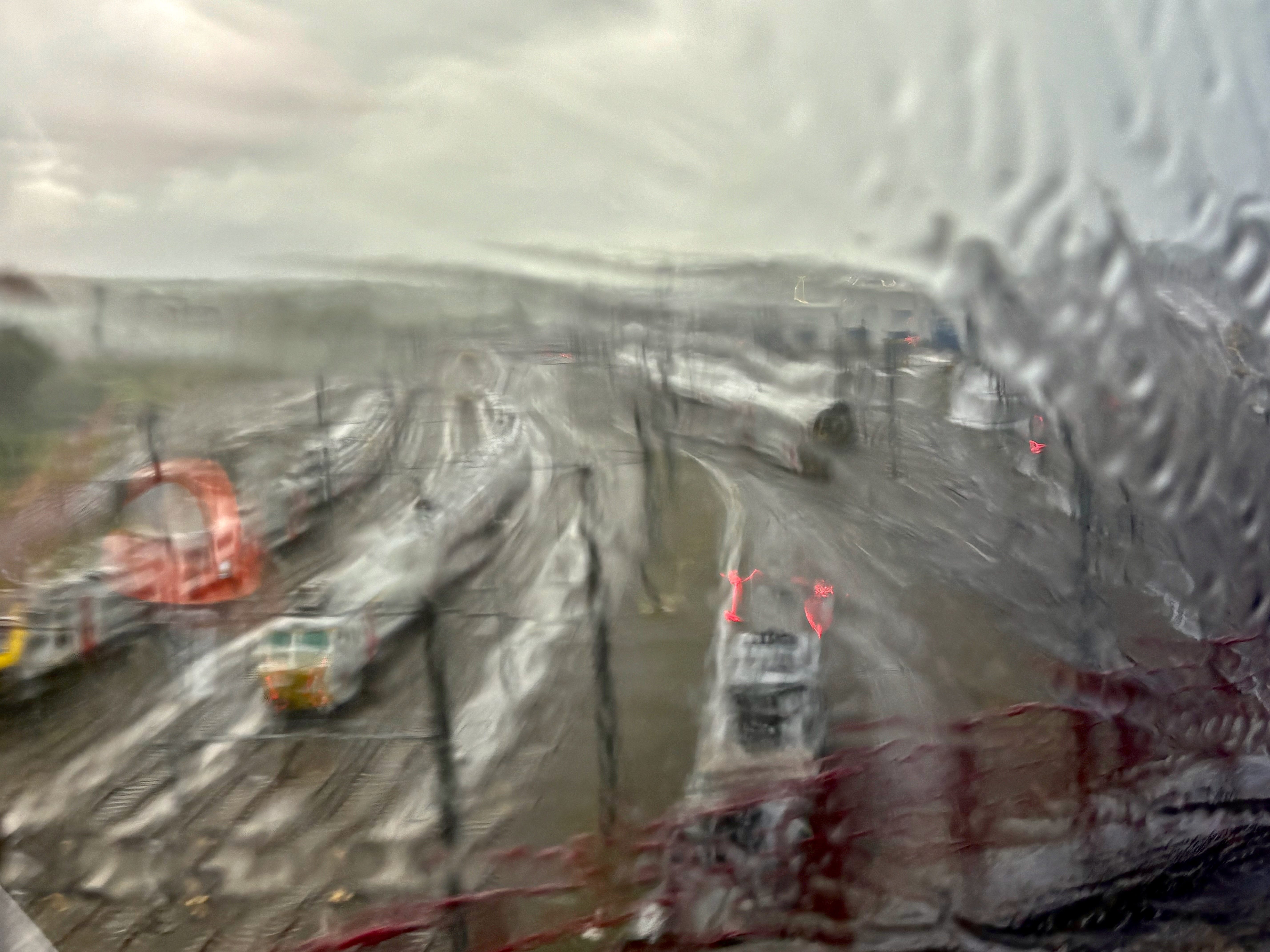
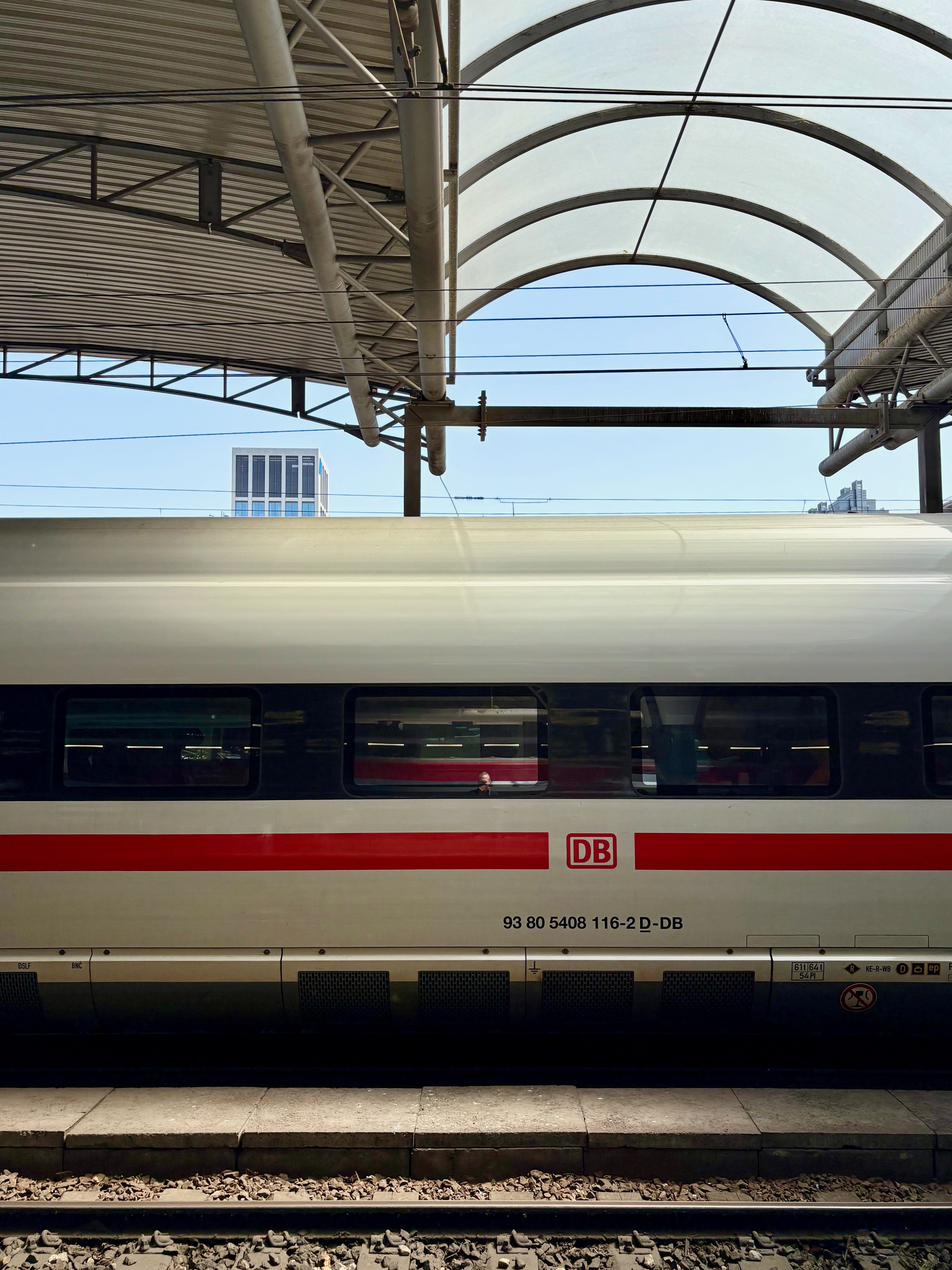
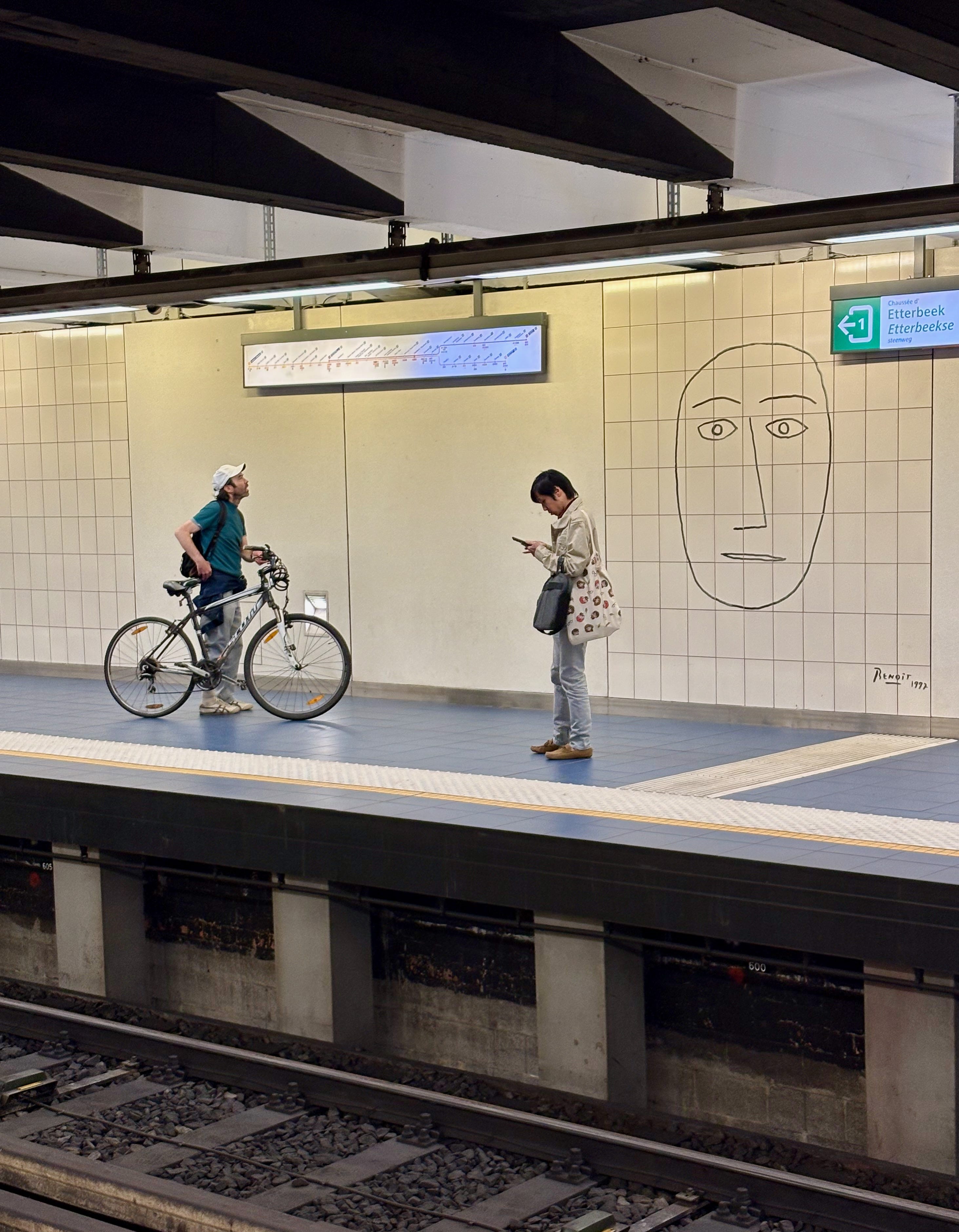
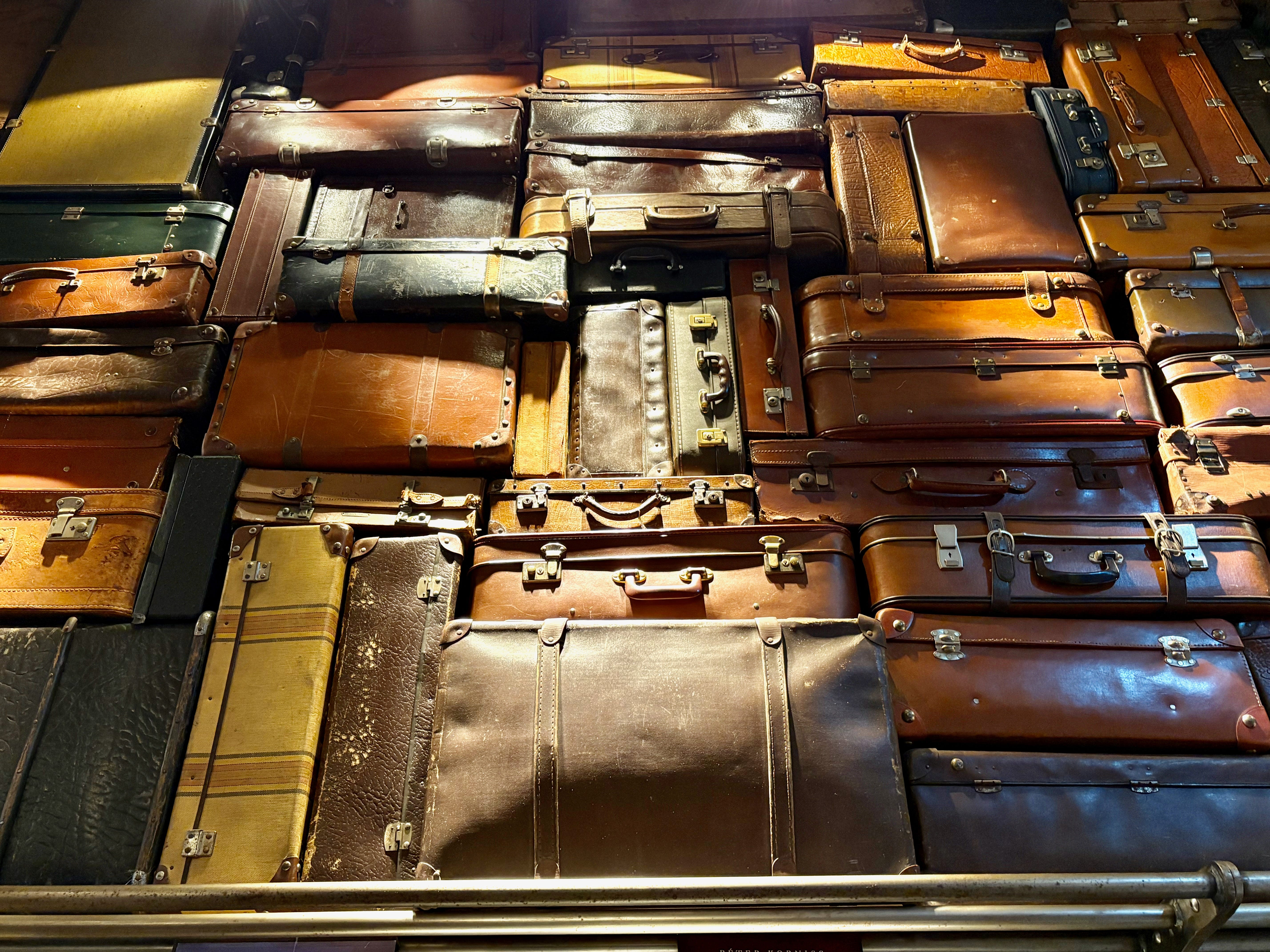
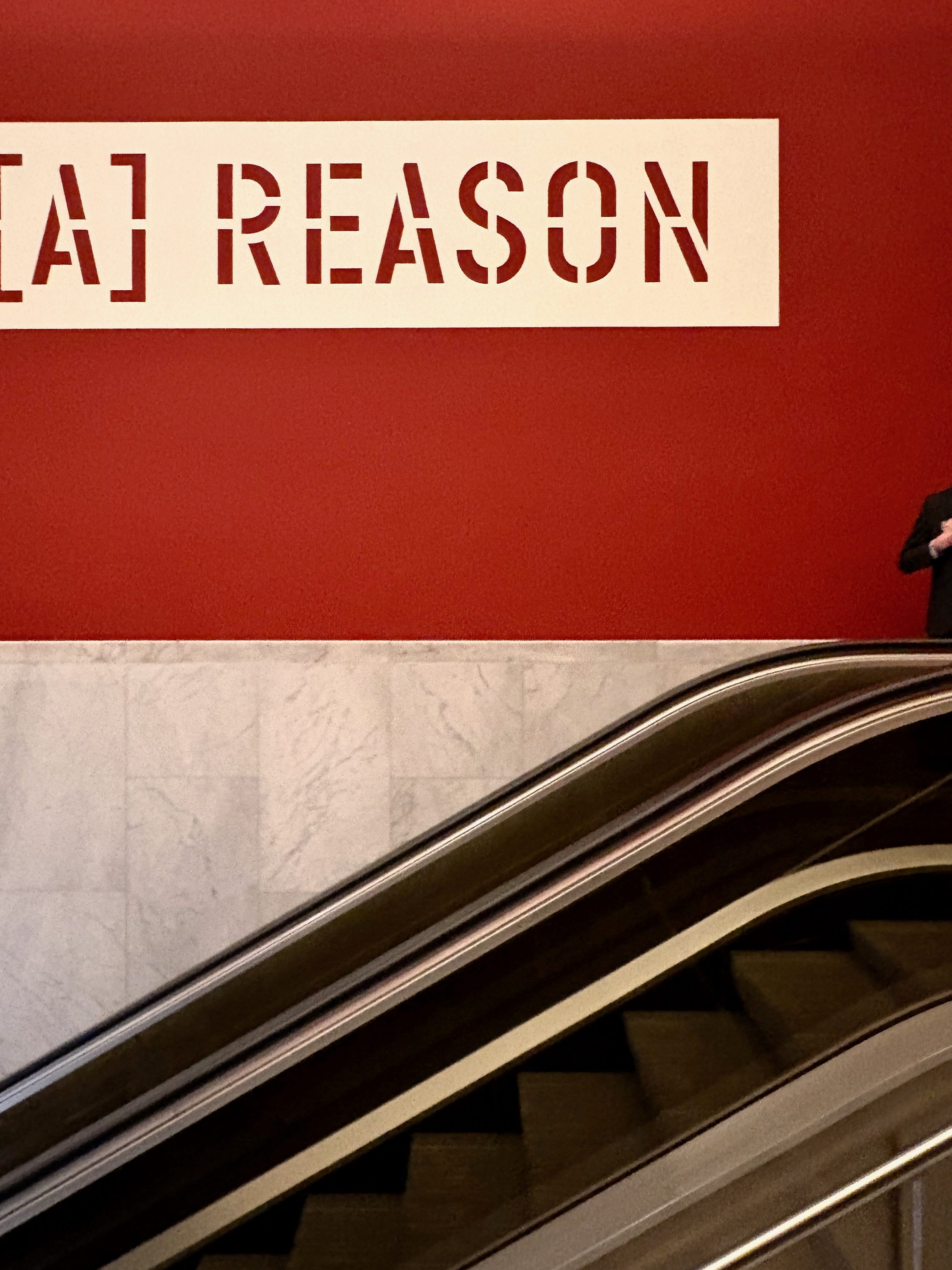
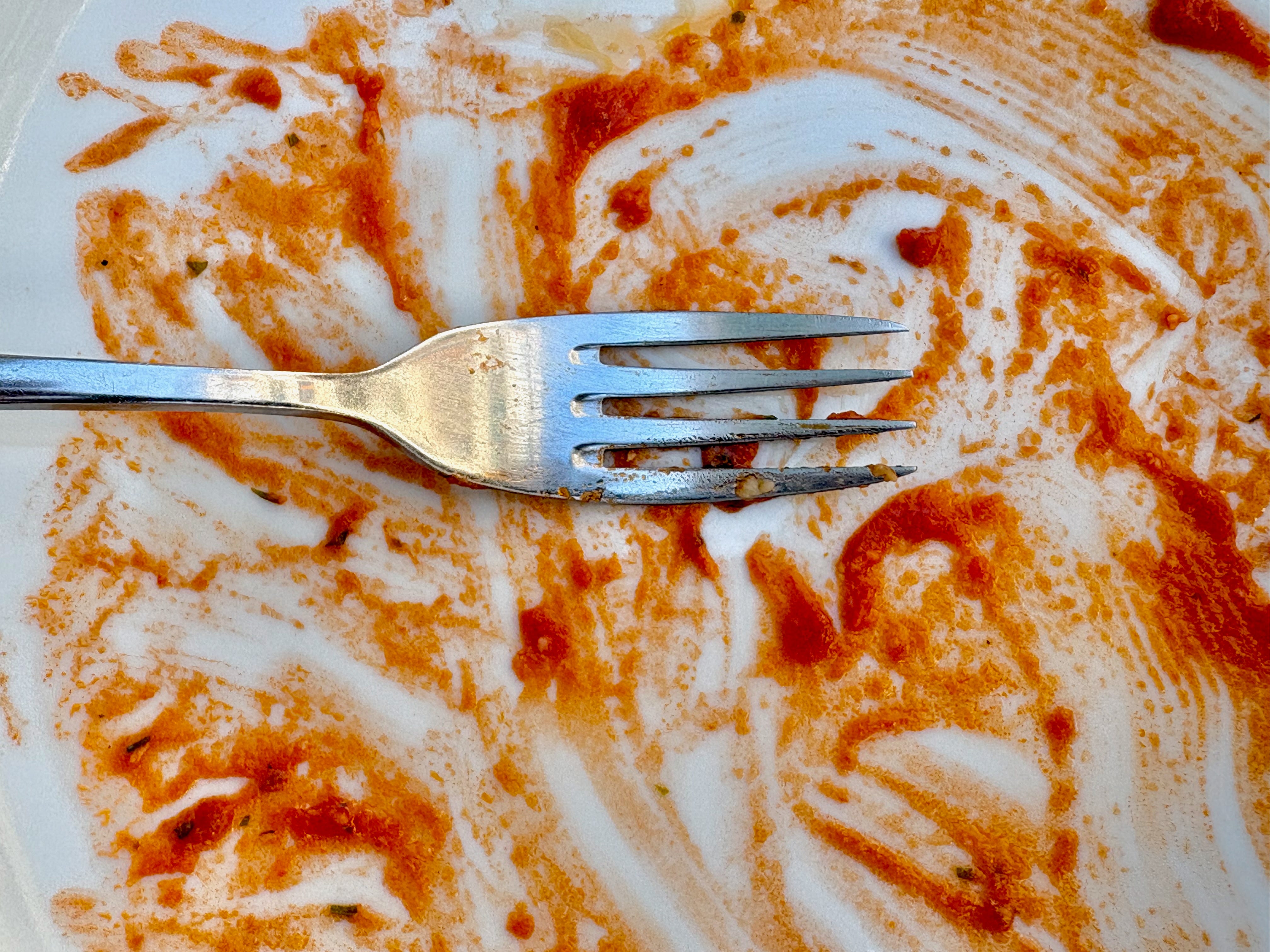
I would like to end this photo essay with some images that I consider beautiful, or at least intriguing (with the caveat that I have a strong inclination toward non-canonical beauty). I don’t think these images require any explanation.
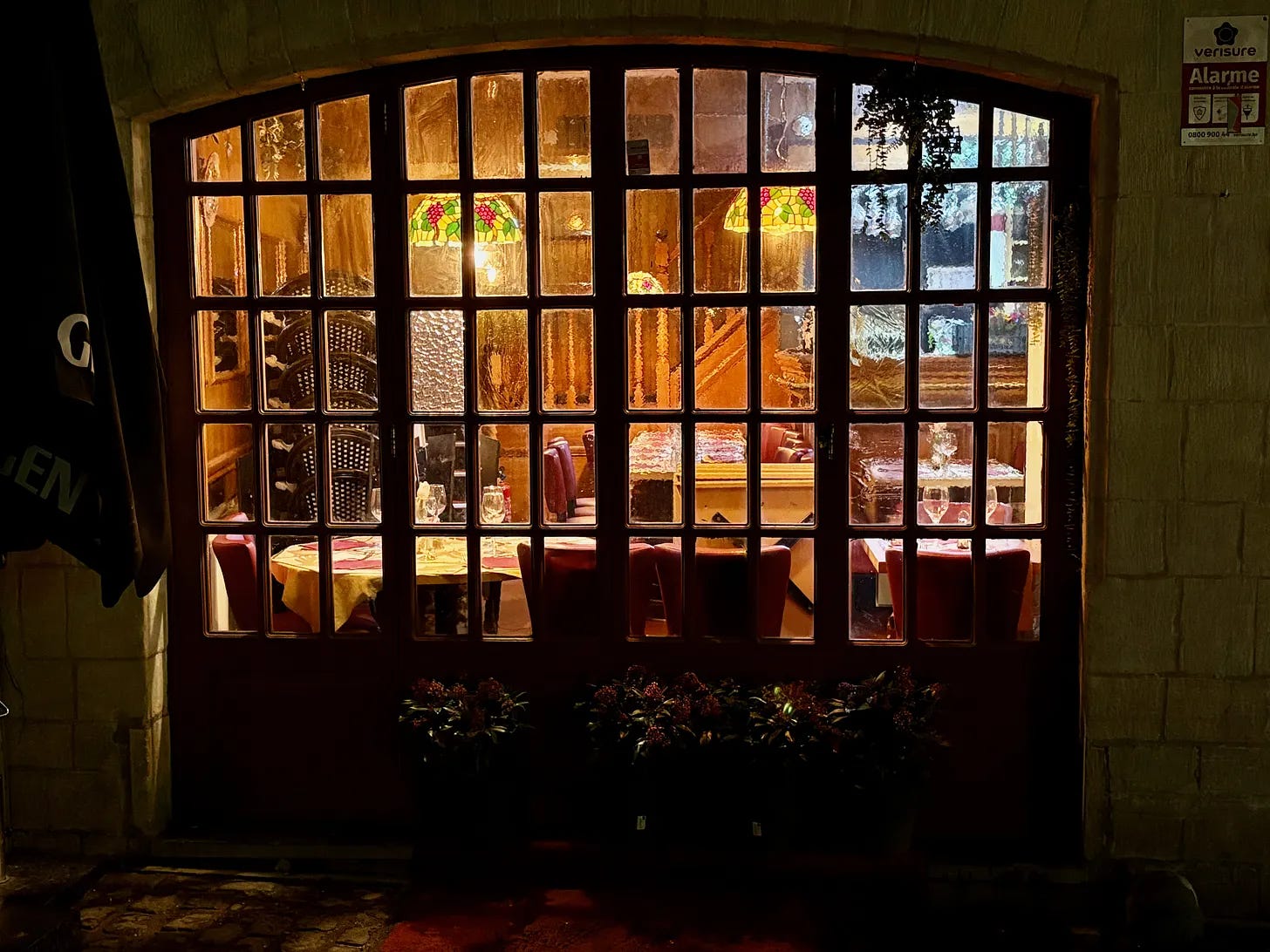
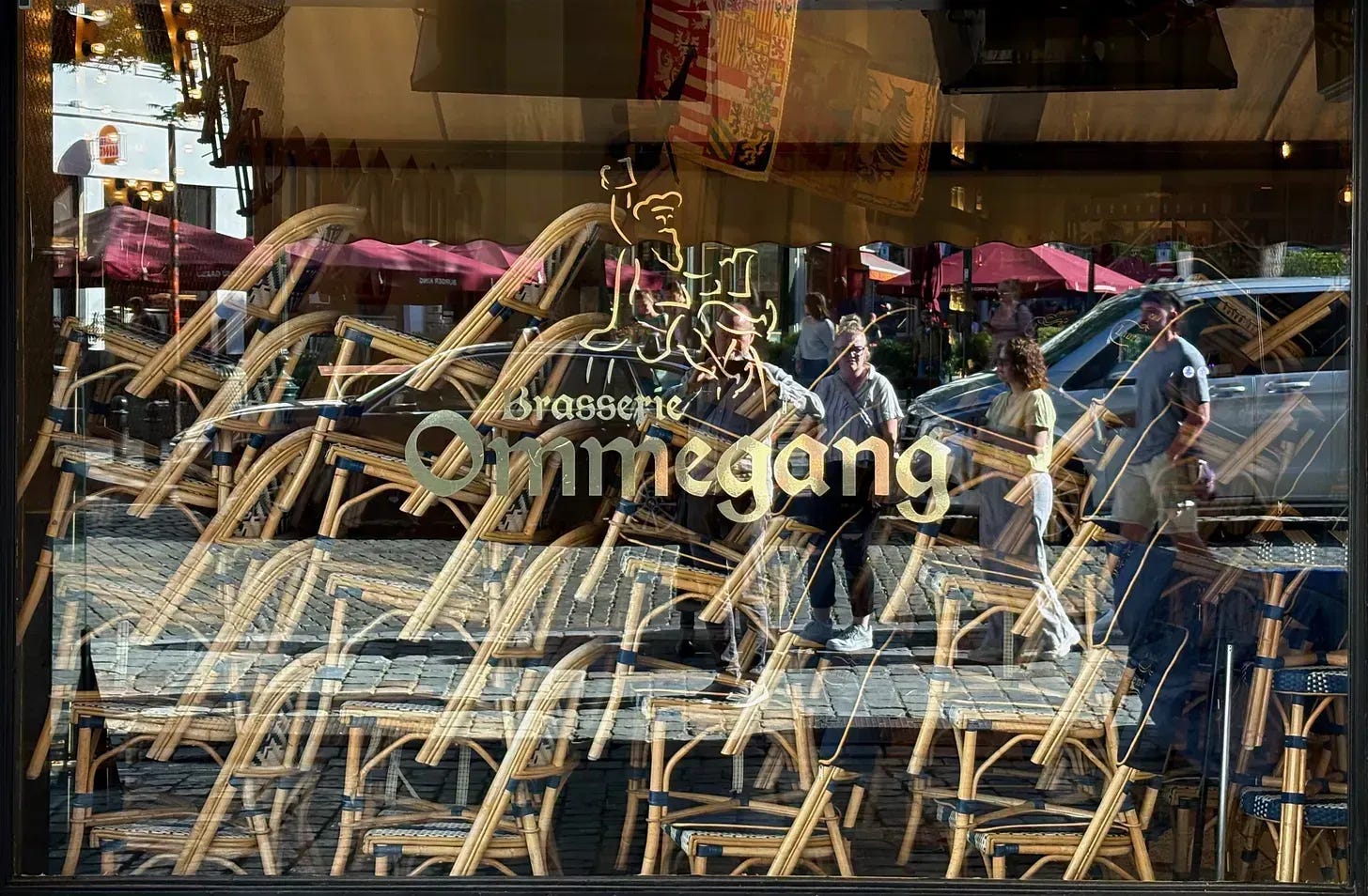
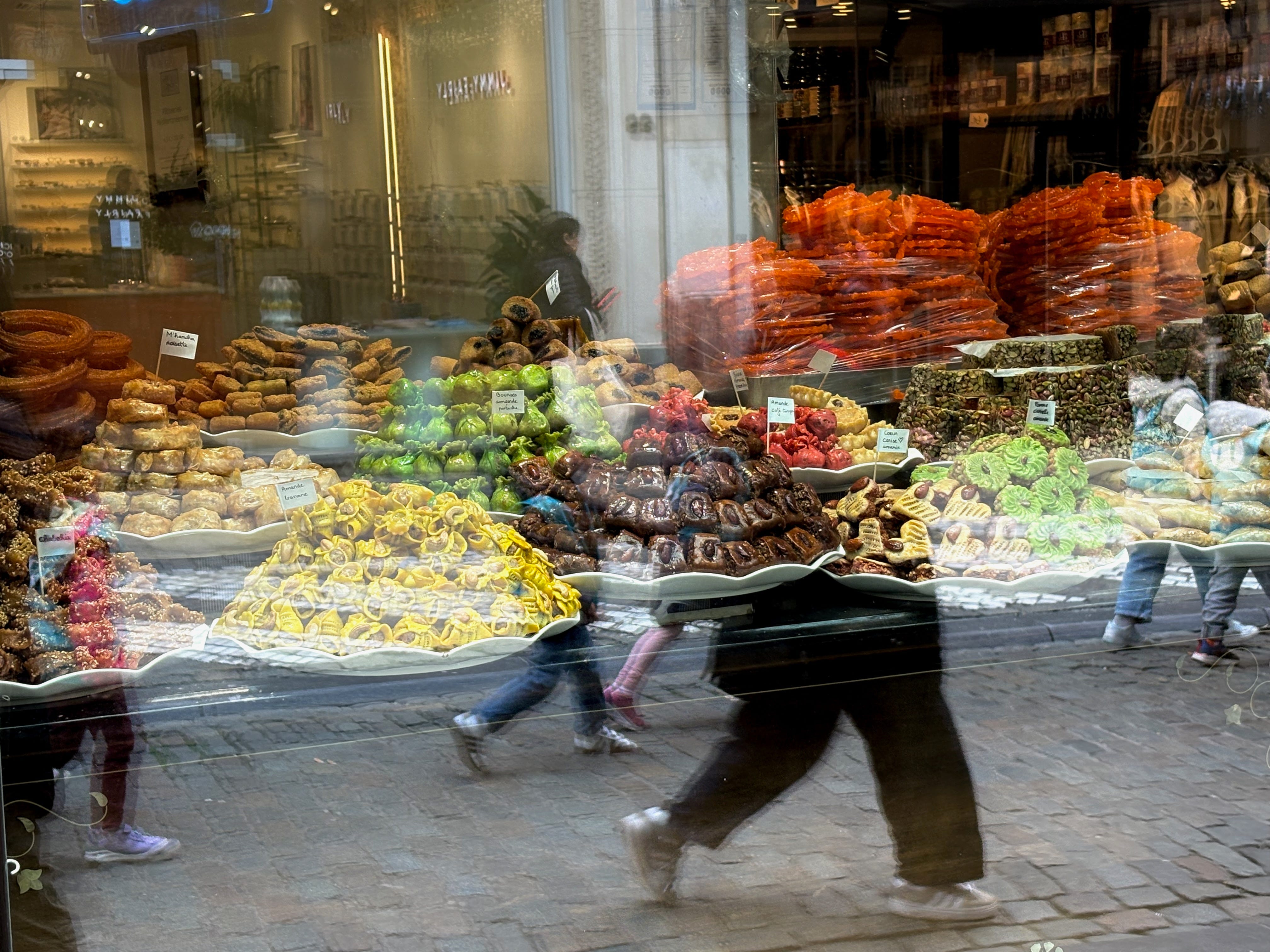
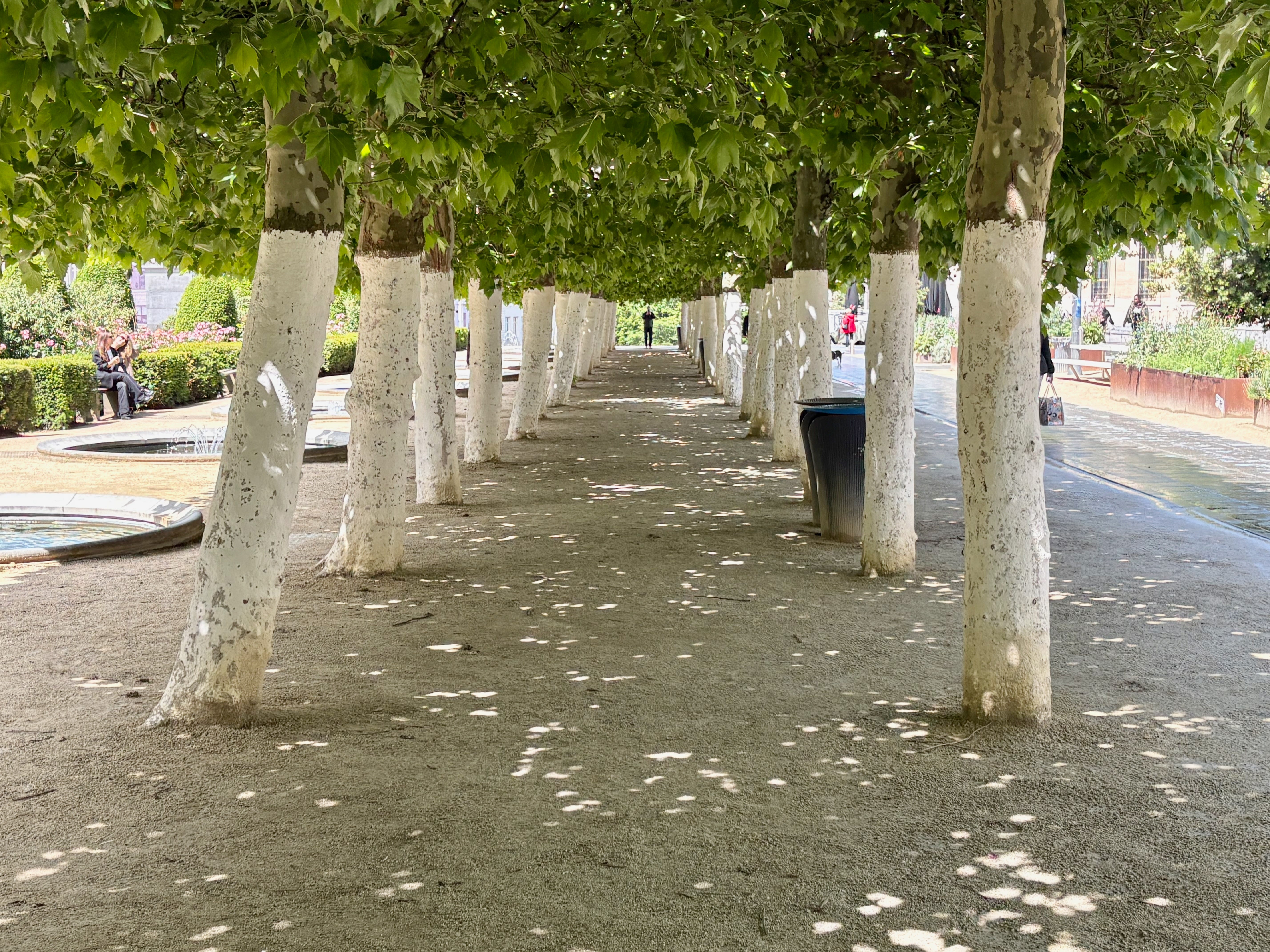
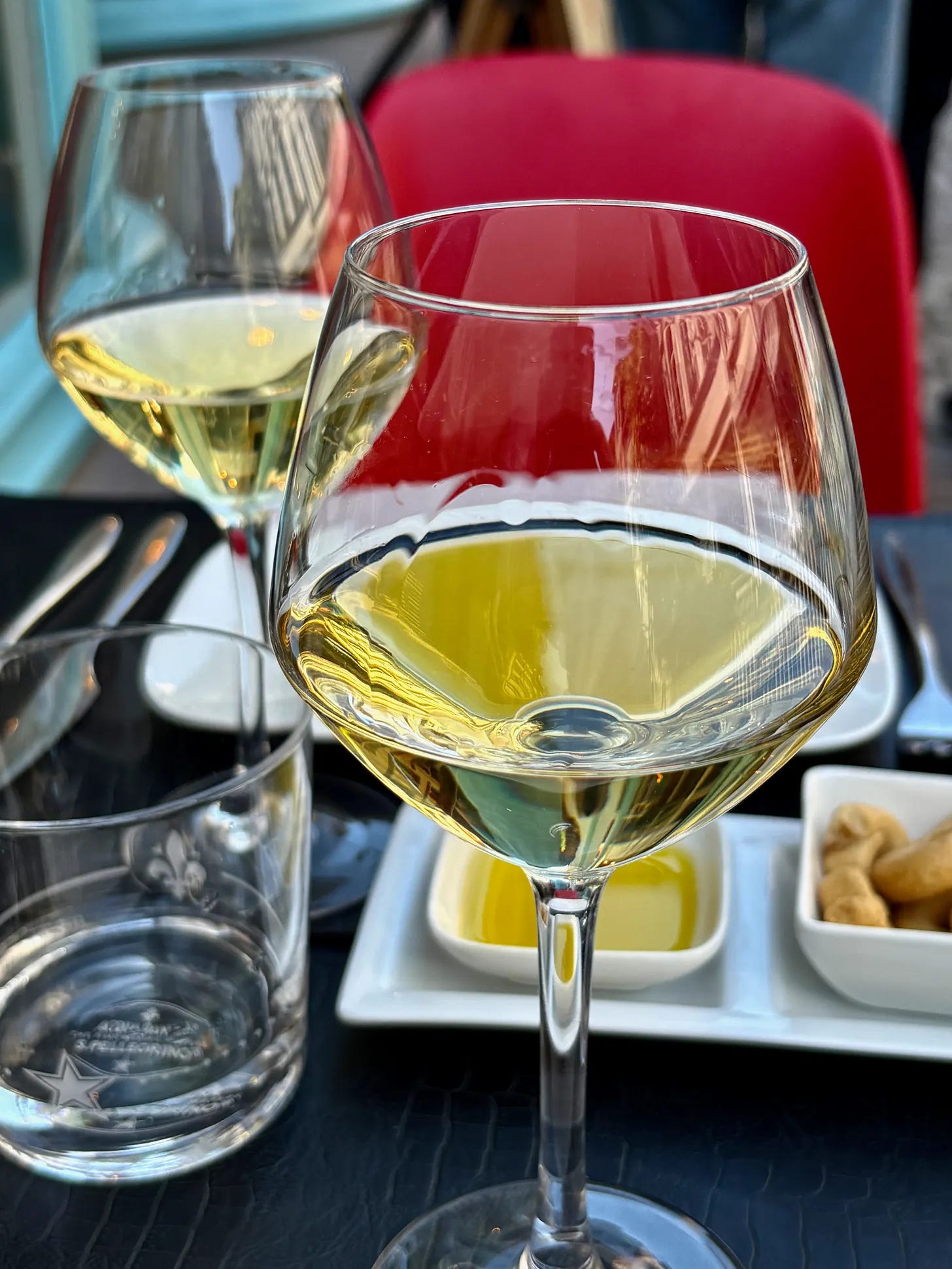
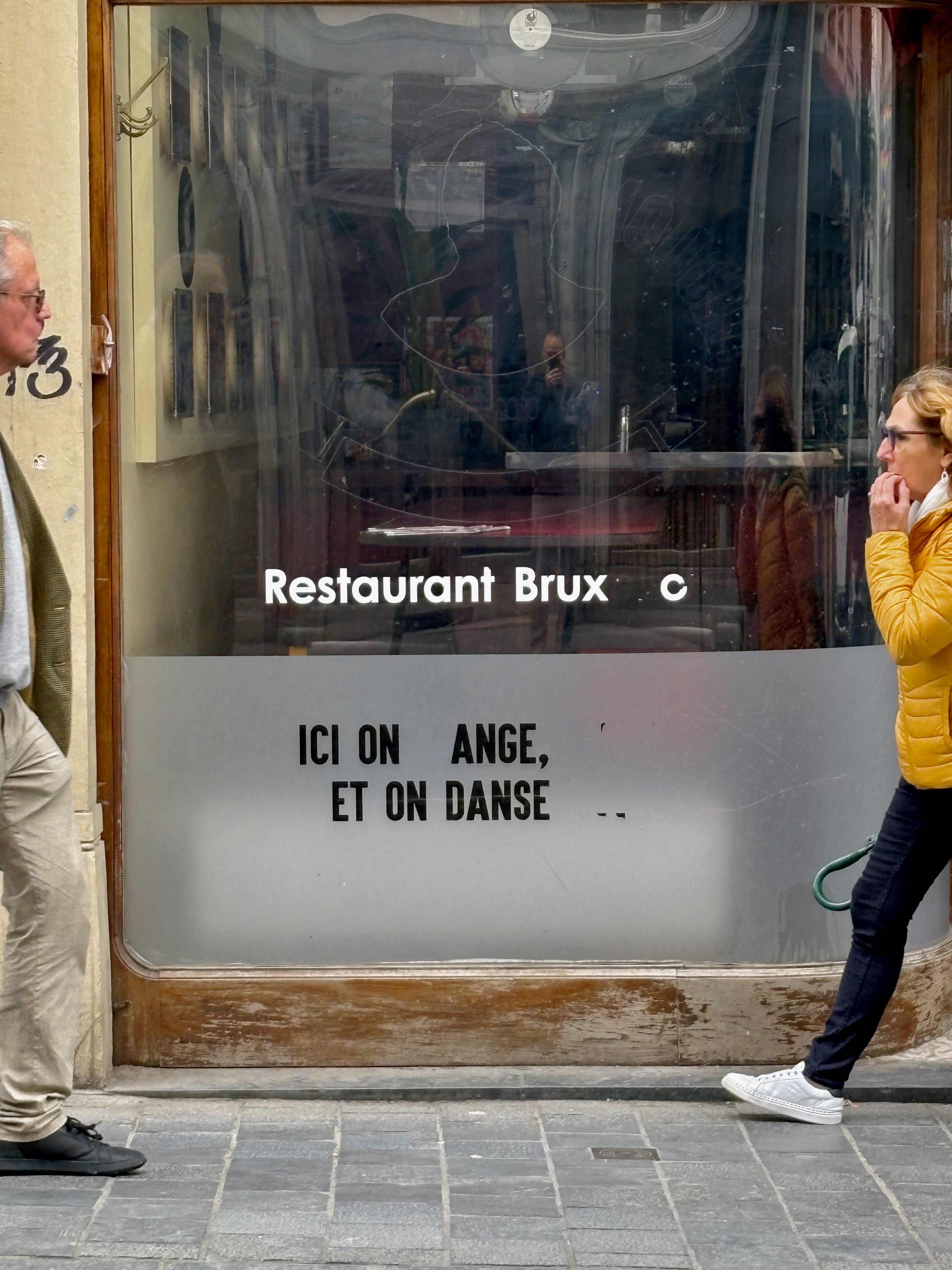
In this last photo, I love the fortuitous disappearance of the M from mange (“eats”), which makes it sound like one “angels” here. What will happen when these two people come together? We will never know.
Well, that is the end our our tour of the Belgian capital. I hope that you have enjoyed it aesthetically, and that it awakens in you a desire to explore Brussels for yourself.
If you find yourself on the fence about going, do try not to waffle.
If you enjoy image-heavy travel writing of this sort, you may like these other pieces from Living Elsewhere:
I want to thank my friend Michael Boyden, who I believe first recommended La Quincaillerie to me. Heel erg bedankt!
Comments
Nothing yet. Say the first thing.
Sign in to join the conversation.