
It is interesting to note that important concepts have been brought into the assisted suicide debate, but given a new and reductive twist. Dignity, one of the central characteristics on both sides of the debate, has clearly suffered this treatment. On the one hand, palliative care has long demonstrated that it offers death with dignity, where patients can be helped to live and die well with hope but without recourse to assisted suicide. On the other hand, in a new twist, supporters of assisted dying claim that the refusal to let a competent person choose assisted dying is an affront to human dignity because it is denying choice. Dignity has been reduced to individual choice.
Similarly, hope has been employed in assisted dying debates and has been given a new twist. Supporters of assisted dying sincerely hope that parliament will see sense and drive forward the assisted dying bill. This reduces hope simply to holding out for a particular outcome. More specifically, supporters of assisted dying argue that giving the person choice over the timing and manner of their death gives the person hope: hope that they will not have to live their final days in suffering and hope that they will avoid a horrible death. In a rather perverse view of hope, the argument goes that if a person knows there is the option for an assisted death, then the person will enjoy some comfort and peace of mind. In this framing of hope, fear and suffering appear inevitable; death equated with nothingness is preferable and is the solution; peace of mind equals an end to life by poisoning. This sounds more like hopelessness than hope. Hopelessness is driving forward demands for choice in assisted suicide, as if the only way to reclaim hope is by placing all hope in affirming a choice that ends all choices.
The insistence on assisted dying rather than assisted suicide is another twist of language. The claim goes that in suicide, the person is not dying but wants to die; the person wanting assisted dying is dying but wants choice as to when and how. However, in both situations, the final act of self-killing is done by the person, albeit in assisted dying, with the aid of another. In both cases, the intention is to bring about an early, untimely death. Suicide is rightly seen as an act of despair because it is based on the conviction that no one, not even God, can help. Catholic teaching acknowledges that a person in these circumstances can be so troubled, under such grievous psychological anxiety, that their responsibility for the act of taking their own life is diminished. However, instead of despair, assisted dying is portrayed as an act of hope, since another person willingly helps, and in some legislations, society supports the decision.
The decision for assisted dying must be made without coercion, with freedom and capacity. This forgets that what is driving the request is fear of losing control, anxiety, fear of dying and fear of being treated as less than a person. Assisted dying as a reasonable solution to a difficult situation buys into today’s general sense of hopelessness, in which people of all ages lose hope if they feel they are no longer productive, active, or economically useful. It is a particularly acute form of hopelessness because assisted suicide, institutionally, affirms that the person is redundant, a burden, abandoned to their own devices, and better off dead. This acute hopelessness cannot easily be solved by, for instance, better safeguards or protection of the vulnerable or a restriction of assisted suicide to those who appear to be dying, because this hopelessness is deep soul pain.
It is a particularly acute form of hopelessness because assisted suicide institutionally affirms that the person is redundant, a burden, abandoned to their own devices, better off dead.
Feelings of hopelessness are inevitable if the predominant mindset for living well is framed around speed, function, efficiency, autonomy and individual choice. Living a life with all these capacities becomes a normal way of being; losing any one of these capacities is living a diminished life, hence the fear of losing control or of losing bodily and perhaps more acutely mental functioning. People with disabilities have long recognised this discriminatory attitude to living with losses, and this is why many disabled people have campaigned against assisted suicide: it presents their lives as somehow diminished or less than a good life, as not worth living. The cycle is completed by characterising a life of dependence as undignified. Supporters of assisted suicide think that they are supporting choice. Perhaps they too feel that they would not wish to live a life ‘like that’, of dependence, of disability, the kind of life that people with disabilities do live and live well.
Significantly, the witness of people with disabilities is especially important because it can recalibrate the predominant mindset by reminding us all that human beings are dependent and in relationship. Moreover, assisting in suicide is not a truly loving act. To love is to want the good of the other person. It is misplaced compassion to affirm a person’s belief that their situation is hopeless, to facilitate a choice made in hopelessness. So what might genuine compassion, a compassion that instils hope, look like?
As a virtue, compassion sits between a deficit and an excess: too little compassion becomes cold-heartedness; too much compassion becomes an overidentification with the person suffering, in which perspective is lost, and help ceases to be effective and meaningful. Hopeful compassion begins with attentive listening to the person.
The Catholic tradition has long recognised that good people struggle. Existential dignity is the way a person lives well in accordance with their full human dignity and faces life’s struggles. Existential dignity can be affected by the fears and worries, false hopes, misapprehensions, and struggles that a person has in trying to live and die well. This includes the challenges a person might have with facing serious illness, loss of control, horror at having to undergo intimate personal care by strangers, and fear at being treated as less than the person they once thought themselves to be. Attentive listening allows these fears to be named and taken seriously, but with genuine kindness. Notably, unlike excessive empathy, attentive listening does not cave into hopelessness, make false promises or adopt a simple fix-it attitude. Instead, with both truth and mercy, attentive listening begins the process of accompanying the suffering person through their dark night.
People with disabilities have long recognised this discriminatory attitude to living with losses, and this is why many disabled people have campaigned against assisted suicide: it presents their lives as somehow diminished or less than a good life, as not worth living.
The art of accompaniment is closely tied to addressing patients' spiritual needs. From its very extensive experience of treating and supporting patients and their families through serious illness, dying, death and bereavement, the NHS acknowledges that everyone has spiritual needs and that these needs can be addressed. Spirituality in the context of the NHS is related to discovering meaning and purpose in life and in the challenges illness brings. Palliative care professionals know that good holistic care, including spiritual care, provides a realistic answer to the hopelessness of assisted suicide.
It is a reality that, in some circumstances, a person may have physical symptoms that seem almost impossible to address. A person may experience real moral distress that manifests physically when love is lacking, self-esteem suffers, or the person feels isolated, abandoned or misunderstood. Moral distress also rises when the person feels bitterness or anger, especially if they feel powerless. When meaning cannot be found, a person may feel there is no point to what is happening to them, no way out and no way forward. This may lead to rigid ways of thinking, especially when the person is struggling to hold onto whatever control they can. In particular, the person may face fear of dying and of the dying process where the heady mix of fear of loss of control, of other people’s reactions, of being isolated and abandoned, of the unknown, blends with the fear of loss of loved ones, of missing out on the future, and often fear of ultimate meaninglessness. The calm professionalism of palliative care specialists enables them to keep perspective and offer a realistic and good death without intending to bring death about, without assisting in suicide.
Palliative care can offer two central remedies for soul pain: first, love and affirmation; and second, a sense of purpose and meaning. The need for love and affirmation includes being able to love oneself, find a loving connection with others, forgive others and oneself and trust. The search for meaning brings creativity and courage and fosters patient endurance and resilience. Serious illness challenges our sense of who we are and faces us with the limits of our existence. Good spiritual and palliative care helps the person let go of what ought to be, including the sense that this should not be happening to me, and helps the person adjust to their new reality, however short that might be. Spiritual care can help a person on their journey through the dark night of the soul that threatens their inmost core, where things are falling apart.
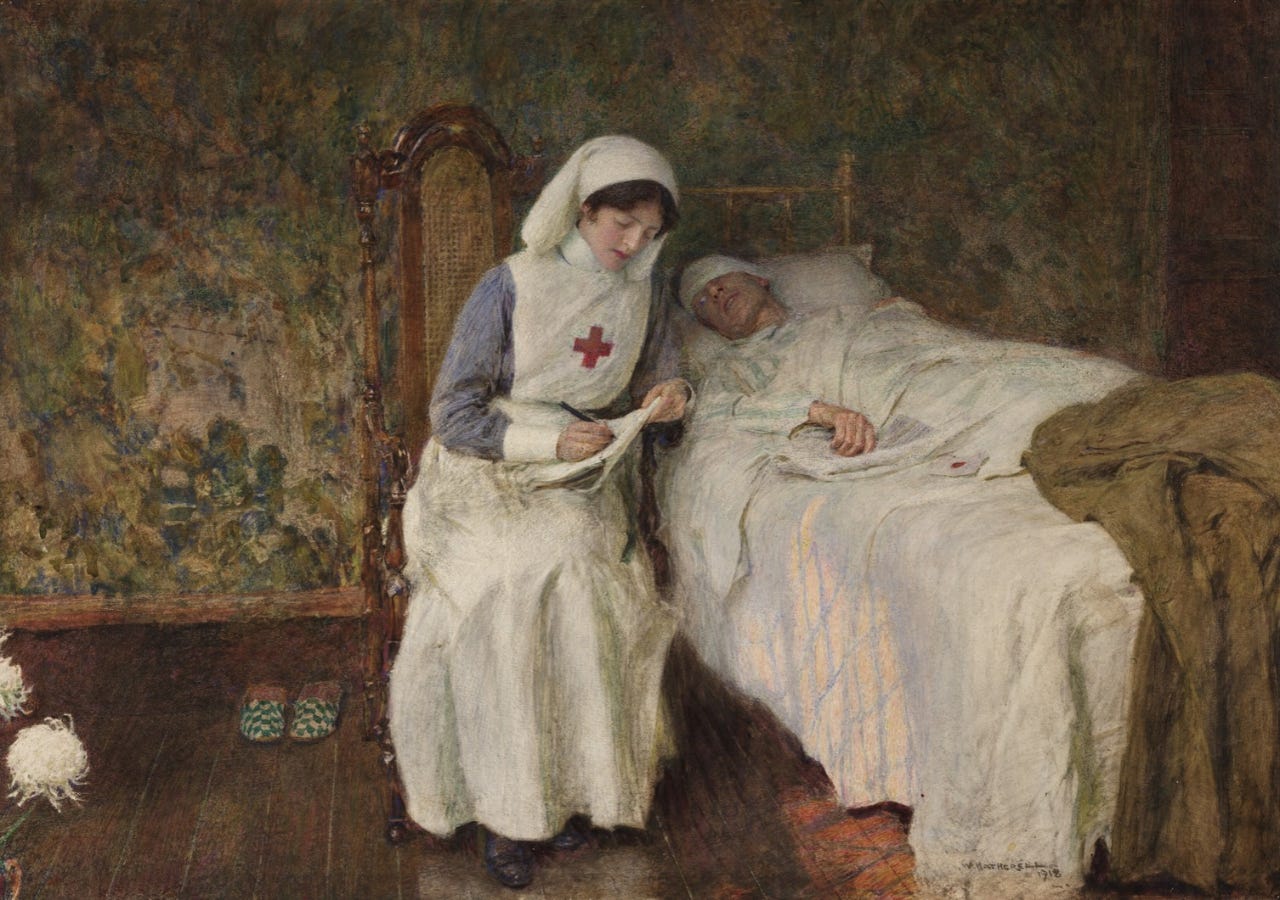
For those who fear a loss of control, palliative care professionals respect the person as they are, with their own values and ways of doing things. They talk about the wishes of the patient – where the person wants to die, who they want to have with them, what kind of medication is appropriate. In many cases, the person can be supported to die at home with full care and so live and die well. New strategies can be introduced such as relationship renewal, prayer, meditation, and even simple breathing techniques to help the person gain control and inner peace. The mindset of palliative care is hope: this hope allows for “Gethsemane moments”, but it confirms that this person has value even if the person has lost their own sense of their worth; this person is worth treating, worth listening to, worth affirming as a person, and worth accompanying with hope and real compassion, mortal to mortal.
On 11th September 2026, the UK Parliament will be voting once again on assisted suicide. Click here to write to your MP asking them to vote no to assisted suicide.
Dr Pia Matthews is a senior lecturer at St Mary's University Twickenham and a faculty member of the Mater Ecclesiae College. She also lectures and is on the formation team at Allen Hall Seminary, Chelsea. Pia is the author of the CTS ebook Infertility and Fertility Treatment and previously appeared on our podcast to discuss “Are Some Lives Worth More Than Others?”.
Comments
Nothing yet. Say the first thing.
Sign in to join the conversation.