
In This Post
📚 Seven classic readalikes for fans of Verity, It Ends with Us, Ugly Love, Reminders of Him, November 9, Confess, and Layla
📖 Why Colleen Hoover readers are already fluent in the emotional machinery of classic literature
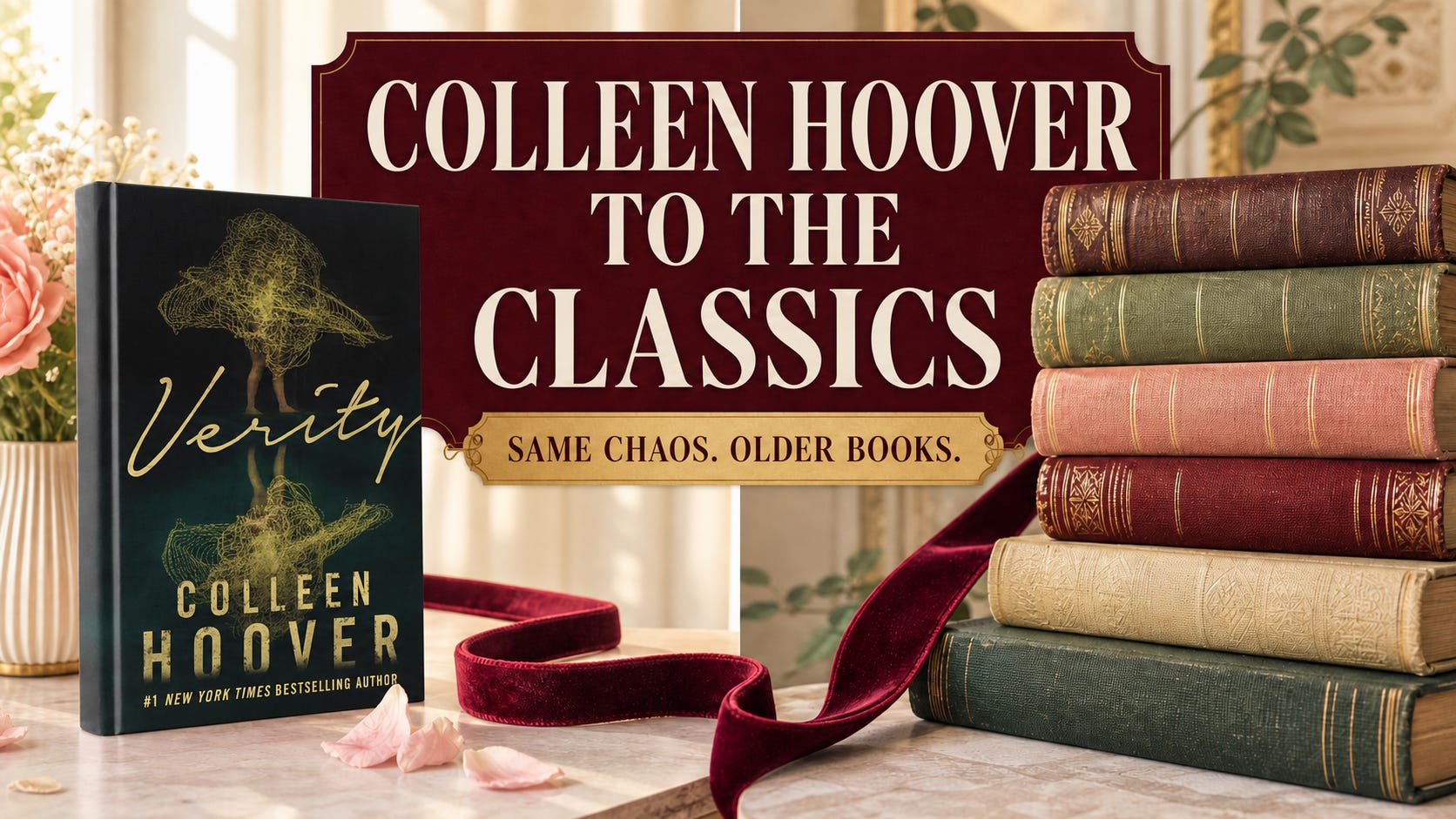
A reader-requested rabbit hole: Shoutout to m r sarath, whose comment asking for a post on the internet’s “favorite” author sent me straight from Colleen Hoover to the classics.
Colleen Hoover is the current It Author. That is not a moral judgment. It is what happens when one writer’s backlist becomes a bookstore section, a social-media ecosystem, and apparently a Hollywood production calendar.
Since 2024, It Ends with Us has been followed to the screen by Regretting You and Reminders of Him. Amazon MGM says Verity will arrive on October 2, 2026.
And, to be honest, I have not been impressed by the Colleen Hoover adaptations yet. There. I said it.
I thought *The Housemaid* was an adaptation done right. Yes, that is Freida McFadden, not Colleen Hoover. But that movie understood something important: if your story contains a beautiful house, a wealthy couple, and enough domestic menace to poison a tasteful kitchen island, you must commit. Serve the expensive countertops and the psychological damage.
So I am hoping Verity redeems the Hoover adaptation era. Anne Hathaway, Dakota Johnson, and one extremely incriminating manuscript have a job to do.
But we are not talking about screenplay adaptations today.
Because here is the argument literary people keep missing: Colleen Hoover readers do not need to be rescued from popular fiction and marched toward the canon under armed supervision.
They already like the things classics do.
They like buried secrets, romantic obsession, dangerous houses, second chances, bad timing, grief, and the deeply human belief that this emotionally unavailable person will become available if everyone suffers beautifully enough.
That is not the opposite of classic literature.
That is half the nineteenth century.
So if you like Colleen Hoover, do not choose your first classic by reputation. Choose it by appetite.
Here is where to start.
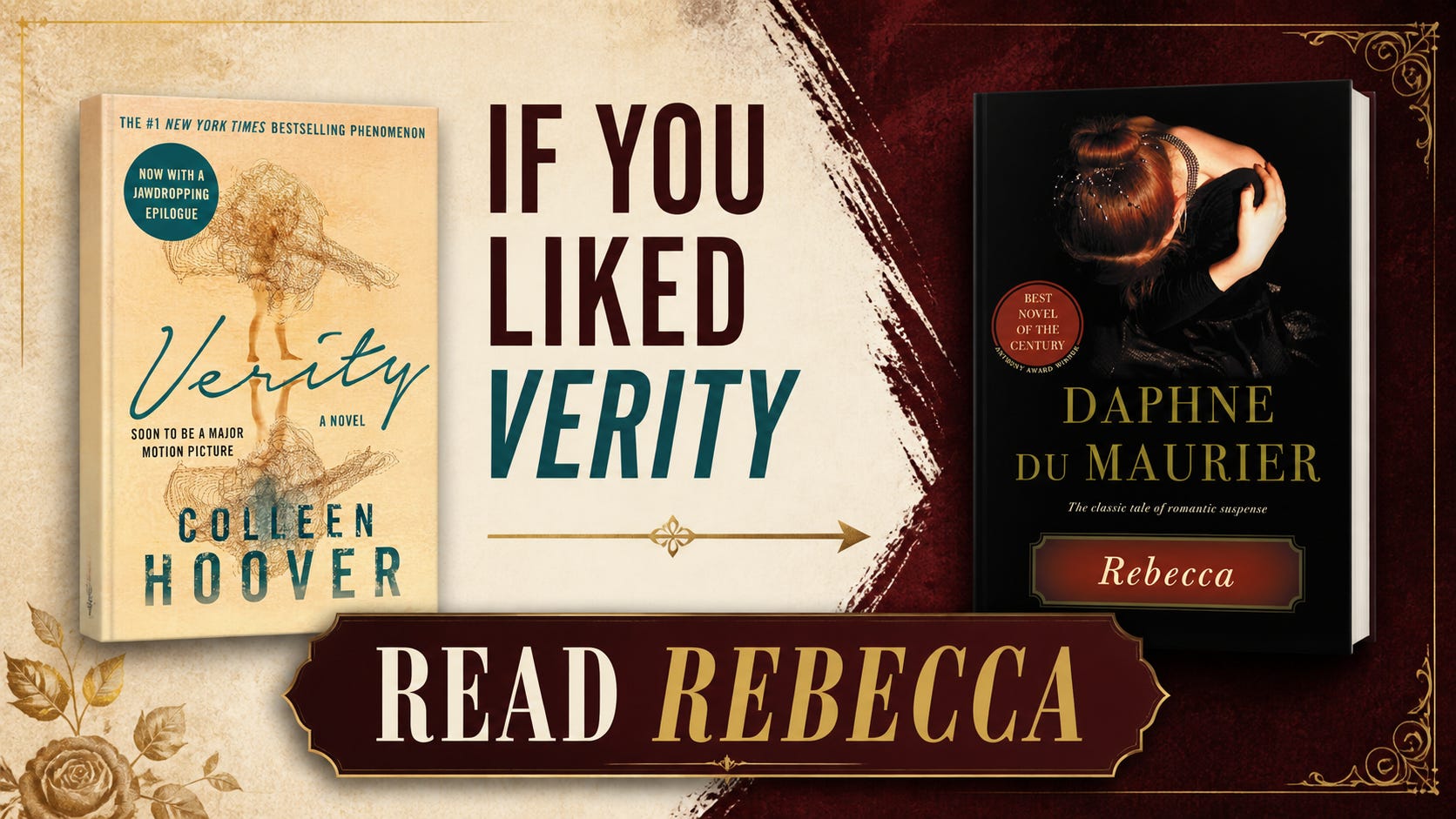
Verity sends a struggling writer into the home of a famous, incapacitated author. There she finds a private manuscript containing the sort of information that should never be left in an office drawer when a curious replacement wife-adjacent woman is wandering around the house.
Rebecca gives you a young woman who marries a wealthy widower and arrives at Manderley only to discover that his dead first wife is still running the place through memory, gossip, objects, servants, and one monogrammed handkerchief at a time.
The connection is not simply “large house, suspicious wife.” It is the question underneath both books: who controls the story of a woman when she cannot, or will not, explain herself?
Daphne du Maurier makes absence feel like surveillance. Rebecca is dead and still somehow the most socially powerful person in every room. Efficient. Terrifying. Very on brand.
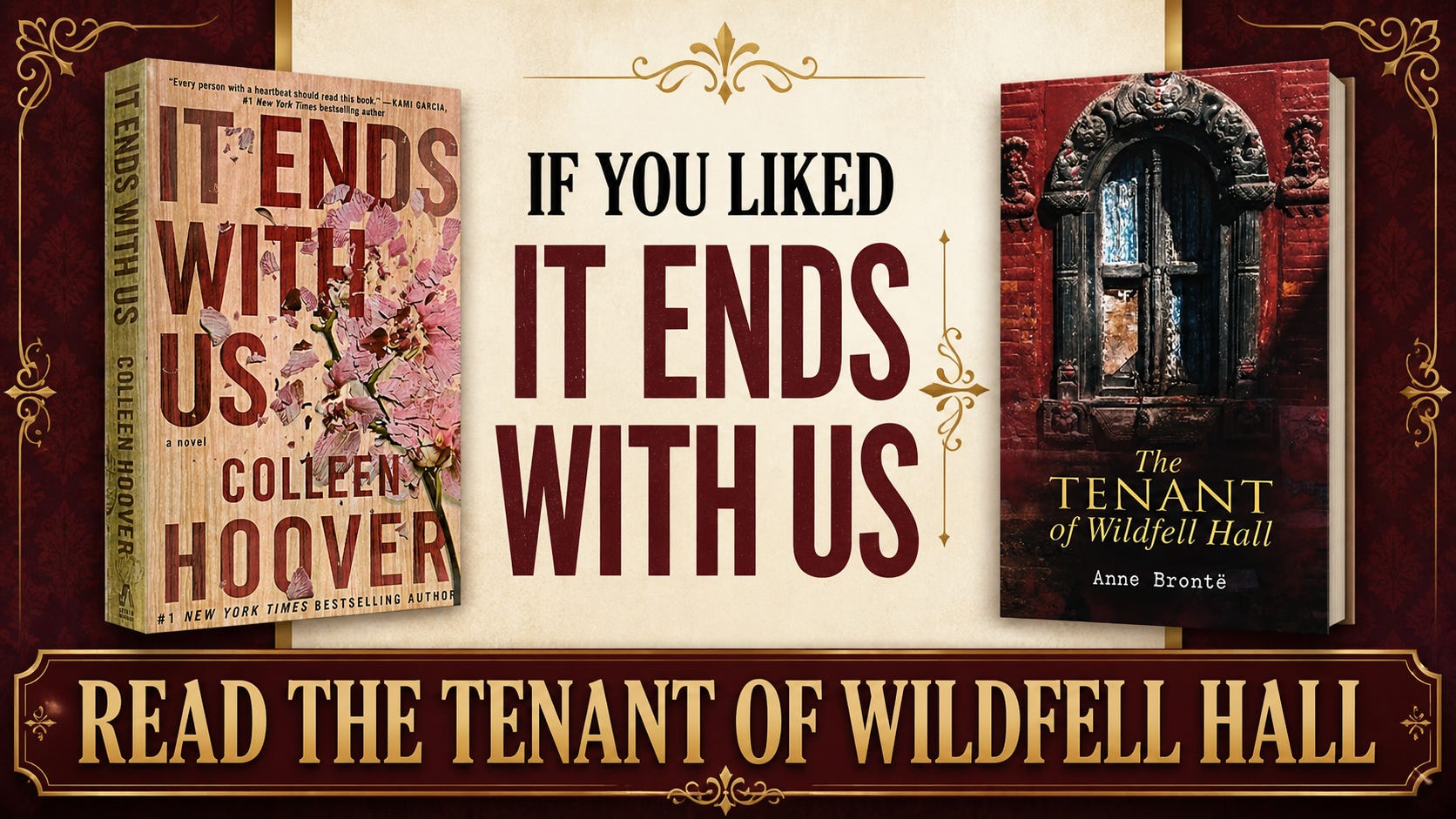
People keep filing The Tenant of Wildfell Hall under “quiet Victorian novel,” which is an extraordinary way to describe a book about a woman fleeing an abusive, alcoholic husband, hiding with her child, and trying to support herself while the neighborhood treats her privacy like a public emergency.
Helen Huntingdon is not waiting for love to make cruelty harmless. She learns what her husband is, protects her son, and leaves.
Anne Brontë is very clear about something readers still struggle to say without adding seventeen disclaimers: loving someone does not make it safe to remain within reach of their damage. That is the bridge from It Ends with Us. Not identical plots. The same refusal to treat endurance as the highest form of womanly goodness.
Sometimes the brave romantic ending is the door closing behind you.
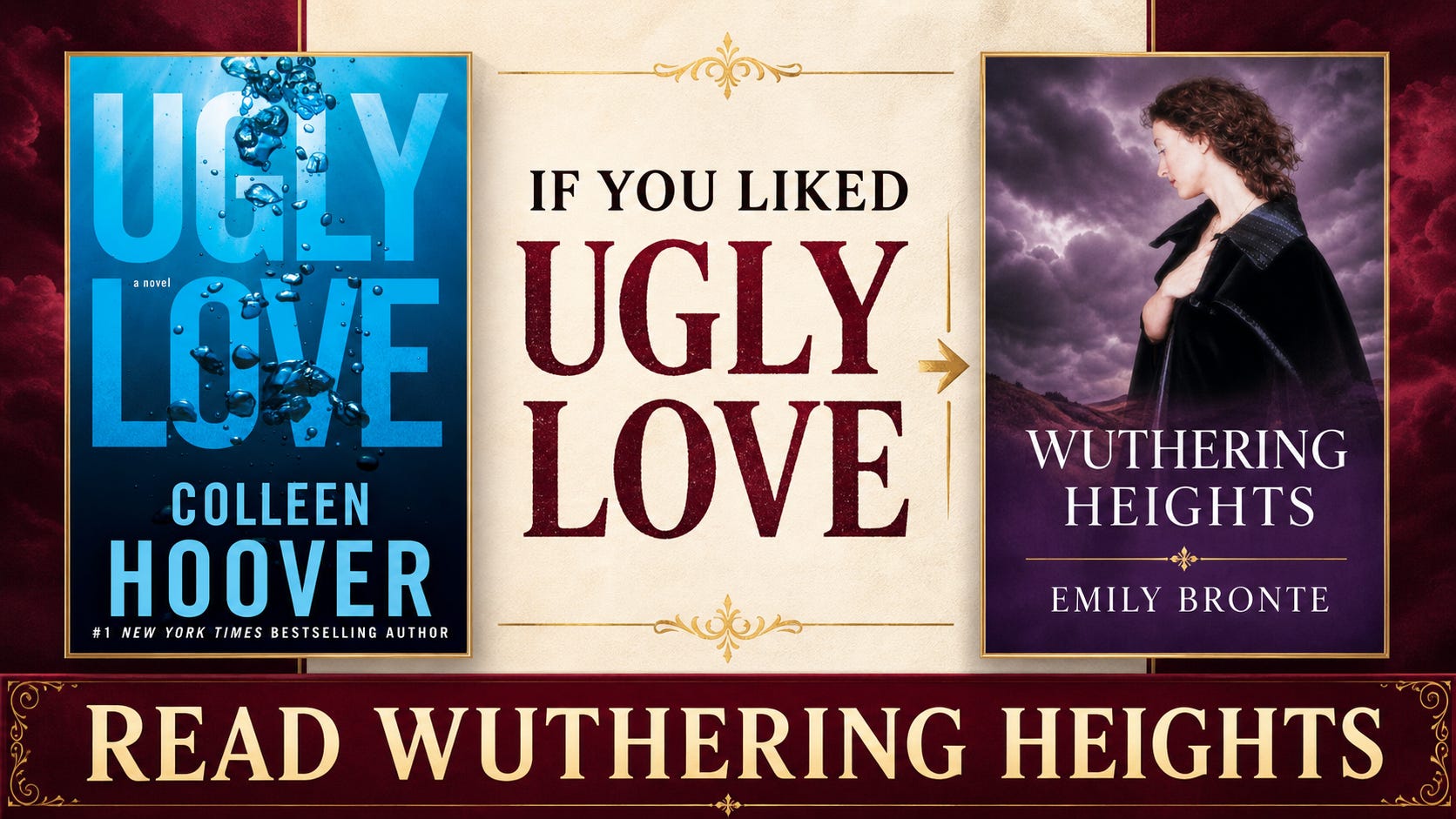
Miles gives Tate two rules: do not ask about the past, and do not expect a future.
This is the sort of arrangement fictional people announce with confidence immediately before discovering that feelings have not reviewed the terms and conditions.
Wuthering Heights takes the attraction-versus-destruction problem and removes all remaining safety rails. Catherine and Heathcliff do not merely love each other badly. They turn their thwarted attachment into a weather system that damages two households and reaches into the next generation.
Do not read it as an aspirational romance. Please. I am asking this for the sake of everyone’s upholstery. Read it because Emily Brontë understood that intensity can feel like proof even when it is actually a warning.
That distinction will improve every romance you read afterward.
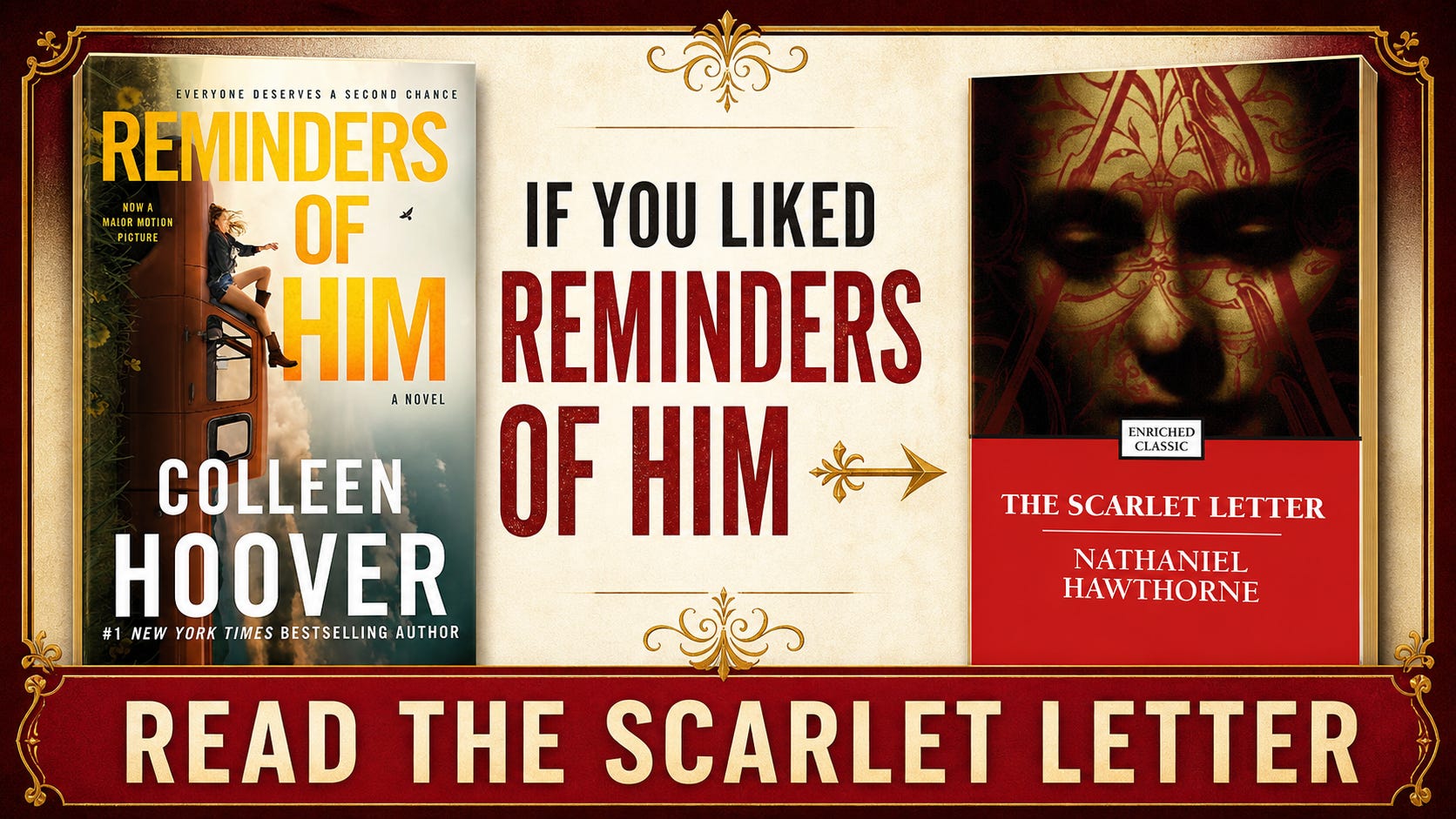
Kenna Rowan returns after five years in prison hoping to reunite with her young daughter. The town has already decided that her worst act is her permanent identity, and everyone close to the child believes exclusion is the same thing as protection.
The Scarlet Letter opens with Hester Prynne emerging from prison while holding her baby. Her community does not merely punish her. It turns punishment into civic entertainment, complete with costume branding.
Hester survives the sentence. What she cannot escape is everyone’s determination to keep sentencing her socially.
Nathaniel Hawthorne is heavier on symbols and significantly lighter on bar-owner romance, but the emotional question is the same: when does accountability end, and who gets to decide whether a woman has suffered enough to become human again?
The answer, historically, has been “not the woman.” Convenient system.
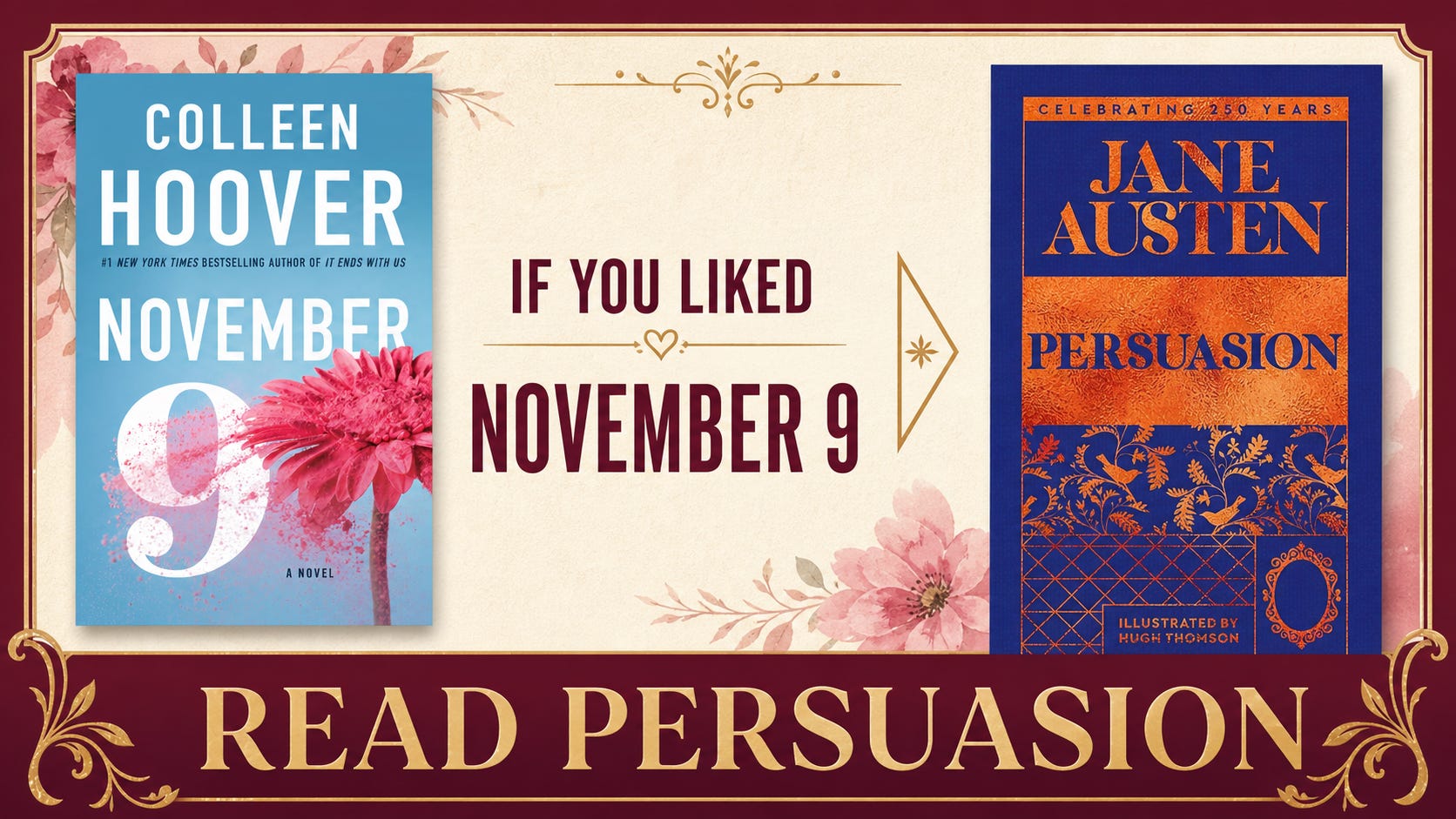
Fallon and Ben meet on the same date each year, allowing time, distance, secrets, and one writer’s questionable relationship with reality to interfere with what might otherwise have been a normal courtship.
Persuasion gives you Anne Elliot and Captain Wentworth, separated for eight years because Anne was convinced to refuse him when they were young. When they meet again, he is successful, desirable, and apparently determined to behave like a man who has never once drafted an imaginary speech in the shower.
He has.
Jane Austen strips away the annual appointment but keeps the ache: two people living inside the consequences of bad timing, wounded pride, and the terrible possibility that the other person has moved on more convincingly. If you read romance for the moment when regret finally has to speak in complete sentences, read Persuasion.
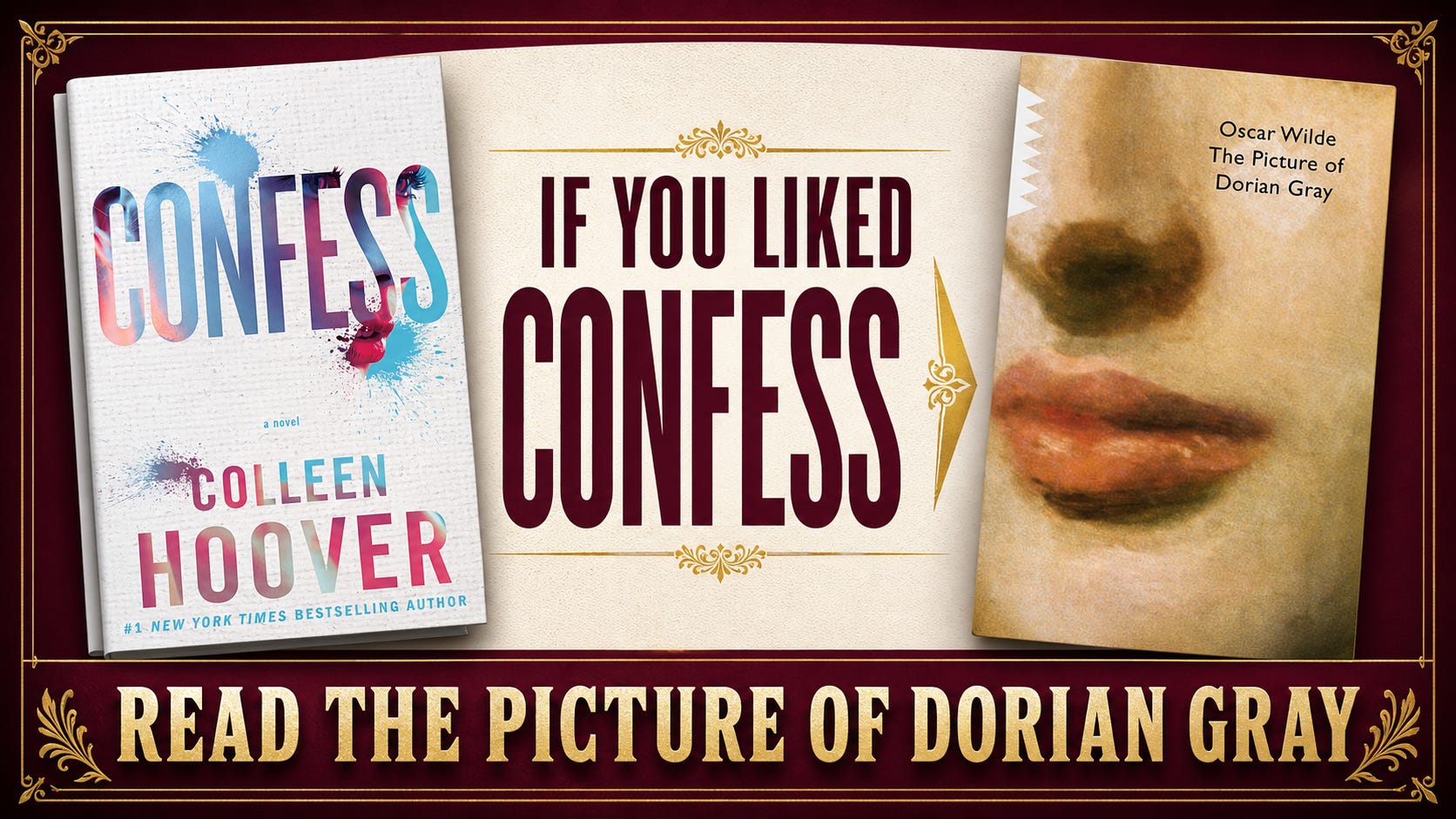
In Confess, Owen creates art from anonymous confessions. The paintings turn private shame into something visible, beautiful, and dangerous. Naturally, he is also keeping a secret of his own, because apparently the studio did not offer an employee discount on honesty.
The Picture of Dorian Gray reverses the mechanism. Instead of art revealing what people confess, a portrait hides what Dorian refuses to admit. His face remains beautiful while the painting records every corruption he wants the world to ignore.
One book asks whether confession can free you. The other asks what secrecy does when it is allowed to become interior decorating. Oscar Wilde gives you a man who discovers that outsourcing your conscience to a painting has administrative drawbacks.
Read these together and art stops being decoration. It becomes evidence.
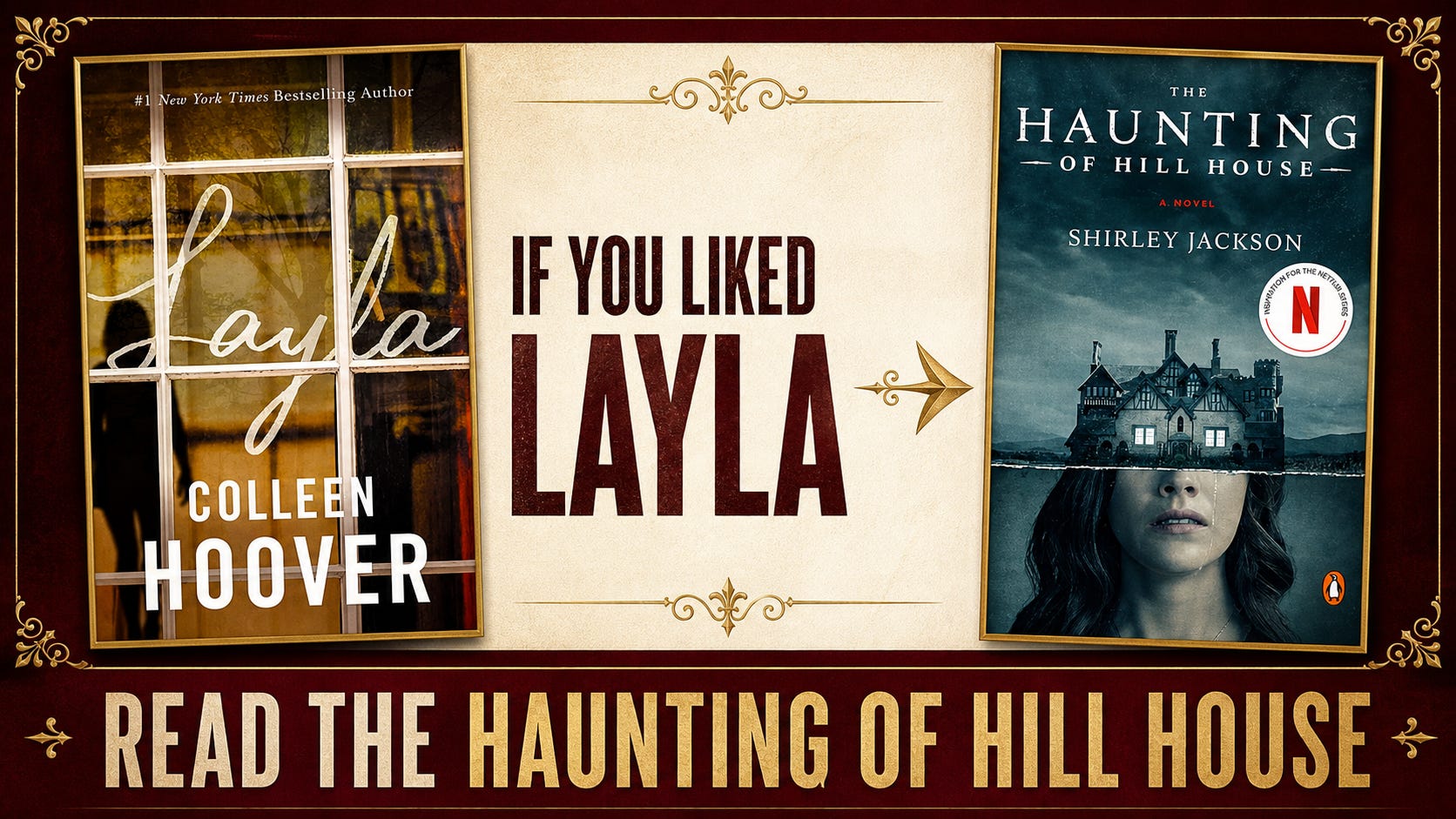
Layla takes a couple back to the bed-and-breakfast where they met after violence has changed their relationship. Then the house begins producing inexplicable events, another presence enters the emotional arrangement, and reality develops the structural integrity of wet tissue paper.
The Haunting of Hill House gives you Eleanor, a lonely woman invited to join a paranormal investigation inside a house that seems unusually interested in her vulnerabilities.
Shirley Jackson does not hand you a neat label for what is happening. Is the house haunted? Is Eleanor unraveling? Has the house simply found the exact person most likely to answer when it calls? Yes is not an available answer on the form, but it is spiritually correct.
If what you liked about Layla was the uncertainty, the isolated setting, and the sensation that love may not be the safest thing in the room, Hill House is waiting.
This Month for Members
- How to Start a Classic Book Club*webinar and replay
- The Classics Confidence Kit
- The complete companion-guide collection
- Reading roadmaps, planners, annotation tools, and the full webinar archive
- Immediate access to the Literary Fancy Members’ Library
$10 a month. Less than buying three books about men who refuse to discuss their past.
Member's Library
Jun 12

Your complete paid-member archive, organized by what you want to do today. Choose your next classic, find a companion guide, improve how you read, or watch a class.

Comments
Nothing yet. Say the first thing.
Sign in to join the conversation.