
From the writer: In case you have not read the diary entries from Week 1, I suggest reading them first before reading further.
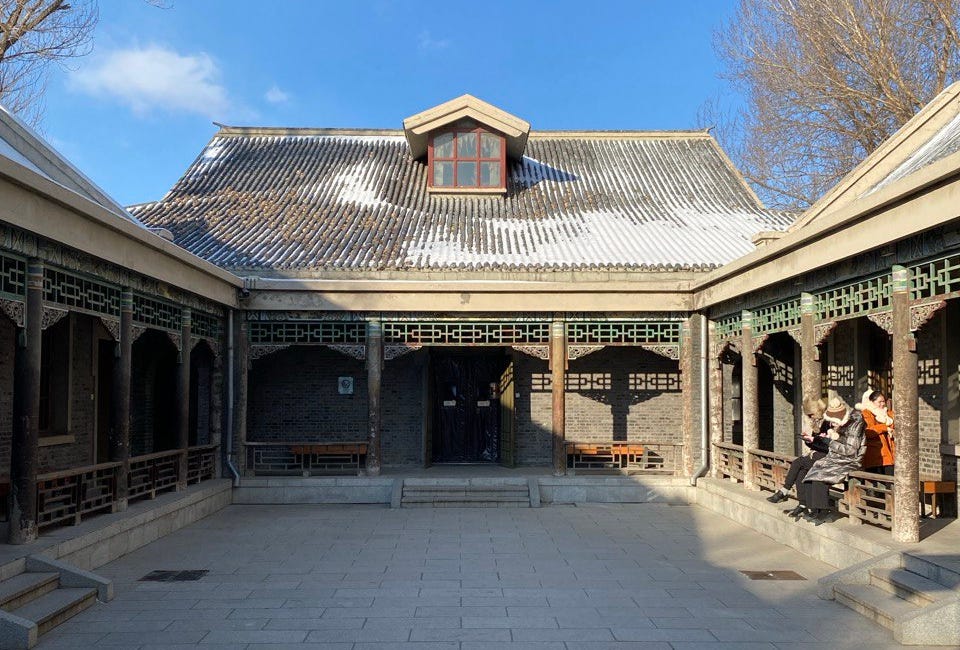
January 3rd, Saturday
Harbin-Mudanjiang
China is China—so many people. I went to Hongzhuan Morning Market to have breakfast, but the place was way too crowded. I gave up the idea of eating anything there. It seemed one misstep or fall could make dozens of people get crushed to death. I still managed to buy a cup of jujube-flavored soy milk. A great drink for the cold Manchurian morning.
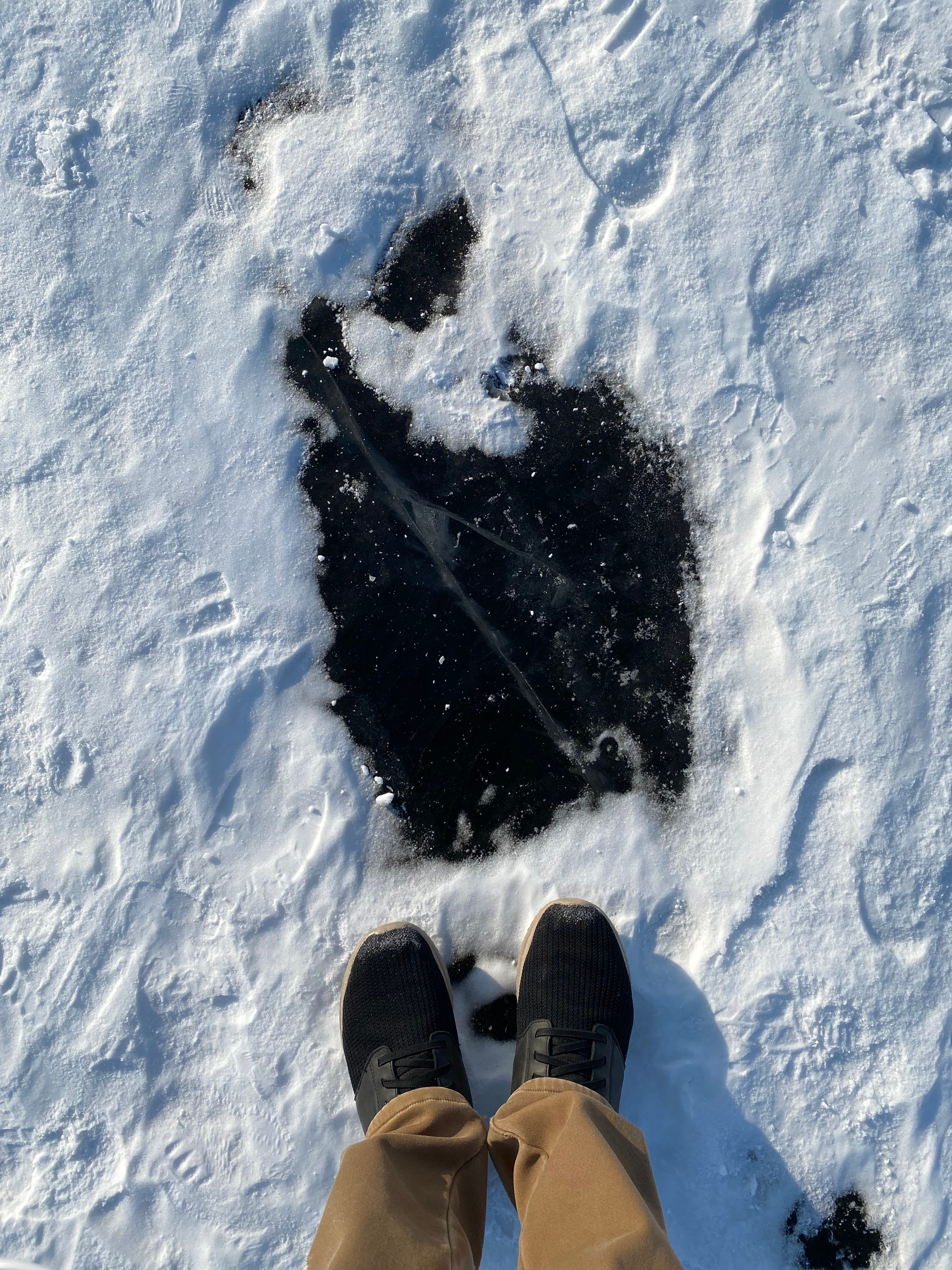
Before leaving Harbin, I decided to use the remaining time to see the Songhua River. The river was frozen, and some people were fishing on it. I liked the idea of being on top of a river. I walked towards the middle of the river and lay on it. The Sun and the sky felt foreign. The sky was clear, but also hazy, either from dust or smog. How could it be so clear and hazy at the same time?
I remembered Nedelskaya’s poem. She described Harbin as a “dusty city” and its sunset “foreign”. A century ago, had the people from other corners of the world watched the same sky and the Sun that I was watching? The frozen river was opaque and dark green where it was not covered with snow. I could not tell how deep it must be. I felt unsure whether the attempt at making sense of the river’s depth was worth it. Even though I wanted to remember what it felt like to be on the frozen Manchurian river for my novel, I already knew the sensation would escape me soon. I will have to rely on my photos and imagination as I write the novel.
It seemed that not many foreigners go to Mudanjiang, especially on the slow train. I could have chosen another train that would have taken me to my destination in less than two hours, but I wanted to be on the rails for a long time. The attendant, confused about what to do with my foreign passport, asked another how it should be handled. Then, the trainmaster came to inspect my passport again. The Sun was setting outside the window. It was a foreign sunset indeed.
“Ah, xuexiang!” exclaimed the attendant, having learned that I was headed to Mudanjiang. He might have had Zhongguo Xuexiang in mind, the China Snow Town. It is one of the winter attractions located in the Xuexiang National Forest Park, and tourists often go on a tour there departing from Mudanjiang. However, it sounded to me as if he wanted to imply that Mudanjiang was a snow town, or the snow town.
Xiang is a strange word. Unlike other Chinese words that can mean town, it also carries the nuance of one’s place of origin, one’s hometown. Xuexiang, accordingly, sounds like where snow originates from, or one’s hometown where it snows. The two syllables uttered by the attendant gave me a strange feeling of nostalgia.
I thought of two writers: Baek Seok and Kawabata Yasunari. I tend to be very ungenerous when judging Korean writers. It is partly because of my bitter attitude toward Korea, and partly because I can understand them too well, being a Korean. Still, for me, Baek Seok is a poet who cannot be judged or assessed. I would choose Baek Seok if I could read poems by only one poet all my life, despite not thinking that Baek Seok is the greatest poet. His poems are often nostalgic, somehow reminding the reader of Chagall. I have a poem scheduled to be published in a literary journal—I thought it was inspired by Chagall, but the inspiration also came from Baek Seok, now that I think of it.
Baek Seok wrote in his poem Me, Natasha, and the White Donkey: “Since I, being poor/love the beautiful Natasha/Tonight pours down the snow//I do love Natasha,/the snow pours down, and/I drink soju, seated alone and lonely/Drinking soju, thinking/Natasha and I,/in the night when snow pours and piles up, on a white donkey/Will go to a mountain village will go deep into the mountain where crow tits cry and live in a cottage//The snow pours down,/I think of Natasha/No way Natasha will not come”. The reason snow pours down at night is that a poor poet loves a beautiful woman called Natasha. The mountain village, where he will take her, was the image I had in mind when I heard the word xuexiang.
On the other hand, being on a train to a snow town inevitably made me think of Kawabata Yasunari’s Snow Country. I pondered for a moment the difference between the Chinese, who say snow hometown[鄕], and Kawabata, who wrote snow country[国].
Xuexiang and yukiguni—their difference, however, soon left my mind when I saw a girl seated across from me. She was asleep, covered in a coat and leaned over the table in front of her. Through the window behind her, I could see the Moon rising, pale and large. It was an image more impressive than Yoko’s reflection on the window that Shimamura observes in Snow Country. Momentarily, I wanted to stay in the train car with the sleeping girl forever, never waking her up. It was not snowing, but snow was on the rails.
Right in front of Mudanjiang Station, people were waiting for their family members at the parking lot. I walked past them. The weather did not feel cold.
After checking in at the hotel, I learned that Maduro had been kidnapped by the US.
January 4th, Sunday
Mudanjiang
I woke up past noon. It had never happened before during this trip. Now I am at my destination, the place where my novel is going to be set. Now what, I thought. I did not have much of what could be called a plan.
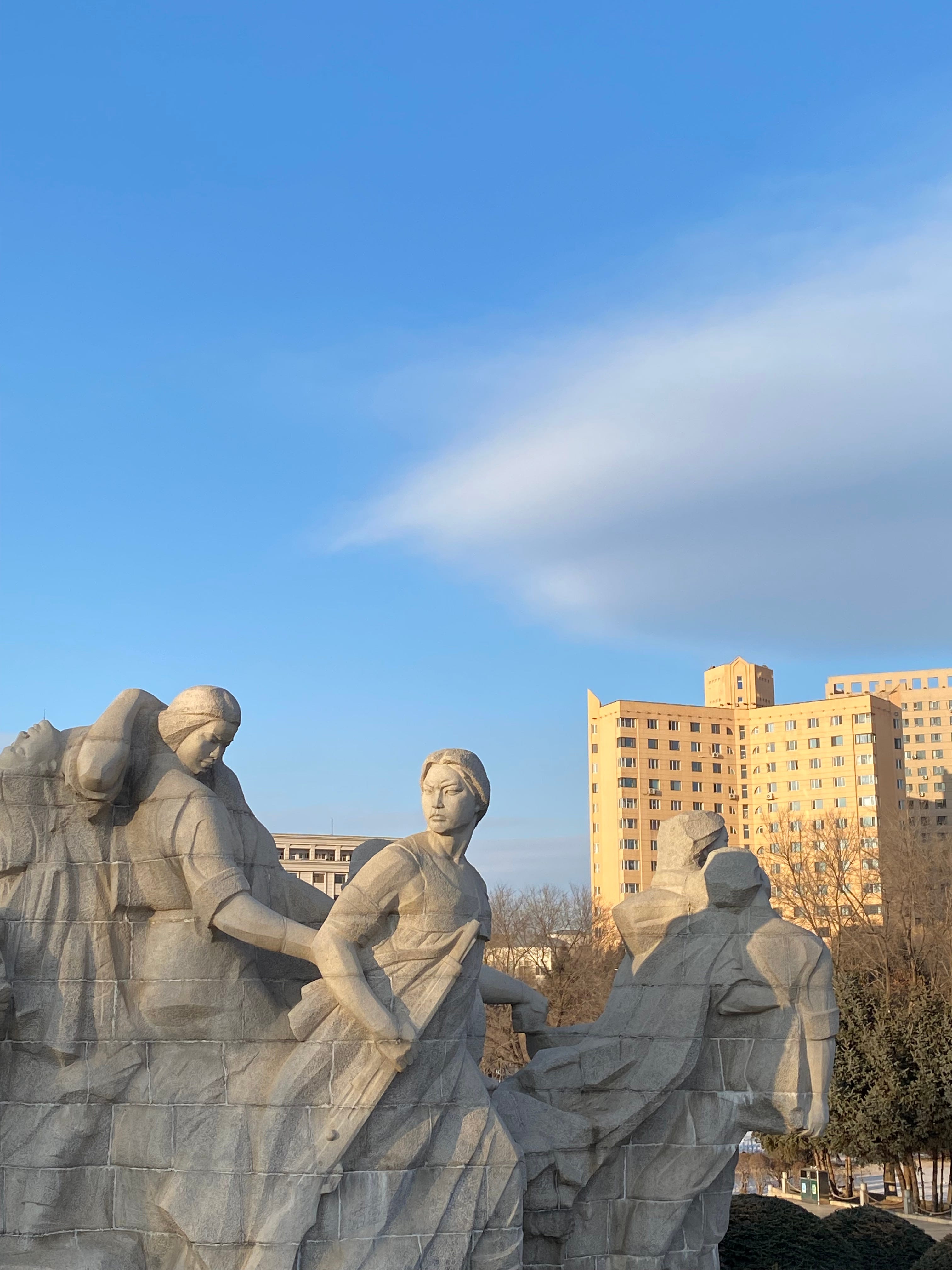
I headed to Eight Heroines Who Drowned Themselves in the River Museum. It had a small exhibit hall displaying the other sides of the local history, but its focus was on the regional fighters who struggled against Japanese imperialism. The “Eight Heroines” refer to the eight soldiers of the women’s regiment that belonged to the Northeast Counter-Japanese United Army. On October 20th, 1938, they fought the Japanese force to cover the escape of their comrades at a riverbank. When their ammunition ran out, they refused to become captives and threw themselves into the Wusihun, a tributary of the Mudan River—thus the name Eight Heroines Who Drowned Themselves in the River. Two of them were Korean.
I had not known that two of the Eight Heroines were Korean before coming to Mudanjiang. I left the museum and walked towards the Mudan River, past the large monument of the Eight Heroines. At the museum, many other Korean fighters were also on display. Koreans and Chinese had a shared past of anti-imperialist resistance; in South Korea, the memory was being effectively forgotten, perhaps intentionally to a certain extent: China was a potential enemy to South Korea. Here in Mudanjiang, however, the memory was still alive and well.
The Northeast Counter-Japanese United Army consisted of various anti-Japanese guerrillas. It was led by the Chinese Communist Party in principle, but the party based in Yanan could not always direct the fighters in Manchuria. As the Japanese subjugation in Manchuria fortified, the army had to flee even further East, to the land ruled by the Soviet Union. Additionally, there were many Koreans in the army, some born in the Korean Peninsula and others in Manchuria. For many South Koreans, nonetheless, the name Northeast Counter-Japanese United Army gives rise to certain uneasiness—Kim Il Sung was one of its prominent officers, and his anti-Japanese career in the army would later legitimize his regime in Pyongyang. Many of his comrades that he had acquainted himself with in Manchuria and Primorsky Krai, both Korean and Chinese, entered the Korean War and invaded the Korean Peninsula’s south, or tried to liberate the rest of the peninsula, depending on your political stance. The official name of the Korean War used in the People’s Republic of China is the War to Resist US Aggression and Aid Korea. South Koreans, obviously, do not think that they were ‘aided’ by Beijing in the war.
Kim Il Sung’s autobiography, With the Century, depicts his days as a guerrilla officer quite poignantly (there is a claim that ghostwriters, distinguished North Korean novelists, were involved in the creation of the book). The book has stayed banned in South Korea by the National Security Act, and possessing or reading it could result in criminal punishment. I read With the Century again last year after many years as reference material for my novel set in Pyongyang, The Great Leader and His Eternal Life. The autobiography, though simple and somewhat rustic in its style, was good writing, as I remembered it. Kim Il Sung (and his ghostwriters) beat Natsume Soseki in writing about life in Manchuria.
I walked on the frozen Mudan River. I wanted some inspiration for my new novel, The Peony River, but could not find any. Instead, I found myself thinking about the East Asia that the Eight Heroines would have envisioned, the antagonism towards China among the South Korean youth, and Maduro. Only a few hours before his kidnapping, Maduro received a Chinese representative. Did they sell him off? I thought. Although a military intervention in the Western Hemisphere would be practically implausible for China, I wondered if China had traded Maduro for something else. Moreover, it seemed Trump might have hinted at what Xi could do with Taipei instead of starting a full-scale war, intentionally or not. And Putin—did you really have to do it if all you wanted was regime change in Kiev?
Anyhow, Maduro had it coming. That’s what happens when you are singing the stupid Imagine when America is coming after you. Imagine there’s no countries, nothing to kill or die for? Be a fucking hippie clown when you are not the president of a country. The perp walk should have been enough to give you a fatal heart attack from shame.
Sovereign: adjective. Having nuclear weapons, preferably with ICBMs that can strike Washington. Kim Il Sung must be proud of his son and grandson. Kim scores again, this time against Maduro.
I visited a few bookstores to see if I could find good reference materials about Mudanjiang. I could not find any. An unproductive day at last, when I was in the very town that I wanted to use as the background of my novel. The riverside parks and the streets of Mudanjiang were so peaceful, though. It was the Solemnity of Epiphany that I did not go to a church, since the closest Catholic church was in Harbin. I thought of the day when I took a dip in the icy Neva River, along with Russians on Epiphany. I kind of wanted to break the ice on the Mudan River and jump in. It might give me a literary epiphany.
The cold wind gave me a headache. All I could think about was Moscow, Kiev, Beijing, Taipei, Washington, Caracas, and Tehran. Even if something happens in Taiwan, it seems Mudanjiang will stay the same, unless the Japan Self-Defense Forces decides to do something stupid in Manchuria. Takaichi expressed some interesting ideas regarding China, but she did not seem to be particularly interested in Manchuria.
January 5th, Monday
Mudanjiang
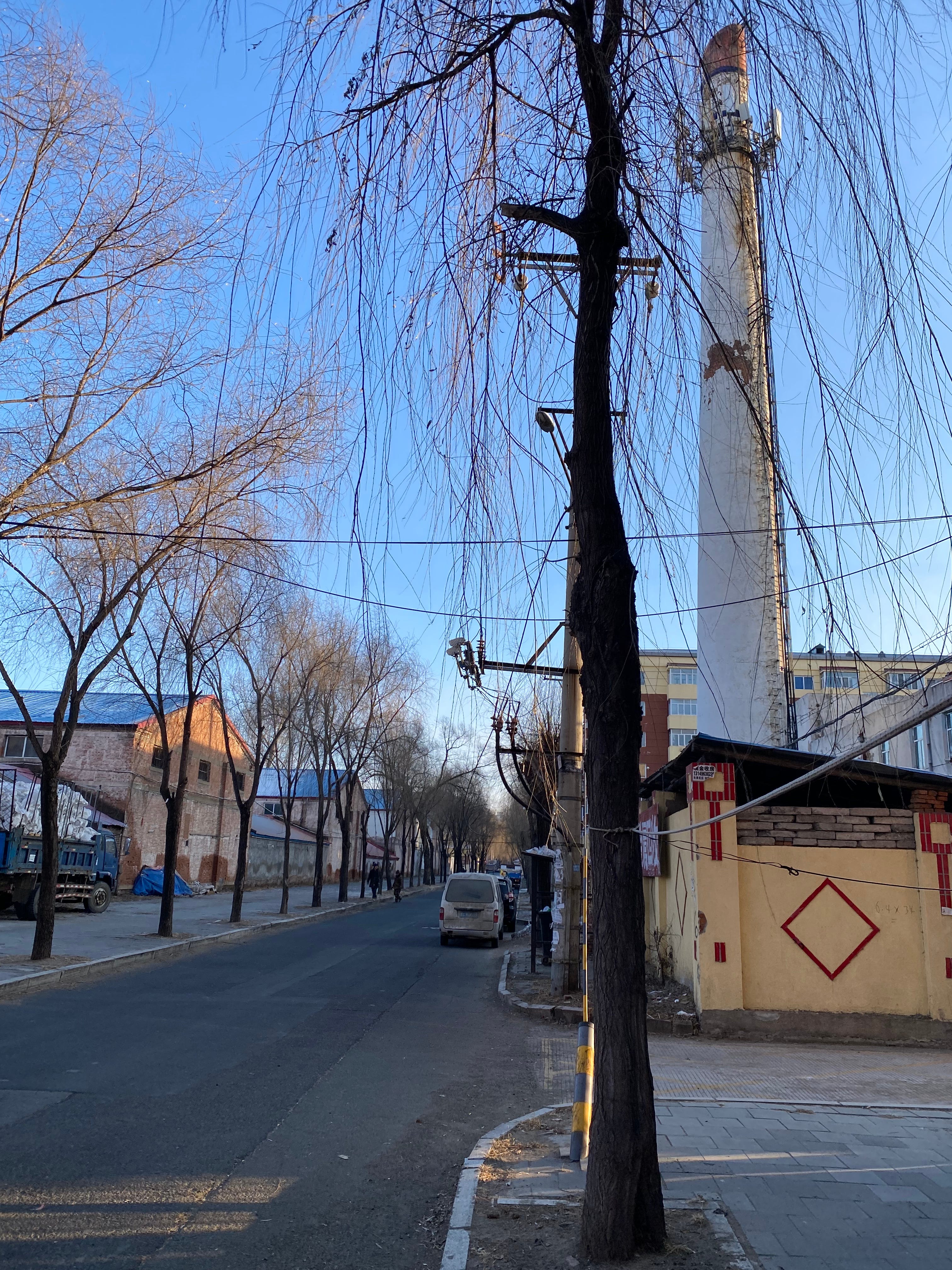
Another unproductive day. The two libraries I wanted to visit today for research into city history turned out to be closed on Mondays. I decided to walk for an hour and a half to Mudanjiang University Library. The wind was harsh. It was the coldest day I had encountered in Manchuria so far.
Since I arrived here, I am intentionally walking the distances that I normally would take a bus, subway train, or taxi. Mudanjiang does not have many physical remnants from the early 20th century, but I can still force my body to remember what the air and the wind here feel like. And the Sun—the Sun here feels so strange, so foreign: a slanted white sphere taking up so much space in the sky without giving warmth, disappearing so soon across the horizon without much evening glow.
The streets on the way to Mudanjiang University felt strange, too. Arrays and arrays of battered Soviet-style apartment buildings with small shops on the ground floor, many of them closed. Despite so many apartments, there were so few people in the streets. Perhaps they did not come out because of the cold, or they were working in the city center. Even if that was the case, still so few. Quiet streets where the sound of a car driving over a thin layer of ice thunders like firecrackers; small factories with rusty gates that no sound of machinery comes out from; broken windows, shattered glass; printed flyers on power poles looking for a lost dog, whose colors are long lost; hand-written flyers of empty rooms for rent, just black and white; an old man sitting outside when the wind makes it imperceptible that you have a nose and cheeks—a town haunted by the wind and the strange Sun, but not haunted in the same way the worn-out, old-time industrial towns in Russia are, precisely because of the Sun. The East is red, Comrade Mao? It’s white here in the Northeast. The sky is blue and the Sun is white, General Chiang? Even the sky here is too pale to be called blue, like a curtain of ice, too thin and barely concealing what is beyond what we can see.
The guards at the university’s gate told me that the library was closed until the new semester in March. I went into a café nearby, and I still felt cold for an hour or so, even though the place was quite warm. Most of the customers seemed to be college students, and practically everyone knew each other. I wondered if the library was truly closed.
After coming back to my hotel in a taxi, I received a message from E— that H— had died this morning. I was pondering whether I should go out into the cold again and check out the local live music bar I had found online. I turned on my laptop instead.
H— was the youngest among us back when we were in the student union. Everyone at the student union was, in a broad sense and to varying degrees, either a socialist or a feminist, or both. Such people tend to die young, usually by killing themselves. E— did not tell me why and how H— had died, but I could imagine. Hearing of H—’s death in Manchuria felt so strange, but somehow acceptable.
In the hotel room, I remembered H—, still a teenager then, playing the guitar and singing the song she wrote: I Used to Be So Pretty When I Was Young Though. She was still young then, and not a pretty girl to be honest, but pretty in that she was a young girl. Another memory: she invited me to her place, and we had some drinks. “Shit, I’m getting a feeling that we are going to have sex,” she said. We didn’t. H— and I, together with R—, stayed close onward, until we were no longer so. Life got between R— and me after graduation, and the last time I saw her was at a Christmas party before Covid. On the other hand, it was our opinions regarding feminism that got between H— and me.
I am now recalling another story I heard on hearsay. A student activist, D—, whom I had once mocked for his fervent defense of “human rights”, killed himself. It was because he was discovered to have sexually harassed a girl: technically still a sexual harassment, a groping, but not the sort you would have to pay back with your life. I believe he killed himself more from shame than guilt. It is a very East Asian way of thinking, most abundant in Japan and less so in China, Korea being the middle—in the same vein, I, an East Asian, believe that Maduro should have violently resisted the US soldiers even with his bare hands so that he could be shot on the spot, instead of bearing the shame of being photographed as a captive.
H— was among those who urged D—’s victim to openly disclose the incident. Many of us were burning with somewhat Puritan fervor, like a gentler version of the Red Guards—I almost always sneered at them but also recognized some beauty in their fervor, calling for the absolute purity in thoughts and acts. I think H— was not responsible at all regarding D—’s death, thus respecting D—’s autonomy and honor, but some people considered her to be so. H— went to D—’s funeral only to be kicked out.
H— is now gone, like D—. In some ways, they were stupid, but from another way of seeing it, they were “ardent and sincere” like An Jung-geun, with “sadness” in their hearts. Such people should have been born a century earlier in Manchuria. If H— could kill herself for whatever sadness she had in her heart, I am certain that she could have joined the Eight Heroines of Mudanjiang as well. She was not at fault. It is the fault of our age, where life has become so pointless that there is nothing to throw it into a river for. In another age, H— would have died a martyr for people’s liberation under the strange, white Sun.
I have just decided to go out to buy a bottle of baijiu at a convenience store and drink it alone in the Manchurian hotel room. Here in Northeast China, even a spirit is bai, white. No live music bar, since I am not really in the mood to see a young girl singing and playing a guitar by chance tonight.
January 6th, Tuesday
Mudanjiang
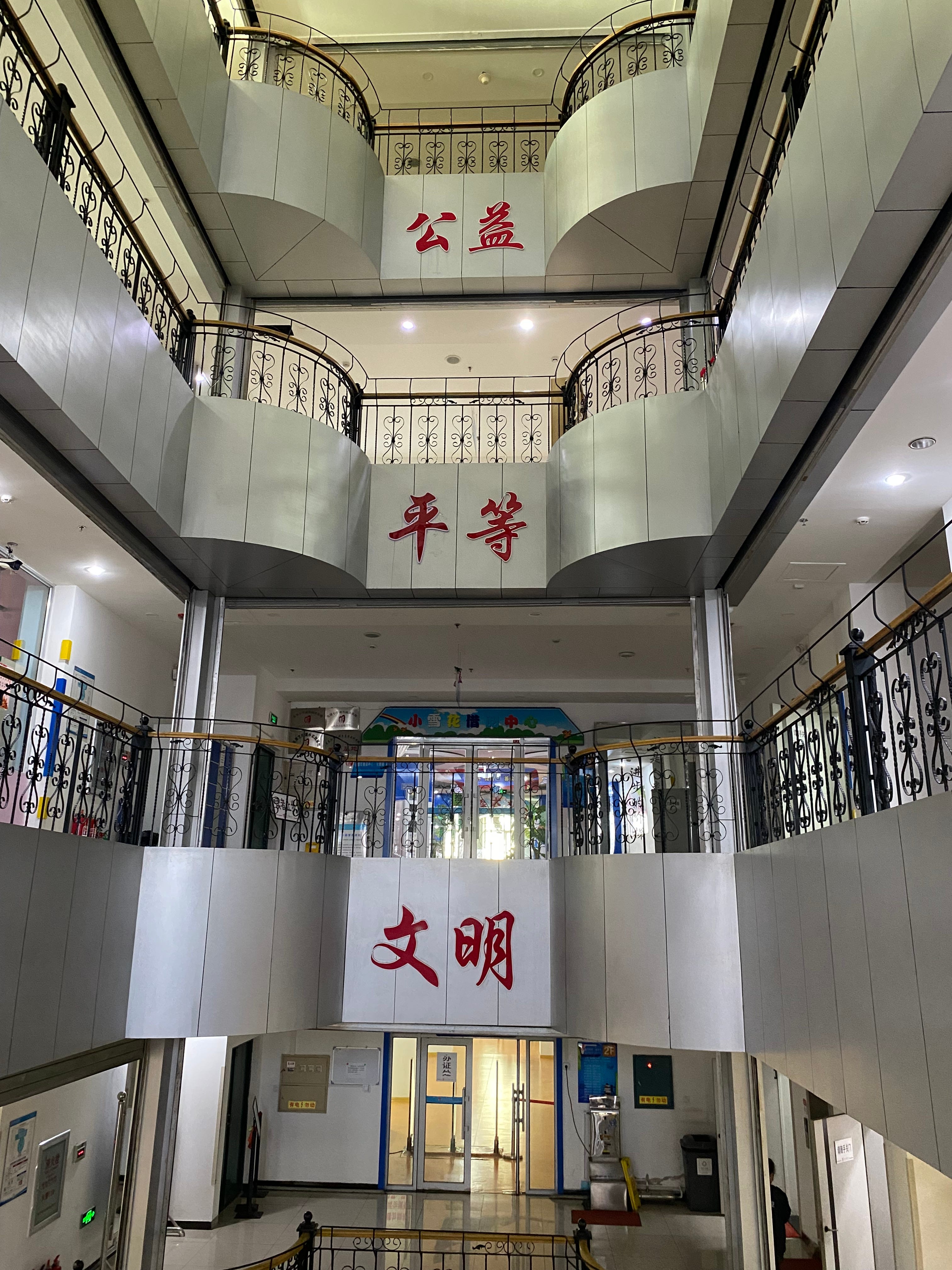
A somewhat productive day, in a sense: I could confirm that source materials I could refer to for my novel, especially visual ones, were practically non-existent. The first place I visited, Mudanjiang Korean Ethnic Minority Library, did not have maps or photographs of Mudanjiang from the 1920s and could not guide me to anywhere that might. Neither did Mudanjiang Museum, other than the photographs I had already seen two days ago in their exhibition hall. Mudanjiang Library was not very helpful either, as expected. I am still somewhat relieved. If they do not have the maps, no one else does. Finding out their non-existence is relieving in that I do not have to dig deeper anymore, at least regarding the city’s past layout. It is now a few photographs I have already found, myself, and my imagination against the 1920s Mudanjiang—or against the lack of its visual record.
The busy day was not without its own fruit, though. Heilongjiang People’s Publishing House has a collection of studies on Mudanjiang’s local culture that is not for sale to the general public, but Mudanjiang Museum gave me a tome from it. (Helongjiang People’s Publishing House, I thought you were a people’s publishing house! Flashback: a scene from the movie Doctor Zhivago. Gromeko sees the sign on his house that it has been expropriated in the name of the people. “Very well, I’m one of the people too!” he exclaims and tries to get in.) I could skim through the rest of the collection and take photos of some pages at Mudanjiang Library. It was stored in the local literature section, which opens only on Fridays for set hours. Nevertheless, being a foreigner definitely helps. I was led to the library director’s office, whose official title was “Secretary”, and then to the closed underground section. While Comrade Secretary was standing and watching behind me all the time, where no material could be taken out or photocopied, I managed to find some useful passages, chronicles, tables, and photographs, even though not as many as I expected.
I also got to talk with the director of Mudanjiang Korean Ethnic Minority Library, the only library in Heilongjiang Province that specializes in Chaoxianzu literature, ethnic Koreans living in China. It was obvious that not many foreigners besides Russians, as the city is close to the Russian border, visit Mudanjiang. Taking a trip to China? You are visiting Beijing or Shanghai, of course. Maybe Guangzhou, Xuzhou, or Hangzhou, if you have already been there. But heading to the Chinese Northeast? You must be quite a seasoned traveler in China. You are visiting Harbin, right? No? Mudanjiang? Isn’t that like the name of a river? Where the hell is Mudanjiang anyway?
However, another factor was at play when the director invited me to her office: I was a foreigner, but not too foreign—a Korean. She gave me her WeChat contact, suggested some places I should visit, and told me that she would put me in contact with Korean publishers in China when my novel is done. The Korean translation of my novel might be published in China, instead of Korea.
The term she used to explain why she wanted to help me, dongpo, a compatriot, had a strange ring to it. It literally means to be from the same womb. The word has somewhat fallen out of use in South Korea. If I hear someone saying it out loud in Seoul, it will sound like an expression of anachronistic nationalism. In contrast, North Koreans and Choxianzu are more likely to use the term often.
The relationship between South Koreans and Chaoxianzu, or Joseonjok, the way the same word is pronounced in Korean, is rather complicated. Since South Korea established diplomatic relations with the People’s Republic of China in 1992, many Joseonjok have entered the country of their capitalist kins as immigrant workers. The income levels in China and South Korea differed vastly in the past, and unskilled laborers can still earn much more in the latter. Soon, the general South Korean society began to see Joseonjok as uncultured manual workers, often falling under the suspicion of committing violent crimes or scams. Despite the practical lack of a language barrier, cultural differences have also become a source of discrimination and conflicts. South Korea was no longer the Korea of the early 20th century, as remembered in the collective memory of Joseonjok, and Joseonjok, who had lived together with the Chinese for almost a century under a socialist regime, were not the Koreans recognizable to South Koreans as such either. Meanwhile, Joseonjok soon grew bitter of South Koreans as well. They were not treated as dongpo in the South of the peninsula.
I sense that the antipathy towards Joseonjok in South Korea has grown stronger recently. The New Cold War has arrived, and China is understood not only as a threat to South Korean national security but also as a source of barbarism and tyranny, especially among young males. Their hate towards Joseonjok is less about them being ‘backward’ Koreans from an underdeveloped country, as they understand China; rather, they regard Joseonjok as Chinese, in that their loyalty lies in the Chinese Communist Party, who claim to be dongpo only for the gains of themselves and China.
Were the library director and I dongpo? Can we have any dongpo in this age? In 2024, North Korea amended its constitution and dropped the Korean reunification as a national goal. Kim Il Sung and Kim Jong Il continued to express their will to ‘liberate’ the South of the Korean Peninsula: South Koreans were dongpo who had to be saved from their puppet regime and American colonialism, at least as a way of saying. To Kim Jong Un, however, South Korea is not a country of dongpo. It is just a separate, hostile state that happens to be near his.
The director explained that the library has many books from both Koreas but the Chinese laws do not allow public libraries to display books published abroad. Thus, the books in Korean there were all Chaoxianzu/Joseonjok books only. South Koreans, North Koreans, and Joseonjok—we seemed to be falling apart further.
Having heard that I planned to write a novel set in the 1920s Mudanjiang, I could sense that the director was imagining a heroic tale of Koreans in Manchuria fighting against the Japanese imperialists. She said she had high hopes for my novel. I could not dare tell her that in fact, I intended to depict such Koreans as villains—The Korean Anarchist Federation in Manchuria, who did try to fight the Japanese and wielded certain influence in Mudanjiang, would ask for ‘donations’ from local Korean peasants. Naturally, you cannot fight imperialism without money, and not all peasants naturally agree with anti-imperialist causes and willingly make sacrifices for them, which is understandable.
Nevertheless, all I could do was politely thanking her. We were talking in Korean, and it was the longest conversation I had had since arriving in Manchuria. It felt too cruel, either for her or for me, to let a dongpo down.
January 7th, Wednesday
Mudanjiang (Hengdao Hezi)
I decided not to go to Jiamusi or Tumen. I am flying back to Korea on Friday and decided to stay in Mudanjiang till then. Considering what I wrote before departing, it seems my life will take a turn towards Mudanjiang, whatever it may mean.
I do not know much about Jiamusi other than that it borders on Russia (so does Mudanjiang). The only reason I wanted to go see it was that Jiamusi is the most northeastern corner of China. Thus, the place had a mythic air in my mind—the end of Manchuria, with an evidently Manchu name. When I was in Khabarovsk and looking at the Amur some years ago, I was told that China started over there. I wanted to see the other side of it.
Will I ever see Jiamusi? It is not that hard to come to Jiamusi from Seoul, but we always say so when we choose to give up something, as if we will live forever and have infinite chances to come back. I could have visited other parts of Latvia when I was there. I still can, technically, but I am rather doubtful I will ever go to certain Latvian ports that I decided not to visit then.
Anyhow, I have stated many times that my novel will be set in Mudanjiang, and it is not a bad idea to explore it further before I go home. Even though Mudanjiang is called a city, a prefecture-level city to use the precise term of the Chinese administrative division, its size is a bit over 40,000 square kilometers—that’s about how big Denmark is. (China is always marvelous. It calls a Denmark-sized land a city. To be fair, the province it is in, Heilongjiang, is larger than Uzbekistan.) As a result, when the locals say Mudanjiang, they are often referring to the relatively small urbanized area where Mudanjiang Station is, while the municipality’s jurisdiction stretches to the vast rural areas around it. I have spent enough time in its downtown, so to speak. Time to take a look at other parts of the city.
It was Mudanjiang Korean Ethnic Minority Library’s director who suggested that I should visit the century-old Russian village in Hengdao Hezi. From Mudanjiang Station to Hengdao Hezi Station, it takes about half an hour on a fast train and an hour and a half on a slow one. I got off at Hengdao Hezi East Station, a station before. I wanted to visit the Siberian Tiger Park before heading to the village.
As its name suggests, the Siberian Tiger Park is a zoo whose focus is on Siberian tigers. There are a few other animals, but no one visits the park for them. The Siberian tiger, or Amur tiger, is a subspecies found in the Chinese Northeast and the Russian Far East. Sometimes also called Manchurian tiger, it is the biggest among all tiger subspecies: a large male killed in 1943 Manchuria measured 660 pounds and over 11 feet, from head to the end of the tail. Many Siberian tigers inhabited Korea too, but they are believed to be extinct from the peninsula now.
Zhang Xueliang kept two taxidermized Manchurian tigers in the so-called Tiger Hall. He shot two of his men to death in the hall. The tigers were still on display at General Zhang’s Mansion. I believe Zhang did a splendid job in asserting his dominance. If he had shot them in a dining room, it might have looked like a drunken frenzy, and absurd if in a toilet. He also could have brought them to a trial so that a judge would sentence them to death on his behalf, or simply ordered his soldiers to shoot them outside, as normal rulers do. Instead, he shot them himself in a hall with tigers. He knew, consciously or not, how a Manchurian warlord should act. Zhang Xueliang was a much more cultured man than his father, but the son of the wild rider did learn something from him.
The tigers at the Siberian Tiger Park were quite tame, in a sense. Whenever visitors approached their cage, they came forward, so that it would be easier for the visitors to take photos with them. It was because, I believe, visitors to the park are allowed to buy raw meat on skewers and feed the tigers. I am not really sure if that is good for the tigers, but the park had literally written out at its entrance that the goal was to preserve the endangered Siberian tigers by making the “tigers earn money themselves”. So, they are honest about it, and I do not think I can criticize them wholeheartedly. Make them pay for you, boys, because you know: Arbeit macht frei, meine Schweine—oh, sorry, I meant meine Tiger. Be Instagrammable, or Xiaohongshuable.
Despite my cynicism and the park’s transparent policy, the way the tigers walked was outstandingly elegant. At one point, an almost stripeless, golden tiger approached me. She was perhaps a result of intentional breeding for the spectacle. I squatted down to look at her. She directly looked at my face, pushing her nose onto the metal mesh. There was nothing between her and me besides the mesh and a glass wall. Then, she growled. Not a roar, just a short growl. I felt my body stiffen up. It was a primal fear that did not require reasoning.
The Tiger Baron. The phrase entered my mind like a tiger’s fangs. Now I knew what one of the villains in my novel was going to be called. He could be Russian, Polish, or Japanese. The important thing was that he should be the polar opposite of my Korean villain. The Korean, though a villain, should be comprehensible, whose cruelty was the logical conclusion of his clear political principles. However, the Tiger Baron was going to be a man of impulses, thus capable of both pointless murders and unexpected mercy, whose unpredictability would be the source of fear. He would be elegant and terrifying at the same time.
Now, I had a Korean anarchist, a Japanese Futurist poet, an American missionary nurse, a Chinese communist spy, a Russian ex-monk, and the Tiger Baron in the Manchuria of my mind. The plot was going to roll.
From the Siberian Tiger Park, the Russian village of Hengdao Hezi was an hour and a half away on foot. I walked through the blizzard while cars raced by. Again, I wanted my body to remember the wind, air, and snow of Manchuria. A car stopped next to me soon, nevertheless, and I was hitch-hiked. The driver was a very kind man with two daughters seated in the back. He probably thought I was out of my mind to be walking outside in such severe weather. He was right. When I got in the car, the sudden warmth gave me a terrible headache that felt like frozen metal plates squeezing my brain, even though I had a beanie on. I had not understood what the cold could have done to me with more time.
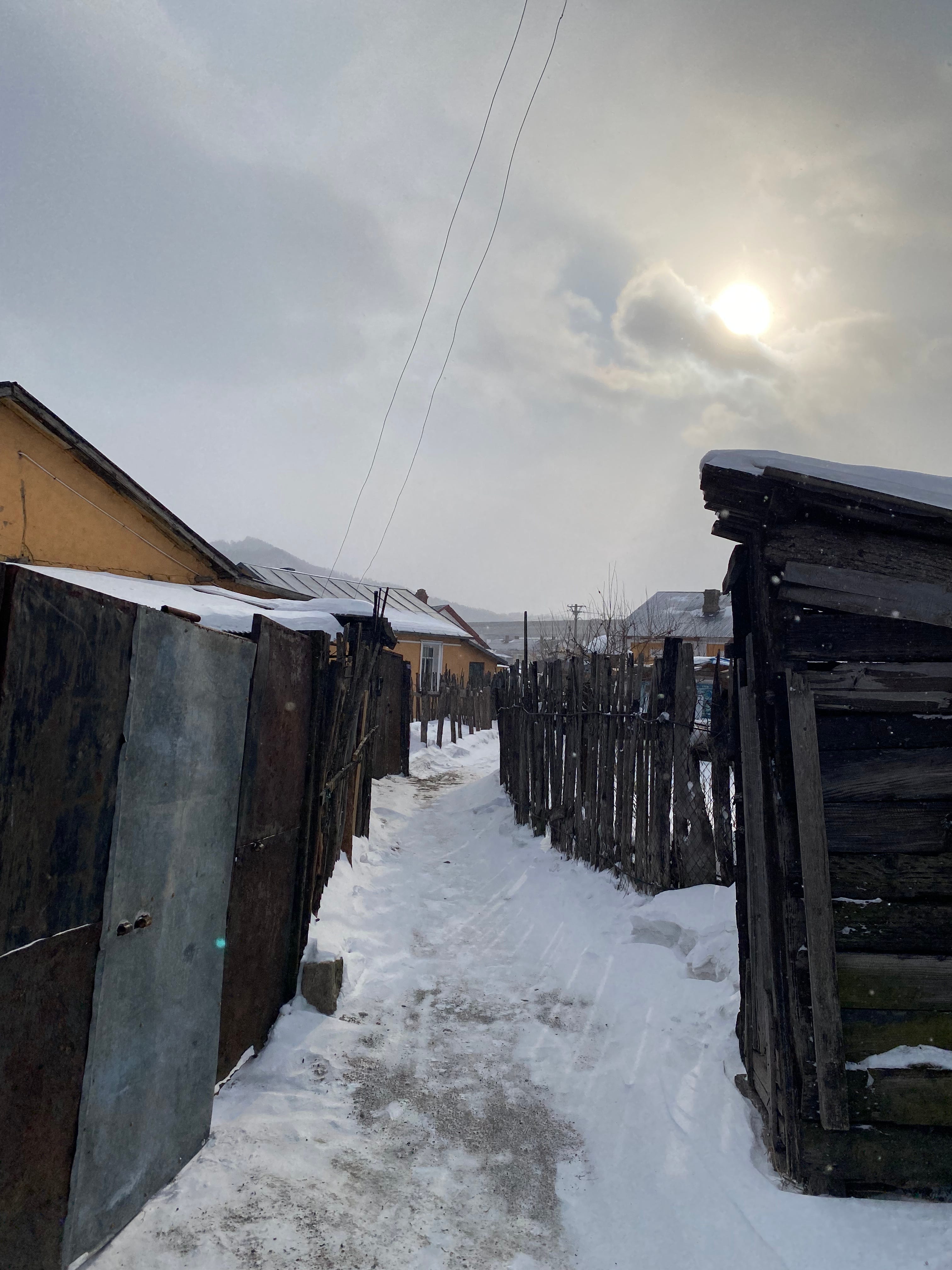
The village in Hengdao Hezi was built by Russians, starting from the late 19th century. Following the construction of the Chinese Eastern Railway, hundreds of Russians lived in it until the mid-20th century, many of whom either worked for the railway or were their family. The houses felt very familiar for me. Some of them had been turned into shops and hostels, and others were occupied by Chinese residents, but most of them seemed empty. Many houses in the village had ‘for rent’ or ‘for sale’ signs. Those century-old houses probably did not have running water, and it would cost more to fix them than to buy them.
The village had an Orthodox church, now turned into a museum. I could not clearly picture how, but I knew the church was going to be depicted in my novel. Its exhibition, curated by one man, was impressive, with photos and relics of people who lived in Hengdao Hezi and worked for the railway. In fact, there were physical copies of photograph collections from the 1910s-1940s on display, some of which I had downloaded beforehand as pdf files. It seemed the curator, who lives in Harbin, might have been the person who scanned and uploaded them online. I walked away, determined that I would contact him when I return to Seoul to ask for help.
There was a railroad crossing in the middle of the village. It was hard to explain why, but everything in the village felt nostalgic: snow, streetlamps, electric poles, the smell of burning wood, all those decaying houses, and the endless whistles of trains that passed by.
I imagined myself buying a house in the Russian village where no one knew me and spending long winters on top of a pechka. A stranger in a strange snowing town, built by strangers who came to a strange land in the strange century—I thought of Kawabata Yasunari again. The Manchurian village built by Russians lacked the dreary air of Japanese sexuality. At the end of the Snow Country, the town warehouse burns down, and Yoko falls from its balcony, which is described as “frighteningly sensuous”. Xuexiang, even though not as alluring as yukiguni, seemed to be a better option for me to get lost in. I might have wanted to die as a geisha amidst flames in a yukiguni if I were a young, attractive, and sensitive girl, but I was not—perhaps to my dismay. I felt bad for Japanese men. I thought I might be able to grasp why some of them flew out for kamikaze suicide attacks.
Long-term residency in China is rather difficult to obtain, but it did not seem impossible. In any case, it would be easier for me to buy a house in Hengdao Hezi than an apartment in Seoul. Not that I would necessarily want an apartment in Seoul if I could afford one. Out of all the places I have visited in China, including over ten cities, the Russian village in Hengdao Hezi was the only place where I ever thought I might want to live.
I walked around the village until nightfall and waited for my train at a café in front of Hengdao Hezi Station, listening to the train whistles all the time. I did not know where those trains were headed. Nabokov defined toska as “a dull ache of the soul, a longing with nothing to long for”. The village was full of nostalgia that hit its visitors like an old, heavy train, but I did not have anything to feel nostalgic about.
January 8th, Thursday
Mudanjiang (Suifenhe)
Last day in Manchuria before going back to Korea was spent visiting Suifenhe. Suifenhe Station is the last station of the Chinese Eastern Railway, and the railway continues to the next station in Russia. On the train, half the passengers were Russian. I sometimes saw Russians in Mudanjiang but had never seen so many Russians in one place before.
Instead of heading to Suifenhe right away, I stopped by Muling Station. In January 1925, Buyeo People Unification Conference was held in Muling. (Buyeo was an ancient kingdom in Manchuria, succeeded by the Kingdom of Goguryeo/Goryeo, where the name Korea came from. Thus, the ‘Buyeo people’ here is to be understood as referring to Koreans.) The conference led to the formation of Shinmin Prefecture in the same year, an autonomous Korean polity that wielded its influence in Mudanjiang. Some of the activists who participated in Shinmin Prefecture, especially those who put emphasis on direct military actions against Japan, later created the Korean Anarchist Federation in Manchuria and the Korean People’s Association in Manchuria. These were the people who built Korean military academies in Manchuria, sent spies to the Japanese-occupied Korean Peninsula, engaged in guerrilla warfare against Japan, plotted the assassinations of Japanese key figures and pro-Japanese Koreans and Chinese, and so on.
In the 1920s, the local Chinese authorities in the Northeast were sometimes pro-Japanese and anti-Japanese at other times. Meanwhile, the Republic of China had two centers of authority: the Nationalist government in Nanjing, led by the revolutionary Kuomintang, and the Beiyang government in Beijing, a coalition of Northern warlords. This period in Chinese history is called the Warlord Era, and small and large civil wars between warlords continued, creating a power and security vacuum. Taking advantage of this vacuum, Koreans of all ideologies could strive to realize their political goals in Manchuria, especially the anti-Japanese struggles that would have been impossible in the annexed Korean Peninsula, and the Empire of Japan did not miss the chance as well to invade the Chinese mainland via Manchuria.
In this sense, Manchuria of the 1920s can function as a Romantic chronotope for my novel: Koreans, Han Chinese, Japanese, Russians, Jews, Poles, Manchus, Mongols, Huis (an ethnoreligious group, Islamized Han people) and even Swedes, Americans, Canadians, and Germans, all brought to the Wild East via railroads, doing whatever they can do and whatever they want to do to survive, to cultivate, to pillage, to go big, to go home, to conquer, to liberate, to kill, and to love, in a strange land where law and order does not exist yet.
I walked outside the Muling Station. There were some village dwellings, a factory that procured corn, and a gas station, but it felt so empty and quiet. Cows were roaming about the field, and I had to take care not to step on cow dung. Walking back to the station, I thought no one would find out if I died here, either by accident or not. Again, perfect for the inspiration: the Wild East.
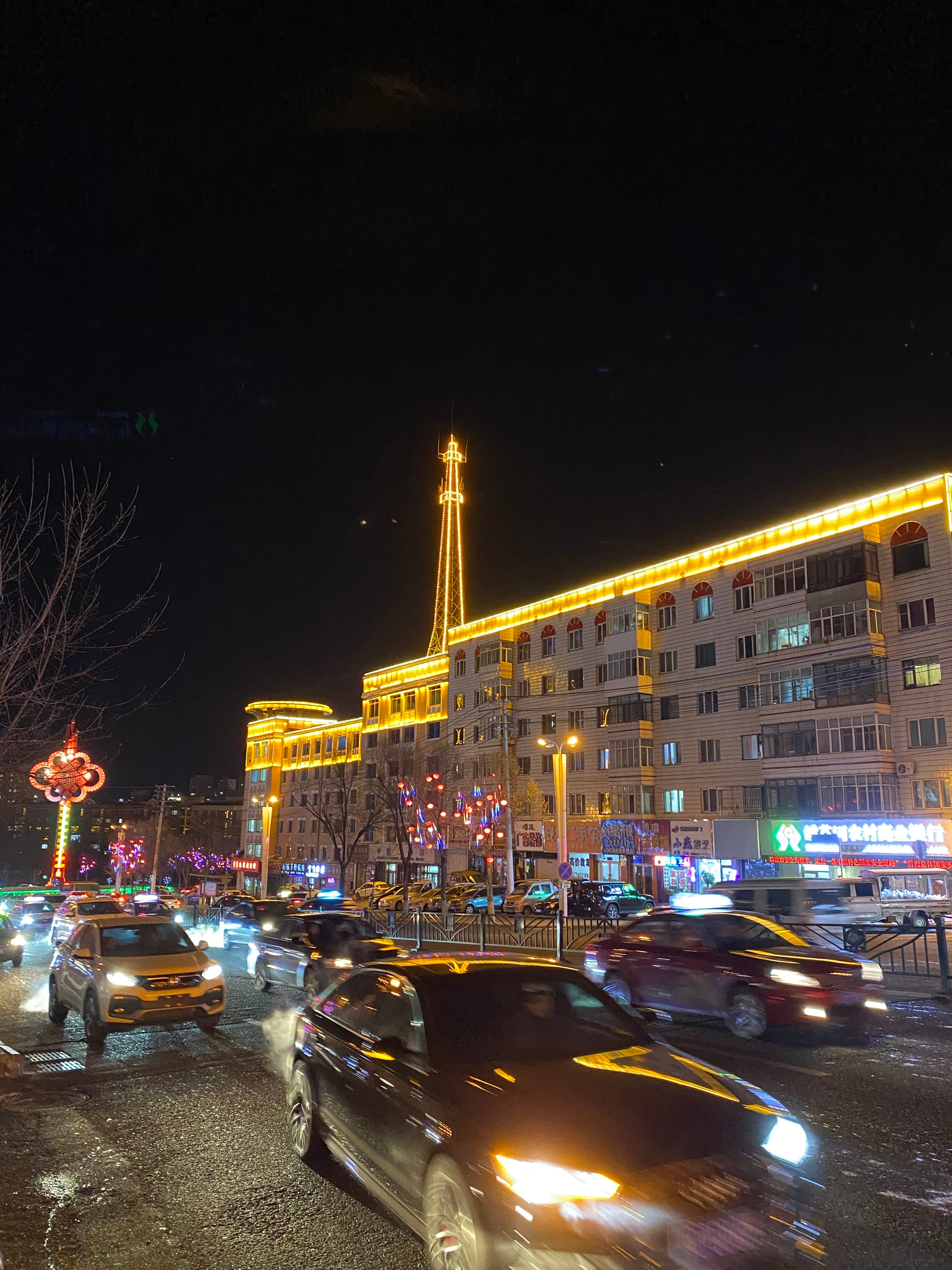
Unlike the rural Muling, Suifenhe seemed to be a thriving border city. Many shops had signboards in Russian, and I noticed a lot of international trading companies on the streets. Even many of the recently built buildings looked Russian. The sign on the top of the administrative service center read “China (Heilongjiang) Pilot Free Trade Zone Suifenhe Area”, written out both in Chinese and Russian. Suifenhe is the only place in China where trading with Russian rubles is officially permitted.
I walked to the White Building, a former residence of railway workers built in 1903, now used as a museum. The exhibition on the first floor showed some other aspects of the Chinese Eastern Railway and life in Suifenhe in the late 19th century and early 20th century as well, but its focus was more on how Suifenhe, connected to Moscow by railroad, helped import revolutionary ideas from Russia to China and how socialists, open and undercover, across many strata of the local society contributed to the anti-imperialist struggles against Japan and the Chinese Communist Revolution.
The second floor was being used as an exhibition hall for national security education, which felt somewhat ironic. It showed many potential national security threats to China, including the 2019-2020 Hong Kong Protests, presented as how the Chinese Communist Party understood them, and urged the visitors to stay alert for the homeland’s security. If I were a key CCP figure in Suifenhe, I would definitely fire the curators at the White Building. Unintentionally, the two consecutive exhibitions seemed to generate an insecure message: we know the state can be overthrown because we did it ourselves, and we are feeling anxious because it might be overthrown again. I was a bit disappointed. Communist party organizations usually do a better job than this.
I also took a quick tour in Suifenhe Museum. It kept a complete silence about the Sino-Soviet conflict of 1929, together with the exhibitions at the White Building. As a matter of fact, Soviet forces captured Suifenhe in 1929, which does not fit the plot of continued Chinese-Russian amity. The conflict happened because Zhang Xueliang tried to seize the Chinese Eastern Railway, which had been under Russian/Soviet jurisdiction since the late 19th century. Soon, the USSR demanded that Zhang disband White Russian militias in Manchuria as a term of the negotiation. Then two years later, in 1931, Japan began its full-scale invasion of Manchuria. Manchuria as a wild, anarchic, and Romantic chronotope disappeared forever thus.
Walking out of the museum, I wished I could just take a train tomorrow and continue travelling into Russia. However, my trip to Manchuria that began in Dalian, the other end of the Chinese Eastern Railway, had to end at this end, Suifenhe. Until recently, I, a South Korean, could enter Russia visa-free any time. Technically, I still can, but in 2025, Russia began to require all foreigners entering it to report at least three days in advance. The Far East was again a suffocating place, and it was time to get back to Korea.
January 9th, Friday
Mudanjiang-Harbin-Qingdao-Seoul
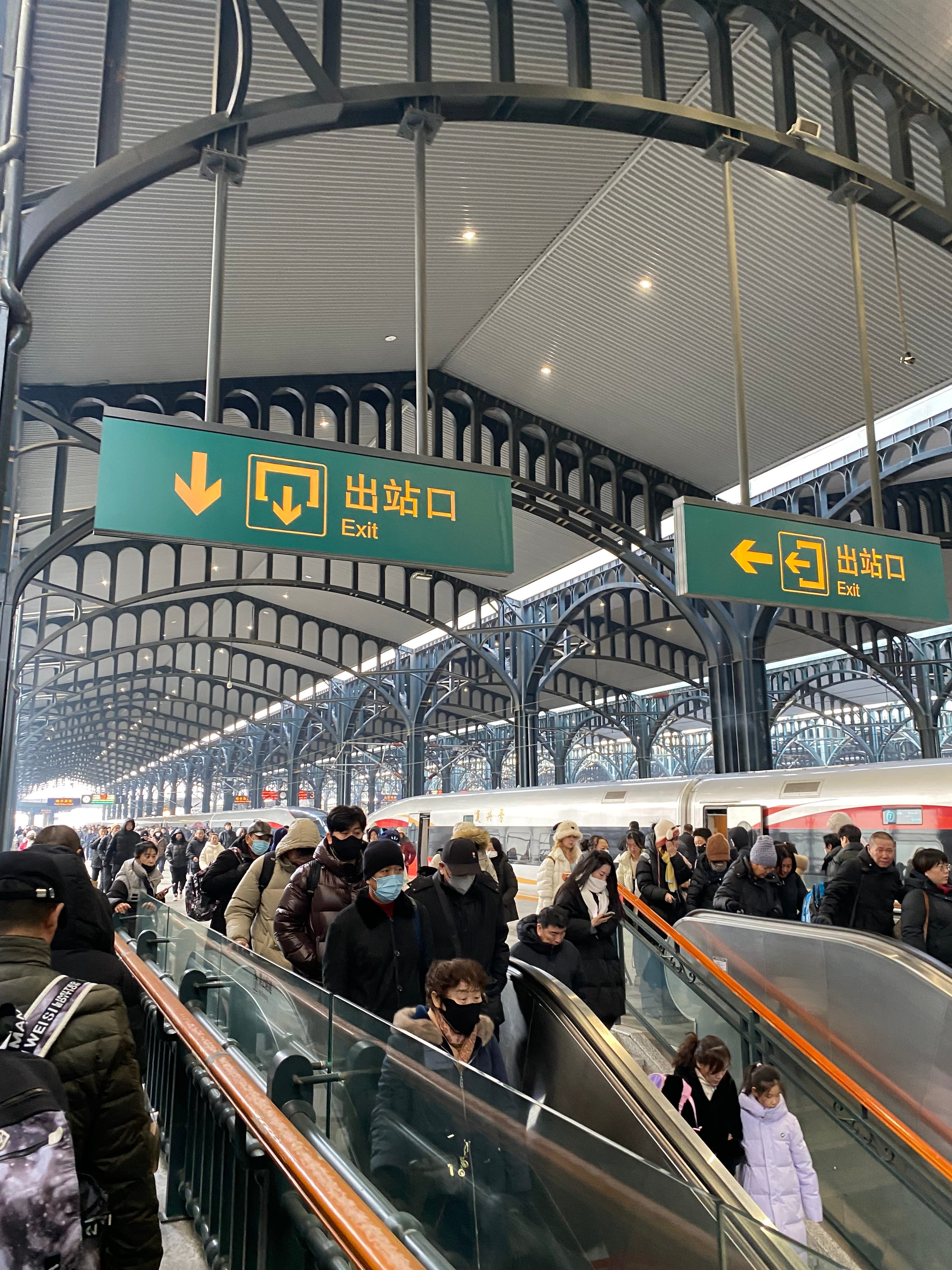
A hectic day. A train ride from Mudanjiang Station to Harbin Station; a bus ride to Harbin Airport; a flight to Qingdao Airport; a flight to Incheon Airport; and then a bus ride to Seoul. I could catch a break in Qingdao with a bottle of original Tsingtao beer, a sausage, and a bowl of chicken soup, Guangzhou-style, I believe.
The moment I stepped out of the plane in Qingdao, it felt so hot. For two weeks, I had become used to the weather where my mustache froze when I went outside. In Qingdao, the temperature was 9°C/48.2°F. It was a bit lower than that in Seoul, where I arrived past ten at night, but it still felt so warm, perhaps too warm.
At home, I took out a purple clay teacup from my backpack, sweating. The teacup, purchased at a tea shop in Harbin, had an engraving of a tiger. I boiled water, brewed shu puer, and poured it into the cup, chewing on a betel nut I bought at Qingdao Airport. I instantly felt the kick: the heart beating faster, the blood rushing into my head, and the heat spreading in my body.
Appreciating the tiger, I envisioned the opening scene of my novel: a clueless Japanese Futurist poet from Dalian gets off the train at Hengdao Hezi Station, surprised by the xuexiang. Indeed, every good Manchurian tale should start with someone getting off a train. Kawabata Yasunari, Natsume Soseki, Baek Seok, Lu Xun, and many others would agree with me.
It seemed someone was going to go on an unexpected tiger hunt.
January 12th, Monday
Seoul
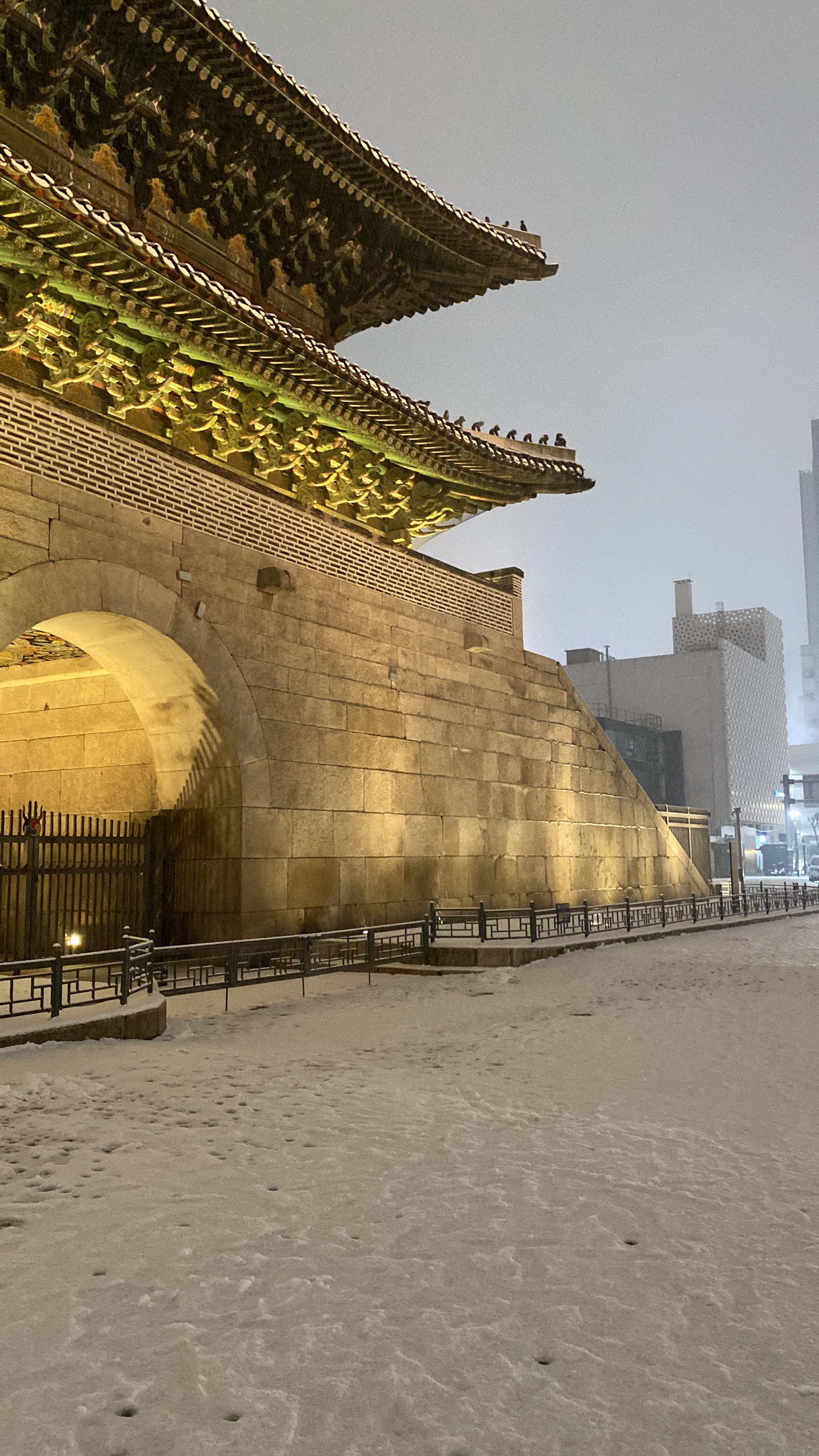
An unexpected postscript to the travel in Manchuria, from Seoul. A snowy day. I am taking a walk around Dongdaemun, late at night. I wait at a crossroad, smoking a cigarette. A young Korean lad in his twenties approaches and talks to me in English: “Hey, no smoking!”
“Sorry?” I say. I do not feel the need to switch to Korean and unveil that I am Korean. I do not know exactly why, but even the workers at Incheon Airport talked to me in English when I was heading to Dalian. Perhaps I do not look like a Korean. Anyhow, the lad talked to me in English, thinking that I was a foreigner, so I choose to stick with English.
“No smoking zone!”
He is probably not happy that the smoke got in his eyes or something, but his claim is bullshit. I have been hanging around Dongdaemun since he was in elementary school, or even younger. Here, the only open-air places where smoking is technically restricted are parks and near the bus stops and the subway entrances. I do not like his attitude. He could have just walked away or asked politely.
“I kind of get what you want to tell me, young man, but not really. Are you saying that smoking is banned here by law? On what grounds are you saying so, and who are you to talk to me like that?”
A look of frustration shows up on his face. He did not understand all of what I said, due to his limited English, but grasps that I am not being compliant. He also has something more he wants to say, definitely not the nicest thing to tell a stranger. He just can’t express it in English.
“Where are you from? Where are you from!” He begins to scream.
Shit, I think. It’s a fight-or-flight moment, and I realize this isn’t really about me smoking a cigarette near him. He thinks I am Chinese. Chinese, including Chaoxianzu, are somewhat notorious for smoking everywhere. A keyring with a panda plush is dangling from my backpack. I bought it in Chengdu, and the panda is even in a Chinese shirt. It must make me look more like a Chinese tourist in Dongdaemun, a spot frequented by foreigners.
A young male Korean asking where I am from in an aggressive manner—the only possibility is that he expects me to answer that I am from China and will assault me for that answer. Otherwise, no one can say the simple question “where are you from?” as if it were a threat. The antipathy against China in South Korea has intensified during the last decade, especially among young males.
J—, a Chinese who studied in Seoul until last year, once said he was scared because of the anti-Chinese sentiments. I thought he was being oversensitive. It turns out, you can be assaulted in Seoul for being Chinese.
I decide not to tell him that I am from here, from Korea. Even if I wanted to tell him that I am Korean, it would be too late at this point. I will have to either run away or punch him back.
Suddenly, another lad shows up. He grabs the lad by the arm and drags him away. Perhaps a friend of his, who does not want him to get into trouble. The lad keeps screaming: “Where are you from?” I quickly cross the road and get away.
On my way back home, I pray for the young lad and keep thinking about him. I pray for him, maybe out of religious scrupulosity. On the other hand, I dream of another Greater East Asian War: in 1941, the Tojo cabinet declared that the Japanese warfare in East Asia and the Pacific would officially be called so. I think I might not mind the People’s Liberation Army marching into Seoul if I get to see a Chinese soldier shooting that uncivilized kid.
An Jung-geun-seonsaengnim, we failed. East Asia is unrefined, and I am afraid it might stay the same onward. So, Takaichi-kakka, please do something. Don’t act like a pussy this time like you did last November. Deploy the Japan Self-Defense Forces in Taiwan, for real. Not the first time Japan doing it in that island anyhow, right? Maybe do it in Korea and Manchuria, too. Invite Trump and Putin to the party, and let us burn it all and start it all over again. Let’s create new borders. The existing ones are suffocating.
Long live the Greater East Asia—
Dai Toa Kyoeiken Banzai,
Wansui,
Manse.
If you enjoyed my work, you can buy me a cup of tea. I am not a coffee person, by the way.
No posts
Comments
Nothing yet. Say the first thing.
Sign in to join the conversation.